NORTON META TAG

Showing posts with label tim geitner. Show all posts

05 February 2016

UPDATE 5FEB16 WHEN WE STAND TOGETHER WE WILL ALWAS WIN & One Betrayal Too Many from HUFFPOST 15SEP11

Smith goes.jpgDave poster.jpg
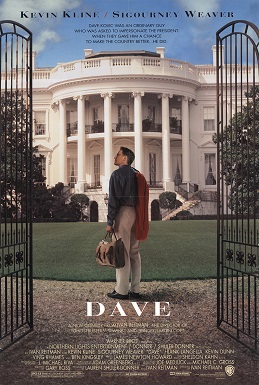
I found this post, left as a draft post on my blog, while searching for post on Social Security. It is very appropriate now considering the slate of candidates the repiglican party is offering the country. hillary's corporate democratic platform is not what the country needs either. Remember the movies DAVE and MR SMITH GOES TO WASHINGTON? Movies about men who ended up in power in Washington and actually stood up for, fought for, legislated for and represented all the American people and not just the corporate controllers of the political parties in D.C.? Remember how good you felt when these guys beat corporate America and the political establishment? Remember wishing we actually had someone like these guys to vote for? Well, in 2016 we have that man in +Senator Bernie Sanders ! We do need, and are desperate for, a political revolution through the ballot box.  He gets slammed for his presidential campaign platform ( BERNIE 2016 ) and we are warned Bernie will never be able to get any of his "pie in the sky" plans and proposals enacted in Washington. That propaganda campaign is being controlled by the rich, corporate America, the 1%. But if millions of people register to vote, volunteer for and donate to Bernie's campaign we can elect a President who will represent all of us, fight for us, and insist the White House and Congress be returned to the people. Don't get discouraged, DON'T stay uninvolved. DEMOCRACY IS NOT A SPECTATOR SPORT! Check out BERNIE 2016 and join the campaign today!!! This from +The Huffington Post .....
One Betrayal Too Many
THIS is exactly how I feel, there have been too many betrayals by the Obama administration, too many times he has turned his back on the poor, the working class and the middle class for the benefit of corporate America. Maybe it will be best if he is defeated in his bid for a second term, so the country, under a repiglican/tea-bagger administration will sink so low that even the fools who now support their agenda will be devastated and the Democratic party will find and nominate a nominee that not only talks a good populist, progressive game but will actually legislate it. I really do think we are going to have to hit rock bottom, and that will happen with a repiglican/tea-bagger government, for the American people to rise up and bring a government of the people to power. The question is, will it happen through the ballot box or on the streets?
It's getting too late to give President Barack Obama a pass on the economy. Sure, he inherited an enormous mess from George W., who whistled "Dixie" while the banking system imploded. But it's time for Democrats to admit that their guy bears considerable responsibility for not turning things around. 
He blindly followed President Bush's would-be remedy of throwing money at the banks and getting nothing in return for beleaguered homeowners. Sadly, Obama has proved to be nothing more than a Bill Clinton clone triangulating with the Wall Street lobbyists at the expense of ordinary folks. 
That fatal arc of betrayal was captured by a headline in Tuesday's New York Times: "Soaring Poverty Casts Spotlight on 'Lost Decade.'" The Census Bureau reported that there are now 46.2 million Americans living below the official poverty line -- the highest number in the 52 years since that statistic was first measured -- and median household income has fallen back to the 1996 level. As Harvard economist Lawrence Katz summarized this dreary news: "This is truly a lost decade. We think of America as a place where every generation is doing better, but we're looking at a period when the median family is in worse shape than it was in the late 1990s."
The late 1990s, it should be noted, is when President Clinton, working with Phil Gramm, the Republican head of the Senate Banking Committee, pushed through two critical pieces of legislation ending effective regulation of the banks. The Gramm-Leach-Bliley Act smashed the wall between high-flying Wall Street investment firms and the once staid commercial banks entrusted with the deposits and mortgages of America's innocent souls. The next year Clinton signed the Commodity Futures Modernization Act, banning any effective regulation of the rapidly expanded trade in the collateralized debt obligations and credit default swaps that have since haunted the world's economy.
The collapse of those toxic securities led to the housing crisis and resulted in 15.1 percent of Americans now living in poverty, the same level as when Bill Clinton took office. But thanks to another one of Clinton's grand triangulation strategies, the one he called "welfare reform," the impoverished are now denied the safety net that existed before the Clinton presidency. Although 22 percent of U.S. children are now below the poverty line, the Aid to Families With Dependent Children program no longer exists. 
Some of us who voted for Obama thought he was no Clinton, but he was and is, as was demonstrated in his first days in office when he appointed two key veterans of the Clinton Treasury Department, Lawrence Summers and Timothy Geithner, to head up the Obama economic team. Geithner, as treasury secretary, is the point man for the administration's push to pass the so-called American Jobs Act, which the president hyped in his Sept. 8 speech to Congress and the nation. It was pure Clinton bull: I feel your pain while I help the super-rich pick your pocket. 
Space permits only one example, that of General Electric CEO Jeffrey Immelt, whom Obama selected to head his "Jobs Council of leaders from different industries who are developing a wide range of new ideas to help companies grow and create jobs." Was that some cruel joke? GE under Immelt has grown and created jobs, but they are abroad rather than in our own troubled country. As a result, by the end of last year, only 134,000 of GE's workforce of 304,000 were based in the United States; the remainder -- and 82 percent of the company's profit -- were sheltered abroad.
Ironically, GE's ability to avoid taxes was restricted by President Ronald Reagan, who had once been a spokesman for GE but was outraged by the company's use of tax loopholes. It remained for President Clinton to offer GE some new tax breaks. As a result of being able to shelter profit abroad last year, GE had profits of $14.2 billion but claimed a tax benefit of $3.2 billion. Immelt was the elephant in the room when Obama said in his speech last week: "Our tax code should not give an advantage to companies that can afford the best-connected lobbyists. It should give an advantage to companies that invest and create jobs right here in the United States of America."
It has been a long time since GE was creating jobs here during its "better light bulb" days, and the last spurt of GE participation in the U.S. economy came through its unit GE Capital, which specialized in toxic mortgage lending that once produced more than half of the company's profits but ultimately led to a taxpayer bailout. 
Someone who knows a great deal about that sort of scam is Elizabeth Warren, the consumer advocate and Harvard law professor pushed out of Obama's inner circle. In launching her campaign for the U.S. Senate in Massachusetts this week, Warren posted a video that clearly defined the enemy:
"Washington is rigged for big corporations. A big company, like GE, pays nothing in taxes, and we're asking college students to take on even more debt to get an education?"
Obama in appointing Immelt last January praised him as a business leader who "understands what it takes for America to compete in the global economy." Apparently, what Immelt understands is that what it takes to satisfy corporate interests instead of national needs is conning a president into looking the other way while you send jobs abroad.

15 September 2011

UPDATE 5FEB16; One Betrayal Too Many from HUFFPOST 15SEP11

Dave poster.jpgSmith goes.jpg
I found this post, left as a draft post on my blog, while searching for post on Social Security. It is very appropriate now considering the slate of candidates the repiglican party is offering the country. hillary's corporate democratic platform is not what the country needs either. Remember the movies DAVE and MR SMITH GOES TO WASHINGTON? Movies about men who ended up in power in Washington and actually stood up for, fought for, legislated for and represented all the American people and not just the corporate controllers of the political parties in D.C.? Remember how good you felt when these guys beat corporate America and the political establishment? Remember wishing we actually had someone like these guys to vote for? Well, in 2016 we have that man in +Senator Bernie Sanders ! We do need, and are desperate for, a political revolution through the ballot box.  He gets slammed for his presidential campaign platform ( BERNIE 2016 ) and we are warned Bernie will never be able to get any of his "pie in the sky" plans and proposals enacted in Washington. That propaganda campaign is being controlled by the rich, corporate America, the 1%. But if millions of people register to vote, volunteer for and donate to Bernie's campaign we can elect a President who will represent all of us, fight for us, and insist the White House and Congress be returned to the people. Don't get discouraged, DON'T stay uninvolved. DEMOCRACY IS NOT A SPECTATOR SPORT! Check out BERNIE 2016 and join the campaign today!!! This from +The Huffington Post .....
THIS is exactly how I feel, there have been too many betrayals by the Obama administration, too many times he has turned his back on the poor, the working class and the middle class for the benefit of corporate America. Maybe it will be best if he is defeated in his bid for a second term, so the country, under a repiglican/tea-bagger administration will sink so low that even the fools who now support their agenda will be devastated and the Democratic party will find and nominate a nominee that not only talks a good populist, progressive game but will actually legislate it. I really do think we are going to have to hit rock bottom, and that will happen with a repiglican/tea-bagger government, for the American people to rise up and bring a government of the people to power. The question is, will it happen through the ballot box or on the streets?
It's getting too late to give President Barack Obama a pass on the economy. Sure, he inherited an enormous mess from George W., who whistled "Dixie" while the banking system imploded. But it's time for Democrats to admit that their guy bears considerable responsibility for not turning things around.
He blindly followed President Bush's would-be remedy of throwing money at the banks and getting nothing in return for beleaguered homeowners. Sadly, Obama has proved to be nothing more than a Bill Clinton clone triangulating with the Wall Street lobbyists at the expense of ordinary folks.
That fatal arc of betrayal was captured by a headline in Tuesday's New York Times: "Soaring Poverty Casts Spotlight on 'Lost Decade.'" The Census Bureau reported that there are now 46.2 million Americans living below the official poverty line -- the highest number in the 52 years since that statistic was first measured -- and median household income has fallen back to the 1996 level. As Harvard economist Lawrence Katz summarized this dreary news: "This is truly a lost decade. We think of America as a place where every generation is doing better, but we're looking at a period when the median family is in worse shape than it was in the late 1990s."
The late 1990s, it should be noted, is when President Clinton, working with Phil Gramm, the Republican head of the Senate Banking Committee, pushed through two critical pieces of legislation ending effective regulation of the banks. The Gramm-Leach-Bliley Act smashed the wall between high-flying Wall Street investment firms and the once staid commercial banks entrusted with the deposits and mortgages of America's innocent souls. The next year Clinton signed the Commodity Futures Modernization Act, banning any effective regulation of the rapidly expanded trade in the collateralized debt obligations and credit default swaps that have since haunted the world's economy.
The collapse of those toxic securities led to the housing crisis and resulted in 15.1 percent of Americans now living in poverty, the same level as when Bill Clinton took office. But thanks to another one of Clinton's grand triangulation strategies, the one he called "welfare reform," the impoverished are now denied the safety net that existed before the Clinton presidency. Although 22 percent of U.S. children are now below the poverty line, the Aid to Families With Dependent Children program no longer exists.
Some of us who voted for Obama thought he was no Clinton, but he was and is, as was demonstrated in his first days in office when he appointed two key veterans of the Clinton Treasury Department, Lawrence Summers and Timothy Geithner, to head up the Obama economic team. Geithner, as treasury secretary, is the point man for the administration's push to pass the so-called American Jobs Act, which the president hyped in his Sept. 8 speech to Congress and the nation. It was pure Clinton bull: I feel your pain while I help the super-rich pick your pocket.
Space permits only one example, that of General Electric CEO Jeffrey Immelt, whom Obama selected to head his "Jobs Council of leaders from different industries who are developing a wide range of new ideas to help companies grow and create jobs." Was that some cruel joke? GE under Immelt has grown and created jobs, but they are abroad rather than in our own troubled country. As a result, by the end of last year, only 134,000 of GE's workforce of 304,000 were based in the United States; the remainder -- and 82 percent of the company's profit -- were sheltered abroad.
Ironically, GE's ability to avoid taxes was restricted by President Ronald Reagan, who had once been a spokesman for GE but was outraged by the company's use of tax loopholes. It remained for President Clinton to offer GE some new tax breaks. As a result of being able to shelter profit abroad last year, GE had profits of $14.2 billion but claimed a tax benefit of $3.2 billion. Immelt was the elephant in the room when Obama said in his speech last week: "Our tax code should not give an advantage to companies that can afford the best-connected lobbyists. It should give an advantage to companies that invest and create jobs right here in the United States of America."
It has been a long time since GE was creating jobs here during its "better light bulb" days, and the last spurt of GE participation in the U.S. economy came through its unit GE Capital, which specialized in toxic mortgage lending that once produced more than half of the company's profits but ultimately led to a taxpayer bailout.
Someone who knows a great deal about that sort of scam is Elizabeth Warren, the consumer advocate and Harvard law professor pushed out of Obama's inner circle. In launching her campaign for the U.S. Senate in Massachusetts this week, Warren posted a video that clearly defined the enemy:
"Washington is rigged for big corporations. A big company, like GE, pays nothing in taxes, and we're asking college students to take on even more debt to get an education?"
Obama in appointing Immelt last January praised him as a business leader who "understands what it takes for America to compete in the global economy." Apparently, what Immelt understands is that what it takes to satisfy corporate interests instead of national needs is conning a president into looking the other way while you send jobs abroad.

14 July 2011

America Needs a President Who Will Confront the Financial Industry's Hegemony Over Our Lives 14JUL11

THANK YOU SHEILA BAIR, we are already missing you! You are quite a lady for sure!!!!
No one in a position of authority in our government today seems to understand fully the threat to American institutions and ideals represented by the untrammeled clout the financial industry now holds permeating the halls of government through the power of influence and money. We are barreling toward a destabilizing schism in our society where one interest group, the finance world and its allies, are running the nation to their own economic benefit, oblivious of the pain and loss being endured by their fellow citizens on the Main Streets of our towns and villages and the neighborhoods and tenements of our cities
Our president, whose objectives are certainly sincere, has surrounded himself with men whose formation and ties run deep into the culture of Wall Street -- be it his Chief of Staff William Daley, formerly Midwest Chairman of JPMorgan Chase; Treasury Secretary Timothy Geithner, Former Chair of the New York Fed, or Gary Gensler, Chairman of the Commodity Futures Trading Commission and former Goldman Sachs partner -- while consulting freely with Warren Buffet, that champion of and investor in Goldman Sachs. In many ways very little has changed from the previous administration when the Treasury and virtually all government agencies responsible for financial oversight were in some manner beholden to Wall Street houses and banks, and when the crunch came in September 2008 it was their "club" members who were bailed, while the rest of the country sank into a miasma of recession and unemployment. As Sheila Bair was quoted in the New York Times Magazine saying to Joe Nocera: "You know, Wall Street barely missed a beat with their bonuses. Isn't that ridiculous?"
Nor has their been a serious effort made by prosecutors in the Obama administration and its agencies to hold individuals responsible nor to claw-back the billions of dollars paid out as bonuses for phony profits that were booked by creating and marketing fundamentally flawed financial instruments such as the now notorious C.D.O.'s. The Justice Department opted for a policy known as 'deferred prosecutions'. The guidelines left open a possibility other than guilty or not guilty, giving leniency all too often if companies investigated and reported their own wrongdoing. In return the government would enter agreements to delay or cancel prosecution if companies promised to change their behavior -- in other words, no punishment and little assurance that it wouldn't happen again.
Yet there was one player in government, that progressively rare breed, a moderate republican appointee holdover from the Bush Administration, who fought tooth and nail against the clubhouse fraternity that had taken over the fiscal soul of the nation. She was unflinching in defending the interests of the nation's citizens, becoming an equal opportunity irritant to Democrat and Republican alike. And she knew what she was talking about.
I personally have had the good fortune of hearing her speak at an Aspen Ideas Festival event just over a week ago. She was lucid, forthright, without hyperbole conveying a sense of reasoned indignation felt by too many of us, at the unfairness of the present structure. Where we, as citizens seem unable through our elected officials to stem the influence, the systematic 'heads I win, tails you lose' construct of our financial institutions and their growing impact on the functioning of our society.
Upon her retirement as Chairman of the FDIC (Federal Deposit Insurance Corporation) this July 8th Sheila Bair received this accolade from the Wall Street Journal's Deborah Salomon: "Sheila Bair, who is stepping down as Chairman of the Federal Deposit Insurance Corp. this week, leaves behind an agency transformed from a sleepy bank overseer into a financial regulatory powerhouse focused on preventing another financial crisis." The article goes on to report that at her last FDIC meeting the agency finalized a rule allowing the government to recover compensation from executives responsible for a financial firm's collapse. Only someone with the gumption of Bair could have achieved such a result given the opposition massed against her.
In an in-depth article by Joe Nocera, Nocera writes that Bair began sounding the alarm about the dangers posed by the explosive growth of subprime mortgage rates in June 2006. At the time, "Bair insisted that she and her agency have a seat at the table and fought Henry Paulson and Timothy Geithner, the President of the New York Federal Reserve, as they tried to cobble together solutions that would keep the financial world from going off a cliff: She and the F.D.I.C. managed a number of huge failing institutions during the crisis including Indy Mac, Wachovia, and Washington Mutual."
Of particular significance was Bair's belief in market discipline where, according to Nocera, she found herself at variance with Obama's Treasury Department, meaning she held that shareholders and debt holders should take losses ahead of depositors and taxpayers. "She was tough-minded and straight-forward." And as she would be quoted, "Our job is to protect bank customers, not banks."
She fought for increasing the capital requirements for banks in the face of banks who lobbied strenuously against her. Lower capital requirements allow for more risk, ergo larger bonuses. She fought against the United States' adoption of the bank boondoggle called Basel II which would have lowered bank capital requirements and worse, self selection of risk models thereby significantly exposing the system to even greater bank failures. Nocera would declare "I've long believed her opposition to Basel II has been a hugely underappreciated factor in helping to save the financial system when the crisis came."
And on it went. Geithner, in full Wall Street mode, wanted the F.D.I.C. to guarantee all debt issued by bank-holding companies (such as JPMorgan Chase, Goldman Sachs, Morgan Stanley). Sheila Bair said NO!
To Bair, her fight with the Treasury and the federal Reserve was ultimately about the bondholders. According to Bair "They did not want to impose losses on bondholders and we did...there is no insurance premium on bondholders... For the little guy on Main Street who has bank deposits, we charge the banks a premium for that, and it gets passed along to the customer. We don't have the same thing for bondholders, they're supposed to take losses."
And, most tellingly, she was clear in her displeasure that the government, by acting as if it was no one's fault, placed no responsibility where it should have been placed. For the many of us who have been wondering the same thing, what a breath of fresh air.
She has a stalwart fighter for mortgage modifications that would truly help homeowners. As Nocera explains that "what particularly galls her is that the Treasury under both Paulson and Geithner has been willing to take all sorts of criticism to help the banks. But it has been utterly unwilling to take any political heat to help homeowners."
All the while the Dodd-Frank Bill meant to prevent the too big to fail syndrome from ever rearing its head again, thereby making the largest banks accountable for their actions, is being lobbied into impotence by the financial brotherhood.
Here we have Sheila Bair, Kansas transplant to Washington, taking on the behemoths of the financial world, dogged in her defiance, "We always saw ourselves as the champion of the little guy. The other regulators never saw a bank closure, because that was our role. We were the ones that saw people losing their jobs when we had to shut down a little bank. They never understood the unfairness of the way little banks were treated versus the big banks...I've always thought that it was really important for everybody to have to play by the same set of rules."
Given the financial crisis in which our nation finds itself -- given the access and the power of the financial intuitions' hold, enabling them to play events to come to their own advantage -- would it not be better to have one of our own in the White House who understands the game? Who is on our side, and by virtue of her position and knowledge can stare down all the entreaties for special treatment because she inherently understands that this nation cannot flourish, nor overcome the obstacles that lie ahead and maintain its dignity if we do not all together play by the same set of rules?
Sheila Bair may not know it yet, but we need not only her kind, we need her to become our president. Her persona, her values, her experience would be a rare and welcome gift to the nation!

30 December 2010

Wall Street's Ten Biggest Lies for 2010 29DEZ10

BROUGHT TO YOU BY THE GOP, TEA-BAGGERS AND THE GREEDY PIGS OF REPUBLICORP AND THE MILITARY-INDUSTRIAL COMPLEX....
What a great year for Wall Street: profits up, bonuses up and, best of all, criticism down, especially from Washington. Somehow Wall Street has much of America believing its lies and rationalizations. We're even beginning to forget that Wall Street is largely responsible for the economic mess we're in.
So before we're completely overtaken by financial Alzheimer's, let's revisit Wall Street's greatest fabrications for 2010. (For the full story, please see The Looting of America.)

1."Honest, we didn't do it!"
Two years ago Wall Street's colossal greed crashed our economy. Our financial elites created and spewed highly leveraged toxic assets around the globe. These poisonous "innovations" pumped up the housing bubble and Wall Street grew insanely rich in the process. When it all burst, we learned that the big Wall Street institutions that had caused the crash were far too big to fail -- and too connected. High government officials came to their rescue with trillions in cash and guarantees -- underwritten, of course, by we taxpayers. Everyone knew this at the time. But if you asked just about anyone on "The Street" they denied all culpability and pointed the finger everywhere else: Fannie, Freddie, the Fed, the Community Reinvestment Act, tax deductions for home buying, bad regulations, not enough regulations, too many regulations, too much consumer debt, the rating agencies, the Chinese -- and on and on. Sadly, their blame-shifting strategy worked, bamboozling the media and people across the political spectrum. The GOP members of the Financial Crisis Commission are so drunk with this Kool-Aid that in their minority report, they refuse even to use the words "Wall Street" or "speculation" in assessing the causes of the crash. Hypocrites? Crooks? Morons? Take your pick.
2."The overall costs will be incredibly small in comparison to almost any experience we can look at in the United States or around the world."
Ever since Treasury Secretary Timothy Geithner screwed up his tax returns we knew he was numerically challenged. But his statement to Congress on December 16, 2010, on the cost of the bailout shows a willful inability to count. Yes, Wall Street has paid back most of our bailout funds. Whoopee! Our economy is in shambles, and millions of people are suffering. With his offensive "no big deal" analysis, Geithner glosses over all this human misery, and sidesteps the hidden costs of the bailout, including the financial insurance we taxpayers provided to every giant financial company in the country via the Fed. On the open market, that insurance -- which guarantees trillions of dollars in toxic assets -- would come at a very steep price. We coughed it up for free. But that's still chump change compared to the human costs of the worst employment crisis since the Great Depression -- the lost income, the depleted savings, the ravaged neighborhoods. Then there's the capsized state and local budgets, the public service reductions, the laid off teachers, firefighters and police officers -- all resulting from a plunge in public revenues caused by Wall Street's crash. Why aren't these costs on Geithner's balance sheet? A cynic might think Tim was priming us to accept the latest round of Wall Street bonuses. Hey -- they paid us back, so why should we care how much they earn?
3. "It's a war. It's like when Hitler invaded Poland in 1939."
Steven Schwarzman is supposed to be brilliant. After all, he made billions as head of the Blackstone Group, a private equity company and hedge fund. But last August, as some members of Congress mulled about eliminating a very lucrative tax loophole, he suffered a mental meltdown and saw an impending Nazi invasion. But the awful attack never happened. Schwartzman and his fellow hedge fund honchos all held onto their unbelievable tax break: Hedge fund and private equity income is still only taxed at 15 percent rather than at the top income tax rate of 35 percent. (That's because, inexplicably, it's considered "capital gains," not income.) Taxing Schwartzman's income as income would cost him hundreds of millions of dollars -- and the prospect of this apparently triggered a shock spasm that catapulted his foot into his mouth. I'm sure my IQ isn't high enough to keep up with the genius logic behind Steve's analogy. But just who is Hitler and who is Poland in his scenario? Maybe in his grandiose conceit, his firm is as big as Poland? Or it would require a Blitzkrieg to wipe out his tax loophole? In reality, even if Schwarzman had to pay a 90 percent tax rate (as he would have under Eisenhower), it would hardly have been a hardship -- let alone World War 3. He'd still have more money than he could ever spend in his lifetime. Schwarzman should be proud though: He gets 2010's Dumbest Wall Street Quote of the Year Award. Bravo! (In 2009 the honor went to Lloyd Blankfein, CEO of Goldman Sachs, who claimed he was "doing God's work."
4. "The hard truth is that getting this deficit under control is going to require some broad sacrifice, and that sacrifice must be shared by employees of the federal government."
But not by Wall Street. President Obama words of November 29th came only days before he "compromised" with the Republicans to continue the Bush tax cuts for the super-rich and to bestow an enormous estate tax gift to the 6,600 richest families in America. Mr. President, the "hard truth" is that you're slapping around public sector workers because you don't have the nerve to take on Wall Street. If you had the guts, you could raise real money by going to war with Steven Schwartzman and eliminating the hedge fund tax loophole. By the way, closing that loophole for just the top 25 hedge fund managers would raise twice the revenue than you'll get by freezing the wages of all two million federal workers! (See "The Wall Street Tax Debate that Never Was" )
5. "25 hedge fund managers are worth 658,000 teachers."
Nearly everyone on Wall Street sincerely believes that they are "worth" the enormous sums they "earn." You see, their pay is determined by the market, and markets don't lie. They reflect the high value our skilled elites bring to the economy. So we shouldn't be shocked that the top 25 hedge fund managers together "earn" $25 billion a year, even at a moment when more than 29 million Americans can't find full-time work. The outrageous economic logic of Wall Street compensation has those 25 moguls taking home as much as 658,000 entry level teachers (they earn about $38,000 per year). How can that be justified? It can't. These obscene "earnings" are the product of 30 years of financial deregulation, as well as the tax cuts and tax loopholes that our government has just extended. The hedge fund honchos get most of their money by siphoning off wealth from the rest of us, not by creating new value. I dare Wall Street to prove otherwise.
6. "To bolster the economy we need .... an improvement in the relationship between business and government (the current antagonism, even if not the primary explanation for slow hiring and sluggish investment, does seem to be affecting hiring and other business behavior)."
In this op-ed, Peter Orszag, Obama's former budget director, parrots the Wall Street line that employers aren't hiring because of "regulatory uncertainty." Mother of God, how much more certainty do they want? The Republicans and Blue Dog Democrats aren't about to let Obama seriously regulate Wall Street, even if he wanted to, which he doesn't. The truth is that employers aren't hiring because there's insufficient consumer demand for goods and services. But at least Peter Orszag is a man of his word. He personally plans to "improve the relationship between business and government" by tapping his government contacts at his new fat job at Citigroup, the nearly failed mega-bank that he helped to save at taxpayer expense. Orszag could have landed a coveted professorship at just about any university in the world. But apparently the 42-year-old wiz kid prefers Citigroup's multi-million dollar compensation package. Any bets on how long it takes for Larry Summers to cash in?
7. "Lengthened availability of jobless benefits has raised the unemployment rate by 1.5 percentage points."
You see, the unemployed cause their own unemployment, at least if you believe this assessment from a March 17th research note from JP Morgan Chase. (Next, Wall Street will call for a return of the Poor Houses.) The theory is simple -- you give people money not to work and they won't look for jobs. Still, it takes chutzpah for JP Morgan Chase, the beneficiary of billions of dollars in taxpayer largess, to criticize the unemployed for not finding jobs that aren't there, precisely because JP Morgan Chase helped to destroy them! Dear JP Morgan research staff: Five to six workers are now competing for every available job. If that's too complicated for you quants to grasp, maybe you should try a game of musical chairs in the trading room.
8. "Private employers, led by our revitalized financial sector, will create the jobs we need -- that is, if the government would just stay out of the way."
We now need 22 million new jobs to get us back to full employment (5 percent unemployment). In addition, each month the economy must generate another 105,000 jobs just to keep up with new entrants into the workforce. To get to full employment, the private sector would have to create about 630 firms the size of Apple (35,000 employees each). These numbers don't lie. Does anyone on Wall Street really believe that the private sector alone can pull off this miracle? But really, why should they care? They've got theirs, thank you very much. The painful truth that both Wall Street and Washington refuse to face is that if the big, bad government doesn't fund or create millions of new jobs, we'll face crippling unemployment for decades to come.
9. "Tim Geithner extolled 'the benefits of financial innovation' to the American economy." (Wall Street Journal, August 4, 2010)
Sorry to beat up on Tim again, but it's sometimes hard to tell who he's working for. Whenever you hear the phrase "financial innovation" put your hand on your wallet. That's the phrase Wall Street uses to justify its casinos and its outlandish profits and bonuses. People who talk about "financial innovation" are either getting big bucks on Wall Street, want more bucks on Wall Street, or hope to get a job on Wall Street the nano-second their public service ends. My question for Tim is: If Apple creates iPhones, what does Wall Street create? Warren Buffett says it creates "financial weapons of mass destruction." Paul Volcker, Reagan's Fed Chair, said there is not a "shred of evidence" that "financial innovation" is beneficial. Volcker also believes that the economy "was quite good in the 1980s without credit-default swaps and without securitization and without CDOs." Volcker gets the Smartest Wall Street Quote of the Year Award: "The most important financial innovation I've seen in the last 25 years is the automatic teller machine." How could Tim get it so wrong?
10. "I'm shocked, shocked to find that gambling is going on in here." Okay, okay, Claude Raines said that in Casablanca, not on Wall Street. But Wall Street and its defenders say exactly the same thing about their opaque derivatives games. Louise Story's excellent piece in The New York Times shows how a handful of banks have cornered the market clearinghouses for derivatives - entities that are supposed to make derivatives less risky. The big banks are limiting competition, according to Story, because they "want to preserve their profit margins, and they are the ones who helped write the membership rules." Meanwhile, Wall Street is quietly pushing to exempt its most profitable derivatives from even these rigged exchanges. So don't be "shocked, shocked" when Wall Street crashes again and we're asked to foot the bill. And that's when, not if.
*****
Dear Readers, here's to a Happy New Year and a more just 2011. Many thanks for all your support.
Les Leopold is the author of The Looting of America: How Wall Street's Game of Fantasy Finance destroyed our Jobs, Pensions and Prosperity, and What We Can Do About It Chelsea Green Publishing, June 2009. He is currently working on a new book, How to Earn $900,000 an Hour: The Rise of Wall Street Billionaires and the New Class War, (hopefully to be published in 2011).

12 August 2010

Elizabeth Warren Uncovered What the Govt. Did to 'Rescue' AIG, and It Ain't Pretty 9AUG10

THIS is why Elizabeth Warren MUST be appointed and approved as head of the Consumer Financial Protection Bureau, she is the only one who can be trusted to monitor and regulate wall street and the financial industry. 
 
The government’s $182 billion bailout of insurance giant AIG should be seen as the Rosetta Stone for understanding the financial crisis and its costly aftermath.
 

Elizabeth Warren, chairs a Congressional Oversight Panel hearing on Capitol Hill, on May 26, 2010 in Washington, DC. Warren, an attorney and Harvard law professor, was named in November 2008 as chair of the Congressional Oversight Panel, a body of lawmakers set up to investigate the crisis and the government's bailout of the financial and auto industries.
Photo Credit: AFP/Getty Images/File - Mark Wilson

The government’s $182 billion bailout of insurance giant AIG should be seen as the Rosetta Stone for understanding the financial crisis and its costly aftermath. The story of American International Group explains the larger catastrophe not because this was the biggest corporate bailout in history but because AIG’s collapse and subsequent rescue involved nearly all the critical elements, including delusion and deception. These financial dealings are monstrously complicated, but this account focuses on something mere mortals can understand—moral confusion in high places, and the failure of governing institutions to fulfill their obligations to the public.
Three governmental investigative bodies have now pored through the AIG wreckage and turned up disturbing facts—the House Committee on Oversight and Reform; the Financial Crisis Inquiry Commission, which will make its report at year’s end; and the Congressional Oversight Panel (COP), which issued its report on AIG in June.
The five-member COP, chaired by Harvard professor Elizabeth Warren, has produced the most devastating and comprehensive account so far. Unanimously adopted by its bipartisan members, it provides alarming insights that should be fodder for the larger debate many citizens long to hear—why Washington rushed to forgive the very interests that produced this mess, while innocent others were made to suffer the consequences. The Congressional panel’s critique helps explain why bankers and their Washington allies do not want Elizabeth Warren to chair the new Consumer Financial Protection Bureau.
The report concludes that the Federal Reserve Board’s intimate relations with the leading powers of Wall Street—the same banks that benefited most from the government’s massive bailout—influenced its strategic decisions on AIG. The panel accuses the Fed and the Treasury Department of brushing aside alternative approaches that would have saved tens of billions in public funds by making these same banks “share the pain.”
Bailing out AIG effectively meant rescuing Goldman Sachs, Morgan Stanley, Bank of America and Merrill Lynch (as well as a dozens of European banks) from huge losses. Those financial institutions played the derivatives game with AIG, the esoteric practice of placing financial bets on future events. AIG lost its bets, which led to its collapse. But other gamblers—the counterparties in AIG’s derivative deals—were made whole on their bets, paid off 100 cents on the dollar. Taxpayers got stuck with the bill.
“The AIG rescue demonstrated that Treasury and the Federal Reserve would commit taxpayers to pay any price and bear any burden to prevent the collapse of America’s largest financial institutions,” the COP report said. This could have been avoided, the report argues, if the Fed had listened to disinterested advisers with a less parochial understanding of the public interest.
Fed and Treasury officials dismiss this critique as second-guessing of tough decisions they had to make in the fall of 2008, amid the fast-moving global crisis. Yet two years later, those controversial decisions remain highly relevant. Public anger has not abated. It fuels the election turmoil that this year threatens to bring down incumbents in both parties who voted for bank bailouts.
Although the AIG bailout was carried out in the waning days of George W. Bush’s presidency, the popular sense of injustice has deeply scarred Barack Obama, since he too adopted a forgiving approach toward culpable financial interests. Obama came to office intent on restoring public trust in government. His indulgence of the mega-banks led to the opposite result.
More to the point, the AIG story raises real doubts and suspicions about how the government will respond next time. Or whether the new financial reform legislation actually corrects government’s deference to the pinnacles of private financial power. Massive federal intervention was certainly necessary, the Warren panel agrees, including quick action to forestall AIG’s bankruptcy. But government declined to demand anything in return.
The AIG rescue was done in ways that had “poisonous effects” on the financial marketplace and public opinion, the report concluded. Cynical expectations were confirmed, both for citizens and financial players. Some financial firms are simply “too big to fail,” it seems; Washington will not let them collapse, no matter what the president claims.
The most troubling revelation in this story is the astonishing weakness of the Federal Reserve and its incompetence as a faithful defender of the public interest. In the lore of central banking, the Fed is awesomely powerful and intimidating. As regulator of the banking system, it has life-and-death influence over banks. As manager of the economy, it has open-ended authority to intervene in the financial system to restore stability, as the central bank did massively during the crisis.
Yet the Fed was strangely passive and compliant when it came to demanding cooperation and sacrifice from the largest financial institutions. Timothy Geithner was then president of the New York Federal Reserve Bank, the lead regulator of Wall Street’s largest banks. He briefly insisted they must accept the burden of rescuing AIG. But the bankers called his bluff and blew him off—and Geithner deferred to their wishes. The taxpayer bailout followed. The episode is relevant to the future, because Geithner is now Obama’s Treasury Secretary and in charge of preventing the next taxpayer bailout.
In the early autumn of 2008, mayhem swept through global financial markets. It engulfed AIG on Monday morning, September 15. Lehman Brothers had just failed. Panicky credit markets were seizing up. American International Group, largest insurance company in the world, was hemorrhaging capital, rapidly sinking toward bankruptcy. At the New York Fed, Geithner had the problem covered, or so he thought.
Geithner informed top executives of Wall Street’s most important financial houses—Jamie Dimon of JPMorgan Chase and Lloyd Blankfein of Goldman Sachs—that the banking industry, not the Federal Reserve, must step up and do the rescue. Geithner told them it was “inconceivable that the Federal Reserve could or should play any role in preventing AIG’s collapse.”
That Monday morning, Geithner summoned representatives from Goldman and the JPMorgan bank to Fed offices and told them to organize a private-sector consortium of major lenders to provide the emergency liquidity loans that would keep AIG afloat until things settled down. It was presumed JPMorgan would be the lead lender; Goldman, as an investment bank, could help AIG sell off assets to raise capital. Given the Fed’s blessing, other banks were expected to cooperate.
The New York Fed president did not need to threaten anyone. This was the gentlemanly way in which the central bank can invoke its informal authority, with numerous precedents in the past. Prodded by the Fed and Treasury, major banks had done something similar back in 1998 to save the hedge fund Long Term Capital Management, whose collapse threatened a chain reaction on Wall Street. During the Latin American debt crisis of the 1980s, the Fed had used its overbearing influence to make leading US banks grant concessions and write down outstanding loans—a grudging “workout” that saved Mexico, Brazil and Argentina from default but also saved some famous New York banks from imploding.
This time, the entire system was at risk, so virtually everyone was vulnerable. Geithner expected the biggest banks to package a substantial bridge loan that would give AIG the time to sell assets and raise capital, an orderly resolution. After all, AIG was an insurance corporation, not a bank. The Fed had no direct regulatory authority over it. Geithner had gotten an early glimpse of AIG’s troubles in the summer, when its CEO approached him and asked for access to the Fed’s discount window, the place banks go for short-term liquidity loans. Geithner turned him down, but learned how deeply Wall Street and Europe’s leading banks were entwined in AIG’s troubles.
The problem was derivatives. During the housing bubble, AIG had reaped a fortune selling derivative contracts based on mortgage-backed securities—hedging devices that made investors feel safe holding these assets. When the bubble burst and housing securities plummeted in value, AIG’s derivatives became its instrument of self-destruction. The counterparties, as per their contract, demanded immediate payment to cover their losses—more and more capital, as housing prices continued to fall. Goldman Sachs, almost alone among big banks, had bet right on the housing bubble. Now it was aggressively collecting on its bet.
The bankers’ committee assembled at the Fed worked all day and into the night, joined by AIG, the New York State insurance regulators, with investment bank Morgan Stanley acting as Treasury’s new adviser. The group drafted a “term sheet” that toted up AIG’s exposure. It would need as much as $75 billion, they estimated.
In Washington, Treasury Secretary Henry Paulson kept his distance, while fighting other bonfires. Paulson assured reporters the meeting under way at the New York Fed had nothing to do with a government bailout for AIG. “What’s going on in New York is a private-sector effort,” Paulson said.
Sometime after midnight, the bankers called to say, sorry, they were not interested. There would be no private-sector rescue. According to Thomas Baxter, general counsel at the New York Fed, notification came on Tuesday morning, not from the principal executives of Goldman and JPMorgan but from a bankruptcy lawyer, Marshall Huebner, advising JPMorgan on AIG’s problems. The New York Fed immediately hired him as its own lawyer and proceeded to do what the bankers had refused to do—bail out AIG.
JPMorgan and Goldman offered no public explanation for rejecting Geithner’s proposal. The public wasn’t ever told the banks were asked to do their part. Nor did Federal Reserve officials argue with the decision or try to apply persuasive pressures. It did not put the squeeze on to convince the bankers they must accept some kind of sacrifice in the interest of sharing the pain. Nor did Geithner threaten to pursue an alternative strategy that could have forced the banks to negotiate the terms. This was considered out of the question, though the central bank has employed all these tools on past occasions.
In a subsequent hearing, Damon Silvers, the AFL-CIO policy director who is a member of Warren’s oversight panel, asked Baxter, “When you’re pulling together the private sector to solve a problem that they’ve created of the type that AIG represented, is it typical to accept no for an answer?” Baxter fudged. “Well, I started out by saying there was nothing typical about the crisis,” he replied. He talked in circles and never answered the question.
If the bankers refused to participate, the Fed had to move fast to stanch the bleeding. AIG faced another downgrade from credit rating agencies (the same agencies that had given triple-A blessings to mortgage securities). The Fed adopted the bankers’ “term sheet” as its operating guide and swiftly created a revolving credit fund of $85 billion.
Late on Tuesday, the central bank lent $12 billion to AIG. The next day, it lent another $12 billion. This was only the beginning. The AIG operation became a gigantic spigot for circuitously distributing public money to private banking interests. As the New York Fed pumped more money into AIG, the insurance giant pumped it right out the door to satisfy the demands from counterparties like Goldman Sachs. Having helped scuttle the private rescue, Goldman collected $13 billion from this backdoor public assistance. The Fed did not stop AIG’s hemorrhage. It began financing it, with no questions asked.
The Fed has always insisted this financial daisy chain was not designed to pump more capital into the leading banks. “This was not about the banks,” a senior vice president of the New York Fed told the New York Times. If not, then why did the Federal Reserve work so hard to keep their names secret? Fed lawyers labored for months to prevent disclosure of the beneficiaries. Ranking Federal Reserve governors coldly rejected as “inappropriate” the repeated Congressional demands to know the names. If it wasn’t about helping those banks, why did the Fed not pause to reconsider its initial decision and develop a less costly approach? It became instead the paymaster for AIG’s failed derivative contracts—conducting business as usual in the midst of national emergency.
This process continued for nearly two months and swelled to horrendous proportions before the Federal Reserve finally figured out a way to turn off the spigot. In November, it arranged a complex swap, known as “Maiden Lane,” in which the government paid off counterparties, acquired the remaining derivative contracts and extinguished them. The bankers again collected roughly full value on assets that were then selling in financial markets for less than 50 cents on the dollar.
The Fed claimed victory for the public, but in reality the game was already lost, despite the generous public financing. AIG was facing another downgrade, and everyone understood this one would probably be fatal—triggering the bankruptcy the Fed had tried to avoid. After the bankers had gotten the money, they graciously agreed to settle.
Back in September, when the Federal Reserve hired JPMorgan’s lawyer as its own, there was no public outcry because the public didn’t know about it. Marshall Huebner of the law firm Davis Polk & Wardwell was an expert in corporate bankruptcy and would help the Fed get up to speed quickly. The arrangement was not illegal and not unethical, given the precious distinctions the legal profession makes on ethics. JPMorgan gave its lawyer consent to switch sides, though Huebner’s firm continued to represent the Morgan bank (Davis Polk graciously gave the Fed a 10 percent discount of Huebner’s $1,000-an-hour billing rate). The Federal Reserve limited his advice to AIG matters. Huebner later also became Treasury’s lawyer when it added TARP funds to AIG, though the Fed and Treasury do not have identical interests.
What was troublesome about swapping lawyers? There was a “third client” in this matter—the American public—who faced huge exposure to losses but didn’t have its own lawyer in the room. The central bank, with its high sense of rectitude, would insist it represents the public interest. The Congressional Oversight Panel did not buy that.
The government, the Warren report said, “put the efforts to organize a private AIG rescue in the hands of only two banks, JPMorgan Chase and Goldman Sachs, institutions that had severe conflicts of interest as they would have been among the largest beneficiaries of taxpayer rescue.”
Once the immediate panic subsided, the Fed did not seek out alternative opinions and proposals on what to do next, either from independent debtor counsel or even from AIG’s bankruptcy lawyer. “By failing to bring in other players, the government neglected to use all of its negotiating leverage,” the report observed.
In fact, the Congressional Oversight Panel found an incestuous stew of private financial players in the AIG case, who switched their allegiance between public and private roles numerous times. Severely conflicted loyalties are commonplace on Wall Street. The Fed saw nothing wrong with it.
Goldman Sachs always claimed it was fully hedged against loss, even if AIG went bankrupt, but the oversight panel discovered a crucial gap in its protection. Goldman would have been more vulnerable if the Fed had succeeded in arranging a “voluntary” workout by the private banks. Such a deal could have compelled Goldman and other counterparties to make concessions—accept a “haircut,” as Wall Street financiers put it. Goldman helped dump that possibility.
Morgan Stanley, another investment bank that had its own near-death experience in the fall of 2008, got a similar though much smaller benefit while also acting as adviser to the Treasury Department. The Federal Reserve provided both Goldman and Morgan Stanley with shelter from the storm by designating each as a “bank holding company,” even though neither owned many retail banks. The status gave them access to emergency loans at the Fed’s discount window—just in case.
JPMorgan Chase was vulnerable in a different way. It was not a counterparty holding AIG derivatives, but the Morgan bank was itself the banking industry’s largest issuer of derivatives. It held $9.2 trillion in credit derivatives—four times its capital reserves—and many trillions more in other forms of derivatives. By its actions, the Fed greatly reduced the risks for the Morgan bank.
“The rescue of AIG distorted the marketplace by transforming highly risky derivative bets into fully guaranteed payment obligations,” the COP explained. “The result was that the government backed up the entire derivatives market, as if these trades deserved the same taxpayer backstop as savings deposits and checking accounts.”
Bankers will be bankers. But what about the Federal Reserve? The oversight panel expressed sympathy for the circumstances Fed officials faced, but drew a harsh conclusion: “By adopting the term sheet developed by the private sector consortium and retaining most of its terms and conditions, the Federal Reserve Bank of New York chose to act, in effect, as if it were a private investor in many ways, when its actions also had serious public consequences whose full extent it may not have appreciated.”
That summarizes the moral confusion of the Federal Reserve. In a state of national emergency, it was acting under the business-as-usual expectations of the private financial system, while skipping lightly over the public consequences. This quality was most clearly demonstrated in the choices it did not make. The oversight report explains in detail the alternative approaches the Fed did not even explore. The central bank has insisted that none of these were pursued because they were either unworkable or prohibited. The explanations tend to be legalistic and narrowly argued in the logic of Wall Street investors.
To put it crudely, the Fed could have taken some key players in a back room and discreetly banged their heads together. Central bankers do this on occasion with uncooperative bankers. In extreme circumstances, the Fed can apply formidable powers of persuasion. Most bankers do not wish to provoke the Fed’s disfavor, especially when the system is wobbly and they might need the central bank’s help to survive. This time the Fed did not even try.
Timothy Geithner told panel members he does not think it is the Federal Reserve’s role to use the tools at its disposal to induce the banks it regulates to do something they do not want to do. That posture implicitly gives the high ground to the regulated banks—their choice, not the government’s.
Baxter, general counsel at the New York Fed, testified that the Fed did not seek to pressure banks into compromising on their contract rights. “We see that as an abuse of regulatory power,” he said. Scott Alvarez, general counsel for the Federal Reserve Board in Washington, testified, “We had no legal authority to force anyone to take actions they did not want to take and at this time in this economic circumstance, they did not want to provide assistance to a struggling firm. So there was nothing more that we could do.”
The oversight panel did not accept these claims of regulatory impotence. Neither do many Wall Street veterans familiar with the Fed’s potential power. Given the scale of the crisis, the Fed could have decided to organize a joint public-private consortium to handle emergency lending for AIG. That inevitably pushes counterparties to make their share of concessions, like the “haircuts” creditors typically accept to settle corporate bankruptcy cases.
The Fed could not force them to accept, but it could make refusal very awkward. Any holdouts could be “named and shamed” and held up for public scorn—as bankers who accepted public bailouts but refused to do their part. There’s nothing irregular about that. Such “workouts” are standard practice when major creditors have to resolve problems of indebted companies. Typically they will settle for less to avoid the enormous costs and delay of long-running bankruptcy litigation. Martin Beinenstock of the law firm Dewey & LeBoeuf testified: “A fundamental principle of workouts is shared sacrifice, especially when creditors are being made better off than they would be if AIG were left to file bankruptcy.”
The alternatives described by the COP report are variations on this same theme of accountability—the equity of threatened bankers stepping up to “share the pain” alongside their public benefactors. Any of these other solutions would have been difficult and involved mind-bending legal complications. But the reality was that the largest financial players were far more vulnerable and dependent on the government than they or the Fed would acknowledge.
Instead of pumping out more billions, the central bank could have supplied short-term credit to AIG, while announcing that this was only a temporary measure to get through the storm. The Fed could then have declared it was preparing the insurance company to file for regular bankruptcy. This would put creditors on notice: they faced a long and expensive legal tangle in which they were unlikely to get everything they wanted. That would give them a strong incentive to negotiate a settlement for something less than 100 percent. As leading creditor, the Federal Reserve would have a lot of influence on the parties the bankruptcy judge helped or penalized.
This approach was roughly the strategy for bailing out General Motors. Government expended billions, but it also claimed the role as the lead player and asserted control—demanding new management and a thorough reorganization of the corporation. In this “managed bankruptcy,” every GM stakeholder took a hit—the workers and shareholders, but also the creditors. Fed defenders cite legal obstacles that made the AIG case different. And the Fed was also reluctant to take control of AIG, even after it became 80 percent owner.
Citing legal inhibitions seems a strange excuse for the Federal Reserve to invoke. During the larger crisis, the central bank dispensed trillions of dollars in imaginative and unprecedented ways, often with no explicit authority. The law is deliberately vague and says the Fed can lend to virtually anyone in “exigent circumstances.” The Fed itself gets to define what that vague phrase means.
The Federal Reserve proved to be a weak and unreliable regulator for the public interest, but blamed its weakness on inadequate laws. That excuse has now been taken away by the new financial-reform legislation, which gives the central bank more explicit legal authority to intervene and take control of troubled financial institutions. The Fed has always been able to do this—if it had the nerve to use its implicit powers in strong-armed ways. For longstanding reasons, it has lacked the will.
The Fed is now in the crosshairs and will be tested by future events. Officials may issue threats and warnings, but market players and the general public will remain skeptical until the central bank actually seizes an errant financial institution, disassembles its dangerous elements and shuts it down. That alone is needed to destroy the cynical assumption among investors, depositors and bankers that the unacknowledged doctrine of “too big to fail” still reigns. Taking this action would of course deliver a great shock to the financial system. That is why I doubt the Fed will do it.
The Congressional Oversight Panel did not address the new law and its potential effectiveness. What follows is my analysis, based on many years of observing the central bank during its turmoil of the past generation. The Fed is weak for many reasons, some revealed in the AIG story, but like any proud institution, it dares not speak candidly about its predicament. The political system is likewise still too intimidated to challenge the myth and mystery, but sharp questions have been raised since the financial crisis. If I am right, a stronger reform critique will be forthcoming when the Fed fails again to put its public obligations ahead of the banks.
One weakness is embedded in the institutional culture of the Fed—its chummy relations with the most powerful institutions and the moral confusion between public purpose and private returns. In some ways, these traits date back to the Federal Reserve’s origins in 1913, when this hybrid government agency was created, melding public and private interests. Regulated bankers participate side by side with their regulators. The central bank’s obligation to protect the “safety and soundness” of the financial system often becomes a euphemism for defending bank profitability. These qualities might conceivably be bleached away with fundamental reform of the venerable institution. Ideally, it could start with the conflicted loyalties so obvious at the powerful New York Fed.
Even in that unlikely event, the Federal Reserve will still be handicapped by the other great source of its weakness—the structural imbalance of power in which the banking giants can easily outgun their principal regulator. We saw how that happened in the AIG story when the bankers called Geithner’s bluff, after which he retreated obediently.
The awkward secret, understood by savvy Fed governors, is that the central bank has been steadily weakened by the deregulation of banking and finance over the past generation. As the Fed was deprived of various control levers with which it used to discipline the banking system, private financial power accordingly became stronger—more reckless and more concentrated at the top. As the mega-banks allied themselves with unregulated hedge funds and leverage was multiplied through off-balance-sheet gimmicks, the system became more powerful yet also more fragile, a dangerous combination. Some leaks have been plugged, but not all of them. And bankers are good at finding new ones.
Savvy bankers understand what Fed officials understand—the central bankers are trapped in a game of chicken with important banks that can call their bluff. If the Fed acts in a prompt fashion to curb or punish reckless behavior before it get dangerous, the bankers will accuse it of stifling profit and progress. Bank examiners are chastened, told to back off.
If the Fed waits too long to intervene, as it regularly did during the past twenty-five years, then it may be faced with a far more dangerous situation: given the globalization of financial markets, the system now operates with a hair-trigger response to threatening rumors or disclosures. We saw it happen in the fall of 2008. A broad panic raced around the world, freezing credit markets, collapsing financial assets and bringing down major institutions.
This discreet power struggle is never candidly acknowledged by the governing institutions (who fear it would weaken them further), but it has fed the growing instability for several decades. Fed regulators have lacked the nerve (or the hard evidence) to stop dangerous practices by banks before they reach the crisis stage. Yet once calamity appears imminent, it’s feared that taking action might provoke a wider disaster—a global “run” by investors—since other banks are engaged in similar behavior.
We might feel more sympathy for the Federal Reserve, except its leaders have actively contributed to their predicament. Paul Volcker, Fed chairman in the Carter and Reagan era, privately grumbled that removing ceilings on interest rates would weaken the central bank’s hand, but he reluctantly supported it. His successor, Alan Greenspan, led cheers for liberating the banks from government regulation. The consequences are now fully visible.
The first “too big to fail” bailout, of Continental Illinois Bank in 1984, was supervised by Volcker in circumstances that would lead to other bailouts in later years. Volcker knew the Chicago bank was drowning in bad loans, so he demanded that the board of directors fire its go-go chairman, Roger Anderson, and start writing off the bad debt. The directors called Volcker’s bluff and did the opposite. At the climax, Volcker arranged a federal rescue because he feared several other major banks were similarly vulnerable. If the Fed didn’t rescue Continental, that could touch off something worse.
“Yeah, maybe we should have nailed them,” Michael Bradfield, Volcker’s general counsel, acknowledged afterward (reported in my book Secrets of the Temple). “What are you going to say? Goddamn it, as long as Roger Anderson is chairman of your bank, we’re not going to lend any money at the discount window? You can say it and it’s pretty intimidating, but the directors can call your bluff…. as a practical matter, you can’t. The consequences of refusing to supply liquidity support to a bank are too severe.”
In other words, the AIG case was not only about weak regulators. Geithner was weak and easily spun around by the bankers, but Volcker was a monumentally tough regulator, and he made similar decisions when his bluff was called. That comparison is my evidence for the structural causes beneath politics and personalities. Those deeper causes have not been fixed.
Lots of ordinary citizens have figured this out. If some banks are too big to fail, then government should compel them to become smaller banks. The harsh reality is that our bloated financial sector is too large for the economy it serves, its power too concentrated at the top. Neither the president nor either political party is yet ready to face the imperative of breaking up the mega-banks. Until they do, the system will remain unstable and prone to excesses, maybe worse.
Meanwhile, the Federal Reserve’s dilemma has been made much larger. It has been given broad discretion to enforce many structural changes on the financial system. But discretion can be fatal for regulators, as AIG illustrated. It asks Fed leaders to get tough with their principal clients, when Congress didn’t have the nerve to do the same. Congress needs to write hard-nosed laws with concrete prohibitions and specific enforcement triggers, not wishful requests. If the Fed again fails to act, as I fear, another crisis becomes more likely. If that occurs, the Federal Reserve will be the next big subject for reform.

05 August 2010

Geithner says GOP wrong, ending tax cuts for wealthy won't hurt small business 4AUG10

THE gop continues it's propaganda war against middle class and working class and poor Americans by spreading lies concerning ending the bush era tax cuts for the wealthy. It is hard to understand how a party that claims so many of faith in their leadership, so many Christians, can deliberately deceive their members and the nation with the notion that the wealthy should be able to get away with not paying their fair share and that ending these tax cuts will hurt the entire nation. They worship money and power, lust for it, with total disregard of the effect of their policies on the nation and the average citizen. 


Treasury Secretary Timothy F. Geithner pushed back hard Wednesday against GOP criticism that allowing tax cuts to expire for the wealthiest Americans could harm small businesses.
Senate Republicans held a news conference Wednesday afternoon with a trio of small-business owners to blast the Obama administration's plan to allow Bush-era tax cuts for the wealthiest 2 percent of Americans to expire at the end of the year, while extending only those that apply to middle-class families. They argued that more than half of all small-business income would be hit by the increase, potentially imperiling businesses that employ as many as 30 million workers.
"The impact of all this taxation, regulation and, yes, litigation as well, has a deterrent effect on what we all would like to do, and that is to create jobs," said Senate Minority Leader Mitch McConnell (R-Ky.).
Hours later, in a speech at the Center for American Progress, Geithner called the GOP effort "a political argument masquerading as substance." He said letting the top-level tax cuts expire would affect fewer than 3 percent of small businesses, leaving the vast majority untouched. He also suggested that Republicans are using a misleading definition of "small business." According to the GOP's definition, Geithner said, a small business could include partners in a major law firm and directors of a large financial company.
"If you actually want to help small businesses get needed tax relief as opposed to using them as a cover for supporting tax cuts for the most well-off," he said, "those people should be supporting Senate passage of the Small Business Jobs Act this week." The bill is stalled, and aides said it may not pass until after the August break.
Geithner reiterated the administration's case for extending tax cuts for families making less than $250,000 a year while allowing the upper-class cuts to expire. "There is no credible argument to be made that the purpose of government is to borrow from future generations of Americans to finance an extension of tax cuts for the top 2 percent," Geithner said., saying such a move would amount to "a $700 billion fiscal mistake."
"It's not the prescription the economy needs right now, and the country can't afford it," he said.

25 July 2010

Timothy Geithner: Allow Bush Tax Cuts For The Wealthy To Expire (VIDEO) 25JUL10

FINALLY, he shows some backbone and some empathy for the majority and takes a stand to make the wealthy pay some of their fair share!
 
WASHINGTON (Associated Press) — Treasury Secretary Tim Geithner said that allowing tax cuts for the wealthy to expire would be "the responsible thing to do."
This is the last year for the tax cuts enacted under President George W. Bush. Republicans have generally favored extending all of them. While Democrats are divided on the issue, President Barack Obama has favored allowing the expiration of cuts he says have applied to the wealthiest people.
"It's responsible to let the tax cuts expire that just go to 2 percent to 3 percent of Americans, the highest earning Americans," Geithner told ABC's "This Week" in an interview broadcast Sunday.
Doing so would show the world that the U.S. is "willing as a country now to start to make some progress" reducing long-term budget deficits, he said.
Geithner said he does not believe that higher taxes for those high earners will hurt economic growth.
He also said he "absolutely" believes Congress will act on taxes before the election. That's a touchy issue for Democrats, some of whom may not be eager to address a hot-button issue like taxes so close to Election Day.
WATCH:


Speaking on NBC News' "Meet the Press," Geithner says he supports allowing the top capital gains tax rate to revert to 20 percent. It's 15 percent now.
He also addressed the future of Fannie Mae and Freddie Mac, the mortgage buyers whose bailout has cost taxpayers $145 billion so far. The financial overhaul didn't address their future. The Obama administration has said it wants to wait until next year to determine their future.
"I think we're not going to preserve Fannie and Freddie in anything like the current form," Geithner said on "Meet the Press." "We're going to have to bring fundamental change to that market."

17 July 2010

Tell President Obama: We want Elizabeth Warren to regulate Wall Street CREDO ACTION 17JUL10 and UPDATE ON THE FIGHT 19JUL10

HERE IS AN UPDATE ON THE FIGHT TO HAVE ELIZABETH WARREN APPOINTED TO HEAD THE CONSUMER FINANCIAL PROTECTION BUREAU......CLICK THE HEADER OR THE LINKS FARTHER IN THIS POST TO JOIN THE STRUGGLE!


The response to our campaign to defend Elizabeth Warren from Treasury Secretary Tim Geithner's attempts to sabotage her appointment to the new Consumer Financial Protection Bureau has been overwhelming. Together with our friends at the Progressive Change Campaign Committee, over 140,000 people have joined the fight since we launched our campaign on Friday.

The media and progressive insiders are taking notice as we apply growing pressure on the President to appoint Warren, with stories appearing in The New York Times, The Hill, and Talking Points Memo.* But Washington insiders are pushing an alternative candidate who will be much friendlier to Wall Street. This Robert Rubin protégé is currently working within the Treasury Department as Geithner's point man on the effort to stop the Senate from passing strong derivatives regulation reform.

We need to increase the pressure to ensure that Elizabeth Warren (a progressive champion of reform) and not Michael S. Barr (a Robert Rubin-style ally of Wall Street) is appointed. Can you help spread the word to your friends and family?

Click here to post a message on Facebook.

Click here to tweet a message.

Or forward the original email below.

The new Consumer Financial Protection Bureau is going to have enormous flexibility to write and implement consumer protection rules for banks and Wall Street firms. Warren's main rival, Michael S. Barr, first worked at the Treasury under Secretary Robert Rubin, under whose watch some of the very deregulation that caused the current financial meltdown was achieved.

With your help, we are on the verge of dramatically improving consumer protections and giving consumers a strong voice against Wall Street and the big banks. But that won't happen if President Obama passes over Elizabeth Warren and appoints a Robert Rubin ally to lead the Consumer Financial Protection Bureau.

Click here to use our tell-a-friend tool to ask your social networks join our fight.

Thanks for your help to spread the word. Your pressure works.

Adam Quinn
CREDO Action

*For more information:
The Saturday Word: Obstruction and Appointments, The New York Times, July 17, 2010.
Progressives side with Warren, knock Geithner, The Hill, July 16, 2010.
Axelrod: Warren A Candidate To Lead New Consumer Protection Bureau , Talking Points Memo, July 16, 2010.


Tell President Obama: We want Elizabeth Warren to regulate Wall Street
ELIZABETH WARREN deserves to head the Consumer Financial Protection Bureau. She is a woman of faith and has shown integrity and professionalism without petty sniping throughout the financial crisis, AND this agency was her idea..one that came to be because or overwhelming public support demanding it be included in the legislation passed by Congress this Thursday. Please click the header (or the link at  the end of this post) to participate in this petition action calling on Pres. Obama to appoint Elizabeth Warren to head the Consumer Protection Financial Bureau. See my earlier post for the article from Huffington Post on Tim Geithner's opposition to her and why she should head this agency.
Appoint Elizabeth Warren
Take action!


Huffington Post published an explosive story reporting that Treasury Secretary Timothy Geithner is trying to block President Obama from appointing one of the best consumer watchdogs in the nation to lead the new Consumer Financial Protection Bureau created by Congress to rein in Wall Street. 1
As chair of the bailout oversight panel, Elizabeth Warren held Wall Street executives' feet to the fire and proved time and time again that she was not afraid to speak out.
Geithner is a Wall Street insider with long and deep ties to the financial industry. It's outrageous that he would try to sabotage the nomination of Warren, a respected Harvard professor who came up with the idea of establishing a Consumer Financial Protection Bureau in the first place. It's clear from his handling of the financial crisis that Geithner is more concerned with protecting his friends on Wall Street than standing up for consumers.
Many Americans are already wary of Geithner because of his handling of the financial crisis. Now many of us are outraged at his latest action. We can mount a public pressure campaign and win this fight but we need your help.
Our allies at the PCCC launched a campaign this morning supporting Elizabeth Warren. They've already started to turn the media narrative around and demonstrate that Americans want a real watchdog in charge of Wall Street regulation. If we can get thousands of petition signatures today we can counter Geithner's attempts to block her appointment.
If we fight back now we can make a difference. Help us create overwhelming momentum for Elizabeth Warren.
Your pressure works, thanks for working for a better world.
Adam Quinn, Campaign Manager
CREDO Action

http://act.credoaction.com/campaign/pick_warren/?r_by=10086-179986-rrbaDRx&rc=paste1

FROM THE WASHINGTON POST 
Starting consumer protection right

Saturday, July 17, 2010; A08

Starting out right on consumer protection

My worry isn't that the Obama administration will pass over Elizabeth Warren at the Consumer Financial Protection Bureau and appoint "some banker" instead. My worry is that it will pass over Warren, a renowned Harvard law professor and consumer advocate, and choose some gray bureaucrat or friendly ex-congressman instead. A crusty banker who hates a lot of his former colleagues and has the cutthroat, ruthless personality of lots of bankers might be able to attract other ex-Wall Street types and create an interesting agency. Some former bureaucrat can't.
When you're creating a new institution, if you get good people in the first place, you'll keep getting good people after that. The argument for Warren is that the best young lawyers and consumer advocates revere her and would walk across broken glass for the opportunity to work with her. There's no second choice with anything close to that allure.
I'm not surprised that the administration is conflicted about appointing her, however. A lot of economists -- inside and outside the administration -- think she's too dismissive of financial innovation. Business leaders would lose their minds over the appointment. It'd be a tough sell in the Senate. Of course, this was always what the CFPB was supposed to be about: an independent agency housed inside the Federal Reserve, so that there's a pro-consumer voice to battle it out with the Fed's -- and the rest of the regulatory system's -- natural bent toward banks and financial products.
The case against Warren, in other words, boils down to ambivalence toward the idea of the CFPB. Which makes sense, as it's her idea. That's fair enough, but I'd much rather start by making the CFPB strong and ratcheting it back if necessary than ratcheting it back at the start and pretending we can make it stronger if we need to in the future.