BUCKNACKT'S SORDID TAWDRY BLOG
We should not be a journey to the grave with the intention of arriving safely in an attractive & well preserved body, but rather to skid in sideways, chocolate, bier or wein in hand, body thoroughly used up, totally worn out and screaming "WHOO-HOO, WHAT A RIDE!!!!!!"
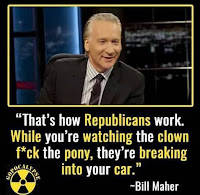
WHY deliberately lie about the unemployment rate? If (NOT MY) president drumpf/trump repeats this often enough then people will start to believe it and he will the be able to manipulate them, people of one group will see those of another group as a threat, while he takes from the 99% for the 1%. Bill Maher describes it best , it may be a bit crude but it is the truth. This from PolitiFact.....
At a town hall with CEOs, President Donald Trump revived some of his longstanding concerns about how the nation’s unemployment statistics are calculated.
Appearing to reference the number of Americans out of work, Trump said, "We have 100 million people if you look. You know, the real number's not 4.6 percent (for the unemployment rate). They told me I had 4.6 percent last month. I'm doing great. I said yeah, but what about the hundred million people? A lot of those people came out and voted for me. I call them the forgotten man, the forgotten woman. But a lot of those people -- a good percentage of them would like to have jobs and they don't. You know, one of the statistics that, to me, is just ridiculous -- so, the 4.6 sounds good. But when you look for a job, you can't find it and you give up. You are now considered statistically employed. But I don't consider those people employed."
Is Trump right that "when you look for a job, you can't find it and you give up. You are now considered statistically employed"? Not at all.
Trump seems to suggest that government statisticians are performing something like medieval alchemy, turning lead (unemployment) into gold (employment) with the flick of a wand.
That’s not the case. Broadly speaking, if someone is already considered unemployed and they give up looking for a job, they would be counted as "not in the labor force" -- not as "employed."
In fact, there is an official statistical category for a person in this situation. If someone wants and looks for a job but then gives up, they are called "discouraged workers." Specifically, these people "want and are available for a job and who have looked for work sometime in the past 12 months" but are "not currently looking because they believe there are no jobs available or there are none for which they would qualify."
The problem for Trump is that "discouraged workers" are relatively rare -- in the most recent month, there were 522,000 of them. That’s just one-fourteenth the number of unemployed workers, and only about one-half of 1 percent of the "out of work" Americans Trump seems to have been referring to.
Speaking of which, as we have noted previously, Trump’s 100-million figure of "out of work" Americans is highly misleading.
This number -- in reality, a bit lower at 94 million -- includes any American age 16 and over who isn’t institutionalized and who isn’t either working or actively looking for work. This means the figure includes retirees, high school students over 16, undergraduate and graduate students, stay-at-home parents, disabled people, adults who are engaged in full-time education or training, and even trust-fund kids and those wealthy enough to be living off investments.
In other words, the figure includes a lot of people who wouldn’t be expected to be working, or who are engaged in other pursuits. We have previously estimated that no more than a quarter of the 94 million people not in the labor market are either out of work, looking for a job, or eager to get back in the job hunt if labor-market conditions were to improve.
Here's a chart from the jobs site Indeed.com showing one analysis of the reasons that prime-working-age Americans may not be working.
So suggesting that roughly 100 million Americans are out of work ropes in many people who, in fact, have no desire to find paid employment.
Our ruling
Trump said, "When you look for a job, you can't find it and you give up. You are now considered statistically employed." That’s flat wrong -- someone who stops looking for work would be shifted to the "out of the labor force" category, not the "employed category." We rate the statement False.
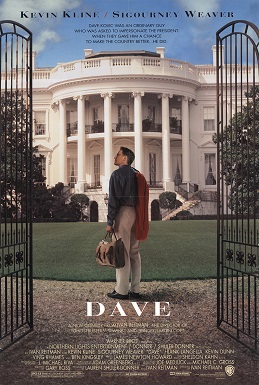
I found this post, left as a draft post on my blog, while searching for post on Social Security. It is very appropriate now considering the slate of candidates the repiglican party is offering the country. hillary's corporate democratic platform is not what the country needs either. Remember the movies DAVE and MR SMITH GOES TO WASHINGTON? Movies about men who ended up in power in Washington and actually stood up for, fought for, legislated for and represented all the American people and not just the corporate controllers of the political parties in D.C.? Remember how good you felt when these guys beat corporate America and the political establishment? Remember wishing we actually had someone like these guys to vote for? Well, in 2016 we have that man in +Senator Bernie Sanders ! We do need, and are desperate for, a political revolution through the ballot box. He gets slammed for his presidential campaign platform ( BERNIE 2016 ) and we are warned Bernie will never be able to get any of his "pie in the sky" plans and proposals enacted in Washington. That propaganda campaign is being controlled by the rich, corporate America, the 1%. But if millions of people register to vote, volunteer for and donate to Bernie's campaign we can elect a President who will represent all of us, fight for us, and insist the White House and Congress be returned to the people. Don't get discouraged, DON'T stay uninvolved. DEMOCRACY IS NOT A SPECTATOR SPORT! Check out BERNIE 2016 and join the campaign today!!! This from +The Huffington Post ..... One Betrayal Too Many THIS is exactly how I feel, there have been too many betrayals by the Obama administration, too many times he has turned his back on the poor, the working class and the middle class for the benefit of corporate America. Maybe it will be best if he is defeated in his bid for a second term, so the country, under a repiglican/tea-bagger administration will sink so low that even the fools who now support their agenda will be devastated and the Democratic party will find and nominate a nominee that not only talks a good populist, progressive game but will actually legislate it. I really do think we are going to have to hit rock bottom, and that will happen with a repiglican/tea-bagger government, for the American people to rise up and bring a government of the people to power. The question is, will it happen through the ballot box or on the streets? It's getting too late to give President Barack Obama a pass on the economy. Sure, he inherited an enormous mess from George W., who whistled "Dixie" while the banking system imploded. But it's time for Democrats to admit that their guy bears considerable responsibility for not turning things around. He blindly followed President Bush's would-be remedy of throwing money at the banks and getting nothing in return for beleaguered homeowners. Sadly, Obama has proved to be nothing more than a Bill Clinton clone triangulating with the Wall Street lobbyists at the expense of ordinary folks. That fatal arc of betrayal was captured by a headline in Tuesday's New York Times: "Soaring Poverty Casts Spotlight on 'Lost Decade.'" The Census Bureau reported that there are now 46.2 million Americans living below the official poverty line -- the highest number in the 52 years since that statistic was first measured -- and median household income has fallen back to the 1996 level. As Harvard economist Lawrence Katz summarized this dreary news: "This is truly a lost decade. We think of America as a place where every generation is doing better, but we're looking at a period when the median family is in worse shape than it was in the late 1990s." The late 1990s, it should be noted, is when President Clinton, working with Phil Gramm, the Republican head of the Senate Banking Committee, pushed through two critical pieces of legislation ending effective regulation of the banks. The Gramm-Leach-Bliley Act smashed the wall between high-flying Wall Street investment firms and the once staid commercial banks entrusted with the deposits and mortgages of America's innocent souls. The next year Clinton signed the Commodity Futures Modernization Act, banning any effective regulation of the rapidly expanded trade in the collateralized debt obligations and credit default swaps that have since haunted the world's economy. The collapse of those toxic securities led to the housing crisis and resulted in 15.1 percent of Americans now living in poverty, the same level as when Bill Clinton took office. But thanks to another one of Clinton's grand triangulation strategies, the one he called "welfare reform," the impoverished are now denied the safety net that existed before the Clinton presidency. Although 22 percent of U.S. children are now below the poverty line, the Aid to Families With Dependent Children program no longer exists. Some of us who voted for Obama thought he was no Clinton, but he was and is, as was demonstrated in his first days in office when he appointed two key veterans of the Clinton Treasury Department, Lawrence Summers and Timothy Geithner, to head up the Obama economic team. Geithner, as treasury secretary, is the point man for the administration's push to pass the so-called American Jobs Act, which the president hyped in his Sept. 8 speech to Congress and the nation. It was pure Clinton bull: I feel your pain while I help the super-rich pick your pocket. Space permits only one example, that of General Electric CEO Jeffrey Immelt, whom Obama selected to head his "Jobs Council of leaders from different industries who are developing a wide range of new ideas to help companies grow and create jobs." Was that some cruel joke? GE under Immelt has grown and created jobs, but they are abroad rather than in our own troubled country. As a result, by the end of last year, only 134,000 of GE's workforce of 304,000 were based in the United States; the remainder -- and 82 percent of the company's profit -- were sheltered abroad. Ironically, GE's ability to avoid taxes was restricted by President Ronald Reagan, who had once been a spokesman for GE but was outraged by the company's use of tax loopholes. It remained for President Clinton to offer GE some new tax breaks. As a result of being able to shelter profit abroad last year, GE had profits of $14.2 billion but claimed a tax benefit of $3.2 billion. Immelt was the elephant in the room when Obama said in his speech last week: "Our tax code should not give an advantage to companies that can afford the best-connected lobbyists. It should give an advantage to companies that invest and create jobs right here in the United States of America." It has been a long time since GE was creating jobs here during its "better light bulb" days, and the last spurt of GE participation in the U.S. economy came through its unit GE Capital, which specialized in toxic mortgage lending that once produced more than half of the company's profits but ultimately led to a taxpayer bailout. Someone who knows a great deal about that sort of scam is Elizabeth Warren, the consumer advocate and Harvard law professor pushed out of Obama's inner circle. In launching her campaign for the U.S. Senate in Massachusetts this week, Warren posted a video that clearly defined the enemy: "Washington is rigged for big corporations. A big company, like GE, pays nothing in taxes, and we're asking college students to take on even more debt to get an education?" Obama in appointing Immelt last January praised him as a business leader who "understands what it takes for America to compete in the global economy." Apparently, what Immelt understands is that what it takes to satisfy corporate interests instead of national needs is conning a president into looking the other way while you send jobs abroad.
CONTRARY to the 2016 repiglican presidential candidates and party leadership the sky is not falling and America is not on the verge of collapse due to government regulation, the federal deficit, and immigration. For a perspective on the reality of the state of our Republic with an acknowledgement we do have serious issues and problems to address consider this from +Mother Jones .....
Yesterday
at lunch, I was mulling over all the familiar laments we've heard this
year about voter anger and America decline. And I thought: really,
what's so bad? I should write a post about this.
Today I woke up, and in a remarkable example of precog telepathy, Politico's Michael Grunwald had written almost exactly the piece I had in mind:
Start with the economy....Unemployment has dropped from 10 percent
during the worst of the Great Recession to 5 percent today....The
housing market has also rebounded from the crisis, and after-tax
corporate profits are at an all-time high....The oft-predicted doomsday
scenarios of the post-crisis era—double-dip recession, runaway
inflation, runaway interest rates, out-of-control energy prices, a
health insurance death spiral, a Greek-style debt crisis, a run on the
dollar—are still stubbornly refusing to materialize. Growth is modest
but steady. Inflation is low....About 17 million uninsured Americans
have gotten coverage in the past few years. The federal deficit has
plunged from $1.4 trillion in 2009 to under $500 billion, while the
dollar has gained strength against foreign currencies.
....Meanwhile, other recent developments—cheaper gas, free birth
control and preventive care, the elimination of annual and lifetime caps
on health insurance, expanded tax credits for the working poor,
increased efficiency measures that lower energy bills, and much
more—have put more money in the pockets of American families, even
though their incomes have grown slowly.
....Crime in big cities dropped about 5 percent in 2015, and has
been cut in half since 1990. The teen birth rate is down more than 60
percent since 1990....Carbon emissions have dropped 10 percent from 2005
levels. High school graduation rates are at an all-time high....And
despite all the rhetoric about border crises and wall-building,
America’s population of undocumented immigrants has remained stable for
the past five years.
....Legislative gridlock in Washington eased significantly in 2015.
After four years of divided-government paralysis, President Obama signed
a slew of major bipartisan laws last year, including a bizarrely
responsible reform of a long-standing Medicare funding problem and a
sensible overhaul of the unpopular No Child Left Behind education law.
There's no need to be too Pollyannish, of course. Wages continue to
be pretty stagnant. The Middle East is in flames. Reproductive rights
are under sustained attack. Way too many unarmed blacks are being shot
by police. Heroin use has become an epidemic. Etc.
But generally speaking, Grunwald is right. America weathered the
Great Recession better than Europe, better than China, better than
Japan, better than Russia, better than just about anybody. Health care
costs have been growing slowly and more people are covered than ever
before. Taxes are low on the middle class. The tech revolution has
delivered an insane—and surprisingly high quality—number of
entertainment options available to almost anyone. Campaign rhetoric
notwithstanding, American military strength is unmatched by anyone in
the world, and it's not even close. Telepathy has apparently been
developed by the editors at Politico.
That's not bad, is it? POSTSCRIPT: Normal griping about all our problems will resume shortly. Don't worry: I have not been taken over by aliens.
From +ABC News . I'm not saying Sen Sanders is a saint, but his politics, past and present, have generally reflected the teachings of Christ and the Holy Catholic (includes Catholic and Protestant) Church. Very interesting the mainstream media recognizes this while Christian leadership ignores it while also ignoring the un-Christian politics of most of the republican candidates for their party's presidential nominee. I'd like to see the same kind of comparison to all the other candidates for the Democratic and republican presidential nominee......
Pope
Francis holds a Mass in the Plaza de la Revolution, Sept. 21, 2015 in
Holguin, Cuba. Bernie Sanders talks on stage, Sept. 19, 2015, in
Manchester, N.H.
Standing before a crowd of mostly evangelical Christian students at
Liberty University in Lynchburg, Virginia, last week, Vermont Sen. Bernie Sanders admitted, “I am not a theologian, I am not an expert on the Bible, nor am I a Catholic.”
Still, the presidential candidate wanted to quote Pope Francis: “I agree with Pope Francis when he says, and I quote, ‘The current financial crisis
originated in a profound human crisis, the denial of the primacy of the
human person,’” Sanders said. “Now those are pretty profound words,
which I hope we will all think about.”
The moment was an exception. Sanders, an independent, arguably talks
about faith on the campaign trail less than any other 2016 candidate;
which is to say, he almost never talks about it. And when he does, he
says a candidate’s religion should not be a factor for voters.
But the teachings of Pope Francis, 78, and campaign messages from the
Brooklyn-born Sanders, 74, have a lot in common. Both men share a deep
frustration about the status quo and, speaking on a range issues from climate change to wealth inequality, their words echo each other:
1. Pope Francis: “I ask you to be builders of the
world, to work for a better world. Dear young people, please, don’t be
observers of life, but get involved." (July 27, 2013)
Bernie Sanders: “We have to be engaged. We have to get
involved... And millions of our friends and neighbors who don’t vote,
who have given up on the political process, they have got to get
involved.” (Seabrook, N.H., Sept. 20, 2015)
2. Pope Francis: “We must say, ‘We want a just system! A
system that enables everyone to get on.’ We must say: ‘We don’t want
this globalized economic system which does us so much harm!’” (Sept. 22, 2013)
Bernie Sanders: “The American people are saying,
"Enough is enough. We need to create an economy that works for all of us
and not just a handful of billionaires.” (Cochran, New Hampshire on ABC News’ ‘This Week,’ June 28, 2015)
ON WAGES
3. Pope Francis: “A just wage enables them to have adequate access to all the other goods, which are destined for our common use.” (Nov. 24, 2013)
Bernie Sanders: “The federal minimum wage,
it's a starvation wage. You do the arithmetic. People can’t live on it.
We have got to raise the minimum wage over a period of years to a
living wage.” (Johnston, Iowa, Sept. 3, 2015)
ON FAMILY
4. Pope Francis: “Over and over again we see that
family bonds are essential for the stability of relationships in
society, for the work of education and for integral human development.” (June 20, 2013)
Bernie Sanders: “What is most important is the need for
mothers and fathers to bond with the baby they have brought to life.
What kind of family value is it when you tell a woman who has just had a
baby that she can’t spend time with that child, but that she has to go
back to work?” (Washington, D.C., June 11, 2015)
ON UNEMPLOYMENT
5. Pope Francis: “The most serious of the evils that afflict the world these days are youth unemployment and the loneliness of the old.” (Oct. 1, 2013)
Bernie Sanders: “In my view there is no justice in our country when youth unemployment exists at tragically high levels.” (Liberty University, Sept. 14, 2015)
ON WAR
6. Pope Francis: “We want in our society, torn apart by
divisions and conflict, that peace break out! War never again! Never
again war! Peace is a precious gift, which must be promoted and
protected.” (Sept. 1, 2013)
Bernie Sanders: “It is my firm belief that the test of a
great nation with the most powerful military on earth is not how many
wars it can engage in, but how it can use our strength and our
capabilities to resolve international conflicts in a peaceful way.” (Washington, D.C., Sept. 9, 2015)
ON CLIMATE CHANGE
7. Pope Francis: “The vocation of being a ‘protector,’
however, is not just something involving us Christians alone; it also
has a prior dimension which is simply human, involving everyone. It
means protecting all creation, the beauty of the created world… It means
respecting each of God’s creatures and respecting the environment in
which we live." (March 19, 2013)
Bernie Sanders: "When we talk about our
responsibilities as human beings and as parents, there is nothing more
important than leaving our planet healthy and habitable for our kids and
our grandkids." (Los Angeles, Aug. 10, 2015)
ON HEALTH CARE
8. Pope Francis: “It is vital that government leaders
and financial leaders take heed and broaden their horizons, working to
ensure that all citizens have dignified work, education and health
care.” (Nov. 24, 2013)
Bernie Sanders: "Health care is a right of all people,
not a privilege. Most Americans do believe that all of us should have
health care coverage, and that nobody should be left out of the system."
(Op-ed, Huffington Post, July 9, 2009)
ON INEQUALITY
9. Pope Francis: “It is a well-known fact that current
levels of production are sufficient, yet millions of people are still
suffering and dying of starvation.” (June 20, 2013)
Bernie Sanders: “Despite exploding technology and
increased worker productivity, median family income is almost $5,000
less than it was in 1999.” (Twitter, June 15, 2015)
10. Pope Francis: “While the earnings of a minority are
growing exponentially, so too is the gap separating the majority from
the prosperity enjoyed by those happy few.” (Nov. 24, 2013)
Bernie Sanders: "There is something profoundly wrong
when we are seeing a proliferation of billionaires at the same time as
millions of Americans are working longer hours for lower wages and we
have the highest rate of childhood poverty of any major country." (Portland, Maine, July 6, 2015)
HERE is an op-ed piece from the PCCC, published in +The Hill analyzing the results of the 2014 Mid Term elections and just why the democrats did so bad. The article was published the week of the election and it seems someone in the democratic party leadership paid attention because Sen Elizabeth Warren has been appointed to the Democratic Policy and Communications Committee (are you paying attention Hillary?). Flashback, "It's the economy, stupid!" Read Sen Warren's op-ed (below) in the +Washington Post to understand why she was the most popular democratic speaker for campaigns this year and why she is one of the most popular politicians (with regular Americans, not the rich, or the bank-financial cabal or corporations) in Congress.
Craig...we just published an op-ed telling Democratic leaders,
"We won't win our own tidal wave elections unless we can build a
movement around big ideas -- like free college education, full
employment, Medicare for All, expanded Social Security, and real reform
of Wall Street."
PCCC Op-Ed In The Hill:
By Adam Green and Stephanie Taylor, PCCC Co-Founders
Democrats lost on Tuesday, as widely predicted. But for months, pundits got wrong what Democrats would need to win.
There was rumor that youth turnout, Latino
turnout, and cutting-edge Get Out The Vote practices would tip the
balance in close races. But when "close" elections are decided by 7 to
12 points, something much bigger is happening.
Pundits say President Obama was unpopular. Score one for the pundits. But the critical question is: Why was the president so unpopular?
Did voters not show up because of Syria, Obamacare, or Ebola? No.
Was President Obama proposing some big
liberal idea, sparking backlash? No. It's hard to remember the last time
the President offered a big idea.
Jobs and economic security are consistently
the top issues voters say they care about in red, purple, and blue
states. But Democrats did not have a united economic agenda in this
election.
Voters did not wake up on Election Day
thinking that their ability to have a job, have affordable college
education, or to retire with security was at stake. It was a
Seinfeld-ian election about nothing. And nothing does not inspire
potential voters to vote. In the absence of big ideas, Democrats lost.
(Of note, some Democrats campaigned
as Republicans. Mark Pryor (D-Ark.) campaigned as the "most
conservative Senate Democrat" -- but voters chose a real Republican over
a fake one.)
However, someone did spark energy this
election cycle. Sen. Elizabeth Warren (D-Mass.) attracted standing-room
only crowds in red and purple states. Democrats who didn't want to be
seen with the president were proud to be seen with Warren.
And Warren was the most popular Democrat on
the campaign trail for a reason: Her message of taking on Wall Street,
reducing student debt, and expanding Social Security benefits is popular
everywhere.
While progressives such as Sens. Al Franken
(D-Minn.), Jeff Merkley (D-ore.), and Brian Schatz (D-Hawaii) won
re-election -- and Representatives Rick Nolan (D-Minn.) and Mike Honda
(D-calif.) won their close races -- they won because they have
consistently been economic populists and local voters knew that. But for
other Democrats across the nation, nothing substitutes for a clear,
authentic, united Democratic message focused on big ideas.
Moving forward, something needs to change
for Democrats. We need a bigger politics. We won't win our own tidal
wave elections unless we can build a movement around big ideas -- like
free college education, full employment, Medicare for All, expanded
Social Security, and real reform of Wall Street.
We need to make these issues so central to
the national debate that candidates actively campaign on these ideas.
And we need to start now.
Hillary Clinton may be coming around to
this strategy. In the final few weeks of the campaign, she tried to
sound more and more like Sen. Warren. (While not hitting the language
precisely, the intent seemed admirable.)
Progressives will be organizing in states
like New Hampshire and Iowa to ensure that all Democrats running for
president take a position on -- and campaign actively on -- Elizabeth
Warren's bold populist agenda. This is the path to victory in the
primary and general election.
A national progressive movement stands
ready to work with those leaders in Congress who choose to recognize
this imperative and step up to champion big ideas.
And if Obama makes Warren's agenda the
centerpiece of his agenda in 2015, his popularity will rise and
Americans will get the debate about big, bold ideas that we deserve.
Focusing on big ideas is the path forward
for progressives and Democrats. The Warren wing of American politics is
ready to lead.
Green and Taylor are co-founders of the Progressive Change Campaign Committee, at BoldProgressives.org
Elizabeth Warren published an op-ed in The Washington Post, warning Democrats:
Before leaders in Congress and the
president get caught up in proving they can pass some new laws, everyone
should take a skeptical look at whom those new laws will serve. At this
very minute, lobbyists and lawyers are lining up by the thousands to
push for new laws -- laws that will help their rich and powerful clients
get richer and more powerful.
The American people ... want a
government that will stand up to the big banks when they break the law
... help out students who are getting crushed by debt ... [and] protect
and expand Social Security.
Read her piece below and tell us what you think. Elizabeth Warren's Op-Ed in The Washington Post:
Elizabeth Warren: It’s time to work on America’s agenda
There have been terrible, horrible, no good, very bad Election Days
for Democrats before -- and Republicans have had a few of those, too.
Such days are always followed by plenty of pronouncements about what
just changed and what’s going to be different going forward.
But for all the talk of change in Washington and in states where one
party is taking over from another, one thing has not changed: The stock
market and gross domestic product keep going up, while families are
getting squeezed hard by an economy that isn’t working for them.
The solution to this isn’t a basket of quickly passed laws designed
to prove Congress can do something -- anything. The solution isn’t for
the president to cut deals -- any deals -- just to show he can do
business. The solution requires an honest recognition of the kind of
changes needed if families are going to get a shot at building a secure
future.
It’s not about big government or small government. It’s not the size
of government that worries people; rather it’s deep-down concern over
who government works for. People are ready to work, ready to do their
part, ready to fight for their futures and their kids’ futures, but they
see a government that bows and scrapes for big corporations, big banks,
big oil companies and big political donors -- and they know this
government does not work for them.
The American people want a fighting chance to build better lives for
their families. They want a government that will stand up to the big
banks when they break the law. A government that helps out students who
are getting crushed by debt. A government that will protect and expand
Social Security for our seniors and raise the minimum wage.
Americans understand that building a prosperous future isn’t free.
They want us to invest carefully and prudently, sharply aware that
Congress spends the people’s money. They want us to make investments
that will pay off in their lives, investments in the roads and power
grids that make it easier for businesses to create good jobs here in
America, investments in medical and scientific research that spur new
discoveries and economic growth, and investments in educating our
children so they can build a future for themselves and their children.
Before leaders in Congress and the president get caught up in proving
they can pass some new laws, everyone should take a skeptical look at
whom those new laws will serve. At this very minute, lobbyists and
lawyers are lining up by the thousands to push for new laws -- laws that
will help their rich and powerful clients get richer and more powerful.
Hoping to catch a wave of dealmaking, these lobbyists and lawyers --
and their well-heeled clients -- are looking for the chance to rig the
game just a little more.
But the lobbyists’ agenda is not America’s agenda. Americans are
deeply suspicious of trade deals negotiated in secret, with chief
executives invited into the room while the workers whose jobs are on the
line are locked outside. They have been burned enough times on tax
deals that carefully protect the tender fannies of billionaires and big
oil and other big political donors, while working families just get
hammered. They are appalled by Wall Street banks that got taxpayer
bailouts and now whine that the laws are too tough, even as they rake in
billions in profits. If cutting deals means helping big corporations,
Wall Street banks and the already-powerful, that isn’t a victory for the
American people -- it’s just another round of the same old rigged game.
Yes, we need action. But action must be focused in the right place:
on ending tax laws riddled with loopholes that favor giant corporations,
on breaking up the financial institutions that continue to threaten our
economy, and on giving people struggling with high-interest student
loans the same chance to refinance their debt that every Wall Street
corporation enjoys. There’s no shortage of work that Congress can do,
but the agenda shouldn’t be drawn up by a bunch of corporate lobbyists
and lawyers.
Change is hard, especially when the playing field is already tilted
so far in favor of those with money and influence. But this government
belongs to the American people, and it’s time to work on America’s
agenda. America is ready -- and Congress should be ready, too.
Want to support our work? Ed Schultz called us "The
top progressive group in the country"! And our tiny staff ensures that
small contributions go a long way. Chip in $3 here.
Paid for by the Progressive Change Campaign Committee PAC (www.BoldProgressives.org)
and not authorized by any candidate or candidate's committee.
Contributions to the PCCC are not deductible as charitable contributions
for federal income tax purposes.
WonkPM is your afternoon update of the latest posts on Wonkblog. WonkPM is a supplement to your morning Wonkbook newsletter. If you'd like to opt-out from receiving WonkPM, please click here.
No
one likes the idea of filthy rich banks getting a leg up from the
government, not even Republicans. And a small but growing contingent
within the party is aligning with populists to strip big banks of the
benefits they receive from the implicit guarantee that the government
will always come to their rescue. Rep. Dave […]
As
it negotiates U.S. trade policy, including the massive Trans-Pacific
Partnership (TPP) and the upcoming E.U.-U.S. trade deal, the Obama
administration seeks closed-door council from its network of 28 trade
advisory committees. These committees are made up of U.S. citizens and
ostensibly exist to represent the public’s interests in these
negotiations. But the advisory committees […]
Nobody
quite knows what immigration reform will looks like, much less when it
will happen, but one thing's for sure: Under a new law, immigrants would
be asked to pay at least several hundred dollars in fees for the
privilege of becoming U.S. citizens, not to mention all the back taxes
they might owe. For […]
Last
summer, when speculation heated up over the Federal Reserve’s plans to
begin to “taper” its bond purchases, markets went wild. Bond yields
spiked and stocks fell. But things calmed down, and when the Fed
ultimately did taper, it went off without a hitch. But a major new paper
by a quartet of top economists now […]
Welcome
to Wonkbook, Wonkblog’s morning policy news primer by Evan Soltas. To
subscribe by e-mail, click here. Send comments, criticism, or ideas to
Wonkbook at Washpost dot com. To read more by the Wonkblog team,
click here. I've written approximately 360 Wonkbooks since I started in
the summer of 2012, and this one is my last. Puneet […]
The
two-and-a-half-year-old Consumer Financial Protection Bureau may
finally have a confirmed director, but that doesn't mean Republicans are
done throwing rocks at it. The House debated (UPDATE: And passed,
232-182) a package of bills this afternoon that would replace the
bureau's single director with a five-person commission, prevent it from
collecting consumer credit card information, […]
Welcome to Wonkbook, Wonkblog's morning policy news primer by
Evan Soltas. Send comments, criticism, or ideas to Wonkbook at Washpost
dot com. To read more by the Wonkblog team, click here.
I've
written approximately 360 Wonkbooks since I started in the summer of
2012, and this one is my last. Puneet Kollipara is the next Wonkbooker.
He starts Monday.
I'm confident that Puneet will keep Wonkbook
the best digest of the day's public policy news. He's a wonk, too -- he
joins Wonkblog as a specialist in science and environmental policy, with
previous experience writing for Chemical & Engineering News,
Science News, and Inside EPA.
You should follow him on Twitter, along with Wonkblog itself.
I'm
heading off to join Ezra Klein as an economics writer on his new
venture. I'm also continuing as an opinion contributor to Bloomberg
View. And you can follow me on Twitter @esoltas.
I'm
deeply grateful for the opportunity to work at The Washington Post and
to all the people who helped me along the way. Particular thanks go to
Michelle Williams and Amrita Jayakumar, Wonkbook's current and former
producers; Karl Singer and Dylan Matthews, my predecessors; and Ezra
Klein and David Cho, my supervisors.
They put enormous trust in
me as
a young writer, and I can only hope I've repaid them. Wonkbook has been
one of the best experiences of my life, and one of those from which I've
learned and grown the most.
And the greatest thanks, of course, go to Wonkbook's incredibly loyal and, well, wonky readership. It's been an honor. Wonkbook's Number of the Day: 4.1 percent. That's how small
the federal budget deficit was in 2013 as a percentage of gross
domestic product. It's the smallest since 2008, when the recession
caused the deficit to swell. Wonkbook's Chart of the Day: Where the cuts happened.
Wonkbook's Top 5 Stories:
(1) budget deficit falls to 4.1 percent of GDP; (2) monetary policy is
also tightening; (3) gay rights, red states; (4) saving HealthCare.gov;
and (5) the interconnections of energy. 1. Top story: The deficit is shrinking away Federal budget deficit falls to smallest level
since 2008. "Closing the books on a fiscal year in which the
federal budget deficit fell more sharply than in any year since the end
of World War II, the Treasury Department reported on Thursday that the
deficit for 2013 dropped to $680 billion, from about $1.1 trillion the
previous year. In nominal terms, that is the smallest deficit since
2008, and signals the end of a five-year stretch beginning with the
onset of the recession when the country's fiscal gap came in at more
than $1
trillion each year. As a share of the nation's economy, the budget
deficit fell to about 4.1 percent, from a high of more than 10 percent
during the depths of the Great Recession." Annie Lowrey in The New York Times. The nation's budget wars have reduced the deficit by $3.3 trillion. "The
endless rounds of deficit reduction in Washington in recent years have
significantly improved the nation's budget outlook, reducing projected
borrowing by $3.3 trillion through 2024, according to new estimates by
Senate Budget Committee chairman Patty Murray (D-Wash.)...As this chart
from Murray shows, the discretionary budget, which funds the Pentagon
and other agencies, will absorb nearly half of the cuts, or $1.6
trillion...A quarter of the impact comes from the higher taxes on the
wealthy that were adopted during the fiscal cliff fight. And another 20
percent comes from not borrowing as much and not having to pay more than
$700 billion in interest that otherwise would have accrued. Mandatory
programs, which include Social Security and Medicare, were barely
nicked, meanwhile, accounting for just 7 percent of overall savings." Lori
Montgomery in The Washington Post. @ryanlcooper: The 2010-2013 fevered obsession with the 2050 budget deficit from is going to look monstrous to future historians Does the declining deficit mean Obama should embrace the GOP tax plan? "Should
Obama take the fig leaf of a tax reform proposal offered by Camp --
regarded by all sides as reasonable, the most compromising proposal made
by a
Republican in some time -- and respond with a cool, if not warm,
embrace? Should Obama say, "I can work with this," and then work with it
-- suggest some modifications to ease Democratic concerns, find some
money for domestic investments in jobs and infrastructure and research
and development? Or should he blow it off? The funny thing is the Camp
tax reform proposal is a bit of mirror image to Obama's own budget
proposals -- compromise offers that try to reach the other side halfway.
The Camp
proposal is very much in the Obama mold." Zachary A. Goldfarb in The Washington Post. Wall Street hates Dave Camp. "Private
equity and investment firms in New York are telling key Republican
players in D.C. that commitments for big-dollar fundraising have been
"canceled for the foreseeable future," according to one GOP lobbyist
with knowledge of the conversations...Big banks want to turn Republicans
against the bank tax. The situation puts the party at risk of seeing a
reliable source of campaign cash dry up
right in the middle of a critical election year. The tax proposal itself
is not even expected to get a vote in the House, since it's so
unpopular among most Republicans. That Wall Street would react so
ferociously to a dead-end bill is a reminder of how hard a powerful
player is willing to fight to protect its interests in Washington." Jake Sherman, Anna Palmer and Lauren French in Politico. CHAIT: Now this is a Republican tax reform plan. "The
tax-reform proposal unveiled yesterday by Dave Camp, chairman of the
House Ways and Means Committee, does something remarkable: It actually
reforms the tax code. It doesn't use the pretense of reform to shift the
tax burden off the rich, as Republican "tax reform" plans usually do,
and it does not use hand-waving to gesture in the direction of reform
without following through. Camp
has actually plunged his hands into the guts of the tax code and pulled
out item after item. It may be the most impressive and ambitious
domestic policy proposal crafted by a major Republican in a generation."
Jonathan Chait in New York Magazine. PONNURU: Dave Camp's one huge tax problem. "It
imposes a new tax on a few banks with a large number of assets. This
tax is not completely unjustified: It's billed as a way of offsetting
the advantage these firms get from being considered candidates for
bailouts in the event they run into trouble. But is this the right way
to fix that problem? Shouldn't we base the tax on liabilities rather
than assets, if we're trying to
tackle the too-big-to-fail problem?" Ramesh Ponnuru in Bloomberg. Music recommendations interlude: The Beatles, "Hello, Goodbye," 1967.
Top opinion BIDEN: We need TPP. "High
quality global journalism requires investment. Please share this
article with others using the link below, do not cut & paste the
article. See our Ts&Cs and Copyright Policy for more detail. Email
ftsales.support@ft.com to buy additional rights.
http://www.ft.com/cms/s/0/bde80c72-9fb0-11e3-b6c7-00144feab7de.html#ixzz2uaXXQ6Be
The question is whether the US will take a leadership role in shaping a
new course that reflects American values - or whether we will stand on
the sidelines as a new order unfolds." Joe Biden in The Financial Times. KRUGMAN: No big deal. "It's
far from clear that the T.P.P. is a good idea. It's even less clear
that it's something on which President Obama should be spending
political capital. I am in general a free trader, but I'll be undismayed
and even a bit relieved if the T.P.P. just fades away. The first thing
you need to know about
trade deals in general is that they aren't what they used to be...Why?
Basically, old-fashioned trade deals are a victim of their own success:
there just isn't much more protectionism to eliminate." Paul Krugman in The New York Times. FOURNIER: The religious-liberty excuse. "The
Bible is both a holy book and a book of loopholes, open to broad
interpretation and, at one time, the source of racist inspiration. My
takeaway: In this great and diverse country, we are capable of
protecting people's
right to express their faith and worship freely without tramping others'
rights to live freely." Ron Fournier in National Journal. SUDERMAN: Obamacare's failed state exchanges. "The
federal government spent more on broken state-run exchanges than it did
on its own troubled system. Of the 14 states, plus the District of
Columbia, that established their own health insurance coverage under
Obamacare, seven remain dysfunctional, disabled, or severely
underperforming. Development of those exchanges was funded heavily by
the federal government through a series of grants that totaled more than
$1.2 billion--almost double the $677 million cost of development for
the federal exchange." Peter Suderman in Reason. PORTER: Why college supply matters. "Most
discussion about our dismal educational attainment implicitly assumes
that if the demand for higher education materializes, public and
nonprofit colleges and universities will step up to meet it. Recent
research has shown, however, that this is not generally the case. There
is pretty good evidence
that shortfalls in the supply of higher education slots have constrained
college completion. John Bound of the University of Michigan and Sarah
Turner at the University of Virginia tracked college education through
the second half of the 20th century. They found that when states had a
large college-age population, public spending per student declined and
graduation rates suffered." Eduardo Porter in The New York Times. BROOKS: Ease and ardor. "Michel
de Montaigne and Samuel Johnson are two of the greatest essayists who
ever lived. They tackled similar problems and were fascinated by some of
the same perplexities, but they represent different personality types
and recommended two different ways to live." David Brooks in The New York Times. Cliches interlude: Time will tell whether you turn a blind eye to this little-noticed link, but at the end of the day, who cares? 2. Monetary policy is also tightening Yellen says the Fed is sticking to its tightening plans for now, despite a wintertime slowdown. "Federal
Reserve Chairwoman Janet Yellen said bad weather might explain the
patch of soft economic data making headlines during the past few weeks,
but she isn't quite sure. The Fed's uncertainty on the matter likely
puts its policy plans on cruise control for now, meaning continued
reductions in monthly bond purchases unless the weak data persist and
change the officials' view about the economic outlook." Jon Hilsenrath and Pedro Nicolaci Da Costa in The Wall Street Journal. Here's the most important thing Janet Yellen said today. "Mr.
Chairman, let me add as an aside that since my appearance before the
House committee, a number of data releases have pointed to softer
spending than many analysts had expected. Part of that softness may
reflect adverse weather conditions, but at this point, it's
difficult to discern exactly how much. In the weeks and months ahead, my
colleagues and I will be attentive to signals that indicate whether the
recovery is progressing in line with our earlier expectations" Ylan Q. Mui in The Washington Post. Orders for durable goods rose in January. "The
Commerce Department said durable goods orders excluding transportation
rose 1.1 percent, the largest increase since May, after falling 1.9
percent in December...Still, the data on Thursday was not enough to
alter views that economic growth hit a soft patch early in the first
quarter, with important measures like shipments declining last month." Reuters. Jobless claims rise more than expected. "The
number of Americans filing new claims for unemployment benefits jumped
last week, the latest indication of volatility in the nation's job
market. Initial claims for jobless benefits, a measure of changes in
employment nationwide, rose by 14,000 to a seasonally adjusted 348,000
in the
week ended Feb. 22 from the previous week's downwardly revised figure of
334,000, the Labor Department said Thursday. Economists surveyed by Dow
Jones had predicted claims would come in at 335,000. Jobless claims can
be volatile. The four-week moving average of claims, considered more
reliable because it smooths out week-to-week gyrations, held steady last
week at 338,250." Ben Leubsdorf and Josh Mitchell in The Wall Street Journal. Fisher: Faster taper, please. "The
economy has "enough money to create jobs," he said. In the case of a
"more rapidly accelerating economy, I might be in favor of a further
reduction," in bond buys he said...Speaking at the conference sponsored
by Germany's central bank, Mr. Fisher warned that a prolonged period of
accommodative monetary policy could create risks to financial stability,
in part by steering money to risky assets." Todd Buell and Christopher Lawton in The Wall Street Journal. The Fed's curse of unanimity. "Neil
Fligstein, a sociology professor at the University of California,
Berkeley, argues in a recent paper that the broader problem was
cultural. The Fed increasingly is dominated by one kind of official:
academic economists who lack private-sector experience. "They all start
out analyzing
everything in more or less the same way," he said...[I]t remains a
striking fact that Fed officials were not just wrong about economic
conditions, but wrong in roughly the same way." Binyamin Appelbaum in The New York Times. Bernanke set to relive his worst day ever. "Former
Federal Reserve chairman Ben S. Bernanke is slated on Thursday to
provide a long-awaited deposition in a landmark class-action lawsuit
over the government's bailout of insurance giant AIG. His sworn
testimony comes after a long legal battle in which the government sought
to
shield Bernanke from providing a statement. Last summer, U.S. Federal
Claims Court Judge Thomas Wheeler ruled that Bernanke's "personal
involvement" in AIG's $85 billion bailout makes him a key witness. But
an appeals court acknowledged that deposing Bernanke while he was in
office could cause "significant" disruption." Ylan Q. Mui in The Washington Post. Consumer Financial Protection Bureau isn't out of the woods yet. "[T]he
CFPB is probably safe -- at least until the midterm elections. But the
continued onslaught is evidence that it hasn't made as many friends as
it might've hoped, even after delivering $3 billion to consumers in
settlements over fraudulent practices by
financial institutions, and helping thousands who called in to complain
about mortgages, student loans, auto loans, payday lenders, and debt
collectors. The bureau's leaders tried really, really hard to win over
the community banks and credit unions, but their trade associations
still spoke out in favor of the legislation that would render it
essentially powerless, protesting that the CFPB's new requirements are
still too onerous for smaller institutions to deal with." Lydia DePillis in The Washington Post. Fed set to ignore Bitcoin. "Federal
Reserve Chairwoman Janet Yellen on Thursday distanced the central bank
from oversight of bitcoin and other virtual currencies, the latest sign
that emerging forms of digital payment continue to operate in a sort of
regulatory black hole. "The Federal Reserve simply does not have
authority to
supervise or regulate bitcoin in any way," Ms. Yellen said at a Senate
Banking Committee hearing Thursday. "This is a payment innovation that
is taking place entirely outside the banking industry."" Ryan Tracy and Scott Patterson in The Wall Street Journal. The incredible stock-picking ability of SEC employees. "[I]n
the report titled "The Stock Picking Skills of SEC Employees,"
researchers found that SEC employees' stock purchases look like your
average person's. But when these employees sell their stocks, they
appear to systematically beat the market by making sales within
weeks of costly enforcement actions by the agency. "These results
suggest that SEC employees potentially trade profitably under the new
rules, and that at least some of their profits potentially stem from
trading ahead of costly SEC sanctions and on privileged non-public
information," write Shivaram Rajgopal, a professor of accounting at
Emory University, and Roger M. White, a doctoral student in accounting
at Georgia State University. "In short, it appears that SEC employees
continue to take
advantage of non-public information to trade profitably in stocks under
their regulatory purview."" Jia Lynn Yang in The Washington Post. Interesting interlude: The dark psychology of being a talented comedian.
3. Gay rights force their way into red states Kentucky must recognize out-of-state same-sex marriages, federal judge says. "A
federal judge signed an order Thursday directing state officials to
immediately recognize same-sex marriages performed in other states and
countries. U.S. District Judge John G. Heyburn
II issued a final order throwing out part of the state's ban on gay
marriages. It makes his Feb. 12 ruling official. The order doesn't
affect a related lawsuit seeking to force the state to issue marriage
licenses to same-sex couples. The order came just hours after Kentucky's
attorney general asked for a 90-day delay to decide whether to appeal
the earlier ruling. Heyburn's final order did not mention the request
for a stay." The Washington Post. D.C. insurance must cover treatment for transgender residents, mayor says. "Health
insurance providers in the District of Columbia must cover treatment
for those given a diagnosis of gender dysphoria, including
gender-reassignment surgeries, Mayor Vincent C. Gray said Thursday.
Building on the District of Columbia's existing
anti-discrimination measures, the announcement reiterates that gender
dysphoria -- a diagnosis for psychological discomfort with one's sex,
formerly known as gender identity disorder -- is a recognized medical
condition. As such, treatment deemed necessary by medical professionals
must be covered by insurers, including Medicaid...The mayor's office was
careful to note that this was not a change but rather a clarification
of a policy that went into effect last March, prohibiting medical
discrimination on the basis of gender identity or expression." Emmarie Huetteman in The New York Times. After veto in Arizona, conservatives vow to fight for religious liberties. "Conservative
activists said Thursday that they will continue to press for additional
legal protections for private businesses that deny service to gay men
and lesbians, saying that a defeat in Arizona this week is only a minor
setback and that
religious-liberty legislation is the best way to stave off a rapid shift
in favor of gay rights...Many conservatives said they will continue
working to convince voters and judges that opponents of same-sex
marriage and abortion are motivated by faith rather than bigotry." Juliet Eilperin in The Washington Post. Why Republicans themselves shot it down. "The
decision by members of the Republican establishment to join gay
activists in opposing the bill reflected the alarm the Arizona battle
stirred among party leaders, who worried about identifying their party
with polarizing social issues at a time when Republicans see the
prospect of
big gains in Congressional elections on economic issues. No less
important, the bill produced almost unanimous opposition among one
critical Republican constituency -- business owners -- who feared it
would entangle the state in lawsuits and prompt a damaging boycott." Adam Nagourney in The New York Times. Names interlude: What your name says about your politics. 4. How HealthCare.gov was saved Key healthcare longread: How an unlikely group of high-tech wizards revived Obama's troubled HealthCare.gov website. Steven Brill in Time Magazine. Surgeon general nominee one step closer. "President
Obama's nominee for surgeon general is one step closer to confirmation
after the Senate health committee approved him for the job on Thursday.
The Senate will likely
confirm Dr. Vivek Murthy in the coming weeks despite a move by Sen. Rand
Paul (R-Ky.) to block the nomination over concerns about Murthy's
stance on guns." Elise Viebeck in The Hill. Food labels to get first makeover in 20 years with new emphasis on calories, sugar. "The
new label, which could take a year or more to appear on store shelves,
includes more than half a dozen significant changes -- such as more
prominent calorie counts and more realistic serving sizes -- that
advocates see as key in fighting the
country's obesity epidemic. Years of research show that tracking
calories may be more important than tracking fat consumption when it
comes to your health...The Grocery Manufacturers Association and other
industry groups have said they are committed to working with the
administration to help Americans make better diet choices. As the new
labels were being developed, however, they expressed strong objections
to some of the FDA's ideas, especially the addition of a line for "added
sugars.""
Ariana Eunjung Cha and Krissah Thompson in The Washington Post. Interview: Burkey Belser, who designed the original nutrition facts label, on the new proposals. Ariana Eunjung Cha in The Washington Post. Insurers become Obamacare foot soldiers. "Insurance
companies are serving as foot soldiers for ObamaCare with a
multimillion-dollar ad campaign intended to push customers into the
insurance
exchanges. Though the companies are reluctant to publicize their role in
the unpopular law, health insurers are expected to spend hundreds of
millions of dollars in 2014 alone on television, radio and online ads
aimed at boosting enrollment." Elise Viebeck in The Hill. We all feel like this interlude: Husky gets a head massager. 5. Why energy policy is complex U.S. moves towards Atlantic oil exploration. "The
Interior Department opened the door on Thursday to the first searches
in decades for oil and gas off the Atlantic coast, recommending that
undersea seismic surveys proceed, though with a host of safeguards to
shield marine life from much of their impact. The recommendation is
likely to be adopted after a period of public comment and over
objections by environmental activists who say it will be ruinous for the
climate and sea life alike." Michael Wines in The New York Times. Bakken crude, rolling through Albany. "With
little fanfare, this sleepy port has been quietly transformed into a
major hub for oil shipments by trains from North Dakota and a key
supplier to refiners on the East Coast. Hidden in plain sight, Albany's
oil boom has taken local officials and residents by surprise...About 75
percent of Bakken oil production travels by rail and as much as 400,000
barrels a day heads to the East Coast, said Trisha Curtis, an analyst at
the Energy Policy Research Foundation. Albany gets 20 to 25 percent of
the Bakken's rail exports, according to various analyst estimates." Jad Mouawad in The New York Times. Senators take another crack at energy bill. "A
bipartisan Senate duo on Thursday renewed the fight for passage of an
energy efficiency bill. Sens. Jeanne Shaheen (D-N.H.) and Rob Portman
(R-Ohio) on Thursday reintroduced an energy efficiency bill that stalled
in September after debates about the Affordable Care Act and the
Keystone XL pipeline sidetracked the legislation. This time around,
backers are optimistic the bill will pass. Sponsors include Sens. Mary
Landrieu (D-La.), John Hoeven (R-N.D.), Kelly Ayotte (R- N.H.), and
Chris Coons (D-Del.). The revamped legislation includes an extra 10
amendments, ranging from efficiency retrofits on low-income housing to a
program that promotes energy efficiency in leased commercial buildings.
All of the additions are meant to help the bill garner enough support
to pass
the Senate." Laura Barron-Lopez in The Hill. Art interlude: Banksy and "The Simpsons." Wonkblog Roundup How Obama is trying to lift up young men of color. A Q&A with Joshua Dubois. Zachary A. Goldfarb. Burkey Belser, who designed the original nutrition facts label, on the new proposals. Ariana Eunjung Cha. The incredible stock-picking ability of SEC employees. Jia Lynn Yang. Bernanke set to relive his worst day ever. Ylan Q. Mui. Here's the most important thing Janet Yellen said today. Ylan Q. Mui. We have an answer: The nation's budget wars have reduced the deficit by $3.3 trillion. Lori Montgomery. Does the declining deficit mean Obama should embrace the GOP tax plan? Zachary A. Goldfarb. Consumer Financial Protection Bureau isn't out of the woods yet. Lydia DePillis. Et Cetera Five years on, rudderless Tea Party searches for meaning. John Stanton in BuzzFeed. Yahoo webcam images from millions of users intercepted by GCHQ. Spencer Ackerman and James Ball in The Guardian. Got tips, additions, or comments? E-mail us. Wonkbook is produced with help from Michelle Williams.