NORTON META TAG

Showing posts with label lawrence summers. Show all posts

05 February 2016

UPDATE 5FEB16 WHEN WE STAND TOGETHER WE WILL ALWAS WIN & One Betrayal Too Many from HUFFPOST 15SEP11

Smith goes.jpgDave poster.jpg
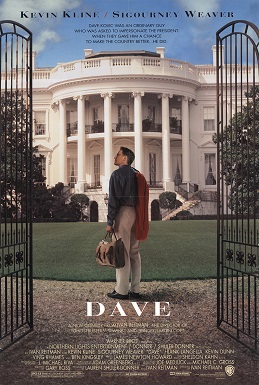
I found this post, left as a draft post on my blog, while searching for post on Social Security. It is very appropriate now considering the slate of candidates the repiglican party is offering the country. hillary's corporate democratic platform is not what the country needs either. Remember the movies DAVE and MR SMITH GOES TO WASHINGTON? Movies about men who ended up in power in Washington and actually stood up for, fought for, legislated for and represented all the American people and not just the corporate controllers of the political parties in D.C.? Remember how good you felt when these guys beat corporate America and the political establishment? Remember wishing we actually had someone like these guys to vote for? Well, in 2016 we have that man in +Senator Bernie Sanders ! We do need, and are desperate for, a political revolution through the ballot box.  He gets slammed for his presidential campaign platform ( BERNIE 2016 ) and we are warned Bernie will never be able to get any of his "pie in the sky" plans and proposals enacted in Washington. That propaganda campaign is being controlled by the rich, corporate America, the 1%. But if millions of people register to vote, volunteer for and donate to Bernie's campaign we can elect a President who will represent all of us, fight for us, and insist the White House and Congress be returned to the people. Don't get discouraged, DON'T stay uninvolved. DEMOCRACY IS NOT A SPECTATOR SPORT! Check out BERNIE 2016 and join the campaign today!!! This from +The Huffington Post .....
One Betrayal Too Many
THIS is exactly how I feel, there have been too many betrayals by the Obama administration, too many times he has turned his back on the poor, the working class and the middle class for the benefit of corporate America. Maybe it will be best if he is defeated in his bid for a second term, so the country, under a repiglican/tea-bagger administration will sink so low that even the fools who now support their agenda will be devastated and the Democratic party will find and nominate a nominee that not only talks a good populist, progressive game but will actually legislate it. I really do think we are going to have to hit rock bottom, and that will happen with a repiglican/tea-bagger government, for the American people to rise up and bring a government of the people to power. The question is, will it happen through the ballot box or on the streets?
It's getting too late to give President Barack Obama a pass on the economy. Sure, he inherited an enormous mess from George W., who whistled "Dixie" while the banking system imploded. But it's time for Democrats to admit that their guy bears considerable responsibility for not turning things around. 
He blindly followed President Bush's would-be remedy of throwing money at the banks and getting nothing in return for beleaguered homeowners. Sadly, Obama has proved to be nothing more than a Bill Clinton clone triangulating with the Wall Street lobbyists at the expense of ordinary folks. 
That fatal arc of betrayal was captured by a headline in Tuesday's New York Times: "Soaring Poverty Casts Spotlight on 'Lost Decade.'" The Census Bureau reported that there are now 46.2 million Americans living below the official poverty line -- the highest number in the 52 years since that statistic was first measured -- and median household income has fallen back to the 1996 level. As Harvard economist Lawrence Katz summarized this dreary news: "This is truly a lost decade. We think of America as a place where every generation is doing better, but we're looking at a period when the median family is in worse shape than it was in the late 1990s."
The late 1990s, it should be noted, is when President Clinton, working with Phil Gramm, the Republican head of the Senate Banking Committee, pushed through two critical pieces of legislation ending effective regulation of the banks. The Gramm-Leach-Bliley Act smashed the wall between high-flying Wall Street investment firms and the once staid commercial banks entrusted with the deposits and mortgages of America's innocent souls. The next year Clinton signed the Commodity Futures Modernization Act, banning any effective regulation of the rapidly expanded trade in the collateralized debt obligations and credit default swaps that have since haunted the world's economy.
The collapse of those toxic securities led to the housing crisis and resulted in 15.1 percent of Americans now living in poverty, the same level as when Bill Clinton took office. But thanks to another one of Clinton's grand triangulation strategies, the one he called "welfare reform," the impoverished are now denied the safety net that existed before the Clinton presidency. Although 22 percent of U.S. children are now below the poverty line, the Aid to Families With Dependent Children program no longer exists. 
Some of us who voted for Obama thought he was no Clinton, but he was and is, as was demonstrated in his first days in office when he appointed two key veterans of the Clinton Treasury Department, Lawrence Summers and Timothy Geithner, to head up the Obama economic team. Geithner, as treasury secretary, is the point man for the administration's push to pass the so-called American Jobs Act, which the president hyped in his Sept. 8 speech to Congress and the nation. It was pure Clinton bull: I feel your pain while I help the super-rich pick your pocket. 
Space permits only one example, that of General Electric CEO Jeffrey Immelt, whom Obama selected to head his "Jobs Council of leaders from different industries who are developing a wide range of new ideas to help companies grow and create jobs." Was that some cruel joke? GE under Immelt has grown and created jobs, but they are abroad rather than in our own troubled country. As a result, by the end of last year, only 134,000 of GE's workforce of 304,000 were based in the United States; the remainder -- and 82 percent of the company's profit -- were sheltered abroad.
Ironically, GE's ability to avoid taxes was restricted by President Ronald Reagan, who had once been a spokesman for GE but was outraged by the company's use of tax loopholes. It remained for President Clinton to offer GE some new tax breaks. As a result of being able to shelter profit abroad last year, GE had profits of $14.2 billion but claimed a tax benefit of $3.2 billion. Immelt was the elephant in the room when Obama said in his speech last week: "Our tax code should not give an advantage to companies that can afford the best-connected lobbyists. It should give an advantage to companies that invest and create jobs right here in the United States of America."
It has been a long time since GE was creating jobs here during its "better light bulb" days, and the last spurt of GE participation in the U.S. economy came through its unit GE Capital, which specialized in toxic mortgage lending that once produced more than half of the company's profits but ultimately led to a taxpayer bailout. 
Someone who knows a great deal about that sort of scam is Elizabeth Warren, the consumer advocate and Harvard law professor pushed out of Obama's inner circle. In launching her campaign for the U.S. Senate in Massachusetts this week, Warren posted a video that clearly defined the enemy:
"Washington is rigged for big corporations. A big company, like GE, pays nothing in taxes, and we're asking college students to take on even more debt to get an education?"
Obama in appointing Immelt last January praised him as a business leader who "understands what it takes for America to compete in the global economy." Apparently, what Immelt understands is that what it takes to satisfy corporate interests instead of national needs is conning a president into looking the other way while you send jobs abroad.

15 September 2011

UPDATE 5FEB16; One Betrayal Too Many from HUFFPOST 15SEP11

Dave poster.jpgSmith goes.jpg
I found this post, left as a draft post on my blog, while searching for post on Social Security. It is very appropriate now considering the slate of candidates the repiglican party is offering the country. hillary's corporate democratic platform is not what the country needs either. Remember the movies DAVE and MR SMITH GOES TO WASHINGTON? Movies about men who ended up in power in Washington and actually stood up for, fought for, legislated for and represented all the American people and not just the corporate controllers of the political parties in D.C.? Remember how good you felt when these guys beat corporate America and the political establishment? Remember wishing we actually had someone like these guys to vote for? Well, in 2016 we have that man in +Senator Bernie Sanders ! We do need, and are desperate for, a political revolution through the ballot box.  He gets slammed for his presidential campaign platform ( BERNIE 2016 ) and we are warned Bernie will never be able to get any of his "pie in the sky" plans and proposals enacted in Washington. That propaganda campaign is being controlled by the rich, corporate America, the 1%. But if millions of people register to vote, volunteer for and donate to Bernie's campaign we can elect a President who will represent all of us, fight for us, and insist the White House and Congress be returned to the people. Don't get discouraged, DON'T stay uninvolved. DEMOCRACY IS NOT A SPECTATOR SPORT! Check out BERNIE 2016 and join the campaign today!!! This from +The Huffington Post .....
THIS is exactly how I feel, there have been too many betrayals by the Obama administration, too many times he has turned his back on the poor, the working class and the middle class for the benefit of corporate America. Maybe it will be best if he is defeated in his bid for a second term, so the country, under a repiglican/tea-bagger administration will sink so low that even the fools who now support their agenda will be devastated and the Democratic party will find and nominate a nominee that not only talks a good populist, progressive game but will actually legislate it. I really do think we are going to have to hit rock bottom, and that will happen with a repiglican/tea-bagger government, for the American people to rise up and bring a government of the people to power. The question is, will it happen through the ballot box or on the streets?
It's getting too late to give President Barack Obama a pass on the economy. Sure, he inherited an enormous mess from George W., who whistled "Dixie" while the banking system imploded. But it's time for Democrats to admit that their guy bears considerable responsibility for not turning things around.
He blindly followed President Bush's would-be remedy of throwing money at the banks and getting nothing in return for beleaguered homeowners. Sadly, Obama has proved to be nothing more than a Bill Clinton clone triangulating with the Wall Street lobbyists at the expense of ordinary folks.
That fatal arc of betrayal was captured by a headline in Tuesday's New York Times: "Soaring Poverty Casts Spotlight on 'Lost Decade.'" The Census Bureau reported that there are now 46.2 million Americans living below the official poverty line -- the highest number in the 52 years since that statistic was first measured -- and median household income has fallen back to the 1996 level. As Harvard economist Lawrence Katz summarized this dreary news: "This is truly a lost decade. We think of America as a place where every generation is doing better, but we're looking at a period when the median family is in worse shape than it was in the late 1990s."
The late 1990s, it should be noted, is when President Clinton, working with Phil Gramm, the Republican head of the Senate Banking Committee, pushed through two critical pieces of legislation ending effective regulation of the banks. The Gramm-Leach-Bliley Act smashed the wall between high-flying Wall Street investment firms and the once staid commercial banks entrusted with the deposits and mortgages of America's innocent souls. The next year Clinton signed the Commodity Futures Modernization Act, banning any effective regulation of the rapidly expanded trade in the collateralized debt obligations and credit default swaps that have since haunted the world's economy.
The collapse of those toxic securities led to the housing crisis and resulted in 15.1 percent of Americans now living in poverty, the same level as when Bill Clinton took office. But thanks to another one of Clinton's grand triangulation strategies, the one he called "welfare reform," the impoverished are now denied the safety net that existed before the Clinton presidency. Although 22 percent of U.S. children are now below the poverty line, the Aid to Families With Dependent Children program no longer exists.
Some of us who voted for Obama thought he was no Clinton, but he was and is, as was demonstrated in his first days in office when he appointed two key veterans of the Clinton Treasury Department, Lawrence Summers and Timothy Geithner, to head up the Obama economic team. Geithner, as treasury secretary, is the point man for the administration's push to pass the so-called American Jobs Act, which the president hyped in his Sept. 8 speech to Congress and the nation. It was pure Clinton bull: I feel your pain while I help the super-rich pick your pocket.
Space permits only one example, that of General Electric CEO Jeffrey Immelt, whom Obama selected to head his "Jobs Council of leaders from different industries who are developing a wide range of new ideas to help companies grow and create jobs." Was that some cruel joke? GE under Immelt has grown and created jobs, but they are abroad rather than in our own troubled country. As a result, by the end of last year, only 134,000 of GE's workforce of 304,000 were based in the United States; the remainder -- and 82 percent of the company's profit -- were sheltered abroad.
Ironically, GE's ability to avoid taxes was restricted by President Ronald Reagan, who had once been a spokesman for GE but was outraged by the company's use of tax loopholes. It remained for President Clinton to offer GE some new tax breaks. As a result of being able to shelter profit abroad last year, GE had profits of $14.2 billion but claimed a tax benefit of $3.2 billion. Immelt was the elephant in the room when Obama said in his speech last week: "Our tax code should not give an advantage to companies that can afford the best-connected lobbyists. It should give an advantage to companies that invest and create jobs right here in the United States of America."
It has been a long time since GE was creating jobs here during its "better light bulb" days, and the last spurt of GE participation in the U.S. economy came through its unit GE Capital, which specialized in toxic mortgage lending that once produced more than half of the company's profits but ultimately led to a taxpayer bailout.
Someone who knows a great deal about that sort of scam is Elizabeth Warren, the consumer advocate and Harvard law professor pushed out of Obama's inner circle. In launching her campaign for the U.S. Senate in Massachusetts this week, Warren posted a video that clearly defined the enemy:
"Washington is rigged for big corporations. A big company, like GE, pays nothing in taxes, and we're asking college students to take on even more debt to get an education?"
Obama in appointing Immelt last January praised him as a business leader who "understands what it takes for America to compete in the global economy." Apparently, what Immelt understands is that what it takes to satisfy corporate interests instead of national needs is conning a president into looking the other way while you send jobs abroad.

21 August 2010

Elizabeth Warren or Bust! from MOJO 18AUG10

BankBusters_300x200.jpg
I've been out of Washington for a little while—escaping the heat and the disheartening politics. I've even managed to go for more than a week without tweeting (with a few lapses). But it's hard to escape people who want to talk about what's happening back within the Beltway. What's edifying is discovering what folks outside Washington focus on.
Those of us who follow politics and policy for a living often have numerous matters on our to-watch lists. People outside the politerati usually have a truncated list, and often imbue a particular issue or controversy with special significance. A highly unscientific survey—based on comments made to me by highly-educated, self-identified, vacationing liberals who feel let down by President Barack Obama—shows that a top priority for Obama's base these days is Elizabeth Warren.
Can DC's top bailout cop beat the finance lobby—and Larry Summers?
BY HER OWN reckoning, Elizabeth Warren had two transformative experiences on the way to becoming official Washington's most unconventional expert on the financial industry. Let's start with the second. It was 2003, and Warren, an earnest-sounding and ever enthusiastic Harvard law professor who specializes in bankruptcy, was on the set of Dr. Phil. She had written a book with her daughter called The Two-Income Trap: Why Middle-Class Mothers & Fathers Are Going Broke, and she'd expected to sit next to the host and explain its key points. Instead, Dr. Phil was interviewing a stressed-out couple with serious medical and financial troubles. After they mentioned they had obtained a second mortgage to pay off their credit card debt, the lights went up on Warren, and Dr. Phil asked her if this had been a smart step. No, she declared, because now they could lose their home if they defaulted.
As soon as her turn was over, Warren found herself thinking, "You've been doing this work for 20 years now, and it is unlikely that any of it has had as direct an impact as these 45 seconds." She had reached millions, some of whom might actually pay attention to her advice. "So here you are, Miss Fancy-Pants Professor at Harvard. What do you plan to do now? Is it all about writing more academic articles, or is it about making a difference for the families you study? I made a decision right then: It was for the families, not the self-aggrandizement of scholarship."
Six years later, Warren is applying that people-first philosophy by simultaneously running the Congressional Oversight Panel, which monitors the $700 billion TARP bailout program on behalf of the taxpayers, and pushing for a new agency to protect consumers from predatory lenders. Now, as Congress seriously considers her proposal (and lobbyists maneuver to kill it), the question is: Can a middle-class populist in Ivy League garb change the world—or at least Big Finance?
Warren, 60, grew up in Oklahoma in what she terms "modest circumstances." Her father was a maintenance man; her mother worked for Sears. After graduating early from high school, she headed to college on a debate scholarship. Eventually she landed at Rutgers' law school, where she admits starting out somewhat clueless: When a fellow student asked if she would try out for the law review, she didn't know if he meant a magazine or a theatrical show. "All I knew was, if the smart kids were doing it, count me in."
She graduated in 1976, with no job lined up and nine months pregnant with her second child. Soon she'd started her own practice, handling wills, real estate closings, and the like. Later she taught nights at Rutgers, and then found a position at the University of Houston's law school—one of the first women ever hired there, she says, and the first who was not married to a faculty member. She began teaching bankruptcy law. "Bankruptcy," she says, "is about economic death and rebirth, a story of failure but survival, how people come back, how businesses come back. It's an American story."
It was around this time that Warren had her other epiphany. Conventional wisdom held that bankruptcy law was too friendly to debtors, and she shared that view. So she teamed up with two other academics to conduct research that, she thought, "would expose those crafty debtors exploiting loopholes in the law." To her surprise, the study—one of the largest of its kind—demonstrated that most bankruptcies were filed by struggling workers dealing with the loss of a job, a medical problem, or a family breakup. "It changed my vision not only of the bankruptcy system, but of the American economy," she says. "It put me face-to-face with hundreds of thousands of people who worked hard and played by the rules, but a pink slip, a bad diagnosis, or a spouse who ran off had left them in economic shambles." From that point on, Warren focused on how financial policy and law affected folks at the kitchen-table level, and by 2005 she was testifying on the Hill against legislation sought by credit card companies and the financial sector—and eventually passed by Congress—that made it tougher to file for bankruptcy.
Her passionate advocacy for family-friendly economic policies caught the eye of Sen. Harry Reid (D-Nev.), who'd disagreed with her on the bankruptcy bill. "He was struck by her articulate views on pro-consumer issues," a spokesman says, and so, last November, Reid appointed Warren to the TARP panel.
Shuttling between Cambridge and the panel's offices in DC—tucked away in a corner of the Government Printing Office—Warren broke the mold of the typical government commission. Instead of endlessly studying the issue before producing a bland, predictable doorstop of a report, the panel would publish a to-the-point, easy-to-comprehend assessment of a different slice of TARP each month. One of the reports revealed that the Treasury Department had paid $78 billion more than market value for the assets it purchased from banks. Another said that despite the hundreds of billions of dollars spent on the bailouts, the financial system is still polluted by toxic assets that could trigger another meltdown. And the September report found that taxpayers might not recover up to $23 billion in TARP funds doled out to Chrysler and GM. Warren herself has done her part to publicize her panel's work, delivering testimony to Congress and appearing widely in the media (on The Daily Show, Jon Stewart inquired whether she had "powers to crush" companies that had gotten sweetheart deals from TARP), often bluntly taking Treasury to task for failing to make its programs transparent. At one point she told lawmakers that "Congress and the American public have no clear answer" from Treasury regarding its overall TARP strategy.
"She's done a great job calling attention to the Treasury's failing in ensuring that the taxpayers get a fair deal," says Dean Baker, codirector of the Center for Economic and Policy Research. "That really is extraordinary in DC." Nobel Prize-winning economist Joseph Stiglitz remarks, "What she is doing is making a lot of people very uncomfortable."
Indeed. In April, Thomas Cooley, a Forbes columnist, blasted Warren for politicizing the oversight panel to advance an anti-bank agenda, and one of the five-person panel's two Republican members, Jeb Hensarling, has criticized her for focusing the commission's work "on issues not central to our mandate." He also pushed for releasing the transcripts of the panel's private meetings, a move that Warren resisted because, a spokesman says, the members need to have "candid discussions" about their ongoing investigations.
Beyond monitoring how the government is mopping up after the financial crisis, Warren is pushing a proposal that could help prevent the next one: creating a Financial Product Safety Commission to protect consumers from abusive lenders. Mortgages and credit cards, she wrote in a 2007 journal article about the proposal, "should be subject to the same routine safety screening that now governs the sale of every toaster, washing machine, and child's car seat."
Straightforward as that sounds, it would represent a fundamental shift. "Regulating financial products based on fairness, simplicity, and appropriate risk is an entirely new paradigm," notes Reid Cramer, director of the New America Foundation's asset building program. In the wake of the financial meltdown, the idea has gained traction in Washington, thanks in part to Warren's plainspoken advocacy. "Almost unique among people with deep financial insight, Professor Warren speaks a language that ordinary people can easily comprehend," says Laurence Tribe, a colleague at Harvard Law. For example, when testifying before a congressional committee in June, Warren summed up the shift in banking this way: "Today's business model is about making money through tricks and traps."
Warren's proposal, of course, terrifies the finance industry, and with the White House vowing to push for it and Congress expected to start hammering out legislation, lobbyists have been preparing for battle. The American Bankers Association has proclaimed its opposition. Bill Himpler, executive vice president of the American Financial Services Association, says Warren's commission would "take us essentially back to the 1970s, where we had double-digit interest rates...and one-third the consumer credit available that we have now." Earlier this year, the Republicans on the Congressional Oversight Panel, Hensarling and former Sen. John Sununu, dissented from a panel report that called for the new watchdog, arguing that it "could well undermine the health of banks." In June, financial policy analyst Jaret Seiberg said that the industry's worst nightmare is that should Congress create such an agency, Warren would run it.
Does she want the position? "I have a job I love," she says. And while Warren would be a natural choice, she may not be a shoo-in. One senior Obama economic adviser told me that Lawrence Summers, the national economic adviser, "has a thing about her"—meaning he's not a fan. (The White House did not respond to a request for comment from Summers.) For her part, Warren says that she and Summers are friends, and a source familiar with their relationship characterizes them as sparring partners. "They're like two tennis players at Wimbledon: energetic, uncompromising. But they're adversaries, not enemies. When they put down the tennis rackets, they can still go out for a drink."
But a Warren colleague at Harvard (who admires her) notes that Summers—who as Harvard president speculated that women may not have the same innate math and science ability as men—might share the sentiments of fellow Harvard economists who dismiss Warren as insufficiently theoretical. "They think she shouldn't be talking about bankruptcy except as someone in the economics department would—that is, with formulas and theorems, not about how it affects real people." In Washington, though, that skill—explaining how grand financial concepts affect real-world families—may prove Warren's greatest asset. As she once put it on The Rachel Maddow Show, her rule for financial products is very basic: "If you can't explain it so the person on the other side can understand it, then you shouldn't sell it to them."
David Corn is Mother Jones' Washington bureau chief. For more of his stories, click here. He's also on Twitter.

11 August 2010

The Rubin Con Goes On

ROBERT Rubin is a liar, a greedy pig who continues his campaign of deception of the American people and his corruption of politicians and the political system in his quest for more money and power. If anything, he should be facing criminal charges and fines for his role in causing this recession and profiting from it. Fareed Zakaria must have been neutered recently, I thought he was a better journalist than he showed himself to be in this interview.....as a matter of fact, he should just retire from journalism and become a full time political prostitute like so many of his colleagues...at least we would then know what to expect from him. Also note rubin's role in removing a honest and effective official from a government financial regulatory body so he and his cabal could commit their financial crimes against the nation and compare that with the current campaign by wall street and the financial community against getting Elizabeth Warren appointed and approved to head the CFPB.
 
The corruptions of journalism were on full display when CNN's Fareed Zakaria turned to Robert Rubin this past Sunday for advice on how to fix the financial crisis that he, as much as anyone, caused (full video below). I was trapped on a treadmill in front of an overhead television and unable to turn the thing off in time to avoid this assault on my mental and physical health.
As a result I was forced to hear Rubin, Bill Clinton's treasury secretary, insist that he always favored regulating toxic derivatives and is therefore not at all responsible for the ensuing economic meltdown. He was responding to the sole critical question from the CNN host, who quoted a question by New York Times columnist Paul Krugman: "Did all the senior members of the [Obama] economics team have to be protégés of Robert Rubin, the apostle of financial deregulation?" Unfortunately, Zakaria just rolled over when his guest simply lied in response:
"First of all, I am not the apostle of financial deregulation. Quite the contrary. On derivatives ... I developed a deep concern about the systemic problem that was created. When I was back at Goldman Sachs, it was a concern I had ... a concern I had when I was in government. And in fact, when I wrote my book in 2003, I was so concerned about it that I actually included that discussion in there."
Zakaria ended the show recommending it as his book of the week: "He wrote a great memoir that covered his two distinguished careers, both ... on Wall Street and in Washington. ... It was written with Jacob Weisberg, a great writer, the editor of Slate, and the two men weave a compelling tale that has many lessons for today."
To be charitable, I will assume that Zakaria has not actually read that book, which omits any discussion of the radical deregulation legislation that Rubin ushered through Congress and got the president to sign. Bill Clinton is on record stating that he got bad advice from Rubin and his handpicked successor, Lawrence Summers, on derivatives regulation: "On derivatives, yeah, I think they were wrong and I think I was wrong to take it," Clinton told ABC News last April 10.
Rubin and Summers were responsible for forcing Brooksley Born out of the Clinton administration because as chair of the Commodity Futures Trading Commission she had the temerity to suggest regulating the mortgage-backed securities that eventually proved to be so toxic. Instead, Rubin and Summers pushed the Commodity Futures Modernization Act, which Clinton signed into law in his last month in office, categorically exempting those suspect derivatives from any government regulation.
By then, Rubin had moved on to a $15-million-a-year job at Citigroup, which became a prime exploiter of the subprime housing market. As a result of its massive involvement with toxic securities, Citigroup, with Rubin in a leading role until early 2009, had to be bailed out by the federal government with a $45 billion direct investment and a guaranteed Fed protection for $306 billion in potentially toxic assets.
Citigroup, a merger of the old Citibank and Travelers insurance company, was made legal only by the Financial Services Modernization Act, which Rubin backed while treasury secretary. Then, in one of the most egregious conflicts of interest in U.S. history, he went to work for the new bank, which took advantage of the changes in the law to buy up the infamous subprime lenders, beginning with Associates First Capital. The Economist magazine wrote of that purchase that "it extends Citi's already huge credit card operation to a lucrative new niche (price insensitive, if default prone, borrowers)" and questioned whether investors would see Citi's bold new venture "as something smart, such as 'evolved credit extension,' or something seamy such as loan-sharking."
Rubin was a major proponent of the firm's seamy expansion into the mortgages that proved to be toxic, and by 2007 Citigroup was the second-largest subprime servicer, after the only slightly more infamous Countrywide. As the New York Times pointed out on Nov. 22, 2008, after a decade of flattering portraits of the man, finally acknowledging Rubin's role in Citi's disgrace: "The bank's downfall was years in the making and involved many in its hierarchy, particularly [CEO Charles O.] Prince and Robert E. Rubin, an influential director and senior adviser."
There is much more, and I haven't even touched on Rubin's shameful role in Enron's shenanigans. Enough said, though, to question not only Zakaria's journalism but, far more important, Barack Obama's leadership in first turning to Rubin as a key campaign adviser and then putting his disciples in charge of the U.S. economy.