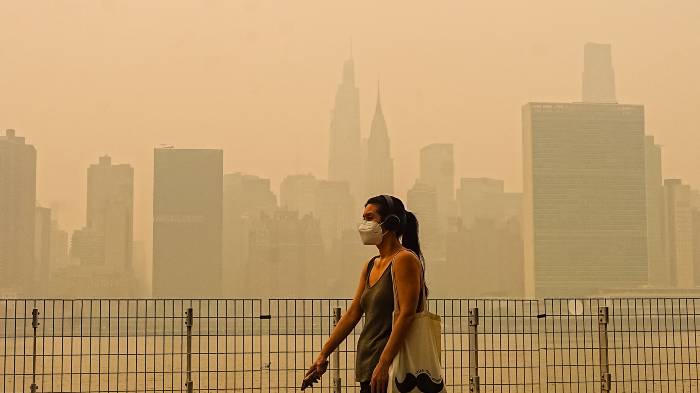
Brutal heat waves across the nation, epic wildfires in the heartland, submerged subways in New York–2026 is another banner year for climate extremes, so who’s to blame?
And more importantly, how do you prove it?
Researchers are chugging away on that problem even as the fossil fuel industry works to discredit “attribution science,” sowing disinformation about a discipline that aims to quantify how greenhouse gas emissions (and therefore major polluters) supercharge the adverse climate events we are experiencing ever more frequently.
“Bad weather is of course not new. So how do you show that emissions from company X cause injury Y from a hurricane or whatever?” attorney Michael Buschbacher, whose firm, Boyden Gray, sides with the fossil fuel industry in climate liability cases, asked during a Federalist Society panel last year.
How indeed.
This past week, I wrote about a new paper from Indiana University Earth systems scientist Christopher Callahan, whose promising statistical model measures the relationship between CO2 emissions and extreme weather. His approach could make it easier to hold industry accountable. “There is no level of emissions that does not contribute to changing climate impacts,” Callahan told me. “Every ton matters.”
The other climate scientists I spoke with agreed and praised the paper. Callahan’s work is “extremely valuable,” said Brown University climatologist Kim Cobb. “This would have been a pipe dream 10 years ago.”
Hopefully it won’t take another 10 to start making a difference in court.
You can read my story about Callahan’s model, and the high stakes of attribution science, at MotherJones.com.
—Rachel Santarsiero







No comments:
Post a Comment