MORE of the growing nonviolent political protest for freedom, democracy and human rights in Syria. Every death of a protester, every arrest, every Syrian military defection strengthens the resolve of the opposition to drive the assad cabal from power, freeing the Syrian people to be the vibrant nation they can be. From NPR....
Syrian troops flown in on helicopters descended on an eastern town near the Iraqi border Sunday where scores of soldiers defected to join the four-month-old uprising against President Bashar Assad, witnesses and activists said.
Assad has unleashed military and security forces on restive towns across the country to crush the unrest, but the uprising has been building steadily. Friday saw the largest protests yet with hundreds of thousands turning out nationwide to challenge the president's rule. About 30 people were killed on Friday and Saturday authorities rounded up more than 500.
On Sunday, residents in the eastern town of al-Boukamal said about 150 soldiers arrived in helicopters, but there were no immediate reports of violence. The pro-government Al-Watan newspaper reported Sunday that a military operation in the town was imminent.
Activists reported that dozens of soldiers defected and joined protesters in al-Boukamal late Saturday. The crowds chanted "the people and the army are one!" — echoing the rallying cries heard during Egypt's revolution.
The defections were reported by Syria-based human rights activist Mustafa Osso and Omar Idilbi, a spokesman for the Local Coordination Committees, which help organize and track the protests.
Both cited witnesses on the ground to back up the defection reports.
The government has banned most foreign media and restricted local coverage, making it nearly impossible to confirm witness reports independently.
But a video posted on YouTube, purportedly from al-Boukamal, showed scores of people marching and standing on two army tanks and one armored personnel carrier. No soldiers appeared in the video but the residents were chanting "the people and the army, one hand!"
There have been previous reports of army defections, although it is difficult to gauge how widespread they are. Assad, and his father who ruled before him, stacked key military posts with members of their minority Alawite sect, melding the fate of the army and the regime.
The army has a clear interest in protecting the regime because they fear revenge attacks and persecution should the country's Sunni majority gain the upper hand.
Assad is counting on this unwavering loyalty now that Syrians are joining the protest movement in growing numbers and from a broader cross-section of society.
Syrian troops also stormed a town near the Lebanese border Sunday.
The Local Coordinating Committees said some 2,000 military and security forces stormed into Zabadani, some 25 miles northwest of Damascus, after cutting the town's telephone services, Internet connections and electricity.
Activists say the government's crackdown has killed some 1,600 people since March, most of them unarmed protesters. But the regime disputes the toll and blames a foreign conspiracy for the unrest, saying religious extremists — not true reform-seekers — are behind it.
Also Sunday, authorities detained leading opposition figure Ali Abdullah after a raid on his home in the Damascus suburb of Qatana, his son Mohammad said. Abdullah, 61, had spent four years in jail but was released May 30 when Assad issued pardons to pacify the protesters.
Sunday's military operations came a day after opposition figures called for a united front to bring down Assad, whose family has ruled Syria for more than 40 years.
Hundreds of opposition members met in neighboring Turkey to form a unified movement that can offer a realistic alternative to Assad, whose supporters argue that he is the only force who can guarantee stability in a region bedeviled by civil wars and religious strife.
Although Assad's regime is shaken, he still draws from a significant well of support from the middle classes, business community and religious minorities.

BUCKNACKT'S SORDID TAWDRY BLOG We should not be a journey to the grave with the intention of arriving safely in an attractive & well preserved body, but rather to skid in sideways, chocolate, bier or wein in hand, body thoroughly used up, totally worn out and screaming "WHOO-HOO, WHAT A RIDE!!!!!!"

16 July 2011
MY LATEST LOAN THRU KIVA 16JUL11
Landouard Hagumintwali
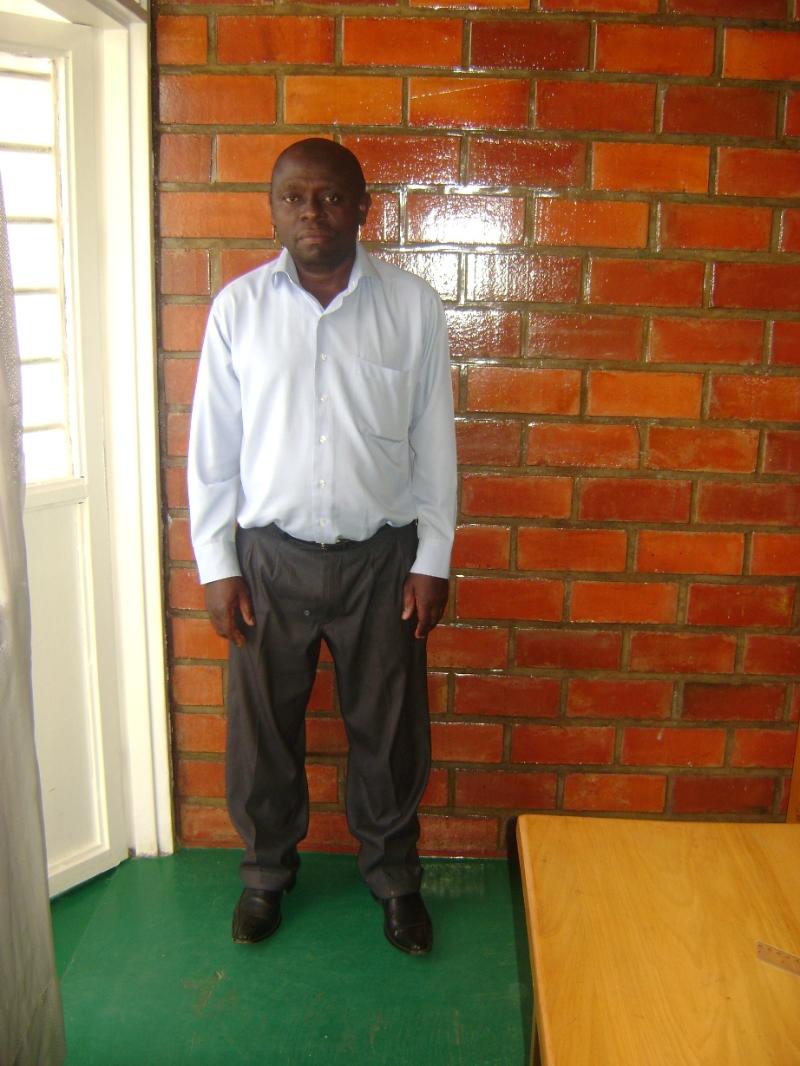
A loan of $1,200 helps Landouard Hagumintwali to buy 50 sacks of rice, 20 boxes of juice, 10 jerrycans of groundnut oil and some other goods for his store, as well as pay for labor.
4% raised, $1,150 to go
- Repayment Term:
- 14 months (more info)
- Repayment Schedule:
- Monthly
- Pre-Disbursed:
- Jul 5, 2011
- Listed:
- Jul 16, 2011
- Currency Exchange Loss:
- Possible
- Default Protection:
- Not Covered
Your funds will be used to backfill this loan.
Repayments will go to you.
Landouard is a merchant, 47 years old and married. He was born in Burundi. He is the father of four children aged between 4 and 14, with three of them attending school. He lives with his younger brother and his younger sister. He finished elementary education.
This is his first loan cycle with the microfinance institution ACB. He will buy 50 sacks of rice, 20 boxes of juice, 10 jerrycans of groundnut oil and some other goods for his store, as well as pay for labor. His growth strategy for his business consists in giving a warmer welcome to customers and doing some marketing for his store to increase his market share. In future he wants to become an important merchant and wholesaler in the area of the great lake for the benefit of his family. He wants to provide his children with education until university level.
This is his first loan cycle with the microfinance institution ACB. He will buy 50 sacks of rice, 20 boxes of juice, 10 jerrycans of groundnut oil and some other goods for his store, as well as pay for labor. His growth strategy for his business consists in giving a warmer welcome to customers and doing some marketing for his store to increase his market share. In future he wants to become an important merchant and wholesaler in the area of the great lake for the benefit of his family. He wants to provide his children with education until university level.

Landouard est un commerçant, il est âgée de 47 ans, il est marié, est il est né au Burundi. Il a 4 enfants entre 4 et 14 ans, 3 vont à l’école,il vit avec son petit frère et sa petite soeur.Son niveau d’éducation est primaire. C’est son premier cycle de prêt avec ACB. Il va acheter 50sacs de riz, 20 cartons du jus ,10 jerricans d’huile d’arachides et autre marchandises pour son commerce et payer la main d’œuvre. Sa stratégie pour la croissance de l’affaire est l’amélioration de l’accueille pour attire la clientèle et faire le marketing de son boutique pour conquérir le marché. Dans l’avenir il veut devenir le grand commerçant, et le grand distributeur dans la région de grand lac, pour sa famille il veut éduquer ses enfants jusqu’au niveau de l’université.
 Subscribe to updates from this loan
 Additional information about this loan
About Amasezerano Community Banking, S.A.
Amasezerano Community Banking, S.A., is a for-profit microfinance institution founded in 2005 by the Rwandan NGO African Evangelist Enterprises-Rwanda and 61 individual shareholders, and has been a Kiva partner since June 2010. The mission of Amasezerano Community Bank (ACB) is to have a holistic, positive impact on the lives of poor people by providing quality financial services. ACB’s client base is composed primarily of farmers, small-business owners, women entrepreneurs and low-wage private-sector salaried workers. Credit offerings are tailored to meet client needs, and include group solidarity loans, agricultural loans, loans for women entrepreneurs, small-business loans, and loans for salaried workers. ACB also offers mobile money transfers, currency exchange and life insurance services to its borrowers.About the Country

- Country:
- Rwanda
- Avg Annual Income:
- $1,000
- Currency:
- Rwanda Francs (RWF)
- Exchange Rate:
- 593.0000 RWF = 1 USD
This Week in Civil Liberties fron the ACLU 15JUL11
THIS WEEK IN CIVIL LIBERTIES includes an execution, judges, juries, hacking and DADT. Thank GOD for the ACLU!!!!!
 This week, blog posts revealed that we are ignoring the rights of foreign nationals, ignoring juries, and ignoring the will of the people. Britain probably will continue being our BFF regardless, because they are ignoring privacy. Luckily, Washington, D.C. is ignoring the current fashion for corrections systems making big criminals out of little criminals...
Execution in Texas, Despite So Much
Learn more about civil rights: Sign up for breaking news alerts, follow us on Twitter, and like us on Facebook.
Execution in Texas, Despite So Much
Texas executed a Mexican national who was tried, convicted and sentenced to die in the state of Texas without ever talking to the Mexican consulate. His sentence would almost certainly have been different if he had. It is certain that his lawyer would have been different – Mexico pays for experienced lawyers to defend against death penalty cases for its citizens.
From Filthy Boys Prison to New Beginnings: Hill Staffers Walk a Mile in Youthful Offenders' Shoes
Key congressional staffers and staff in the Office of Juvenile Justice and Delinquency Prevention made a site visit to the now-closed Oak Hill Youth Center -- in order to highlight D.C.'s previous approach to juvenile justice that relied on punitive measures and secure confinement as a response to juvenile crime -- and to the New Beginnings Youth Development Center -- to see D.C.'s new juvenile facility modeled on Missouri's, housing residents in dormitory-like settings and creating a culture focused on rehabilitation as well as accountability.
Why Have a Jury?
In Alabama, elected judges have the authority to override the jury’s sentencing decision in death penalty cases – in other words, a judge can sentence a person to die even if a jury of his or her peers decides death is not the appropriate punishment. 98 defendants in Alabama have been sentenced to death after their juries recommended a life sentence, often unanimously...
Lessons from the UK "Phone Hacking" Scandal
Britain's gigantic scandal around privacy invasions by the press and police began with revelations about reporters for Rupert Murdoch's British tabloid newspaper News of the World hacking into the voicemail of a murdered young girl, and has expanded as other privacy invasions have come to light.
Seeking to Delay and Derail DADT Repeal
Pretending to fiscal responsibility, congressional opponents of Don't Ask Don't Tell (DADT) repeal succeeded in attaching two anti-gay, political, "red meat" amendments to the legislation, ideological efforts to advance a narrow social agenda that is out of step with what the American public wants.Learn more about civil rights: Sign up for breaking news alerts, follow us on Twitter, and like us on Facebook.
Syrians Mourn Slain Protesters; Opposition Meets 16JUL11
ONE has to admire the Syrian people for continuing their revolution without violence on their part. With every death they gain legitimacy, with every person on the streets protesting nonviolently they are showing the world incredible bravery. The world must do more to support the Syrian people, iron clad sanctions completely isolating the assad government politically, militarily and economically must be in place and enforced. The international community must also provide refugee assistance to Turkey to provide for those who are receiving sanctuary there. What is not needed, and should not happen, is military action from the outside. assad's days are numbered, and the Syrian people will prevail in their struggle for freedom, democracy and human rights. From NPR....
Tens of thousands of Syrians shouting "We want freedom!" carried slain protesters through the streets Saturday, one day after security forces killed at least 28 people during the largest anti-government demonstrations since the uprising began, activists said.
The funerals came as prominent opposition figures held a conference in neighboring Turkey seeking ways to oust Syrian President Bashar Assad, with a prominent dissident saying he leads "the most tyrannical regime in the world."
"The regime had kidnapped the entire state, and we want it back," said Haitham al-Maleh, who headed the conference in neighboring Turkey. The 80-year-old lawyer, who spent years in Syrian prisons for his political activism, recently left Syria out of fear for his life.
Activists say the government's crackdown on dissent has killed some 1,600 people since March, most of them unarmed protesters. But the regime disputes the toll and blames a foreign conspiracy for the unrest, saying religious extremists — not true reform-seekers — are behind it.
On Friday, hundreds of thousands of Syrians took to the streets across the country in the largest show of the uprising's strength.
Syrians poured into areas where the government crackdown has been most intense — a sign that security forces cannot break the revolt. Thousands turned out in the capital, Damascus, which until now had seen only scattered protests.
A witness in Damascus told The Associated Press on Saturday that tens of thousands from Damascus and the suburbs held funerals for slain protesters, carrying the bodies overhead on stretchers and shouting "God is Great!" and "We want freedom!"
Like most witnesses in Syria, he spoke on condition of anonymity for fear of retribution. The government has banned most foreign media and restricted local coverage, making it difficult to independently confirm accounts on the ground.
The Local Coordinating Committees, which help organize and track the protests, said they have the names of 28 people confirmed dead. Other estimates of the death toll were as high as 41.
Also Saturday, security forces continued a weekslong operation in the restive Idlib province, near the Turkish border. The London-based Syrian Observatory for Human Rights said authorities raided homes in the village Kfar Nabl and made scores of arrests.
The government crackdown has led to international condemnation and sanctions.
"What's happening in Syria is very uncertain and troubling because many of us had hoped that President Assad would make the reforms that were necessary," U.S. Secretary of State Hillary Clinton told reporters in Istanbul on Saturday. "The brutality has to stop, there must be a legitimate sincere effort with the opposition to try to make changes."
"Yesterday we witnessed the largest demonstrations to date in Syria, an effort to try to convey directly to the government the pent-up desire of the Syrian people for the kind of reforms that they have been promised," she added.
Saturday's opposition conference in Turkey — called the National Salvation Conference — was attended by some 400 dissidents looking to form a unified opposition to Assad, whose family has ruled Syria for more than 40 years.
The conference is part of a series of meetings the opposition has held recently in Turkey and Europe in an attempt to organize their ranks. Activists in Damascus also took part in Saturday's meeting by telephone.
Organizers had planned to hold a conference in Damascus in tandem with the Turkey meeting, but it was canceled after Friday's bloodshed. The Local Coordination Committees said at least 14 people were killed near a hall where the conference was to be held.
In Turkey, al-Maleh accused Assad of leading a "fascist regime" and praised the "heroic people of Syria" for rising up against him.
Opposition figure Mashaal Tammo, addressing the conference by phone from Damascus, said Assad had lost his legitimacy to rule and called on him to step down.
In an emotional speech, he said the "the existence of the regime was no longer justified," and called for a peaceful transition to a civil, pluralistic and democratic state.
Abdul-Karim Rihawi, the Damascus-based head of the Syrian Human Rights League, said 28 intellectuals and artists were released from detention Saturday, three days after they were arrested for taking part in an anti-government protest in Damascus.
But regime supporters taunted them and threw stones at them as they left court, Rihawi said.
———
AP Writer Matthew Lee contributed to this report from Istanbul.
———
Zeina Karam can be reached on http://twitter.com/zkaram
Tens of thousands of Syrians shouting "We want freedom!" carried slain protesters through the streets Saturday, one day after security forces killed at least 28 people during the largest anti-government demonstrations since the uprising began, activists said.
The funerals came as prominent opposition figures held a conference in neighboring Turkey seeking ways to oust Syrian President Bashar Assad, with a prominent dissident saying he leads "the most tyrannical regime in the world."
"The regime had kidnapped the entire state, and we want it back," said Haitham al-Maleh, who headed the conference in neighboring Turkey. The 80-year-old lawyer, who spent years in Syrian prisons for his political activism, recently left Syria out of fear for his life.
Activists say the government's crackdown on dissent has killed some 1,600 people since March, most of them unarmed protesters. But the regime disputes the toll and blames a foreign conspiracy for the unrest, saying religious extremists — not true reform-seekers — are behind it.
On Friday, hundreds of thousands of Syrians took to the streets across the country in the largest show of the uprising's strength.
Syrians poured into areas where the government crackdown has been most intense — a sign that security forces cannot break the revolt. Thousands turned out in the capital, Damascus, which until now had seen only scattered protests.
A witness in Damascus told The Associated Press on Saturday that tens of thousands from Damascus and the suburbs held funerals for slain protesters, carrying the bodies overhead on stretchers and shouting "God is Great!" and "We want freedom!"
Like most witnesses in Syria, he spoke on condition of anonymity for fear of retribution. The government has banned most foreign media and restricted local coverage, making it difficult to independently confirm accounts on the ground.
The Local Coordinating Committees, which help organize and track the protests, said they have the names of 28 people confirmed dead. Other estimates of the death toll were as high as 41.
Also Saturday, security forces continued a weekslong operation in the restive Idlib province, near the Turkish border. The London-based Syrian Observatory for Human Rights said authorities raided homes in the village Kfar Nabl and made scores of arrests.
The government crackdown has led to international condemnation and sanctions.
"What's happening in Syria is very uncertain and troubling because many of us had hoped that President Assad would make the reforms that were necessary," U.S. Secretary of State Hillary Clinton told reporters in Istanbul on Saturday. "The brutality has to stop, there must be a legitimate sincere effort with the opposition to try to make changes."
"Yesterday we witnessed the largest demonstrations to date in Syria, an effort to try to convey directly to the government the pent-up desire of the Syrian people for the kind of reforms that they have been promised," she added.
Saturday's opposition conference in Turkey — called the National Salvation Conference — was attended by some 400 dissidents looking to form a unified opposition to Assad, whose family has ruled Syria for more than 40 years.
The conference is part of a series of meetings the opposition has held recently in Turkey and Europe in an attempt to organize their ranks. Activists in Damascus also took part in Saturday's meeting by telephone.
Organizers had planned to hold a conference in Damascus in tandem with the Turkey meeting, but it was canceled after Friday's bloodshed. The Local Coordination Committees said at least 14 people were killed near a hall where the conference was to be held.
In Turkey, al-Maleh accused Assad of leading a "fascist regime" and praised the "heroic people of Syria" for rising up against him.
Opposition figure Mashaal Tammo, addressing the conference by phone from Damascus, said Assad had lost his legitimacy to rule and called on him to step down.
In an emotional speech, he said the "the existence of the regime was no longer justified," and called for a peaceful transition to a civil, pluralistic and democratic state.
Abdul-Karim Rihawi, the Damascus-based head of the Syrian Human Rights League, said 28 intellectuals and artists were released from detention Saturday, three days after they were arrested for taking part in an anti-government protest in Damascus.
But regime supporters taunted them and threw stones at them as they left court, Rihawi said.
———
AP Writer Matthew Lee contributed to this report from Istanbul.
———
Zeina Karam can be reached on http://twitter.com/zkaram
7 Winning Issues for Democrats (If They Only Had the Guts to Fight) 15JUL11
IT isn't too late for the Democratic Party to reclaim these issues as their own, to return to the core principles of the party that made it a voice for the people. Is anyone at the DCCC and DSCC and OFA listening? From AlterNet....

Friday's jobless numbers also prompted several writers to note that Obama could well lose a reelection bid if unemployment remains at the same level into election season. John Nichols rightly pointed out that “Americans are not that into the debt-ceiling debate. Polling has suggested that less than a quarter of Americans are 'closely following' the fight.”
As the election comes closer, it won't be enough for Democrats to count on unpopular right-wing politicians to lose fights for them—they will need to find some winning issues to campaign on. And it's not actually that hard to do.
There are a few issues, after all, that are consistently popular in public-opinion polls, not to mention with that same Democratic base that was depressed in 2010 and is angry now at the idea of cuts to the social safety net. For Democrats to make gains in 2012, not just hold the White House and the seats they've already got, here are seven winning issues to fire up the base and convert swing voters. It won't be easy, but it would be real progress.
7. Get out of Afghanistan and Libya and oh yeah, all the way out of Iraq.
Obama positioned himself to the left of his Democratic rival Hillary Clinton on the wars back in 2007 and 2008, proclaiming his opposition to the war in Iraq from the beginning and touting diplomacy, not violence, as the solution in the Middle East. His rhetoric at the time won him a Nobel Peace Prize.
But it's 2011, and not only are troops still in Iraq and the war in Afghanistan ongoing, but we've got a “kinetic military action” in Libya and drone strikes most recently in Somalia as well as Yemen and Pakistan.
And Americans aren't feeling it. A New York Times/CBS News poll released in June found that 58 percent of the public thinks we shouldn't be in Afghanistan and 59 percent think we shouldn't be in Libya. (It's worth noting that the poll didn't even ask about Iraq, lending fuel to the belief many have that the war there is “over.” It's not.)
Some Democrats have pushed for a real end to the war in Afghanistan. Most recently, a group of Democratic senators introduced a bill, coordinated with a push from Democracy for America, calling for “Safe and Responsible Redeployment of United States Combat Forces from Afghanistan.”
With the economy still the biggest issue on most Americans' minds, the wars are an unwanted expense and a huge force contributing to the deficit. Smart Democratic politicians will link these issues together on the campaign trail and call for an end to wars that are costing us too dearly in lives as well as dollars.
6. Push for a comprehensive employment non-discrimination act (ENDA).
Nearly three-fourths of voters believe that gay, lesbian, bisexual and transgender people should be protected from discrimination in the workplace.
What's the problem, then?
This:
In the current economy, where every job opening yields far more qualified applicants than can possibly be hired, it's a tragedy.
Andrew Cuomo, the Democratic governor of New York, is basking in the glow of having passed a marriage equality bill that was extremely popular with his constituents. Progressive Democrats should be making the point that no, there is no federal workplace protection for gay, lesbian, bisexual and transgender workers—and then fighting like hell to pass one.
5. Pass comprehensive immigration reform.
Wait, immigration reform is a horribly contentious issue, isn't it?
Not, actually, as much as you'd think.
The numbers of immigrants from Mexico are down and states like Georgia that have passed draconian anti-immigrant laws are actually suffering from a lack of willing farm workers.
But while Jan Brewer and other right-wing governors have passed horrific immigration bills on the state level, a Daily Kos poll a few months ago showed 69 percent support for comprehensive immigration reform that included increased border security and a crackdown on employers who hire undocumented workers, as well as a path to citizenship for undocumented workers who apply for legal status, learn English and pay back taxes.
Jed Lewison at Kos noted:
4. Increase environmental protections.
The right wing loves to trash environmental laws as job-killers and claim that progressives and environmentalists are attacking private industry when they push for regulations. But despite years of that sort of rhetoric and a miserable economy, Americans still want their air, water and land clean. Seventy-one percent still want the Environmental Protection Agency funded, and as of last year, 56 percent chose protecting the environment over keeping energy prices low. Fifty-six percent also want the government to regulate private companies' energy output to control global warming.
Erik Loomis, environmental historian and blogger at Lawyers, Guns and Money, argues that environmental policies that put people first are winning issues. He says:
3. Fight for Social Security, Medicare and Medicaid.
It's depressing that with a Democrat in the White House and Democrats in charge of at least one house of Congress, this should even be an issue.
However, these programs are consistently immensely popular—even when the public thinks they could be administered better, 88 percent think Medicare has been good for the country, followed by 87 percent for Social Security and even 77 percent for Medicaid, the program that provides health services for the poor. (And a new study confirms with research what public opinion already believes—that Medicaid provides concrete benefits for its recipients.)
So why is Barack Obama floating the idea of cuts—or of raising the eligibility age for Medicare?
As Joshua Holland wrote for AlterNet last week:
Which brings us to the next point...
2. Tax, tax, tax, tax, tax the rich.
It should be a no-brainer by now, right? One of Barack Obama's biggest applause lines on the campaign trail was the one about letting the Bush tax cuts expire for those who made over $250,000 a year—and he even won a majority of votes from that same income bracket. The grand compromise late last year to keep those cuts angered many and drove Vermont Senator Bernie Sanders to a fiery eight-and-a-half-hour speech on the Senate floor, where he concluded:
But it shouldn't matter. Democrats should take note instead of a poll that hit swing states Ohio, Missouri, Montana and Minnesota and asked voters about raising taxes on large incomes to reduce the deficit. The higher the income proposed for taxes, the more willing voters were to increase the tax burden. Sixty-six percent of Ohioans were willing to raise taxes on those who make over $150,000 a year, while 78 percent of them would tax millionaires more.
More importantly for Democrats looking for an issue for the campaign trail, 48 percent of Ohioans would be more likely to vote for Senator Sherrod Brown (who, it should be noted, joined Bernie Sanders in his Senate floor speech) if he led the fight in Congress for a millionaire's tax. Forty-seven percent of Minnesotans would be more likely to support their senator, Amy Klobuchar, and 42 percent of Montanans would be more likely to support Jon Tester.
Overall, some 72 percent of voters support higher taxes on those who make over $250,000 a year, including some 54 percent of Republicans. The rich are getting richer and the unemployed aren't getting any closer to employment. We've had years and years of tax cuts under the false claim that they create jobs. It's time for Democrats to point out that those wealthy job creators simply aren't creating jobs—and then raise their taxes and...
1. Create some jobs.
Right-wing columnist Michael Medved's worst nightmare goes something like this:
Medved wrote this in a plea to his fellow conservatives to wake up and do something about jobs. When even one of the nation's far-right voices sees the need for a jobs program—even if only to forestall the impact a real jobs program might have on the progressive vote—and the Democratic president is doing nothing, what's wrong?
Democrats need to get out in front of terrible jobs numbers and right-wing critique. They need to articulate a jobs program now. Thirty-nine percent of the population thinks that this recession isn't a recession—it's a permanent decline for the country and the state of all of our lives. Forty-seven percent think that unemployment benefits should be extended even if it means increasing the deficit (44 percent think they should not be) and 60 percent are either “somewhat” or “very” worried that someone in their household will soon be out of work.
Robert Reich, former Secretary of Labor under Bill Clinton, called for a renewal of the Works Progress Administration and the Civilian Conservation Corps on Friday when jobs numbers came out. Michael Medved desperately fears a bold move by the administration on job creation.
The conventional wisdom says that the president and the Democrats spent their political capital on the first stimulus bill, but now even former members of the administration's economic team are calling for more. It's time to put the conventional wisdom to rest. Jared Bernstein summed up the argument on Friday:
Progressives will have to organize and bring pressure like never before on Democratic politicians who count on votes, dollars and volunteer hours from them—but that's how we got the New Deal, isn't it?
The 2012 election is still a while away, but the horse race stories have already begun and new Republican candidates seem to be jumping into the fray every week.
Meanwhile, the debt ceiling debate is the political fight of the summer, and since President Obama floated the idea of Social Security cuts as part of the “grand bargain” he's seeking, the progressive base has been expressing its anger. Seventy-six percent of MoveOn's membership said they would not donate to or volunteer for Obama's reelection effort if he allowed cuts to Social Security benefits. And Jim Dean, of Howard Dean's Democracy for America, said “Cutting Social Security to reduce the national debt is like attacking Iraq to get Osama Bin Laden -- the two things are not related."Friday's jobless numbers also prompted several writers to note that Obama could well lose a reelection bid if unemployment remains at the same level into election season. John Nichols rightly pointed out that “Americans are not that into the debt-ceiling debate. Polling has suggested that less than a quarter of Americans are 'closely following' the fight.”
As the election comes closer, it won't be enough for Democrats to count on unpopular right-wing politicians to lose fights for them—they will need to find some winning issues to campaign on. And it's not actually that hard to do.
There are a few issues, after all, that are consistently popular in public-opinion polls, not to mention with that same Democratic base that was depressed in 2010 and is angry now at the idea of cuts to the social safety net. For Democrats to make gains in 2012, not just hold the White House and the seats they've already got, here are seven winning issues to fire up the base and convert swing voters. It won't be easy, but it would be real progress.
7. Get out of Afghanistan and Libya and oh yeah, all the way out of Iraq.
Obama positioned himself to the left of his Democratic rival Hillary Clinton on the wars back in 2007 and 2008, proclaiming his opposition to the war in Iraq from the beginning and touting diplomacy, not violence, as the solution in the Middle East. His rhetoric at the time won him a Nobel Peace Prize.
But it's 2011, and not only are troops still in Iraq and the war in Afghanistan ongoing, but we've got a “kinetic military action” in Libya and drone strikes most recently in Somalia as well as Yemen and Pakistan.
And Americans aren't feeling it. A New York Times/CBS News poll released in June found that 58 percent of the public thinks we shouldn't be in Afghanistan and 59 percent think we shouldn't be in Libya. (It's worth noting that the poll didn't even ask about Iraq, lending fuel to the belief many have that the war there is “over.” It's not.)
Some Democrats have pushed for a real end to the war in Afghanistan. Most recently, a group of Democratic senators introduced a bill, coordinated with a push from Democracy for America, calling for “Safe and Responsible Redeployment of United States Combat Forces from Afghanistan.”
With the economy still the biggest issue on most Americans' minds, the wars are an unwanted expense and a huge force contributing to the deficit. Smart Democratic politicians will link these issues together on the campaign trail and call for an end to wars that are costing us too dearly in lives as well as dollars.
6. Push for a comprehensive employment non-discrimination act (ENDA).
Nearly three-fourths of voters believe that gay, lesbian, bisexual and transgender people should be protected from discrimination in the workplace.
What's the problem, then?
This:
”The survey also found that 9 of out 10 voters erroneously think that a federal law is already in place protecting gay and transgender people from workplace discrimination. A similar number of voters also did not know whether their state had a gay and transgender workplace discrimination law. These numbers show the huge disconnect between voter perceptions about workplace protections and the realities that gay and transgender people face on the job.”How do we pass a law when the vast majority of the public thinks a law is already in existence? The Center for American Progress pointed out that anywhere from 15 to 43 percent of gay people have faced some form of discrimination or harassment on the job—and that figure is a staggering 90 percent for transgender workers. In a good economy, the fact that 44 percent of transgender people report being passed over for a job because of their gender identity or expression, and 26 percent report being fired, would be cause for alarm.
In the current economy, where every job opening yields far more qualified applicants than can possibly be hired, it's a tragedy.
Andrew Cuomo, the Democratic governor of New York, is basking in the glow of having passed a marriage equality bill that was extremely popular with his constituents. Progressive Democrats should be making the point that no, there is no federal workplace protection for gay, lesbian, bisexual and transgender workers—and then fighting like hell to pass one.
5. Pass comprehensive immigration reform.
Wait, immigration reform is a horribly contentious issue, isn't it?
Not, actually, as much as you'd think.
The numbers of immigrants from Mexico are down and states like Georgia that have passed draconian anti-immigrant laws are actually suffering from a lack of willing farm workers.
But while Jan Brewer and other right-wing governors have passed horrific immigration bills on the state level, a Daily Kos poll a few months ago showed 69 percent support for comprehensive immigration reform that included increased border security and a crackdown on employers who hire undocumented workers, as well as a path to citizenship for undocumented workers who apply for legal status, learn English and pay back taxes.
Jed Lewison at Kos noted:
”Those numbers are pretty emphatic, but what's even more remarkable is that every single demographic and ideological group in the survey would support immigration reform based on the principles outlined in the question. In fact, the right is more supportive of the approach than the left, presumably because it would require immigrants to pay back taxes and learn English before becoming eligible for citizenship.”If that's still too messy a fight (or concedes too much to the right), the DREAM Act also polls with majority support—54 percent are in favor of a law that would give legal status to those who attend college or join the military.
4. Increase environmental protections.
The right wing loves to trash environmental laws as job-killers and claim that progressives and environmentalists are attacking private industry when they push for regulations. But despite years of that sort of rhetoric and a miserable economy, Americans still want their air, water and land clean. Seventy-one percent still want the Environmental Protection Agency funded, and as of last year, 56 percent chose protecting the environment over keeping energy prices low. Fifty-six percent also want the government to regulate private companies' energy output to control global warming.
Erik Loomis, environmental historian and blogger at Lawyers, Guns and Money, argues that environmental policies that put people first are winning issues. He says:
“Go to Louisiana and talk about the BP oil spill, talk about how we need an oil industry that provides jobs and doesn't destroy our coastline. Go to Arkansas and talk about how we need energy, but we also need to make sure that the natural gas industry doesn't cause earthquakes underneath us. Go to rural New York now and argue the same thing since that's a big issue there. Go to West Virginia and talk about how we can create a coal industry that doesn't remove mountains and provides more jobs to people. Not to mention pushing green jobs and alternative energy projects that put people back to work.”Once again, with the economy the main concern for so many voters this election cycle, it's time for politicians to think smart about linking jobs to new and alternative energy technologies. Deeply unpopular conservative governors may be rejecting money for high-speed rail transit, and progressives running in their states (Florida and Ohio, for a start) can turn that anti-environmentalist job-killing argument right around on them.
3. Fight for Social Security, Medicare and Medicaid.
It's depressing that with a Democrat in the White House and Democrats in charge of at least one house of Congress, this should even be an issue.
However, these programs are consistently immensely popular—even when the public thinks they could be administered better, 88 percent think Medicare has been good for the country, followed by 87 percent for Social Security and even 77 percent for Medicaid, the program that provides health services for the poor. (And a new study confirms with research what public opinion already believes—that Medicaid provides concrete benefits for its recipients.)
So why is Barack Obama floating the idea of cuts—or of raising the eligibility age for Medicare?
As Joshua Holland wrote for AlterNet last week:
This administration has certainly shown itself to be enthralled by the idea of scoring big, “bipartisan” legislative victories on what the chattering class considers the most pressing issues facing the country, and a Beltway consensus has (unfortunately) gelled around the idea that reducing the deficit in the near term, rather than getting people back to work, is a top priority.This simply doesn't gel with public opinion. Sixty percent at least want benefits to remain unchanged from these programs, and according to one poll, 22 percent would cut the defense budget first, and 42 percent would rather raise taxes on the rich than see cuts to Social Security.
Which brings us to the next point...
2. Tax, tax, tax, tax, tax the rich.
It should be a no-brainer by now, right? One of Barack Obama's biggest applause lines on the campaign trail was the one about letting the Bush tax cuts expire for those who made over $250,000 a year—and he even won a majority of votes from that same income bracket. The grand compromise late last year to keep those cuts angered many and drove Vermont Senator Bernie Sanders to a fiery eight-and-a-half-hour speech on the Senate floor, where he concluded:
"If the American people stand up and say, we can do better than this, that we don’t need to drive up the national debt by giving tax breaks to millionaires and billionaires, (if) the American people are prepared to stand – and we’re prepared to follow them – I think we can defeat this proposal.”The proposal passed, and even though Obama promised it would be for the last time, the GOP is determined not to raise taxes on its own base in any sort of debt deal.
But it shouldn't matter. Democrats should take note instead of a poll that hit swing states Ohio, Missouri, Montana and Minnesota and asked voters about raising taxes on large incomes to reduce the deficit. The higher the income proposed for taxes, the more willing voters were to increase the tax burden. Sixty-six percent of Ohioans were willing to raise taxes on those who make over $150,000 a year, while 78 percent of them would tax millionaires more.
More importantly for Democrats looking for an issue for the campaign trail, 48 percent of Ohioans would be more likely to vote for Senator Sherrod Brown (who, it should be noted, joined Bernie Sanders in his Senate floor speech) if he led the fight in Congress for a millionaire's tax. Forty-seven percent of Minnesotans would be more likely to support their senator, Amy Klobuchar, and 42 percent of Montanans would be more likely to support Jon Tester.
Overall, some 72 percent of voters support higher taxes on those who make over $250,000 a year, including some 54 percent of Republicans. The rich are getting richer and the unemployed aren't getting any closer to employment. We've had years and years of tax cuts under the false claim that they create jobs. It's time for Democrats to point out that those wealthy job creators simply aren't creating jobs—and then raise their taxes and...
1. Create some jobs.
Right-wing columnist Michael Medved's worst nightmare goes something like this:
”In the president’s rousing vision, the new jobs program, designated 'America Works,' would hire people immediately for desperately needed federal projects while simultaneously providing money from Washington for positions at the state and local level, as well as partially subsidizing new jobs in the private sector.It's funny how Republicans' worst nightmare looks like a progressive dream. Putting millions of Americans back to work? Subsidizing jobs by taxing the corporations that have so far failed to hire? Where do we sign up?
Warming to his message, Obama declared: 'Cynics will respond to this plan the way they always react to new ideas and fresh starts. They will say, “You can’t do that” or claim that “we can’t afford it.” But Americans know better. They know that we can’t afford not to act, or to protect a stale, shabby status quo at a time of national crisis.'
'How can we say we can’t afford to start hiring again, to do all the jobs that desperately need doing, when all around us we see accumulations of wealth unprecedented in human history?'”
Medved wrote this in a plea to his fellow conservatives to wake up and do something about jobs. When even one of the nation's far-right voices sees the need for a jobs program—even if only to forestall the impact a real jobs program might have on the progressive vote—and the Democratic president is doing nothing, what's wrong?
Democrats need to get out in front of terrible jobs numbers and right-wing critique. They need to articulate a jobs program now. Thirty-nine percent of the population thinks that this recession isn't a recession—it's a permanent decline for the country and the state of all of our lives. Forty-seven percent think that unemployment benefits should be extended even if it means increasing the deficit (44 percent think they should not be) and 60 percent are either “somewhat” or “very” worried that someone in their household will soon be out of work.
Robert Reich, former Secretary of Labor under Bill Clinton, called for a renewal of the Works Progress Administration and the Civilian Conservation Corps on Friday when jobs numbers came out. Michael Medved desperately fears a bold move by the administration on job creation.
The conventional wisdom says that the president and the Democrats spent their political capital on the first stimulus bill, but now even former members of the administration's economic team are calling for more. It's time to put the conventional wisdom to rest. Jared Bernstein summed up the argument on Friday:
”Washington needs to quickly and aggressively shift from its long-term debt obsession to the much more immediate jobs problem. To do otherwise at this point would be deeply irresponsible.”The problem, of course, with these seven issues is that almost all of them pit everyday Americans against corporate interests. With the Citizens United decision allowing open season for corporate cash in the upcoming campaign, politicians can kiss that money goodbye if they strike out too far against the will of big business.
Progressives will have to organize and bring pressure like never before on Democratic politicians who count on votes, dollars and volunteer hours from them—but that's how we got the New Deal, isn't it?
Sarah Jaffe is an associate editor at AlterNet, a rabblerouser and frequent Twitterer. You can follow her at @seasonothebitch.
Winners and Losers From the Great Recession from Mother Jones 30JUN11
HERE'S a great article from Mother Jones showing the real winners from this last recession and no big surprise it is corporations come out on top guaranteeing the political whores on Capital Hill will keep receiving their back money as long as they keep all revenue increases out of any federal budget cap agreement.
So who's benefited and who hasn't from the current recovery following the Great Recession? I think you know the answer already, but just to make it official, here's a report from researchers at Northeastern University's Center for Labor Market Studies:

Plainly, what's needed to address this crisis is tax cuts for corporations and reduced federal spending on workers. But who will speak up for our downtrodden corporate sector? It is a vexing problem.
Via Economix.
Between the second quarter of 2009 and the fourth quarter of 2010, real national income in the U.S. increased by $528 billion. Pre-tax corporate profits by themselves had increased by $464 billion while aggregate real wages and salaries rose by only $7 billion or only .1%. Over this six quarter period, corporate profits captured 88% of the growth in real national income while aggregate wages and salaries accounted for only slightly more than 1% of the growth in real national income. The extraordinarily high share of national income (88%) received by corporate profits was by far the highest in the past five recoveries from national recessions.Here it is in table format, in case you want to see comparisons to previous recessions and recoveries:
Plainly, what's needed to address this crisis is tax cuts for corporations and reduced federal spending on workers. But who will speak up for our downtrodden corporate sector? It is a vexing problem.
Via Economix.
15 July 2011
Five states. Five lawsuits from the ACLU 14JUL11
PAPIERE BITTE, has a nazi, totalitarian sound to it, doesn't it. Nobody should be randomly subjected to this in the U.S., we have laws against this, protecting our civil rights as outlined in the 4th Amendment. From the ACLU....

There's only one reason Jim Shee was pulled over on his 70th birthday. He was a brown man in Arizona.
Jim Shee — an American citizen of Chinese and Spanish descent — was driving to his 70th birthday party when he was questioned by police demanding to see his "papers." It happened again a few days later.
This is precisely the kind of unwarranted, biased suspicion and racial profiling that Arizona's SB1070 law — and each of the copycat measures now sweeping the country — invites.
But there are other things the laws invite — ACLU lawsuits. In fact, the ACLU has swiftly responded to every single bill that has passed with a lawsuit. We have already brought Arizona, Utah, Indiana, Georgia and Alabama to court and will do the same with South Carolina later this summer. This kind of racial profiling has no place in America.
The ACLU is taking care of business in the states, but we need the Obama administration to do its part to stop the anti-immigrant activists from putting these laws on the books. Tell Attorney General Holder: There is no place in our country for "show me your papers" laws.
These state laws reflect a growing civil rights crisis that must be addressed nationally. They institutionalize racial profiling and discrimination in states and localities throughout the nation and are in direct violation of the Constitution.
We've won preliminary injunctions in Arizona, Utah, Indiana and Georgia to stop these laws from taking effect. And on Friday, we went to court in Alabama. Like laws passed in other states, Alabama's new statute doesn't just give police the authority to carry out discriminatory and unconstitutional practices. It actually requires that everyone in Alabama carry the right sort of ID card or else be presumed an undocumented immigrant.
We don't intend to sit still for this kind of hateful legislation. And we are counting on you to not sit still, either. Tell Attorney General Holder: Stop these racial profiling laws.
Don't let this massive erosion of people's fundamental rights go unanswered. Act today by signing our ACLU "No place for racial profiling" petition.
© ACLU, 125 Broad Street, 18th Floor, New York, NY 10004
 Before Arizona's notorious anti-immigrant SB1070 bill was even law, ACLU client Jim Shee — an American citizen — was stopped twice by police and asked to produce his "papers."  |
Jim Shee — an American citizen of Chinese and Spanish descent — was driving to his 70th birthday party when he was questioned by police demanding to see his "papers." It happened again a few days later.
This is precisely the kind of unwarranted, biased suspicion and racial profiling that Arizona's SB1070 law — and each of the copycat measures now sweeping the country — invites.
But there are other things the laws invite — ACLU lawsuits. In fact, the ACLU has swiftly responded to every single bill that has passed with a lawsuit. We have already brought Arizona, Utah, Indiana, Georgia and Alabama to court and will do the same with South Carolina later this summer. This kind of racial profiling has no place in America.
The ACLU is taking care of business in the states, but we need the Obama administration to do its part to stop the anti-immigrant activists from putting these laws on the books. Tell Attorney General Holder: There is no place in our country for "show me your papers" laws.
These state laws reflect a growing civil rights crisis that must be addressed nationally. They institutionalize racial profiling and discrimination in states and localities throughout the nation and are in direct violation of the Constitution.
We've won preliminary injunctions in Arizona, Utah, Indiana and Georgia to stop these laws from taking effect. And on Friday, we went to court in Alabama. Like laws passed in other states, Alabama's new statute doesn't just give police the authority to carry out discriminatory and unconstitutional practices. It actually requires that everyone in Alabama carry the right sort of ID card or else be presumed an undocumented immigrant.
We don't intend to sit still for this kind of hateful legislation. And we are counting on you to not sit still, either. Tell Attorney General Holder: Stop these racial profiling laws.
Don't let this massive erosion of people's fundamental rights go unanswered. Act today by signing our ACLU "No place for racial profiling" petition.
 | Thanks for acting, Anthony D. Romero Executive Director, ACLU |
Will Politicians Listen to Pastors (calling for a moral budget)? 14JUL11
THE wealthy and corporate America, the financial and banking industries, and a vast majority of the gop / tea-baggers in Congress as well as those in state and local governments have declared war on the poor, the working class and the middle class in America. This is class warfare, an epic struggle of morality against immorality, a struggle to stop the greed and lust for power and control the gop / tea-baggers are fighting for, an all out battle for the soul of the nation. From Sojourners.....
The way you think and feel about the world is shaped by what you see when you get out of bed in the morning. I remember hearing this from civil rights activists. It simply means that perspective is hugely determined by place, context, and vantage point. This is profoundly true for me and most of the people I've ever met. You see the world from the place you live.
Part of the problem in the current budget impasse in Washington, D.C. is the perspectives of the politicians in the debate. Every morning they see and hear each other; the gladiator ring of national politics; the Washington media; their donors; their ideological base; and their latest poll ratings. Sure enough, the perspective that dominates politicians of both parties on the budget is who's up and who's down; whose power is growing or diminishing; whose constituents and donors are better organized and get their interests in front of the lawmakers; what the pollsters say; and how the end result of the debate will impact electoral gains. This perspective also dominates the news coverage.
So we at Sojourners thought there needed to be another perspective in this debate, and that the nation needed other voices. We need to hear from people who see and hear something different from politicians when they get up in the morning -- real people who are struggling, some of whom are poor, families, children, and the elderly, and maybe people whose job forces them to have to read the Bible.
I'm talking about local pastors. Every day, pastors relate with the people in their congregations and communities. Pastors can't avoid the real world, which is so easy to do in Washington, D.C.
We wondered, what do pastors think about the budget debate? We decided to go to them and ask them to speak out, and now they have. "An Open Letter to Congress and the President" was initiated by a group of pastors two weeks ago and sent out to their colleagues. Their letter talked about the real people who will be most impacted by this debate, and that any budget deal should be evaluated by how it affects the poorest and most vulnerable. God requires this of us, they asserted. We decided to try for 1,000 signatures from local pastors -- in July, when so many people are away, when things are shutting down for the summer, when it's hardest to get a response on anything. It was an act of faith. So far, in two weeks, 4,700 pastors have responded and made their voices clear. A full page ad titled, "Listen to Your Pastors" appeared in Politico yesterday. A copy of the ad with a full list of signers is here. You can also listen to a press call I moderated on Wednesday featuring Rev. Rich Nathan, Rev. Nadia Bolz-Weber, and Rev. Derrick Harkins.
"The recession has cost hundreds of our church members' jobs and homes," said Rev. Rich Nathan, senior pastor of the Vineyard Church of Columbus in Columbus, Ohio. "But I am concerned about something that has even more devastating consequences for our nation: the adoption of a philosophy that says, 'I got mine! You're on your own!' Jesus had an infinitely wiser philosophy for building a flourishing society: 'Love your neighbor as yourself.' This is as meaningful in today's budget debates as it was two thousand years ago in ancient Israel."
Growing numbers of Christians are condemning the immorality of extending tax breaks and benefits for the wealthy, while programs that help the poor and vulnerable meet their most basic needs are being cut. The clergy signers of the letter told political leaders, "We work, pray, and do whatever we can to remain faithful to the responsibility of every Christian to help the poor. Still, we can't meet the crushing needs by ourselves." They reminded Congress that government is a critical and necessary partner in serving the common good.
Rev. Nadia Bolz-Weber, founding pastor of House for All Sinners and Saints in Denver, Colorado, was also a recipient of a program that could be cut. "As a member of the clergy and a mother of two children with strong minds and bodies -- which benefited for three years from WIC [the Women, Infants, and Children program] -- I stand with all Christians in America who believe the cries of the poor and the cries of the children are not only the very voice of Christ, but are indeed the sound of our future waiting for response," Rev. Bolz-Weber said. "How shall we answer?"
In their letter, the clergy rejected the false choice between moral and fiscal responsibility, and reminded political leaders of the need to get our country's finances in order without making the poor bear the burden of deficit reduction. "This is not about some nameless, faceless 'other.' The choices politicians make about the budget will harm or help our neighbors," said Rev. Derrick Harkins, senior pastor of the Nineteenth Street Baptist Church in Washington, D.C. "We want to serve those who don't have lobbyists on K Street. Our budget is a moral document, and it is either going to reflect the best of who we are, or the worst.”
Christian opposition to budgets cuts that harm low-income people continues to grow. In May, more than 50 of America's most prominent Christian leaders formed a "Circle of Protection" coalition that laid out principles and values for a moral budget. Thousands of people of faith have since joined this campaign.
Our country is in the midst of a clash between two competing moral visions, between those who believe in the common good, and those who believe individual good is the only good. A war has been declared on the poor, and it is a moral imperative that people of faith and conscience fight on the side of the most vulnerable. Pastors have spoken up. Will the lawmakers listen to their pastors? This may be the only hope we have as we grimace in listening to reports of their budget debates. Hoping the politicians listen to their pastors is also an act of faith in July. But you never know.
Jim Wallis is the author of Rediscovering Values: A Guide for Economic and Moral Recovery, and CEO of Sojourners. He blogs at www.godspolitics.com. Follow Jim on Twitter @JimWallis.
The way you think and feel about the world is shaped by what you see when you get out of bed in the morning. I remember hearing this from civil rights activists. It simply means that perspective is hugely determined by place, context, and vantage point. This is profoundly true for me and most of the people I've ever met. You see the world from the place you live.
Part of the problem in the current budget impasse in Washington, D.C. is the perspectives of the politicians in the debate. Every morning they see and hear each other; the gladiator ring of national politics; the Washington media; their donors; their ideological base; and their latest poll ratings. Sure enough, the perspective that dominates politicians of both parties on the budget is who's up and who's down; whose power is growing or diminishing; whose constituents and donors are better organized and get their interests in front of the lawmakers; what the pollsters say; and how the end result of the debate will impact electoral gains. This perspective also dominates the news coverage.
So we at Sojourners thought there needed to be another perspective in this debate, and that the nation needed other voices. We need to hear from people who see and hear something different from politicians when they get up in the morning -- real people who are struggling, some of whom are poor, families, children, and the elderly, and maybe people whose job forces them to have to read the Bible.
I'm talking about local pastors. Every day, pastors relate with the people in their congregations and communities. Pastors can't avoid the real world, which is so easy to do in Washington, D.C.
We wondered, what do pastors think about the budget debate? We decided to go to them and ask them to speak out, and now they have. "An Open Letter to Congress and the President" was initiated by a group of pastors two weeks ago and sent out to their colleagues. Their letter talked about the real people who will be most impacted by this debate, and that any budget deal should be evaluated by how it affects the poorest and most vulnerable. God requires this of us, they asserted. We decided to try for 1,000 signatures from local pastors -- in July, when so many people are away, when things are shutting down for the summer, when it's hardest to get a response on anything. It was an act of faith. So far, in two weeks, 4,700 pastors have responded and made their voices clear. A full page ad titled, "Listen to Your Pastors" appeared in Politico yesterday. A copy of the ad with a full list of signers is here. You can also listen to a press call I moderated on Wednesday featuring Rev. Rich Nathan, Rev. Nadia Bolz-Weber, and Rev. Derrick Harkins.
"The recession has cost hundreds of our church members' jobs and homes," said Rev. Rich Nathan, senior pastor of the Vineyard Church of Columbus in Columbus, Ohio. "But I am concerned about something that has even more devastating consequences for our nation: the adoption of a philosophy that says, 'I got mine! You're on your own!' Jesus had an infinitely wiser philosophy for building a flourishing society: 'Love your neighbor as yourself.' This is as meaningful in today's budget debates as it was two thousand years ago in ancient Israel."
Growing numbers of Christians are condemning the immorality of extending tax breaks and benefits for the wealthy, while programs that help the poor and vulnerable meet their most basic needs are being cut. The clergy signers of the letter told political leaders, "We work, pray, and do whatever we can to remain faithful to the responsibility of every Christian to help the poor. Still, we can't meet the crushing needs by ourselves." They reminded Congress that government is a critical and necessary partner in serving the common good.
Rev. Nadia Bolz-Weber, founding pastor of House for All Sinners and Saints in Denver, Colorado, was also a recipient of a program that could be cut. "As a member of the clergy and a mother of two children with strong minds and bodies -- which benefited for three years from WIC [the Women, Infants, and Children program] -- I stand with all Christians in America who believe the cries of the poor and the cries of the children are not only the very voice of Christ, but are indeed the sound of our future waiting for response," Rev. Bolz-Weber said. "How shall we answer?"
In their letter, the clergy rejected the false choice between moral and fiscal responsibility, and reminded political leaders of the need to get our country's finances in order without making the poor bear the burden of deficit reduction. "This is not about some nameless, faceless 'other.' The choices politicians make about the budget will harm or help our neighbors," said Rev. Derrick Harkins, senior pastor of the Nineteenth Street Baptist Church in Washington, D.C. "We want to serve those who don't have lobbyists on K Street. Our budget is a moral document, and it is either going to reflect the best of who we are, or the worst.”
Christian opposition to budgets cuts that harm low-income people continues to grow. In May, more than 50 of America's most prominent Christian leaders formed a "Circle of Protection" coalition that laid out principles and values for a moral budget. Thousands of people of faith have since joined this campaign.
Our country is in the midst of a clash between two competing moral visions, between those who believe in the common good, and those who believe individual good is the only good. A war has been declared on the poor, and it is a moral imperative that people of faith and conscience fight on the side of the most vulnerable. Pastors have spoken up. Will the lawmakers listen to their pastors? This may be the only hope we have as we grimace in listening to reports of their budget debates. Hoping the politicians listen to their pastors is also an act of faith in July. But you never know.
Jim Wallis is the author of Rediscovering Values: A Guide for Economic and Moral Recovery, and CEO of Sojourners. He blogs at www.godspolitics.com. Follow Jim on Twitter @JimWallis.
Afghanistan Weekly Digest: Ahmed Wali Karzai. Veterans. NATO. 14JUL11
WE'RE still at war, here is this week's Afghanistan Weekly Digest from SOJO.
[Editors' note: As part of Sojourners' campaign to end the war in Afghanistan, we will run a weekly Afghanistan news digest to educate our readers about the latest news and developments related to the war, the U.S. military's strategy, and the people impacted by our decisions. Read more about our campaign at www.sojo.net/afghanistan.]
 Hannah Lythe is policy and outreach associate at Sojourners.
- Afghan president’s half brother killed by a bodyguard: “President Hamid Karzai’s half brother, the most powerful man in southern Afghanistan and a lightning rod for criticism of corruption in the government, was assassinated Tuesday by a close associate.”
- Veterans face high unemployment after military service: “Unemployment among recently returned veterans, already in double digits, is poised to get worse as more soldiers return from Iraq and Afghanistan. The jobless rate for veterans who served at any time since September 2001 — called Gulf War-era II veterans — was 13.3 percent in June, up from 12.1 percent the month before, according to the Bureau of Labor Statistics. In June 2010 it was 11.5 percent.”
- Petraeus confident as he leaves Afghanistan: “Just days away from the end of his tour as the supreme military commander in Afghanistan, and the end of a 37-year military career, Gen. David H. Petraeus said he was leaving in the belief that his plan to turn around the war and hand over security to the Afghans could be achieved.”
- NATO says airstrike in Afghan province killed women and children: “NATO forces said Thursday that they had unwittingly killed several women and children a day earlier during an early morning air attack against militants in a remote corner of eastern Afghanistan. The American-led coalition also said it was investigating separate reports of civilian deaths in a nearby province.”
- White House changes policy on condolence letters for military suicides: “For several administrations at least, the White House has declined to send letters of condolence to families of troops who committed suicide, even if those suicides occurred in combat zones. The policy was based on concerns within military circles that recognizing such deaths would encourage more suicides. But it infuriated many of those families, who felt they should have received the same kinds of letters sent to families of every service member killed in action.”
Hannah Lythe is policy and outreach associate at Sojourners.Google vs. Facebook: Should Human Rights Factor in Your Choice of Social Network? 6JUL11
I am going to check out google plus...
Question: What would billionaire Mark Zuckerberg lose by refusing Chinese demands that he censor Facebook? What would he and his company gain from being more principled?
This came up after reading Christopher Luna's analysis of Google Plus as an alternative to Facebook, Zuckerberg's social networking colossus that boasts more than 600 million users globally.
Google Plus, which launched in beta last week, has been Topic One among the "digerati," who've spent much of the week kicking the tires of Facebook's new competitor and reporting back to followers and friends.
But Luna, a masters student at Harvard Divinity School, looked at the competing services through a different lens.
He wrote that he's come to trust Google more because of its refusal to buckle to Chinese censors:
For Luna, Google's stance on behalf of free speech and human rights should be the deciding factor for social media users.
"The choice here isn't just about business. It's about whether a capitalist economy can show that the bottom line is not the only thing in the world that matters," he writes. "It's about whether a corporation can exist and thrive while standing by principles that support the value of human beings."
In 2011, networked technology has become a megaphone for freedom movements from Tunisia and Yemen to Burma and Vietnam. Yet at the same time new media companies have provided repressive regimes with the means to turn technology against their citizenry -- to spy on communications, censor content and, even, track down dissidents for arrest.
And while I agree with Luna that Google has a better record than Facebook on several open Internet and human rights issues, both are in the business of selling us, their users, to advertisers. For some people, that basic fact -- including their need to gather as much data as possible about us whether we are aware of it or not -- compromises their products too much. (Wouldn't it be great if those 600 million people used Disapora's open social network instead?)
In a more perfect world tech companies that stand up for freedom and justice should naturally be more successful economically. This isn't the way our globalized markets have functioned over the centuries, but perhaps we've reached a point in our newly connected world where principles can lead to profits.
For this to succeed, though, consumers will need to become more engaged in corporate behavior both at home and abroad, and to vote with their wallets (and clicks) for the company that takes the high road.
For Luna, the choice is obvious: "I'd like to see Google win this war [with Facebook], and I know who's side I'm on here. I kind of think that leaving Facebook is one way that we can participate..."
Question: What would billionaire Mark Zuckerberg lose by refusing Chinese demands that he censor Facebook? What would he and his company gain from being more principled?
This came up after reading Christopher Luna's analysis of Google Plus as an alternative to Facebook, Zuckerberg's social networking colossus that boasts more than 600 million users globally.
Google Plus, which launched in beta last week, has been Topic One among the "digerati," who've spent much of the week kicking the tires of Facebook's new competitor and reporting back to followers and friends.
But Luna, a masters student at Harvard Divinity School, looked at the competing services through a different lens.
He wrote that he's come to trust Google more because of its refusal to buckle to Chinese censors:
Google is currently in a power war with China, and Google has made the correct choice in its difficult decision between compromising with a totalitarian government that would exert every pressure possible, legal and illegal, to use the information that we trust to Google to continue its campaign against freedom and dissidence.Facebook, Cisco and Microsoft have shown themselves to be much more willing to comply with Chinese gatekeepers in order to gain access to the nation's vast marketplace of users.
For Luna, Google's stance on behalf of free speech and human rights should be the deciding factor for social media users.
"The choice here isn't just about business. It's about whether a capitalist economy can show that the bottom line is not the only thing in the world that matters," he writes. "It's about whether a corporation can exist and thrive while standing by principles that support the value of human beings."
In 2011, networked technology has become a megaphone for freedom movements from Tunisia and Yemen to Burma and Vietnam. Yet at the same time new media companies have provided repressive regimes with the means to turn technology against their citizenry -- to spy on communications, censor content and, even, track down dissidents for arrest.
And while I agree with Luna that Google has a better record than Facebook on several open Internet and human rights issues, both are in the business of selling us, their users, to advertisers. For some people, that basic fact -- including their need to gather as much data as possible about us whether we are aware of it or not -- compromises their products too much. (Wouldn't it be great if those 600 million people used Disapora's open social network instead?)
In a more perfect world tech companies that stand up for freedom and justice should naturally be more successful economically. This isn't the way our globalized markets have functioned over the centuries, but perhaps we've reached a point in our newly connected world where principles can lead to profits.
For this to succeed, though, consumers will need to become more engaged in corporate behavior both at home and abroad, and to vote with their wallets (and clicks) for the company that takes the high road.
For Luna, the choice is obvious: "I'd like to see Google win this war [with Facebook], and I know who's side I'm on here. I kind of think that leaving Facebook is one way that we can participate..."
Subscribe to:
Posts (Atom)