I was naive, I thought that N.Y. AG Eric Schneiderman was going to go after the greedy wall street financiers and bankers that caused the "Great" recession that began in 2008 over the objections of the Treasury Dept. Now it seems, unless he moves quickly, the skeptics will be right, the bank-financial cabal and wall street corporations own a controlling majority of our elected officials and Schneiderman is a eunuch. Anyone wanna bet the winning word in the 2012 national spelling bee will be plutocracy? From HuffPost.....
Forgery. Perjury. Investor fraud. Bribery. Money laundering. The
body of evidence against individuals at the nation's biggest banks is
overwhelming. Nothing speaks louder about the banks' guilt than this
evidence -- nothing, that is, except the billions they've paid to settle
the charges.
The Administration reacted indignantly this week to suggestions it's
still slow-walking its investigation. And then, despite all this
evidence, the Treasury Secretary of the United States proclaimed that no laws had been broken. And the White House wonders why its word is no longer enough?
A source in the office of a key figure in the investigation has
denied a new story that they've ruled out criminal prosecutions. But the
burden of proof has shifted. Nothing will convince the public now
except action.
Straw Men
Whether it's JPMorgan Chase settling
bribery charges in Alabama, Wells Fargo settling charges of laundering
drug-cartel money in Mexico, or the nation's five largest banks buying
their way out of widespread foreclosure fraud and tax evasion, never in
history has so much evidence led to so little action. Investigators
pinpointed the fraudulent activity of individual accountants in GE
Capital's settlement with the SEC, only to be dumbfounded to discover
that no criminal indictments were handed down.
So it was nothing short of astonishing to hear the Secretary of the Treasury assert yesterday
that no crimes were committed by America's banks, saying that "most
financial crises are caused by a mix of stupidity and greed and
recklessness and risk-taking and hope" and adding "you can't legislate
away stupidity and risk-taking and greed and recklessness."
That's a straw-man argument, since nobody has suggested outlawing
character traits. The Administration's critics are pointing to a mound
of evidence implicating bankers in criminal activity and asking the
simple question: Where are the prosecutions?
Free Pass
Geithner was doubling down on an assertion his boss made last December, when President Obama told 60 Minutes that
"Some of the most damaging behavior on Wall Street -- in some cases
some of the least ethical behavior on Wall Street -- wasn't illegal."
Deliberately or not, that sent a message to bankers that they could
stop worrying about indictments -- that is, if they ever had worried.
Why would they? There's been no investigation, no grilling, no
subpoenaing of bank executives' emails or phone records. And as far back
as 2010, Eric Holder and his Justice Department were trying to pass off
long-standing investigations as part of a major assault against
financial fraud called "Operation Blind Trust."
The DoJ's claims were quickly debunked and "Blind Trust" was shown to be nothing more than a deception which a Bloomberg columnist said used "trumped-up numbers." The Columbia Journalism Review summed up their recap of "Blind Trust" coverage with the headline, "Obama Administration's Financial Fraud Task Force Stunt Misfires."
Burden of Proof
But we were told those days are over. Now the President's really cracking
down on Wall Street, we were told. In the face of widespread criticism
for his proposed foreclosure fraud settlement with five top banks, the
President eventually accompanied that deal with a promise of tougher
enforcement. He appointed New York State Attorney General Eric
Schneiderman, who had been pursuing banks and resisting previous deals,
to his previously-lethargic mortgage fraud group.
"The mortgage fraud task force I announced in my State of the Union
address retains its full authority to aggressively investigate the
packaging and selling of risky mortgages that led to this crisis," the
President said
on February 9. "Working closely with state attorneys general, we're
going to keep at it until we hold those who broke the law fully
accountable."
But then there were stories that the task force's proposed staff,
whose proposed numbers were already absurdly low when compared to those
used to pursue criminal behavior under Reagan after the much smaller
savings and loan scandal of the 1980s, hadn't even been hired.
The Administration responded swiftly. Unnamed Justice Department employees joined Schneiderman's press secretary in telling The Nation's
George Zornick that the task force's five co-chairs are in "constant
communication" and "meet regularly." Fifty attorneys and other
employees were already working on the project, Zornick was told. (It was
not made clear whether they were assigned to the task force full-time.)
The Candidate
Yesterday Zornick published a piece
quoting former Democratic Rep. Brad Miller, an outspoken advocate for
bank investigations, as saying he was strung along by the task force
after being led to believe he was a leading candidate by Schneiderman's
office. What's more, he made the explosive suggestion that, in Zornick's
words, "the working group was afraid of Wall Street."
Miller told Zornick that he knew "Republicans were watching the work
of the task force very closely and very critically, and that they would
oppose my playing that role." Most explosively, he said he had been
told that "People being indicted and looking at the possibility of
prison sentences -- they were saying they did not expect any of that.
They expect civil litigation or civil enforcement but not criminal
prosecution."
If the task force had abandoned any thoughts of criminal prosecution
with Schneiderman's assent, it would be a political and legal bombshell.
But a source in Schneiderman's office who said he was Miller's point
of contact denies that suggestion -- "vehemently," he added.
The source said Miller was a candidate for the job, but that some
felt he lacked prosecutorial experience. In addition, I was told,
concerns were expressed about appointing someone with a political
background. "That would give Republicans another avenue of attack
against the whole task force," the source said. (The Republicans have
already been harrassing the group at every opportunity.) Schneiderman's
office recognizes that statutes of limitation present a real problem.
"But abandon prosecutions altogether," the source added, "and let the
word get out that everybody's off the hook? How silly would that be?"
The Problem
The real problem isn't that they haven't appointed the right Executive
Director for the task force,although that's extremely important. The
real problem is that the Administration didn't take more aggressive
action in 2009 or 2010 to investigate criminal behavior on Wall Street.
Now the wrongdoers -- and their political sympathizers -- are trying to
run out the clock.
The real problem is that the senior officials in the same
Administration are making public proclamations about the innocence of
people who should, by all rights, be suspects in a criminal
investigation.
The real problem isn't that somebody's lust for vengeance isn't being
fulfilled. It's not even the fact that senior officials find it
understandably difficult to contemplate criminal investigations of
people they've known for years as colleagues, friends... and yes, as
donors.
The real problem is this: As long as bankers know they won't be
prosecuted for committing crimes they'll commit them again. Officials
in the Justice Department and elsewhere privately express fears that it
will be difficult to obtain convictions after so much time has passed,
or in cases where intent is difficult to prove.
But they don't even look like they're trying. Comments like Mr.
Geithner's only add to the perception that bankers have a free pass to
commit crimes without fear of prosecution. That's not just an
injustice. It's also a threat to our economic security.
This perception can only be changed if the Administration moves
aggressively to hire and staff this Task Force with the best people and
best managers possible. The public needs to see action, and it needs to
see it now.
http://www.huffingtonpost.com/rj-eskow/burden-of-proof-geithner_b_1456951.html?utm_source=Alert-blogger&utm_medium=email&utm_campaign=Email%2BNotifications

BUCKNACKT'S SORDID TAWDRY BLOG We should not be a journey to the grave with the intention of arriving safely in an attractive & well preserved body, but rather to skid in sideways, chocolate, bier or wein in hand, body thoroughly used up, totally worn out and screaming "WHOO-HOO, WHAT A RIDE!!!!!!"
Showing posts with label Rep Brad Miller D NC. Show all posts
Showing posts with label Rep Brad Miller D NC. Show all posts
26 April 2012

04 February 2012
'Gasland' Journalists Arrested At Hearing By Order Of House Republicans (UPDATES) 1FEB12
SO much for repiglican / tea-bagger congressional transparency, but really, did any of use expect any less?
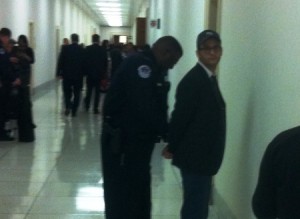
 This image, taken by a Democratic source, shows Josh Fox being arrested by Capitol Hill police.
WASHINGTON -- In a stunning break with First Amendment policy, House Republicans directed Capitol Hill police to detain a highly regarded documentary crew that was attempting to film a Wednesday hearing on a controversial natural gas procurement practice. Initial reports from sources suggested that an ABC News camera was also prevented from taping the hearing; ABC has since denied that they sent a crew to the hearing.
Josh Fox, director of the Academy Award-nominated documentary "Gasland" was taken into custody by Capitol Hill police this morning, along with his crew, after Republicans objected to their presence, according to Democratic sources present at the hearing. The meeting of the House Subcommittee on Energy and Environment had been taking place in room 2318 of the Rayburn building.
HuffPost has obtained exclusive video of the arrest of Josh Fox. Rep. Brad Miller (D-N.C.), the ranking Democrat on the subcommittee, can be heard at the end of the clip asking Republican Chairman Andy Harris (R-Md.) to halt the arrest and permit Fox to film the public hearing. Harris denies Miller's request as Fox is escorted out of the hearing in handcuffs.
WATCH Capitol Hill Police Arrest a Journalist for Filming a Public Hearing: (story continues below, click the link to watch the video of Josh Fox's arrest)
http://www.huffingtonpost.com/2012/02/01/house-republicans-order-j_n_1246971.html?utm_source=Triggermail&utm_medium=email&utm_term=Daily%20Brief&utm_campaign=daily_brief
"Gasland" received strong critical acclaim and takes a critical eye toward the practice of hydraulic fracturing, or "fracking," a process in which several tons of highly pressurized water and chemicals are injected into the ground, allowing valuable natural gas to escape. The practice is decried by ecological experts for destroying ecosystems and polluting groundwater. The energy industry keeps the actual content of fracking chemicals secret.
Fox had hoped to film Wednesday's hearing for a follow-up to "Gasland." Fox told HuffPost later Wednesday evening, "We did get his staff on the phone, they never returned the phone call," referring to staffers for Chairman Harris. "This is not transparency. This is a lockout and it's bad. It's the people's House, after all. We went through the proper channels to arrange to tape this hearing. We have taped congressional hearings before and we've been turned down before, but I disagree with the policy. Anyone who says they're a journalist is a journalist. It's called the First Amendment. It's the freedom of the press, and that is fundamental to our core identity as the United States of America."
Hearings are open to the public, and any citizen can attend. Regulations only govern the use of cameras. Even under an extreme adherence to the rules, Fox's camera could have been confiscated or disabled without subjecting him to arrest. And while Fox did not have formal Capitol Hill credentials, such formalities are rarely enforced against high-profile journalists. Temporary passes are easy to obtain, and if Republicans had objected on procedural grounds, they could have simply sent the crew to the front desk, rather than ordering police to arrest journalists. The right to a free press is protected by the First Amendment to the U.S. Constitution. Documentary crews are almost never denied access to public meetings of elected government officials.
UPDATE: 12:09 p.m. -- Capitol Police public information officer Sergeant Kimberly Schneider provided the following statement to HuffPost on the morning's events:
"At approximately 10:30 a.m. today, United States Capitol Police arrested Joshua Fox of Milanville, Pa. in room 2318 of the Rayburn House office building. He is charged with unlawful entry, and he is currently being processed at United States Capitol Police headquarters."
UPDATE: 2:27 p.m. -- Fox apparently had applied for credentialing the day before the hearing but had been unable to obtain official permission to film. He had asked a credentialed film crew to tape the proceedings on his behalf but was informed that this was not permitted.
Nevertheless, turning away journalists is extremely rare on Capitol Hill. The rules requiring pre-approval for film crews are designed to prevent hearings from being disrupted by hordes of camera operators. That was not the case for this hearing. Only two cameras requested entrance to the event, which was not crowded.
Subcommittee Chairman Andy Harris (R-Md.) was unavailable for comment, but several Democrats on the committee voiced outrage with the GOP's press blackout.
"I was chair of the Subcommittee for four years, and we frequently had people show up the day of a hearing to film," Rep. Brad Miller (D-N.C.) told HuffPost. "We asked for their name, but they were told if they would not disrupt the hearing, they were free to record. A couple of times staff said, 'You're getting in the way, don't stand there,' but other than that, I do not ever recall anything like this. We certainly never turned anyone away for not providing 24 hours' notice."
"It's an outrageous violation of the First Amendment," Rep. Zoe Lofgren (D-Calif.) told HuffPost. "Here we've got an Academy Award-nominated filmmaker, and it's an important subject and the subject that he did his prior film on for HBO. And they put him in handcuffs and hauled him out of there. This is stunning."
"I found it ironic that there was not a flood of cameras there," noted Rep. Paul Tonko (D-N.Y.). "There was the one camera and then before that, the ABC camera ... if you have a camera there to bring the issue home to the public, that's a good thing."
The hearing was already being filmed by C-SPAN. Josh Fox had only sought to obtain higher-quality video by bringing their own cameras to the event. Democrats attempted to suspend the rules governing camerawork to allow Fox and ABC to film the hearing, but Republicans, who hold a majority on all House committees and subcommittees, voted down the motion. Democrats then sought to postpone the hearing to allow for filming at a later date, a motion which Republicans also overruled.
UPDATE: 3:45 p.m. -- Republican staffers told Democrats that a crew for ABC News had also been denied access to the event, but ABC News told HuffPost that their organization did not have any journalists assigned to cover the hearing. It is not clear what caused the confusion.
"We definitely did not have a crew on the Hill this morning to cover this hearing," an ABC News spokeswoman told HuffPost. "The individual who was turned away absolutely did not have ABC news credentials."
UPDATE: 4:45 p.m. -- Rep. Jerry Nadler (D-N.Y.) told HuffPost, “I have served in the House of Representatives since 1992, and I had the privilege of chairing the Subcommittee on the Constitution, Civil Rights, and Civil Liberties. In all that time, I cannot recall a chair of any committee or subcommittee having ever ordered the removal of a person who was filming a committee proceeding and not being disruptive, whether or not that person was accredited. It is a matter of routine that all sorts of people photograph and record our proceedings. Most of them are not accredited. I cannot recall anyone questioning their right to be there."
Arthur Spitzer, legal director of the ACLU in Washington, explained that "congressional committees routinely allow professional journalists to record hearings even when they don't have official press credentials, and excluding a journalist because he doesn't share the political views of the committee chair is outrageous. The Supreme Court has explained many times that censorship based on viewpoint is the clearest kind of First Amendment violation, and that seems to be what happened here."
Josh Fox, meanwhile, has issued the following statement to the press:
WASHINGTON -- In a stunning break with First Amendment policy, House Republicans directed Capitol Hill police to detain a highly regarded documentary crew that was attempting to film a Wednesday hearing on a controversial natural gas procurement practice. Initial reports from sources suggested that an ABC News camera was also prevented from taping the hearing; ABC has since denied that they sent a crew to the hearing.
Josh Fox, director of the Academy Award-nominated documentary "Gasland" was taken into custody by Capitol Hill police this morning, along with his crew, after Republicans objected to their presence, according to Democratic sources present at the hearing. The meeting of the House Subcommittee on Energy and Environment had been taking place in room 2318 of the Rayburn building.
HuffPost has obtained exclusive video of the arrest of Josh Fox. Rep. Brad Miller (D-N.C.), the ranking Democrat on the subcommittee, can be heard at the end of the clip asking Republican Chairman Andy Harris (R-Md.) to halt the arrest and permit Fox to film the public hearing. Harris denies Miller's request as Fox is escorted out of the hearing in handcuffs.
WATCH Capitol Hill Police Arrest a Journalist for Filming a Public Hearing: (story continues below, click the link to watch the video of Josh Fox's arrest)
http://www.huffingtonpost.com/2012/02/01/house-republicans-order-j_n_1246971.html?utm_source=Triggermail&utm_medium=email&utm_term=Daily%20Brief&utm_campaign=daily_brief
"Gasland" received strong critical acclaim and takes a critical eye toward the practice of hydraulic fracturing, or "fracking," a process in which several tons of highly pressurized water and chemicals are injected into the ground, allowing valuable natural gas to escape. The practice is decried by ecological experts for destroying ecosystems and polluting groundwater. The energy industry keeps the actual content of fracking chemicals secret.
Fox had hoped to film Wednesday's hearing for a follow-up to "Gasland." Fox told HuffPost later Wednesday evening, "We did get his staff on the phone, they never returned the phone call," referring to staffers for Chairman Harris. "This is not transparency. This is a lockout and it's bad. It's the people's House, after all. We went through the proper channels to arrange to tape this hearing. We have taped congressional hearings before and we've been turned down before, but I disagree with the policy. Anyone who says they're a journalist is a journalist. It's called the First Amendment. It's the freedom of the press, and that is fundamental to our core identity as the United States of America."
Hearings are open to the public, and any citizen can attend. Regulations only govern the use of cameras. Even under an extreme adherence to the rules, Fox's camera could have been confiscated or disabled without subjecting him to arrest. And while Fox did not have formal Capitol Hill credentials, such formalities are rarely enforced against high-profile journalists. Temporary passes are easy to obtain, and if Republicans had objected on procedural grounds, they could have simply sent the crew to the front desk, rather than ordering police to arrest journalists. The right to a free press is protected by the First Amendment to the U.S. Constitution. Documentary crews are almost never denied access to public meetings of elected government officials.
UPDATE: 12:09 p.m. -- Capitol Police public information officer Sergeant Kimberly Schneider provided the following statement to HuffPost on the morning's events:
"At approximately 10:30 a.m. today, United States Capitol Police arrested Joshua Fox of Milanville, Pa. in room 2318 of the Rayburn House office building. He is charged with unlawful entry, and he is currently being processed at United States Capitol Police headquarters."
UPDATE: 2:27 p.m. -- Fox apparently had applied for credentialing the day before the hearing but had been unable to obtain official permission to film. He had asked a credentialed film crew to tape the proceedings on his behalf but was informed that this was not permitted.
Nevertheless, turning away journalists is extremely rare on Capitol Hill. The rules requiring pre-approval for film crews are designed to prevent hearings from being disrupted by hordes of camera operators. That was not the case for this hearing. Only two cameras requested entrance to the event, which was not crowded.
Subcommittee Chairman Andy Harris (R-Md.) was unavailable for comment, but several Democrats on the committee voiced outrage with the GOP's press blackout.
"I was chair of the Subcommittee for four years, and we frequently had people show up the day of a hearing to film," Rep. Brad Miller (D-N.C.) told HuffPost. "We asked for their name, but they were told if they would not disrupt the hearing, they were free to record. A couple of times staff said, 'You're getting in the way, don't stand there,' but other than that, I do not ever recall anything like this. We certainly never turned anyone away for not providing 24 hours' notice."
"It's an outrageous violation of the First Amendment," Rep. Zoe Lofgren (D-Calif.) told HuffPost. "Here we've got an Academy Award-nominated filmmaker, and it's an important subject and the subject that he did his prior film on for HBO. And they put him in handcuffs and hauled him out of there. This is stunning."
"I found it ironic that there was not a flood of cameras there," noted Rep. Paul Tonko (D-N.Y.). "There was the one camera and then before that, the ABC camera ... if you have a camera there to bring the issue home to the public, that's a good thing."
The hearing was already being filmed by C-SPAN. Josh Fox had only sought to obtain higher-quality video by bringing their own cameras to the event. Democrats attempted to suspend the rules governing camerawork to allow Fox and ABC to film the hearing, but Republicans, who hold a majority on all House committees and subcommittees, voted down the motion. Democrats then sought to postpone the hearing to allow for filming at a later date, a motion which Republicans also overruled.
UPDATE: 3:45 p.m. -- Republican staffers told Democrats that a crew for ABC News had also been denied access to the event, but ABC News told HuffPost that their organization did not have any journalists assigned to cover the hearing. It is not clear what caused the confusion.
"We definitely did not have a crew on the Hill this morning to cover this hearing," an ABC News spokeswoman told HuffPost. "The individual who was turned away absolutely did not have ABC news credentials."
UPDATE: 4:45 p.m. -- Rep. Jerry Nadler (D-N.Y.) told HuffPost, “I have served in the House of Representatives since 1992, and I had the privilege of chairing the Subcommittee on the Constitution, Civil Rights, and Civil Liberties. In all that time, I cannot recall a chair of any committee or subcommittee having ever ordered the removal of a person who was filming a committee proceeding and not being disruptive, whether or not that person was accredited. It is a matter of routine that all sorts of people photograph and record our proceedings. Most of them are not accredited. I cannot recall anyone questioning their right to be there."
Arthur Spitzer, legal director of the ACLU in Washington, explained that "congressional committees routinely allow professional journalists to record hearings even when they don't have official press credentials, and excluding a journalist because he doesn't share the political views of the committee chair is outrageous. The Supreme Court has explained many times that censorship based on viewpoint is the clearest kind of First Amendment violation, and that seems to be what happened here."
Josh Fox, meanwhile, has issued the following statement to the press:
I was arrested today for exercising my First Amendment rights to freedom of the press on Capitol Hill. I was not expecting to be arrested for practicing journalism. Today's hearing in the House Energy and Environment subcommittee was called to examine EPAs findings that hydraulic fracturing fluids had contaminated groundwater in the town of Pavillion, Wyoming. I have a long history with the town of Pavillion and its residents who have maintained since 2008 that fracking has contaminated their water supply. I featured the stories of residents John Fenton, Louis Meeks and Jeff Locker in GASLAND and I have continued to document the catastrophic water contamination in Pavillion for the upcoming sequel GASLAND 2. It would seem that the Republican leadership was using this hearing to attack the three year Region 8 EPA investigation involving hundreds of samples and extensive water testing which ruled that Pavillion's groundwater was a health hazard, contaminated by benzene at 50x the safe level and numerous other contaminants associated with gas drilling. Most importantly, EPA stated in this case that fracking was the likely cause. As a filmmaker and journalist I have covered hundreds of public hearings, including Congressional hearings. It is my understanding that public speech is allowed to be filmed. Congress should be no exception. No one on Capitol Hill should regard themselves exempt from the Constitution. The First Amendment to the Constitution states explicitly "Congress shall make no law...that infringes on the Freedom of the Press". Which means that no subcommittee rule or regulation should prohibit a respectful journalist or citizen from recording a public hearing.This is a developing story. Check back with HuffPost for more.
This was an act of civil disobedience, yes done in an impromptu fashion, but at the moment when they told me to turn off the cameras, I could not. I know my rights and I felt it was imperative to exercise them.
When I was led out of the hearing room in handcuffs, John Boehner's pledge of transparency in congress was taken out with me.
The people of Pavillion deserve better. The thousands across the US who have documented cases of water contamination in fracking areas deserve their own hearing on Capitol hill. They deserve the chance to testify in before Congress. The truth that fracking contaminates groundwater is out, and no amount of intimidation tactics --either outright challenges to science or the arrest of journalists --will put the genie back in the bottle. Such a brazen attempt to discredit and silence the EPA, the citizens of Pavillion and documentary filmmaking will ultimately fail and it is an affront to the health and integrity of Americans.
Lastly, in defense of my profession, I will state that many many Americans get their news from independent documentaries. The hill should immediately move to make hearings and meetings accessible to independent journalists and not further obstruct the truth from being reported in the vivid and in depth manner that is only achievable through long form documentary filmmaking.
I will be thinking on this event further and will post further thoughts and developments.
I have been charged with "unlawful entry" and my court date is February 15.
Josh Fox
Washington D.C.
2/1/12
08 October 2011
Bank Of America Debit Card Fee Leads To Legislative Response 3OKT11
bank of america is among the worst of the financial institutions sapping the chance of a economic recovery in the U.S. Their greed knows no bounds, here is their latest grab for your money, if you are foolish enough to bank with them. The story on HuffPost follows this call to action from the PCCC.....

Last week, Bank of America announced they will charge a new $60-per-year fee to use debit cards on basic things like groceries. It will pad their profits by an estimated $2 billion.
In reaction, a TV host cut up her Bank of America card on the air.
Now, Congressman Brad Miller -- from Bank of America's home state of North Carolina -- is going on offense against Bank of America with legislation that would make it much easier for customers to switch banks.
To gain momentum, Miller needs other members of Congress to pile on this week.
Can you sign our petition urging your Representative and others to support Brad Miller's "move your money" bill? Click here.
When the new debit card fee was announced, Sen. Dick Durbin said, “Bank of America customers, vote with your feet, get the heck out of that bank."
A right-wing blogger wrote, "I actually agree with Durbin to a point." One person shared, "After 30 years of banking with Bank of America, today I walked into a local branch and asked to speak to the branch manager and closed every account."
But here's the catch -- Bank of America intentionally puts up obstacles to customers leaving.
In many states, walking into a bank branch isn't even enough! Miller's bill would change that -- allowing people to close accounts by phone or Internet, and have things like direct deposit transfer automatically.
Urge Congress to hold Bank of America accountable now. Sign here.
Across America, a simmering rage is coming to a boil against Wall Street greed.
The Occupy Wall Street movement has channeled this anger. Today, we're focusing it into a deep corporate accountability campaign against one of Wall Street's worst actors.
Rep. Miller's bill is just the first step. Later, we'll organize at local branches across the country and target Bank of America with hard-hitting ads.
But first, please sign our petition urging your Representative and others to support Brad Miller's "move your money" bill today. Click here.
We'll deliver this petition to Congress, and work with Rep. Miller to move his legislation forward. Thanks for being a bold progessive.
-- Kristiane Skolmen, Stephanie Taylor, Adam Green, Neil Sroka, and the PCCC team
 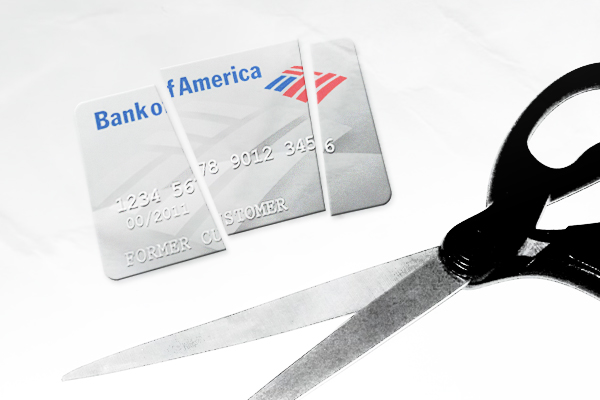 |
In reaction, a TV host cut up her Bank of America card on the air.
Now, Congressman Brad Miller -- from Bank of America's home state of North Carolina -- is going on offense against Bank of America with legislation that would make it much easier for customers to switch banks.
To gain momentum, Miller needs other members of Congress to pile on this week.
Can you sign our petition urging your Representative and others to support Brad Miller's "move your money" bill? Click here.
When the new debit card fee was announced, Sen. Dick Durbin said, “Bank of America customers, vote with your feet, get the heck out of that bank."
A right-wing blogger wrote, "I actually agree with Durbin to a point." One person shared, "After 30 years of banking with Bank of America, today I walked into a local branch and asked to speak to the branch manager and closed every account."
But here's the catch -- Bank of America intentionally puts up obstacles to customers leaving.
In many states, walking into a bank branch isn't even enough! Miller's bill would change that -- allowing people to close accounts by phone or Internet, and have things like direct deposit transfer automatically.
Urge Congress to hold Bank of America accountable now. Sign here.
Across America, a simmering rage is coming to a boil against Wall Street greed.
The Occupy Wall Street movement has channeled this anger. Today, we're focusing it into a deep corporate accountability campaign against one of Wall Street's worst actors.
Rep. Miller's bill is just the first step. Later, we'll organize at local branches across the country and target Bank of America with hard-hitting ads.
But first, please sign our petition urging your Representative and others to support Brad Miller's "move your money" bill today. Click here.
We'll deliver this petition to Congress, and work with Rep. Miller to move his legislation forward. Thanks for being a bold progessive.
-- Kristiane Skolmen, Stephanie Taylor, Adam Green, Neil Sroka, and the PCCC team
P.S. On the petition page, you can also write a note to Occupy Wall Street protesters. Our staffer on the ground will personally deliver these notes to their General Assembly. Sign here.
WASHINGTON -- While demonstrators in New York are calling for an occupation of Wall Street, a new push by Democrats in Congress proposes a different tactic: Just walk away.
Senate Majority Whip Dick Durbin and Rep. Brad Miller are going on the offensive against Bank of America after the financial behemoth cited Wall Street reform in announcing a new five dollar monthly debit charge last week. Miller, a Democrat from BofA's home state of North Carolina, plans to introduce legislation that would make it easy for consumers to switch banks and simultaneously swap their direct deposit, electronic bill paying and other automatic features that make moving money from one bank to another more hassle than it's often worth.
Illinois Democrat Dick Durbin, meanwhile, is encouraging consumers to abandon the bank's debit card. "My word to consumers across America is talk with your feet, look for a debit card that doesn't charge the Bank of America fee," Durbin told HuffPost, adding that the revenue from the new fee likely far outstrips what they'll lose to swipe fee reform. "It would be no surprise if we found out that Bank of America is overcharging consumers again. They've been found guilty of that in the past, but I really encourage consumers across America to look for competition that doesn't charge this fee, move their debit cards."
The Chicago Tribune, Durbin's home state paper, dubbed the BofA charge "the Durbin fee," which conservative blogs and Republicans have been happy to latch onto, arguing that the hike was a logical consequence of Durbin's swipe fee reform, which capped the fees banks could charge merchants for using debit cards.
On Saturday, the Federal Reserve instituted a 24 cent cap on swipe fees, estimating that running the card costs banks between 7 and 10 cents per swipe. The cap is roughly 20 cents lower than the average swipe fee had been previously.
Anne Pace, a Bank of America spokeswoman, noted that other banks are testing similar fees and that Regents and SunTrust are also hiking charges. "The price of a debit card was previously determined by the amount and type of transactions. We were able to pass some of these costs along to merchants, but because of regulatory changes, we are adjusting our pricing to reflect today’s economics," she told HuffPost.
On Friday, Durbin's office sent around a memo, obtained by HuffPost, to other senators who had supported his swipe fee amendment, telling them to reject the suggestion that swipe fee reform required BofA to raise fees. Banks raise fees no matter what, Durbin argued in defense, noting that they'd raised fees after the bailout.
The Electronic Payments Coalition, which represents banks in the swipe fee battle, hit back at Durbin. “It is astounding that Senator Durbin, who created today’s chaos, is now trying to point the finger at everyone but himself for the widely predicted consumer harm," spokeswoman Trish Wexler emailed to HuffPost.
"Senator Durbin has spent years pushing the agenda of giant retailers, while flatly ignoring repeated warnings by consumer advocates, economists, and regulators this type of consequence. The truth is that Senator Durbin knew that banks and credit unions across the board would have to raise prices. Instead of heeding our warnings and protecting consumers, he chose to put millions of dollars into the pockets of giant retailers.”
Miller's bill represents a chance to go on offense. Durbin told HuffPost it's something he could get behind, though he has yet to see the legislative language. "I've worked with Brad, he's come up with some pretty good ideas and I like the concept very much," Durbin said. "We've got to give consumers an opportunity for creating competition in the banking industry. Right now that is very difficult, we've got to make it easier."
The system in place today makes it difficult to switch accounts. But it doesn't have to be that way. The Federal Deposit Insurance Corporation regularly takes over failing banks on Friday afternoons and converts them to new banks by Monday morning, using software that makes sure not a single customer misses an automatic bill pay or a direct deposit. Miller's bill would require banks to make it as easy as technologically possible to switch accounts, and would forbid practices aimed at keeping consumers locked in.
Miller had been studying the legislation for at least a year, he said, but decided to pull the trigger after BofA's $5 fee was instituted. It is at heart a free-market reform, he said, and was inspired by HuffPost's Move Your Money campaign that unfolded after the bailout.
“If we can find a way to introduce real competition into banking, that'd do more than any regulation," Miller told HuffPost. "The biggest banks have turned the switch for market forces to the off position. If consumers could shop around for banks the way they can for everything else, banks wouldn’t think they had a God-given right to pay their executives vulgar bonuses and still make enormous profits, and consumers would get a much better deal."
Due to Republican-controlled redistricting, Miller faces a difficult primary against Democratic Rep. David Price if he hopes to remain in Congress, as both have been stuffed into the same district.
Legislation and regulation without a free market will ultimately fail, Miller said, and will lead to endless new fees as banks replace revenue lost to consumer protections with new charges. Without a real free market, consumers won't be able to respond the way they normally would.
Durbin noted that small banks and credit unions that are able, under Durbin's amendment, to charge higher swipe fees, should use that revenue to provide free debit cards that could win market share from BofA. "The community banks and credit unions that are exempt from this ought to step in with a zero charge debit card. At that point, it could be interesting. We could actually have some competition over debit cards," he said.
"In any other line of business, companies would be reluctant to raise their fees for fear of losing customers. That fear doesn't seem to be present in the banking industry," Miller said.
Even without the increased competition from Miller's bill, BofA's fee may not last. In January 2010, TCF Bank, which pioneered free checking in the 1980s, announced it would begin charging a monthly fee in response to Fed rules restricting overdraft charges. The move was regularly cited during the 2010 swipe fee fracas as evidence of the harm that would befall consumers if Durbin didn't back off. This January, TCF brought back free checking after losing customers.
One day before the Senate was expected to vote on delaying swipe fee reform in June, Chase went one step further: Thanks to the Durbin amendment, thousands of Chase customers were warned, your kid can forget about that trip to Disney World. "Congress recently enacted a new law known as the Durbin Amendment that significantly impacts debit cards," reads the letter. "As a result of this law, we will be changing our debit rewards program. After July 21, 2011 you will no longer earn Disney Dream Reward Dollars when you use your Disney Rewards Debit Card."
Durbin said that the fee is part of the bank's lobbying strategy to undo swipe fee reform. "I expect the banking industry to continue to kick and scream over this...They just happen to think they can win the day, ultimately, in Congress if they keep the pressure up," he said. "I'm not going to shed any tears for Bank of America. They made some awful decisions when it came to mortgages that jeopardized the future of their bank. They've had problems with profitability and losses leading up to this moment and for them to blame this law, which finally puts an end to the monopoly they had on swipe fees, it just doesn't bear up under close inspection."
Miller, in a letter to House colleagues, describes ways in which the legislation makes it easier to switch accounts:
HuffPosts's Zach Carter contributed reporting.
This article has been updated to include a statement from the Electronic Payments Coalition.
Bank Of America Debit Card Fee Leads To Legislative Response
http://www.huffingtonpost.com/2011/09/30/bank-of-america-fee_n_992623.htmlWASHINGTON -- While demonstrators in New York are calling for an occupation of Wall Street, a new push by Democrats in Congress proposes a different tactic: Just walk away.
Senate Majority Whip Dick Durbin and Rep. Brad Miller are going on the offensive against Bank of America after the financial behemoth cited Wall Street reform in announcing a new five dollar monthly debit charge last week. Miller, a Democrat from BofA's home state of North Carolina, plans to introduce legislation that would make it easy for consumers to switch banks and simultaneously swap their direct deposit, electronic bill paying and other automatic features that make moving money from one bank to another more hassle than it's often worth.
Illinois Democrat Dick Durbin, meanwhile, is encouraging consumers to abandon the bank's debit card. "My word to consumers across America is talk with your feet, look for a debit card that doesn't charge the Bank of America fee," Durbin told HuffPost, adding that the revenue from the new fee likely far outstrips what they'll lose to swipe fee reform. "It would be no surprise if we found out that Bank of America is overcharging consumers again. They've been found guilty of that in the past, but I really encourage consumers across America to look for competition that doesn't charge this fee, move their debit cards."
The Chicago Tribune, Durbin's home state paper, dubbed the BofA charge "the Durbin fee," which conservative blogs and Republicans have been happy to latch onto, arguing that the hike was a logical consequence of Durbin's swipe fee reform, which capped the fees banks could charge merchants for using debit cards.
On Saturday, the Federal Reserve instituted a 24 cent cap on swipe fees, estimating that running the card costs banks between 7 and 10 cents per swipe. The cap is roughly 20 cents lower than the average swipe fee had been previously.
Anne Pace, a Bank of America spokeswoman, noted that other banks are testing similar fees and that Regents and SunTrust are also hiking charges. "The price of a debit card was previously determined by the amount and type of transactions. We were able to pass some of these costs along to merchants, but because of regulatory changes, we are adjusting our pricing to reflect today’s economics," she told HuffPost.
On Friday, Durbin's office sent around a memo, obtained by HuffPost, to other senators who had supported his swipe fee amendment, telling them to reject the suggestion that swipe fee reform required BofA to raise fees. Banks raise fees no matter what, Durbin argued in defense, noting that they'd raised fees after the bailout.
The Electronic Payments Coalition, which represents banks in the swipe fee battle, hit back at Durbin. “It is astounding that Senator Durbin, who created today’s chaos, is now trying to point the finger at everyone but himself for the widely predicted consumer harm," spokeswoman Trish Wexler emailed to HuffPost.
"Senator Durbin has spent years pushing the agenda of giant retailers, while flatly ignoring repeated warnings by consumer advocates, economists, and regulators this type of consequence. The truth is that Senator Durbin knew that banks and credit unions across the board would have to raise prices. Instead of heeding our warnings and protecting consumers, he chose to put millions of dollars into the pockets of giant retailers.”
Miller's bill represents a chance to go on offense. Durbin told HuffPost it's something he could get behind, though he has yet to see the legislative language. "I've worked with Brad, he's come up with some pretty good ideas and I like the concept very much," Durbin said. "We've got to give consumers an opportunity for creating competition in the banking industry. Right now that is very difficult, we've got to make it easier."
The system in place today makes it difficult to switch accounts. But it doesn't have to be that way. The Federal Deposit Insurance Corporation regularly takes over failing banks on Friday afternoons and converts them to new banks by Monday morning, using software that makes sure not a single customer misses an automatic bill pay or a direct deposit. Miller's bill would require banks to make it as easy as technologically possible to switch accounts, and would forbid practices aimed at keeping consumers locked in.
Miller had been studying the legislation for at least a year, he said, but decided to pull the trigger after BofA's $5 fee was instituted. It is at heart a free-market reform, he said, and was inspired by HuffPost's Move Your Money campaign that unfolded after the bailout.
“If we can find a way to introduce real competition into banking, that'd do more than any regulation," Miller told HuffPost. "The biggest banks have turned the switch for market forces to the off position. If consumers could shop around for banks the way they can for everything else, banks wouldn’t think they had a God-given right to pay their executives vulgar bonuses and still make enormous profits, and consumers would get a much better deal."
Due to Republican-controlled redistricting, Miller faces a difficult primary against Democratic Rep. David Price if he hopes to remain in Congress, as both have been stuffed into the same district.
Legislation and regulation without a free market will ultimately fail, Miller said, and will lead to endless new fees as banks replace revenue lost to consumer protections with new charges. Without a real free market, consumers won't be able to respond the way they normally would.
Durbin noted that small banks and credit unions that are able, under Durbin's amendment, to charge higher swipe fees, should use that revenue to provide free debit cards that could win market share from BofA. "The community banks and credit unions that are exempt from this ought to step in with a zero charge debit card. At that point, it could be interesting. We could actually have some competition over debit cards," he said.
"In any other line of business, companies would be reluctant to raise their fees for fear of losing customers. That fear doesn't seem to be present in the banking industry," Miller said.
Even without the increased competition from Miller's bill, BofA's fee may not last. In January 2010, TCF Bank, which pioneered free checking in the 1980s, announced it would begin charging a monthly fee in response to Fed rules restricting overdraft charges. The move was regularly cited during the 2010 swipe fee fracas as evidence of the harm that would befall consumers if Durbin didn't back off. This January, TCF brought back free checking after losing customers.
One day before the Senate was expected to vote on delaying swipe fee reform in June, Chase went one step further: Thanks to the Durbin amendment, thousands of Chase customers were warned, your kid can forget about that trip to Disney World. "Congress recently enacted a new law known as the Durbin Amendment that significantly impacts debit cards," reads the letter. "As a result of this law, we will be changing our debit rewards program. After July 21, 2011 you will no longer earn Disney Dream Reward Dollars when you use your Disney Rewards Debit Card."
Durbin said that the fee is part of the bank's lobbying strategy to undo swipe fee reform. "I expect the banking industry to continue to kick and scream over this...They just happen to think they can win the day, ultimately, in Congress if they keep the pressure up," he said. "I'm not going to shed any tears for Bank of America. They made some awful decisions when it came to mortgages that jeopardized the future of their bank. They've had problems with profitability and losses leading up to this moment and for them to blame this law, which finally puts an end to the monopoly they had on swipe fees, it just doesn't bear up under close inspection."
Miller, in a letter to House colleagues, describes ways in which the legislation makes it easier to switch accounts:
The Freedom and Mobility in Consumer Banking Act makes the following changes and clarifications to existing law: Increases competition among banks by guaranteeing consumers the right to close a personal checking or savings account:
• Provides consumers the right to close an account at no charge
• Provides consumer the right to close an account at any time, regardless of whether the balance is positive, zero, or negative
• Provides consumer the right to close an account in person, by phone, or by other remote means as may be prescribed by regulation
Prohibits abusive fees and charges:
• Prohibits fees or charges from being assessed to an account after receiving a request to close an account
Requires banks to take reasonable steps to facilitate account closures:
• Requires institutions to notify consumers of preauthorized and recurring debits that hit their account for 30 days after a qualified account is closed
• Requires institutions to remit the balance in a closed account to the customer’s new account electronically if the consumer chooses
Prohibits banks from blacklisting consumers for failing to satisfy bank-generated fees assessed to an account at time of closure:
• Provides that consumers shall be given at least 30 days to remit payment for an account that is closed with a negative balance before the institution can initiate any collection activity, or reporting to a third party
• Provides that where an account is closed with a negative balance that is exclusively the result of overdraft or other fees assessed to the account by the depository institution, the institution may not report the account as delinquent to ChexSystems or any similar specialty consumer reporting service.
HuffPosts's Zach Carter contributed reporting.
This article has been updated to include a statement from the Electronic Payments Coalition.
12 November 2010
Does Social Security Have WMD? 12NOV10 & Deep-Six the Deficit Commission Report 11NOV10
HERE is a great piece from HuffPost with a very interesting bit of information
"More to the point, Social Security has nothing to do with the deficit. "Since Social Security is legally prohibited from ever spending more than it has collected in taxes," Dean Baker correctly argues, "it cannot under the law contribute to the deficit."
The Social Security system "fell outside of the mandate" of the Deficit Commission, Baker said. "They must have been expecting extra credit."
This is a bit of news that the deficit commission and the political parties, the Obama administration and the mainstream media seem to have deliberately left out of the story......but thanks to Rep Brad Miller (D NC) this very important tidbit has been pointed out.....WE NEED TO POINT THIS OUT TO PRES OBAMA BY E MAILING HIM AT
http://www.whitehouse.gov/contact AND TO OUR REPRESENTATIVE AND SENATORS, FIND THEIR E MAIL ADDRESSES AT
http://www.usa.gov/Contact/Elected.shtml
This from HuffPost followed by Dean Bakers piece in The New Republic...
The PowerPoint released by Erskine Bowles and Alan Simpson, the co-chairs of the National Commission on Fiscal Responsibility and Reform ("The Deficit Commission"), said we should "Reform Social Security for its own sake, not for deficit reduction."
No kidding. Social Security has nothing to do with the deficit. Not now, not ever.
Critics of Social Security have frequently made alarming claims about the future of the system to support calls for "reform." President George W. Bush conceded in 2005 that "it's not bankrupt yet," but said we couldn't "wait until it's bankrupt." "The problem with that notion is that the longer you wait, the more difficult it is to fix," President Bush said. "You realize that this system of ours is going to be short the difference between obligations and money coming in, by about $11 trillion, unless we act... That's trillion with a 'T.'"
That does sound scary.
So what was the period for that projected shortfall? It was for the "indefinite future."
Forecasts of the end times are usually the work of religious prophets, not economists or actuaries. According to the Book of Revelation, at the end of days earthquakes will level mountains, hail will fall mixed with fire, and a beast with seven heads and ten horns will arise from the seas.
In that context, a shortfall in the Social Security system just doesn't seem like that big a deal.
At least President Bush used the term "projected shortfall," but Republican talking heads sent forth to battle on cable television routinely used the word "deficit," implying that we'd have to pick up the difference.
No, we wouldn't. Here's how it would work if we just left the current law alone.
The system has been running a substantial surplus for a generation because the Baby Boom has been working and paying payroll taxes, and the Baby Boom dwarfs the generation now receiving benefits. The surplus has gone into the Trust Fund, which now stands at about $2.6 trillion (That's trillion with a "T.") As the Baby Boom retires, the system will stop running a surplus later this decade. Then the system will pay full benefits, including cost-of-living adjustments, from payroll taxes and the interest from the Trust Fund. About a decade after that, payroll taxes and interest on the Trust Fund will not be enough to pay full benefits, including cost of living adjustments. Then the system will pay full benefits, including cost of living adjustments, from payroll taxes, interest and the principal of the Trust Fund.
Around 2037, the principal of the Trust Fund will be exhausted. Under the existing law, the system will then reduce the benefits to what can be covered by payroll taxes. The projection is that the benefits would then be reduced by about 22 percent.
A 22-percent reduction in benefits is pretty unattractive, especially if the finances of the middle class are as fragile in 30 years as they are now. But proposals to "fix" Social Security by reducing benefits would really just swap one reduction of benefits for another.
Paul Krugman argues that raising the retirement age is a reduction of benefits that works to the disadvantage of blue-collar workers:
More to the point, Social Security has nothing to do with the deficit. "Since Social Security is legally prohibited from ever spending more than it has collected in taxes," Dean Baker correctly argues, "it cannot under the law contribute to the deficit."
The Social Security system "fell outside of the mandate" of the Deficit Commission, Baker said. "They must have been expecting extra credit."
We are right to worry about Social Security, and we are right to worry about our long-term deficit. But the two are completely distinct.
So proposing to "reform" Social Security because of long-term deficits is like invading Iraq because Afghanistan attacked us.
Or maybe the Social Security system has weapons of mass destruction.

"More to the point, Social Security has nothing to do with the deficit. "Since Social Security is legally prohibited from ever spending more than it has collected in taxes," Dean Baker correctly argues, "it cannot under the law contribute to the deficit."
The Social Security system "fell outside of the mandate" of the Deficit Commission, Baker said. "They must have been expecting extra credit."
This is a bit of news that the deficit commission and the political parties, the Obama administration and the mainstream media seem to have deliberately left out of the story......but thanks to Rep Brad Miller (D NC) this very important tidbit has been pointed out.....WE NEED TO POINT THIS OUT TO PRES OBAMA BY E MAILING HIM AT
http://www.whitehouse.gov/contact AND TO OUR REPRESENTATIVE AND SENATORS, FIND THEIR E MAIL ADDRESSES AT
http://www.usa.gov/Contact/Elected.shtml
This from HuffPost followed by Dean Bakers piece in The New Republic...
The PowerPoint released by Erskine Bowles and Alan Simpson, the co-chairs of the National Commission on Fiscal Responsibility and Reform ("The Deficit Commission"), said we should "Reform Social Security for its own sake, not for deficit reduction."
No kidding. Social Security has nothing to do with the deficit. Not now, not ever.
Critics of Social Security have frequently made alarming claims about the future of the system to support calls for "reform." President George W. Bush conceded in 2005 that "it's not bankrupt yet," but said we couldn't "wait until it's bankrupt." "The problem with that notion is that the longer you wait, the more difficult it is to fix," President Bush said. "You realize that this system of ours is going to be short the difference between obligations and money coming in, by about $11 trillion, unless we act... That's trillion with a 'T.'"
That does sound scary.
So what was the period for that projected shortfall? It was for the "indefinite future."
Forecasts of the end times are usually the work of religious prophets, not economists or actuaries. According to the Book of Revelation, at the end of days earthquakes will level mountains, hail will fall mixed with fire, and a beast with seven heads and ten horns will arise from the seas.
In that context, a shortfall in the Social Security system just doesn't seem like that big a deal.
At least President Bush used the term "projected shortfall," but Republican talking heads sent forth to battle on cable television routinely used the word "deficit," implying that we'd have to pick up the difference.
No, we wouldn't. Here's how it would work if we just left the current law alone.
The system has been running a substantial surplus for a generation because the Baby Boom has been working and paying payroll taxes, and the Baby Boom dwarfs the generation now receiving benefits. The surplus has gone into the Trust Fund, which now stands at about $2.6 trillion (That's trillion with a "T.") As the Baby Boom retires, the system will stop running a surplus later this decade. Then the system will pay full benefits, including cost-of-living adjustments, from payroll taxes and the interest from the Trust Fund. About a decade after that, payroll taxes and interest on the Trust Fund will not be enough to pay full benefits, including cost of living adjustments. Then the system will pay full benefits, including cost of living adjustments, from payroll taxes, interest and the principal of the Trust Fund.
Around 2037, the principal of the Trust Fund will be exhausted. Under the existing law, the system will then reduce the benefits to what can be covered by payroll taxes. The projection is that the benefits would then be reduced by about 22 percent.
A 22-percent reduction in benefits is pretty unattractive, especially if the finances of the middle class are as fragile in 30 years as they are now. But proposals to "fix" Social Security by reducing benefits would really just swap one reduction of benefits for another.
Paul Krugman argues that raising the retirement age is a reduction of benefits that works to the disadvantage of blue-collar workers:
[W]hile average life expectancy is indeed rising, it's doing so mainly for high earners, precisely the people who need Social Security least. Life expectancy in the bottom half of the income distribution has barely inched up over the past three decades. So the Bowles-Simpson proposal is basically saying that janitors should be forced to work longer because these days corporate lawyers are living to a ripe old age.Would blue-collar workers be better off if we raised the retirement age or let an across-the-board cut in benefits go into effect in 30 years or so? Isn't that a question we should ask?
More to the point, Social Security has nothing to do with the deficit. "Since Social Security is legally prohibited from ever spending more than it has collected in taxes," Dean Baker correctly argues, "it cannot under the law contribute to the deficit."
The Social Security system "fell outside of the mandate" of the Deficit Commission, Baker said. "They must have been expecting extra credit."
We are right to worry about Social Security, and we are right to worry about our long-term deficit. But the two are completely distinct.
So proposing to "reform" Social Security because of long-term deficits is like invading Iraq because Afghanistan attacked us.
Or maybe the Social Security system has weapons of mass destruction.
Deep-Six the Deficit Commission Report
- Dean Baker
- November 11, 2010 | 12:00 am
For more coverage of the debt commission report, read Jonathan Chait and Jonathan Cohn.
Senator Alan Simpson, the chairman of the bipartisan deficit commission, spent much of his life scolding people for being dependent on Social Security and Medicare and complaining that they didn’t save enough. Now, based on the draft proposal released yesterday, it appears that he and his co-chairman Erskine Bowles never departed from this attitude in steering their thinking.
Given the state of the economy, the co-chairs’ report reads like a document from Mars. Just to remind those of us who earn their living on planet earth (outside of Wall Street), the country is suffering from 9.6 percent unemployment. More than 25 million people are unemployed, underemployed, or have given up looking for work altogether. Tens of millions of people are underwater in their mortgage and millions face the prospect of losing their home to foreclosure.
We did not get here because of government deficits, contrary to what Mr. Bowles seemed to suggest at the co-chairs’ press conference today. We got here because of the bursting of an $8 trillion housing bubble. This bubble was fueled by the reckless and possibly unlawful practices of the Wall Street banks, like Morgan Stanley, the bank on whose board Mr. Bowles sits.
This is important background—because the economy’s current problem has nothing, zero, nada to do with deficits. Its problem is a lack of demand. If there were more demand, more people would be employed. The government is the only force capable of creating demand right now, since the housing bubble wealth that had been fueling the economy has largely disappeared. This means that if our commission co-chairs had ever bothered to look at the current deficit in the context of the economic crisis, they would be complaining that the deficit is too small rather than too large.
Their ignorance of basic economics also leads them to hype unfounded fears about the longer-term picture. If they understood the fact that the current deficit is a support for the economy, rather than a drain on the economy, they would not be concerned about the buildup of debt taking place at the moment. There is no reason that the Fed can’t just buy this debt (as it is largely doing) and hold it indefinitely. (The Fed has other tools to ensure that this expansion of the monetary base does not lead to inflation.)
That way, the debt creates no interest burden for the country, since the Fed refunds the interest to the Treasury every year. Last year the Fed refunded almost $80 billion in interest to the Treasury, nearly 40 percent of the country’s net interest burden. This means that the fears raised by Simpson and Bowles of an exploding debt reaching 90 percent of GDP by the end of the decade have no foundation in reality.
The other fear that Simpson and Bowles raised, the Chinese holdings of debt, should be condemned as xenophobic fear-mongering. Insofar as China’s holding of U.S. assets is a problem, it is holdings of assets period, not just government bonds. If China holds $2 trillion of private stock, bonds, and other assets it has the same impact on the United States as if it held $2 trillion in government bonds. It represents money in interest, dividends, and profits that is flowing out of the United States and to China, meaning that we will be less wealthy since much of our future output will be income to foreigners, not to people in the United States.
But the transfer of wealth to China depends entirely on our trade deficit, which is determined by the value of the dollar, not the budget deficit. Simpson and Bowles decided not to let this basic economic fact get in their way.
Over the longer term, the country is projected to face a deficit problem, but this is almost entirely attributable to the projection that private sector health care costs will continue to grow at an explosive rate. More than half of our health care is paid for by the government, so this projected growth rate of health care costs would eventually lead to serious budget problems in addition to leading to enormous problems for the private sector. However, the underlying problem is the broken health care system, not public sector health care programs. This subtlety also seems to have escaped Simpson and Bowles.
Finally, it is striking that they felt the need to address Social Security's solvency even though it was not part of their mandate. The commission’s mandate was to deal with the country’s fiscal problems. Since Social Security is legally prohibited from ever spending more than it has collected in taxes, it cannot under the law contribute to the deficit.
But Simpson and Bowles are scolds. So they produced a plan that will substantially reduce Social Security benefits for most middle class workers, even though this program fell outside of their mandate. They must have been expecting extra credit.
There are certainly some positive items in the report. For example, they want to limit the mortgage interest-rate deduction for expensive houses. They also want to get rid of the deduction for cafeteria benefit plans; one of the stupidest tax breaks ever designed. But, these items will likely go nowhere, which would be a good place to leave the rest of the report.
Dean Baker is the co-director of the Center for Economic and Policy Research. His most recent book is False Profits: Recovering from the Bubble Economy (Polipoint Press, 2010.)
For more TNR, become a fan on Facebook and follow us on Twitter.
Senator Alan Simpson, the chairman of the bipartisan deficit commission, spent much of his life scolding people for being dependent on Social Security and Medicare and complaining that they didn’t save enough. Now, based on the draft proposal released yesterday, it appears that he and his co-chairman Erskine Bowles never departed from this attitude in steering their thinking.
Given the state of the economy, the co-chairs’ report reads like a document from Mars. Just to remind those of us who earn their living on planet earth (outside of Wall Street), the country is suffering from 9.6 percent unemployment. More than 25 million people are unemployed, underemployed, or have given up looking for work altogether. Tens of millions of people are underwater in their mortgage and millions face the prospect of losing their home to foreclosure.
We did not get here because of government deficits, contrary to what Mr. Bowles seemed to suggest at the co-chairs’ press conference today. We got here because of the bursting of an $8 trillion housing bubble. This bubble was fueled by the reckless and possibly unlawful practices of the Wall Street banks, like Morgan Stanley, the bank on whose board Mr. Bowles sits.
This is important background—because the economy’s current problem has nothing, zero, nada to do with deficits. Its problem is a lack of demand. If there were more demand, more people would be employed. The government is the only force capable of creating demand right now, since the housing bubble wealth that had been fueling the economy has largely disappeared. This means that if our commission co-chairs had ever bothered to look at the current deficit in the context of the economic crisis, they would be complaining that the deficit is too small rather than too large.
Their ignorance of basic economics also leads them to hype unfounded fears about the longer-term picture. If they understood the fact that the current deficit is a support for the economy, rather than a drain on the economy, they would not be concerned about the buildup of debt taking place at the moment. There is no reason that the Fed can’t just buy this debt (as it is largely doing) and hold it indefinitely. (The Fed has other tools to ensure that this expansion of the monetary base does not lead to inflation.)
That way, the debt creates no interest burden for the country, since the Fed refunds the interest to the Treasury every year. Last year the Fed refunded almost $80 billion in interest to the Treasury, nearly 40 percent of the country’s net interest burden. This means that the fears raised by Simpson and Bowles of an exploding debt reaching 90 percent of GDP by the end of the decade have no foundation in reality.
The other fear that Simpson and Bowles raised, the Chinese holdings of debt, should be condemned as xenophobic fear-mongering. Insofar as China’s holding of U.S. assets is a problem, it is holdings of assets period, not just government bonds. If China holds $2 trillion of private stock, bonds, and other assets it has the same impact on the United States as if it held $2 trillion in government bonds. It represents money in interest, dividends, and profits that is flowing out of the United States and to China, meaning that we will be less wealthy since much of our future output will be income to foreigners, not to people in the United States.
But the transfer of wealth to China depends entirely on our trade deficit, which is determined by the value of the dollar, not the budget deficit. Simpson and Bowles decided not to let this basic economic fact get in their way.
Over the longer term, the country is projected to face a deficit problem, but this is almost entirely attributable to the projection that private sector health care costs will continue to grow at an explosive rate. More than half of our health care is paid for by the government, so this projected growth rate of health care costs would eventually lead to serious budget problems in addition to leading to enormous problems for the private sector. However, the underlying problem is the broken health care system, not public sector health care programs. This subtlety also seems to have escaped Simpson and Bowles.
Finally, it is striking that they felt the need to address Social Security's solvency even though it was not part of their mandate. The commission’s mandate was to deal with the country’s fiscal problems. Since Social Security is legally prohibited from ever spending more than it has collected in taxes, it cannot under the law contribute to the deficit.
But Simpson and Bowles are scolds. So they produced a plan that will substantially reduce Social Security benefits for most middle class workers, even though this program fell outside of their mandate. They must have been expecting extra credit.
There are certainly some positive items in the report. For example, they want to limit the mortgage interest-rate deduction for expensive houses. They also want to get rid of the deduction for cafeteria benefit plans; one of the stupidest tax breaks ever designed. But, these items will likely go nowhere, which would be a good place to leave the rest of the report.
Dean Baker is the co-director of the Center for Economic and Policy Research. His most recent book is False Profits: Recovering from the Bubble Economy (Polipoint Press, 2010.)
For more TNR, become a fan on Facebook and follow us on Twitter.
Subscribe to:
Posts (Atom)