NORTON META TAG

Showing posts with label bribery. Show all posts

10 March 2026

Shoddy $1 Million Vietnam War Memorial, Mired in Fraud, Is Being Torn Down 10MAR26


Orange County Supervisor Janet Nguyen wants to demolish the unfinished Vietnam War Memorial in Fountain Valley’s Mile Square Park. (Allen J. Schaben/Los Angeles Times)

FRAUD, bribery, theft, conspiracy all committed by a gop / greed over people-republican party politician!!! And no, this time this isn't about NOT MY pres drumpf / trump. But where is the outrage??? Where are the additional investigations??? The ignorance based, hate fueled, racist attacks on the Vietnamese immigrant community??? ( I REALLY HOPE THAT DOESN'T HAPPEN ). This from Military.com.....

Shoddy $1 Million Vietnam War Memorial, Mired in Fraud, Is Being Torn Down


Military.com | By Kevin Damask
Published 

A Vietnam War memorial in Southern California, plagued by fraud and political scandal nearly from the start, will be demolished, according to local officials. 

Plans for the memorial in Orange County were unveiled in 2023 to honor Vietnamese troops who worked alongside U.S. forces in Vietnam. Orange County, a mostly affluent region of California, features the largest number of Vietnamese Americans in the country. 

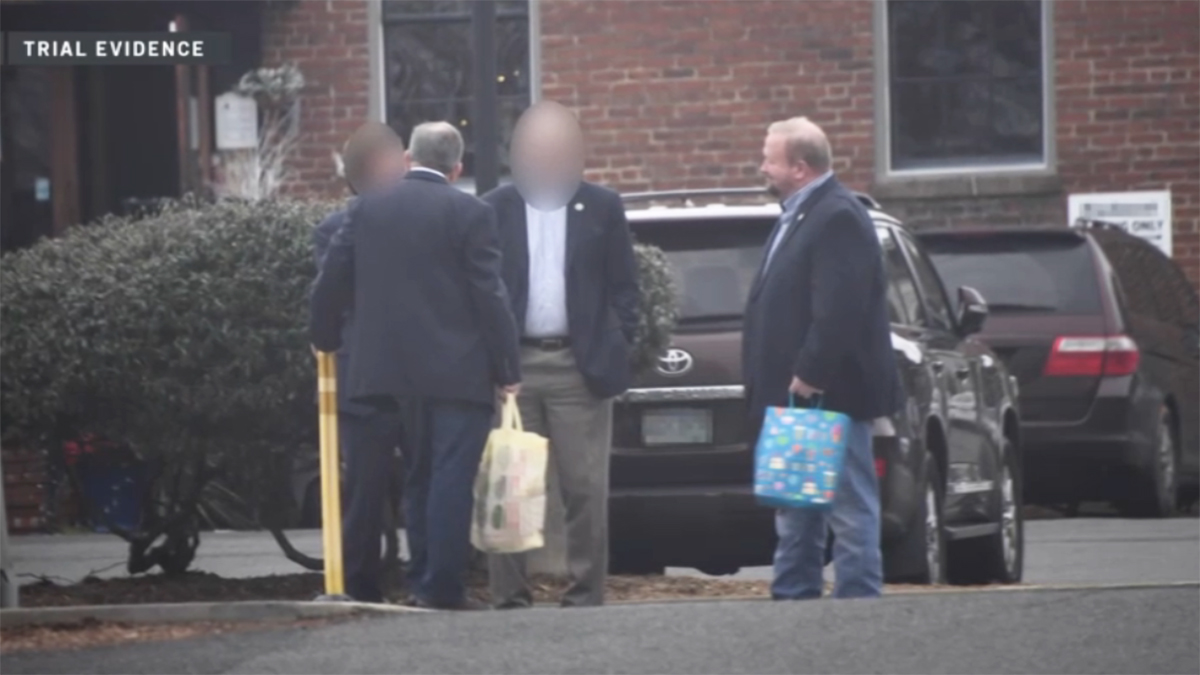
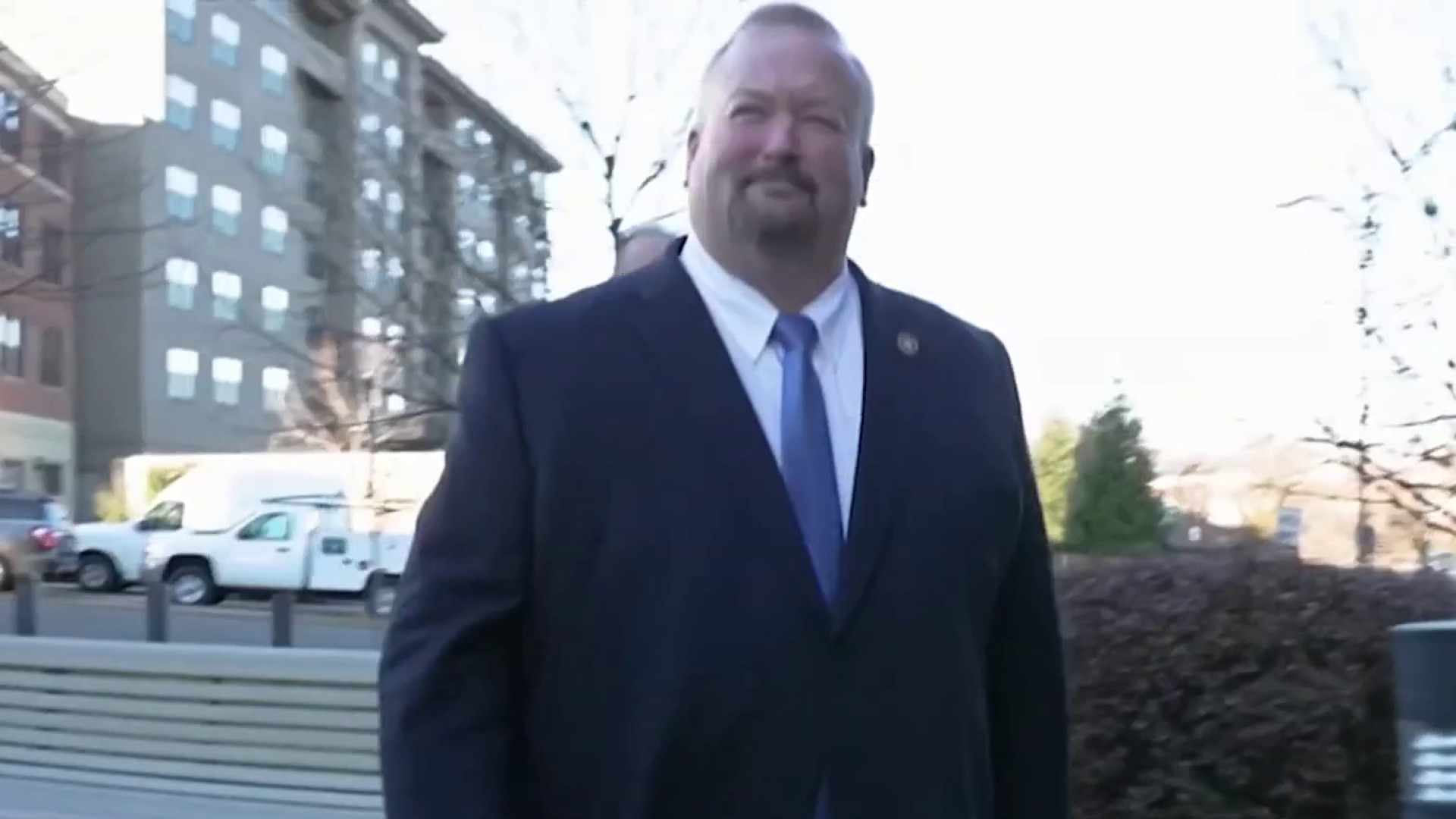
Andrew Do, the embattled former Orange County Supervisor, created the project, designating $1 million from local taxpayers to a nonprofit called the Viet America Society. However, an investigation showed that Do was siphoning money from the organization for personal use. Do faced prosecution on conspiracy charges and was sentenced to five years in prison. 

While Do faced legal woes, the Vietnam Memorial sat idle, wilting in the Southern California sun. The project was taken over by new leadership, who said they were appalled by the memorial’s shabby construction. 

Tear Down, Start Over 

Last fall, the Los Angeles Times reported that repairing the half-finished monument would incur costs between $168,000 to $420,000, adding an extra $40,000 to complete the engraving process, making sure each deceased veteran’s name is listed on the wall.  

With the heavy price tag for renovation, Orange County officials decided to tear down the memorial (a much less expensive process) and totally rebuild the memorial. Last week, crews came to Mile Square Regional Park to begin the process of demolishing an idea once promising, now being torn to rubble. 

Janet Nguyen, Do’s successor as county supervisor, said the memorial was a “disgrace” and vowed to do better.  

“The county decided to tear down the wall because we can do better. This memorial is a disgrace to veterans and not the respect they deserve,” Nguyen said in a statement to the Daily Mail. “We have been looking for alternative options, including a space at the new veteran’s cemetery.” 

Telling local news station KTLA last November that the disgraced memorial was a “heartbreaking” way to honor veterans, she noted the monument, bearing no wheel-chair accessible path, could not be enjoyed by veterans with disabilities.

“What was the point?” Nguyen said at a November press conference. “They ... put up these cheap materials that are getting worn down already within not even a year, just so they could launder the rest of the money themselves.” 

Nick Beradino, who serves as president of the Veterans Alliance of Orange County, told the L.A. Times that the memorial looked beyond repair, calling it “trashy.” 

“It dishonors the service of the brave men and women whose names are on that wall,” Beradino said.  “It’s time to tear it down and move forward.” 

A Tale of Deception 

Once the monument is torn down, county officials hope to move on from Do’s fraudulent tenure as supervisor. 

In 2024, Do pleaded guilty to taking more than $500,000 in bribery money and funneling $10 million in COVID-19 relief funds to the Viet America Society. Based on a report from the Central District of California’s U.S. Attorney’s Office, Do moved about $224,000 to his daughter, Rhiannon Do, who was helping run the Viet America Society. 

Last June, Todd Spitzer, Orange County district attorney, said Do “transformed the County of Orange into an ATM available to his insiders, his loved ones, and himself, withdrawing millions of dollars to buy houses, lavish dinners, and expensive wine while the elderly, the sick, and the vulnerable who depended on Andrew Do were left to fend for themselves.” 

According to the Department of Justice, Do also filtered funds through the non-profit for his own benefit, using tens of thousands of dollars to pay property tax and credit card bills. 

Do certainly left a mess in his destructive wake, but as county officials finish tearing down the old Vietnam veterans memorial, they hope to start fresh and construct a new one properly honoring those who served.

30 May 2025

Trump’s Air Force One deal with Qatar not final, despite U.S. claims 28MAI25


 HERE'S a big surprise, NOT MY pres drumpf / trump and his fascist administration LIED to us about how this "gift" from the brutal authoritarian government of Qatar came to be. Qataris are not our friends, they are not even trust worthy allies. But then NOT MY pres drumpf / trump, NOT MY vp vance and their fascist authoritarian administration, all corrupt, all greedy aren't our friends either, and that is sad. We can only continue to fight to save our democratic Republic in the courts, the U.S. Congress and the upcoming elections and pray for help in defeating our ongoing national nightmare. From the Washington Post.....

Trump’s Air Force One deal with Qatar not final, despite U.S. claims


The delay reflects lingering concerns about legal liabilities stemming from a White House maneuver to transform what was originally a sale between two countries into a “gift.”


Despite claims by the Defense Department to the contrary, legal teams representing the U.S. and Qatari governments have not finalized an agreement for transferring the luxury Boeing 747-8 jetliner that President Donald Trump wants for Air Force One amid outstanding requests by Qatar for Washington to clarify the transaction’s terms, said officials familiar with the matter.

Qatar is insisting that a memorandum of understanding between Washington and Doha specify that the aircraft’s transfer was initiated by the Trump administration and that Qatar is not responsible for any future transfers of the plane’s ownership, these people said.

The delay reflects lingering concerns about legal liability stemming from the White House maneuver to transform what was originally a sale between two countries into a “gift” that Trump continues to tout as a major deliverable from his recent trip to the Middle East.

“[I] got a beautiful big magnificent free airplane for the United States Air Force,” Trump told reporters in the Oval Office on Wednesday. “Very proud of that.”

The outstanding legal work is not expected to scuttle the plane deal, the officials said, but the clarifications are likely to invite further scrutiny of the administration’s claims about how the deal originated.

Trump initially said it was Qatar that reached out and offered him the luxury jet free of charge. In fact, it was the Trump administration that first approached Qatar this winter about acquiring the plane through a sale after the president made clear to aides that he was upset about delays of two Boeing jets purchased during his first term for $3.9 billion, officials said. Discussion about the sale later evolved into Qatar agreeing to provide the plane as a gift, a development reported previously by CNN and the New York Times.

A White House official, who like others spoke on the condition of anonymity to discuss a sensitive topic, confirmed that the details of the plane transfer are still being finalized.

Anna Kelly, a spokeswoman for the White House, said there is no question, however, that the plane will be given to the United States free.

“As the president has said, this will be a sovereign-to-sovereign gift to the U.S. Air Force,” Kelly said in a statement to The Washington Post.

In recent weeks, Qatar has faced intense criticism from Democrats and some Republicans for the luxury jet arrangement. Sen. Chris Murphy (D-Connecticut) and a group of fellow Democrats introduced legislation to block $1.9 billion in arms sales to Doha unless the offer was rescinded.

“It’s an illegal bribe that the President of the United States is champing at the bit to accept. That’s unconstitutional and not how we conduct foreign policy,” Murphy said at the time.

House Democrats, led by Rep. Gregory W. Meeks (D-New York), have introduced their own legislation that would block federal funds from being used to transfer a foreign country’s plane to the U.S. government or to Trump’s presidential library, as administration officials suggested he would do upon leaving office.

Democrats were particularly outraged about plans for the jet, appraised at roughly $180 million, to be transferred to Trump’s presidential library. Trump suggested on Wednesday that his critics were wrong to worry about that, noting that the mega jet would be far too large for personal use.

“They tried to say, ‘Oh, it’s Trump’s airplane,’” Trump told reporters in the Oval Office. “Oh, yeah, sure. It’s too big. It’s frankly, it’s too big. Much too big.”

White House Counsel David Warrington, however, wrote a memo in early March stating that the Defense Department could accept a gift of the plane from Qatar in two phases, initially to the U.S. government and then later to the Trump Presidential Library Foundation once Trump left office, said two people familiar with the matter.

It had appeared that the legal work was finalized last week after Pentagon spokesman Sean Parnell said in a statement that the “secretary of defense has accepted a Boeing 747 from Qatar in accordance with all federal rules and regulations.” But the last communication between the legal teams was May 9, and they had not concluded their work, officials said.

The Defense Department declined to comment.

Trump’s determination to complete the deal has been apparent to his aides since he toured the aircraft on Feb. 15 at the Palm Beach International Airport and admired its interior, officials said. “They’re giving it to me,” Trump remarked to those around him.

Trump “loved it,” when he saw the aircraft in person, finding it far more updated, modern and spacious than the existing planes used for Air Force One, and appreciating that there were “more work stations” available on the new jet for him and his aides to use, a second White House official said.

Scrutiny of the plane deal since it was announced, just before Trump’s visit to Qatar, has not deterred the president or his team, the White House official added. “Everyone thinks that we’re scared of the plane situation, that we’re not really going to do it,” the official said. “We’re looking forward to it. Everyone is going to love it. The press is going to love it. We’re not cowardly.”

The Trump administration has commissioned the defense contractor L3Harris to retrofit the Qatari plane and bring it into compliance with the rigorous safety and security standards for presidential transport. The work is to be done in Texas.

After Trump toured the jet, Air Force officials reviewed the aircraft and found that it was “very poorly maintained” and would require millions of dollars just to bring it up to satisfactory maintenance conditions, said one person familiar with the matter. The Air Force assessed then that there was no way the jet could ferry the president in its current state.

The Air Force estimated then that it could cost $1.5 billion to meet those requirements. To then remove the military gear and convert it for civilian use after Trump leaves office could cost an estimated $500 million, said two people familiar with the matter.

One of these officials said it was unclear if those estimates still hold true, because the president has the authority to waive certain requirements, former U.S. officials said.

“If the president said, ‘I want this in a year and a half, and I don’t care what capabilities it has as long as it’s a luxury flying palace with my colors on it,’” then it can be done, said former Air Force secretary Frank Kendall. But he’ll have to waive some security requirements, which he can do, Kendall said. “He’s the commander in chief. Nobody’s going to make him have those features.”

+1


26 April 2012

Burden of Proof: Geithner, the President, and Wall Street's Unpunished Crimes 26APR12

I was naive, I thought that N.Y. AG Eric Schneiderman was going to go after the greedy wall street financiers and bankers that caused the "Great" recession that began in 2008 over the objections of the Treasury Dept. Now it seems, unless he moves quickly, the skeptics will be right, the bank-financial cabal and wall street corporations own a controlling majority of our elected officials and Schneiderman is a eunuch. Anyone wanna bet the winning word in the 2012 national spelling bee will be plutocracy? From HuffPost.....
Forgery. Perjury. Investor fraud. Bribery. Money laundering. The body of evidence against individuals at the nation's biggest banks is overwhelming. Nothing speaks louder about the banks' guilt than this evidence -- nothing, that is, except the billions they've paid to settle the charges.
The Administration reacted indignantly this week to suggestions it's still slow-walking its investigation. And then, despite all this evidence, the Treasury Secretary of the United States proclaimed that no laws had been broken. And the White House wonders why its word is no longer enough?
A source in the office of a key figure in the investigation has denied a new story that they've ruled out criminal prosecutions. But the burden of proof has shifted. Nothing will convince the public now except action.
Straw Men

Whether it's JPMorgan Chase settling bribery charges in Alabama, Wells Fargo settling charges of laundering drug-cartel money in Mexico, or the nation's five largest banks buying their way out of widespread foreclosure fraud and tax evasion, never in history has so much evidence led to so little action. Investigators pinpointed the fraudulent activity of individual accountants in GE Capital's settlement with the SEC, only to be dumbfounded to discover that no criminal indictments were handed down.
So it was nothing short of astonishing to hear the Secretary of the Treasury assert yesterday that no crimes were committed by America's banks, saying that "most financial crises are caused by a mix of stupidity and greed and recklessness and risk-taking and hope" and adding "you can't legislate away stupidity and risk-taking and greed and recklessness."
That's a straw-man argument, since nobody has suggested outlawing character traits. The Administration's critics are pointing to a mound of evidence implicating bankers in criminal activity and asking the simple question: Where are the prosecutions?
Free Pass

Geithner was doubling down on an assertion his boss made last December, when President Obama told 60 Minutes that "Some of the most damaging behavior on Wall Street -- in some cases some of the least ethical behavior on Wall Street -- wasn't illegal."
Deliberately or not, that sent a message to bankers that they could stop worrying about indictments -- that is, if they ever had worried. Why would they? There's been no investigation, no grilling, no subpoenaing of bank executives' emails or phone records. And as far back as 2010, Eric Holder and his Justice Department were trying to pass off long-standing investigations as part of a major assault against financial fraud called "Operation Blind Trust."
The DoJ's claims were quickly debunked and "Blind Trust" was shown to be nothing more than a deception which a Bloomberg columnist said used "trumped-up numbers." The Columbia Journalism Review summed up their recap of "Blind Trust" coverage with the headline, "Obama Administration's Financial Fraud Task Force Stunt Misfires."
Burden of Proof
But we were told those days are over. Now the President's really cracking down on Wall Street, we were told. In the face of widespread criticism for his proposed foreclosure fraud settlement with five top banks, the President eventually accompanied that deal with a promise of tougher enforcement. He appointed New York State Attorney General Eric Schneiderman, who had been pursuing banks and resisting previous deals, to his previously-lethargic mortgage fraud group.
"The mortgage fraud task force I announced in my State of the Union address retains its full authority to aggressively investigate the packaging and selling of risky mortgages that led to this crisis," the President said on February 9. "Working closely with state attorneys general, we're going to keep at it until we hold those who broke the law fully accountable."
But then there were stories that the task force's proposed staff, whose proposed numbers were already absurdly low when compared to those used to pursue criminal behavior under Reagan after the much smaller savings and loan scandal of the 1980s, hadn't even been hired.
The Administration responded swiftly. Unnamed Justice Department employees joined Schneiderman's press secretary in telling The Nation's George Zornick that the task force's five co-chairs are in "constant communication" and "meet regularly." Fifty attorneys and other employees were already working on the project, Zornick was told. (It was not made clear whether they were assigned to the task force full-time.)
The Candidate

Yesterday Zornick published a piece quoting former Democratic Rep. Brad Miller, an outspoken advocate for bank investigations, as saying he was strung along by the task force after being led to believe he was a leading candidate by Schneiderman's office. What's more, he made the explosive suggestion that, in Zornick's words, "the working group was afraid of Wall Street."
Miller told Zornick that he knew "Republicans were watching the work of the task force very closely and very critically, and that they would oppose my playing that role." Most explosively, he said he had been told that "People being indicted and looking at the possibility of prison sentences -- they were saying they did not expect any of that. They expect civil litigation or civil enforcement but not criminal prosecution."
If the task force had abandoned any thoughts of criminal prosecution with Schneiderman's assent, it would be a political and legal bombshell. But a source in Schneiderman's office who said he was Miller's point of contact denies that suggestion -- "vehemently," he added.
The source said Miller was a candidate for the job, but that some felt he lacked prosecutorial experience. In addition, I was told, concerns were expressed about appointing someone with a political background. "That would give Republicans another avenue of attack against the whole task force," the source said. (The Republicans have already been harrassing the group at every opportunity.) Schneiderman's office recognizes that statutes of limitation present a real problem.
"But abandon prosecutions altogether," the source added, "and let the word get out that everybody's off the hook? How silly would that be?"
The Problem

The real problem isn't that they haven't appointed the right Executive Director for the task force,although that's extremely important. The real problem is that the Administration didn't take more aggressive action in 2009 or 2010 to investigate criminal behavior on Wall Street. Now the wrongdoers -- and their political sympathizers -- are trying to run out the clock.
The real problem is that the senior officials in the same Administration are making public proclamations about the innocence of people who should, by all rights, be suspects in a criminal investigation.
The real problem isn't that somebody's lust for vengeance isn't being fulfilled. It's not even the fact that senior officials find it understandably difficult to contemplate criminal investigations of people they've known for years as colleagues, friends... and yes, as donors.
The real problem is this: As long as bankers know they won't be prosecuted for committing crimes they'll commit them again. Officials in the Justice Department and elsewhere privately express fears that it will be difficult to obtain convictions after so much time has passed, or in cases where intent is difficult to prove.
But they don't even look like they're trying. Comments like Mr. Geithner's only add to the perception that bankers have a free pass to commit crimes without fear of prosecution. That's not just an injustice. It's also a threat to our economic security.
This perception can only be changed if the Administration moves aggressively to hire and staff this Task Force with the best people and best managers possible. The public needs to see action, and it needs to see it now.
http://www.huffingtonpost.com/rj-eskow/burden-of-proof-geithner_b_1456951.html?utm_source=Alert-blogger&utm_medium=email&utm_campaign=Email%2BNotifications

17 September 2011

Lawmakers Seek Transparency From Supercommittee 16SEP11

THE "super committee" is not constitutional, and there will no doubt be court challenges once they present their recommendations to Congress. Until then, if you want to contact them here is the link
http://deficitreduction.senate.gov/public/index.cfm/contact 
The newly formed congressional supercommittee's 12 members are charged with finding more than $1 trillion in budget savings this fall. Their clout could attract more campaign contributions, and lawmakers are demanding greater accountability for the money the panel's members take in.
Sen. David Vitter (R-LA) has a mixed voting record when it comes to campaign finance reform, but he is adamant about making the six Republicans and six Democrats on the deficit-reduction supercommittee more accountable.
"They have before them only everything in the federal budget and everything in the U.S. tax code," he says. "It's enormous power, it's an enormous role, and obviously everybody in Washington, D.C., and beyond, every special interest, is going to be lobbying them."
Those lobbyists will also possibly make generous contributions at the many fundraisers that members of the supercommittee have scheduled this fall. Sen. Rob Portman (R-OH), a member of the supercommittee, says he "canceled a bunch of fundraisers" because the committee responsibilities have taken up so much time. As far as ethical problems regarding the fundraising, he says he's leaving that up to others.
"Every member needs to decide," Portman says.
Earlier this week, Sen. John Kerry (D-MA) told the Boston Globe he'd decided not to do any fundraising while he serves on the supercommittee. However, possibly out of deference to colleagues who do plan to raise funds, Kerry downplayed his decision when asked about it.
"I think that too much is being made out of that. People are doing business here in the United States Senate all the time," he says, "and unfortunately, because of the nature of politics, they have to raise money too. So I'm not going to get into that discussion."
Other members of the supercommittee say they have no plans to alter their fundraising schedules.
"My view is, anything that was scheduled before I was appointed to the supercommittee, I'm going to continue with that schedule," says Rep. Dave Camp (R-MI), chairman of the House Committee on Ways and Means. "And I'm not going to add any new items in a fundraising capacity to my schedule."
Rep. Xavier Becerra (D-CA) points out that unlike senators, who face re-election every six years, he and other House members have campaigns to finance every two years. He says he would happily stop raising election money if he heard his opponents weren't raising money, or if he didn't have to pay for campaign activities.
"Until then, I think it's important for me to do everything that I've done in the past, and do it as transparently and as openly as I've always done it," Becerra says.
Campaign-finance watchdogs say holding fundraisers is not so much the issue.
Bill Allison of the Sunlight Foundation says the problem is that, because of reporting rules, nobody will know who gave supercommittee members money, and how much, until mid-January — two months after the panel completes its work. Allison says that helps special interests give money more discreetly.
"Even if you're not having a fundraiser, they can write you a check. It's not like you have to have an event for somebody to send you some money," he says. "I think it's disclosing the contributions that's really important, and that's what we have to see from these members while they're sitting on this committee."
Rep. Dave Loebsack (D-IA) teamed up with another House Democrat and a Republican last week to introduce the Deficit Committee Transparency Act. It calls for the supercommittee to create a website where any meetings with lobbyists would have to be posted within 48 hours. Loebsack says campaign contributions would also have to be reported.
"Whatever they receive, in terms of $500 or above, to themselves or to their leadership political action committees, I want that reported within 48 hours," he says.
Loebsack says they "haven't heard from leadership on either side of the aisle yet" in response to the legislation. A letter sent to the supercommittee's co-chairmen asking them to adopt the 48-hour rule has gone unanswered.

Related NPR Stories

08 July 2011

Foreign Policy: Drunk With Power In North Korea (AND PAKISTAN) from NPR 8JUL11

INSIGHT into the dealings between n korea and Pakistan involving nuclear weapons technology, alcohol, and murder. And the Pakistanis can't understand why we can't trust them! from NPR......
In this undated photo released by Korean Central News Agency via Korea News Service in Tokyo December 2009, North Korean leader Kim Jong Il, left, looks at a bottle containing an alcoholic beverage as he visits a factory of the Rason Taehung Trading Company in North Hamgyong Province, North Korea.
Enlarge Korea Central News Agency/AP In this undated photo released by Korean Central News Agency via Korea News Service in Tokyo December 2009, North Korean leader Kim Jong Il, left, looks at a bottle containing an alcoholic beverage as he visits a factory of the Rason Taehung Trading Company in North Hamgyong Province, North Korea.
Simon Henderson is the Baker fellow and director of the Gulf and Energy Policy program at the Washington Institute for Near East Policy.
Pakistan and North Korea have been involved for decades in a secretive trade: The Pakistani military acquired missiles from North Korea, and Pyongyang, as part of the deal, gained access to Pakistan's uranium enrichment centrifuges. Now, new details have emerged that reveal how this relationship was smoothed by money. The Washington Post published revelations Wednesday, attributed to me, that top-level North Korean officials bribed Pakistani military officials with over $3 million in exchange for the nuclear technology. This disclosure offers fresh details about how nuclear weapon secrets have proliferated across the globe — and provides a unique insight into the dangerous consequences of the hermit kingdom's "entrepreneurial" role in world affairs.
The story, in short, is this: Abdul Qadeer Khan, the founder of Pakistan's nuclear weapons program, provided me with a letter written in 1998 by a high-ranking North Korean official, which laid out payments of cash and jewelry intended for two Pakistani generals in exchange for nuclear know-how. Khan, who I have been in correspondence with since the early 1980s, also provided a written narrative that described how he personally handed the money over to one of the generals. While Pakistani officials maintain that the letter is a forgery, both senior U.S. officials and the former International Atomic Energy Agency official in charge of investigating Khan said that the documents accord with their understanding of the corruption that fueled Pakistan's crucial assistance to North Korea's nuclear weapons program.
But the larger issue of why North Korea has been so enthusiastic about acquiring, and subsequently exporting, nuclear technology remains unanswered. What motivated North Korea to reportedly build a plutonium-producing nuclear reactor for Syria — a project destroyed by Israeli jets in 2007? Why has Pyongyang sold missiles to Iran and may be helping the Islamic Republic with its nuclear program — perhaps with the P2 centrifuge enrichment technology that it revealed last year?
You don't have to be a specialist in East Asia, or on North Korea's "Juche" ideology of self-reliance, to know the answer. It is simple: cash. American diplomats might go on overseas postings determined "to build and sustain a more democratic, secure and prosperous world," as the State Department's mission statement puts it, but their North Korean counterparts go to make money. Indeed, they have to. It's partly because of their national ideology, and partly because of practical necessity. And it's not just about boosting Pyongyang's foreign exchange reserves.
I remember, when living in Pakistan as the BBC and Financial Times correspondent in 1978, a conversation I had with an American diplomat at the U.S. embassy in Islamabad just before the arrival of North Korean Vice President Pak Sung Chul on an official visit. I asked the diplomat, who happened to have an impish sense of humor, what would be a good question to ask Pakistani officials about North Korea.
"Why don't you ask whether North Korea will find another way of funding its embassy?" he suggested, explaining that Pyongyang did not give the embassy enough money to function. Instead, its diplomats would buy duty-free alcohol from diplomat-only stores, and then sell it at vast profit on the local black market.
Islamabad, as the capital of an Islamic state, was dry — but it was also thirsty. And the North Korean diplomats' bootlegging scheme was a very lucrative business. It drove the Pakistani government crazy, but there was little they could do about it: North Korea was an important provider of artillery and munitions for the Pakistani army.
I only got around to asking Pakistani officials about this some 20 years later, during a trip to Islamabad in summer 1998. Just before my arrival, a curious news item had appeared in the international press: The wife of a North Korean diplomat, Maj. Gen. Kang Tae-Yun, had been shot dead in Islamabad, apparently accidentally, by a neighbor's servant. (It was the transfer of her body home that is referenced in the letter published today in the Washington Post.) In conversation with a senior Pakistani official, while trying to probe the story, I recalled the anecdote about how the North Koreans funded their local embassy. He smiled ruefully and muttered: "They still do."
The most frequently mentioned line of conjecture for why Mrs. Kang was shot suggests Pakistan's Inter-Services Intelligence (ISI), the country's feared spy agency, organized the operation because it thought she was revealing information about contacts between Pakistan and North Korea to Western intelligence agencies. But North Korean official Jon Byong-Ho, who authored the letter, clearly thought that the real target was Mr. Kang officially the North Korean economic counselor in Islamabad, but actually Pyongyang's coordinator of nuclear and missile cooperation, working closely with A.Q. Khan.
According to Khan, the Kangs were walking up their driveway of their home, when the telephone in the house started to ring. Kang rushed ahead to take the call just as a shot rang out. Kang was not hit, but his wife was peppered with shotgun pellets and fatally wounded.
An investigation by the Pakistani military found that the shot was "accidentally" fired by the neighbor's cook, who had been holding the shotgun of the neighbor's armed watchman. (The Kang's house was in a smart neighborhood of Islamabad; nearby villas were rented to Chinese military sales executives as well as a Japanese diplomat. Such houses usually have several servants and a cook, as well as a watchman on the gate.) But why would Kang have been the real target? Perhaps his greed got to him: The possibility should not be ruled out that Kang had been running commercial rackets in Islamabad, and had upset or had forgotten to pay off the right people.
But it might not have been whiskey that was Kang's game. Khan told me that, in 1997, Kang was involved with one attempt to buy so-called maraging steel from Russia, a vital material for making uranium enrichment centrifuges, particularly of the P-2 type recently observed by U.S. scientists visiting North Korea. A sample of the steel had been sent to Kang in Pakistan, but was shipped via British Airways and, unsurprisingly, impounded by British authorities. In early 1998, again according to Khan, Kang tried to buy additional undisclosed, high-tech items in Russia.
Like the North Korean diplomats who lined their pockets by running a liquor smuggling business out of the embassy in Islamabad, Kang's motives may not have been simply nationalistic. He was, I am told, trying to turn a profit on the transactions in order to fund his son's schooling. North Korean Supreme Leader Kim Jong-Il provided his son with a Swiss education, and it sounds like Kang thought his child deserved the same. The Juche philosophy of self-reliance may be meant to protect the hermit kingdom, but as the experience of North Korean officials and those caught in the crossfire in Pakistan attests, it is also a good excuse to make a killing.

02 December 2010

Nigerian Government To Charge Dick Cheney In Massive Bribery Case 2NOV10

THERE will be a lot of jokes about Nigeria bringing charges against Dick Cheney, but there should be a lot of admiration for the Nigerian officials for having the courage to do this, especially since American lawmakers are too cowardly to bring charges against him. Cheney is guilty of war crimes and crimes against humanity for his role in deceiving the American public and the world into the immoral and illegal war in Iraq, a war KBR / Halliburton have received huge profitable contracts. No doubt the corporate greed and imperialist attitude of KBR / Halliburton lead them to make corrupt decisions in their dealings with Nigerian government officials, and we can only hope Cheney finds himself facing massive fines and jail time. OK, Cheney in jail is a fantasy that probably will not come true, but I hope he has to pay through the nose for this.
The Nigerian government will charge former Vice President Dick Cheney in a massive bribery case involving $180 million in kickbacks paid to Nigerian lawmakers, who awarded a $6 billion natural gas pipeline contract to Halliburton subsidiary KBR when Cheney was running the company. Godwin Obla, prosecuting counsel at the Economic and Financial Crimes Commission, said indictments will be lodged in a Nigerian court “in the next three days,” and an arrest warrant for Cheney “will be issued and transmitted through Interpol.”
KBR already plead guilty in the U.S. last year in relation to the bribery scheme, and along with Halliburton agreed to pay a $579 million settlement. “This bribery scheme involved both senior foreign government officials and KBR corporate executives who took actions to insulate themselves from the reach of U.S. law enforcement,” said Acting Assistant Attorney General Rita M. Glavin of the Criminal Division at the time. Cheney was indeed a “KBR corporate executive” at the time, but was not specifically charged. The case revolves largely around the actions of London lawyer Jeffrey Tesler, who maintained strong connections with the Nigerian government and was hired by Halliburton subsidiaries to funnel money to them in order to obtain lucrative contracts. Halliburton Watch explains the Cheney connection:
[In June 2004], Halliburton fires Albert Jack Stanley after investigators say he received $5 million in “improper” payments from Mr. Tesler…. Halliburton spokesperson, Wendy Hall, said that during the years he ran KBR, Mr. Stanley reported to David Lesar, Halliburton’s president and chief operating officer at the time and CEO today. Mr. Lesar reported to Mr. Cheney when Cheney was chief executive…. According to the Dallas Morning News, “Mr. Cheney ran Halliburton when one of four suspicious payments occurred.” [...]
The Wall Street Journal reports on newly disclosed evidence by Halliburton, including notes written by M.W. Kellogg employees during the mid-1990s in which they discussed bribing Nigerian officials. The Financial Times of London said the evidence “raises questions over what Mr Cheney knew – or should have known – about one of the largest contracts awarded to a Halliburton subsidiary.”
A Cheney spokesperson told Reuters he had no comment, but would later today. It is important to note that the U.S. Chamber of Commerce — of which Halliburton is a member — recently lobbied to weaken an important U.S. law that “stops American-based multinational firms from bribing foreign governments in order to win special business advantages,” as ThinkProgress detailed in October.

20 August 2010

The Oil Spill & Missed Opportunities, So What Now Congress? from SOJO

HERE is a call to action from Sojourners on the failure of the Senate to pass clean energy and climate change legislation. I have included my letter to Sens Warner and Webb of VA, click here to find your senator (and how much they have received from big oil, thank you True Majority) and please participate in the actions by both organizations.

http://www.truemajority.org/site/oilspill/money.php?state=
 
A massive oil spill in the Gulf of Mexico and a devastating, massive oil spill in China – you would think the world’s two largest polluters, and U.S. legislators, would be getting the message: It’s time to move beyond dirty fossil fuels.

Thanks to your support, Sojourners’ members made this statement loud and clear last week – sending more than 17,000 letters to Congress asking for investment in new, clean energy sources; smart regulation of pollution (like carbon); and aid for and accountability to the Gulf.

Seems like they only heard half of our message.

Early this week, Senate majority Leader Harry Reid announced he would schedule a vote on a bill that would provide for some helpful and needed support in the Gulf region (such as expanding BP’s liability cap, fixing the regulatory system for oil and gas drilling, and investing in conservation), and would even support some small investments in a new energy economy (like incentives for green home building). 

Missing in this legislation? A clear commitment to move our country away from fossil-fuel dependency, to fight climate change, and to set a renewable energy standard. Send a message to your senators, click here

 http://go.sojo.net/campaign/oil_climate_disappointed?rk=Vd4BQknaODFhE

The reasons for the anemic, short-sighted bill should cause us concern: lack of political will – fueled by election-year politicking – and lack of courage to take the tough votes that will be opposed by the oil and gas industry.

This oil spill was a giant wake-up call to our nation, but it seems our leaders are still asleep. So while Congress takes the easy way out in the short term, we’ll all continue to face the long-term consequences.
Ask your senators What Now? click here

http://go.sojo.net/campaign/oil_climate_disappointed?rk=Vd4BQknaODFhE


What is their excuse for missing a key opportunity to set our country on a new energy future? To take responsibility for our role in climate change? To encourage decreased energy consumption?

Send us the responses you receive at sojourners@sojo.net and we’ll publish them on our God’s Politics blog. Congress needs to know that people of faith take their commitment to caring for God’s creation seriously, and we expect them to do the same.

Sincerely,

Elizabeth, Rev. Jen, Duane, and the rest of the Sojourners policy team

MY LETTER TO SENS WARNER AND WEBB, BOTH DEMOCRATS FROM VIRGINIA
As a person of faith called to be a steward of God's creation, I am very disappointed that the Senate failed to pass comprehensive energy and climate legislation before leaving for vacation.

The oil spill is a huge wake-up call, and we need to listen. I want to know: What is your plan for changing our nation's energy future? What is your commitment to clean energy and fighting climate change?

What now?

I am not pleased to hear that there was a lack of support for taking the tough votes that will place our nation on the path to a new energy and environmental future. I am not happy with the $35 billion tax break you approved for the oil companies, especially knowing you Sen. Warner have received $25,650 and you Sen. Webb have received $81,650 in contributions from these companies. It certainly seems your votes on this issue can be bought, and your allowing nothing to be done on clean energy and climate legislation seems to indicate who had the winning bid for your votes and it wasn't the people of Virginia or the nation.

Passing Gulf oil spill-related legislation is a band-aid - we must address the root causes of this crisis.

Please respond at your earliest convenience with your plans to address the energy and pollution crisis in our nation, including how you will use your position to gain support from other senators for comprehensive legislation.

I plan to share your response. 

19 August 2010

BIG OIL BRIBERY IN THE U.S. SENATE 19AUG10

FIND OUT HOW MUCH IT HAS COST BIG OIL TO BUY YOUR SENATOR...BUT DON'T FEEL TOO BAD FOR THE OIL COMPANIES...THE SENATE GAVE THEM A $35 BILLION TAX BREAK IN RETURN! 


TrueMajority
Dear Craig,


How much money has your Senator taken from Big Oil?


How much money has your Senator received


Ever wonder why we give $35 billion of our tax dollars to oil companies?

Follow the money.

This year alone, Big Oil companies like BP and ExxonMobil gave over $11 million to candidates for Congress and a staggering $8 million to sitting members. In fact, Big Oil has given an average of $34,647 to each U.S. senator.1 VA Sen Mark Warner has received $25,650 and VA Sen Jim Webb has received $81,650. Click the link below to see who is buying your senator and let them know what you think.

And, like clockwork, the Senate voted in favor of those $35 billion in tax breaks and subsidies to Big Oil, even during the world's most disastrous oil spill in the Gulf of Mexico. They sided with Big Oil, not with the voters. They took the money and ran.2

We're tired of the greasy, dirty politics of Washington. It's time to clean up the Senate. 

We've launched an effort to stop the subsidies. Already more than 65,000 of you have signed our Stop the Big Oil Bailout petition. Now we're asking you to help clean up by focusing on your own senators.

This issue isn't about party politics. Democrats and Republicans take money from Big Oil. Over her career, Senator Mary Landrieu (D-La.) has taken more than $666,000. Senator Jim Inhofe (R-Okla.) has taken more than $740,000 since he got to the Senate.

This is about the right kind of public policies being hijacked by rich corporations like BP and ExxonMobil.

If we want to stop polluting good policy with dirty money, we need to first stop the Big Oil Bailout. You can help by seeing how much your senators have taken from oil companies and spreading the word. 
http://www.truemajority.org/site/oilspill/money.php?state=