NORTON META TAG

Showing posts with label move your money. Show all posts

30 December 2011

PCCC YEAR END ROUNDUP from BOLDPROGRESSIVES.ORG 30DEZ11

THIS is why I support the PCCC and in this coming year of economic and electoral uncertainty I hope you will consider becoming a supporter too!


Progressive Change Campaign Committee


The PCCC Team!

It's been a great year. The Nation magazine just called our Draft Elizabeth Warren effort the "Most Valuable Campaign of 2011."
Before the new year begins, we wanted to send you an insider peek at our accomplishments together. (See list below.) Every day, over 850,000 of us fought hard for our progressive values -- and it shows.
Most importantly, we wanted to say thank you. Thank you for caring so deeply about our country. Thank you for taking action. And thanks for being a bold progressive!
-- The PCCC Team (Stephanie, Adam, Michael, Forrest, Keauna, Amanda, Jason, Drew, Kristiane, Conor, Jordan, Robyn, Neil, Matt, Ethan, Dheeraj, Kari, Jeff, Taylor, Andrew, Zach, Karen, TJ, Jake, and DeVeria)

Ton Ten
(Appreciate this year's activism? Chip in $3 to continue our effective activism in 2012.)
Draft Warren house party.
Draft Warren house party
1) Draft Elizabeth Warren. In 2010, we led the successful grassroots effort to have Elizabeth Warren set up the new consumer protection agency.
This year, when she wasn't appointed to permanently lead it, we launched the Draft Elizabeth Warren for Senate campaign and raised over $100,000 for Warren before she even jumped into the race. Matt from our team worked with hundreds of volunteers across Massachusetts to hold Draft Elizabeth Warren house parties, showing her large grassroots support. And it worked! Elizabeth Warren is now seven points ahead of Scott Brown -- and thousands of members like you have donated a whopping $600,000 to her campaign!
2) Wisconsin recall victories: When Gov. Scott Walker attacked workers, we had to get involved. Members like you made over 380,000 calls to Wisconsin voters during the recall elections and worked 1,743 local volunteer shifts. With our friends at Democracy for America, we made 5 powerful TV ads that aired over 18,000 times -- plus radio ads, online ads, and robo-calls. Keauna from our team moved to Madison to assist local activists while the rest of us worked with volunteers across the nation. And we won! Together, we recalled two Republican senators and took away Gov. Walker's working majority in the Senate.
(Appreciate this effective activism? Chip in $3 to continue our national program in 2012.)
3) Awesome House candidates. Elizabeth Warren will need allies in Congress. We've been busy finding, vetting, and endorsing wonderful progressive candidates around the country, particularly those in competitive primaries for open seats. So far we've endorsed Eric Griego (NM-01), Annie Kuster (NH-02), Chris Donovan (CT-05) and Ilya Sheyman (IL-10), with more to come.  

When making endorsements, we pick candidates who are bold progressives with a competent campaign and a plan to win. Stephanie and Adam interview each candidate under consideration. Jason and Kari from our team help endorsed candidates find online directors and finance directors. In October, we sponsored a full-day media training for progressive candidates -- followed by a joint petition delivery to John Boehner's office the next day, which made national news. So far, members like you have donated $175,000 to our 4 endorsed House candidates!
One of the nation's first "Move Your Money" events!
Move Your Money
4) Banxodus! We worked with Rep. Brad Miller (D-NC) on a bill making it easier to move your money from big Wall Street banks. Meanwhile, Kristiane from our team organized one of the first "Move Your Money" events in the nation, and every local TV station in Portland, Oregon showed up!
But we realized there was another obstacle to moving your money -- it's hard to find a good bank. So Ethan and Michael from our tech team built Banxodus.org, a great tool to help folks find good local banks. So far, 162,242 people have used Banxodus to search for a new bank in their area.
5) Saving Medicare. When Rep. Paul Ryan (R-WI) proposed ending Medicare, we worked with Ryan's Democratic opponent, Rob Zerban, to deliver over 65,000 signatures to Ryan's campaign office, creating local media pressure on Ryan. We also held other House Republicans accountable when they voted for Ryan’s plan. We launched a hard-hitting TV ad against Rep. Charlie Bass (R-NH). Bass now faces huge disapproval numbers and a strong election challenge from progressive favorite Annie Kuster.
Delivering 50,000 notes directly to Sen. Reid.
Reid delivery
6) Saving Social Security. When Lindsey Graham (R-SC) called for cuts to Social Security benefits, we launched a powerful TV ad featuring one of his constituents holding him accountable. When Majority Leader Harry Reid (D-NV) passionately defended Social Security, we rewarded him with over 50,000 thank you notes -- and two of our retired members from Nevada flew to Washington to personally present them! Sen. Reid promised at our joint press conference to keep Social Security benefits "off the table" -- and he's stuck to his word.
7) Holding Democrats accountable. When the New York Times reported that President Obama put Social Security and Medicare benefit cuts on the table in negotiations, we needed grassroots pressure. Over 200,000 members pledged not to donate or volunteer for any Democratic politician who joined Republicans in cutting these vital benefits. Chicago-area members, including our press secretary Neil, personally delivered these pledges to Obama's headquarters.

The Associated Press, MSNBC, ABC, CBS, and others covered the event. MSNBC's Lawrence O'Donnell called us the “most effective progressive objectors” to benefit cuts and said our grassroots pressure was "actually helping the president's negotiating position" against Republicans. And we won! Social Security and Medicare benefits were not cut.
8) Fighting Wall Street immunity. Wall Street banks are pushing for a deal with the Department of Justice and state Attorneys General that would give the banks immunity -- for crimes that haven't even been investigated yet! So far, 85,000 members like you have become "citizen signers" of Rep. Tammy Baldwin's (D-WI) resolution opposing this deal. Conor and Jordan from our team worked the halls of Congress while thousands of us made phone calls. Together, these efforts increased Baldwin's co-sponsors from 27 to 70.
Meanwhile, Kentucky Attorney General Jack Conway announced his opposition to the deal on our email list! And working with our partners at CREDO Action, we delivered petitions to Attorney General Kamala Harris in California. The next day, she announced she would oppose the deal. Momentum!

9) Saving the Internet! Congress is considering a bill that would end the Internet as we know it -- giving the government and private corporations the ability to take down websites without due process. This is a threat to free speech and innovation. We sponsored a joint petition with Reddit and over 100,000 people took action. Last week, a massive grassroots outpouring scuttled a planned vote and killed this proposal for the year. (It will be back next year -- and we'll keep fighting.)
10) PCCC growth: Holy cow, we've grown! This year, we hired a Chief of Staff (Amanda), three new members of our technology team (Ethan, Dheeraj, TJ), a new press team (Neil, Matt), new grassroots organizers (Kristiane, Jake), a new team of Capitol Hill organizers (Conor, Jordan, Robyn), and some great fellows! Plus, Michael (our very first employee!) took on a new role as Chief Information Officer, overseeing projects like Banxodus.org and other fun stuff coming in 2012!
We keep overhead costs incredibly low so member donations are used for organizing. We work out of our homes or coffee shops. When we travel, we ask local members for housing to reduce costs. (Thank you to all our wonderful hosts!)
In 2012, there are elections to win, legislation to pass, and more people to organize -- please consider chipping in $3 to continue our effective activism.
PCCC team!

11 November 2011

Proof the big banks are terrified & Ten stories of people moving their money, despite bank efforts to stop them 11NOV11

FROM The Daily Kos, this shows just how greedy and a little scared they are. Keep the movement going and MOVE YOUR MONEY!!!!!!

"Brothers and sisters, do not be weary in doing what is right."
- 2 Thessalonians 3:13
"No one can serve two masters. If you try, you will wind up loving the first master and hating the second, or vice versa. People try to serve both God and money— but you can’t. You must choose one or the other."
- Matthew 6:24


DAILY KOS

Since September 29, at least 700,000 Americans have moved their money out of big banks and into credit unions.

The big banks are so freaked out by what's happening that some have locked their doors and even called the police on customers who tried to close their accounts.

Click here for ten amazing stories about big banks desperately trying to stop customers from closing their accounts.

Please share these stories with a friend, too. Everyone needs to know we have the big banks on the run.

Keep fighting,
Markos Moulitsas
Founder, Daily Kos


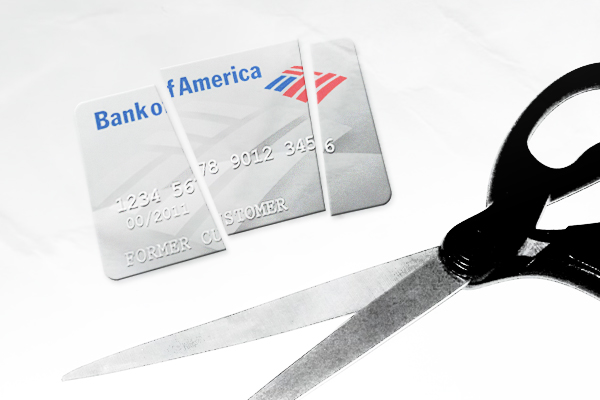
chopped up Bank of America cards
Trust me, it feels awesome!
Banks are shrugging off the (at least) 700,000 accounts they've lost the last six weeks and claim they don't want your business:
[T]he banks are going to be better off because they are getting rid of their least-profitable or not profitable clients. It helps them stem this tsunami of cash that’s been flowing in that they don’t know what to do with.
But not only do they relentlessly advertise for new business on billboards, TV, direct mail and other places, but they fight tooth and nail to prevent people from closing their accounts. The Daily Kos community and others have chronicled many such efforts, so follow me below the fold for ten of these awesome stories.
  1. "He has a right to speak," said the cop to the banker When Daily Kos community member marvinborg was distributing flyers outside of local Chase and Bank of America branches encouraging customers to move their money to credit unions, one of the managers called the police on him. When they arrived, the police promptly told the manager off:
    "He has the right to speak and the right to hand out flyers. Unless he blocks you or causes a disturbance, he has the right to be here - please don't call the police again if he is not bothering you. If you don't like free speech you should move to another country."
  2. "You can't be a customer and a protester at the same time." At a Bank of America branch in Santa Cruz, the manager locked two customers inside a branch as they were trying to close their accounts, and then called the police on them. Supposedly, this was because they were wearing signs. When the police showed up, they didn't arrest anyone, and were just as baffled as the customers:

  3. "They're arresting everyone?" At a Citibank in New York City, a customer actually was forcibly arrested when she tried to enter the bank to close her account:

  4. "Let them in!" At a Bank of America in St. Louis, security refused to allow customers who wanted to close their accounts inside:

  5. The bank said "You'll be back." Even when banks don't call the police, they can give customers sound like jilted boyfriends:
    At Wells Fargo, my sister walked up to the teller and politely asked to close her account. The teller said, “No problem.” She pulled up her account and saw the balance and told her that due to the amount she had to speak with the branch manager. The branch manager came out. He was probably 30 years old and was very arrogant. He asked my sister why she wanted to close her account and my sister told him she thought Wells Fargo was part of the problem with the economy. He went thru some talking points about why she shouldn’t move her money, but my sister didn’t back down. When he asked her where she was going she told him that she would be banking at the North Carolina State Employees Credit Union. She isn’t a state employee, but anyone can join if you are related to a state employee. It turns out her husband is. Anyway, the bankster told her “You’ll be back. Credit unions can’t provide the services you need.” We’ll see about that. She withdrew over $200k from Wells Fargo. [Emphasis added]
  6. "Management is nervous" In the midst of begging customers not to leave, every once in a while banks can let it slip just how scared they are:
    The manager was pleasant enough and very direct. After introducing herself she flat out asked "What can we do to change your mind?" "We don't want to see you go" she emphasized. This opened a door for me to further explain my decision to leave the bank and why I was doing it. Amazingly, it did not fall on deaf ears. She indicated that understood where I was coming from and actually showed genuine surprise at some of the facts I provided her about the less than consumer friendly policies and machinations of her employer. She did make some feeble counter-arguments and repeatedly asked me if I would change my mind (with a hint of desperation!). I stood firm and by the end of our conversation she asked if I would be willing to put it all in writing so she could send it up the chain. She shared that management is nervous, they are seeing money leaking out of the bank and realize that they have made mistakes.  She even hinted that there has been high-level discussion on reversing the new fess since there has been so much consumer push-back. [Emphasis added]
    The fees were reversed soon after this was posted.
  7. They're offering cash for customers to open up accounts It's silly to argue that they don't want cash deposits, yet they're offering cold, hard cash for those who will, well, deposit cash.
    There’s a lot of fine print involved, but basically, they will pay me $200 to move my checking account to them provided that: 1)    I make one bill payment through the account each month
    2)    The account has a balance of $10,000 as of 1/20/2012
    3)    I wait 'till April for the $200 (giving me about 4% interest on my $10k)
    4)    I don’t close my credit card account
    5)    I don’t violate of any of their nit-picky procedures in the fine print
    6)    They don’t decide to simply screw me and not pay up: “Bank of America may change or terminate this offer before this date without notice…”
    Well! I had been told that banks didn’t need deposits. I guess that’s not true, otherwise why would they be running (cough, cough) to sign me up – and offering cold hard cash as well?
  8. They're pretending it's no big deal You know there's something happening when they're circulating talking points.
    In a truly random set of circumstances I found myself stopping by three separate Wells Fargo locations yesterday [...] [Branch 1:] While we were making small talk, I casually asked, “So, how many people closed out accounts this weekend?”
    The cashier said, “Oh it was just two or three people.  Not many at all.” [...]
    [Wells Fargo embedded in Whole Foods:] While chatting it up, I asked, “So, how many people closed out their accounts here on Saturday? “
    The Teller said, “Just two or three people closed their accounts.  Only two said it was because of Bank Transfer Day.” [...]
    [Branch 2:] I was talking to Mr. Branch Manager2 while I was getting the passport, I casually said, “So, how many people closed their accounts on Saturday?”
    Mr. Branch Manager2 said, “Oh, it was just 2 or 3 people.  They had very small amounts of money with us.” [...]
    Was there a corporate wide memo with talking points?  I don’t have any proof but it does make me wonder how only “…2 or 3 people” closed their accounts at three different Wells Fargo…
  9. They'll fight tooth and nail for empty accounts It doesn't even matter if a checking account is in use. They'll do everything possible to keep people from closing them.
    I didn't even know he was talking with BoA, but when he had repeated the entire chain of circumstances for the fourth or fifth time, to the same person, getting louder each time, I knew something was definitely screwy. I mean, this is an account that had never held any actual balance. Had never had any checks written. For years. And never would. Why the hell would a bank want to keep it open?
    Eventually my schedule caught up with me and I had to leave, with Ed still bellowing the same story into the phone over and over. I was able to come back an hour or so later, after he was finally off the phone, and asked if that happened to be BoA.
    Well, yes, of course it was.
  10. Offering to refund obnoxious fees ... after the fact. They wouldn't be in this mess if they didn't try to bleed people in the first place.
    "Is everything OK with your account and service?" Well, yes, except for the fact that I'm charged ten dollars a month for the privilege of having a checking account here. (We used to have free checking, but Chase implemented the fee about a year ago if our balance went below $1500.  Man, we were lazy and complacent, but not today!)
    "Let me see, yes, it seems you paid a fee... 3 times?  So only $30."
    Yes, only $30... but it's the principle.  It's the greed that is annoying.
    "Well, you've been with us for many years, here is what I can do.  I can temporarily... uh, permanently waive any future fees.  We really value our relationship with you and want to keep you as a customer."
    It seems like if Chase had called me before I came down here to close my account and made that offer that it would seem genuine, but not only after I'm already here to close my account.  Which I would like to do.
    "Well, we could also refund those fees.  We would really like to retain your business."
    I'm going to be opening up an account with a local credit union.
And how do the banks respond? By lashing out angrily at its customers.
Bank of America CEO Brian Moynihan says the public needs to start thinking before they criticize his company.
People have given it plenty of thought. That's why hundreds of thousands are moving their money when really, doing so is a pain in the ass—you've got to deal with uncleared checks, automatic bill pays and recurring payments, direct deposits and old habits (whether it's navigating your banks online site, or knowing where the branches and ATMs are located).
Wall Street is out at least $60 billion and counting, and we can inflict more pain. Let's truly make Brian Moynihan and his CEO buddies squeal. Please share this post with your friends, and if you have not already done so, Move Your Money.

FINALLY...you can find a good-guy bank with BANXODUS

HERE is a tool to help you find a good guy bank if you are interested in moving your money, from the good people at BoldProgressives..... 
"No one can serve two masters. If you try, you will wind up loving the first master and hating the second, or vice versa. People try to serve both God and money— but you can’t. You must choose one or the other."
- Matthew 6:24


"Brothers and sisters, do not be weary in doing what is right."
- 2 Thessalonians 3:13
 
New Logo: Banxodus!!!
Click here to use our new Banxodus tool to find a good-guy bank near you -- or share intel about local banks with others.
And share this groundbreaking new online tool on Facebook by clicking here. And pass this email to others!
The New York Times reports:
"A site going online...aims to use crowdsourcing to provide more detailed information about both credit unions and community banks. Banxodus, an effort by the Progressive Change Campaign Committee, says it has more than 7,500 institutions in its database, which was created with the help of a few thousand volunteer researchers."
Check out Banxodus today! And spread the word on Facebook!
-- Michael Snook, PCCC Chief Information Officer & Ethan Jucovy, Web Applications Developer

For Bank Of America, Debit Fees Extend To Unemployment Benefits 10NOV11

IF anyone still doubts bank of america is one of the most evil institutions in this country read this from Janell Ross of HuffPost....AND MOVE YOUR MONEY out of bank of america, u.s. bank, wells fargo and jp morgan chase!!!!! A link follows this article for those interested in moving their money.....
CORDOVA, S.C.-- Shawana Busby does not seem like the sort of customer who would be at the center of a major bank's business plan. Out of work for much of the last three years, she depends upon a $264-a-week unemployment check from the state of South Carolina. But the state has contracted with Bank of America to administer its unemployment benefits, and Busby has frequently found herself incurring bank fees to get her money.
To withdraw her benefits, Busby, 33, uses a Bank of America prepaid debit card on which the state deposits her funds. She could visit a Bank of America ATM free of charge. But this small community in the state's rural center, her hometown, does not have a Bank of America branch. Neither do the surrounding towns where she drops off her kids at school and attends church.
She could drive north to Columbia, the state capital, and use a Bank of America ATM there. But that entails a 50 mile drive, cutting into her gas budget. So Busby visits the ATMs in her area and begrudgingly accepts the fees, which reach as high as five dollars per transaction. She estimates that she has paid at least $350 in fees to tap her unemployment benefits.

"It really boggles my mind," she said. "This bank is taking little bits of money out of thousands of pockets, including mine."

Bank of America recently aborted plans to charge ordinary banking customers $5 a month to use their debit cards in the face of national outrage. But the bank has quietly continued to mine another source of fees: jobless people who depend upon the bank's prepaid debit cards to tap their benefits. Bank of America and other financial firms -- including U.S. Bank, Wells Fargo and JP Morgan Chase -- have secured contracts to provide access to public benefits in 41 states. These contracts typically allow banks to collect unlimited fees from merchants and consumers.
In short, the same banks whose speculation delivered a financial crisis that has destroyed millions of jobs have figured out how to turn widespread unemployment into a profit center: The larger the number of people who are out of work and dependent upon the state for sustenance, the greater the potential gains through administering their benefits.
"It's absolutely ridiculous," said Sue Berkowitz, director of the South Carolina Appleseed Legal Justice Center, a Columbia nonprofit that represents low-income people facing foreclosure, food insecurity and other problems. "It should not cost you any more to use a debit card than if they had issued you a check."
For the state, handing Bank of America responsibility for unemployment benefits secured cost savings, said Berkowitz, but they have come at vulnerable people's expense.
"When it comes to ordinary people getting the benefits they have earned, the benefits they need, they don't seem to spend a lot of time worrying," she said.
Bank of America asserts that its prepaid debit cards are a good deal for everyone -- from state taxpayers to people drawing unemployment benefits.
"We have provided prepaid card programs to government agencies for many years," said Jefferson George, a Bank of America spokesman based at the company's Charlotte headquarters. "Clients value the cost savings and increased efficiency and individuals appreciate the ability to receive their benefits payments more quickly and securely."
South Carolina officials say their state's current arrangement with Bank of America, launched in July 2010, has proven a good value for taxpayers. The South Carolina Department of Employment and Workforce, which oversees unemployment benefits, expects to save as much $5 million in check printing and mailing costs annually through its contract with Bank of America, said an agency spokeswoman, Adrienne Fairwell.
She said the state was also attracted to the debit cards as a means of helping jobless people who do not have bank accounts avoid the fees they must pay to cash checks. Roughly one tenth of all South Carolina households -- about 182,000 families -- did not have a bank account as of last fall, according to a recent Pew Research Center report.
But some banking experts say the relevant cost savings are accruing to the banks themselves. New federal regulations cap what banks can collect from merchants when consumers swipe ordinary debit cards at store cash registers. The new swipe fee limits will cut Bank of America's revenues by $2 billion this year, according to Richard Bove, an analyst who follows Bank of America for Connecticut-based brokerage and research service Rochdale Securities.
"Most banks are aiming to recoup 30 to 50 percent through other methods," which include prepaid card fees, said Nancy Bush, an analyst with NAB Research, LLC, a a New Jersey-based investment consulting company, who monitors Bank of America.
Those limits do not apply to most prepaid debit cards, making them particularly attractive to banks, say experts. Prepaid cards are still a small business for banks, but the sector is quickly growing, experts say.
South Carolina now distributes half of all unemployment benefits using Bank of America prepaid debit cards, according to the state department of employment and workforce, with most of the other half delivered through direct deposit.
Neither the state nor Bank of America would disclose the details of their contractual arrangement. A bank spokesman termed the deal "confidential." When The Huffington Post asked the state for for the details of the contract, the spokeswoman required the submission of a formal Freedom of Information Act request. Yet one week after that request was lodged, the state has not provided the contract terms.
But The Herald, a Rock Hill, S.C. newspaper, reported in 2009 that South Carolina pays the bank a 3 cent fee for each transfer it facilitates on a prepaid debit card. The bank collects the same fees from the state for handling direct deposit of unemployment benefits, a state spokesperson said.
Banking experts say the real money lies in the fees the bank collects for a range of services. When the state first contracted with Bank of America, the list of potential fees the bank was allowed to collect included a $1.50 charge when a customer visited a bank ATM or teller more than once per week, a $1.50 charge for use of an out-of-network ATM, a $1.50 charge for speaking to a customer service operator more than once per month, and 50 cents for entering the wrong PIN number at an ATM more than four times or requesting more funds from an ATM than remained on the card.
In May, the National Consumer Law Center named Bank of America prepaid debit cards issued to unemployed people in California and New Jersey the best in the nation. But unemployed card holders in those states don't face the same list of potential fees that exist in South Carolina. One example: California and New Jersey's contracts allow card users to conduct a limited number of free transactions at other banks' ATMs.
After learning about the options that Bank of America gave people using its prepaid cards in other states, South Carolina asked the bank for changes, Fairwell said. In July, unemployed individuals gained unlimited free withdrawals at Bank of America ATMs and one free withdrawal per week at a bank teller anywhere the VISA logo is displayed.
But some fees remain. Bank of America charges prepaid debit card holders in South Carolina $1.50 to visit an out of network ATM. Bank of America also levies a 50 cent fee when a customer uses an ATM to try to withdraw more money than they have in their account more than once in a single week.
"It's not what we would like to see," said Lauren Saunders, managing attorney at the National Consumer Law Center. "It is not as if the bank can legitimately argue it costs them something not to let someone take money out of an ATM."
The state asserts that people who are prudent, timing their withdrawals while adhering to the limits, can secure all of their funds without charge.
"With careful use, South Carolina cardholders can avoid paying any fees," said Fairwell.

But people who rely on such cards to collect their benefits have a difficult time hewing to polite language when they hear such characterizations.

"That's bullshit," said Sandra Gortman, 55, a Columbia resident who says she incurred some $10 in fees within the first weeks of using her card. "Excuse me. But, really, there is no way given the way you have to live when you have very, very little money and copious amounts of stress, to avoid paying fees."

In 2008, Gortman, a long-time bill collector, temporarily left her law firm job to work for the Obama campaign. When the campaign ended the law firm could not afford to keep her on staff, so she started searching for work. In January 2009, she enrolled in the state's unemployment benefits program. At first, her benefits were direct deposited to her Bank of America checking account.
In August 2010, unemployment officials summoned Gortman for a benefits review during which she says she was strongly encouraged to sign up for a prepaid debit card. Gortman resisted. Fearful that the agency would delay her benefits if she did not submit, she says, Gortman signed the form. A few weeks later the card and a brochure came in the mail. The potential fees were disclosed in the fine print, she says, but she initially missed them.
The first week she had the card, Gortman used it to purchase $25 worth of gas at a Columbia gas station. The station held $75 as a deposit while she filled up, and did not refund the balance -- $50 -- until three days later. She says she discovered the charge later when she checked her balance. When Gortman noticed this additional charge, she called Bank of America's automated customer service twice seeking explanation, incurring a $1.50 charge for the second call, she says. When the automated system failed to explain the missing money, Gortman spoke to an operator, incurring an additional 50 cent fee, she said. In July, the bank eliminated customer service fees.
"When you are living on $325 in unemployment benefits a week, believe me, you need and notice every penny," said Gortman. "So I called, I know one week, three or four times before I realized those calls were costing me money. I was, well let's just say, utterly outraged."
In the town of Cordova, where traffic lights are outnumbered by pickup trucks, Busby and her family have been largely dependent on unemployment benefits since June of 2008, when her husband was laid off from a job at a tractor company. The following month, she lost her own job teaching welfare recipients life skills. When their weekly unemployment checks arrived in the mail, she drove north to Columbia or west to Orangeburg, some 35 miles away, to deposit them in their checking account.
The following year, her husband found a full-time factory job, and she secured a temporary position with the Census. But when her job ended in May 2010, Busby went back to the unemployment office to sign up for benefits anew. She received a few checks, and then the state sent her a debit card, though says she has no recollection of applying for one.
Even now that she is cognizant of the fees, she is afraid to switch to direct deposit, fearing a resulting gap in her weekly benefits. Her family's finances are so tight, she says, that any delay puts them behind on the bills.
"There is always, something due -- a light bill that has to be paid, car insurance, the phone," she said. "I get my benefits and that's when we buy food, that very day. There's just a very delicate balance at our house. Nothing, I mean nothing, can go wrong.
New Logo: Banxodus!!!
Click here to use our new Banxodus tool to find a good-guy bank near you -- or share intel about local banks with others.
And share this groundbreaking new online tool on Facebook by clicking here. And pass this email to others!
The New York Times reports:
"A site going online...aims to use crowdsourcing to provide more detailed information about both credit unions and community banks. Banxodus, an effort by the Progressive Change Campaign Committee, says it has more than 7,500 institutions in its database, which was created with the help of a few thousand volunteer researchers."
Check out Banxodus today! And spread the word on Facebook!
-- Michael Snook, PCCC Chief Information Officer & Ethan Jucovy, Web Applications Developer

10 November 2011

MY LATEST LOANS THRU KIVA 10NOV11

MY second loan through Kiva today. This is my second loan to someone in the U.S. As a supporter of the Occupy Wall Street and Move Your Money movements I am disgusted by the greed of wall street and the unwillingness of American financial institutions to loan to the poor, working class and middle class, preferring to sit on trillions of dollars, loaning only to the wealthy and powerful and so increasing their own wealth. So I will continue to loan to entrepreneurs in Third World countries, but I will also loan to entrepreneurs in the U.S. to put Americans back to work. Check out Kiva for a loan to an American business you might want to make.

Richard
A loan of $10,000 helps Richard to pay for construction and labor for expansion of his laundromat.
Richard, a humorous and charismatic entrepreneur, saw an opportunity to serve his community with a laundry business nine years ago. He now owns a busy and successful Laundromat in New York City. In this tough economy, he has created jobs for six people and this loan will help him offer one more position. This business is supporting Richard’s family, including his three children. Over the years, he has been able to expand the business with additional washers and dryers, but is running out of space for additional equipment.

With this loan from Accion USA, Richard will expand his Laundromat into his current office in the building to add 11 washers and 5 dryers. The loan will pay for the construction and labor as well as installation of the new equipment.

Additional information about this loan

Important information

Kiva realizes that access to credit is a challenge for entrepreneurs everywhere. Kiva started out as a website focused on developing-world entrepreneurs. In June 2009, Kiva began experimenting with allowing entrepreneurs in the United States to raise money on its website. If this is something you support, please feel free to fund this loan. If you have questions, including how an entrepreneur in your neighborhood might get a loan, please visit our Help Center and click on "Loans in the United States."

About the Country

Country:
United States
Average Annual Income:
$47,000
Currency:
United States Dollars (USD)

08 October 2011

Bank Of America Debit Card Fee Leads To Legislative Response 3OKT11

bank of america is among the worst of the financial institutions sapping the chance of a economic recovery in the U.S. Their greed knows no bounds, here is their latest grab for your money, if you are foolish enough to bank with them. The story on HuffPost follows this call to action from the PCCC.....


Progressive Change Campaign Committee


Pressure Bank of AmericaPressure Bank of America
Click here to sign Rep. Brad Miller's "move your money" bill -- going on offense against Bank of America.
Last week, Bank of America announced they will charge a new $60-per-year fee to use debit cards on basic things like groceries. It will pad their profits by an estimated $2 billion.
In reaction, a TV host cut up her Bank of America card on the air.
Now, Congressman Brad Miller -- from Bank of America's home state of North Carolina -- is going on offense against Bank of America with legislation that would make it much easier for customers to switch banks.
To gain momentum, Miller needs other members of Congress to pile on this week.
Can you sign our petition urging your Representative and others to support Brad Miller's "move your money" bill? Click here.
When the new debit card fee was announced, Sen. Dick Durbin said, “Bank of America customers, vote with your feet, get the heck out of that bank."
A right-wing blogger wrote, "I actually agree with Durbin to a point." One person shared, "After 30 years of banking with Bank of America, today I walked into a local branch and asked to speak to the branch manager and closed every account."
But here's the catch -- Bank of America intentionally puts up obstacles to customers leaving.
In many states, walking into a bank branch isn't even enough! Miller's bill would change that -- allowing people to close accounts by phone or Internet, and have things like direct deposit transfer automatically.
Urge Congress to hold Bank of America accountable now. Sign here.
Across America, a simmering rage is coming to a boil against Wall Street greed.
The Occupy Wall Street movement has channeled this anger. Today, we're focusing it into a deep corporate accountability campaign against one of Wall Street's worst actors.
Rep. Miller's bill is just the first step. Later, we'll organize at local branches across the country and target Bank of America with hard-hitting ads.
But first, please sign our petition urging your Representative and others to support Brad Miller's "move your money" bill today. Click here.
We'll deliver this petition to Congress, and work with Rep. Miller to move his legislation forward. Thanks for being a bold progessive.
-- Kristiane Skolmen, Stephanie Taylor, Adam Green, Neil Sroka, and the PCCC team
P.S. On the petition page, you can also write a note to Occupy Wall Street protesters. Our staffer on the ground will personally deliver these notes to their General Assembly. Sign here.

Bank Of America Debit Card Fee Leads To Legislative Response

http://www.huffingtonpost.com/2011/09/30/bank-of-america-fee_n_992623.html
WASHINGTON -- While demonstrators in New York are calling for an occupation of Wall Street, a new push by Democrats in Congress proposes a different tactic: Just walk away.
Senate Majority Whip Dick Durbin and Rep. Brad Miller are going on the offensive against Bank of America after the financial behemoth cited Wall Street reform in announcing a new five dollar monthly debit charge last week. Miller, a Democrat from BofA's home state of North Carolina, plans to introduce legislation that would make it easy for consumers to switch banks and simultaneously swap their direct deposit, electronic bill paying and other automatic features that make moving money from one bank to another more hassle than it's often worth.
Illinois Democrat Dick Durbin, meanwhile, is encouraging consumers to abandon the bank's debit card. "My word to consumers across America is talk with your feet, look for a debit card that doesn't charge the Bank of America fee," Durbin told HuffPost, adding that the revenue from the new fee likely far outstrips what they'll lose to swipe fee reform. "It would be no surprise if we found out that Bank of America is overcharging consumers again. They've been found guilty of that in the past, but I really encourage consumers across America to look for competition that doesn't charge this fee, move their debit cards."
The Chicago Tribune, Durbin's home state paper, dubbed the BofA charge "the Durbin fee," which conservative blogs and Republicans have been happy to latch onto, arguing that the hike was a logical consequence of Durbin's swipe fee reform, which capped the fees banks could charge merchants for using debit cards.
On Saturday, the Federal Reserve instituted a 24 cent cap on swipe fees, estimating that running the card costs banks between 7 and 10 cents per swipe. The cap is roughly 20 cents lower than the average swipe fee had been previously.
Anne Pace, a Bank of America spokeswoman, noted that other banks are testing similar fees and that Regents and SunTrust are also hiking charges. "The price of a debit card was previously determined by the amount and type of transactions. We were able to pass some of these costs along to merchants, but because of regulatory changes, we are adjusting our pricing to reflect today’s economics," she told HuffPost.
On Friday, Durbin's office sent around a memo, obtained by HuffPost, to other senators who had supported his swipe fee amendment, telling them to reject the suggestion that swipe fee reform required BofA to raise fees. Banks raise fees no matter what, Durbin argued in defense, noting that they'd raised fees after the bailout.

The Electronic Payments Coalition, which represents banks in the swipe fee battle, hit back at Durbin. “It is astounding that Senator Durbin, who created today’s chaos, is now trying to point the finger at everyone but himself for the widely predicted consumer harm," spokeswoman Trish Wexler emailed to HuffPost.
"Senator Durbin has spent years pushing the agenda of giant retailers, while flatly ignoring repeated warnings by consumer advocates, economists, and regulators this type of consequence. The truth is that Senator Durbin knew that banks and credit unions across the board would have to raise prices. Instead of heeding our warnings and protecting consumers, he chose to put millions of dollars into the pockets of giant retailers.”
Miller's bill represents a chance to go on offense. Durbin told HuffPost it's something he could get behind, though he has yet to see the legislative language. "I've worked with Brad, he's come up with some pretty good ideas and I like the concept very much," Durbin said. "We've got to give consumers an opportunity for creating competition in the banking industry. Right now that is very difficult, we've got to make it easier."
The system in place today makes it difficult to switch accounts. But it doesn't have to be that way. The Federal Deposit Insurance Corporation regularly takes over failing banks on Friday afternoons and converts them to new banks by Monday morning, using software that makes sure not a single customer misses an automatic bill pay or a direct deposit. Miller's bill would require banks to make it as easy as technologically possible to switch accounts, and would forbid practices aimed at keeping consumers locked in.
Miller had been studying the legislation for at least a year, he said, but decided to pull the trigger after BofA's $5 fee was instituted. It is at heart a free-market reform, he said, and was inspired by HuffPost's Move Your Money campaign that unfolded after the bailout.
“If we can find a way to introduce real competition into banking, that'd do more than any regulation," Miller told HuffPost. "The biggest banks have turned the switch for market forces to the off position. If consumers could shop around for banks the way they can for everything else, banks wouldn’t think they had a God-given right to pay their executives vulgar bonuses and still make enormous profits, and consumers would get a much better deal."
Due to Republican-controlled redistricting, Miller faces a difficult primary against Democratic Rep. David Price if he hopes to remain in Congress, as both have been stuffed into the same district.
Legislation and regulation without a free market will ultimately fail, Miller said, and will lead to endless new fees as banks replace revenue lost to consumer protections with new charges. Without a real free market, consumers won't be able to respond the way they normally would.
Durbin noted that small banks and credit unions that are able, under Durbin's amendment, to charge higher swipe fees, should use that revenue to provide free debit cards that could win market share from BofA. "The community banks and credit unions that are exempt from this ought to step in with a zero charge debit card. At that point, it could be interesting. We could actually have some competition over debit cards," he said.
"In any other line of business, companies would be reluctant to raise their fees for fear of losing customers. That fear doesn't seem to be present in the banking industry," Miller said.
Even without the increased competition from Miller's bill, BofA's fee may not last. In January 2010, TCF Bank, which pioneered free checking in the 1980s, announced it would begin charging a monthly fee in response to Fed rules restricting overdraft charges. The move was regularly cited during the 2010 swipe fee fracas as evidence of the harm that would befall consumers if Durbin didn't back off. This January, TCF brought back free checking after losing customers.
One day before the Senate was expected to vote on delaying swipe fee reform in June, Chase went one step further: Thanks to the Durbin amendment, thousands of Chase customers were warned, your kid can forget about that trip to Disney World. "Congress recently enacted a new law known as the Durbin Amendment that significantly impacts debit cards," reads the letter. "As a result of this law, we will be changing our debit rewards program. After July 21, 2011 you will no longer earn Disney Dream Reward Dollars when you use your Disney Rewards Debit Card."
Durbin said that the fee is part of the bank's lobbying strategy to undo swipe fee reform. "I expect the banking industry to continue to kick and scream over this...They just happen to think they can win the day, ultimately, in Congress if they keep the pressure up," he said. "I'm not going to shed any tears for Bank of America. They made some awful decisions when it came to mortgages that jeopardized the future of their bank. They've had problems with profitability and losses leading up to this moment and for them to blame this law, which finally puts an end to the monopoly they had on swipe fees, it just doesn't bear up under close inspection."
Miller, in a letter to House colleagues, describes ways in which the legislation makes it easier to switch accounts:
The Freedom and Mobility in Consumer Banking Act makes the following changes and clarifications to existing law: Increases competition among banks by guaranteeing consumers the right to close a personal checking or savings account:
• Provides consumers the right to close an account at no charge
• Provides consumer the right to close an account at any time, regardless of whether the balance is positive, zero, or negative
• Provides consumer the right to close an account in person, by phone, or by other remote means as may be prescribed by regulation
Prohibits abusive fees and charges:
• Prohibits fees or charges from being assessed to an account after receiving a request to close an account
Requires banks to take reasonable steps to facilitate account closures:
• Requires institutions to notify consumers of preauthorized and recurring debits that hit their account for 30 days after a qualified account is closed
• Requires institutions to remit the balance in a closed account to the customer’s new account electronically if the consumer chooses
Prohibits banks from blacklisting consumers for failing to satisfy bank-generated fees assessed to an account at time of closure:
• Provides that consumers shall be given at least 30 days to remit payment for an account that is closed with a negative balance before the institution can initiate any collection activity, or reporting to a third party
• Provides that where an account is closed with a negative balance that is exclusively the result of overdraft or other fees assessed to the account by the depository institution, the institution may not report the account as delinquent to ChexSystems or any similar specialty consumer reporting service.

HuffPosts's Zach Carter contributed reporting.
This article has been updated to include a statement from the Electronic Payments Coalition.

01 January 2011

Vision: 8 Ways We're Making America a Better Place -- in Spite of the Disasters Coming out of Washington 1JAN11

MY first post for 2011 and I am glad it is one that offers hope. This from AlterNet
 

Joe Ely, Jimmie Dale Gilmore, and Butch Hancock form the Flatlanders, a powerhouse trio of Texas singer/ songwriters now based in Austin. But each of them was raised on the West Texas flatlands (hence the group's name) around Lubbock. They were shaped, both musically and personally, by the full 'Lubbock experience,' which includes a few cultural oddities. Several years ago, Butch explained one of these on a national radio talk show that Susan DeMarco and I hosted.
He pointed out that growing up in the straight-laced, God-fearing Protestant churches of that region could be very confusing for hormone-driven teenagers like him. "They told us that sex was the most vulgar, nastiest thing on earth," Butch said. "And that we should save it for someone we loved."
Politics is not sex, but these days it can be almost as confusing. Obama and the Democrats are in power, but they've been unwilling to assert it with any boldness on the big issues America faces. Instead, they keep capitulating to petulant, recalcitrant Republicans in the vain hope of engaging these pious, right-wing fundamentalists in some sort of bipartisan Kumbaya.

Meanwhile, the GOP's new wave of neo-Neanderthal leaders (Sarah Palin, Newt Gingrich, Glenn Beck, the Koch Brothers, Jim DeMint, the entire menagerie of Fox TV's nattering nabobs, et al.) have plunged the party of Lincoln (and of Reagan, for that matter) headlong into the abyss of political absurdity. EXAMPLE: Obama, they insist, is not merely the centrist, establishment liberal that he has proven to be, but an Islamo-socialist-fascist-marxist Kenyan, a spawn of Satan.
Seriously. Heed the babbling of Newt, who was always strange, but has now turned scary, having loosened all of the nuts and bolts on his sanity to free his inner lunatic. In September, the former leader of the House of Representatives of the United States of America embraced the nutty 'birthers' to declare that Obama exhibits "Kenyan anti-colonial behavior," and that the President's long-dead African father is channeling revolutionary thoughts through his son to rule America from beyond. Remember Newt is a guy who actually thinks he can be elected your president in 2012.
We live in strange times, do we not? Perhaps it's no cosmic coincidence that the balloting for November's congressional/gubernatorial elections began only 31 hours after Halloween.
But now it's the holidays, which raises the big question: is there anything political in 2010 for which we progressive/ populist Americans should be thankful?
Happily, yes! As I've rambled from town to town this year (crisscrossing from Chico to New York City, Cape May to Santa Fe, Pittsburgh to Princeton, Fort Worth to Fort Collins, Buffalo to San Francisco, Portland to Portland, the Wisconsin Dells to my old home place of Denison... and points beyond), I've found that while people are vastly disappointed by the meekness of the Democrats and totally dismayed by the willful weirdness of Republicans, neither has deterred them from pushing on with the groundwork that still must be done to revitalize our country's democracy.
However, rather than looking to Washington for the changes America needs, progressives are now uniting locally, focusing on direct actions they can take in their cities and states. As a young woman in Colorado Springs put it: "We voted for change, but we see that the money monsters in Washington eat change for breakfast. We don't have the power to fix that, not yet, but that doesn't mean we're powerless. We can make a difference where we live, gain more strength, and show the way. A national movement has to come from down here."
She's right. First of all, don't forget that it was the grassroots organizing, energy, and enthusiasm of progressives (especially young people) that created the Obama candidacy and presidency, so the activist base is far more solid and extensive than the corporate and political elite (forgive the redundancy there) want us to realize.
More importantly, local activism and success is intensifying as fast as faith in national politics is dissipating. The media mavens don't cover it (being far too busy touting the 11 percent of the public who say they identify with the corporate-backed teabag groups), but progressives are forging surprising coalitions, not only in San Francisco and New York City, but also in such places as Iowa, Houston, Syracuse, central Missouri, New Haven, Ohio, and Rhode Island. Here, outside the country's media centers, people are producing new solutions and structural changes that add up to real hope for a progressive America. On issues big and small, there's much we can be thankful for... and build on.
Wall Street
Rarely does the plutocracy reveal itself to the hoi polloi as crudely and flagrantly as it has done with Washington's ongoing bailout and shameless coddling of the Wall Street greedheads who wrecked our economy. While Republicans and Democrats alike have loudly decried the greed, they continue to reward the narcissistic barons and increase the power of the monopolistic financial giants.
Obama Democrats passed a meek reform bill that allows top bankers to keep grabbing obscene bonuses for continuing to run their banks as casinos, while letting the banks gain a tighter grip on our wallets and get away with no requirement to invest in productive enterprises, middle-class jobs, and housing. Worse than meek, Republicans are mendacious, having shamefully and openly tried to kill even the modest reforms offered by Democrats, in exchange for getting millions of dollars in campaign cash from Wall Streeters. Then comes the Tea Party, which initially rose from the public's red-faced outrage at banker greed, but got co-opted by GOP operatives. Far from going after Wall Street, the party has largely put its electioneering clout behind a host of congressional candidates taking banker money (often indirectly) and wailing about "big government" efforts to "punish" rich bankers.
Is there anyone who'll push honestly for justice and real change on Wall Street? Yes--the people themselves! Here are a few important grassroots efforts underway and gaining oomph:
1. National People's Action.
This is a growing network of more than two dozen community organizations across the country (workers, farmers, small business owners, retirees, students, clergy, homeowners, et al.) focused squarely on the unchecked greed of big banks. They have successfully confronted Federal Reserve honcho Ben Bernanke and bankers who secretively finance and profit from payday lenders (who charge 400 percent interest for 30-day loans). Deploying more than 200 organizers, their Showdown In America.org campaign seeks to break up the too-big-to-fail banks, decentralize Wall Street power into small and medium-sized banks, impose a moratorium on home foreclosures, and recover some $140 billion of bonus money being siphoned off this year by banker elites.
2. Financial Speculation Tax.
Having poured trillions of the public's dollars into the rescue of Wall Street, the Republicans, 'Blue Dog' Democrats, and Tea Party leaders insist that there is no money left for the bold job creation initiatives (such as a nationwide program for green jobs and for repairing and extending our country's essential infrastructure) that America and the middle class desperately need. Disingenuously, they ask: where would you get the money?
Easy. Get it from where it went--the pockets of Wall Street's high-rolling, casino-style speculators. They do nothing but game the system for their own fast-buck profits, dumping trillions into rapid-fire computer trades involving such nonsensical, unproductive schemes as credit default swaps. Put even a tiny tax on these gaming transactions (ranging from 0.02 to 0.25 percent), and America could recoup over $100 billion a year for job creation and deficit reduction.
After all, we tax Las Vegas' casinos, why not Wall Street's? This is nothing new--for 50 years, up until 1966, the US had a transaction tax in place, and it was doubled in 1932 to help recovery efforts in the Great Depression. Also, England has a very successful one working for it today.
Such groups as the AFL-CIO and SEIU are mounting a major organizing campaign behind the FST. Called 'Make Wall Street Pay,' the effort already has congressional backing, and is gaining strength. As usual, the media isn't covering this, but a growing number of activist groups are joining the call for this policy of common sense fairness. For more information and action suggestions, check out the 'Action Center' at www.banksterusa.org.
3. Elizabeth Warren.
Grassroots clout has already produced one bright spot in Washington's dim response to Wall Street greed. The Bureau of Consumer Financial Protection survived a ferocious onslaught of banker lobbying to be included in the otherwise lukewarm reform bill.
This idea came from a levelheaded, plainspoken, populist-minded bankruptcy expert, Elizabeth Warren. A Harvard professor of law, Warren also is a graduate of the University of Hard Knocks, having seen her own hardscrabble Oklahoma family endure bankruptcy. "I learned early on what debt means, how vulnerable it makes people."
By rallying outsider progressive forces to the cause, Warren became a major inside player, pushing relentlessly to get this important consumer position included in the final law. Having the position is nice, but who would fill it? Bankers wanted one of their own, but consumer and community groups had sprung into action even before the bill passed, organizing tens of thousands of regular folks to demand that Obama name Warren herself to head the agency. Despite furious pressure from bank lobbyists, the people were clear: the President had to give us this one. Warren accepted, but--showing the savvy she'll need to be effective--she agreed to be named special adviser to the President in charge of overseeing the new agency. This avoided the long, brutal, and iffy confirmation fight that the financial giants would've mounted to kill an outright nomination. As a result, she'll probably have a shorter tenure, but she starts right away, allowing her (and us) to fend off the lobbyists and give the fledgling bureau a strong, consumer-oriented beginning.
4. Move Your Money.
For your own private rebellion against the financial finaglers and manipulators, withdraw your money from them--and tell them why you're doing it. Viable options for stashing and investing your funds abound, including credit unions, community banks, and socially responsible credit card and investment firms. MoveYourMoney.info is a spreading movement that literally helps you move, allowing you to escape the tainted tentacles of Wall Street. In addition to your personal funds, look into shifting the accounts of your business, union, church, co-op, neighborhood association, and other organizations into financial institutions closer to home... and much closer to your values. After all, it's your money --why let the bastards have it? Talk it up with friends and family, write letters to the editor, send emails, post blogs, and find other ways to expand the movement.
5. Dog Poop.
It's worth recalling that even the smallest dog can lift its leg on the tallest building. Indeed, when trying to change the world, even small steps can make a big difference, so turn your creative impulses loose.
Take the 'Park Spark,' built by Matthew Mazzotta, an artist in Cambridge, Massachusetts. At his local dog park, he thought about all that canine excrement being bagged and tossed into trashcans. A bulb lit in Mazzotta's head: why not convert the waste into poop power?
He put two 500-gallon oil tanks, painted a cheery yellow, in the park where people can deposit their pooch's poop. Microbes in one tank digest the waste and send methane gas into the second tank, which fuels a gaslight lantern to illuminate the park. Mazzotta's functional sculpture tidies up, provides free renewable energy, and helps us think differently about what's in front of us, including seeing waste as a resource.
6. De-Paving.
Another small step with a big progressive payoff is being taken in such cities as Boston, Davenport, Houston, Portland, and Seattle. People in these places have come together to address the seemingly pedestrian matter of pavement (this is but one of many freewheeling ideas for local activism spun from the fertile mind of enviro-maestro Bill McKibben, who has prompted thousands of local folks to form 'work parties' that come up with hands-on solutions for their communities--check it out at www.350.org). In this case, the problem is that cities simply have too much of their land locked under pavement, which causes flooding, toxic runoff, heat, and an inhuman disconnect from nature. Thus, the rise of a de-paving movement.
Somerville, Massachusetts, for example, has 77 percent of its land coated in asphalt, concrete, and other impervious slabs. So teams are volunteering to free the land, bit by bit, reclaiming green spaces in yards, school grounds, traffic medians, etc... It's hard, hard work, and it's slow, but the payoff is tangible as gardens, parks, and life emerge. A similar group in Oregon has put up a website (Depave.org) that offers planning tips, a list of tools, and step-by-step instructions for others who want to uncover the joy of the green earth. As one de-paver says, "There's some-thing really empowering about literally taking things into your own hands and restoring your community."
Buying Our Democracy
This will sound loopy, but I think we must also be grateful to the Koch brothers this year. Yes, the billionaire, laissez-faire extremists whom we outed in the February Lowdown, detailing dozens of front groups (including the Tea Party) that Charles and David funded and orchestrated in a secretive, long-term effort to impose corporate rule over our nation.
We owe them a huge "thank you," because their political excesses and ideological overreach have finally shredded the cloak of secrecy around these front groups. Now, even such establishment media outlets as The New Yorker are covering the Kochs (see Jane Mayer's extensive, well-written story in the August 30 issue). The brothers are turning into the bobblehead dolls of the emerging plutocracy. Thanks to these free-spending zealots, the public is beginning to see that there really is a vast right-wing conspiracy to undermine public supremacy over corporate power.
The Federalist Society, Cato Institute, Heritage Foundation, and Mercatus Center are just a few of the brothers' creations that for years have tried to remake the judiciary into a governmental monkey wrench to undo our people's democratic authority. In January, this perfidious effort culminated in the constitutional coup that five Supreme Court corporatists pulled off with their decree in the hoked-up 'Citizens United' case (Lowdown, March 2010). As you'd expect, congressional Republicans applauded the coup, and, while Obama and the Democrats have merely complained about this raw power grab, they've essentially accepted it as a done deal. That would be that--except for one thing: you. Ordinary people, who usually pay little attention to arcane court decisions, grasped the import of this one from the moment it was issued, and 80 percent oppose it (including 76 percent of Republicans). This has fueled two important, though little reported, uprisings across the country:
7. Amend the Constitution.
Amending is not easy to do, though it's hardly impossible (twelve amendments were added in the past century), and it is the definitive way to halt the Court's enthronement of corporate money. Also, the very attempt to amend can be a big positive, for the process educates and enlists people in a historic democratic cause that is worthy of them.
Several pro-amendment coalitions have come together to work on this important issue. FreeSpeechForPeople.org includes Public Citizen, Voter Action, the Center for Corporate Policy, and the American Independent Business Alliance. The MovetoAmend.org coalition includes such groups as the Program on Corporations and Law in Democracy (POCLAD), the Alliance for Democracy, Family Farm Defenders, Reclaim Democracy, the National Lawyers Guild, the Center for Media and Democracy, and the Liberty Tree Foundation. The coalitions press for a broader approach that would eliminate the fiction of 'corporate personhood,' explicitly stating that only humans are persons with constitutional rights. MoveOn.org, Common Cause, People for the American Way, and other groups are also working on this issue.
8. Clean Elections.
Long overdue, this would bring the public financing alternative (which a growing number of states and cities have successfully implemented) to all Congressional elections. Maine, North Carolina, Arizona, and New Mexico are among the pioneers of this system, which disarms the corrupt, pay-to-play lobbyists by giving candidates the ability to forego the corporate campaign funds that influence peddlers dole out in exchange for legislative favors. This is a game-changing, structural reform that works, which is why it's getting vehement opposition from Republicans and only lip service from the Obamacans.
Despite this, the idea is on the move. Thanks to a grassroots coalition organized through FixCongressFirst.org and to a national network of clean election experts and organizers called PublicCampaign.org, the Fair Elections Now Act is moving through Congress. It has over 25 co-sponsors in the Senate and 160 co-sponsors in the House. The bill made it out of a House committee last month.
Shine Where You Are
The message here is simple: we can have the kind of economy, government, environment, and country we want... IF we keep pushing, organizing, building, and otherwise doing the work of democracy. Producing change we really can believe in is up to us--not to Obama or the Democratic Party. They are not the progressive movement, we are.
It's never easy to confront the corporate order, to challenge the moneyed powers. As Henrik Ibsen instructed us long ago: "Never wear your best trousers when you go out to fight for freedom and truth."
But fight we must, for freedom, truth, justice, and democracy don't just happen. We The People have to produce them. The good news is that even when the national political scene momentarily darkens, we can be thankful for the thousands of candles, torches, and other lights beaming with such promise all across the country, lit by people like you. In fact, you're probably already one of those hopeful beams, so we're thankful for you, too. If not, become one, and join with others to keep America's grassroots shining bright.
Jim Hightower is a national radio commentator, writer, public speaker, and author of the new book, "Swim Against the Current: Even a Dead Fish Can Go With the Flow." (Wiley, March 2008) He publishes the monthly "Hightower Lowdown," co-edited by Phillip Frazer.

23 July 2010

Pay czar: 17 bailed-out banks overpaid executives 23JUL10 JOIN moveyourmoney.info

I HAVE LEFT THOSE 'IN MY WALLET' PEOPLE BECAUSE OF THE HUGE AMOUNT THEY RECEIVED FROM TARP AND NOW I AM REALLY GLAD I DID SINCE THEY ARE ONE OF THE BANKS WHO PULLED THIS STUNT. I JOINED THE MOVE YOUR MONEY MOVEMENT AND HAVE MY MONEY IN A STABLE LOCAL BANK NOW. GO TO www.moveyourmoney.info FOR HELP IN FINDING AN ALTERNATIVE TO THESE GREEDY PIGS. AND CHECK OUT THIS VIDEO


The government's pay czar announced Friday that 17 companies benefiting from federal bailout money handed out $1.6 billion in excess executive pay at the height of the financial crisis. The firms include Citigroup, Goldman Sachs and Bank of America.
Kenneth Feinberg, who was appointed as the Obama administration's special master for compensation, examined executives earning more than $500,000 at the 419 firms that received taxpayer assistance. Of the 17 companies that in Feinberg's judgment were egregious in their compensation, 11 have repaid the assistance received from taxpayers.
Citigroup was the worst offender, handing out $400 million in excess pay, according to a government source familiar with the report.
Other offending firms include JPMorgan Chase, Morgan Stanley, AIG and McLean-based Capital One.
Feinberg emphasized he is not asking the companies to pay the money back.
"This is an eleventh hour, armchair, 'look back' quarterbacking," Feinberg said Friday.
The report indicates the companies did not do anything illegal and that 90 percent of the executive payments were made by firms that have fully repaid taxpayers.
Feinberg, however, recommends that companies adopt an emergency provision that would allow them to break pay contracts if another financial crisis were to occur. If the company's board determined that the firm was in a crisis, the compensation committee would be allowed to revisit pay levels. During the recent banking meltdown, many companies protested that they were legally obligated to mete out their payment contracts with executives.
The special master has the authority to review pay but not to force any reimbursements from the banks. Feinberg did not determine the payments were "contrary to the public interest," because they were allowed at the time, although Treasury Department rules later imposed tougher limits on pay for bailout recipients.
Other companies singled out by the report include Boston Private Financial Holdings, CIT, M&T Bank, SunTrust, Bank of New York Mellon, Regions Financial, PNC Financial and U.S. Bancorp.
The excessive pay was reported at only a small group of the 419 firms examined. The report found that out of the entire pool of firms receiving taxpayer funds, 240 did not give excess pay to any executives. A subset of 116 firms handed out too much money to five or fewer executives.
Many of the country's biggest banks have repaid their bailout funds, including Goldman Sachs, J.P. Morgan, Bank of America and Wells Fargo. Companies that are still on the hook include AIG, SunTrust and CIT.
As his work as pay czar winds down, Feinberg will soon focus all his attention on overseeing the BP oil spill compensation fund.

07 July 2010

FINALLY PUT MY MONEY WHERE MY MOUTH IS AND MOVED IT & EU CAPS Bank Bonuses: Company Performance To Dictate Bonus Pay 7JUL10

I finally put my money where my mouth is and joined thousands of Americans who have moved their money from the "too big to fail" banks (I was with Chevy Chase, soon to become part of CapitalOne in SEP). Now my money is with Middleburg Bank, a local northern VA institution. So far over $550 million has been moved by regular working people like me. If you are tired of the greed, the obscene bonuses and the lack of investment to get out out of this economic mess (after all, the nation bailed these banks out, the least they could do is make sure we are paid back with interest and then invest in the nation that saved them) you may want to check othe this link that will help you decide if you should and how to move your money. 

http://www.huffingtonpost.com/arianna-huffington/move-your-money-a-new-yea_b_406022.html

CHECK out this story about how the big banks are still helping themselves and then what the EU has done to address some of the greed of the big banks in Europe. 


2
0views

Wall Street Bonuses Business Insider Lending
CHART: Bank Lending Dives, But Wall Street Bonuses Are Way Up
businessinsider.com:
The Business Insider's Joe Weisenthal and Kamelia Angelova produced this great chart juxtaposing the latest data on Wall Street bonuses (up 17%) with bank lending (down 7.5%). Their take away: "sitting on your hands and doing nothing is a pretty lucrative gig."
Read the whole story: businessinsider.com
Get HuffPost Business On Twitter, Facebook, and Google Buzz!
The Business Insider's Joe Weisenthal and Kamelia Angelova produced this great chart juxtaposing the latest data on Wall Street bonuses (up 17%) with bank lending (down 7.5%). Their take away: "sittin...