NORTON META TAG

03 April 2018

The Country With The World's Worst Inequality Is ...2APR18

Related image
26 years after freeing itself from apartheid South Africa still struggles with income and economic inequality.  South Africans may be equal politically but economically a very small group controls the economy and most of the wealth in the nation. Still, this World Bank report shows they are taking the necessary steps to address this problem, considering the hundreds of years the country was exploited as a colony and then a brutal plutocracy / oligarchy it is going to take more than 25 years to overcome the damage done. The United States ranking in this report is something to be ashamed of but also proves the voluntary political ignorance of the American people allowing them to be deceived and manipulated by politicians controlled by greedy corporate America, the 1%, is moving America closer and closer to being a Third World nation. From NPR

The Country With The World's Worst Inequality Is ...

More than two decades after South Africa ousted a racist apartheid system that trapped the vast majority of South Africans in poverty, more than half the country still lives below the national poverty line and most of the nation's wealth remains in the hands of a small elite.
"The country was very unequal in 1994 [at the end of apartheid] and now 25 years later South Africa is the most unequal country in the world," says Victor Sulla, a senior economist for the World Bank in charge of southern Africa. "There is no country that we have data about where the inequality is higher than South Africa."
Sulla is the lead author of a new report on poverty and inequality in South Africa.
There are various ways to look at economic inequality and South Africa scores terribly on all of them. Income inequality looks at the gap between what the lowest paid workers earn each day versus the salaries of top employees.
"The people at the bottom in South Africa, they get wages comparable to the people who live in Bangladesh. It's very, very poor. Wages of less than $50 a month," Sulla says. "If you take the top ten percent, they live like in Austria. So it's very high level even by European standards or even by U.S. standards. And we are talking just about employees, people who are getting paid." And not the super-rich who are earning income from factories or property or other investments.


In addition to a huge problem with income inequality, South Africa also has a significant problem with wealth inequality. Wealth inequality looks at the range of a person's assets. So a businessman in Johanesburg might own real estate, factories or other investments while a farmer in KwaZulu Natal might not even own the land she's tilling.
This new report from the World Bank finds that the top 1 percent of South Africans own 70.9 percent of the nation's wealth. The bottom 60 percent of South Africans collectively control only 7 percent of the country's assets.
"How is that possible? Someone must explain this to me!" exclaims 30-year-old Phiwe Budaza, reached on her cellphone in Cape Town. "How is that even possible?"
Budaza, who grew up in the township of Khayelitsha, says inequality is part of life in South Africa.
"There's always been a difference between the white and the black but I think it's getting worse now," she says. Before her cellphone battery dies Budaza says she doesn't have a permanent job. She freelances as a photographer and in her words "hustles" to cover her bills.
"I work as a bartender and I work for a rental company that rents cameras and film equipment," she says.
"It's hard for someone like me who doesn't have a full-time job to survive in Cape Town. The rent for an apartment [in the city] is like three times what I earn in a month." She says she ends up living outside the city, which makes it harder to get to some jobs.
Budaza is not alone in struggling to make ends meet every month in South Africa. The nation's official unemployment rate is currently at 27 percent compared to roughly 4 percent in the United States.
"South Africa is really facing the triple challenge of poverty, unemployment and inequality," says the former head of the African Union, Nkosazana Dlamini-Zuma, about the report. Dlamini-Zuma is a long-time anti-apartheid activist who now heads up a national planning commission in President Cyril Ramaphosa's cabinet.
"We are a relatively rich country but with a lot of poor people," she says.
If things don't change dramatically in South Africa, Dlamini-Zuma adds, the country will fail to reach its goal of eliminating extreme poverty (people earning less than $1.90 a day) by the year 2030.
South Africa has been focused on trying to bring down poverty and reduce inequality. And it's had some success. Post-apartheid, the government launched a significant Black Economic Empowerment program to promote the transfer of white-owned businesses to black investors. South Africa has invested heavily in social programs including free primary education, a plan for universal health care, infrastructure projects to expand access to clean water and minimum income grants to parents.
Sulla at the World Bank says South Africa under the post-apartheid ANC government has been a leader on social programs.
"Their social protection programs in terms of different grants and support for the poor are working very well," he says. "This country is one of the best in the world in terms of the efficiency of its social protection system."
Yet despite these efforts the number of South Africans living below the national poverty has actually been increasing since 2011. In 2015, 55.5 percent of South Africans or more than 30 million people were surviving on less than $5 a day.
Sulla says the lack of progress against poverty is partly due to what he calls "opportunity inequality." Some people have more access to opportunity than others. And the people who've traditionally had wealth and economic opportunities continue to enjoy those benefits.
Dlamini-Zuma says the legacy of the apartheid regime still casts a long shadow over the opportunities available for millions of South Africans.
"We should not shy away from acknowledging that apartheid was a system that systematically excluded black people from the economy, from skills, from everything. So overcoming that has to be a big part of what we do."
She says South Africa's progress will be measured on the progress it makes against the "dehumanizing scourge" of poverty.
"Poverty stops us from reaching our full potential individually and collectively," she says. "It's not good to be the country with the highest inequality in the world. We need to get ourselves out of that space. But it's not going to be easy."

'Affluenza' Driver Out On Probation After Nearly 2 Years In Jail 2APR18

Image result for affluenza memeImage result for affluenza meme
GOD knows if this was me I'd be in jail working on my 100th dance card, if you know what I mean. Why is this puke ethan couch getting out of jail? He broke the rules once, that is why he was in jail for two years though the judge bought the affluenza defense and sentenced him to probation for killing 4 people while driving drunk.

'Affluenza' Driver Out On Probation After Nearly 2 Years In Jail


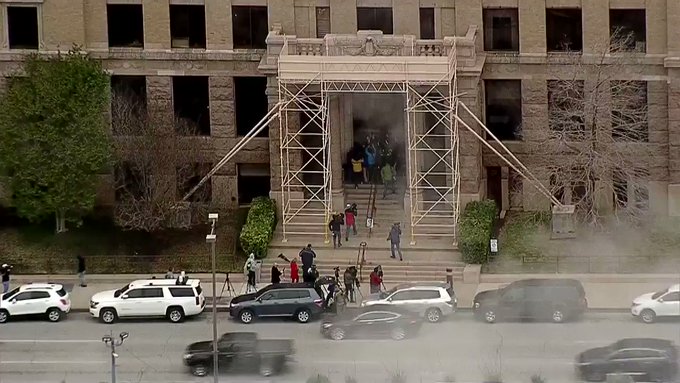
Ethan Couch is surrounded by reporters after he was released from the Tarrant County Jail in Fort Worth, Texas, today.
Nick Oxford/Reuters
Ethan Couch, whose defense team famously argued that his wealthy "affluenza" upbringing contributed to his fatal drunken driving crash, was released Monday after serving just under two years in jail.
Couch was 16 at the time of the crash, which killed four people and injured several others. Now 20, he has served 720 days at the Tarrant County Detention Center in Fort Worth, Texas, for violating his probation in relation to the 2013 auto wreck. His attorneys said Couch will serve the remaining six years under community supervision, which in Couch's case includes a number of sanctions and provisions.
"From the beginning, [Couch] has admitted his conduct, accepted responsibility for his actions, and felt true remorse for the terrible consequences of those actions," Couch's lawyers Scott Brown and Reagan Wynn, wrote in a statement. "Now, nearly five years after this horrific event, [Couch] does not wish to draw attention to himself and requests privacy so he may focus on successfully completing his community supervision and going forward as a law-abiding citizen."
He exited the courthouse Monday morning flanked by his legal team without making any statements to the press, and he rode away in the back of a Tesla.
His mother, Tonya Couch, was not there to see him freed. She is in jail awaiting trial on charges of money laundering and helping her son escape when it appeared his initial sentence would be increased. She was arrested last week for failing drug and alcohol tests, a violation of a court bond.
The 2013 trial stirred national outrage and debate after a psychologist contended that Couch, who had a blood-alcohol level three times the legal limit at the time of the crash, shouldn't be held responsible because his privileged upbringing had left him with "affluenza" and he was incapable of understanding the consequences of his actions.
Rather than hand Couch up to 20 years in jail, as prosecutors had sought, the judge issued what was perceived to be a lenient sentence: 10 years of probation and mandatory rehab.
By contrast, the same judge had nine years earlier sentenced another teen, whose mother was a drug user, to 20 years in jail for a drunken driving incident that left one man dead. And just last week, a Tarrant County judge sentenced a woman to five years for voting illegally. She was serving a nine-month probation at the time.
Couch was jailed two years into his probation after fleeing to Mexico with his mother. The pair had crossed the southern border after a video depicting the teen playing beer pong — a violation of the teen's probation — surfaced on the Internet. An international search for the pair ensued, but it ended when authorities tracked them down to a "resort town in Puerto Vallarta after they used a cellphone to order a pizza from Domino's," according to The Dallas Morning News.
ABC affiliate WFAA reported Couch will face strict conditions for the remainder of his probation:
"Those include alcohol and drug monitoring using a patch and blood or urine samples. He also won't be able to leave his house during the evening or early morning hours, and will have GPS monitoring.
If he eventually obtains a conditional license through the DMV, Couch can only operate a car with an ignition interlock device that also has a camera."
The station says any violation could land him back in court facing up to 10 years in state prison for each of the four intoxication manslaughter cases.

Trump Official Wants To Put Tight Leash On Consumer Watchdog Agency 2APR18


GREED, the word that describes the drumpf/trump-pence administration and the majority of the republican members and too many democratic members of congress. The CFPB really is a government agency created to protect the American people from the greed of the wall street-bank-financial cabal and it has been doing just that, without any interference from congress. mick mulvaney wants to change that and if he is able to then the American people will suffer higher fees, higher interest rates and rampant fraud.  From NPR.....

Trump Official Wants To Put Tight Leash On Consumer Watchdog Agency

The Trump administration will ask Congress to make drastic changes to weaken the independence of the Consumer Financial Protection Bureau, NPR has learned.
Sources familiar with the matter tell NPR that the CFPB's interim director, Mick Mulvaney, will ask lawmakers to restructure the bureau in his upcoming semi-annual report to Congress. The sources asked not to be named, because they aren't authorized to speak on the matter. The bureau officially announced the move Monday afternoon, after this story first published.
Mulvaney wants to give Congress control over the CFPB's budget and to require that any major new rules created by the bureau to protect consumers be approved by Congress before they can go into effect.
He will also ask Congress to give the president more power over the bureau's director, according to the sources. These changes would be a major shift for the bureau, which was designed to be independent from political influence — effectively placing the consumer watchdog on a short leash under the direct control of Congress and the White House.
The CFPB was created in the wake of the financial crisis after reckless mortgage lending and investing by financial institutions helped drive the country into recession and sparked a wave of millions of home foreclosures. In response, Congress created the consumer protection bureau and intentionally insulated it from political control in part by making its funding source come through the Federal Reserve, and not Congress.
The bureau was also given authority to independently make new rules to protect consumers. One such rule would require that high-interest-rate lenders known as payday lenders make sure that customers who take out multiple loans can afford to pay loans back. The rule aims to protect customers from being caught in "debt traps."
After President Trump appointed Mulvaney, a former Republican congressman, to be the bureau's interim director, Mulvaney has taken steps to reconsider the payday rule. Consumer advocates have been highly critical of this and other moves by Mulvaney that have shielded payday lenders from regulations and oversight. They point to campaign contributions Mulvaney took from payday lenders when he was in Congress.
Mulvaney also sponsored legislation to abolish the CFPB — the very agency he's now in control of as interim director. He and some other Republicans for years have said that Congress gave the agency too much power and independence.