NORTON META TAG

Showing posts with label employment. Show all posts

04 March 2019

Fact-checking Bernie Sanders on a $15 minimum wage 1MAR19


I would have given it a Mostly True rating, but the facts are the facts and here they are from PolitiFact......

Fact-checking Bernie Sanders on a $15 minimum wage

By Louis Jacobson 
Supporting a $15 minimum wage has become something of a litmus test for Democratic candidates these days -- strikingly so, since as recently as his 2013 State of the Union address, President Barack Obama supported a far more modest increase, a raise from $7.25 to $9. Later that year, he increased his proposal to $10.10.
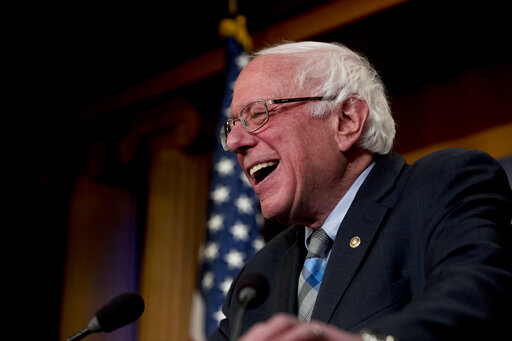
In a Feb. 26 tweet, Sen. Bernie Sanders, I-Vt. -- who had recently announced his second presidential bid -- touted the benefits of raising the minimum wage to $15.
"We must follow cities and states across the country and raise the federal minimum wage to $15 an hour and index it to median wage growth thereafter," he wrote. "Doing so would give more than 40 million low-wage workers a raise, more than 25 percent of the U.S. workforce."
We found that Sanders was close on describing a study released Feb. 5 by the Economic Policy Institute, a left-of-center think tank. But it’s important to note that this study assumes that no net jobs will be lost as a result of a minimum wage -- an assumption that is speculative and, in some corners, controversial.
Analyzing the EPI report
The report looks at the potential impact of the Raise the Wage Act of 2019, which was sponsored by Sanders and other Democrats. The bill would phase in increases to the minimum wage so that it reaches $15 by 2024. It would also index future minimum wage increases to median wage growth.
The study took into account the projected natural growth of wages between now and 2024 and only counted as gains the amount above that baseline wage growth. It also excluded workers who would not be affected by a minimum wage hike, such as self-employed workers.
We should note that Sanders said "more than 40 million low-wage workers" would benefit, but the study itself said 39.7 million, which is slightly less than 40 million.
In addition, the tweet glosses over the fact that the study looked at the bill’s full phase-in period, from 2019 to 2024. The study does say that 39.7 million Americans will benefit once the $15 level is reached by 2024, but prior to that, the numbers are smaller.


As the chart above shows, the study referred to workers who are "directly" impacted by the minimum wage hike as well as workers who are "indirectly" affected by it. Indirectly affected workers were defined as having a wage rate just above the new minimum wage. The study assumes that these workers will receive a raise as employers adjust their pay scales upward to reflect the new minimum wage.
Will there be job losses?
The biggest concern with the Economic Policy Institute study, though, is that it assumes no net change in employment status as a result of the minimum wage increase.
For years, some economists have expressed caution about raising the minimum wage to $15, saying it could raise employers’ costs so much that it leads to higher unemployment.
Supporters of a higher minimum wage point to a recent study that indicated that minimum wages between $10 and $13 did not generally lead to negative labor-force impacts. The study didn’t test a $15 minimum wage, however, since that level hasn’t been enacted anywhere yet.
We reached out to several economists who had told us in 2016 that they were at least somewhat wary of increasing the wage that high.
Timothy Smeeding, a professor of public affairs and economics at the University of Wisconsin, said the study is incomplete because it only counts the benefits and not the drawbacks.
While conservatives "look only at job losses," liberals "look only at higher pay. The truth is that both will happen."
A particular problem is that a national minimum wage will pack a bigger wallop -- and potentially harm employment levels more -- in states with lower wage scales. In 2016, three states had median wages below $15, another 11 had median wages between $15 and $16, and another nine had median wages between $16 and $17.
In these states, mandating a $15 minimum wage could immediately raise wages for close to half of workers, with some seeing their pay roughly double overnight. This could have untold impacts on employment, consumer prices and other aspects of the economy.
"I can’t see how a rapid increase of the minimum to $15 would be in the best interest of such areas, since I’m afraid employment opportunities for the low-skilled might suffer real harm," said Gary Burtless, a senior fellow at the Brookings Institution.
One of the economists we checked back with, Henry Aaron of the Brookings Institution, said he finally ended his opposition to a $15 minimum wage this week, because Sanders’ bill phases in the increase over several years and because it indexes future increases, removing it from the realm of politics.
"In the past, we have had a minimum wage, adjusted for inflation, as high as the one that is proposed at a period when real labor productivity was lower, on average, than it is today or will be five years hence," Aaron said. "Will there be some employment effects in some places from establishing a $15 minimum wage in 2024? Probably. But the effects will be small and the boost in earnings for relatively low-wage workers will be high."
Ultimately, it’s impossible to know how many jobs will be lost due to a minimum wage hike to $15. What we do know is that Sanders’ tweet focuses on the benefits but not the potential downside, expressing certainty where uncertainty prevails.
Our ruling
Sanders said that raising the federal minimum wage to $15 "would give more than 40 million low-wage workers a raise, more than 25 percent of the U.S. workforce."
That sticks closely to the top-line findings of a study by the Economic Policy Institute, a liberal group. Still, it’s important to note that the study assumed no change in unemployment. That’s a big assumption, and one that is not certain to pan out.
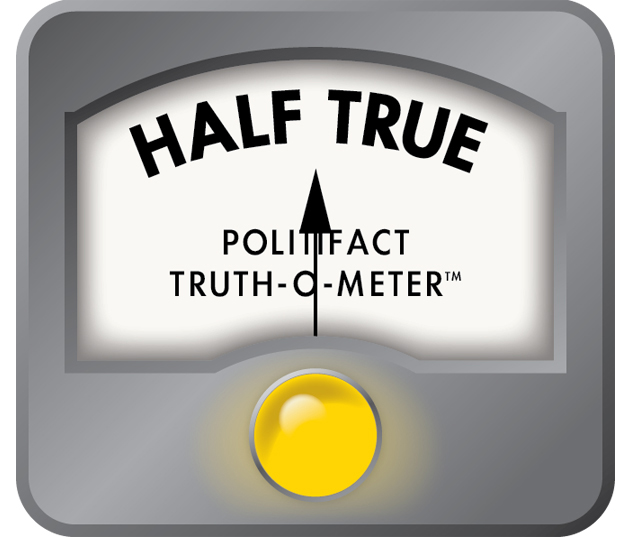
We rate the statement Half True.

About this statement:

Published: Friday, March 1st, 2019 at 2:15 p.m.
Researched by: Louis Jacobson
Edited by: Angie Drobnic Holan
Subjects: EconomyJobsWorkers

Sources:

Bernie Sanders, tweet, Feb. 26, 2019
Institute for Research on Labor and Employment, "The New Wave of Local Minimum Wage Policies: Evidence from Six Cities," Sept. 6, 2018
Governing, Median Wages by State, accessed March 1, 2019
PolitiFact, "Fact-checking a $15 minimum wage," May 9, 2016
Email interview with Gary Burtless, senior fellow at the Brookings Institution, Feb. 28, 2019
Email interview with Ben Zipperer, economist with the Economic Policy Institute, Feb. 28, 2019
Email interview with Timothy Smeeding, professor of public affairs and economics at the University of Wisconsin, March 1, 2019
Email interview with Henry Aaron, senior fellow at the Brookings Institution, March 1, 2019
Email interview with Josh Orton, spokesman for Bernie Sanders, Feb. 28. 2019

30 January 2016

Obamacare "is the biggest job-killer in this country -- millions of Americans have lost their jobs, have been forced into part-time work.Ted Cruz's Pants on Fire claim that health care law is nation's 'biggest job-killer'" 28&29JAN16

Cruz
ted cruz, darling of right wing evangelical voters, continues to rely on lies and deception in his campaign to be the repiglican presidential nominee in 2016. I want to know how his faith justifies this kind of campaigning and why his evangelical supporters have no problem with his deliberate flouting of basic Christian tenants? Here is cruz's "Pants on fire" lie on job and Obamacare from +PolitiFact .....
Pants on Fire!
Cruz
Obamacare "is the biggest job-killer in this country -- millions of Americans have lost their jobs, have been forced into part-time work."  
— Ted Cruz on Thursday, January 28th, 2016 in comments during the Iowa Republican presidential debate

Ted Cruz's Pants on Fire claim that health care law is nation's 'biggest job-killer'

To a man, the seven candidates on the stage at the Republican debate in Des Moines, Iowa, oppose Obamacare. When Texas Sen. Ted Cruz was asked what he would do for the millions of people who have gained health insurance thanks to the program, Cruz was quick to describe his take on the health care law’s failings.
"First of all, we have seen now in six years of Obamacare that it has been a disaster," Cruz said. "It is the biggest job-killer in this country. Millions of Americans have lost their jobs, have been forced into part-time work, have lost their health insurance, have lost their doctors, have seen their premiums skyrocket."
Virtually from the moment the Affordable Care Act was first debated, its critics have warned that it would wreck the economy. Those predictions, we found at least five times, were based onfaulty evidence.
Now Cruz is claiming that the critics were right, and it all has come to pass.
Only that’s not true, either. At least in any way that the national data picks up.
The government’s labor surveys give us a pretty good window into the number of people working in any given month. They also count the number of people who are working part-time but would rather have full-time work. We looked at those tallies at several points in the life of Obamacare: When it passed, when its earliest changes took effect, when people first got insured under the law, and today.
The numbers run against Cruz’s statement.
Not only has the number of jobs gone up, but the number of unwilling part-timers has gone down. We used data from the U.S.Bureau of Labor Statistics to build this table:
 
April 2010
September 2010
January 2014
December 2015
Unemployment rate
9.9
9.5
6.6
5
Number of jobs (thousands)
139,297
139,396
145,092
149,929
Unwilling part-timers (thousands)
9,178
9,246
7,250
6,022

All of the job numbers have moved in a positive direction since April 2010, the first full month after President Barack Obama signed the bill into law. The unemployment rate has moved steadily from 9.9 percent to 5 percent. The economy has added about 10.7 million jobs. And the number of working people who have part-time work but would rather have full-time work has fallen by nearly 3 million. There was a brief rise in that number between April and September 2010, but the longer term trend is clearly one of decline.
That’s not to say the Affordable Care Act deserves all the credit. The fact is many factors drive the labor market and the overall recovery from the Great Recession is the dominant player in this regard.
Still, economist Gary Burtless at the Brookings Institution said job growth has been steady and nearly all of it has been in full-time positions. The pattern, he said contradicts "the prediction that the law would push employers to reduce the hours of their employees in order to avoid the law's penalties on employers who do not provide insurance to the full-time employees."
"In the face of this evidence, critics of the Affordable Care Act keep telling us their predictions of the ‘job killing’ impacts of Obamacare have been borne out by experience," Burtless said. "So far as I can see, this is flatly untrue."
Maxim Pinkovskiy, an economist with the Federal Reserve Bank of New York, compared states that had very different starting points when Obamacare was passed. Pinkovskiy looked at Minnesota, a state with a low uninsurance rate, and Texas, where the uninsurance rate was relatively high. In his study, Texas was considered more exposed to the impacts of the Affordable Care Act because the law’s primary effect was to increase the number of insured people (despite Texas’ decision against expanding Medicaid).
Pinkovskiy found that in terms of jobs, Texas grew at a faster clip than Minnesota.
"More exposed states and counties have, if anything, experienced a rise in employment, salaries and output relative to less exposed areas with the implementation or the enactment of the ACA," Pinkovskiy wrote.
Bowen Garrett, an economist at the Urban Institute, co-authored a study with colleagues at the University of Illinois at Chicago thatcompared states that expanded Medicaid under Obamacare and those that didn’t. The researchers found no predictable effect on labor market trends. Garrett told us that based on some economic models, it’s possible that the Affordable Care Act could have increased the number of part-time jobs by about 250,000.
"But that’s far from the millions some have claimed, and it’s not clear that the ACA is responsible," Garrett said.
A study in Health Affairs found no evidence that the law has led to more part-time work overall, but within certain groups -- people with little education and those 60-64 years old -- there might be a modest rise.
We reached out to the Cruz campaign and did not hear back.
Our ruling
Cruz said that Obamacare cost the country millions of jobs and had forced millions into working part-time.
The government’s employment surveys show no sign of that occurring. By every measure, millions more people are working and millions fewer are stuck unwillingly in part-time work since the time the Affordable Care Act became law. The law might have affected part-time work for certain kinds of people, but that didn’t change the improvement in the overall numbers.
Many of these numbers, especially the well-reported unemployment rate, are readily available and independent economic studies uncovered no sign that job growth has suffered at all under the new health care law.

About this statement:

Published: Friday, January 29th, 2016 at 1:54 p.m.
Researched by: Jon Greenberg
Edited by: Aaron Sharockman
Subjects: Health Care

Sources:

Fox News, Republican debate in Des Moines, Iowa, Jan. 28, 2016
Bureau of Labor Statistics, Labor Force Statistics from the Current Population Survey, Jan. 28, 2016
Brookings Institution, Employment impacts of the Affordable Care Act, March 20, 2015
Federal Reserve Bank of New York, The Affordable Care Act and the Labor Market: A First Look, Oct. 2015
National Bureau of Economic Research, Effects of ACA Medicaid Expansions on Health Insurance Coverage and Labor Supply, December 2015
Email interview, Gary Burtless, economist, Brookings Institution, Jan. 29, 2016
Email interview, Bowen Garrett, economist, Urban Institute, Jan. 29. 2016
Cruz turned familiar data upside down. We rate this claim Pants on Fire.