NORTON META TAG

Showing posts with label 2020 Democratic pres primaries. Show all posts

05 March 2019

Bernie + Warren = ‘one-two punch’ for progressives 1MAR19

Bernie + Warren = ‘one-two punch’ for progressives
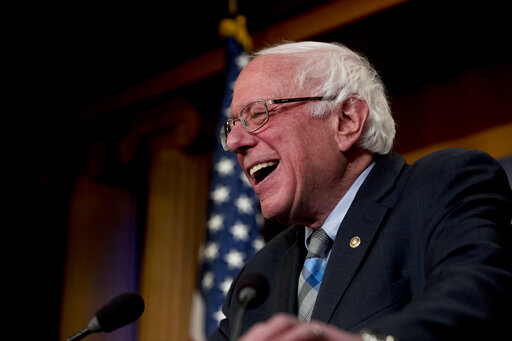
YES, we just finished the 2018 midterm elections, the 116th Congress has been in session for about 2 months and more and more reporting is covering the 2020 Democratic presidential primaries. Considering the corruption, the evil of the drumpf / trump-pence administration and the majority of the republican / gop-greed over people party the Democratic Party has the responsibility to start vetting possible candidates now to make sure there is nothing in their history that would disqualify them to be the Democratic Party candidate to defeat (NOT MY) pres drumpf / trump or whoever the fascist republican / gop party nominates. I contributed to and voted for Sen Sanders in the 2016 Democratic primary in Virginia and right now he is my choice for the 2020 election. I have contributed to Sen Warren's election campaigns and can support her if she is the Democratic nominee. From The Hill.....

Bernie + Warren = ‘one-two punch’ for progressives


THE VIEWS EXPRESSED BY CONTRIBUTORS ARE THEIR OWN AND NOT THE VIEW OF THE HILL

We're a progressive organization that endorses Sen. Elizabeth Warren (D-Mass.). This week, when Sen. Bernie Sanders (I-Vt.) was attacked unfairly, we took a leading role in defending him. Why did we do that? Because we genuinely believe that Warren and Sanders in the race makes both of their candidacies -- and the ultimate nominee -- stronger.
After surveying our nearly 1 million Progressive Change Campaign Committee members for months, and running professional polls in Iowa and New Hampshire, one thing is clear: The conventional wisdom from DC pundits, which says there is a zero-sum “progressive lane,” is wrong. 
Sanders and former Vice President Joe Biden share many supporters. If former Rep. Beto O'Rourke (D-Texas) jumps in, he'd take support from Biden, Sanders, Warren, and Sen. Kamala Harris (D-Calif.). One Iowa voter told a reporter he is leaning toward Warren, but is “intrigued” by Former New York City Mayor Michael Bloomberg.
Here's a prediction: Warren and Sanders in the debate together will be a one-two punch that draws the national spotlight to their bold systemic solutions to our rigged economy and corrupted democracy – making them both stronger as other candidates rush to embrace their ideas. This will increase their collective share of the vote, turning a "lane" into the full road to victory for a bold progressive champion.
Here is how it will play out. By far, the top factor primary voters care about is defeating Donald Trump. Voters who believe many candidates can win will vote based on a candidate’s worldview. But many others will vote not based on their own preferences, but on their perception of who general election swing voters will support. (I call these “pundit” voters. The Washington Post's Ben Terris similarly describes Pundititis.) 
In at least two major ways, Warren and Sanders mutually boost each other’s perceived viability among these “pundit” voters. The first way is agenda setting. 
Which issues get the spotlight in the 12 Democratic debates and in the press every day is a game-changing dynamic. For example, in last year’s Texas U.S. Senate race, the “domestic policy debate” between O’Rourke and GOP Sen. Ted Cruz focused almost entirely on illegal immigration, kneeling during the National Anthem, and other wedge issues that pushed a Republican-leaning state to favor Cruz. If the topics were whether we should cut or expand Social Security and veterans’ benefits, or whether to repeal Trump’s tax cuts for the wealthy to help students graduate from college without debt, Texas could have a different U.S. senator right now.
The one-two punch of Warren and Sanders on the debate stage will command the spotlight in a way neither could do alone. Neither will be isolated when they propose big ideas. When Warren promises to lead on universal childcare, a wealth tax on ultra-millionaires, or a sweeping anti-corruption proposal, Sanders will agree and help make the case. When Sanders calls for Medicare For All or raising the estate tax on millionaires, Warren will do the same. Other candidates will stampede to agree - or look weak if they don’t. 
The net effect will be more air time for Warren, Sanders, and progressive ideas that polls show are overwhelmingly popular with primary and general election voters. As they command the spotlight, look authentic and comfortable in their own skin, and make a persuasive case on issues they have talked about for years, voters will be able to picture them trouncing Trump on a debate stage.
The second way Warren and Sanders mutually boost each other’s perceived viability among “pundit” voters stems directly from the first: By commanding the spotlight and support from other candidates, their ideas will be seen as more mainstream and more viable in the general election. 
We’ve seen in many competitive primaries that two candidates can kick off a domino effect, which quickly results in the entire field following suit. At a minimum, risk-averse voters cannot fret about the viability of bold issue positions in the general election when all primary candidates agree. 
But more important, when Kamala Harris recently made a strong case for Medicare For All (and even made the case for eliminating private insurance), she became a validator and evangelist for that position. She persuaded people and helped bring along the public. As this dynamic continues, it will make the issues championed by Sanders and Warren look even more mainstream and viable against Trump.
As voting in the early states gets closer, Sanders and Warren will have lifted each other up into the finalist round with one or two others. Voters will then have to choose the best nominee against Trump – who won in 2016 after bashing Wall Street speeches, corporate trade deals, and corruption in D.C. He was lying about his intentions, but he tapped into a very real desire by voters to shake up the system.  
That's what Warren and Sanders offer. Not small-bore tweaks. Not insider deals among out-of-touch politicians. Voters want big, bold, systemic change.  
We believe Elizabeth Warren will be the most electable Democrat and the best president for America because she is an inspiring progressive woman with a track record of building smart coalitions and defeating the odds – successfully shaking up the system on behalf of working families.
But Sanders shares many of Warren’s core values. His strong entrance into the race puts him atop the crowded Democratic pack -- at least for now. 
Either way, for progressives, right now more is more. The one-two punch of Warren and Sanders in the race will be a rising tide that lifts both boats – and lifts bold progressive issues into the center of the debate stage.
Adam Green is Co-Founder of Progressive Change Campaign Committee. The PCCC has endorsed Elizabeth Warren for president and raised nearly $2 million in grassroots donations for her two Senate runs combined. The PCCC has also worked with Bernie Sanders for many years.

04 March 2019

Fact-checking Bernie Sanders on a $15 minimum wage 1MAR19


I would have given it a Mostly True rating, but the facts are the facts and here they are from PolitiFact......

Fact-checking Bernie Sanders on a $15 minimum wage

By Louis Jacobson 
Supporting a $15 minimum wage has become something of a litmus test for Democratic candidates these days -- strikingly so, since as recently as his 2013 State of the Union address, President Barack Obama supported a far more modest increase, a raise from $7.25 to $9. Later that year, he increased his proposal to $10.10.
In a Feb. 26 tweet, Sen. Bernie Sanders, I-Vt. -- who had recently announced his second presidential bid -- touted the benefits of raising the minimum wage to $15.
"We must follow cities and states across the country and raise the federal minimum wage to $15 an hour and index it to median wage growth thereafter," he wrote. "Doing so would give more than 40 million low-wage workers a raise, more than 25 percent of the U.S. workforce."
We found that Sanders was close on describing a study released Feb. 5 by the Economic Policy Institute, a left-of-center think tank. But it’s important to note that this study assumes that no net jobs will be lost as a result of a minimum wage -- an assumption that is speculative and, in some corners, controversial.
Analyzing the EPI report
The report looks at the potential impact of the Raise the Wage Act of 2019, which was sponsored by Sanders and other Democrats. The bill would phase in increases to the minimum wage so that it reaches $15 by 2024. It would also index future minimum wage increases to median wage growth.
The study took into account the projected natural growth of wages between now and 2024 and only counted as gains the amount above that baseline wage growth. It also excluded workers who would not be affected by a minimum wage hike, such as self-employed workers.
We should note that Sanders said "more than 40 million low-wage workers" would benefit, but the study itself said 39.7 million, which is slightly less than 40 million.
In addition, the tweet glosses over the fact that the study looked at the bill’s full phase-in period, from 2019 to 2024. The study does say that 39.7 million Americans will benefit once the $15 level is reached by 2024, but prior to that, the numbers are smaller.


As the chart above shows, the study referred to workers who are "directly" impacted by the minimum wage hike as well as workers who are "indirectly" affected by it. Indirectly affected workers were defined as having a wage rate just above the new minimum wage. The study assumes that these workers will receive a raise as employers adjust their pay scales upward to reflect the new minimum wage.
Will there be job losses?
The biggest concern with the Economic Policy Institute study, though, is that it assumes no net change in employment status as a result of the minimum wage increase.
For years, some economists have expressed caution about raising the minimum wage to $15, saying it could raise employers’ costs so much that it leads to higher unemployment.
Supporters of a higher minimum wage point to a recent study that indicated that minimum wages between $10 and $13 did not generally lead to negative labor-force impacts. The study didn’t test a $15 minimum wage, however, since that level hasn’t been enacted anywhere yet.
We reached out to several economists who had told us in 2016 that they were at least somewhat wary of increasing the wage that high.
Timothy Smeeding, a professor of public affairs and economics at the University of Wisconsin, said the study is incomplete because it only counts the benefits and not the drawbacks.
While conservatives "look only at job losses," liberals "look only at higher pay. The truth is that both will happen."
A particular problem is that a national minimum wage will pack a bigger wallop -- and potentially harm employment levels more -- in states with lower wage scales. In 2016, three states had median wages below $15, another 11 had median wages between $15 and $16, and another nine had median wages between $16 and $17.
In these states, mandating a $15 minimum wage could immediately raise wages for close to half of workers, with some seeing their pay roughly double overnight. This could have untold impacts on employment, consumer prices and other aspects of the economy.
"I can’t see how a rapid increase of the minimum to $15 would be in the best interest of such areas, since I’m afraid employment opportunities for the low-skilled might suffer real harm," said Gary Burtless, a senior fellow at the Brookings Institution.
One of the economists we checked back with, Henry Aaron of the Brookings Institution, said he finally ended his opposition to a $15 minimum wage this week, because Sanders’ bill phases in the increase over several years and because it indexes future increases, removing it from the realm of politics.
"In the past, we have had a minimum wage, adjusted for inflation, as high as the one that is proposed at a period when real labor productivity was lower, on average, than it is today or will be five years hence," Aaron said. "Will there be some employment effects in some places from establishing a $15 minimum wage in 2024? Probably. But the effects will be small and the boost in earnings for relatively low-wage workers will be high."
Ultimately, it’s impossible to know how many jobs will be lost due to a minimum wage hike to $15. What we do know is that Sanders’ tweet focuses on the benefits but not the potential downside, expressing certainty where uncertainty prevails.
Our ruling
Sanders said that raising the federal minimum wage to $15 "would give more than 40 million low-wage workers a raise, more than 25 percent of the U.S. workforce."
That sticks closely to the top-line findings of a study by the Economic Policy Institute, a liberal group. Still, it’s important to note that the study assumed no change in unemployment. That’s a big assumption, and one that is not certain to pan out.
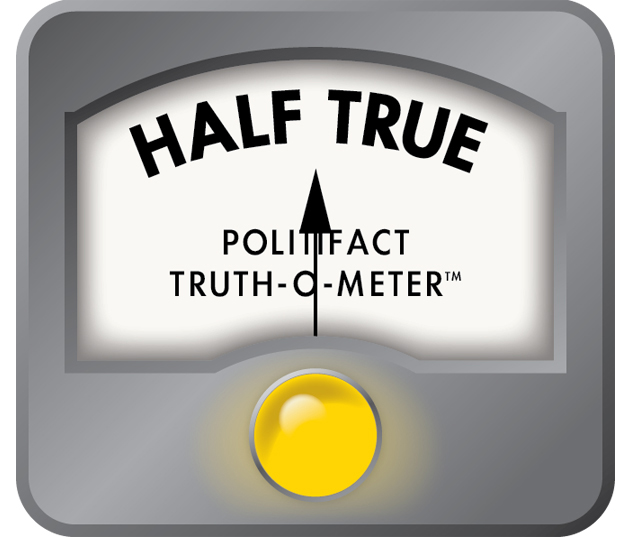
We rate the statement Half True.

About this statement:

Published: Friday, March 1st, 2019 at 2:15 p.m.
Researched by: Louis Jacobson
Edited by: Angie Drobnic Holan
Subjects: EconomyJobsWorkers

Sources:

Bernie Sanders, tweet, Feb. 26, 2019
Institute for Research on Labor and Employment, "The New Wave of Local Minimum Wage Policies: Evidence from Six Cities," Sept. 6, 2018
Governing, Median Wages by State, accessed March 1, 2019
PolitiFact, "Fact-checking a $15 minimum wage," May 9, 2016
Email interview with Gary Burtless, senior fellow at the Brookings Institution, Feb. 28, 2019
Email interview with Ben Zipperer, economist with the Economic Policy Institute, Feb. 28, 2019
Email interview with Timothy Smeeding, professor of public affairs and economics at the University of Wisconsin, March 1, 2019
Email interview with Henry Aaron, senior fellow at the Brookings Institution, March 1, 2019
Email interview with Josh Orton, spokesman for Bernie Sanders, Feb. 28. 2019

BERNIE UPDATE 4MAR19

GO TO BERNIE'S 2020 campaign website for more information on his campaign to be our next president.....
We're going to win this election not because we have a super PAC funded by billionaires. We're going to win this election because we will put together the strongest grassroots coalition in the history of American politics.
That is the message we sent in Brooklyn at our first official campaign event.
And that is the message we sent last night in Chicago at the second rally of our campaign.
While Donald Trump wants to divide us up by the color of our skin, our country of origin, our gender, our religion and our sexual orientation – we are going to do exactly the opposite. We are going to bring our people together – black, white, Latino, Native American, Asian American, gay and straight, young and old, men and women, native born and immigrant.
Because when we do that, we are going to finally create an economy and a government which works for all Americans, and not just the 1 percent.
In solidarity,
Team Bernie


The wealthy and the powerful will do everything possible to defend their financial interests. They have unlimited money, but we have each other. Not just Bernie – us.

Add your name to say you are committed to do whatever it takes to win this election, beat Donald Trump, and elect a government that works for all of us, not just the wealthy few.