NORTON META TAG
Showing posts with label gas prices. Show all posts
09 May 2026
06 June 2022
26 October 2012
Energy Independence Wouldn't Make Gasoline Any Cheaper 26OKT12
FOR all the stupid people (and that is not being harsh) out there who believe 1) the President can lower gas prices, and 2) more oil production in the U.S. will lower gas prices, from Planet Money.....
Friedemann Vogel/Getty Images
Just about every president since Richard Nixon has set
energy independence as a goal, and both major candidates have brought it
up the current campaign.
As it turns out, there is a place, not so far from here, that has achieved energy independence: Canada.
Canada produces far more oil than it consumes. They're not dependent on the Middle East! They've got all the oil they need!
I called Stephen Gordon, a professor of economics at Université Laval in Quebec City, to ask him about what energy independence means for his nation.
"It's not really that big a deal," he told me.
Really? I asked him what gas station he used to fill up his car.
Ultramar. Corner of St. Olivie and St. Jean Baptiste. I called the station and (with the help of a colleague who speaks French) learned that they Charge $1.37 per liter, in Canadian dollars.
Do all the conversions, adjust for taxes, and you get something around $4 per gallon — about the same price as we pay in the U.S. right now.
Energy independence does not mean cheaper gasoline. It doesn't even mean that prices are more stable. Gas prices in Canada went up this summer just like they did in the United States. Prices in Canada are sensitive to conflict in the Middle East, or increased demand from China.
There is a global market for oil. That means there is basically one price, whether you are a net exporter (Canada) or the world's biggest importer (the U.S.).
It is good for Canada's economy to export oil to the rest of the world. Oil is money sitting there in the ground. But it doesn't make gas any cheaper at the pump.
http://www.npr.org/blogs/money/2012/10/26/163637629/energy-independence-wouldnt-make-gasoline-any-cheaper?ft=3&f=1001&sc=nl&cc=nh-20121026
As it turns out, there is a place, not so far from here, that has achieved energy independence: Canada.
Canada produces far more oil than it consumes. They're not dependent on the Middle East! They've got all the oil they need!
I called Stephen Gordon, a professor of economics at Université Laval in Quebec City, to ask him about what energy independence means for his nation.
"It's not really that big a deal," he told me.
Really? I asked him what gas station he used to fill up his car.
Ultramar. Corner of St. Olivie and St. Jean Baptiste. I called the station and (with the help of a colleague who speaks French) learned that they Charge $1.37 per liter, in Canadian dollars.
Do all the conversions, adjust for taxes, and you get something around $4 per gallon — about the same price as we pay in the U.S. right now.
Energy independence does not mean cheaper gasoline. It doesn't even mean that prices are more stable. Gas prices in Canada went up this summer just like they did in the United States. Prices in Canada are sensitive to conflict in the Middle East, or increased demand from China.
There is a global market for oil. That means there is basically one price, whether you are a net exporter (Canada) or the world's biggest importer (the U.S.).
It is good for Canada's economy to export oil to the rest of the world. Oil is money sitting there in the ground. But it doesn't make gas any cheaper at the pump.
http://www.npr.org/blogs/money/2012/10/26/163637629/energy-independence-wouldnt-make-gasoline-any-cheaper?ft=3&f=1001&sc=nl&cc=nh-20121026
22 March 2012
Mitt Romney As Governor Pushed For More Energy-Efficient Light Bulbs 22MAR12
HERE is just a bit of the environmental record "gov" mitt romney is trying to hide from, including his comments on high gas prices, energy efficient light bulbs and other energy saving products as well as government tax credits for consumers purchasing energy efficient products and government regulations mandating increased fuel efficiency for all vehicles. Oh mitt, this is more from your past that can't be erased like an Etch-A-Sketch!
WASHINGTON -- Mitt Romney's effort to turn up the heat, so
to speak, on President Barack Obama over the issue of rising gas prices
has had various elements and layers. He's called for Obama to fire top
cabinet officials; ridiculed the president's reluctance to approve
critical portions of the Keystone pipeline; and denounced the burden of
government regulations.
In one recent campaign stop, Romney accused the president of banning "Thomas Edison's [incandescent] light bulb."
On Thursday morning, The New Republic did a deep dive into Romney's record as a governor and discovered that he pursued many of the same policies he now denounces: While in Massachusetts, Romney responded to high gas prices by stressing that they were a result of the global market. He pursued policies of conservation and vehicle efficiency. He even went so far as to suggest high gas prices would have a positive effect on consumer behavior.
"I don't think that now is the time, and I'm not sure there will be the right time, for us to encourage the use of more gasoline," Romney said, according to the Quincy Patriot Ledger's report at the time. "I'm very much in favor of people recognizing that these high gasoline prices are probably here to stay."
As for those incandescent light bulbs, Romney's statement has been challenged by fact-checkers, who note that the bill that requires minimum efficiency standards for those bulbs was signed into law by President George W. Bush. Obama has subsequently blocked Republican attempts to repeal the law.
But while Romney may be opposed to the federal government regulating minimum standards for the light bulb market, he certainly wasn't opposed to the government promoting energy-efficient light bulb use itself.
In his 2004 Climate Protection Plan, Romney pledged that Massachusetts would work with other states "to foster legislation and other approaches" that would encourage energy efficiency standards for many products, including "Torchiere lighting." Elsewhere in that proposal, he noted that "lighting accounts for 20 to 25 percent of all electricity consumed in the U.S," and that improvement in this field "offers a significant opportunity for the state and for municipalities to save energy and money."
"To that end, the state is working with other states to assist municipal officials to encourage the use of Light Emitting Diodes (LEDs), high-efficiency street lighting, or other energy-saving lighting technologies," the plan reads.
A search of Lexis-Nexis also reveals that in late November 2005, Romney signed a bill that gave families a $600 tax credit for the purchase of energy-efficient products. The bill, as The Boston Globe reported at the time:
http://www.huffingtonpost.com/2012/03/22/mitt-romney-light-bulbs_n_1372892.html?utm_source=Alert-blogger&utm_medium=email&utm_campaign=Email%2BNotifications
In one recent campaign stop, Romney accused the president of banning "Thomas Edison's [incandescent] light bulb."
On Thursday morning, The New Republic did a deep dive into Romney's record as a governor and discovered that he pursued many of the same policies he now denounces: While in Massachusetts, Romney responded to high gas prices by stressing that they were a result of the global market. He pursued policies of conservation and vehicle efficiency. He even went so far as to suggest high gas prices would have a positive effect on consumer behavior.
"I don't think that now is the time, and I'm not sure there will be the right time, for us to encourage the use of more gasoline," Romney said, according to the Quincy Patriot Ledger's report at the time. "I'm very much in favor of people recognizing that these high gasoline prices are probably here to stay."
As for those incandescent light bulbs, Romney's statement has been challenged by fact-checkers, who note that the bill that requires minimum efficiency standards for those bulbs was signed into law by President George W. Bush. Obama has subsequently blocked Republican attempts to repeal the law.
But while Romney may be opposed to the federal government regulating minimum standards for the light bulb market, he certainly wasn't opposed to the government promoting energy-efficient light bulb use itself.
In his 2004 Climate Protection Plan, Romney pledged that Massachusetts would work with other states "to foster legislation and other approaches" that would encourage energy efficiency standards for many products, including "Torchiere lighting." Elsewhere in that proposal, he noted that "lighting accounts for 20 to 25 percent of all electricity consumed in the U.S," and that improvement in this field "offers a significant opportunity for the state and for municipalities to save energy and money."
"To that end, the state is working with other states to assist municipal officials to encourage the use of Light Emitting Diodes (LEDs), high-efficiency street lighting, or other energy-saving lighting technologies," the plan reads.
A search of Lexis-Nexis also reveals that in late November 2005, Romney signed a bill that gave families a $600 tax credit for the purchase of energy-efficient products. The bill, as The Boston Globe reported at the time:
will raise the minimum energy efficiency standard for residential boilers and furnaces, incandescent reflector lamps, and laptop computer power cords -- something Rhode Island, New York, and several other states have done. Such a measure could have a dramatic long-term effect in reducing energy consumption in Massachusetts, and even the country as a whole, Romney said. "This is going to be paying dividends for the people of Massachusetts for a long, long time to come, and we're not finished," he said.(emphasis added) A month and a half before he signed that bill, meanwhile, Romney joined then-Energy Secretary Samuel Bodman for an "Easy Ways to Save Energy" campaign that included, among other suggestions, "replacing existing light bulbs with Energy Star qualified fluorescent lights." The full press release announcing the campaign is below.
DEDHAM, MA -- With higher home heating costs expected this winter, U.S. Secretary of Energy Samuel W. Bodman and Massachusetts Governor Mitt Romney today highlighted easy, inexpensive ways consumers can save money by reducing home heating bills. This visit to New England is Secretary Bodman's first stop on the national "Easy Ways to Save Energy" campaign. "As a longtime Boston resident, I know how tough New England winters can be," Secretary Bodman said. "Because of tight oil and natural gas markets and the damage to our energy infrastructure caused by Hurricanes Katrina and Rita, consumers can expect to see higher energy bills this winter. There are, however, simple, inexpensive, yet extremely effective measures consumers can take to reduce their energy bills."
"As a state, Massachusetts and its people have led the way in pursuing energy efficient programs for our homes and businesses," said Romney. "This year, it's especially important for consumers to know that winter doesn't have to burn a hole in their wallet. Families can save hundreds of dollars by following some common sense tips."
Secretary Bodman and Governor Romney's visit to Lowe's also highlights the company's October 8, 2005 kick off of energy saving How-To Clinics at its 1,200 stores nationwide. Held each Saturday at 1 p.m., these clinics aim to educate consumers about the many ways they can conserve energy and money this winter.
In launching the national "Easy Ways to Save Energy" campaign on Monday, October 3, 2005, Secretary Bodman announced that the Department of Energy will take a comprehensive approach to improving energy efficiency for consumers, businesses and the government. The campaign features: For Consumers:
For the Federal Government:
- An informative "Energysavers" guide outlining easy ways to improve home energy efficiency available through the Department of Energy, or, online at www.energysavers.gov;
- An aggressive public education effort including online, print, radio and television ads featuring the "Energy Hog" - a character similar to McGruff the Crime Dog and Smokey the Bear;
- An "Energy Hog" curriculum to be used by teachers in grades 3-8 featuring web-based games and take-home activities;
- A series of radio public service announcements in English and Spanish featuring energy saving tips that have been distributed to 4,500 stations across the United States;
- For Business:
- Industrial Energy Saving Teams that will be dispatched to help improve the efficiency of 200 of America's most energy-intensive factories;
- Department of Energy is making the Energyavers guide available to be reprinted and distributed by manufacturers, retailers and local utilities;
- Secretary Bodman has directed teams of qualified energy experts to deploy to federal facilities to identify quick and easy ways to save energy this winter. The federal government is the largest consumer of energy in the United States.
- Easy tips for consumers include:
- Making sure your home is properly insulated. Proper insulation in attics, ceilings, floors, crawlspaces and exterior and basement walls can save 30 percent on home heating bills;
- Installing a programmable thermostat. Turning down a thermostat from 72 to 65 degrees for eight ours a day will save up to 10 percent on your heating bill;
- Replacing existing light bulbs with Energy Star qualified fluorescent lights in the lamps and fixtures in your home; this can save up to 50 percent on lighting costs.
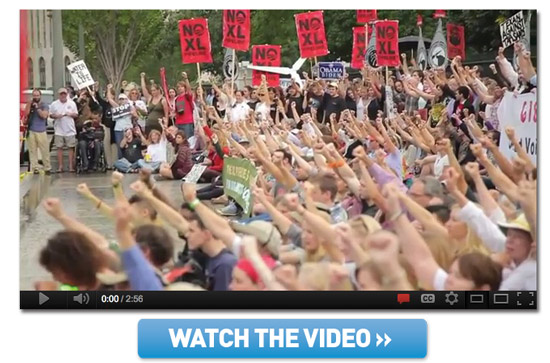
President Obama: You can't have it both ways on Keystone XL
PRES Obama is playing both sides of the fence on keystone xl because of the heat he is getting on the price of gas and the unrelenting and deceptive propaganda campaign being waged by the gop and tea-baggers. Check out this video and article from 350.org on the pipeline and then take part in Credo's call to action and tell Pres Obama to stop cheerleading for keystone xl! AND consider making a donation to 350.org and the e mailing the Obama campaign and tell them their donation went to 350.org to fight the keystone xl pipeline (I did). http://act.350.org/sign/join-the-fight/?akid=1667.575720.veaTqt&rd=1&t=2
© 2012 CREDO. All rights reserved.
|
|||||||||||||||||
|
|
16 March 2012
Why Republicans Aren't Mentioning the Real Cause of Rising Prices at the Gas Pump 15MAR12
THE repiglicans and tea-baggers won't tell America who is primarily responsible for the high gas prices for the same reason they won't support ending the tax subsidies for big oil; it is because their corporate masters on wall street won't let them. They are political whores, and are owned by and responsible to corporate America. Also, to tell the truth about gas prices would eliminate the propaganda campaign they are waging with lies and deception to keep the hatred of the right wing base focused on Pres Obama, too many of whom don't want or need facts and truth, they just want to hate Obama because they are ignorant racist. From HuffPost....
Gas prices continue to rise, which is finally giving Republicans an issue. Mitt Romney is demanding the President open up more domestic drilling; the super PAC behind Rick Santorum just released a new ad in Louisiana blasting the President on gas prices; and the GOP is attacking the White House on the Keystone XL Pipeline.
But the rise in gas prices has almost nothing to do with energy policy. It has everything to do with America's continuing failure to adequately regulate Wall Street. But don't hold your breath waiting for Republicans to tell the truth.
As I've noted before, oil supplies aren't being squeezed. Over 80 percent of America's energy needs are now being satisfied by domestic supplies. In fact, we're starting to become an energy exporter. Demand for oil isn't rising in any event. Demand is down in the U.S. compared to last year at this time, and global demand is still moderate given the economic slowdowns in Europe and China.
But Wall Street is betting on higher oil prices in the future -- and that betting is causing prices to rise. The Street is laying odds that unrest in Syria will spill over into other countries or that tensions with Iran will affect the Persian Gulf, and that global demand will pick up as American consumers bounce back to life.
These bets are pushing up oil prices because Wall Street firms and other big financial players now dominate oil trading.
Financial speculators historically accounted for about 30 percent of oil contracts, producers and end users for about 70 percent. But today speculators account for 64 percent of all contracts.
Bart Chilton, a commissioner at the Commodity Futures Trading Commission -- the federal agency that regulates trading in oil futures, among other commodities -- warns that too few financial players control too much of the oil market. This allows them to push oil prices higher and higher -- not only on the basis of their expectations about the future but also expectations about how high other speculators will drive the price.
In other words, a relatively few players with very deep pockets are placing huge bets on oil -- and you're paying.
Chilton estimates that drivers of small cars like Honda Civics are paying an extra $7.30 every time they fill up -- and that money is going into the pockets of Wall Street speculators. Drivers of larger vehicles like the Ford Explorer are paying speculators $10.41 when they fill up.
Funny, but I don't hear Republicans rail against Wall Street speculators. Could this have anything to do with the fact that hedge funds and money managers are bankrolling the GOP as never before?
Wall Street isn't bankrolling Democrats nearly as much this time around because the Street is still smarting from the Dodd-Frank Wall Street reform law pushed by the Democrats, and from the president's offhand remark in 2010 calling the denizens of the Street "fat cats."
The Commodity Futures Trading Commission is trying to limit how much speculators can bet in oil futures -- a power it was given by Dodd-Frank. It issued a rule in October, but it won't take effect for another year.
Meanwhile, Wall Street has gone to court to stop the rule. It's already won a stay.
As rising gas prices start wagging the election-year dog, the President should let America know what's really causing prices to rise.
Robert Reich is the author of Aftershock: The Next Economy and America's Future, now in bookstores. This post originally appeared at RobertReich.org.
Gas prices continue to rise, which is finally giving Republicans an issue. Mitt Romney is demanding the President open up more domestic drilling; the super PAC behind Rick Santorum just released a new ad in Louisiana blasting the President on gas prices; and the GOP is attacking the White House on the Keystone XL Pipeline.
But the rise in gas prices has almost nothing to do with energy policy. It has everything to do with America's continuing failure to adequately regulate Wall Street. But don't hold your breath waiting for Republicans to tell the truth.
As I've noted before, oil supplies aren't being squeezed. Over 80 percent of America's energy needs are now being satisfied by domestic supplies. In fact, we're starting to become an energy exporter. Demand for oil isn't rising in any event. Demand is down in the U.S. compared to last year at this time, and global demand is still moderate given the economic slowdowns in Europe and China.
But Wall Street is betting on higher oil prices in the future -- and that betting is causing prices to rise. The Street is laying odds that unrest in Syria will spill over into other countries or that tensions with Iran will affect the Persian Gulf, and that global demand will pick up as American consumers bounce back to life.
These bets are pushing up oil prices because Wall Street firms and other big financial players now dominate oil trading.
Financial speculators historically accounted for about 30 percent of oil contracts, producers and end users for about 70 percent. But today speculators account for 64 percent of all contracts.
Bart Chilton, a commissioner at the Commodity Futures Trading Commission -- the federal agency that regulates trading in oil futures, among other commodities -- warns that too few financial players control too much of the oil market. This allows them to push oil prices higher and higher -- not only on the basis of their expectations about the future but also expectations about how high other speculators will drive the price.
In other words, a relatively few players with very deep pockets are placing huge bets on oil -- and you're paying.
Chilton estimates that drivers of small cars like Honda Civics are paying an extra $7.30 every time they fill up -- and that money is going into the pockets of Wall Street speculators. Drivers of larger vehicles like the Ford Explorer are paying speculators $10.41 when they fill up.
Funny, but I don't hear Republicans rail against Wall Street speculators. Could this have anything to do with the fact that hedge funds and money managers are bankrolling the GOP as never before?
Wall Street isn't bankrolling Democrats nearly as much this time around because the Street is still smarting from the Dodd-Frank Wall Street reform law pushed by the Democrats, and from the president's offhand remark in 2010 calling the denizens of the Street "fat cats."
The Commodity Futures Trading Commission is trying to limit how much speculators can bet in oil futures -- a power it was given by Dodd-Frank. It issued a rule in October, but it won't take effect for another year.
Meanwhile, Wall Street has gone to court to stop the rule. It's already won a stay.
As rising gas prices start wagging the election-year dog, the President should let America know what's really causing prices to rise.
Robert Reich is the author of Aftershock: The Next Economy and America's Future, now in bookstores. This post originally appeared at RobertReich.org.
03 March 2012
Big Oil’s Misbegotten Tax Gusher 5MAI2011 & Q&A: What's Going on With Gasoline Prices? 2MAR12
FOR all of us who get pissed off about the tax breaks big oil companies get while we are paying high gas prices (though not as high as they were at the start of the recession during the bush administration) here is an article from American Progress with explanations and figures followed by a Q&A from Mother Jones on gas prices.....
SOURCE: AP/Robert F. Bukaty
The five largest oil companies last week announced first-quarter profits of $32 billion, up 30 percent from the first quarter of 2010. Exxon Mobil Corp. alone reported quarterly earnings of $11 billion, nearly 70 percent higher than a year ago, while BP p.l.c., Chevron Corp., ConocoPhillips, and Royal Dutch Shell p.l.c. reaped the remaining $21 billion.
At a time when gas prices exceed $4 a gallon, these profits are coming out of ordinary people’s pockets, and not just at the pump. American families are also padding the oil companies’ enormous profits with their tax dollars. In effect, U.S. taxpayers wrote a collective $7 billion bonus check to the oil industry when they filed their taxes last month.
That’s because the tax code is stuffed with a host of subsidies for oil and gas. These subsidies are delivered through the tax code but they are essentially no different from government spending programs that provide money directly.
Some of these tax earmarks have been around for nearly a century, and the deep-pocketed industry has successfully challenged previous repeal attempts. But today’s high gas prices and inflated profits have undermined the industry’s argument that their tax breaks benefit consumers. Meanwhile, federal budget deficits have sharpened Congress’s focus on eliminating wasteful government spending—of which oil subsidies are one of the worst examples.
Even congressional Republicans—who voted unanimously to retain oil tax breaks in March—now seem to be backing off their defense of the indefensible. Both House Speaker John Boehner (R-OH) and Budget Committee Chairman Paul Ryan (R-WI) have said, albeit in vague terms, that they now support rolling back oil and gas tax subsidies. A growing number of rank-and-file Republicans have echoed these comments.
It’s time to turn these sentiments into action, and momentum is building on Capitol Hill.
Senate Majority Leader Harry Reid (D-NV) said he intends to hold a vote as early as next week on ending the oil and gas earmarks.
In the House, all 15 Democrats on the tax-writing Ways and Means Committee this week urged Chairman Dave Camp (R-MI) to schedule a session to move a tax subsidy repeal. Thirty other members of Congress, led by House Democrat Earl Blumenauer of Oregon, recently wrote Boehner urging him to allow an up-or-down vote on the “Ending Big Oil Tax Subsidies Act.” Democrats may offer amendments repealing oil subsidies to legislation on the House floor this week.
The Center for American Progress has repeatedly in the last year scrutinized the hidden world of oil and gas tax subsidies, emphasizing that they represent wasteful government spending. Here’s a summary of the major oil and gas tax breaks and their cost to taxpayers:[1]
The oil and gas industry maintains that this is not a special tax break because other companies receive similar deductions. But the percentage depletion method permitted for oil and gas is fundamentally different and more favorable. In some cases, it can eliminate all federal taxes for these companies. Moreover, percentage depletion is a poorly designed subsidy because it “doesn’t specifically target hard-to-find or difficult-to-extract oil,” as CAP’s Richard Caperton and Sima Gandhi have written.
Whatever rationale there was for allowing oil producers to claim the manufacturing deduction has evaporated in the intervening time, as oil prices have nearly tripled. Eliminating oil producers from a benefit never intended for them “will have no effect on consumer prices for gasoline and natural gas in the immediate future,” and is unlikely to have any effect over the long run, according to a recent report by Congress’s Joint Economic Committee.
Notwithstanding these rules, so-called “dual capacity taxpayers,” which are overwhelmingly oil companies, have been permitted to claim credits for certain payments to foreign governments, even in countries that generally impose low or no business tax (suggesting that these payments, or levies, are in fact a form of royalty).[5] Dual capacity taxpayer rules, therefore, are a subsidy for foreign production by U.S. oil companies. President Obama and others have proposed limiting the tax credit for these companies to what it would be if they did not have the special “dual capacity taxpayer” status.
Taken together, these oil and gas tax subsidies represent a colossal waste of taxpayer resources since they pay companies, in the form of tax breaks, to do what they do anyway—especially at a time of price-fueled record profits.
American consumers have for years been waiting for the benefits of these tax subsidies to trickle down to them in the form of lower gas prices. It hasn’t happened. In fact, these subsidies existed during the 2008 oil shock when prices hit a record $147 per barrel, yet did nothing to lower oil prices or increase production. And repealing them won’t increase prices at the pump. “Gasoline prices are a function of world oil prices and refining margins,” explains Severin Borenstein, co-director of UC-Berkeley’s Center for the Study of Energy Markets. Any incremental impact on production “will have no impact on world oil prices, and therefore no impact on gasoline prices.”
Oil tax subsidies are simply a waste of taxpayer dollars. Oil and gas companies, like all companies, make investment decisions based on the profit potential. Those decisions are driven primarily by market conditions, including the price of oil on world markets, not marginal tax incentives.
“With $55 oil we don’t need incentives to the oil and gas companies to explore,” said President George W. Bush in 2005. “There are plenty of incentives.”
Oil prices today are double what they were then. It’s time to stop giving away tax dollars to some of the world’s most profitable companies.
Seth Hanlon is Director of Fiscal Reform for CAP's Doing What Works project.
[2]. Alan B. Krueger, Testimony before the Senate Committee on Finance Subcommittee on Energy, Natural Resources, and Infrastructure, September 10, 2009.
[3]. All revenue estimates are, unless otherwise noted, from: General Explanations of the Administration’s Fiscal Year 2012 Revenue Proposals (Department of the Treasury, 2011).
[4]. Chuck O’Toole, “‘Gang of 10’ Energy Compromise Would Strip Oil and Gas Deduction,” Tax Notes, August 4, 2008).
[5]. Joint Committee on Taxation, Description of Revenue Provisions Contained in the President’s Fiscal Year 2011 Budget Proposal (Government Printing Office, 2010), p. 318.
[6]. Robert Pirog, “Oil and Natural Gas Industry Tax Issues in the FY2012 Budget Proposal” (Washington: Congressional Research Service, 2011).
[7]. This is the industry estimate of the effect on oil companies of President Obama’s proposal to eliminate LIFO as a whole. See: American Petroleum Institute, “Significant Industry Tax Issues Contained in President Obama’s FY 2012 Budget” (2011), available at http://www.api.org/policy/tax/upload/FY2012_Budget-Short_Tax_Issues_Paper.pdf.
[8]. In 2005 the use of LIFO inflated the cost of goods for the five biggest oil companies by a combined $12 billion, thereby reducing their taxable income. See: David Reilly, “Big Oil’s Accounting Methods Fuel Criticism,” The Wall Street Journal, August 8, 2006.
Chris_J/FlickrGasoline prices are on the rise! How come? And what does it mean? Let's do a Q&A.
Q: How much has the price of gasoline increased recently?
A: Since the beginning of the year, the average price of gasoline has increased by 42 cents, from $3.36 to $3.78 per gallon. That's from the US Energy Information Administration, and it's an average of all grades, all formulations, across all regions of the country. The price has gone up more in some regions (like California) and less in others (like the Rocky Mountain states). You can see the regional variations here.
Q: How come it's gone up so much?
A: Gasoline prices are linked very tightly to crude oil prices. Stuart Staniford has the wonky graph here and the wonky explanation: "Technically, 97% of the variance of the price of gas is explained by the price of oil."
Q: So what's the relationship?
A: UC San Diego's James Hamilton, your go-to guy for the effect of oil prices on the economy, says his rule of thumb is that a $1 increase in the price of crude produces a 2½-cent increase in the price of gasoline. Lately, gasoline prices have been linked most closely to the price of Brent crude, and since the beginning of the year Brent has gone up from $107 to $123, a $16 increase. By
Hamilton's rule, this should have produced an increase of 40 cents in the price of gasoline.
Q: Hey, that's almost exactly right! So there's nothing more to it than oil prices?
A: Pretty much. There are a few miscellaneous other factors, like refinery shutdowns and the change from winter to summer formulations, but they don't amount to much.
Q: Fine. But why have oil prices gone up?
A: In the long run, the answer is just supply and demand. Oil production has plateaued over the past few years because everyone in the world is pumping full out, and there's very little spare production capacity left. Meanwhile, because the global economy is recovering, demand has increased. Americans may be using less oil these days, but that doesn't make up for rising consumption in Asia, particularly China and India. So the basic reason for climbing oil prices is Econ 101: When global supply is stagnant and global demand goes up, prices increase.
In addition, there are other theories about why prices have specifically gone up just in the past couple of months. Bernie Sanders thinks it's because of oil speculators on Wall Street. Sanctions on Iran may be hurting their ability to ship crude. Additionally, some analysts think that some of the price increase is driven by fear that Iran might cut off oil shipments entirely, or else slow or close the Strait of Hormuz. In other words, some of it might be driven by panic.
But here's the main takeaway: Demand for oil is pushing up against supply limits, and that's a permanent condition. From now on, demand is always going to be bumping up against supply limits because even if supply rises a bit in the future, demand is rising even faster. And when supply and demand are that tightly constrained, every small bump in demand or disruption in supply causes a big swing in prices. Last year it was the war in Libya that caused a price spike. This year it's Iran. But it's always going to be something. It doesn't take much anymore to produce a $30 swing in oil prices.
Q: Is this bad news for President Obama? Aren't presidential elections heavily influenced by gasoline prices?
A: Nate Silver crunched the numbers on this and concluded that the effect was actually pretty small. High prices at the pump probably have a negative effect on an incumbent president, but not much of one.
Q: Whew!
A: Not so fast. You also need to factor in the fact that higher oil prices are likely to slow down the economy. Jared Bernstein provides the nickel summary: "In terms of the overall economy, what you worry about here is a) oil is an important production input to everything we do, and b) higher gas prices mean less disposable incomes for people. Those are the dynamics behind the rules of thumb—the ones that say a $10 increase in a barrel of oil translates into about a quarter more per gallon at the pump, and, if it sticks, could shave 0.2% off of GDP growth. Not good, and why oil is #2 on my list of threats to the recovery (right after fiscal drag and before Europe)."
James Hamilton has done a lot of academic work on the effect of oil prices on the economy, and the effect is very real. If prices stay high, it could put a damper on economic performance later this year, and that in turn could hurt Obama's reelection chances.
Q: Do you have any good news to share?
A: Not really. New shale oil finds in North Dakota might increase global supplies a bit, but probably not enough to make up for increasing demand from China and other emerging economies. Basically, prices are going to stay high for the foreseeable future; even small supply disruptions are likely to cause big price gyrations; and big supply disruptions are likely to cause full-blown recessions. Like it or not, this is our future. I recommend you buy a motorcycle.
Why They Don’t Need $70 Billion from Taxpayers Amid Record Profits
Route 1 traffic bisects Exxon and Mobil gas stations Thursday, April 27, 2006, in Scarborough, Maine. Exxon Mobil Corp. reported first-quarter earnings of $11 billion, nearly 70 percent higher than a year ago.
By Seth Hanlon
At a time when gas prices exceed $4 a gallon, these profits are coming out of ordinary people’s pockets, and not just at the pump. American families are also padding the oil companies’ enormous profits with their tax dollars. In effect, U.S. taxpayers wrote a collective $7 billion bonus check to the oil industry when they filed their taxes last month.
That’s because the tax code is stuffed with a host of subsidies for oil and gas. These subsidies are delivered through the tax code but they are essentially no different from government spending programs that provide money directly.
Some of these tax earmarks have been around for nearly a century, and the deep-pocketed industry has successfully challenged previous repeal attempts. But today’s high gas prices and inflated profits have undermined the industry’s argument that their tax breaks benefit consumers. Meanwhile, federal budget deficits have sharpened Congress’s focus on eliminating wasteful government spending—of which oil subsidies are one of the worst examples.
Even congressional Republicans—who voted unanimously to retain oil tax breaks in March—now seem to be backing off their defense of the indefensible. Both House Speaker John Boehner (R-OH) and Budget Committee Chairman Paul Ryan (R-WI) have said, albeit in vague terms, that they now support rolling back oil and gas tax subsidies. A growing number of rank-and-file Republicans have echoed these comments.
It’s time to turn these sentiments into action, and momentum is building on Capitol Hill.
Senate Majority Leader Harry Reid (D-NV) said he intends to hold a vote as early as next week on ending the oil and gas earmarks.
In the House, all 15 Democrats on the tax-writing Ways and Means Committee this week urged Chairman Dave Camp (R-MI) to schedule a session to move a tax subsidy repeal. Thirty other members of Congress, led by House Democrat Earl Blumenauer of Oregon, recently wrote Boehner urging him to allow an up-or-down vote on the “Ending Big Oil Tax Subsidies Act.” Democrats may offer amendments repealing oil subsidies to legislation on the House floor this week.
The Center for American Progress has repeatedly in the last year scrutinized the hidden world of oil and gas tax subsidies, emphasizing that they represent wasteful government spending. Here’s a summary of the major oil and gas tax breaks and their cost to taxpayers:[1]
Percentage depletion ($11.2 billion over 10 years)
Companies are generally allowed to deduct the costs of an investment over the term of that investment’s useful life. But oil companies get to use a special method for calculating their deductions called “percentage depletion.” Instead of deducting the costs of an oil or gas well as its value declines, oil companies are allowed to deduct a flat percentage of the income they derive from it. Because the deductions are based on revenues, not costs, the subsidy actually increases at times when prices are high, which of course is when oil companies enjoy their greatest profits.[2]The oil and gas industry maintains that this is not a special tax break because other companies receive similar deductions. But the percentage depletion method permitted for oil and gas is fundamentally different and more favorable. In some cases, it can eliminate all federal taxes for these companies. Moreover, percentage depletion is a poorly designed subsidy because it “doesn’t specifically target hard-to-find or difficult-to-extract oil,” as CAP’s Richard Caperton and Sima Gandhi have written.
Domestic manufacturing deduction for oil production ($18.2 billion over 10 years)[3]
Oil producers successfully lobbied for inclusion in a 2004 bill that gave the beleaguered manufacturing sector a special tax break designed to discourage outsourcing of jobs. For a number of reasons—including the capital-intensive nature of oil production, the relative mobility of investments, and of course the level of profitability—there are vast differences between the oil industry and traditional U.S. manufacturing. As Sen. Bob Corker, a Tennessee Republican, has explained: “Congress was trying to solve a manufacturing issue in this country” by enacting the deduction and included oil producers “almost inadvertently.”[4]Whatever rationale there was for allowing oil producers to claim the manufacturing deduction has evaporated in the intervening time, as oil prices have nearly tripled. Eliminating oil producers from a benefit never intended for them “will have no effect on consumer prices for gasoline and natural gas in the immediate future,” and is unlikely to have any effect over the long run, according to a recent report by Congress’s Joint Economic Committee.
Expensing of intangible drilling costs ($12.5 billion over 10 years)
Another special tax rule dating back to 1916 permits independent oil companies (and major integrated oil companies to a lesser but still significant extent) to “expense” certain costs associated with drilling oil wells. This means they can take immediate deductions for these costs rather than spreading the deductions out over the useful life of the wells, which is the normal tax code rule for other types of investments. Taking deductions immediately means the companies lower their tax bill in the first year, in effect getting an interest-free loan from the government.“Dual capacity taxpayer” rules for claiming foreign tax credits ($10.8 billion over 10 years)
Our tax system allows companies that do business abroad to reduce from their tax bill any income taxes paid to other governments. The rules are supposed to prevent oil companies from claiming credit for royalty payments to foreign governments. Royalties are not taxes; they are fees for the privilege of extracting natural resources.Notwithstanding these rules, so-called “dual capacity taxpayers,” which are overwhelmingly oil companies, have been permitted to claim credits for certain payments to foreign governments, even in countries that generally impose low or no business tax (suggesting that these payments, or levies, are in fact a form of royalty).[5] Dual capacity taxpayer rules, therefore, are a subsidy for foreign production by U.S. oil companies. President Obama and others have proposed limiting the tax credit for these companies to what it would be if they did not have the special “dual capacity taxpayer” status.
Amortization of geological and geophysical expenditures ($1.4 billion over 10 years)
Another way many oil producers get to postpone their tax liability is by writing off the costs of searching for oil over an accelerated time period of two years. The president has proposed that all oil companies write off these costs over seven years, a relatively minor tax change that would have a negligible impact on investment decisions. According to the Congressional Research Service: “If the industry were experiencing a time of stagnant oil prices that were near the cost of production, relatively small changes in tax expenses might affect investment and production activities. However, in a time of high and volatile oil prices, small changes in tax expense are overshadowed by price variations.”[6]“Last-in, first-out” accounting for oil companies (as much as $22.5 billion over 10 years)[7]
A tax accounting method known as “last in, first out,” or LIFO, provides a significant tax benefit for oil companies, especially when prices are rising. LIFO allows oil companies to calculate profits based on the cost of the oil they most recently added to their inventory. Since the most recently acquired inventory costs the most when prices are rising, this method can minimize a company’s taxable income. LIFO is available to businesses in other industries but large oil companies are perhaps the biggest beneficiaries.[8]Taken together, these oil and gas tax subsidies represent a colossal waste of taxpayer resources since they pay companies, in the form of tax breaks, to do what they do anyway—especially at a time of price-fueled record profits.
American consumers have for years been waiting for the benefits of these tax subsidies to trickle down to them in the form of lower gas prices. It hasn’t happened. In fact, these subsidies existed during the 2008 oil shock when prices hit a record $147 per barrel, yet did nothing to lower oil prices or increase production. And repealing them won’t increase prices at the pump. “Gasoline prices are a function of world oil prices and refining margins,” explains Severin Borenstein, co-director of UC-Berkeley’s Center for the Study of Energy Markets. Any incremental impact on production “will have no impact on world oil prices, and therefore no impact on gasoline prices.”
Oil tax subsidies are simply a waste of taxpayer dollars. Oil and gas companies, like all companies, make investment decisions based on the profit potential. Those decisions are driven primarily by market conditions, including the price of oil on world markets, not marginal tax incentives.
“With $55 oil we don’t need incentives to the oil and gas companies to explore,” said President George W. Bush in 2005. “There are plenty of incentives.”
Oil prices today are double what they were then. It’s time to stop giving away tax dollars to some of the world’s most profitable companies.
Seth Hanlon is Director of Fiscal Reform for CAP's Doing What Works project.
Endnotes
[1]. There are also several other special tax provisions with a smaller cost to taxpayers (or no estimated cost due to current circumstances). These include the enhanced oil recovery credit, the credit for oil and gas produced from marginal wells, the deduction for tertiary injectants, and the exception from the passive loss rules for working interests in oil and natural gas properties.[2]. Alan B. Krueger, Testimony before the Senate Committee on Finance Subcommittee on Energy, Natural Resources, and Infrastructure, September 10, 2009.
[3]. All revenue estimates are, unless otherwise noted, from: General Explanations of the Administration’s Fiscal Year 2012 Revenue Proposals (Department of the Treasury, 2011).
[4]. Chuck O’Toole, “‘Gang of 10’ Energy Compromise Would Strip Oil and Gas Deduction,” Tax Notes, August 4, 2008).
[5]. Joint Committee on Taxation, Description of Revenue Provisions Contained in the President’s Fiscal Year 2011 Budget Proposal (Government Printing Office, 2010), p. 318.
[6]. Robert Pirog, “Oil and Natural Gas Industry Tax Issues in the FY2012 Budget Proposal” (Washington: Congressional Research Service, 2011).
[7]. This is the industry estimate of the effect on oil companies of President Obama’s proposal to eliminate LIFO as a whole. See: American Petroleum Institute, “Significant Industry Tax Issues Contained in President Obama’s FY 2012 Budget” (2011), available at http://www.api.org/policy/tax/upload/FY2012_Budget-Short_Tax_Issues_Paper.pdf.
[8]. In 2005 the use of LIFO inflated the cost of goods for the five biggest oil companies by a combined $12 billion, thereby reducing their taxable income. See: David Reilly, “Big Oil’s Accounting Methods Fuel Criticism,” The Wall Street Journal, August 8, 2006.
Q&A: What's Going on With Gasoline Prices?
—By Kevin Drum
Q: How much has the price of gasoline increased recently?
A: Since the beginning of the year, the average price of gasoline has increased by 42 cents, from $3.36 to $3.78 per gallon. That's from the US Energy Information Administration, and it's an average of all grades, all formulations, across all regions of the country. The price has gone up more in some regions (like California) and less in others (like the Rocky Mountain states). You can see the regional variations here.
Q: How come it's gone up so much?
A: Gasoline prices are linked very tightly to crude oil prices. Stuart Staniford has the wonky graph here and the wonky explanation: "Technically, 97% of the variance of the price of gas is explained by the price of oil."
Q: So what's the relationship?
A: UC San Diego's James Hamilton, your go-to guy for the effect of oil prices on the economy, says his rule of thumb is that a $1 increase in the price of crude produces a 2½-cent increase in the price of gasoline. Lately, gasoline prices have been linked most closely to the price of Brent crude, and since the beginning of the year Brent has gone up from $107 to $123, a $16 increase. By
Q: Hey, that's almost exactly right! So there's nothing more to it than oil prices?
A: Pretty much. There are a few miscellaneous other factors, like refinery shutdowns and the change from winter to summer formulations, but they don't amount to much.
Q: Fine. But why have oil prices gone up?
A: In the long run, the answer is just supply and demand. Oil production has plateaued over the past few years because everyone in the world is pumping full out, and there's very little spare production capacity left. Meanwhile, because the global economy is recovering, demand has increased. Americans may be using less oil these days, but that doesn't make up for rising consumption in Asia, particularly China and India. So the basic reason for climbing oil prices is Econ 101: When global supply is stagnant and global demand goes up, prices increase.
In addition, there are other theories about why prices have specifically gone up just in the past couple of months. Bernie Sanders thinks it's because of oil speculators on Wall Street. Sanctions on Iran may be hurting their ability to ship crude. Additionally, some analysts think that some of the price increase is driven by fear that Iran might cut off oil shipments entirely, or else slow or close the Strait of Hormuz. In other words, some of it might be driven by panic.
But here's the main takeaway: Demand for oil is pushing up against supply limits, and that's a permanent condition. From now on, demand is always going to be bumping up against supply limits because even if supply rises a bit in the future, demand is rising even faster. And when supply and demand are that tightly constrained, every small bump in demand or disruption in supply causes a big swing in prices. Last year it was the war in Libya that caused a price spike. This year it's Iran. But it's always going to be something. It doesn't take much anymore to produce a $30 swing in oil prices.
Q: Is this bad news for President Obama? Aren't presidential elections heavily influenced by gasoline prices?
A: Nate Silver crunched the numbers on this and concluded that the effect was actually pretty small. High prices at the pump probably have a negative effect on an incumbent president, but not much of one.
Q: Whew!
A: Not so fast. You also need to factor in the fact that higher oil prices are likely to slow down the economy. Jared Bernstein provides the nickel summary: "In terms of the overall economy, what you worry about here is a) oil is an important production input to everything we do, and b) higher gas prices mean less disposable incomes for people. Those are the dynamics behind the rules of thumb—the ones that say a $10 increase in a barrel of oil translates into about a quarter more per gallon at the pump, and, if it sticks, could shave 0.2% off of GDP growth. Not good, and why oil is #2 on my list of threats to the recovery (right after fiscal drag and before Europe)."
James Hamilton has done a lot of academic work on the effect of oil prices on the economy, and the effect is very real. If prices stay high, it could put a damper on economic performance later this year, and that in turn could hurt Obama's reelection chances.
Q: Do you have any good news to share?
A: Not really. New shale oil finds in North Dakota might increase global supplies a bit, but probably not enough to make up for increasing demand from China and other emerging economies. Basically, prices are going to stay high for the foreseeable future; even small supply disruptions are likely to cause big price gyrations; and big supply disruptions are likely to cause full-blown recessions. Like it or not, this is our future. I recommend you buy a motorcycle.
If You Liked This, You Might Also Like...
Chart: Why the GOP's Gas Price Attack on Obama Is BS
See anything here? Like the fact that what you pay at the pump is independent of who's in office?Chart of the Day: Unleaded Gasoline and Teen Pregnancy
Next Frontier in Natural Gas Wars: Psy Ops
Industry insiders advocate for "psy ops" and military counterinsurgency tactics to fight local communities.Natural Gas: Not That Great After All
Bachmann Continues $2 Gas Farce
Kevin Drum
Political BloggerKevin Drum is a political blogger for Mother Jones. For more of his stories, click here. RSS | Twitter
02 March 2012
Gas Prices Inspire War Of Words: Obama, Dems Take On GOP & Get the Facts: Our Dependence on Foreign Oil is Declining 1MAR12
I would like to hear how the Christian leadership of the republican / tea-bagger caucus in Congress can justify the lies and deception they are spreading about gas prices and oil production in the U.S. Christian politicians shouldn't have to lie about the issues and their policies if they are the truth. There is nothing Christian or religious in their manipulation of the facts to increase their political power and the the already obscene profits of the big oil companies that own them through their campaign contributions. Pres Obama and Democrats are challenging the entire Congress to end the federal subsidies and tax breaks for big oil. E mail your Senator here http://www.senate.gov/general/contact_information/senators_cfm.cfm
and your Representative here https://writerep.house.gov/writerep/welcome.shtml
and Pres Obama here http://www.whitehouse.gov/contact and demand
an end to the federal subsidies and tax breaks for big oil companies. This from HuffPost
WASHINGTON -- People who claim a lack of oil drilling is to blame for spiking gasoline prices are either dumb or dishonest, President Barack Obama argued Thursday as Democrats ramped up their defense against Republicans claiming just that.
"Anybody who tells you that we can just drill our way out of this problem does not know what they're talking about, or they're not telling you the truth -- one or the other," Obama said at an event held in New Hampshire to tout his energy policies.
He noted that, in fact, oil production in the United States has hit its highest level in eight years, that more rigs are operating in the U.S. than in the rest of the world combined, that more than 400 drilling permits have been granted since the massive BP oil spill, and that for the first time in 13 years, oil imports account for less than half of all U.S. oil consumption.
"And no matter what you hear from some folks in an election year, the key part of this strategy over the last three years has been to increase safe, responsible oil production here at home, while also pursuing clean energy for the future," Obama added.
Regardless, Republicans, who launched a coordinated assault on the administration over gas prices earlier this week, kept up the drumbeat on Thursday.
"American families and small businesses continue to struggle, and they're especially feeling the impact of rising gas prices, which have doubled under President Obama," House Speaker John Boehner (R-Ohio) told reporters in his weekly briefing.
In the other chamber, Sen. John Barrasso (R-Wyo.) took to the floor to make the GOP case in the wake of Obama's speech. "It's clear that the president is defensive on this issue," said Barrasso, who also blamed Obama for a doubling of of gas prices.
Neither he nor Boehner noted that the current average of $3.73 per gallon is lower than the price at the start of the recession during the Bush administration.
"The president's polices are at best ineffective and at worst are contributing to the higher gas prices," Barrasso said, before hitting the week's mantra of demanding more drilling.
"The president actually has some options that make a lot of sense to a lot of Americans," said the senator, "and that option, of course, is to increase American energy production."
Obama also renewed his request to end $4 billion in tax subsidies that the oil companies still receive every year, even as they're reaping record profits. The GOP was quick to attack that as well.
"Democrats have already acknowledged that the idea the President discussed today won't lower gas prices," Boehner said later the same day in a statement. "In fact, the nonpartisan Congressional Research Service says it would increase them. Republicans are focused on an all-of-the-above energy policy, and I remain hopeful the President will follow through on his commitment to work with us to increase the supply of American-made energy."
House Minority Leader Nancy Pelosi (D-Calif.) tried a different angle in the Democratic pushback, suggesting that the top driver of gas prices right now is not supply but aggressive speculation in oil markets. She pointed to blocked efforts by the Commodity Futures Trading Commission to stop such speculation, which the CFTC estimates adds more than 50 cents a gallon to the price of gas.
"What's happening about the price at the pump is very interesting," Pelosi said in her weekly press conference. "Supply is going up, demand is going down, and the price is going up," she said, referring to recent data to that effect.
"So how do you explain that?" Pelosi asked. "You explain it by recognizing that Republicans are protecting Wall Street speculators responsible for driving up the pain at the pump."
Michael McAuliff covers Congress and politics for The Huffington Post. Talk to him on Facebook.

and your Representative here https://writerep.house.gov/writerep/welcome.shtml
and Pres Obama here http://www.whitehouse.gov/contact and demand
an end to the federal subsidies and tax breaks for big oil companies. This from HuffPost
WASHINGTON -- People who claim a lack of oil drilling is to blame for spiking gasoline prices are either dumb or dishonest, President Barack Obama argued Thursday as Democrats ramped up their defense against Republicans claiming just that.
"Anybody who tells you that we can just drill our way out of this problem does not know what they're talking about, or they're not telling you the truth -- one or the other," Obama said at an event held in New Hampshire to tout his energy policies.
He noted that, in fact, oil production in the United States has hit its highest level in eight years, that more rigs are operating in the U.S. than in the rest of the world combined, that more than 400 drilling permits have been granted since the massive BP oil spill, and that for the first time in 13 years, oil imports account for less than half of all U.S. oil consumption.
"And no matter what you hear from some folks in an election year, the key part of this strategy over the last three years has been to increase safe, responsible oil production here at home, while also pursuing clean energy for the future," Obama added.
Regardless, Republicans, who launched a coordinated assault on the administration over gas prices earlier this week, kept up the drumbeat on Thursday.
"American families and small businesses continue to struggle, and they're especially feeling the impact of rising gas prices, which have doubled under President Obama," House Speaker John Boehner (R-Ohio) told reporters in his weekly briefing.
In the other chamber, Sen. John Barrasso (R-Wyo.) took to the floor to make the GOP case in the wake of Obama's speech. "It's clear that the president is defensive on this issue," said Barrasso, who also blamed Obama for a doubling of of gas prices.
Neither he nor Boehner noted that the current average of $3.73 per gallon is lower than the price at the start of the recession during the Bush administration.
"The president's polices are at best ineffective and at worst are contributing to the higher gas prices," Barrasso said, before hitting the week's mantra of demanding more drilling.
"The president actually has some options that make a lot of sense to a lot of Americans," said the senator, "and that option, of course, is to increase American energy production."
Obama also renewed his request to end $4 billion in tax subsidies that the oil companies still receive every year, even as they're reaping record profits. The GOP was quick to attack that as well.
"Democrats have already acknowledged that the idea the President discussed today won't lower gas prices," Boehner said later the same day in a statement. "In fact, the nonpartisan Congressional Research Service says it would increase them. Republicans are focused on an all-of-the-above energy policy, and I remain hopeful the President will follow through on his commitment to work with us to increase the supply of American-made energy."
House Minority Leader Nancy Pelosi (D-Calif.) tried a different angle in the Democratic pushback, suggesting that the top driver of gas prices right now is not supply but aggressive speculation in oil markets. She pointed to blocked efforts by the Commodity Futures Trading Commission to stop such speculation, which the CFTC estimates adds more than 50 cents a gallon to the price of gas.
"What's happening about the price at the pump is very interesting," Pelosi said in her weekly press conference. "Supply is going up, demand is going down, and the price is going up," she said, referring to recent data to that effect.
"So how do you explain that?" Pelosi asked. "You explain it by recognizing that Republicans are protecting Wall Street speculators responsible for driving up the pain at the pump."
Michael McAuliff covers Congress and politics for The Huffington Post. Talk to him on Facebook.

| Thursday, March 1, 2012 | |||
| |||
21 February 2012
The Gas Wars (IT IS TIME TO FIGHT BACK!) 21FEB12 & Oil Slicks: Who Benefits From Gambling on Gas Prices? 22FEB12
THERE'S never been a better time to put pressure on Congress to end the federal subsidies for big oil than now, while they are reaping huge profits from speculator driven high oil prices. It is time for people to stop bitching about the high cost of gas and actually try to do something about it. E mail your Representative here https://writerep.house.gov/writerep/welcome.shtml
and your Senators here http://www.senate.gov/general/contact_information/senators_cfm.cfm
and Pres. Obama here http://www.whitehouse.gov/contact
and demand subsidies for big oil companies be ended now. And share with others if you like.
Below is an article explaining just what is going on with gas prices. Some may not like the political spin and linking Republicans to the interest of big oil. It is a fact that there are plenty of Democrats in Congress who are controlled by the oil and gas lobby, but it is the Republican Party that has blocked all attempts to repeal the subsidies for the oil and gas companies the past two years. All of Congress must be held accountable for ending these subsidies, so e mail your Rep and Senators and try to do something about this, or BOHICA every time you fill your tank.....
Nothing drives voter sentiment like the price of gas -- now averaging $3.56 a gallon, up 30 cents from the start of the year. It's already hit $4 in some places. The last time gas topped $4 was 2008.
And nothing energizes Republicans like rising energy prices. Last week House Speaker John Boehner told Republicans to take advantage of voters' looming anger over prices at the pump. On Thursday House Republicans passed a bill to expand offshore drilling and force the White House to issue a permit for the Keystone XL pipeline. The tumult prompted the Interior Department to announce on Friday expanded oil exploration in the Arctic.
If prices at the pump continue to rise, expect more gas wars.
In fact, oil prices are rising for three reasons -- none of which has to do with offshore drilling or the XL pipeline.
The first, on the supply side, is Iran's decision to cut in oil exports to Britain and France in retaliation for sanctions put in place by the EU and United States. Iran's threat to do this has been pushing up crude oil prices for weeks.
The second, on the demand side, is rising hopes for a global economic recovery -- which would mean increased oil consumption. The American economy is showing faint signs of a recovery. Europe's debt crisis appears to be easing. Greece's pending bailout deal is calming financial nerves on both sides of the Atlantic, and the Bank of England and European Central Bank are keeping rates low. At the same time, China has decided to boost its money supply to spur growth there.
Neither of these would have much effect were it not for the third reason -- overwhelming bets of hedge funds and other money managers that oil prices will rise on the basis of the first two reasons.
Speculators have pushed crude oil to $105.28 per barrel, up 35 percent since September. Brent crude, Europe's benchmark, is now $120.37 a barrel -- also worrisome because many East Coast refineries use imported oil.
Funny, I don't hear Republicans rail against speculators. Could that have anything to do with the fact that hedge funds and money managers are bankrolling the GOP as never before?
But that's okay. The gas wars may come to a screeching halt before too long, anyway. So many bets are being placed on rising oil prices that the slightest hint the speculators are wrong -- almost any sign of expanding supply or declining demand -- will set off a sharp drop in oil prices similar to the record one-day fall on May 5 of last year.
Robert Reich is the author of Aftershock: The Next Economy and America's Future, now in bookstores. This post originally appeared at RobertReich.org.
http://www.huffingtonpost.com/rj-eskow/oil-slicks-who-benefits-f_b_1294906.html?utm_source=Alert-blogger&utm_medium=email&utm_campaign=Email%2BNotifications
Anybody who doesn't believe that energy speculators can change election results might want to ask Gray Davis, the former Governor of California who was removed in a recall drive partly prompted by voter frustration over California's ongoing energy crisis. Only afterwards did we learn that the crisis was caused by speculators who backed his opponents' deregulatory agenda -- and benefited from it.
Coincidence? We report, you decide.
And anyone who doesn't believe that gas prices affect election results might want to ask former President Jimmy Carter. If the 1980 election hadn't turned out the way it did we might be living in a very different world.
Today gas prices continue to rise, despite the fact that demand for oil is lower than it's been in the last fifteen years. Are speculators affecting our fate again? That's the subject of heated technical debate, although I find the evidence very compelling. But here's something to consider: The prime suspects for oil speculation -- Goldman Sachs, the Koch Brothers, etc. -- are the people who are fighting tooth and nail to make sure government never has the power to investigate their actions.
Here's the California scenario in a nutshell: Deregulation unleashes the dogs of speculation on energy markets, driving up prices and creating scarcity. A moderate Democrat loses office as a result, turning the reins of power over to a Republican who calls for ... more deregulation.
Could it happen again?
Speculation Speculation
People keep debating the question, just as they did in 2008: Are speculators affecting oil prices? Skeptics point to the crisis in Iran and recent signs of increased demand as real-world factors that could affect prices. But end-user demand remains low.
I find the pro-speculation arguments compelling. But the professional approach to any financial question requires us to "put the 'anal' in 'analyst,'" so the most professional thing to say is: We don't know for sure. And we can't know for sure until the government gets the authority and the resources to investigate fully. (More about that in a minute.)
Here's what we do know: Oil prices rose while demand fell. Futures and other financial instruments have allowed all sorts of people to bet on the oil market, along with other commodities markets, for more than twenty years. And whenever demand and prices don't track together, something is happening that we can't see.
If prices are rising based on expectation that things will get better in the future, that suggests speculators are at work. And if they fall whenever there's a sign of an upcoming economic storm, that also suggests that prices are being driven by intermediaries who are gambling on the future rather than suppliers responding to demand.
Those intermediaries happen to be the same people who keep lobbying to make sure we don't have the ability to find out what's happening or the authority to stop it.
The Skeptics
Some of the people who reject the idea that speculators are at work are also defending a separate but related idea: That oil is a limited commodity and we're overly dependent on it. That's true, and some people are afraid that the "speculator" argument will be seen as a blank check to continue our over-reliance on oil.
But two things can be true at the same time: Speculation may be affecting the price of a commodity that will nevertheless continue to grow in direct and indirect cost, meaning that we should therefore begin reducing our dependence on it.
The Case
Why is the case for oil speculation prices so compelling? Not only is there that mysterious divergence between demand and price, but there are also convincing analyses like the one Michael Masters did which linked the last price surge to $60 billion in speculator purchases.
Twenty years ago, speculators purchased roughly 30 percent of the world's future oil deliveries. As of 2011 that number has risen to 70 percent. They wouldn't be doing it if there weren't money to be made. It's hard to believe that they would stake trillions of dollars merely on the wisdom of their educated guesses -- especially if they had the opportunity to manipulate the results instead.
You can count Goldman Sachs among the believers. Last year it issued a warning that speculation was getting out of hand and driving prices too high. Since Goldman was present at the creation of the speculation market, it has a lot of credibility on the topic. Nobody knows more about Frankenstein's monster than Dr. Frankenstein himself.
Speculation/Manipulation
Speculation is one possible cause of rising prices. Another is outright price manipulation, as took place in California.
If we have no clear proof that speculators are driving prices, that means we also lack proof of outright manipulation.
How do we get proof? There are three possible scenarios: One is that speculators are innocent of any wrongdoing, and aren't even hurting the economy. Another is that they're acting legally, but destructively, which may spur calls for new legislation. And the third is that some of them are engaged in criminal behavior.
The way to find out is through government investigation, and by strengthening the regulatory power of the appropriate agencies. But look who's blocking those actions.
Cui Bono?
As the old prosecutors used to say, Cui Bono? Who benefits? The people who would have both the motive and the opportunity to manipulate markets are the same people who are blocking real investigations.
Wall Street firms have been at the forefront of blocking even the mild financial reforms of Dodd/Frank -- reforms which include increased limits on their ability to gamble in the commodities market.
Energy distributors like the infamous Koch Brothers also have both motive and opportunity. The Koch Brothers own oil suppliers and distributors, and introduced the first oil-indexed Wall Street swap way back in 1986. As suppliers, they can influence price. As speculators, they can make a fortune.
Wall Street firms and energy distributors also happen to be pouring enormous sums of money into Washington to make sure they're never subjected to meaningful regulatory oversight. They're in bed with a number of prominent politicians, especially in the GOP. (Ten years ago they were literally "in bed" with one another, since Sen. Phil Gramm's wife was on Enron's board even as Gramm pushed the deregulation of oil speculation.)
Who else benefits from rising oil prices? Republican politicians, who have been using them all week to attack the President and Democrats in general.
Coincidence? We report, you decide. To be clear, we're not suggesting that anybody's sinking tens of billions of dollars into oil purchases just to decide this year's election. There are probably cheaper ways to purchase democracy. But if it is all coincidence, it's all working out pretty nicely for somebody.
A Populist Issue
As we said in the beginning, we can't know for sure what's behind these oil prices. But what we can know is that we don't know -- and that our government should have the resources to track these markets and intervene when they're being misused.
Some people believe the oil price boom may be ending, and that's possible. But with so much that's hidden from view, we can't know. If they continue to rise that could change the course of the upcoming election and lead the President to defeat.
Fortunately there are things he can be doing now that would greatly benefit the country, and parenthetically would also help his reelection efforts. Last year he announced an investigation into possible oil speculation, but it was underfunded and seems to have gone nowhere. The President should immediately ramp up that effort and give it real resources.
Secondly, the President should mount a strong defense for financial regulation and make the case for strong oversight of commodities trading. He can point to rising oil prices, should they occur, and tell the public that his opponents won't give him the resources he needs to handle the problem.
Third, he can point to GOP-backed moves like the amendment passed in Congress last week which would force U.S. taxpayers to keep guaranteeing big banks' speculation in oil and other markets as a sign of what this battle is really about: economic security for the many vs. government-guaranteed greed and speculation for the few.
To be sure, this latest move had "bipartisan" support, as so much dangerous deregulation has in the past. (This picture serves as a harsh reminder of Clinton-era coziness with Wall Street.) But that's exactly the kind of bipartisanship the President should reject: the bipartisanship of corporate politics.
That's a route the President would be well-advised to take. Should he? Yes. Will he? We don't know -- and we're not in the business of speculating.
We discussed oil prices last week with Thom Hartmann in his television show, The Big Picture:
and your Senators here http://www.senate.gov/general/contact_information/senators_cfm.cfm
and Pres. Obama here http://www.whitehouse.gov/contact
and demand subsidies for big oil companies be ended now. And share with others if you like.
Below is an article explaining just what is going on with gas prices. Some may not like the political spin and linking Republicans to the interest of big oil. It is a fact that there are plenty of Democrats in Congress who are controlled by the oil and gas lobby, but it is the Republican Party that has blocked all attempts to repeal the subsidies for the oil and gas companies the past two years. All of Congress must be held accountable for ending these subsidies, so e mail your Rep and Senators and try to do something about this, or BOHICA every time you fill your tank.....
Nothing drives voter sentiment like the price of gas -- now averaging $3.56 a gallon, up 30 cents from the start of the year. It's already hit $4 in some places. The last time gas topped $4 was 2008.
And nothing energizes Republicans like rising energy prices. Last week House Speaker John Boehner told Republicans to take advantage of voters' looming anger over prices at the pump. On Thursday House Republicans passed a bill to expand offshore drilling and force the White House to issue a permit for the Keystone XL pipeline. The tumult prompted the Interior Department to announce on Friday expanded oil exploration in the Arctic.
If prices at the pump continue to rise, expect more gas wars.
In fact, oil prices are rising for three reasons -- none of which has to do with offshore drilling or the XL pipeline.
The first, on the supply side, is Iran's decision to cut in oil exports to Britain and France in retaliation for sanctions put in place by the EU and United States. Iran's threat to do this has been pushing up crude oil prices for weeks.
The second, on the demand side, is rising hopes for a global economic recovery -- which would mean increased oil consumption. The American economy is showing faint signs of a recovery. Europe's debt crisis appears to be easing. Greece's pending bailout deal is calming financial nerves on both sides of the Atlantic, and the Bank of England and European Central Bank are keeping rates low. At the same time, China has decided to boost its money supply to spur growth there.
Neither of these would have much effect were it not for the third reason -- overwhelming bets of hedge funds and other money managers that oil prices will rise on the basis of the first two reasons.
Speculators have pushed crude oil to $105.28 per barrel, up 35 percent since September. Brent crude, Europe's benchmark, is now $120.37 a barrel -- also worrisome because many East Coast refineries use imported oil.
Funny, I don't hear Republicans rail against speculators. Could that have anything to do with the fact that hedge funds and money managers are bankrolling the GOP as never before?
But that's okay. The gas wars may come to a screeching halt before too long, anyway. So many bets are being placed on rising oil prices that the slightest hint the speculators are wrong -- almost any sign of expanding supply or declining demand -- will set off a sharp drop in oil prices similar to the record one-day fall on May 5 of last year.
Robert Reich is the author of Aftershock: The Next Economy and America's Future, now in bookstores. This post originally appeared at RobertReich.org.
Oil Slicks: Who Benefits From Gambling on Gas Prices?
http://www.huffingtonpost.com/rj-eskow/oil-slicks-who-benefits-f_b_1294906.html?utm_source=Alert-blogger&utm_medium=email&utm_campaign=Email%2BNotifications
Anybody who doesn't believe that energy speculators can change election results might want to ask Gray Davis, the former Governor of California who was removed in a recall drive partly prompted by voter frustration over California's ongoing energy crisis. Only afterwards did we learn that the crisis was caused by speculators who backed his opponents' deregulatory agenda -- and benefited from it.
Coincidence? We report, you decide.
And anyone who doesn't believe that gas prices affect election results might want to ask former President Jimmy Carter. If the 1980 election hadn't turned out the way it did we might be living in a very different world.
Today gas prices continue to rise, despite the fact that demand for oil is lower than it's been in the last fifteen years. Are speculators affecting our fate again? That's the subject of heated technical debate, although I find the evidence very compelling. But here's something to consider: The prime suspects for oil speculation -- Goldman Sachs, the Koch Brothers, etc. -- are the people who are fighting tooth and nail to make sure government never has the power to investigate their actions.
Here's the California scenario in a nutshell: Deregulation unleashes the dogs of speculation on energy markets, driving up prices and creating scarcity. A moderate Democrat loses office as a result, turning the reins of power over to a Republican who calls for ... more deregulation.
Could it happen again?
Speculation Speculation
People keep debating the question, just as they did in 2008: Are speculators affecting oil prices? Skeptics point to the crisis in Iran and recent signs of increased demand as real-world factors that could affect prices. But end-user demand remains low.
I find the pro-speculation arguments compelling. But the professional approach to any financial question requires us to "put the 'anal' in 'analyst,'" so the most professional thing to say is: We don't know for sure. And we can't know for sure until the government gets the authority and the resources to investigate fully. (More about that in a minute.)
Here's what we do know: Oil prices rose while demand fell. Futures and other financial instruments have allowed all sorts of people to bet on the oil market, along with other commodities markets, for more than twenty years. And whenever demand and prices don't track together, something is happening that we can't see.
If prices are rising based on expectation that things will get better in the future, that suggests speculators are at work. And if they fall whenever there's a sign of an upcoming economic storm, that also suggests that prices are being driven by intermediaries who are gambling on the future rather than suppliers responding to demand.
Those intermediaries happen to be the same people who keep lobbying to make sure we don't have the ability to find out what's happening or the authority to stop it.
The Skeptics
Some of the people who reject the idea that speculators are at work are also defending a separate but related idea: That oil is a limited commodity and we're overly dependent on it. That's true, and some people are afraid that the "speculator" argument will be seen as a blank check to continue our over-reliance on oil.
But two things can be true at the same time: Speculation may be affecting the price of a commodity that will nevertheless continue to grow in direct and indirect cost, meaning that we should therefore begin reducing our dependence on it.
The Case
Why is the case for oil speculation prices so compelling? Not only is there that mysterious divergence between demand and price, but there are also convincing analyses like the one Michael Masters did which linked the last price surge to $60 billion in speculator purchases.
Twenty years ago, speculators purchased roughly 30 percent of the world's future oil deliveries. As of 2011 that number has risen to 70 percent. They wouldn't be doing it if there weren't money to be made. It's hard to believe that they would stake trillions of dollars merely on the wisdom of their educated guesses -- especially if they had the opportunity to manipulate the results instead.
You can count Goldman Sachs among the believers. Last year it issued a warning that speculation was getting out of hand and driving prices too high. Since Goldman was present at the creation of the speculation market, it has a lot of credibility on the topic. Nobody knows more about Frankenstein's monster than Dr. Frankenstein himself.
Speculation/Manipulation
Speculation is one possible cause of rising prices. Another is outright price manipulation, as took place in California.
If we have no clear proof that speculators are driving prices, that means we also lack proof of outright manipulation.
How do we get proof? There are three possible scenarios: One is that speculators are innocent of any wrongdoing, and aren't even hurting the economy. Another is that they're acting legally, but destructively, which may spur calls for new legislation. And the third is that some of them are engaged in criminal behavior.
The way to find out is through government investigation, and by strengthening the regulatory power of the appropriate agencies. But look who's blocking those actions.
Cui Bono?
As the old prosecutors used to say, Cui Bono? Who benefits? The people who would have both the motive and the opportunity to manipulate markets are the same people who are blocking real investigations.
Wall Street firms have been at the forefront of blocking even the mild financial reforms of Dodd/Frank -- reforms which include increased limits on their ability to gamble in the commodities market.
Energy distributors like the infamous Koch Brothers also have both motive and opportunity. The Koch Brothers own oil suppliers and distributors, and introduced the first oil-indexed Wall Street swap way back in 1986. As suppliers, they can influence price. As speculators, they can make a fortune.
Wall Street firms and energy distributors also happen to be pouring enormous sums of money into Washington to make sure they're never subjected to meaningful regulatory oversight. They're in bed with a number of prominent politicians, especially in the GOP. (Ten years ago they were literally "in bed" with one another, since Sen. Phil Gramm's wife was on Enron's board even as Gramm pushed the deregulation of oil speculation.)
Who else benefits from rising oil prices? Republican politicians, who have been using them all week to attack the President and Democrats in general.
Coincidence? We report, you decide. To be clear, we're not suggesting that anybody's sinking tens of billions of dollars into oil purchases just to decide this year's election. There are probably cheaper ways to purchase democracy. But if it is all coincidence, it's all working out pretty nicely for somebody.
A Populist Issue
As we said in the beginning, we can't know for sure what's behind these oil prices. But what we can know is that we don't know -- and that our government should have the resources to track these markets and intervene when they're being misused.
Some people believe the oil price boom may be ending, and that's possible. But with so much that's hidden from view, we can't know. If they continue to rise that could change the course of the upcoming election and lead the President to defeat.
Fortunately there are things he can be doing now that would greatly benefit the country, and parenthetically would also help his reelection efforts. Last year he announced an investigation into possible oil speculation, but it was underfunded and seems to have gone nowhere. The President should immediately ramp up that effort and give it real resources.
Secondly, the President should mount a strong defense for financial regulation and make the case for strong oversight of commodities trading. He can point to rising oil prices, should they occur, and tell the public that his opponents won't give him the resources he needs to handle the problem.
Third, he can point to GOP-backed moves like the amendment passed in Congress last week which would force U.S. taxpayers to keep guaranteeing big banks' speculation in oil and other markets as a sign of what this battle is really about: economic security for the many vs. government-guaranteed greed and speculation for the few.
To be sure, this latest move had "bipartisan" support, as so much dangerous deregulation has in the past. (This picture serves as a harsh reminder of Clinton-era coziness with Wall Street.) But that's exactly the kind of bipartisanship the President should reject: the bipartisanship of corporate politics.
That's a route the President would be well-advised to take. Should he? Yes. Will he? We don't know -- and we're not in the business of speculating.
We discussed oil prices last week with Thom Hartmann in his television show, The Big Picture:
23 June 2011
Obama ready to release oil from petroleum reserve to offset Mideast turmoil, high energy use from WASHINGTON POST 23JUN11
WHO is getting this oil, what price are they paying for it (current market value?), what is the cost to the American taxpayers (including the cost of replacing this to the Strategic Reserve)? We do not get our oil from Libya, Europe and the Far East are the main customers for Libyan oil. This will not lower fuel prices, it will not create any American jobs, all it does is lessen our preparedness for a real crisis that may occur. This is just another pathetic attempt to mollify the greed of corporate America and the gop / tea-baggers in congress in an attempt to get wall street to start spending the billions they have from continuing the bush tax cuts and stimulate the economy. When will the Obama administration learn that they are being played for fools, and the rich, corporate America, the banking-financial cabal and the gop & teabaggers will keep the nation wallowing in recession, taking everything they can get from you with no return for the nation, until Pres Obama is defeated in 2012?
U.S. Energy Secretary Steven Chu said the release of oil is a response to oil supply disruptions caused by turmoil in the Middle East and North Africa, including Libya.
The administration said the uprising in Libya has resulted in a loss of about 1.5 million barrels of oil a day. The release comes as the United States approaches a period of high energy use in July and August.
High oil prices have increased the cost of gasoline, contributing to an economic slowdown and putting increased political pressure on President Barack Obama.
Copyright 2011 The Associated Press. All rights reserved. This material may not be published, broadcast, rewritten or redistributed.
By Associated Press
WASHINGTON — The Obama administration has decided to release 30 million barrels of oil from the U.S. Strategic Petroleum Reserve as part of a broader international effort to pump more 60 million barrels onto the world market over the next month.U.S. Energy Secretary Steven Chu said the release of oil is a response to oil supply disruptions caused by turmoil in the Middle East and North Africa, including Libya.
The administration said the uprising in Libya has resulted in a loss of about 1.5 million barrels of oil a day. The release comes as the United States approaches a period of high energy use in July and August.
High oil prices have increased the cost of gasoline, contributing to an economic slowdown and putting increased political pressure on President Barack Obama.
Copyright 2011 The Associated Press. All rights reserved. This material may not be published, broadcast, rewritten or redistributed.
15 January 2011
Full Catastrophe Banking in 2011 3JAN11
DIRE predictions, and my fear is they are going to come true, and the poor, working class and middle class will suffer more than we already have in this recession.
With a $4.7 trillion bailout under their belts and no harm done to their billion-dollar bonuses, don't expect Wall Street bankers to be chastened by the 2008 financial crisis. Below we list eight things to watch out for in 2011 that threaten to rock the financial system and undermine any recovery.
1) The Demise of Bank of America WikiLeaks founder Julian Assange is promising to unleash a cache of secret documents from the troubled Bank of America (BofA). BofA is already under the gun, defending itself from multiple lawsuits demanding that the bank buy back billions worth of toxic mortgages it peddled to investors. The firm is also at the heart of the robo-signing scandal, having wrongfully kicked many American families to the curb. If Assange has emails showing that Countrywide or BofA knew they were recklessly abandoning underwriting standards and/or peddling toxic dreck to investors, the damage to the firm could be irreparable.
2) Robo-signers Wreaking Havoc With lawsuits abounding, new types of fraud in the foreclosure process are being uncovered daily, including accounting fraud, fake attorneys, destroyed promissory notes and false notarization. The crisis not only calls into question the legality of untold foreclosures, it also calls into question the value of trillions of dollars worth of mortgage-backed securities held by banks, pension funds, federal, state and local governments. The only government report on the topic by the feisty Congressional Oversight Panel for the TARP acknowledges that "it is possible that 'robo-signing' may have concealed deeper problems in the mortgage market that could potentially threaten financial stability."
3) MERS Madness
In addition to outright fraud, numerous state Supreme Courts have questioned the legal standing of the Mortgage Electronic Registration or "MERS" system. MERS is listed as the mortgagee for 60% of U.S. mortgages. It is an electronic clearinghouse created by industry to bypass the property registration system developed in precolonial days to ensure that the King could not easily rob the subjects of their land. Wall Street turned to MERS to speed securitizations (and now foreclosures), but its legal standing is now in doubt and its shoddy processing of documents has major ramifications for the securitization process as well. Look for a rotten "MERS fix" in the new Congress. Let's hope it gives consumer advocates some leverage to demand justice for Americans being robbed by the new Kings on Wall Street.
4) Flash Crash Calamity The "flash crash" of May 2010 rattled the markets and caused a stunning 700 point drop in the Dow within minutes. Regulators think they know what occurred, but they are moving too slowly to put the brakes on hair-trigger trading. Seventy percent of Wall Street trades take place in milliseconds, so it is no surprise that mini-flash crashes are becoming a constant. With traders now gearing up to trade on raw news feeds and Twitter, we can anticipate even more volatility. A small financial transaction tax targeting high-volume, high-speed trades is long overdue. It would throw sand in the roulette wheel and raise much needed revenue for the federal government.
5) Bigger Behemoth Banks The Federal Reserve is planning to "stress test" the big banks again. The same 19 banks that underwent the first stress tests in 2009 will be tested again, but this time the Fed says it won't release the results. Why not? Banks with toxic mortgages and mortgage-backed securities on their books and concomitant legal exposure to "put back" law suits are being kept afloat by accounting tricks, TARP and Fed loans. Honest stress tests of still weak financial institutions may well result in sales and buyouts that will further consolidate the already concentrated banking industry and create larger and more unwieldy "too big to fail" behemoths -- backed by the guarantee of the American taxpayer.
6) Foreclosure Tsunami Housing foreclosures may top nine million in 2011 and [[Goldman Sachs]] predicts the number will reach 12 million in the next few years. The result will be another significant drop in home prices in 2011 and even more families underwater. Civilized nations see the forcible migration of a city the size of New York as an economic and humanitarian catastrophe, but not the United States. The Obama administration and Congress have callously refused to take meaningful action to aid families facing foreclosure even in the face of widespread predatory lending and rampant foreclosure fraud. The only hope now for millions of American families is aggressive action by the 50 state Attorneys General who are actively investigating foreclosure fraud. Whether they have the guts to wrestle a settlement out of the big banks that slows the foreclosure machine and offers families meaningful options has yet to be seen.
7) Bankrupt Cities and States Meredith Whitney, a research analyst who correctly predicted the credit crunch, is now warning that over 100 American cities could go bust next year. She anticipates billions worth of municipal bond defaults and warns: "next to housing this is the single most important issue in the U.S. and certainly the biggest threat to the U.S. economy." States are also in dire straits. The economic shock of mass unemployment on top of years of population decline, deindustrialization and the like have left cities unable to meet their obligations to taxpayers and retirees. With the austerity nuts in charge of the House, it may take a bankruptcy of a major player to prod an appropriate federal response to this looming disaster.
8) Gas Prices above $4.00 The price of energy and other commodities shifted into high gear in late August when the Federal Reserve Chairman decided to stimulate the economy with quantitative easing. Speculators quickly began bidding up the value of asset classes like crude oil, metals and food commodities. In December, the Commodities Futures Trading Commission failed to apply position limits to these commodities, delaying rules that would crack down on speculators and aid consumers who are already seeing big price hikes at the pump. Without swift action, skyrocketing gas prices will further tank an already stalled economy.
As we hope for the best in 2011, let's prepare for the worst. The big banks are sure to deliver.
*****
Track the issues and take action at BanksterUSA.org.
With a $4.7 trillion bailout under their belts and no harm done to their billion-dollar bonuses, don't expect Wall Street bankers to be chastened by the 2008 financial crisis. Below we list eight things to watch out for in 2011 that threaten to rock the financial system and undermine any recovery.
1) The Demise of Bank of America WikiLeaks founder Julian Assange is promising to unleash a cache of secret documents from the troubled Bank of America (BofA). BofA is already under the gun, defending itself from multiple lawsuits demanding that the bank buy back billions worth of toxic mortgages it peddled to investors. The firm is also at the heart of the robo-signing scandal, having wrongfully kicked many American families to the curb. If Assange has emails showing that Countrywide or BofA knew they were recklessly abandoning underwriting standards and/or peddling toxic dreck to investors, the damage to the firm could be irreparable.
2) Robo-signers Wreaking Havoc With lawsuits abounding, new types of fraud in the foreclosure process are being uncovered daily, including accounting fraud, fake attorneys, destroyed promissory notes and false notarization. The crisis not only calls into question the legality of untold foreclosures, it also calls into question the value of trillions of dollars worth of mortgage-backed securities held by banks, pension funds, federal, state and local governments. The only government report on the topic by the feisty Congressional Oversight Panel for the TARP acknowledges that "it is possible that 'robo-signing' may have concealed deeper problems in the mortgage market that could potentially threaten financial stability."
3) MERS Madness
In addition to outright fraud, numerous state Supreme Courts have questioned the legal standing of the Mortgage Electronic Registration or "MERS" system. MERS is listed as the mortgagee for 60% of U.S. mortgages. It is an electronic clearinghouse created by industry to bypass the property registration system developed in precolonial days to ensure that the King could not easily rob the subjects of their land. Wall Street turned to MERS to speed securitizations (and now foreclosures), but its legal standing is now in doubt and its shoddy processing of documents has major ramifications for the securitization process as well. Look for a rotten "MERS fix" in the new Congress. Let's hope it gives consumer advocates some leverage to demand justice for Americans being robbed by the new Kings on Wall Street.
4) Flash Crash Calamity The "flash crash" of May 2010 rattled the markets and caused a stunning 700 point drop in the Dow within minutes. Regulators think they know what occurred, but they are moving too slowly to put the brakes on hair-trigger trading. Seventy percent of Wall Street trades take place in milliseconds, so it is no surprise that mini-flash crashes are becoming a constant. With traders now gearing up to trade on raw news feeds and Twitter, we can anticipate even more volatility. A small financial transaction tax targeting high-volume, high-speed trades is long overdue. It would throw sand in the roulette wheel and raise much needed revenue for the federal government.
5) Bigger Behemoth Banks The Federal Reserve is planning to "stress test" the big banks again. The same 19 banks that underwent the first stress tests in 2009 will be tested again, but this time the Fed says it won't release the results. Why not? Banks with toxic mortgages and mortgage-backed securities on their books and concomitant legal exposure to "put back" law suits are being kept afloat by accounting tricks, TARP and Fed loans. Honest stress tests of still weak financial institutions may well result in sales and buyouts that will further consolidate the already concentrated banking industry and create larger and more unwieldy "too big to fail" behemoths -- backed by the guarantee of the American taxpayer.
6) Foreclosure Tsunami Housing foreclosures may top nine million in 2011 and [[Goldman Sachs]] predicts the number will reach 12 million in the next few years. The result will be another significant drop in home prices in 2011 and even more families underwater. Civilized nations see the forcible migration of a city the size of New York as an economic and humanitarian catastrophe, but not the United States. The Obama administration and Congress have callously refused to take meaningful action to aid families facing foreclosure even in the face of widespread predatory lending and rampant foreclosure fraud. The only hope now for millions of American families is aggressive action by the 50 state Attorneys General who are actively investigating foreclosure fraud. Whether they have the guts to wrestle a settlement out of the big banks that slows the foreclosure machine and offers families meaningful options has yet to be seen.
7) Bankrupt Cities and States Meredith Whitney, a research analyst who correctly predicted the credit crunch, is now warning that over 100 American cities could go bust next year. She anticipates billions worth of municipal bond defaults and warns: "next to housing this is the single most important issue in the U.S. and certainly the biggest threat to the U.S. economy." States are also in dire straits. The economic shock of mass unemployment on top of years of population decline, deindustrialization and the like have left cities unable to meet their obligations to taxpayers and retirees. With the austerity nuts in charge of the House, it may take a bankruptcy of a major player to prod an appropriate federal response to this looming disaster.
8) Gas Prices above $4.00 The price of energy and other commodities shifted into high gear in late August when the Federal Reserve Chairman decided to stimulate the economy with quantitative easing. Speculators quickly began bidding up the value of asset classes like crude oil, metals and food commodities. In December, the Commodities Futures Trading Commission failed to apply position limits to these commodities, delaying rules that would crack down on speculators and aid consumers who are already seeing big price hikes at the pump. Without swift action, skyrocketing gas prices will further tank an already stalled economy.
As we hope for the best in 2011, let's prepare for the worst. The big banks are sure to deliver.
*****
Track the issues and take action at BanksterUSA.org.
Subscribe to:
Posts (Atom)