NORTON META TAG

Showing posts with label ethnic mapping. Show all posts

31 August 2013

The one map that shows why Syria is so complicated 27AUG13

HERE is an interesting map of Syria and the Levant / Middle East. Click on the maps to enlarge.

Click to enlarge. Each color represents an ethnic or religious group. (The Gulf/2000 Project at Columbia University)
Click to enlarge. Each color represents an ethnic or religious group. (Michael Izady / The Gulf/2000 Project at Columbia University)
Now that the United States is strongly signaling that it will lead some form of limited offshore strikes against Syria in response to suspected chemical weapons attacks on civilians, one point you’re going to hear repeated over and over about the country is that it’s complicated. And that’s no joke, as the above map helps to drive home.
The map, from Columbia University’s really exceptional Gulf/2000 Project, shows the different ethnic and linguistic groups of the Levant, the part of the Middle East that’s dominated by Syria, Lebanon and Israel. Each color represents a different group. As you can see, there are a lot of groups swirled together. There are enclaves, and there is overlap.
Ethnic and linguistic breakdowns are just one part of Syria’s complexity, of course. But they are a really important part. The country’s largest group is shown in yellow, signifying ethnic Arabs who follow Sunni Islam, the largest sect of Islam. Shades of brown indicate ethnic Kurds, long oppressed in Syria, who have taken up arms against the regime. There are also Druze, a religious sect, Arab Christians, ethnic Armenians and others.

There are a couple of ways to think about what this map says about the Syrian civil war, beyond the strategic implications of where Assad is strongest (along the Alawite-heavy coast) and where he’s weak (in the Kurdish regions, for example).
Syria is run by Alawites, a minority sect of Islam whose members include President Bashar al-Assad and many in his inner circle. They’re indicated in a greyish green, clustered near the Mediterranean coast. Although Alawites make up only 12 percent of the Syrian population, they are playing a crucial role in the war, fighting to prop up Assad’s regime.
The first is what you might call the Fareed Zakaria case for why Syria is imploding (he didn’t invent this argument but is a major proponent). Zakaria starts with the premise that Syria, like many other Middle Eastern (and African) countries, has highly artificial borders that were created by European colonial powers. Those powers also tended to promote a minority and rule through it. This tactic badly exacerbated some preexisting sectarian tensions. It also forced countries into unsustainable power imbalances, with minorities ruling over majorities. That’s not actually how Assad came into power — his father seized it in a coup — but Zakaria’s thesis is that what we’re seeing in Syria is in some ways the inevitable re-balancing of power along ethnic and religious lines, with the Sunni Arab majority retaking control from the Alawite minority. He compares the situation to post-2003 Iraq, when members of the Shiite majority violently took power from the Sunni minority that, under Saddam Hussein, had ruled them. That would explain why so much of the killing in Syria has been along sectarian lines. It would also suggest that there’s not much anyone can do to end the killing because, in his view, this is a painful but unstoppable process.
The other way to look at this is that it’s a war first and a sectarian conflict second. Religious and ethnic antagonisms have been around for many, many generations in the Levant, including Syria. Maybe what’s happening is that the war began for political reasons — people protesting dictatorship, the dictatorship overreaching in suppressing those protests by force, things spiraling out of control until it’s civil war — but that the fighting is causing people to retreat to sectarian identities and antagonisms, to make the old divisions deeper and more vicious. Sectarian conflict, after all, can have its own self-reinforcing logic: Alawites are bonding together in part because they fear, not without reason, that they’ll be slaughtered in Sunni revenge killings if Assad loses. Sunnis see Alawite militias forming and thus perceive all Alawites as their enemies, so they start attacking members of that religious sect, which makes other Alawites more likely to form in-group militias. And on.
Of course, something as complicated as sectarian conflict in a country with many religious and ethnic groups could never really be defined by one neat theory. There are likely many different factors behind what’s happening. But this map is a helpful way to start understanding it. The version up top is actually cropped; the full-size version is below. Click either to enlarge them.
Click to enlarge. Each color represents an ethnic or religious group. (The Gulf/2000 Project at Columbia University)
Click to enlarge. Each color represents an ethnic or religious group. (Michael Izady / The Gulf/2000 Project at Columbia University)

26 October 2011

Mapping the FBI: Uncovering Abusive Surveillance and Racial Profiling

EVER since I found out the fbi had a file on me because of my political activities starting when I was in the 9th grade I have been wary of government security agencies. I love my country, I am proud to be and thank God I am an American...and it is sad that I can't trust my government. This from the ACLU of the latest fbi tactics to monitor Americans based not on criminal activity but just on one's race, ethnicity, national origin and/or religion. God bless America AND the ACLU!!!

mappingfbi_4.jpg
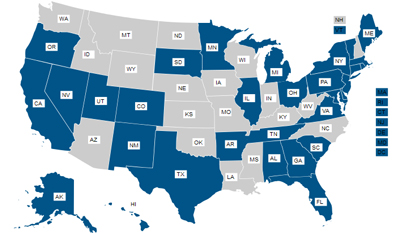
The Federal Bureau of Investigation is collecting racial and ethnic information and “mapping” American communities around the country based on crude stereotypes about which groups commit different types of crimes. Nationwide, the FBI is gathering reports on innocent Americans' so-called “suspicious activity” and sharing it with unknown numbers of federal, state and local government agencies.
In response, the ACLU's “Mapping the FBI” initiative seeks to expose misconduct, abuse of authority, and unconstitutional profiling and other violations of Americans' rights and liberties across the country.
SEARCH THE DOCUMENTS
As our nation's predominant law enforcement agency, the FBI should be tracking true threats, not wasting resources and inappropriately mapping American communities on the basis of race, ethnicity, national origin, or religion. Law enforcement programs based on evidence and facts are more effective than a system based on racial stereotypes or mass suspicion.
Yet, in the decade since 9/11, long-standing safeguards on the FBI's investigative and intelligence collection activities have been erased, allowing it to engage in racial and profiling and to initiate intrusive investigations with little or no suspicion of wrongdoing.
Taken together, the changes in the FBI's authority have vastly expanding its ability to engage in unlawful and abusive surveillance of innocent Americans. Learn more: Expanded FBI Authority »
The ACLU is working in the courts, in Congress and in communities to expose the ways in which the FBI's expanded authority threatens civil rights and civil liberties. Our work includes:
  • Eye on the FBI: Consolidating information obtained through ACLU records requests, lawsuits and reports, the ACLU's “Eye on the FBI” alerts provide regular and detailed analysis of FBI activities that pose a threat to civil liberties. These activities include the use of factually incorrect and bigoted biased counterterrorism materials and FBI racial profiling. Learn more »
  • Racial and Ethnic Mapping: 34 ACLU affiliates have filed public records requests to uncover how the FBI is using racial and ethnic demographic information and data about “ethnic-oriented” business and facilities to “map” and investigate local communities. ACLU affiliates in Michigan, New Jersey and Northern California are in federal court to enforce their records requests and secure information for the public. Learn more »
  • eGuardian: The ACLU has sued the FBI and the Justice Department to learn more about an FBI monitoring and information-sharing program known as “eGuardian,” through which the bureau collects so-called “Suspicious Activities Reports” (SARs) from local, state and federal law enforcement agencies nationwide. Learn more »
  • Spy Files: This ACLU effort paints a comprehensive picture of the vast and expanding infrastructure of surveillance in the U.S. today by local, state and federal law enforcement—including the FBI. Documents obtained by the ACLU show that through this de facto domestic intelligence system, our government is monitoring and recording Americans' First Amendment-protected beliefs and activities. Learn more »
FBI Interviews: The ACLU is working to educate individuals and community organizations across the country about their rights when encountering law enforcement. Over the past two years, the FBI has significantly increased its use of “voluntary” interviews – especially within specific racial, ethnic, and religious communities – often encouraging interviewees to serve as informants in their communities. Know Your Rights »
ACLU Letter to Attorney General Holder  »
Learn more: Expanded FBI Authority »
Act now! Tell the FBI: “Don't Map Me or My Community!” »