NORTON META TAG

Showing posts with label energy transfer partners. Show all posts

18 November 2016

Win!!! Two days after our DAPL petition delivery BANK DNB SELLS IT'S INTEREST IN DAPL & Army Wants Further Study Of Dakota Access Pipeline Route 18&14NOV16

Image result for standing rock pipeline photos

DAPL protest continue at Standing Rock in N Dakota as well as across the country and world. Norwegian Bank DNB was convinced it's involvement in DAPL was morally wrong because of a massive international  petition campaign and is selling off it's investment in the project. This is a huge victory, one of more to come. From +Us @ SumOfUs ....
Huge news! Yesterday, Bank DNB announced it is going to sell its assets in the Dakota Access Pipeline project!
It’s clear our message is having an impact. On Tuesday, we delivered hundreds of thousands of signatures right to the Bank’s offices in Norway, and thousands of us flooded its Facebook page with messages in support of the Standing Rock Sioux Nation. 
Two days later, we won. 
The Chairman of the Standing Rock Sioux Tribal Council sent us this note:
We are pleased that Bank DNB is weakening its ties to DAPL. It was a wise decision, especially given Energy Transfer Partners’ continuous disregard for our land, water, and sovereignty. Recent comments by Energy Transfer Partners CEO indicate the company seems intent on ramping up aggression, which is why it is of the utmost importance that other banks follow the example of DNB.
This major milestone could only happen because all around the world, people like you stood in support of the Standing Rock Sioux and the courageous water defenders on the ground right now in North Dakota.
But our fight against the Dakota Access Pipeline is not over yet -- we have plans to force other banks to pull out of DAPL, and we promise we won’t stop until we win.

Share this victory on Facebook now.
Also, check out the photos of the delivery! You can click on the pictures to see coverage in the Norwegian press. 
Greenpeace Norway delivering the petition:
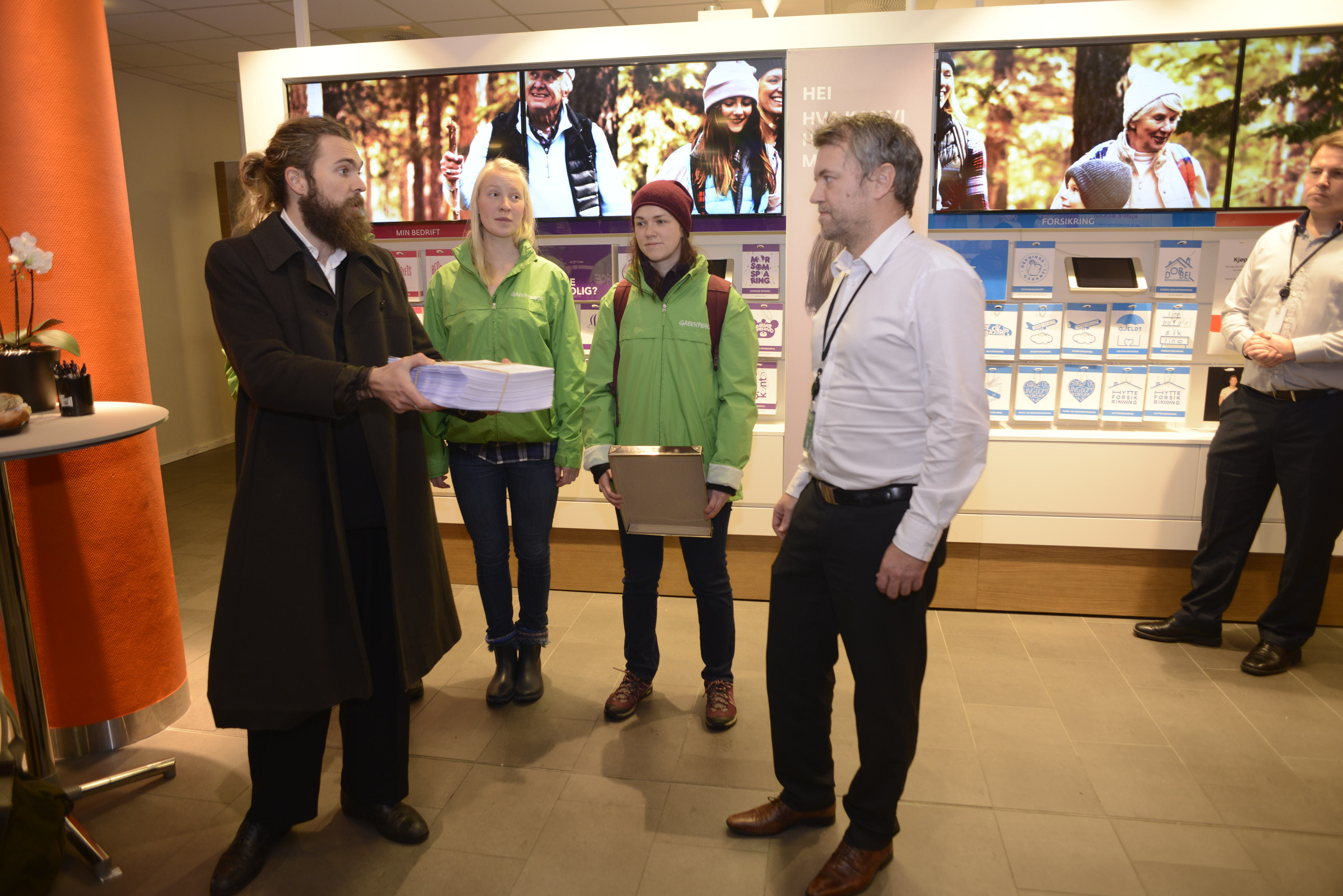
Greenpeace delivering the petition in Norway
Greenpeace Norway and its allies outside, standing in solidarity with the Standing Rock Sioux Nation:
Greenpeace Norway and its allies standing with the Standing Rock Sioux Nation

Army Wants Further Study Of Dakota Access Pipeline Route

November 14, 20166:55 PM ET

Demonstrator Stephanie Jasper stands in the Cannonball River during a standoff with police at Turtle Island, north of the Standing Rock Sioux Reservation.
Emily Kask for NPR
The U.S. Army Corps of Engineers said Monday that it needs more information before it can decide whether to allow the Dakota Access Pipeline to be built along its planned route.
In a joint statement by the U.S. Army and Department of the Interior, the Corps announced it had finished a review of the route, and concluded that more study was needed before it could grant the pipeline company the easement it needs to cross under a section of the Missouri River.
The pipeline company Energy Transfer Partners is building the pipeline to bring crude oil from central North Dakota, near the Bakken oil fields, down to Illinois. The current route crosses the river close to the Standing Rock Sioux reservation north of Cannon Ball, N.D.
Army Assistant Secretary Jo-Ellen Darcy wrote in a letter to the company and to tribal leaders that, "additional discussion with the Standing Rock Sioux Tribe and analysis are warranted," reported The Associated Press, and that the discussion would include possible changes to the river crossing which could reduce the risk of an oil spill.
Protesters have been occupying land in the area since the summer. Members of the tribe have said they are concerned that the pipeline could contaminate their drinking water if it leaks.
The tribe previously filed a motion seeking a temporary restraining order to stop construction of the pipeline, on the grounds that the Army Corps did not adequately consult with them about the route. In court documents, allies of the tribe alleged the pipeline route goes through sacred sites, and argued the tribe had not been able to survey the area for cultural artifacts and graves before the route was approved.
In September, a federal judge decided not to grant the restraining order, as we reported, but three federal agencies responded to the ruling by saying they would not allow the pipeline to cross the Missouri until until a review was completed.
That review, completed today, led the Army Corps to ask for more input from the tribe.
As the legal wrangling has gone on, many demonstrators have clashed with police. Earlier this month police used pepper spray and what they called nonlethal ammunition to keep people off private land, and in October more than 100 people were arrested, as NPR's Jeff Brady has reported.
Some 412 people have been arrested in connection with the protests, according to the United Nations. The U.N. Permanent Forum on Indigenous Issues has expressed "deep concerns" about the route, saying "numerous individuals have confirmed that there has been little consultation by the federal government related to the DAPL project."
Environmental and indigenous-rights groups supporting the protesters were planning to attract attention to the issue with demonstrations outside Army Corps of Engineers offices, along with banks and other locations in multiple cities on Tuesday, according to email press releases from the groups.

03 November 2016

VIDEOS: The Indigo Girls Launch #NoDAPL Boycott to Protest Pipeline Owner Who Runs Major Folk Music Festival & VIDEO: FULL Exclusive Report: Dakota Access Pipeline Co. Attacks Native Americans with Dogs & Pepper Spray 3NOV&6SEP16


BRAVO Indigo Girls! The world needs to know what an evil person kelsy warren really is, he should not get away with deceiving the world about what he really is, someone who doesn't believe in the themes of them music he loves, instead is someone who is greedy and ruthless and racist in his attitudes towards the environment, climate change and the fate of Native Americans. I hope enough musicians decide to boycott the Cherokee Creek Music Festival that kelsy warren is forced to rethink the DAPL and at the least make the necessary adjustments to address the legitimate concerns of the Standing Rock Sioux and environmentalist. This from +Democracy Now! .....

The Indigo Girls Launch #NoDAPL Boycott to Protest Pipeline Owner Who Runs Major Folk Music Festival
FULL Exclusive Report: Dakota Access Pipeline Co. Attacks Native Americans with Dogs & Pepper Spray

TRANSCRIPT
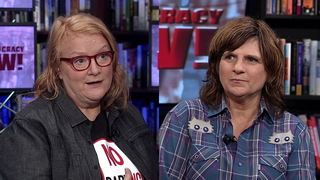
Many musicians, including Emily Saliers and Amy Ray, better known as the folk duo the Indigo Girls, are now banding together to confront Energy Transfer Partners CEO Kelcy Warren and help stop the pipeline. In addition to owning the pipeline, Warren owns a small music label and is the founder and driving force behind the Cherokee Creek Music Festival in Texas. In addition to raising awareness and funds for the land and water protectors at Standing Rock, the Indigo Girls are organizing musicians to challenge Kelcy Warren directly. Emily Saliers and Amy Ray penned a letter to Warren, which was co-signed by noted artists Jackson Browne, Shawn Colvin, Joan Osborne, Keb’ Mo’ and others. It reads, in part, "[W]e realize the bucolic setting of your festival and the image it projects is in direct conflict with the proposed Dakota Access Pipeline ... This pipeline violates the Standing Rock Sioux Nation’s treaty rights, endangers the vital Missouri River, and continues the trajectory of genocide against Native Peoples." The letter concludes, "In order to stay true to our music and respect the Native Nations that are united against the Dakota Access Pipeline, we will no longer play your festival or participate in Music Road Records recordings." We speak to Emily Saliers and Amy Ray of the Indigo Girls.


TRANSCRIPT
This is a rush transcript. Copy may not be in its final form.
NERMEEN SHAIKH: Many musicians, including Emily Saliers and Amy Ray, better known as the folk duo the Indigo Girls, are now banding together to confront Kelcy Warren and help stop the pipeline. In addition to owning the pipeline, Warren owns a small music label and is the founder and driving force behind the Cherokee Creek Music Festival in Texas.
AMY GOODMAN: The Indigo Girls began speaking out after September 3rd, when Democracy Now! filmed security guards working for the Dakota Access pipeline company attacking Native Americans. The report showed guards unleashing dogs and using pepper spray, and featured people with bite injuries and a dog with blood dripping from its nose and mouth.
WATER PROTECTOR: These people are just threatening all of us with these dogs. And she, that woman over there, she was charging, and it bit somebody right in the face.
AMY GOODMAN: The dog has blood in its nose and its mouth.
WATER PROTECTOR: And she’s still standing here threatening us.
AMY GOODMAN: Why are you letting their—her dog go after the protesters? It’s covered in blood!
AMY GOODMAN: In addition to raising awareness and funds for the land and water protectors at Standing Rock, the Indigo Girls are organizing musicians to challenge Kelcy Warren directly, the CEO of Energy Transfer Partners. Emily Saliers and Amy Ray penned a letter to Kelcy Warren, which was co-signed by Jackson Browne, Shawn Colvin, Joan Osborne, Keb’ Mo’ and others. It read, in part, "[W]e realize the bucolic setting of your festival and the image it projects is in direct conflict with the ... Dakota Access Pipeline ... This pipeline violates the Standing Rock Sioux Nation’s treaty rights, endangers the vital Missouri River, and continues the trajectory of genocide against Native Peoples." The letter concluded, "In order to stay true to our music and respect the Native Nations that are united against the Dakota Access Pipeline, we will no longer play your festival or participate in Music Road Records recordings." That’s what they wrote.
Well, the Indigo Girls, Emily Saliers and Amy Ray, join us here in our New York studio.
Welcome, both, to Democracy Now!
EMILY SALIERS: Good to be here.
AMY RAY: Thanks for having us.
AMY GOODMAN: Emily, talk about what happened, when you played at Cherokee Creek Music Festival in Texas, what it was like, and when you realized the force behind Cherokee Creek was the same one behind the Dakota Access pipeline.
EMILY SALIERS: Well, when we first played Cherokee Creek Music Festival, it was like any other sort of laid-back, bucolic setting, and we had no idea of the—who owned the festival or what his associations were. I mean, if his—and then we participated in the record tribute for Jackson, did a song on that record. I mean, if the record label had been named Oil Pipeline Records, we might have had a clue earlier. But so we played this festival, and then, we’ve been fighting the pipelines in conjunction with a group that we helped start with Winona LaDuke, Native American activist. This group is called Honor the Earth. And we’ve been fighting these pipelines that are proposed to traverse through Native lands and threaten the ecosystems. And we’re particularly stringent about the battle for the Dakota Access pipeline.
And so, we actually got a note on our Facebook page from someone out there who said, "Do you know who this guy Kelcy Warren is, who owns the Cherokee Creek Music Fest that you played?" And we had not known his association. Like Jackson says, none of us really knew the association. So, once we found out, we immediately started talking about what can we do to rectify the situation and our presence in something that is completely the antithesis of what we stand for as artists and as allies for Native communities.
NERMEEN SHAIKH: So what did you do?
EMILY SALIERS: Well, we decided to write a letter to Mr. Warren, and we decided to ask—put a word out to all the artists who had either participated in the record tribute to Jackson or in the Cherokee Creek Music Festival. And so, we sent out this letter. And as quickly as we could, we gathered signatures from artists who stood in solidarity with us, and to ask Mr. Warren to reconsider the pipeline, to not build this pipeline, and to think about Native rights and to think about how music and artists and what we all stand for is completely in contrast to what this pipeline is going to do, which desecrates the environment and runs across Native treaty rights. And these people are protectors of water and land, and there’s nothing in it for them except for what they want to do for all of us and for the good of nature and to respect their sacred burial sites. And so, artists like me and Amy and Jackson and all the artists who signed on to the letter were writing songs about—we oppose the treatment of human beings and land and water in the manner in which Mr. Warren’s company acts. And so, that’s what the letter was. That’s how we got signatures. And then we posted it.
AMY GOODMAN: Amy Ray, have you spoken to Kelcy Warren? Are you able to reach him?
AMY RAY: No, no. I mean, we would love to speak to Kelcy, honestly. I mean, I—he’s passionate about music. I mean, he is a music fanatic. And I feel like—we just really felt like this is a guy who really loves music, and if we could just get through to him on that level and show him the disconnect between all the music that he loves and what his company is doing, that maybe—I mean, maybe we’re being idealistic, but maybe it would get through to him in some way. But we have not spoken with him. We did give the letter directly to him, rather than just through email. We had it—we have a connection to his assistant, who put it on his desk. So—but we have not heard from him. But we did give the letter directly to him.
And there were many more signers on the letter that went to him, who didn’t necessarily want to be public about their signatures. So there’s probably about probably five or six more people that signed on to that letter, as well.
And then, what we’ve done is we posted it on a website called The Bluegrass Situation, who is also reaching out and having people email and call Kelcy and the label, and just starting more of a movement with other musicians to just get in touch and just pressure, pressure from the music community, because—and I think this goes—I think this is a very important lesson for us, as well, is when you play these big festivals and when you play events or you play benefits, to know who’s—where the money’s coming from. And we’ve always prided ourselves on kind of knowing that, and we really just missed this one completely. But it was a good lesson, because it’s like you’re in the middle of Texas, you’re playing a well-funded show.
NERMEEN SHAIKH: Well, can you tell us a little bit more about the Cherokee Creek Music Festival? How many are there?
AMY RAY: Oh, it’s amazing. It’s like there’ll be—it’s a weekend of camping. It’s a family setting. It’s on a creek. All the money goes to children’s charities, as you said before. And there’s all these great artists there, and the environment is just amazing. I mean, you would never even associate it with anything negative, ever. Like it’s like people jamming and hippies and families. And it’s all been—all the money goes to children’s groups. And so, the last thing you would think was this is a guy that’s funding all these Republican candidates and kind of working against everything we work for.
AMY GOODMAN: Well, talk about Honor the Earth specifically, because you both co-founded it with Winona LaDuke, and what this organization is.
AMY RAY: We started it in early ’90s. We went to an Earth Day show in Boston, and Winona spoke. And we freaked out over her speak—speaking. And we were like, "Oh, man. This is how we want to do our environmental work." At the time, we were working sort of in more of a white mainstream kind of world.
AMY GOODMAN: Winona LaDuke, indigenous leader from northern Minnesota, the White Earth Reservation.
AMY RAY: Yeah. We heard her speak, and we were just like, that’s a whole new lens to see everything from. We sat down with her that day, and we started scheming. And we started Honor the Earth along with the Indigenous Women’s Network, Indigenous Environmental Network and the Seventh Generation Fund. And we just had a board that was completely Native. And the idea is, we’re going to be an umbrella organization that funds people that are already doing great work, because so many people are doing great environmental work in the Native communities and cultural sustainability work. And we just gather money. We do benefits. We try to build a bridge between Native and non-Native communities. And we do some lobbying work. And Winona does project work, like working specifically to stop pipelines out of the tar sands or the Dakota Access pipeline. Or we fund—on the other side, we fund really great positive projects, like wind power and solar power and, you know, infrastructure building in communities, that brings up their economic base. So, it’s been around since like—’93?
EMILY SALIERS: Yeah.
AMY RAY: Yeah, and it’s still going. And we just, you know, do a lot of funding and a lot of granting and, every now and again, benefits, and try to bring attention to what’s going on in Indian country.
AMY GOODMAN: As we wrap up, Amy, would you like to read a part of your letter to Kelcy Warren?
EMILY SALIERS: Actually, Amy did pen this letter to Kelcy—
AMY RAY: You helped.
EMILY SALIERS: —but I’m going to read it. As a team member—
AMY RAY: You helped.
EMILY SALIERS: —I’m going to read it.
“Dear Mr. Warren,
"We have played your Cherokee Music Festival and found it to be a compelling gathering of artists and a noble pursuit to help children’s charity organizations across the country. Many of us who have played your festival have invested time and energy into the fight for human rights and environmental justice. For some of us, this mission is the moving force and spiritual foundation of our larger community of musicians, and one of the inspirations to play such rich gatherings as the Cherokee Music Festival. But sadly, we realize that the bucolic setting of your festival and the image it projects is in direct conflict with the proposed Dakota Access Pipeline—a project your company, Energy Transfer Partners, is responsible for spearheading. This pipeline violates the Standing Rock Sioux Nation’s treaty rights, endangers the vital Missouri River, and continues the trajectory of genocide against Native Peoples."
AMY GOODMAN: Well, I want to thank you both for being with us. We’re going to end with some of your own music. We’ve been speaking with Indigo Girls, Emily Saliers and Amy Ray, the Grammy Award-winning Indigo Girls duo, also environmental and indigenous activists. This is Democracy Now!, as we head south to Alabama to a pipeline explosion. But first, some Indigo Girls.
[break]
AMY GOODMAN: The Indigo Girls, that’s right, performing at an Honor the Earth concert at Standing Rock, the Sioux reservation in North Dakota. This is Democracy Now!, democracynow.org, The War and Peace Report. I’m Amy Goodman, with Nermeen Shaikh.
RECENT NEWS
The original content of this program is licensed under a Creative Commons Attribution-Noncommercial-No Derivative Works 3.0 United States License. Please attribute legal copies of this work to democracynow.org. Some of the work(s) that this program incorporates, however, may be separately licensed. For further information or additional permissions, contact us.

DEMOCRACY NOW! DAILY DIGEST: The Indigo Girls Launch #NoDAPL Boycott to Protest Pipeline Owner Who Runs Major Folk Music Festival 3NOV16


Democracy Now! Daily Digest

A Daily Independent Global News Hour with Amy Goodman & Juan González

Thursday, November 3, 2016

Stories

Many musicians, including Emily Saliers and Amy Ray, better known as the folk duo the Indigo Girls, are now banding together to confront Energy Transfer Partners ... Read More →
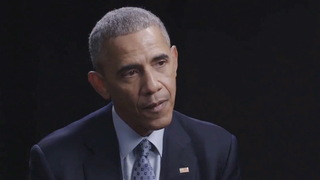
President Obama says the U.S. Army Corps of Engineers is considering rerouting the $3.8 billion Dakota Access pipeline, amid months of resistance ... Read More →
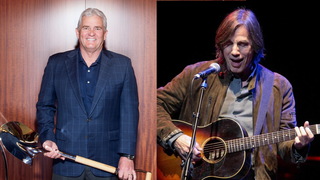
When Kelcy Warren of Energy Transfer Partners is not building pipelines, he runs a small record label that puts out folk music. In December 2013, Warren’s record label, ... Read More →
We turn now to look at the Texas billionaire behind the Dakota Access Pipeline: Kelcy Warren, the CEO of Energy Transfer Partners. Described by Bloomberg as ... Read More →
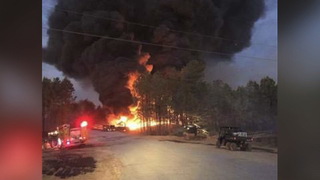
We end today's show looking at another pipeline. In Alabama, at least one worker has died and five have been hospitalized after a section of the Colonial pipeline ... Read More →

Headlines →