

IT is disgusting that "afflunza victim" brock turner is out of jail. Not only did this pig get away with rape, he didn't even serve the full term of his favorable sentence for raping a woman. brock turner is disgusting, aaron persky, the judge who sentenced him is also a disgusting pig, and they will, some day, be held accountable for their actions. Meanwhile people like Nikki Petree, struggling to live in Sherwood, Arkanas, has been repeatedly fined and has been jailed by for bouncing one check for $29.00, and she is not the only victim of "judge" milas 'butchie' hale and the illegal debtors' prison in Sherwood, Arkansas. Thank God for the ACLU, the +Lawyers Committee for Civil Rights and the law firm of Morrison & Foerester, at least they have the moral fortitude to take on 'butchie' hale and his illegal court system. I have no doubt Nikki Petree and the other poor people who have been persecuted, prosecuted, fined and imprisoned illegally will get justice. If they had only used the "affluenza" defense!
Stanford Swimmer Brock Turner Released from Jail After Only 3 Months
SEPTEMBER 02, 2016
HEADLINES
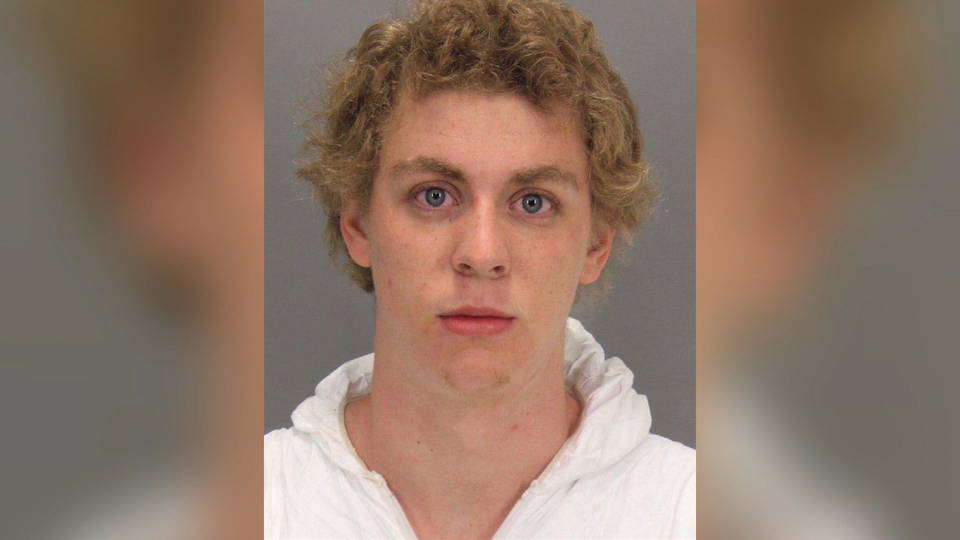
Meanwhile, Stanford swimmer Brock Turner is slated to leave a Santa Clara jail today, after serving only three months of a six-month sentence for sexually assaulting an unconscious woman behind a dumpster. His short sentence has sparked massive outrage against the judge on the case, Aaron Persky. It’s also inspired California lawmakers to pass a new law requiring prison time for those convicted of sexually assaulting an unconscious victim. In a widely read letter, Brock Turner’s victim wrote: "You took away my worth, my privacy, my energy, my time, my intimacy, my confidence, my own voice, until today."
Is an Arkansas Town Operating a "Hot Check" Court as an Illegal Debtors' Prison?
SEPTEMBER 02, 2016
https://www.youtube.com/watch?v=JuDnCnGaLCg
A woman in Sherwood, Arkansas, just spent 35 days in a county jail after she accidentally bounced a $29 check five years ago. Nikki Petree was sentenced to jail last month by a judge accused of running a debtors’ prison. She had already been arrested at least seven times over the bounced check and paid at least $600 in court fines. Her release comes as the Lawyers’ Committee for Civil Rights Under Law, the ACLU and an international law firm have filed a lawsuit to challenge the modern-day debtors’ prison in Sherwood. We speak with Kristen Clarke, president and executive director of the Lawyers’ Committee for Civil Rights Under Law, who says Sherwood jails people in violation of a long-standing law that forbids the incarceration of people for their failure to pay debts.
TRANSCRIPT
This is a rush transcript. Copy may not be in its final form.
JUAN GONZÁLEZ: We turn now to Arkansas to look at the case of a mother who just spent 35 days in a county jail after she accidentally bounced a $29 check five years ago. Nikki Petree was sentenced to jail just last month by a judge accused of running a debtors’ prison. Petree had already been arrested at least seven times over the bounced check, and paid at least $600 in court fines—more than 20 times the original debt. Petree said, quote, "Every time I go to jail, they’d let me out immediately for $100. They’d turn around and add $600 or $700 more to my bond. I couldn’t afford to pay. They cornered me, and there was no way out from underneath it. I felt overwhelmed and hopeless," she said.
AMY GOODMAN: Nikki Petree’s release comes as the Lawyers’ Committee for Civil Rights Under Law, the ACLU and the international law firm Morrison & Foerster have filed a class-action civil rights lawsuit challenging the modern-day debtors’ prison in Sherwood, Arkansas. The lawsuit was filed in the United States District Court for the Eastern District of Arkansas against the city of Sherwood, Arkansas; Pulaski County, Arkansas; and Judge Milas Hale. Petree is one of four named plaintiffs in the suit who allege their constitutional rights were violated by the Hot Check Division of the Sherwood District Court when they were jailed for their inability to pay court fines and fees. The lawsuit alleges that Sherwood, Pulaski County, engages in a policy and custom of jailing poor people who owe court fines, fees and costs stemming from misdemeanor bad check convictions. It also says they jail people in violation of a long-standing law that forbids the incarceration of people for their failure to pay debts.
For more, we’re going to Washington, D.C., to Kristen Clarke, president and executive director of the Lawyers’ Committee for Civil Rights Under Law, one of the groups that filed this lawsuit.
Welcome to Democracy Now! Can you explain exactly what happened to Nikki Petree? She ends up in jail for a $28-and-change check, that she didn’t realize had bounced because her last paycheck hadn’t put in, and she ends up in jail five years later?
KRISTEN CLARKE: Yeah, Nikki Petree is not alone. This is a debtors’ court system that’s been in place in Sherwood that preys on the backs of poor people. Nikki Petree is one woman who exemplifies what happens if you’re poor in Sherwood. She wrote a check that was returned for insufficient funds about five years ago. That check amounted to about $28. And since that time, she’s spent more than 25 days in jail and has paid more than $600 in fines to the local court system. That is money that she did not have. She lives below the poverty line. She remains indebted by more than $2,500 to the local court system. And she was jailed at the time that we filed this suit last week. And there are so many people like her in Sherwood. We filed this lawsuit to bring an end to a court system that we believe preys on the backs of poor people.
JUAN GONZÁLEZ: Well, Kristen Clarke, in that lawsuit, you raise the issue of why this is happening. You say that local courts and municipalities throughout Arkansas have used the threat and the reality of incarceration to trap their poorest citizens in a never-ending spiral of repetitive court proceedings and ever-increasing debt. But you say also that faced with opposition to increased taxes, municipalities have turned to creating a system of debtors’ prisons to fuel the demand for increased public revenue. How extensive is this in Arkansas that municipalities are using this as a new revenue source?
KRISTEN CLARKE: It’s not only the case in Arkansas, but all over the country we’re seeing the resurgence of debtors’ prisons. In Sherwood, this is a court that’s generated more than $12 million over the course of five years by imposing fines and fees over and over again on poor people who wrote checks to local merchants that were returned for insufficient funds. In Ferguson, Missouri, we saw a local court system that was built on this concept of entangling people in the court system for transit, for traffic offenses. That court generated $20 million off the backs of poor people in Ferguson. But we know that these are not isolated practices.
What’s happened is that in 1983 the Supreme Court made clear that this is unconstitutional, that you can’t lock people up merely because they are poor. But what we’ve seen is the resurgence of debtors’ prison, because there hasn’t been enough enforcement to put a check on court systems like the one in place in Sherwood. So we filed this lawsuit to bring an end to an era that’s been marked by a court system in which one judge presides, Judge Butch Hale, where he has disregarded the due process rights of poor people at every turn.
What happens in Sherwood is that people get on line outside his courtroom. They are forced to sign a waiver of their right to counsel. Nobody is allowed in that courtroom but the defendants. If you come with a family member, an advocate or friend, you’re not allowed in. There are no tapes or recordings of the proceedings, no transcripts of the proceedings. People appear without counsel by their side. No one explains their rights to them. And every time they stand up before Judge Butch Hale, he imposes fine, fee after fine and fee, and court costs on them, subjecting these people to a spiraling cycle of debt.
AMY GOODMAN: I mean, it is an astounding story about Nikki Petree. Didn’t she end up owing something like $2,600 on this $28-and-change check?
KRISTEN CLARKE: That’s exactly right. She remains indebted by more than $2,500, $2,600. She spent more than 25 days in jail. She’s already come out of pocket more than $600. And that’s money that she doesn’t have, because she, like everybody who appears before this court, are poor people. This is a court that preys on the most vulnerable people in Sherwood. And they make a profit off of this.
The Criminalization of Poverty: Woman Describes Fines & Arrests After $1.07 Check Bounces
SEPTEMBER 02, 2016
We continue our look at what the ACLU calls an illegal debtors’ prison in Arkansas by speaking with a former resident who wrote a check for $1.07 for a loaf of bread. She describes how after her check bounced, her debt ballooned with fees and fines to nearly $400, and police officers twice came to her job to arrest her. Since then, she has been caught up in Sherwood’s Hot Checks Department. We are also joined by lawyer Kristen Clarke, president and executive director of the Lawyers’ Committee for Civil Rights Under Law, who says the woman’s experience is common.
TRANSCRIPT
This is a rush transcript. Copy may not be in its final form.
AMY GOODMAN: We’re also joined by Janice, who is a native of Little Rock, Arkansas, who’s been caught up in Sherwood’s Hot Checks Department for decades. One check she wrote for $1.07 for a loaf of bread bounced. The debt ballooned after fees and fines to nearly $400. She currently has a warrant in Sherwood’s Hot Checks Department and wishes to remain anonymous for fear of arrest.
So, Janice, you’re in profile; you don’t want to be seen. But explain what happened to you.
JANICE: On several occasions, I have been arrested by Sherwood Police Department for bounced checks, insufficient funds checks. I’ve even been arrested on my job—two different jobs, as a matter of fact, one—with two different hospitals. My checks has totaled, I would say, less than $1,000 worth of checks. And they’re little, small checks. I was a bad manager. I didn’t keep a good register, so, therefore, I had bounced checks. Some were $20. Hundred dollar may have been the highest number of checks that I wrote. But I have had accumulated fees up to thousands of dollars in fees and costs, on roughly less than $1,000 worth of checks.
JUAN GONZÁLEZ: And when you go into the—before the judge on these cases, what’s the process? What happens there?
JANICE: He just bring you before him, and, like they say, you sign a waiver. You go up before the judge, and he assesses your fees and court costs, and give you a monthly payment amount, until you have to pay this monthly payment by such, such date. You have a 10-day grace period. If it’s not paid, then there’s another failure-to-pay warrant issued and additional costs and fines assessed to the amount you already have.
AMY GOODMAN: Now, part of your struggle is you have MS—is that right, Janice? And you’re trying to deal with medical costs, as well?
JANICE: Correct.
AMY GOODMAN: And is this Judge Hale that you’re going before, who Kristen Clarke just described?
JANICE: Yes, it is.
AMY GOODMAN: Are you allowed to bring in a friend, a family member, a lawyer at your side?
JANICE: Now, if you do retain an attorney, an attorney can be there, but family members and friends are not allowed in.
AMY GOODMAN: So what is your situation right now?
JANICE: Right now, I have not been there since somewhere around 2008. And I have an active warrant, because I could not afford to pay the monthly payment that he had assessed of $200, because I feel as if I have paid, you know, restitution on the checks that I’ve previously wrote, but these are all accumulated fines and court costs that has been assessed.
JUAN GONZÁLEZ: And they’ve come on several occasions to arrest you on your job? I find this hard—this is a civil issue. Why they would be coming to arrest you on your job?
JANICE: Because that’s what they do. Even though they know your address, your home address, they will come out to your job, opposed to your home. And this has caused me to lose two jobs because of that.
JUAN GONZÁLEZ: Kristen Clarke, what about that, this issue of—I mean, normally, if somebody writes a check that they don’t have funds for, the bank will send them and issue, you know, a charge, but having law enforcement come in and arrest you for this, especially on your job, is this—is this illegal?
KRISTEN CLARKE: This abusive debt collection practice is part of the scheme. The clients that we represent in this case have had the cops show up at their doorstep and insist that they pay money now, or they are threatened with arrest. I am heartbroken to hear the story of the woman who just spoke. But again, we know that these are not isolated cases. This is a systemic pattern that exists across Sherwood and across Pulaski County. This is a court that has made big business out of preying on the backs of poor people. And they have made the focus on the most marginalized people in this community the focus of this court. People who have written small checks that are returned for insufficient funds, that is the focus of this court. And I can’t tell you how many people we’ve talked to who have stories like the woman who just spoke. We represent a cancer patient in this case. You know, he was hospitalized and receiving chemotherapy. And two—you know, a few checks bounced for very small amounts, and this man has been jailed and remains indebted in thousands of dollars to a court. Every time someone appears before Judge Hale, he imposes more court costs, more fines, more fees. And there is no way out for the people who are entrapped in this system.
AMY GOODMAN: So where does the lawsuit go from here, Kristen?
KRISTEN CLARKE: Well, we filed a federal class-action lawsuit. The woman who just spoke may indeed be somebody who is a member of this class. We will fight. We believe that Sherwood is a poster child, if you will. This is a classic example of a debtors’ prison. And we believe we’ll be successful at the end of the day in securing relief for the poor people of Sherwood. We believe that when somebody faces criminal charges, that they should have a lawyer by their side. They should have a judge who warns them about their rights and who counsels them about their rights and respects their due process rights. We will—we will fight on.
And then we’re going to look elsewhere around the country, because we know that this is a nationwide problem that we face. All around the country, we’ve seen the resurgence of debtors’ prisons. We’ve seen the criminalization of poverty. So, we are going to fight until we end this practice and bring our courts in line with that 1983 ruling from the Supreme Court that says you cannot lock poor people up merely because of their inability to pay a fine or fee.
AMY GOODMAN: Well, I want to thank you, Kristen Clarke, with the Lawyers’ Committee for Civil Rights Under Law. And, Janice, thank you for being with us—not her real name. She is in shadow, but that’s because of what she faces as a poor person who is a victim of Sherwood’s Hot Checks Department in Arkansas.


 The ACLU is our nation's guardian of liberty, working daily in courts, legislatures and communities to defend and preserve the individual rights and liberties that the Constitution and laws of the United States guarantee