BUCKNACKT'S SORDID TAWDRY BLOG
We should not be a journey to the grave with the intention of arriving safely in an attractive & well preserved body, but rather to skid in sideways, chocolate, bier or wein in hand, body thoroughly used up, totally worn out and screaming "WHOO-HOO, WHAT A RIDE!!!!!!"
The latest updates on the Syrian revolution from Al Jazeera's live blog, including the news that two members of the Syrian Parliament have resigned in disgust over the blood spilled by government forces. There is also concern about Iranian involvement, possibly with troops and / or naval forces, to help assad fight this revolution. Click the header to go to the actual blog for all the information and links.......
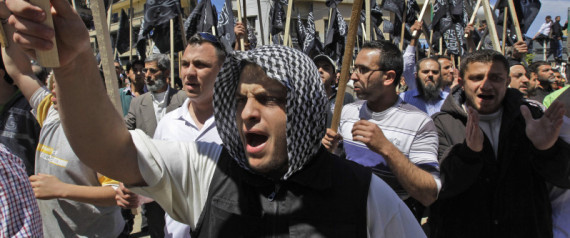
Thousands continue to take to the streets across Syria, despite reform pledges by president Bashar al-Assad. We bring you the latest news from our correspondents and other sources.
Al Jazeera is not responsible for content derived from external sites.
Nasser Weddady, an outreach director at the American Islamic Conference, which promotes civil liberties in the Middle East, said that the MP resignations on Al Jazeera were a "slap in the face" to al-Assad's government.
"Right now the only option left for Bashar al-Assad is to deploy the armed forces because clearly the multiple intelligence services are unable to hold the people at bay," he said.
"The moment of truth, the day or reckoning, will come when Bashar al-Assad is forced to deploy the military to the cities to quell the protest ... that's when we'll understand how significant these cracks will be if the conscripts and the soldiers start refusing orders or even joining the protesters."
6:43pm
Rizaq Abdul-Rahim Abazid, the former mufti of Daraa told Al Jazeera that people are being killed "in front of our eyes, and we can no longer protect them".
"All we are demanding is our rights, and we are calling on the president [Bashar al-Assad] to personally intervene in this crisis. We have had enough."
6:34pm
In Harasta, on the road between Duma and Damascus, a crowd estimated by two eye witnesses at around 4,000 have taken to the street chanting: "Horan [the south of Syria] has said it all: Bashar you're leaving, you will go.”
According to two eyewitnesses security agents on the roofs of the police station and the court are firing on the crowd now, with no confirmed causalities yet.
6:29pm
Al Jazeera sources confirm that Berze has become the first confirmed neighbourhood of Damascus to suffer fatalities during the unrest.
6:13pm
A doctor and two residents have confirmed to Al Jazeera that four residents of Berze, a Damascus neighbourhood on the north-east flank of Qassioun Mountain, have been shot and killed.
A fifth fatality is feared but not yet confirmed, while tens of people were injured.
The dead include a seven-year-old girl Israa Younes who was shot by a bullet while in the kitchen of her parent’s home.
6:09pm
Al Jazeera sources have confirmed that Rizk Abdulrahim Abazeid, the mufti of Daraa, has stepped down in protest over the deaths of protesters.
6:01pm
Al Jazeera's correspondent says he witnessed people being shot 10km north of Izraa. He says his taxi driver, from Daraa, started to cry.
4:45pm
Sources tell Al Jazeera that a large funeral of some 5,000 to 7,000 mourners has finished in Harasta, on the road between Duma and Damascus.
Sources say that in contrast to the armed attacks on mourners in Duma, an eyewitness said no security forces had interfered as locals buried Ali Darwish, one of three killed there yesterday.
“A group of around 40 to 60 guys have now blocked the road with tyres and garbage cans to protest the killing yesterday," according to a witness.
“They are close to the police station but so far the police are just watching them.”
4:36pm
Al Jazeera has received confirmation that security forces did not enter a hospital in Daraa, and no deaths occurred outside the hospital.
4:23pm
Al Jazeera's Rula Amin, reporting from Damascus, said that people continue to wonder who is giving the orders to use live ammunition on the protesters.
"Activists however have repeatedly claimed that nothing happens in this country without the knowledge of the government."
4:05pm
Two Syrian members of parliament tell Al Jazeera they are quitting parliament in protest at the bloodshed in the country.
One of the MPs - Nasser Hariri - who represents the town of Daraa, told Al Jazeera that he "feels sorry for those who were killed in Haran [today and yesterday] by the bullets of security forces despite the fact that the president has promised no live ammunition by security forces at all".
"Being an MP I feel the need to step down as I am not able to protect the voters killed by live ammunitions and now I feel better to resign so I'm resigning from the Syrian People's Assembly."
3:42pm
Naser al-Hariri, a Syrian member of parliament, has resigned his post in protest at the killing of demonstrators.
"After I have failed to protect my sons from the treacherous shots there is no point in me staying in parliament. I announce now that I am stepping down," he told Al Jazeera.
3:31pm
In Daraa, an eyewitness has told Al Jazeera he saw military and plain clothes security kill five people around the state hospital before breaking in and carrying out the wounded on stretchers.
Al Jazeera has heard repeated accounts of Syrian security breaking into hospitals and clinics to take away dead bodies and the injured to military hospitals in an apparent attempt to cover up casualty figures.
3:29pm
More on the violence in Douma:
Syrian military police, identifiable by their red berets, fired from a 4x4 vehicle in Douma, killing two mourners at a funeral for two pro-democracy protesters, several eyewitnesses said.
The eyewitnesses said the car drove by as mourners were leaving the cemetery and military police opened fire randomly on them.
There have also been eyewitness reports of snipers on the roof of the court building and the military security headquarters in Douma.
3:25pm
Reuters reports that three people have been killed in the firing on a funeral in the Barzeh district of Damascus, citing a local rights campaigner.
3:16pm
More from Al Jazeera's staff on developments in Izraa, where eyewitnesses now put the number of people killed at five:
Army and security personnel have shot at mourners in Ezraa killing five people and wounding several others, said an eyewitness present at the funerals.
"I saw four of the dead myself. They had been shot in the chest," he said.
The eyewitness estimated a huge crowd of up to 100,000 had gathered in Izraa from towns and cities nearby, including Sanamein, Nawa, Daael and Daraa, where the uprising began.
The funeral had begun after noon prayers and security personnel had opened fire on the crowd without warning from the Masakin Bridge, said the witness. Human rights activists have documented the names of at least 20 people killed in Izraa on Friday, including a 70-year-old man and a 10-year-old boy.
3:11pm
Here is that eyewitness account from Al Jazeera's correspondent in Izraa, of the funeral procession there being fired upon.
I was travelling north to south on the main Damascus highway that runs from Damascus to Amman, and about 20km before the border, there's an overpass that connects Izraa to the town of Deraa. On that overpass, people were marching and we were sort of warned off on that highway, people stopping, pulling us over to the side of the road. And about 50 metres in front of me you could see the overpass - people marching - and they were met with a hail of gunfire, many people certainly wounded directly in front of us, cars turned around, and I can tell you it was an incredibly chaotic scene, and it seems as though pretty much everyone down here in the southern part of the country is now carrying weapons. It is unclear who was firing at whom, that's part of the confusion ... but clearly a very violent incident now being carried out here in the south of the country.
"It seemed pretty clear to me that this was a funeral procession crossing over the overpass, and they were met with gunfire as I said. It was unclear which direction the gunfire was coming from. I did not see anyone returning fire, I only saw fire in one direction. But as I said, the road has been completely cut off, and there is now a very heavy army presence along the highway.
"Pretty much all of the side roads that lead into the towns to the east and to the west of the main highway ... have been cut completely off by the army.
"I think it's pretty clear now that the government feels that the eyes of the world are elsewhere, and that this is the best way to deal with what they are calling an armed insurrection ... we saw this yesterday, and clearly we're seeing this again today. The government was clearly anticipating funerals like this, and clearly was anticipating that violence could break out at these funerals, people are obviously very angry because they've had family members who have been killed, and I think the government was anticipating violence, but what I witnessed was a clear, brutal use of force on behalf of the security forces.
"Medical personnel could not get to this overpass, because of the situation."
3:01pm
Al Jazeera's correspondent has just been live on Al Jazeera describing a chaotic scene outside Izraa. His comments to follow.
2:52pm
Syrian state television has just run a 'Breaking News' text ticker saying that the government "regrets" US President Barack Obama's statements condemning the violence, saying that his statement is not objective.
2:50pm
Reuters reports that security forces have opened fire on the funeral procession in Barzeh which we had reported on earlier this morning. Mosques in the area are calling on doctors to come to the assistance of those shot, residents say.
2:40pm
AFP reports that two people have been killed when security forces opened fire on those attempting to join the funeral processions in Izraa, citing a witness.
The two people killed were identified as Yasser Nseirat and Jamal Qanbar by the witness, who added that several other people had been wounded.
2:35pm
Syrian activists have started a Google spreadsheet to share data on those killed during the violence surrounding pro-democracy protests and funerals for activists who have been killed.
The English version is available here, and the Arabic one here.
2:33pm
Abu Abdullah, a pro-democracy activist in Izraa, has just been speaking with Al Jazeera.
A lot of people just turned out from all the villages and cities of Deraa, towards Izraa, where we had losses yesterday. And massacres occured there yesterday.
"Funerals are being carried out and 12 people were buried today ... something like 150,000 people are turning up to these funerals and we have also some incidents where live bullets were turned to those taking part in the funerals. Some eyewitnesses who came to Izraa said we have people who have been killed and injured today as well.
"People in the streets are only for the funerals, and demonstrations took place today after bullets and live ammunition were fired on them. Now, people are moving in the streets of Izraa, but they are only here today for the funerals, we are not demonstrating today, but some of them are very angry today as compared to yesterday.
"Yes [there is a visible presence of security forces]. On my way to Izraa, today, I have seen some of the people in military uniforms, and they didn't prevent us from going forward ... we have intensive security forces in the neighbourhood of the city.
"We don't have any plans after the funerals. We are demonstrating in a peaceful way in the streets of Izraa just for freedom and to achieve our demands: demands of freedom, demands of justice, demands of the regime to go away. The important thing now is who is attacking the people with live ammunition?
"This is the problem now. We don't trust them. "
2:31pm
We are hearing reports of security forces opening fire on a funeral in Berze. Updates to follow shortly.
2:20pm
From Al Jazeera staff on the ground in Syria:
In Homs one of the mourners in the funeral of Fawaz Harake, who died of a gunshot wound after being unable to reach hospital yesterday, has told Al Jazeera that the funeral procession of around 6,000 people is now heading to a graveyard inside the city where security forces have deployed to prevent bodies being buried.
“We signed the papers last night agreeing with security to bury him in Tal al-Nasr [a village outside Homs],” said the mourner. “But after noon prayers we decided to bury him in Qatib graveyard inside the city. This has become the graveyard for martyrs.”
Several mourners in Homs have said secret police and the governor are requiring them to agree to bury their dead outside the city in Tal al-Nasr, an apparent effort by authorities to limit a repeat of previous Saturdays where large funeral processions have grown into anti-regime protests.
As Al Jazeera reported in its news blog yesterday, the car carrying Harake was shot at by security forces as it tried to get him to a clinic. “If we had got to the clinic in time he would still be alive today,” said the mourner, who was driving the car.
2:17pm
Reuters reports that Syrian security forces have begun firing live rounds at mourners attempting to join the protests in Izraa, citing witnesses.
2:04pm
Al Jazeera's Rula Amin reports that security forces in Douma are firing "at the legs" of those in the funeral procession, based on eyewitness reports.
1:42pm
An eyewitness reports that four Syrians have been killed in Duma in the last half an hour, when security forces opened fire on a crowd of thousands of mourners burying protesters who were killed on Friday.
Gunfire was continuing, the eyewitness said, who was speaking from Duma, the largest of a set of towns that circle Damascus to the northeast.
Eight people were killed and at least 25 injured there on Friday.
Snipers took positions on the roof of a Baath party building in the vicinity of the Hamdan hospital, a privately-run facility. Last night, residents had formed a human shield around the main gate of the hospital to prevent security forces from arresting the injured.
1:36pm
A funeral has also been held in Midan, in addition to the three funerals held in Barzah reported earlier.
SANA, the official news agency, says that two policemen were killed by "armed gangs" in the central industrial town of Homs during violence on Friday.
It also reported that President Bashar al-Assad has appointed a new governor for the northern port of Latakiya.
1:33pm
Tens of thousands of mourners have packed into buses and headed for the town of Izraa, a rights activist has told AFP.
"More than 150 buses left from Daraa and neighbouring villages to attend the funerals of 18 martyrs killed Friday in Izraa," the activist said.
The funerals are expected to become a "huge rally against the regime", the activist said.
12:34pm
More updates continue to come in on the death toll during yesterday's violence. Here's the official figure, from the SANA news agency: 10.
SANA says that the people were killed during clashes between protesters and a third group, and that security forces only used water cannons and tear gas to disperse demonstrators.
12:31pm
Here's a picture of a smashed fire engine released by SANA, the official Syrian news agency. SANA says that it was attacked by "criminal armed groups" in Jober city, a Damascus suburb. It says that a number of firefighters were wounded in the attack, two of them critically.
12:16pm
Update on the death toll from Friday's violence: six Syrian human rights groups, including the National Organisation for Human Rights in Syria, have issued a statement putting the number of those killed at 76.
They say that 19 people were killed in Homs and 18 in Izraa in the worst of the violence.
Also, on those funerals: Barzat is a neighbourhood in Damascus, the Syrian capital.
11:58am
Funeral prayers have taken place in the town of Barzah for three of those killed during Friday's protests, activists say.
At the funeral, people were chanting what has become a familiar slogan across the Middle East: "The people want to topple the regime".
Here's a video that purports to have been taken at one of the funerals, for a protester named Mohamed Kamal Barakat, according to a voice at the beginning of the video. Two coffins are visible, but it is not clear whether the second body is that of a pro-democracy activist.
11:51am
Al Jazeera's Imran Khan has just filed this report, giving you a protester's view of a demonstration in the town of Harasta, which was one of those that was fired upon on Friday.
11:19am
Cal Perry, Al Jazeera's correspondent in Damascus, has been asked to leave the country by the government, and will be doing so today.
11:12am
Abu Ahmed, a pro-democracy protester who was present when firing broke out at a protest in Ezra yesterday, has just spoken to Al Jazeera. Here's what he had to say:
[These were] mainly peaceful protests. We have like four or five mosques, and people go for these peaceful demonstrations. And along the square of Ezra city, we just shook hands with military personnel without any confrontation, but out of the blue, live ammunition was used, and we did not know where it was coming from.
"The number of peopled killed was 15. Today we have eight funerals and alongside the frontiers of Ezra we have two other funerals and we have so many funerals in Ezra for the time being, those people taking part in the funerals are a lot.
"There is definitely no other party. No different party. Those people who are in military uniform, and some in civilian uniform, those people just started the shooting, and the situation was very clear. The military, in uniform, we don't know what they were doing there.
"These live shootings were severe for more than ten minutes with different types of bullets. People were killed with bullets in the head and shoulders, and we do not know the source of the firing.
"Ezra area is not ready for any destruction. After the Juma prayer, these demonstrations were massive, and people are well known in the governate, no-one is seeking destruction in Ezra or the governate of Deraa.
"Peacefully we were outside, we don't aim at anything, we are just looking for freedom and justice. We are brothers.
"We can say the entrances of the city cannot be fully opened to serve the injured. "
11:03am
Activists say that 103 people were killed by security forces after they begun firing on people protesting against the government. Here's the breakdown of those who were killed by geographic region, according to a statement. We would like to clarify that Al Jazeera cannot independently verify these figures, as access to hospitals and officials is severely restricted in Syria by the government, but that the source of the figures has proved reliable in the past.
Homs: 21
Bab Amr in Homs: 3
Teldo in Homs: 1
Damascus: 3
Kaboon: 4
Madamia in Rif Dimashq: 9
Zamalka in Rif Dimashq: 3
Jobar in Damascus: 2
Darayya in Damascus: 4
Harasta in Rif Dimashq: 5
Duma in Rif Dimashq : 5
Al Hajjar Al Aswad in Rif Dimashq: 4
Ezra in Daraa: 32
Al Herak in Daraa: 1
Hama: 5
Latakiya: 1 Total: 103
10:21am
Here's that report from Rula Amin in Damascus.
Funerals have always become a scene of confrontation and more people taking to the streets. And today ... more than a hundred people dead [according to activists], more than a hundred funerals in different parts of Syria. What's interesting is that we have not yet heard from a government official on why did this happen yesterday, and this is what people want to know.
"Especially, as it comes after a week when the government had announced a major concession that the protesters had been demanding for that had to do with the freedom to protest, and more political freedoms in general, like the lifting of the state of emergency law.
"Today, probably at the funerals we will see a lot of anger, a lot of outrage, and determination. Yesterday, for the first time, there was a statement coming out from what's supposed to be the first body that's emerging leading the protests, called the Syrian Local Co-ordinating Committees. So obviously it's a group of people representing the different places that had witnessed protests, and one of the major things that this statement said was that the protests will continue, no matter what the sacrifices are, until people here achieve a democratic Syria.
"It was a long list of demands, but basically people want the government to stop the detention of people, the arrests, the violence against those who are detained, the release of all political prisoners - they want a transitional period, a peaceful transitional period from where it is now to a democratic multiparty, multiethnic society that will be tolerant to all of its citizens.
"This is what people are saying: they want the laws to be changed, they want peaceful elections, they want parliamentary elections, they want the laws to be changed so that in these elections it would be fair.
"So obviously the protesters are taking a step ahead in trying to formalise a kind of a comprehensive program that they are facing the government with, and it seems they are reaching out to the government, saying 'Let's work on this together so that we can avoid the bloodshed on the street'. They are calling for a body to be formed to lead this transitional period in order to calm and pacify the hotbeds where all the protests are taking place."
10:08am
Al Jazeera's Rula Amin in Damascus reports that funerals are expected for more than a hundred people who activists say were killed in the protests on Friday.
Amin says that funerals have often become focal points for rage against the government and its treatment of protesters.
9:20am
These pictures were taken in Zabadani, near Damascus, on Friday, and show anti-government protesters taking out a rally [Reuters]
9:17am
Things appear to be relatively quiet across the country at the moment, but expect protests and further unrest as and when funeral processions get underway as the day goes on.
8:30am
Reuters has just released a piece analysing the latest developments in Syria and projecting the outlook for political changes. Here are some highlights:
Sarkis Noum, of Beirut's an-Nahar newspaper says the fear barrier has been broken in Syria, and that there is a real risk of the army either splitting or abandoning President Assad's government entirely.
The regime is in trouble. People have been repressed for 40 years but suddenly the wall of fear has crumbled and they are no longer frightened. [...]
"Each time the regime makes new concessions, the people get bolder and ask for more. They see it as a sign of weakness. The regime doesn't know how to respond - it's like an old grudge people have been waiting to avenge. [...]
"There is a big possibility that the army will split or they won't accept to take part in a crackdown, if ordered. It is not easy to bring the regime down but it is easy to divide the regime."
Jamir Mroue, an analyst, says government corruption lies at the heart of the people's anger in the country.
It was a combination of repression, corruption, incompetence and the degeneration of the system. It became combustible and people suffocated. [...]
"The essential spark was ignited by the privatising and franchising of corruption, which along with repression violated the fabric of society. [...]
"Assad has to carry out a white coup to clean his entourage of corrupt figures linked to the regime [...] He has to show people that there is dramatic change, that there will be elections in a few years, that he won't be president for life, that it is no longer a dynasty.
"Either he will opt for transformation of the regime or it will be torn apart."
Talal Salman, the publisher of the Beirut-based as-Safir daily newspaper, says Assad will have to make major changes to the government and those involved in governance in order to appease protesters.
"The Baath Party is ancient, outdated and obsolete. The decisions are being made by the security forces and services who play a fundamental role in the country. They are the real force. [...]
"President Assad might be able to overcome this crisis and contain the situation but the cost may be high... He has to change the regime or the people will force him to."
Finally, a Syrian who refused to give her name had this to say:
There isn't anything impossible any more after Egypt and Tunisia [...] Seeing Syrians defying the security forces on the streets while knowing that they might be shot dead is something beyond imagination.
"Do you think these people are willing to die just for some reforms or for an increase in wages? These people want the Assad regime out."
8:10am
These pictures, taken on Friday, show anti-government protesters gathering in the town of Baniyas [Reuters]
7:33am
Be sure to check out our page on citizens' videos coming out of Syria, curated by Al Jazeera's Ryan Rifai. It'll be updated through the day, so check in regularly.
6:44am
Ban Ki-moon, the UN secretary-general, has condemned the "ongoing violence against peaceful demonstrators" in Syria, and renewed a call for an "independent, transparent and effective investigation", his spokesman has said.
Ban has said that the President Assad's government must "respect international human rights, including the right to freedom of expression and peaceful assembly, as well as the freedom of the press".
He said that it was necessary to hold "an inclusive dialogue" and to ensure the "effective implementation of reforms" in order to "address the legitimate aspirations of the Syrian people and ensure social peace and order".
5:30am
Here it is - a report on how Syrian state TV is trying to undermine social media, the only means most Syrians have of getting news of what they're seeing out to the rest of the world:
5:02am
A video grab from Youtube via AFP shows shows protesters reacting as the body of 10-year-old Mohammed Ibrahim al-Hamuda, who was killed in Friday's protests in Daraa. We'll have a video coming up shortly which expands a bit on what is seen in this image.
3:35am
Mass funerals are planned following Friday's violence, when rights groups say upwards of 88 protesters were killed by security forces.
Reuters reports that Saturday's funerals are sure to "attract large crowds" :
'The funerals will turn into vehement protests, like past funerals,' a Syrian human rights campaigner said.
'When you have security services who are thugs it is difficult to think that they will not shoot at the crowds.
Another cycle of funerals and demonstrations is likely to follow,' the rights campaigner said from the Syrian capital.
3:00am
Syrian state TV is intervieing French-speaking tourists who say that "all has gone well" on their trip to the lovely country, that there were no issues with security, etc.
One woman said she especially liked Damascus as it was a "vivant" city, with lovely people. She said the foreign reports of uprisings aren't true.
The French-speaking group seemed to be on a tour and were enjoying a buffet dinner. So they probably didn't see any of this...
2:28 am
Speaking of Iran, the country wants to expand the "range of its missiles and display a stronger naval presence in the region, including sending two warships in February into the Mediterranean for a stop at a Syrian port" reports the Associated Press:
The commander of Iran's powerful Revolutionary Guard says his forces are expanding their capabilities to retaliate against possible enemy attacks from outside the Gulf.
Gen. Mohammad Ali Jafari says Iran can strike back against foreign warships launching attacks against Iran from as far away as the Indian Ocean.
Jafari made the comments in an interview with the semi-official Fars news agency Friday.
He made no direct mention of the U.S., but his remarks are a clear reference to American forces in the region.
Put these statements in the context of what's happening in Libya and Bahrain, and it's clear why Iran becomes the nexus of tensions in the area.
1:33 am
Barack Obama, US president, has lashed out at Bashar al-Assad, Syrian president, chastising him for turning to Iran (which has reportedly sent troops to Syria) for help.
Reuters reports:
...Obama called on the Syrian government on Friday to stop using 'outrageous' violence against demonstrators and accused President Bashar al-Assad of seeking help from Iran.
'This outrageous use of violence to quell protests must come to an end now,' Obama said in a statement.
'Instead of listening to their own people, President Assad is blaming outsiders while seeking Iranian assistance in repressing Syria's citizens through the same brutal tactics that have been used by his Iranian allies.'
12:19 am
Speaking perhaps to Abdulhamid's mistrust of Syrian media, here's an image from Syrian state TV, which claims that protests were small, with only sporadic violence in some area. Here's one of the images they're broadcasting ....
And here is one of the images we're seeing on Youtube (it's a fuzzy screengrab, the size of the crowd is quite clear)...
12:09 am
Ammar Abdulhamid, of the Thawra Foundation, a non-profit group that calls fro democracy in Syria, told Al Jazeera that he's "very much inspired by the commitment of the protestsers to non-violence ... this is really admirable on behalf of the Syrian people."
Abdulhamid, chalks up talk of violence against security forces as government propaganda.
We really cannot trust the Syrian media - they have really proven themselves to be liars.
Thousands continue to take to the streets across Syria, despite reform pledges by president Bashar al-Assad. We bring you the latest news from our correspondents and other sources.
Al Jazeera is not responsible for content derived from external sites.
Baasam Haddad, Director of the Middle East Studies Program at George Mason University, told Al Jazeera that today's resignations equal "a point of no return" and "One of the indicators for a new stage". He also talks about the power of Youtube videos showing Syrian forces shooting directly at protesters.
12:17am
A rights activist - we're not naming him for his own protection - told Al Jazeera that the city of Harasta is pretty much on lockdown.
Security forces were preventing people - even locals - from entering the city. The source described an atmosphere or fear and paranoia, saying that Syrian security forces entered homes, saying they were searching for weapons, only to "destroy everything in those houses".
He said that even the homes of those who had neither protested in recent weeks nor attened the funerals of those who were killed on Friday were raided.
12:11am
As a Syrian activist predicted, Syrian forces opened fire on the mouners at the funerals of some of those killed killed on Firday, the bloodiest day of protests in Syria yet.
Reueters reports:
Syrian forces killed at least 12 people on Saturday when they fired on mourners calling for the end of President Bashar al-Assad's rule at mass funerals of pro-democracy protesters shot a day earlier.
Independent human rights organisation Sawasiah said security forces killed at least 12 people during the funerals in Damascus and surrounding areas and near the southern town of Izra'a.
'There was a heavy volley of gunfire in our direction as we approached Izra'a to join the funerals of martyrs,' a witness in Izra'a told Reuters.
11:54pm
Nasser Weddady, an outreach director at the American Islamic Conference, which promotes civil liberties in the Middle East, said that the MP resignations on Al Jazeera were a "slap in the face" to al-Assad's government.
"Right now the only option left for Bashar al-Assad is to deploy the armed forces because clearly the multiple intelligence services are unable to hold the people at bay," he said.
"The moment of truth, the day or reckoning, will come when Bashar al-Assad is forced to deploy the military to the cities to quell the protest ... that's when we'll understand how significant these cracks will be if the conscripts and the soldiers start refusing orders or even joining the protesters."
MORE on the nonviolent political protest in Syria and the violent government response to the :Great Friday" protest. This from NPR...
EnlargeAFP/Getty Images A cellphone picture purportedly shows Syrian anti-government protesters taking part in a demonstration in the northeastern city of Banias on Friday.
Syrian security forces fired bullets and tear gas Friday at tens of thousands of protesters across the country, killing at least 75 people in the bloodiest day of the monthlong uprising and signaling that the authoritarian regime was prepared to turn more ruthless to put down the revolt against President Bashar Assad.
Among the dead were a 70-year-old man and two boys ages 7 and 10, Amnesty International said. In the southern town of Izraa, a man ran carrying the body of a young boy, whose hair was matted with blood from a gaping wound on his head, as another child wept and shouted, "My brother!" Footage of the scene was posted on the protest movement's main Facebook pace.
Despite the recent lull in regime changes, Muslim world politics have been irrevocably altered.
In other towns, protesters scattered for cover from sniper bullets, then dragged corpses through the streets. Mobile phone images showed the bodies lined up on the floor inside buildings.
The rallies, most marching out from mosques after Friday's noon Muslim prayers, erupted in towns and cities stretching along the breadth of the country, including in at least two suburbs of the capital, Damascus.
The death toll was likely to rise, raising fears that there will be an explosion of violence Saturday as relatives bury their dead in funerals that in the past have turned into new protests. Ammar Qurabi, head of Syria's National Organization for Human Rights, said another 20 people were missing.
Friday's toll was double that of the previous deadliest day of the uprising, on April 8, when 37 were killed around the country. The heavier crackdown came after Assad warned a week ago that any further unrest would be considered "sabotage" after he made the gesture of lifting long-hated emergency laws, a step he ratified on Thursday.
It was a clear sign that regime was prepared to escalate an already bloody response, with nearly 300 already dead in more than five weeks. Previously, Assad has mixed the crackdown with gestures of reform in a failed attempt to deflate the protests.
EnlargeAP A Syrian soldier hid behind a sand bag barricade in the central city of Homs on Friday.
The bloodshed so far has only served to invigorate protesters whose demands have snowballed from modest reforms to the downfall of the 40-year Assad family dynasty. Each Friday, growing numbers of people in multiple cities have taken to the streets despite the near certainty that they would come under swift attack from security forces and shadowy pro-government gunmen known as "shabiha."
For the first time Friday, organized groups coordinated a list of demands, including an end to torture and violence, the release of political prisoners, and setting a date for a presidential election.
"The people want the downfall of the regime!" shouted protesters in Douma, a Damascus suburb where some 40,000 people took to the streets, eyewitnesses told the AP. It is the same rallying cry that was heard during the revolutions in Egypt and Tunisia.
Other massive protests were reported in the coastal city of Banias, the northeastern Kurdish region and the southern city of Daraa, where the uprising kicked off more than a month ago.
Hilal Hesham, a professor at the American University of Beirut in Lebanon, said Daraa has become a symbol of the failure of Syria's security service when children were arrested for writing anti-government graffiti.
"They removed their fingernails. These are 13-year-olds," he said. "Yes, they tortured them for writing on walls, 'Down with the regime.' Their families went crazy and that started the upheaval in Syria."
Activists had promised that Friday's protests would be the biggest rallies yet against the regime led by Assad, who inherited power from his father 11 years ago in one of the most authoritarian countries in the Middle East.
The protests are growing larger, but have yet to reach the capital. Karim Makdisi, a political analyst in Beirut, said Assad can still count on support in Damascus — the business community and minority groups that worry chaos means more violence and a civil war.
"I still think there is a large segment of the Syrian population that would gladly embrace a kind of stability with serious reform rather than total change," he said.
But the death count Friday makes it all the harder, he added.
"If this continues in the days and weeks ahead and escalates, and the regime continues to respond heavy handedly toward people then the tipping point will come sooner rather than later," Makdisi said.
Anti-government groups were uploading videos of the protest on what is being called "Great Friday" to YouTube to spur others to join.
Friday rallies always have a theme and a name, said Rami Nakhle, a Syrian cyber activist based in Beirut. "We call it the Great Friday, in solidarity with the Syrian Christian," he said. It is Good Friday for Christians, but the Syrian government banned the traditional public celebration ahead of Easter.
Assad has been trying to defuse such protests by launching a bloody crackdown along with a series of concessions, most recently lifting emergency laws that gave authorities almost boundless powers of surveillance and arrest.
He also has fulfilled a decades-old demand by granting citizenship to thousands among Syria's long-ostracized Kurdish minority, fired local officials, released detainees and formed a new government.
But many protesters said the concessions have come too late — and that Assad does not deserve the credit.
"The state of emergency was brought down, not lifted," prominent Syrian activist Suhair Atassi, who was arrested several times in the past, wrote on her Twitter page. "It is a victory as a result of demonstrations, protests and the blood of martyrs who called for Syria's freedom."
Earlier Friday, witnesses said security forces in uniform and plainclothes set up checkpoints around the Damascus suburb of Douma, checking people's identity cards and preventing nonresidents from going in.
Syria stands in the middle of the most volatile conflicts in region because of its alliances with militant groups like Lebanon's Hezbollah and with Shiite powerhouse Iran. That has given Damascus a pivotal role in most of the flashpoint issues of the region, from the Arab-Israeli peace process to Iran's widening influence.
If the regime in Syria wobbles, it also throws into disarray the U.S. push for engagement with Damascus, part of Washington's plan to peel the country away from its allegiance to Hamas, Hezbollah and Tehran. NPR's Deborah Amos reported from Beirut, Lebanon, for this story, which contains material from The Associated Press.
THE nonviolent protesters on the streets across Syria are are being met with government forces firing live ammunition and making mass arrest, and yet the numbers of protest and the number of protesters increase every day. Hundreds have been killed in the nonviolent protest for freedom and democracy. This from Huffpost, click the link to go to the post to see all the videos....
Syria's activists called for the largest protests since demonstrations began a month ago, and reports indicate that huge crowds took to the streets to call for President Bashar Assad's ouster. However, the government responded with a violent crackdown that left at least 75 people dead.
Syria has expelled journalists and the government tightly controls access to the protests. However, dramatic videos have surfaced on Facebook and YouTube showing the horrifying violence taking place while tens of thousands continue to march.
Below, find some of the videos circulating of the protests and violence that rocked Syria on Friday. Please note, some videos are extremely graphic.
This video, reportedly from the town of Amouda, the LA Times notes, shows protesters chanting and waving signs. The LA Times reports that the chants are "One, one, one, the Syrian people are one" and "Freedom! Freedom! Freedom!"
In this video, a large crowd outside of Damascus chants "people want to topple the regime," the Atlantic reportshttp://www.theatlanticwire.com/global/2011/04/fridays-protests-syria-video-footage/36951/.
As the Los Angeles Times is reporting, this march was able to get close to the Midan, close to the Damascus city center, despite a heavy security deployment and police crackdowns. Crowds are heard to chant, "Peaceful, peaceful!"
Syria Protests Spread As Forces Open Fire On Demonstrators
http://www.huffingtonpost.com/2011/04/22/syria-protests-spread-as-_n_852405.html
BEIRUT — Syrian security forces fired bullets and tear gas Friday at tens of thousands of protesters across the country, killing at least 75 people in the bloodiest day of the monthlong uprising and signaling that the authoritarian regime was prepared to turn more ruthless to put down the revolt against President Bashar Assad.
Among the dead were a 70-year-old man and two boys ages 7 and 10, Amnesty International said. In the southern town of Izraa, a man ran carrying the body of a young boy, whose hair was matted with blood from a gaping wound on his head, as another child wept and shouted, "My brother!" Footage of the scene was posted on the protest movement's main Facebook pace.
In other towns, protesters scattered for cover from sniper bullets, then dragged corpses through the streets. Mobile phone images showed the bodies lined up on the floor inside buildings.
The rallies, most marching out from mosques after Friday's noon Muslim prayers, erupted in towns and cities stretching along the breadth of the country, including in at least two suburbs of the capital, Damascus.
The death toll was likely to rise, raising fears that there will be an explosion of violence Saturday as relatives bury their dead in funerals that in the past have turned into new protests. Ammar Qurabi, head of Syria's National Organization for Human Rights, said another 20 people were missing.
Friday's toll was double that of the previous deadliest day of the uprising, on April 8, when 37 were killed around the country. The heavier crackdown came after Assad warned a week ago that any further unrest would be considered "sabotage" after he made the gesture of lifting long-hated emergency laws, a step he ratified on Thursday.
It was a clear sign that regime was prepared to escalate an already bloody response, with nearly 300 already dead in more than five weeks. Previously, Assad has mixed the crackdown with gestures of reform in a failed attempt to deflate the protests.
The bloodshed so far has only served to invigorate protesters whose demands have snowballed from modest reforms to the downfall of the 40-year Assad family dynasty. Each Friday, growing numbers of people in multiple cities have taken to the streets despite the near certainty that they would come under swift attack from security forces and shadowy pro-government gunmen known as "shabiha."
"Bullets started flying over our heads like heavy rain," said one witness in Izraa, where police opened fire on protesters marching in front of the mayor's office. The town is located in southern Daraa province where the uprising kicked off in mid-March.
In Washington, President Barack Obama condemned the latest use of force by Syria against anti-government demonstrators and said the regime's "outrageous" use of violence against the protesters must "end now."
In a statement, Obama said Syria's moves to repeal a decades-old emergency law and allow peaceful demonstrations were not serious in light of Friday's events.
He called on Assad to change course and obey the will of his people by giving them what they seek – freedom of expression, association, peaceful assembly and the ability to choose their leaders.
Tens of thousands marched Friday in the Damascus suburbs of Douma and Hajar Aswad, the central cities of Hama and Homs, Latakia and Banias on the coast, the northern cities of Raqqa and Idlib, the northeastern Kurdish region, and in Daraa, witnesses said.
It was certainly one of the most robust gatherings to date, but it was difficult to gauge whether turnout was larger than heavy demonstrations a week ago. Because the protests were so quickly and violently dispersed Friday, it appeared that many gatherings were broken up before the masses hit the streets.
Amnesty International put the day's death toll at 75, mirroring reports from witnesses to The Associated Press.
Friday's witness accounts could not be independently confirmed because Syria has expelled journalists and restricted access to trouble spots. Witnesses spoke on condition of anonymity for fear of reprisals.
As it has stepped up its response, Assad's regime has seemed little affected by mounting international concern over the violence.
White House spokesman Jay Carney said the U.S. calls on the Syrian government "to cease and desist from the use of violence against peaceful protesters" and to "follow through on its promises and take action toward the kind of concrete reform that they've promised."
In the U.K., Britain's Foreign Secretary William Hague condemned the "unacceptable killing of demonstrators by the Syrian security forces."
"I call on the Syrian security forces to exercise restraint instead of repression, and on the Syrian authorities to respect the Syrian people's right to peaceful protest," Hague said.
The protest movement has been the gravest challenge against the autocratic regime led by Assad, who inherited power from his father 11 years ago in one of the most rigidly controlled countries in the Middle East.
The uprising in Syria takes its inspiration from the popular revolts that toppled the leaders in Egypt and Tunisia. But Syria is a highly unpredictable country, in part because of its sizable minority population, the loyalty of the country's military and the regime's web of allegiances to powerful forces including Lebanon's Hezbollah and Shiite powerhouse Iran.
Serious, prolonged unrest in Syria would almost inevitably hurt Hezbollah and weaken Iran's influence in the region. But it is not at all clear what would come next if a power vacuum emerges in Syria.
The country has multiple sectarian divisions, largely kept in check under Assad's heavy hand and his regime's secular ideology. Most significantly, the majority of the population is Sunni Muslim, but Assad and the ruling elite belong to the minority Alawite sect, an offshoot of Shiism.
Assad has exploited fears of sectarian warfare – so apparent in neighboring Iraq and Lebanon – by blaming the unrest on a "foreign conspiracy" and armed thugs trying to sow sectarian strife.
On Friday, the state-run news agency SANA said masked gunmen on motorcycles opened fire on the guards of a government office in Izraa, killing eight bystanders. SANA also said two members of the security forces were killed "by armed criminal groups," one in the Muadamiya district of Damascus, the other in the Baba Amr district of Homs.
There was no way to independently confirm the account.
U.N. Secretary-General condemned the violence and called for it "to stop immediately," U.N. spokesman Martin Nesirky said.
The U.N. chief reiterated his call for "an independent, transparent and effective investigation into the killings" and reminded Syrian authorities of their obligation to respect international human rights including the rights to freedom of expression, peaceful assembly and freedom of the press, Nesirky said.
Besides the government crackdown, Assad has been trying to defuse the protests by offering a series of concessions, granting citizenship to thousands among Syria's long-ostracized Kurdish minority, firing local officials, releasing detainees and forming a new government. The recent lifting of emergency laws – which gave authorities almost boundless powers of surveillance and arrest – had been a top demand.
But many protesters said the concessions have come too late – and that Assad does not even deserve the credit, because the protest movement is forcing his hand.
The true strength of the protest movement is still murky because the uprising is so loosely organized. To be sure, the protests have expanded in numbers and to more parts of the country.
But there are no organized, credible opposition leaders who can rally followers on the ground or be considered as a possible successor. No political parties other than the Baath Party are allowed in Syria, and almost all opposition figures have been either jailed or exiled.
Still, many young activists are not deterred by the uncertain future.
"This is no reason to stick with this alternative for life," said one activist in Banias, asking that his name not be used for fear of reprisals. "Syria has many qualified people who were never given a chance."
___
Kennedy reported from Cairo. AP Writer Edith Lederer contributed from the United Nations