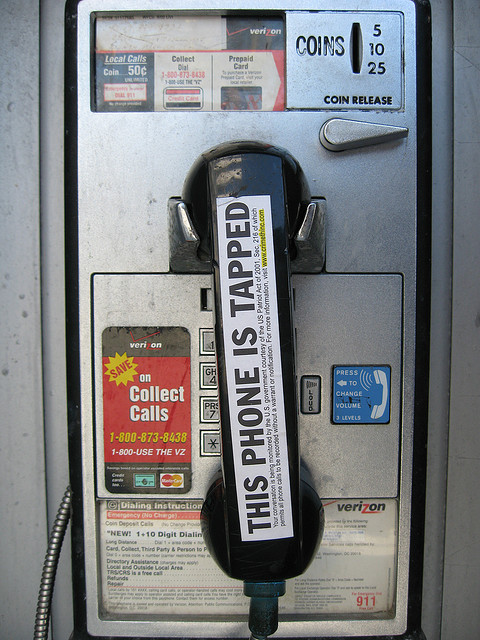
- The GOP's problem with non-white voters, in one awesome picture
- Louisiana threatens to sue MoveOn over billboard
- Young Republicans confirm that their peers hate Republicans
- Paul Ryan: Poor kids should go hungry so they know they're loved
- Cartoon: New York Times columnist invades Ukraine
- MUST-SEE: Jon Stewart blasts conservatives for praising Putin while bashing Obama
- Cartoon: Spheres of influence
- Harry Reid to Politico: 'Get a brain, OK?'
- Guess why the Army's top sexual assault prosecutor's been suspended
- Cartoon: Tasty Ukraine Bites for Pundits!
- Mitch McConnell explains to CPAC audience that he's a badass outlaw
- Reid reveling in role as Koch enemy number one
- This image speaks volumes about the Democratic Party
- McCain: Obama's 1983 college essay on US-Soviet tensions proves he's to blame for Putin and Ukraine
- Cartoon: Handbook for homophobes
- Arizona state Sen. Steve Gallardo comes out: Calls SB 1062 a 'game changer'
- Christiegate: Bogus traffic study excuse officially dies
- The Antarctic half of the global thermohaline circulation is collapsing
- Wimpy Darrell Issa can't stand the heat, so he gets out of the kitchen
- MUST-SEE: Jon Stewart shames Senate Republicans for blocking veterans benefits
- Cartoon: Crisis News!
- George Takei deems Limbaugh inconsequential—We agree. So how does Rush stay on air?
- Obamacare boosting household income and spending
- Minimum wage hike would cut food stamp costs beyond Republicans' dreams
- This image speaks volumes about the Democratic Party
- McCain: Obama's 1983 college essay on US-Soviet tensions proves he's to blame for Putin and Ukraine
- Cartoon: Handbook for homophobes
- Arizona state Sen. Steve Gallardo comes out: Calls SB 1062 a 'game changer'
- Christiegate: Bogus traffic study excuse officially dies
- The Antarctic half of the global thermohaline circulation is collapsing
- Wimpy Darrell Issa can't stand the heat, so he gets out of the kitchen
- MUST-SEE: Jon Stewart shames Senate Republicans for blocking veterans benefits
- Cartoon: Crisis News!
- George Takei deems Limbaugh inconsequential—We agree. So how does Rush stay on air?
- Obamacare boosting household income and spending
- Minimum wage hike would cut food stamp costs beyond Republicans' dreams
- Apple tells Limbaugh and his ilk to stick their money where the sun don't shine
- Sarah Palin explains Vladimir Putin's manly qualities
- The Jews have disappointed Michele Bachmann
- MUST-SEE: Jon Stewart BLASTS Fox News for attacking food stamp recipients
- ChristieGate: The Nation reports on another bridge scheme
- Cartoon: Dr. Pill
- It's fun to accidentally discharge your handgun at the Y-M-C-A! GunFAIL LIX
- ’It's a slush fund.’
- Conservatives condemn censorship of stories of "kind" slavers and "contented" slaves
- Steve King warns gay people might try to trick American businesses into discriminating against them
- What Would Jesus Shoot? Kentucky Baptists giving away 25 guns to attract converts
- Paul Ryan generates report to disprove effectiveness of progressive poverty programs and FAILS!
- Mormons declare war on masturbation
- Random mass killing attempt in Japan
- Issa goes full Benghazi psycho
- Cartoon: The gun
- DISGRACEFUL: Orlando Sentinel runs letter justifying fear of blacks
- OMG! Scott Walker gets grilled on EmailGate—On Fox News! (And MORE big time news)
- Bill Moyers outdoes himself with guest Mike Lofgren: “The Deep State Hiding in Plain Sight”
- Prepare to be amazed
- Some really cool maps of the 2012 presidential election results in New York, Pennsylvania, and Ohio
- Income inequality: Why Krugman won't save us
- Wichita lawmaker introduces bill clarifying who can beat your children
- Are there any real Obamacare horror stories?


Crimea Referendum Vote On Joining Russia Scheduled For March 16
 | by
TIM SULLIVAN and YURAS KARMANAU
| by
TIM SULLIVAN and YURAS KARMANAU
Posted:
Updated:
SIMFEROPOL, Ukraine (AP) — Lawmakers in Crimea called a March 16
referendum on whether to break away from Ukraine and join Russia
instead, voting unanimously Thursday to declare their preference for
doing so.
"This is our response to the disorder and lawlessness in Kiev," Sergei Shuvainikov, a member of the local Crimean legislature, said. "We will decide our future ourselves."
The 100-seat parliament in Crimea, which enjoys a degree of autonomy under current Ukrainian law, voted 78-0, with eight abstentions in favor of holding the referendum, and for joining Russia. Local voters will also be given the choice of deciding to remain part of Ukraine, but with enhanced local powers.
There was no immediate response from the Ukrainian central government to the vote. On Wednesday, Ukraine's prime minister told The Associated Press that Crimea would remain part of Ukraine.
In Moscow, a prominent member of Russia's parliament, Sergei Mironov, said he has introduced a bill to simplify the procedure for Crimea to join Russia and it could be passed as soon as next week, the state news agency ITAR-Tass reported.
On Tuesday, President Vladimir Putin said Russia had no intention of annexing Crimea, while insisting its residents have the right to determine the region's status in a referendum. Putin called a meeting of his Security Council on Thursday to discuss Ukraine.
A referendum had previously been scheduled in Crimea on March 30, but the question to be put to voters was on whether their region should enjoy "state autonomy" within Ukraine.
Earlier, Crimea's new leader said pro-Russian forces numbering more than 11,000 now control all access to the peninsula in the Black Sea and have blockaded all military bases that have not yet surrendered.
The West has joined the new Ukrainian leadership in Kiev in demanding that Russia pull its forces back from Crimea, but little progress was reported after a flurry of diplomatic activity in Paris on Wednesday involving U.S. Secretary of State John Kerry and Russian Foreign Minister Sergey Lavrov.
European Union leaders will meet for an emergency session in Brussels on Thursday to decide what sort of sanctions they can impose on Russia over its actions in Ukraine. Moscow has threatened to retaliate if any punitive measures are put in place.
Ukrainian Prime Minister Arseniy Yatsenyuk, in Brussels for the summit, said Russia was continuing to stir up trouble.
"We ask Russia to respond whether they are ready to preserves peace and stability in Europe or (whether) they are ready to instigate another provocation and another tension in our bilateral and multilateral relations," Yatsenyuk said.
In Simferopol, Crimea's capital, about 50 people rallied outside the local parliament Thursday morning waving Russian and Crimean flags. Among the posters they held was one that said "Russia, defend us from genocide."
"We are tired of revolutions, maidans and conflicts and we want to live peacefully in Russia," said one of the bystanders, Igor Urbansky, 35. "Only Russia can give us a peaceful life."
Maidan is the name of the downtown square in Kiev where tens of thousands of protesters contested the rule of Ukrainian President Viktor Yanukovych, who fled to Russia.
Not all in this city favored the lawmakers' action.
"This is crazy. Crimea has become Putin's puppet," said Viktor Gordiyenko, 46. "A referendum at gunpoint of Russia weapons is just a decoration for Putin's show. A decision on occupation has already been made."
Svetlana Savchenko, another Crimean lawmaker, said the choice she and her fellow deputies took in favor of joining Russia will force Moscow to make a decision.
"This is our principled position," she told The Associated Press. "Now the Russian Federation must begin a procedure - will it take us in or not."
Under the Soviet Union, Crimea belonged to the Russian Federation until it was transferred to Ukraine in 1954 by Soviet Premier Nikita Khrushchev.
Concern that the turmoil could engulf eastern Ukraine grew after hundreds of demonstrators — many chanting "Russia! Russia!" — stormed a government building on Wednesday in Donetsk, a major industrial center near the Russian border.
Clashes between protesters and police broke out early Thursday in Donetsk as police cleared demonstrators from the regional administration center. The Ukrainian flag once again was hoisted over the building, and about 100 Ukrainian Interior troops could be seen in and around it. Two large trucks were parked in front to block the approach.
The European Union on Wednesday extended $15 billion in aid to help support the new Ukrainian government, which took over in late February after months of protests drove out Yanukovych, the Moscow-supported president.
The EU also imposed asset freezes against 18 people held responsible for embezzling state funds in Ukraine, including Yanukovych, his son and some of his closest allies.
Crimea's new leader, Sergei Aksyonov, said his government was in regular contact with the Russian officials, including those in a large Russian delegation now in Crimea.
Speaking at Crimea's government meeting late Wednesday, Aksyonov said the strategic peninsula is fully under the control of riot police and security forces joined by about 11,000 "self-defense" troops. All or most of these troops are believed to be Russian, even though the Russian president and defense minister have denied sending in the military other than those stationed at the home port of Russia's Black Sea Fleet.
___
Sergei Chuzavkov contributed from Donetsk, and Juergen Baetz from Brussels.
 Ukrainian soldiers guard the military base at the Black Sea port
of Sevastopol in Crimea, Ukraine, Wednesday, March 5, 2014. A special
U.N. envoy visiting Crimea was threatened by 10 to 15 armed men on
Wednesday and ordered to leave the region, where Ukraine and Russia are
locked in a tense standoff. (AP Photo/Darko Vojinovic)
Ukrainian soldiers guard the military base at the Black Sea port
of Sevastopol in Crimea, Ukraine, Wednesday, March 5, 2014. A special
U.N. envoy visiting Crimea was threatened by 10 to 15 armed men on
Wednesday and ordered to leave the region, where Ukraine and Russia are
locked in a tense standoff. (AP Photo/Darko Vojinovic)
 Cossacks detain a "Femen" activist during protest in front of the
Crimean parliament building in Simferopol, Ukraine, March 6, 2014. (AP
Photo/Sergei Grits)
Cossacks detain a "Femen" activist during protest in front of the
Crimean parliament building in Simferopol, Ukraine, March 6, 2014. (AP
Photo/Sergei Grits)

Ukraine frigate Hetman Sahaydachy, background, enters waters of the Black Sea port of Odessa, Ukraine, Thursday, March 6, 2014. The Hetman Sahaydachny on Wednesday returned to Odessa in the Black Sea after taking part in NATO exercises. (AP Photo/Sergei Poliakov)
"This is our response to the disorder and lawlessness in Kiev," Sergei Shuvainikov, a member of the local Crimean legislature, said. "We will decide our future ourselves."
The 100-seat parliament in Crimea, which enjoys a degree of autonomy under current Ukrainian law, voted 78-0, with eight abstentions in favor of holding the referendum, and for joining Russia. Local voters will also be given the choice of deciding to remain part of Ukraine, but with enhanced local powers.
There was no immediate response from the Ukrainian central government to the vote. On Wednesday, Ukraine's prime minister told The Associated Press that Crimea would remain part of Ukraine.
In Moscow, a prominent member of Russia's parliament, Sergei Mironov, said he has introduced a bill to simplify the procedure for Crimea to join Russia and it could be passed as soon as next week, the state news agency ITAR-Tass reported.
On Tuesday, President Vladimir Putin said Russia had no intention of annexing Crimea, while insisting its residents have the right to determine the region's status in a referendum. Putin called a meeting of his Security Council on Thursday to discuss Ukraine.
A referendum had previously been scheduled in Crimea on March 30, but the question to be put to voters was on whether their region should enjoy "state autonomy" within Ukraine.
Earlier, Crimea's new leader said pro-Russian forces numbering more than 11,000 now control all access to the peninsula in the Black Sea and have blockaded all military bases that have not yet surrendered.
The West has joined the new Ukrainian leadership in Kiev in demanding that Russia pull its forces back from Crimea, but little progress was reported after a flurry of diplomatic activity in Paris on Wednesday involving U.S. Secretary of State John Kerry and Russian Foreign Minister Sergey Lavrov.
European Union leaders will meet for an emergency session in Brussels on Thursday to decide what sort of sanctions they can impose on Russia over its actions in Ukraine. Moscow has threatened to retaliate if any punitive measures are put in place.
Ukrainian Prime Minister Arseniy Yatsenyuk, in Brussels for the summit, said Russia was continuing to stir up trouble.
"We ask Russia to respond whether they are ready to preserves peace and stability in Europe or (whether) they are ready to instigate another provocation and another tension in our bilateral and multilateral relations," Yatsenyuk said.
In Simferopol, Crimea's capital, about 50 people rallied outside the local parliament Thursday morning waving Russian and Crimean flags. Among the posters they held was one that said "Russia, defend us from genocide."
"We are tired of revolutions, maidans and conflicts and we want to live peacefully in Russia," said one of the bystanders, Igor Urbansky, 35. "Only Russia can give us a peaceful life."
Maidan is the name of the downtown square in Kiev where tens of thousands of protesters contested the rule of Ukrainian President Viktor Yanukovych, who fled to Russia.
Not all in this city favored the lawmakers' action.
"This is crazy. Crimea has become Putin's puppet," said Viktor Gordiyenko, 46. "A referendum at gunpoint of Russia weapons is just a decoration for Putin's show. A decision on occupation has already been made."
Svetlana Savchenko, another Crimean lawmaker, said the choice she and her fellow deputies took in favor of joining Russia will force Moscow to make a decision.
"This is our principled position," she told The Associated Press. "Now the Russian Federation must begin a procedure - will it take us in or not."
Under the Soviet Union, Crimea belonged to the Russian Federation until it was transferred to Ukraine in 1954 by Soviet Premier Nikita Khrushchev.
Concern that the turmoil could engulf eastern Ukraine grew after hundreds of demonstrators — many chanting "Russia! Russia!" — stormed a government building on Wednesday in Donetsk, a major industrial center near the Russian border.
Clashes between protesters and police broke out early Thursday in Donetsk as police cleared demonstrators from the regional administration center. The Ukrainian flag once again was hoisted over the building, and about 100 Ukrainian Interior troops could be seen in and around it. Two large trucks were parked in front to block the approach.
The European Union on Wednesday extended $15 billion in aid to help support the new Ukrainian government, which took over in late February after months of protests drove out Yanukovych, the Moscow-supported president.
The EU also imposed asset freezes against 18 people held responsible for embezzling state funds in Ukraine, including Yanukovych, his son and some of his closest allies.
Crimea's new leader, Sergei Aksyonov, said his government was in regular contact with the Russian officials, including those in a large Russian delegation now in Crimea.
Speaking at Crimea's government meeting late Wednesday, Aksyonov said the strategic peninsula is fully under the control of riot police and security forces joined by about 11,000 "self-defense" troops. All or most of these troops are believed to be Russian, even though the Russian president and defense minister have denied sending in the military other than those stationed at the home port of Russia's Black Sea Fleet.
___
Sergei Chuzavkov contributed from Donetsk, and Juergen Baetz from Brussels.
11:08 AM – Today
PHOTO: Ukrainian Soldiers Guard Military Base
Ukrainian soldiers guard the military base at the Black Sea port
of Sevastopol in Crimea, Ukraine, Wednesday, March 5, 2014. A special
U.N. envoy visiting Crimea was threatened by 10 to 15 armed men on
Wednesday and ordered to leave the region, where Ukraine and Russia are
locked in a tense standoff. (AP Photo/Darko Vojinovic)
Share +
11:07 AM – Today
NATO Urges Russia To Pull Back
NATO once again urged Russia to withdraw its troops from the Crimea region.
"Ukraine is a valued and long-standing partner for NATO. In these difficult moments NATO stands by Ukraine, NATO stands by Ukraine's sovereignty, integrity and by the fundamental principles of international law," NATO Secretary General Anders Fogh Rasmussen said, according to Reuters.
The NATO chief continued: "This crisis is not just about Ukraine, this crisis has serious implications for the security and stability of the Euro-Atlantic area as a whole. We clearly face the gravest threat to European security since the end of the Cold War."
Read more here.
--Eline Gordts
"Ukraine is a valued and long-standing partner for NATO. In these difficult moments NATO stands by Ukraine, NATO stands by Ukraine's sovereignty, integrity and by the fundamental principles of international law," NATO Secretary General Anders Fogh Rasmussen said, according to Reuters.
The NATO chief continued: "This crisis is not just about Ukraine, this crisis has serious implications for the security and stability of the Euro-Atlantic area as a whole. We clearly face the gravest threat to European security since the end of the Cold War."
Read more here.
--Eline Gordts
Share +
10:57 AM – Today
PM: Ukraine Ready To Use Force
Ukraine's Prime Minister
Arseny Yatseniuk told reporters at a news conference in Brussels that
Kiev is ready to use military force to defend itself if Russia expands
its presence in the country.
"In case of further escalation and military intervention into Ukrainian territory by foreign forces, the Ukrainian government and military will act in accordance with the constitution and laws," Yatseniuk said, according to Reuters.
"We are ready to protect our country."
Read the full report here.
--Eline Gordts
"In case of further escalation and military intervention into Ukrainian territory by foreign forces, the Ukrainian government and military will act in accordance with the constitution and laws," Yatseniuk said, according to Reuters.
"We are ready to protect our country."
Read the full report here.
--Eline Gordts
Share +
10:51 AM – Today
Ukrainian Jews To Putin: We Don't Need Your Defense
Russian President Vladimir
Putin justified the use of armed forces in Ukraine earlier this week by
arguing that the crisis in the country had emboldened anti-Semitic
figures. "What is our biggest concern? We see the rampage of reactionary
forces, nationalist and anti-Semitic forces going on in certain parts
of Ukraine, including Kiev," the Russian leader said at his Tuesday press conference.
On Thursday, a group of Ukrainian Jews -- who historically are mostly Russian-speaking -- sent a letter to Putin saying that they did not need his defense, and that Russia was responsible for inciting separatism:
On Thursday, a group of Ukrainian Jews -- who historically are mostly Russian-speaking -- sent a letter to Putin saying that they did not need his defense, and that Russia was responsible for inciting separatism:
They have tried to scare us (and are continuing their attempts) with “Bandera followers” and “Fascists” attempting to wrest away the helm of Ukrainian society, with imminent Jewish progroms. Yes, we are well aware that the political opposition and the forces of social protests who have secured changes for the better are made up of different groups. They include nationalistic groups, but even the most marginal do not dare show anti-Semitism or other xenophobic behavior. And we certainly know that our very few nationalists are well-controlled by civil society and the new Ukrainian government – which is more than can be said for the Russian neo-Nazis, who are encouraged by your security services.Read the full letter here.
We have a great mutual understanding with the new government, and a partnership is in the works. There are quite a few national minority representatives in the Cabinet of Ministers: the Minister of Internal Affairs is Armenian, the Vice Prime Minister is a Jew, two ministers are Russian. The newly-appointed governors of Ukraine's region are also not exclusively Ukrainian.
Unfortunately, we must admit that in recent days stability in our country has been threatened. And this threat is coming from the Russian government, namely – from you personally. It is your policy of inciting separatism and crude pressure placed on Ukraine that threatens us and all Ukrainian people, including those who live in Crimea and the Ukrainian South-East. South-eastern Ukrainians will soon see that for themselves.
Vladimir Vladimirovich, we highly value your concern about the safety and rights of Ukrainian national minorities. But we do not wish to be “defended” by sundering Ukraine and annexing its territory. We decisively call for you not to intervene in internal Ukrainian affairs, to return the Russian armed forces to their normal fixed peacetime location, and to stop encouraging pro-Russian separatism.
Share +
10:38 AM – Today
Rasmussen: Gravest Threat To European Security Since Cold War#NATO SecGen Fogh Rasmussen: We clearly face the gravest threat to European security since the end of the Cold War @GlobalPost #Ukraine
— Paul Ames (@p1ames) March 6, 2014
Share +
10:11 AM – Today
BBC: Pro-Russian Protests Leader Arrested
greg white
@whitegl
Follow
RT @BBCBreaking Pro-Russia protest leader in east #Ukraine city Donetsk arrested as he was being interviewed by BBC http://bbc.in/MQyous
Share +
10:10 AM – Today
PHOTO: FEMEN Detained By Cossacks In Crimea
Cossacks detain a "Femen" activist during protest in front of the
Crimean parliament building in Simferopol, Ukraine, March 6, 2014. (AP
Photo/Sergei Grits)
Share +
9:52 AM – Today
RT Anchor Explains Decision To Quit On Air
Liz Wahl, the RT anchor who
quit on-air over the Russian government's incursion into Crimea,
explained in an email to HuffPost why she quit and why she started
working for the pro-Kremlin English-language channel to begin with.
"I'm resigning due to the network's stance in general," she said. "A network that has an editorial mission to slam the West and promote Russian foreign policy. The coverage of Crimea is the latest and one of the more extreme examples."
"When I started, I knew where Putin stood geopolitically, but did not know that his views would be imposed on the news operation."
--Luke Johnson
"I'm resigning due to the network's stance in general," she said. "A network that has an editorial mission to slam the West and promote Russian foreign policy. The coverage of Crimea is the latest and one of the more extreme examples."
"When I started, I knew where Putin stood geopolitically, but did not know that his views would be imposed on the news operation."
--Luke Johnson
Share +
9:27 AM – Today
Visa Bans Have Already Begun For Russians And Ukrainians
On a conference call with
reporters this morning, the White House did not offer many specifics
about sanctions and visa restrictions for those connected to the Ukraine
violence. However, a senior administration official clarified that they
would include Russian and Ukrainian citizens, while indicating that the
bans had already begun.
"There are individuals who have had their visas pulled or will be banned from visas," said a senior administration official. "And those individuals -- while I won't give names or numbers -- this does include Russians and Ukrainians."
--Luke Johnson
"There are individuals who have had their visas pulled or will be banned from visas," said a senior administration official. "And those individuals -- while I won't give names or numbers -- this does include Russians and Ukrainians."
--Luke Johnson
Share +
9:21 AM – Today
White House Reacts To Crimean Referendum
The White House suggested on
Thursday that the Crimean Parliament's vote on a referendum for the
region to join Russia was illegitimate.
"It is the voice of the United States that decisions about Crimea or any part of Ukraine need to be made with the government in Kiev," said a senior administration official on a conference call with reporters. "This is a country with clearly defined international borders and only the people of Ukraine can make decisions about their political future."
"You can't have a situation in which the legitimate government of the country is excluded from decision-making about different parts of that country," added the official. "That is clearly a violation of international law and how these things are done."
"We will continue to support the sovereignty and territorial integrity of Ukraine as a whole," he also said.
--Luke Johnson
"It is the voice of the United States that decisions about Crimea or any part of Ukraine need to be made with the government in Kiev," said a senior administration official on a conference call with reporters. "This is a country with clearly defined international borders and only the people of Ukraine can make decisions about their political future."
"You can't have a situation in which the legitimate government of the country is excluded from decision-making about different parts of that country," added the official. "That is clearly a violation of international law and how these things are done."
"We will continue to support the sovereignty and territorial integrity of Ukraine as a whole," he also said.
--Luke Johnson
Share +
9:17 AM – Today
Lavrov: U.S. Sanctions Are Not Constructive
Breaking News ✔
@BreakingNews
Follow
Russian foreign minister Lavrov says US sanctions against Russia continue to add pressure, are not constructive - @Reuters
Share +
9:11 AM – Today
Assad Praises Putin
Unsurprisingly, embattled
Syrian President Bashar expressed his support for Russian President
Vladimir Putin in the crisis with Ukraine, Agence France Press reports
on Thursday.
From AFP:
From AFP:
In a telegram, Assad "expressed... Syria's solidarity with Putin's efforts to restore security and stability to Ukraine in the face of attempted coups against legitimacy and democracy in favour of radical terrorists", state news agency SANA said.--Eline Gordts
Assad praised Putin for "wise political leadership and commitment to international legitimacy based on the law that governs ties between nations and peoples".
He said Syria was committed to "President Putin's rational, peace-loving approach that seeks to establish a global system supporting stability and fighting extremism and terrorism".
Share +
9:06 AM – Today
Kerry Meets Lavrov In Rome
U.S. Secretary of State John
Kerry met Russian Foreign Minister Sergei Lavrov for a second day in a
row on Thursday to discuss the situation in Ukraine. This time, the
leaders conveyed on the sidelines of a Rome conference on Libya.
Read more from Reuters here.
Read more from Reuters here.
Share +
9:02 AM – Today
OSCE Observers Barred From Entering Crimea
Unidentified, armed men
barred observers from the Organization for Security and Cooperation in
Europe (OSCE) from entering Crimea, Poland's defense minister told
Reuters on Thursday.
"The mission has been detained, they cannot go further. They landed in Odessa and they were traveling by car from Odessa towards the Crimean Peninsula, but they were detained by unidentified men in fatigues," the defense minister, Tomasz Siemoniak, told reporters.--Eline Gordts
He said it was possible the observers would be allowed to head back the way they came, but they could not go forward into Crimea. Two Polish military officers are among the OSCE mission.
Share +
8:58 AM – Today
Ukrainian PM: Crimea 'So-Called Referendum' Has No Legal Grounds
Teri Schultz
@terischultz
Follow
Ukrainian PM #Yatsenyuk says #Crimea "so-called referendum has no legal grounds at all", urges #Russia not to support
Share +
8:29 AM – Today
PHOTO: Ukrainian Frigate Returns From NATO Exercises
Ukraine frigate Hetman Sahaydachy, background, enters waters of the Black Sea port of Odessa, Ukraine, Thursday, March 6, 2014. The Hetman Sahaydachny on Wednesday returned to Odessa in the Black Sea after taking part in NATO exercises. (AP Photo/Sergei Poliakov)
Share +
8:20 AM – Today
What Putin Really Wants
According to an op-ed by Ruslan Pukhov, Russian President Vladimir Putin's end goal in the Crimea standoff isn't actually annexing
the pro-Russian region. But rather, the Russian leader's goal is simply
to "obtain the greatest possible autonomy for Crimea while still
retaining formal Ukrainian jurisdiction over the peninsula."
This flies in the face of what appeared to be a move by Russia to take over the embattled peninsula. Instead, Putin's power play served as a means to "strong-arm the new, weak and unstable government in Kiev" in order to maintain influence over Ukrainian politics.
"Mr. Putin is a more farsighted and coldblooded calculator," Pukhov argues.
Read the entire article on The New York Times.
-- Ryan Craggs
This flies in the face of what appeared to be a move by Russia to take over the embattled peninsula. Instead, Putin's power play served as a means to "strong-arm the new, weak and unstable government in Kiev" in order to maintain influence over Ukrainian politics.
"Mr. Putin is a more farsighted and coldblooded calculator," Pukhov argues.
Read the entire article on The New York Times.
-- Ryan Craggs
Share +
8:01 AM – Today
White House Statement On Ukraine
Below is the full text of
the White House statement on the visa restrictions and sanctions placed
on individuals contributing to the crisis in Ukraine:
As President Obama has made clear, the United States is pursuing and reviewing a wide range of options in response to Russia’s ongoing violation of Ukraine’s sovereignty and territorial integrity – actions that constitute a threat to peace and security and a breach of international law, including Russia’s obligations under the UN Charter and of its 1997 military basing agreement with Ukraine, and that are inconsistent with the 1994 Budapest Memorandum and the Helsinki Final Act. Pursuant to the President’s guidance, today the State Department is putting in place visa restrictions on a number of officials and individuals, reflecting a policy decision to deny visas to those responsible for or complicit in threatening the sovereignty and territorial integrity of Ukraine. This new step stands in addition to the policy already implemented to deny visas to those involved in human rights abuses related to political oppression in Ukraine. In addition, the President has signed an Executive Order that authorizes sanctions on individuals and entities responsible for activities undermining democratic processes or institutions in Ukraine; threatening the peace, security, stability, sovereignty, or territorial integrity of Ukraine; contributing to the misappropriation of state assets of Ukraine; or purporting to assert governmental authority over any part of Ukraine without authorization from the Ukrainian government in Kyiv. This E.O. is a flexible tool that will allow us to sanction those who are most directly involved in destabilizing Ukraine, including the military intervention in Crimea, and does not preclude further steps should the situation deteriorate. These actions build upon the previous actions the United States has taken, including suspending bilateral discussions with Russia on trade and investment; suspending other bilateral meetings on a case-by-case basis; putting on hold U.S.-Russia military-to-military engagement, including exercises, bilateral meetings, port visits, and planning conferences; and our agreement with G-7 nations to suspend for the time being our participation in activities associated with the preparation of the scheduled G-8 Summit in Sochi in June. Depending on how the situation develops, the United States is prepared to consider additional steps and sanctions as necessary. At the same time, as the President has said, we seek to work with all parties to achieve a diplomatic solution that de-escalates the situation and restores Ukraine’s sovereignty. We call on Russia to take the opportunity before it to resolve this crisis through direct and immediate dialogue with the Government of Ukraine, the immediate pull-back of Russia’s military forces to their bases, the restoration of Ukraine’s territorial integrity, and support for the urgent deployment of international observers and human rights monitors who can assure that the rights of all Ukrainians are protected, including ethnic Russians, and who can support the Ukrainian government’s efforts to hold a free and fair election on May 25. As we follow developments in Ukraine closely, the United States reaffirms its unwavering commitment to our collective defense commitments under the North Atlantic Treaty. We will continue to pursue measures that reinforce those commitments, to include the provision of additional support to NATO’s Baltic Air Policing mission and our aviation detachment in Poland.
Share +
7:43 AM – Today
Obama Reportedly Designates Situation In Ukraine 'Extraordinary Threat' To National Security
Share +
7:40 AM – Today
U.S. Imposes Sanctions, Visa Restrictions On People 'Contributing To The Situation In Ukraine'
Breaking Politics ✔
@breakingpol
Follow
The Associated Press ✔
@AP
Follow
Obama signs executive order 'blocking property of certain persons contributing to the situation in Ukraine' - @ZekeJMiller, @jbendery
Share +
7:12 AM – Today
FEMEN In Crimea
FEMEN, the radical feminist group that tried to stage a topless protest against Putin, is apparently in Crimea.
From their earlier protest:
inna shevchenko @femeninna Follow
From their earlier protest:
inna shevchenko @femeninna Follow
Published on Apr 8, 2013
Topless activists from the Femen
protest group tried to disrupt the visit of Russian President Putin and
Chancellor Merkel to the Hannover Messe tech show. They had anti-Putin
slogans on their semi-naked bodies and were shouting obscenities. http://youtu.be/ERSGZO2GKHo
Share +
6:56 AM – Today
Crimean Parliament Already Starting The Process To Join Russia
Even though a referendum will not be held for another ten days, Crimea's parliament has already asked Russian President Vladimir Putin
to "to start the procedure" on joining the Russian Federation. It's not
clear what that procedure is, since no new territory has joined Russia
since the Russian Federation came into existence. Nevertheless, it
indicates how the parliament is already prejudging the outcome of such a vote.
-- Luke Johnson
-- Luke Johnson
Share +
6:37 AM – Today
Russian Lawmakers Smooth The Way For Crimea Referendum
Just as Crimea's Parliament
announced Thursday it would hold a referendum on joining Russia on March
16, Russia's parliament made sure that it could take place.
The Russian Duma will likely vote on a bill next week to allow provinces outside the Russian Federation to join Russia through local referendum. The vote will likely take place on March 14. "As we are talking about federal constitutional law, it's not worth rushing, the bill must be taken quickly, but not quickly," Dimitry Govortsov, one of the bill's authors, told Interfax. Bills from the Duma rarely, if ever, fail.
Meanwhile, Russian President Vladimir Putin has been informed of the vote, his spokesman, Dimitry Peskov, told Channel One.
-- Luke Johnson
The Russian Duma will likely vote on a bill next week to allow provinces outside the Russian Federation to join Russia through local referendum. The vote will likely take place on March 14. "As we are talking about federal constitutional law, it's not worth rushing, the bill must be taken quickly, but not quickly," Dimitry Govortsov, one of the bill's authors, told Interfax. Bills from the Duma rarely, if ever, fail.
Meanwhile, Russian President Vladimir Putin has been informed of the vote, his spokesman, Dimitry Peskov, told Channel One.
-- Luke Johnson
Share +
6:22 AM – Today
Putin's Approval Ratings Soaring, Says Kremlin-Friendly Pollster That Released Off-Message Poll
VTsIOM, Russia's state-owned pollster, released a poll Thursday
showing Russian President Vladimir Putin's approval rating at almost 68
percent. 53 percent of respondents said the crisis in Ukraine and
Crimea had an effect on their answer. The poll is similar to one in late
February and the highest since his May 2012 rating had him at 68.8
percent.
The same pollster released a poll on February 24 -- but conducted at beginning of the month -- showing that 73 percent of Russians did not favor intervening in Ukraine's political crisis. Russia, obviously, went on to do so. The poll did not fit the narrative -- bolstered by state television -- of Russians cheering military action in the streets.
-- Luke Johnson
The same pollster released a poll on February 24 -- but conducted at beginning of the month -- showing that 73 percent of Russians did not favor intervening in Ukraine's political crisis. Russia, obviously, went on to do so. The poll did not fit the narrative -- bolstered by state television -- of Russians cheering military action in the streets.
-- Luke Johnson