BUCKNACKT'S SORDID TAWDRY BLOG
We should not be a journey to the grave with the intention of arriving safely in an attractive & well preserved body, but rather to skid in sideways, chocolate, bier or wein in hand, body thoroughly used up, totally worn out and screaming "WHOO-HOO, WHAT A RIDE!!!!!!"
Enlist
Duo is a highly toxic herbicide that blends glyphosate, a probable
carcinogen that is wiping out the monarch butterfly, with 2,4-D, a
poison used during the Vietnam War as an active ingredient in Agent
Orange.
It’s
a pesticide that is simply too dangerous for humans and animals! Yet
the Environmental Protection Agency approved this highly toxic herbicide
cocktail for widespread use on genetically engineered corn and soybean
crops.
With your help, we challenged the EPA’s reckless decision…and today we won!
This is a huge victory that you helped win! Thank you!
Every
day, we’re up against powerful corporate interests that will stop at
nothing to put profits ahead of people and the planet. But today we
proved that by coming together, we can stand up to these powerful
industries and win!
More
than 1 billion pounds of pesticides are being dumped onto U.S. crops
every year—threatening your family’s health, drifting into the air,
seeping into waterways, endangering farmworkers and threatening the
survival of endangered species.
But
with you by our side, Earthjustice will continue fighting to reform our
broken chemical system, targeting the most dangerous chemicals and
advancing sustainable agriculture.
As we head into a holiday centered around food and taking care of those we love, this victory is even more sweet!
Thank you for standing with us as we take on the dirtiest industries of our time—and win!
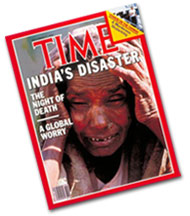
THE Olympic Games are supposed to be all about fostering sportsmanship and world peace. The London Olympic Committee has tarnished this goal in two ways. First, in the name of profitability they have allowed dow to be a corporate sponsor, taking dow's money while the company leaves the people of Bophal, India still struggling to overcome the environmental disaster dow unleashed on that community on 2-3DEZ1984 (see http://en.wikipedia.org/wiki/Bhopal_disaster ). If dow has the money to sponsor the 2012 Summer Olympic Games in London they should have the money to continue the restoration and treatment of Bophal and it's families. Here are some pictures of dow's legacy in Bophal, keep them in mind when watching the opening ceremony and every time you see a commercial by dow during the Olympics.
The second action taken by the London Olympic Committee that exposed their hypocrisy of the ideals of the games was to allow the primary Russian arms dealer to the Syrian government of bashar al-assad, vladimir lisin, to attend the opening ceremony and the 2012 games. He is a merchant of mass murder, massacres, war crimes and crimes against humanity, and to allow him a presence at the games is nothing short of an endorsement of his actions. Below is an article from United Against Genocide objecting to victor lisin being allowed to attend the games, followed by coverage of the Syrian civil war from NPR.....
Terror Games: Syria, Russia and the Olympics
By Bama Athreya
Vladimir Lisin, Russian steel tycoon and vice president of the Russian Olympic Committee who has delivered arms to Syria.
This post originally appeared on OpEdNews.
Typically, the Olympic Games are an opportunity for the international
community to come together by promoting peace and preserving human
dignity through sport. But this year’s Games run the risk of being
tarnished by a Russian Olympic official who has been enabling the Syrian
regime.
Russia’s richest man, a steel tycoon named Vladimir Lisin, has been
helping supply Russian-made arms to the Syrian government responsible
for slaughtering thousands of its own people. According to news reports,
just one day after the Houla massacre, one of Lisin’s ships reached
Syria’s second largest port to offload an alleged shipment of weapons
from St. Petersburg.
The Russian government has rewarded Lisin’s loyalty with a top
position on their Olympic Committee. And as the families in Syria
continue to live in terror amid falling bombs and sniper fire, Lisin is
traveling to London to participate in the Olympic Opening Ceremonies.
Over 19,000 people have been killed in Syria and the violence
intensifies every day. A protracted civil war in Syria now seems
inevitable, which will undoubtedly lead to the loss of many more
civilian lives. In fact, the situation in Syria is now officially being
called a civil war by the International Red Cross.
Yet, Russia continues to support Assad’s murderous regime — recently
vetoing a United Nations Security Council resolution that would support
negotiations — and people like Lisin are profiting from it.
The multi-billion dollar arms trade between Russia and Syria has been
well exposed in recent months. In 2011, the Russian government provided
over $1 billion in weapons to the regime of Syrian President Bashar
al-Assad and over recent weeks attempted to ship attack helicopters and
munitions to the Syrian military.
The profits that Lisin has made are now tarnishing Russia’s gold at
the Olympics. The oligarch is offering $1 million as reward to every
Russian athlete who wins gold at the 2012 games. While the aim of prize
money is to inspire gold medal success, it will leave those achievements
with a bloody tarnish.
Keeping Lisin from attending the games will add to the much-needed
international pressure against Russia and the arms dealers enabling
Syrian President Bashar al-Assad. We must insist that those who enable
Syria’s continued attacks on its own men, women and children pay a
price.
It should be made clear to the London Organizing Committee: There is
no room at this year’s Games for individuals who enable mass atrocities
for their own financial gain.
Together we will stop the deadly flow of arms into Syria by exposing unscrupulous weapons dealers like Vladimir Lisin. http://blog.endgenocide.org/blog/2012/07/27/terror-games-syria-russia-and-the-olympics/?utm_source=rss&utm_medium=rss&utm_campaign=terror-games-syria-russia-and-the-olympics
REPORT AIR DATE: July 23, 2012
Forces Clash in Syria's Two Largest Cities
SUMMARY
President Bashar al-Assad's regime and
the Free Syrian Army battled for control over Syria's two largest
cities, Damascus and Aleppo. Independent Television News' John Irvine
and Alex Thomson report on the violence that continues between rebels
and government troops.
GWEN IFILL: Syria acknowledged for the first
time that it has chemical and biological weapons. But as fierce fighting
there continued, the Syrian foreign minister said the weapons wouldn't
be used to crush the rebels. President Obama said Syrian leader Bashar
al-Assad would be held accountable if his regime did use chemical
weapons.
We have two reports about the war in Syria from Independent
Television News, beginning with John Irvine on the shelling in the
country's second largest city, Aleppo. He filed his story from Beirut,
Lebanon.
JOHN IRVINE: A column of Syrian army
tanks used to be an irresistible force, but not anymore. This is a rebel
ambush in the streets of Aleppo. One tank, the rebels commandeer. At
least two others are destroyed. A burning hulk becomes the backdrop for a
triumphant group photograph.
As the war escalates, the Syrian armed forces are digging deeper into
their arsenal. Fast jets are now being used for bombing runs. The
regime has thrown almost everything it has against its own people, but
it apparently draws the line at chemical weapons. JIHAD MAKDISSI, Syrian Foreign Ministry: Any talks
of WMD or any unconventional weapon that the Syrian Arab Republic
possess would never, would never be used against civilian or against the
Syrian people during this crisis. JOHN IRVINE: What he said next amounted to a warning to the outside world not to get involved. JIHAD MAKDISSI: These weapons are meant to be used only and strictly in the event of external aggression against the Syrian Arab Republic. WILLIAM HAGUE, British foreign secretary: What is
actually happening is, their own people are rising up against a brutal
police state. It has nothing to do with any aggression from anywhere
else in the world. JOHN IRVINE: This conflict is 16 months old. But, still, both sides share an ability to live to fight another day. GWEN IFILL: Damascus has been the scene of pitched
battles between rebel and government troops since the bomb attack that
killed four of Assad's closest security officials last week. There have
been ongoing clashes in a neighborhood in the capital known as Midan.
Alex Thomson reports on the devastation there. ALEX THOMSON: The banality of normality, Damascene
traffic jams again a feature of life here. The gains claimed by the
rebels in the capital appear exaggerated.
The regime's boast that they have pushed the fighters out of some
districts altogether is ever more credible, but independent reporting is
near impossible. We're heading for Midan, where fighting has been
prolonged and intense in recent days. An army checkpoint seals off the
edge of the district. You film covertly and fast and move on in a game
of cat-and-mouse to try and get into the area.
And then, our guide, who would better stay anonymous, says, we're
here. Look around. He hardly needs to. Government forces turned
helicopter gunships, tanks, mortars, rockets, heavy machine guns on this
district for three days.
The government says, in two days' time, families can begin moving
back into Midan. But just take a look at what the family will find when
they move back to this house. People say, yes, of course, the rebel
fighters have been pushed out, but they will fight another day in
another way. And there is no chance that President Assad will win this
civil war.
A shopkeeper who fled the fighting comes back to find his business
has disintegrated. In theory, the government will pay, but all around
us, they're talking now off-camera of a massacre here. Finally, one man
will tell us anonymously everything he knows. MAN: Because this is the only family who stay in
their district during that time. They want to leave in a peaceful way.
And they couldn't right now. ALEX THOMSON: Channel 4 News spoke to seven residents independently of each other, who all either named the Ismailifamily as the victims or the figure of 16 being killed.
We were sent this video said to show the scene of the killings. The
details of a family shot through the head can't be shown. You do see the
poignant sight of an unfinished family meal. House after house trashed.
Everyone here said soldiers or the shabiha militias went on an orgy of
looting here. They know Syrians keep large amounts of cash at home.
This man said the militias stole 18,000 pounds from his place --
outside, the pathetic remains of rebel barricades, futile against
organized ground and air assault, the tank tracks of a departed
government army. Weirdly, the authorities have fastidiously painted over
most of the anti-Assad graffiti which covered the walls around here and
left their own: "The soldiers of God were here."
President Assad has won the battle for Damascus, and won it
convincingly, but everyone knows winning the battle is not the same as
winning the war. http://www.pbs.org/newshour/bb/world/july-dec12/syria_07-23.html Video from Al Jazeera
REPORT AIR DATE: July 26, 2012
Syrian Rebels Brace for Government Advance; Aleppo Civilians Caught in Crossfire
SUMMARY
Syrian troops have positioned
themselves on the edge of Aleppo, preparing to retake the city from
rebel control. In response, rebels have reinforced their weapons
stockpiles for the expected assault. Meanwhile, Aleppo's three million
civilians are caught between the two forces. Independent Television
News' Alex Thomson reports.
JUDY WOODRUFF: Syrian battle groups bore down
on the country's commercial capital today. They targeted rebels in
Aleppo, where some three million people were already under air and
artillery attack.
We begin with Alex Thomson of Independent Television News reporting from Damascus.
ALEX THOMSON: Damascus one week into
the battle for the city and video broadcast by Syrian state television
shows sustained firefights yesterday in the city's outskirts.
But it is Aleppo, Syria's biggest city, where the latest major
assault is likely. Pounded again by the regime's forces from both the
north and the south, helicopters move overhead as troops on the ground
prepare for a major assault.
Activist groups in Syria claim that the government troops are being
redeployed for a coming operation. Such claims are impossible to verify,
but several sources now report two Syrian army convoys, the first
heading from Hama Military Airport, apparently about 170 vehicles,
including tanks, and these are massing at al-Zarba, south of the city.
Another column is heading to Aleppo from Idlib province. With the
rebel counterattacks under way, here, what's claimed to be the wreckage
of one small part of the Idlib convoy, and nearby a captured government
tank.
The rebel attacks continue elsewhere. Here in Latakia,
it's claimed they attacked two army bases. In Homs, shelling by
government forces has scarcely ceased for more than three months, but
they still don't control the entire city. The capital quieter today,
though still some occasional shell fire on the outskirts.
But if the rebels cannot win in the major cities, they certainly
appear to be gaining ground in the propaganda war by being willing to
invite along cameras.
Yet, here in Damascus, all our requests to film with the Syrian army
have been refused point-blank. Could we speak to a government minister?
Impossible. What about a government spokesman even? No chance. The
regime apparently thinks this will still do, inside, the endless
pictures of the great leader and his dad, the same video of military
antics played on TV over and over again everyday, and outside, the
pristine flags, the murals, the devices of a regime strangely lost in
personality politics of the Cold War.
Some small opposition parties are tolerated here, so long as they're
powerless. Incredibly, it's actually easier to interview one of their
leaders than it is to speak to anybody from the government.
Hassan Abdullah Azim is chief of the opposition Nasseri (ph) party
and a lawyer in Damascus. He's been beaten and tortured by the regime in
the past, but he's still not afraid to call it even now. HASSAN ABDULLAH AZIM, opposition leader (through
translator): President Assad should step down and hand over power to the
people. We should move forward and organize new free elections for the
people to choose the government they want. ALEX THOMSON: For now, all that sounds like a distant dream. http://www.pbs.org/newshour/bb/world/july-dec12/syria1_07-26.html
ANALYSIS AIR DATE: July 26, 2012
On Syrian-Turkish Border, 'Underdog' Rebels Have Carved Out a Buffer Zone
SUMMARY
Pockets of Syria have fallen under the
control of rebel fighters, the anti-Assad opposition forces known as the
Syrian Free Army. Judy Woodruff speaks to NPR's Kelly McEvers about her
recent trip to five towns along the Turkish border in rural Syria.
JUDY WOODRUFF: For a first-hand look into
events on the ground in Syria, I'm joined now by NPR's Kelly McEvers.
She has just completed a weeklong reporting trip to northwestern Syria,
near the Turkish border, where she visited a number of towns currently
under rebel control.
Kelly McEvers, welcome.
And how did you decide where you were going inside Syria? We have a map, I think, we are going to be able to show people. KELLY MCEVERS, NPR: The rebels have basically carved
out their own sort of unofficial buffer zone there in northern Syria.
It's right next to the Turkish border.
For them, the benefit is that they're able to get their wounded out
into Turkey a lot more easily than they could before, and that they can
basically get weapons and money into Syria from that -- from the Turkish
area. So, for us, it made a lot of sense to sort of -- to get a sense
of who the rebels are to spend time in the region that they control,
instead of trying to sort of cower and hide and go with them undercover
from place to place, to be in this kind of swathe of towns and villages
that they actually control. JUDY WOODRUFF: Where they are relatively safe, free from government assault on a regular basis or...
KELLY MCEVERS: At this time. JUDY WOODRUFF: Yes. KELLY MCEVERS: If you were to try to look at the map
and say where exactly do the rebels control, every day, it changes a
little bit. It morphs and changes. On the edges of the area they
control, the government might take a town back.
There was one town when we were there that switched hands between the
government and the rebels four times. Why? Because the government
realizes that this border area is important to the rebels. They realize
that it is this buffer zone. And so they are trying to sort of regain
control.
But, obviously, the government's army is stretched and sees that its priorities are elsewhere, namely Damascus and Aleppo. JUDY WOODRUFF: Tell us about the rebels you met. And you talked to a number of them. Who are they? What are they like? KELLY MCEVERS: It's a really good question and it's one I think a lot of people want to answer right now.
They call themselves the Free Syrian Army, but that's about as far as
sort of the unification goes. They don't necessarily answer to a single
leader. They're a bunch of disparate groups spread out across the
country, some say up to 1,000 of them. One unit might only be eight
guys, mostly civilians.
I think the image is that these guys are mostly defected soldiers,
people who leave the army and then join the rebels. A lot of those guys
actually go to these refugee camps in Turkey, for fear of what would
happen to their family after they defect. So a lot of the guys we have
met are civilians, workers, farmers, people who decided to take up arms
and sort of defend this uprising, this revolution against the president. JUDY WOODRUFF: And relatively lightly armed, in contrast to what the government has. KELLY MCEVERS: Exactly. They are so outgunned right
now. They're basically operating with rifles and rocket-propelled
grenades and homemade bombs.
That's another key component to their sort of arsenal right now. That's how they deal with regime tanks.
But when you talk about a fully equipped army with tanks, artillery,
mortars, helicopters, and now we have seen jets being employed in this
fight by the regime's army, you can see that the rebels are definitely
the underdogs here. JUDY WOODRUFF: Kelly McEvers, what about the
civilians you talked to? And what are they saying about al this? Are
they caught in the middle? Are they hoping it's all going to be over?
Are they lining up with one side or another? KELLY MCEVERS: I was in just this very small pocket
of Syria, so it's important to say that I can only speak for the people
that I was with at that particular time.
By and large, in these villages, they see the rebels as their only
hope. They say, look, 16, 17 months ago, we went into the streets to
protest against our president. We said we wanted to bring down the
president. The regime shot at us, detained us, and tortured us. And no
one came to our aid except these guys. These guys picked up guns. And
maybe some of them are my cousins and uncles and brothers. They picked
up guns. They came here to defend us and we welcome them.
This, they say despite the fact that the rebels' presence in their
town sometimes brings the ire of the government. It might mean that
civilian homes get shelled, that people die. They say, we don't care.
We're willing to take that risk because these are the only people here
to protect us. So the rebels definitely have hearts and minds in these
towns. JUDY WOODRUFF: The morale overall, though, was what? What did you find? KELLY MCEVERS: Again, people were pretty willing to
stay on message, especially when talking to a Western journalist. Again,
we support these rebels, we support the cause. It's just any day now
that we're going to take down the regime.
While I was inside Syria, there was this high-level attack inside
Damascus that killed four high-ranking officials in the Syrian
government. So, I think that was a real morale boost. And a few days
after that, you saw a lot of units going to Aleppo. I was very close to
Aleppo, Syria's largest city in the north.
And you saw a lot of rebel units going there, sort of going to take
up the fight, and going all the way to Damascus as well. It looks like
the government has regained control in Damascus and may soon do the same
in Aleppo. So, that morale may turn around pretty quickly. JUDY WOODRUFF: You had some interesting
conversations with people, rebels and citizens, about why the United
States isn't doing more. Explain a little about that. KELLY MCEVERS: Yes, I think there's a lot of anger. I
think people look at the case of Libya and they look at the case of
other places where the U.S. or at least international community has done
more to intervene on the diplomatic level, on the military level.
Look, I think Syrians are smart enough to know that they don't want
an Iraq situation. I think most people would say, we don't want anyone
to come in and invade and occupy our country. I think they're OK with
that. And they're also smart enough to know that the Libya scenario
probably doesn't make sense for NATO or the United States. A no-fly
zone... JUDY WOODRUFF: The no-fly zone. KELLY MCEVERS: ... would be much more complicated in Syria. They get that.
But they say, look, how about some coordination? How about some help?
How about some training? There's a lot of things that you could do. You
could fly airplanes over our country and tell us, hey, there's some
tanks moving this way and there's no tanks on this road, reconnaissance,
intelligence, those sorts of things that frankly Western militaries are
good at.
And they see that that's not happening. And they say that it's not
much longer that they're going to be willing to accept this help. I
think, at some point, they are going to refuse it at any cost and it
might be too late for any intervention. JUDY WOODRUFF: Kelly McEvers, NPR, an extraordinary trip. Thank you very much. KELLY MCEVERS: You're welcome. JUDY WOODRUFF: And online, you can find links to four of Kelly's reports for NPR this week from the Turkish-Syrian border. http://www.pbs.org/newshour/bb/world/july-dec12/syria2_07-26.html
THE London Olympic Committee has shamefully decided to allow dow / union carbide as a sponsor of the 2012 Summer games. Their decision places greed over social, environmental and corporate responsibility, so these games will be tarnished just as the 2008 games in the prc were. The IOC and the London Committee should be ashamed and reverse their decision on dow. This from the SumOfUs.
Tell the London Olympics: Drop Dow, and stand with Sanjay and the people of Bhopal.
Here’s a message from Sanjay Verma, a Bhopal
resident-turned-activist whose life and family were irrevocably changed
due to the Bhopal disaster in India.
My name is Sanjay Verma and I grew up in Bhopal, India. I was
six months old when an explosion at a chemical factory across from my
neighbourhood leaked 40 tons of the potent neurotoxin methyl isocyanate.
My sister saved my life by bundling me up and fleeing from our home
into the panicked streets of Bhopal. My sister and 13 year-old brother
survived, but my parents and five of my siblings died that night.
My sister and I lived in an orphanage for 7 years. Sunil, our eldest
brother, took two jobs just to take care of us and keep us with him.
Tragically, he suffered terrible mental health issues and, after several
attempts at taking his life, he committed suicide in 2006. He was found
hanged, wearing a T-shirt with the slogan- 'No More Bhopals'. I have dedicated my life to fighting for justice for my community, and holding Dow responsible for the Bhopal disaster.
Thanks to you, 50,000 SumOfUs.org members have signed petitions to
the London Olympics Organisers denouncing Dow's sponsorship of the 2012
Olympic Games in London.
The London Olympic Organisers are feeling the pressure and have
agreed to meet with victims and activists. However, they are still
keeping Dow as a sponsor. Today, on the 10,000th day since the
Bhopal disaster, I have travelled from India to the UK to tell Lord Coe
in person that we cannot stand Dow’s Olympic sponsorship. Will you join
me? Will you send a message to Lord Sebastian Coe at London Olympics and tell him to drop Dow as a sponsor?
After all my family and community went through -- and for the many
people who continue to suffer to this day -- I have devoted my life to
seeing that Dow answers for the Bhopal disaster and that my home is
cleaned up so that innocent people no longer have to suffer. I need your help to make sure the London Olympic organisers
hear our story, and know that we will not stand for Dow's Olympic
sponsorship. Will you send a message to the London Olympic Organisers to tell them my community’s story?
If enough of us tell the London Olympic Organisers that we won't
stand for this partnership, we can help show the Olympics the true
meaning of the Olympics -- global unity, not backroom deals and
corporate sponsorships.
Thanks for helping ensure that those behind the Bhopal disaster pay
for the damages wrought, and for helping bring justice to my community,
--Sanjay
********** FAQ What happened in Bhopal?
On December 2-3, 1984,
as the people of the central Indian town of Bhopal slept, an explosion
caused over 40 tons of a deadly toxic gas, methyl isocyanate (MIC), and
other gases to escape from the Union Carbide India Limited pesticide
plant. The company executives could have warned the public, but instead
they chose not to sound the emergency alarm bell in town.
The event occurred in the early hours of the morning of Dec 3rd 1984,
at approximately 12:30 a.m. By 2am, most of the MIC had been dispersed
over an area of 25 miles (40km), and the first deaths were reported to
the police by 3am. By morning, there had been 1,000 reported deaths,
some as far as 5 miles (8 km) from the plant. 90,000 patients were seen
in local hospitals and clinics within the first 24 hours, and in total,
about 200,000 people suffered acute effects of the leak.
The preventable Bhopal disaster has claimed over 20,000 lives, and it
is not over yet because members of the community continue to suffer
from chronic health problems, cancer and birth defects.
Now, despite loud protests by the Indian Olympic delegation, Dow has
signed a controversial sponsorship deal with the Olympics expected to
make Dow $1 billion. With Dow counting on that revenue, we have the best
chance in years for them to finally assume responsibility and clean up
the disaster. We are finally hitting the company where it hurts: its
bottom line. How has Dow responded?
Dow claims that it is not
responsible for the 1984 Bhopal gas tragedy in any way. Despite that,
they hired the same public relations firm that worked to tell people
tobacco didn’t cause cancer, and that Foxconn hired to repair its public
image around working conditions in Apple factories in China.
Union
Carbide paid $470 million in compensation to existing victims in 1989,
amounting to less than $500 per victim whether they were blinded by the
gas, developed terminal cancer from exposure, or suffered debilitating
birth defects. To date, neither Union Carbide nor Dow has paid to clean
up the site, and they have refused to even decommission the factory
after the accident.
Why is Dow responsible for the situation?
No
one disputes the fact that Dow bought Union Carbide after the disaster
occurred. But when Dow purchased Union Carbide, it took on liability for
the Bhopal tragedy. It would be terribly convenient for Dow and other
massive corporations if the slate was wiped clean when a company was
purchased. But Dow didn’t just buy the profit sheet, the shares and the
expertise from Union Carbide. They also bought their legacy, the
environmental tragedy of Bhopal and the responsibility for it. Dow must
ensure that the site is cleaned up and the victims finally get true
justice and proper compensation. If a company could escape liability for
its malpractices by arranging a merger or takeover, then companies
would be able to abuse human rights and damage the environment with
impunity.
SumOfUs is a world-wide movement of people like you, working together to
hold corporations accountable for their actions and forge a new,
sustainable path for our global economy. You can follow us on Twitter, and like us on Facebook
EVERYONE living in an area where corn is grown should be concerned about this pesticide / herbicide and take the time to send an e mail to the USDA asking them to deny dow chemical's request to allow increased use of 2,4-D (part of the deadly Agent Orange herbicide cocktail). You know this company, dow/union carbide, they brought us the environmental disaster at Bhopal, India that has killed approximately 20000 people....click the link to the EPA before 27APR12.
Unless we act quickly, a dangerous weed killer linked to
cancer and birth defects could become much more widely used in U.S.
agriculture. The pesticide is called 2,4-D and it doesn't just taint
the crops it's sprayed on: once released, it travels through the air,
seeps into the ground and contaminates our drinking water.
We can prevent the rampant overuse of 2,4-D by asking
Department of Agriculture officials to reject a profit-minded proposal
to sell genetically engineered corn that won't die when sprayed with the
poison. But we have just two weeks to convince them. Click here to send a letter urging the USDA to reject Dow's dangerous proposal.
When it enters the human body, 2,4-D causes cell damage and
hormonal disruption, which can result in reproductive harm and diseases
like lymphoma.
This pesticide is so hazardous that it has been banned in several other countries.
NRDC asked the EPA to protect Americans, but the EPA is refusing
to take any action. Without that support, the USDA's decision is even
more critical.
If the USDA grants Dow's request, it will mean more farmers
around the country will spray much greater amounts of 2,4-D on their
fields. If we can show the USDA that the public doesn't support this
proposal, we can counter pressure from Dow and make the case for public
health over corporate profits. Send a letter today urging the USDA to oppose Dow’s hazardous plan.
IT is sad the main focus of the International Olympic Committee is profits and not global unity and sportsmanship. I thought the IOC reached a new low when they decided to hold the last Summer Olympics in the prc because the policies of that countries government do not promote global unity, but now the IOC is showing just how much corporate profits control their decisions. dow chemical / union carbide is guilty of environmental crimes against humanity in Bhopal, India and should not be permitted to profit from an event promoting global unity, fairness and sportsmanship while continuing to neglect their responsibilities to the people of Bhopal and continuing to poison people and the environment, especially in the Third World. Please sign the petition to the London 2012 Olympic Organizing Committee asking they to ban dow chemical as a sponsor of the 2012 Olympic Games.
London Olympics: Drop Dow as an official sponsor until it cleans up the Bhopal disaster site
On December 2-3, 1984, as the people of the central Indian town of
Bhopal slept, over 40 tons of a deadly toxic gas -- methyl isocyanate --
leaked from the pesticide plant owned by Dow Chemical subsidiary Union
Carbide India Limited. Company executives could have warned the
public, but instead chose not to sound the emergency alarm bell in town,
sending confused parents and children fleeing directly into the poison
cloud.
The Bhopal disaster -- the worst industrial disaster in history -- has so far
claimed over 20,000 lives. And the death toll is still rising, 27 years
later, because Dow Chemical -- the company responsible -- has never
cleaned it up. To this day, chronic health problems, cancer, and birth defects plague over 150,000 people in this impoverished community. Now, despite loud protests by the Indian Olympic delegation,
Dow has signed a controversial sponsorship deal with the Olympics
expected to make Dow $1 billion. With Dow counting on that
revenue, we have the best chance in years for it to finally assume
responsibility and clean up the disaster. We are finally hitting the
company where it hurts: its bottom line. Sign our urgent petition to the London Organizing Committee to drop Dow Chemical as an Olympic sponsor.
In many ways, Dow is the poster child for corporate wrong-doing.
Its executives are putting their profits ahead of ethical and legal
responsibilities to the suffering Bhopal community. If this disaster
happened in the United States or another developed country, Dow couldn’t
just have abandoned thousands to die and suffer crippling diseases --
but because the victims are poor and Indian, Dow has been able to ignore
their plight.
This week, London 2012 organisers are gathering with the
International Olympic Committee president, Jacques Rogge, and the chair
of the IOC coordination commission, Denis Oswald. On Friday, along with
our friends at Change.org, we will deliver over 34,000 petitions to the
London Olympic organizers. This is a critical opportunity to speak out
for the victims of Bhopal on the world's biggest stage. Tell to London Organizing Committee to drop Dow Chemical as an Olympic sponsor before their critical public meeting on Friday.
With Dow aiming to make millions off the Olympics, we have a rare
opportunity to put real pressure on the company to do the right thing --
clean up the mess in Bhopal that’s still killing people, and fully
compensate the disaster’s victims -- and punish it if it won’t.
Dow’s behavior towards the people of Bhopal is one of the most
monstrous examples of corporate irresponsibility. If we allow Dow to
profit from the Olympics of all events, the worst corporations in the
world will see that they can get away with anything. Butif
we act together, SumOfUs members can send a powerful message to those
same corporations that consumers around the world will stand by their
victims until they see justice.
Thanks,
--Emma, Kaytee and the rest of us at SumOfUs
**** Background Information What happened in Bhopal?
On December 2-3, 1984,
as the people of the central Indian town of Bhopal slept, an explosion
caused over 40 tons of a deadly toxic gas, methyl isocyanate (MIC), and
other gases from the Union Carbide India Limited pesticide plant. The company executives could have warned the public, but instead they chose not to sound the emergency alarm bell in town.
The event occurred in the early hours of the morning of Dec 3rd 1984,
at approximately 12:30 a.m. By 2am, most of the MIC had been dispersed
over an area of 25 miles, and the first deaths were reported to the
police by 3am. By morning, there had been 1,000 reported deaths, some as
far as 5 miles from the plant. 90,000 patients were seen in local
hospitals and clinics within the first 24 hours, and in total, about 200,000 people suffered acute effects of the leak.
The preventable Bhopal disaster has claimed over 20,000 lives,
and it is not over yet because members of the community continue to
suffer from chronic health problems, cancer and birth defects. How has Dow responded?
Dow claims that it is not responsible for the 1984 Bhopal gas tragedy in any way. Despite that,
they hired the same public relations firm that worked to tell people
tobacco didn’t cause cancer, and helped polish the Argentine junta's
image to the world as it was disappearing thousands.
Union Carbide paid $470 million in compensation to existing victims
in 1989, amounting to less than $500 per victim (and sometimes as little
as $150 per victim) whether they were blinded by the gas, developed
terminal cancer from exposure, or suffered debilitating birth defects.
To date, neither Union Carbide nor Dow has paid to clean up the site,
and they have refused to even decommission the factory after the
accident. Why is Dow responsible for the situation?
No one disputes the fact that Dow bought Union Carbide after the disaster occurred. But when Dow purchased Union Carbide, it took on liability for the Bhopal tragedy.
It would be terribly convenient for Dow and other massive
corporations if the slate was wiped clean when a company was purchased.
But Dow didn’t just buy the profit sheet, the shares and the expertise
from Union Carbide. They also bought their legacy, the environmental
tragedy of Bhopal and the responsibility for it.
Dow must ensure that the site is cleaned up and the victims finally get true justice and proper compensation. If
a company could escape liability for its malpractices by arranging a
merger or takeover, then companies would be able to abuse human rights
and damage the environment with impunity.
SumOfUs is a world-wide movement of people like you, working together to
hold corporations accountable for their actions and forge a new,
sustainable path for our global economy. You can follow us on Twitter, and like us on Facebook.


 SumOfUs is a world-wide movement of people like you, working together to
hold corporations accountable for their actions and forge a new,
sustainable path for our global economy. You can follow us on Twitter, and like us on Facebook
SumOfUs is a world-wide movement of people like you, working together to
hold corporations accountable for their actions and forge a new,
sustainable path for our global economy. You can follow us on Twitter, and like us on Facebook