NORTON META TAG

Showing posts with label Bhopal India. Show all posts

20 April 2012

dow & The London Olympics from the SUMOFUS 20APR12

THE London Olympic Committee has shamefully decided to allow dow / union carbide as a sponsor of the 2012 Summer games. Their decision places greed over social, environmental and corporate responsibility, so these games will be tarnished just as the 2008 games in the prc were. The IOC and the London Committee should be ashamed and reverse their decision on dow. This from the SumOfUs.
Tell the London Olympics: Drop Dow, and stand with Sanjay and the people of Bhopal.
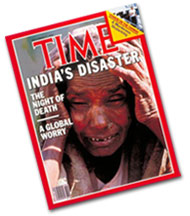
Click show images to see image of Time Magazine cover
Click to Send a Message
Here’s a message from Sanjay Verma, a Bhopal resident-turned-activist whose life and family were irrevocably changed due to the Bhopal disaster in India. 

My name is Sanjay Verma and I grew up in Bhopal, India. I was six months old when an explosion at a chemical factory across from my neighbourhood leaked 40 tons of the potent neurotoxin methyl isocyanate. My sister saved my life by bundling me up and fleeing from our home into the panicked streets of Bhopal. My sister and 13 year-old brother survived, but my parents and five of my siblings died that night.
My sister and I lived in an orphanage for 7 years. Sunil, our eldest brother, took two jobs just to take care of us and keep us with him. Tragically, he suffered terrible mental health issues and, after several attempts at taking his life, he committed suicide in 2006. He was found hanged, wearing a T-shirt with the slogan- 'No More Bhopals'.
I have dedicated my life to fighting for justice for my community, and holding Dow responsible for the Bhopal disaster.
Thanks to you, 50,000 SumOfUs.org members have signed petitions to the London Olympics Organisers denouncing Dow's sponsorship of the 2012 Olympic Games in London.
The London Olympic Organisers are feeling the pressure and have agreed to meet with victims and activists. However, they are still keeping Dow as a sponsor. Today, on the 10,000th day since the Bhopal disaster, I have travelled from India to the UK to tell Lord Coe in person that we cannot stand Dow’s Olympic sponsorship. Will you join me?
Will you send a message to Lord Sebastian Coe at London Olympics and tell him to drop Dow as a sponsor?
After all my family and community went through -- and for the many people who continue to suffer to this day -- I have devoted my life to seeing that Dow answers for the Bhopal disaster and that my home is cleaned up so that innocent people no longer have to suffer.
I need your help to make sure the London Olympic organisers hear our story, and know that we will not stand for Dow's Olympic sponsorship.
Will you send a message to the London Olympic Organisers to tell them my community’s story?
If enough of us tell the London Olympic Organisers that we won't stand for this partnership, we can help show the Olympics the true meaning of the Olympics -- global unity, not backroom deals and corporate sponsorships.
Thanks for helping ensure that those behind the Bhopal disaster pay for the damages wrought, and for helping bring justice to my community,

--Sanjay


**********
FAQ

What happened in Bhopal?
On December 2-3, 1984, as the people of the central Indian town of Bhopal slept, an explosion caused over 40 tons of a deadly toxic gas, methyl isocyanate (MIC), and other gases to escape from the Union Carbide India Limited pesticide plant. The company executives could have warned the public, but instead they chose not to sound the emergency alarm bell in town.
The event occurred in the early hours of the morning of Dec 3rd 1984, at approximately 12:30 a.m. By 2am, most of the MIC had been dispersed over an area of 25 miles (40km), and the first deaths were reported to the police by 3am. By morning, there had been 1,000 reported deaths, some as far as 5 miles (8 km) from the plant. 90,000 patients were seen in local hospitals and clinics within the first 24 hours, and in total, about 200,000 people suffered acute effects of the leak.
The preventable Bhopal disaster has claimed over 20,000 lives, and it is not over yet because members of the community continue to suffer from chronic health problems, cancer and birth defects.
Now, despite loud protests by the Indian Olympic delegation, Dow has signed a controversial sponsorship deal with the Olympics expected to make Dow $1 billion. With Dow counting on that revenue, we have the best chance in years for them to finally assume responsibility and clean up the disaster. We are finally hitting the company where it hurts: its bottom line.
How has Dow responded?
Dow claims that it is not responsible for the 1984 Bhopal gas tragedy in any way. Despite that, they hired the same public relations firm that worked to tell people tobacco didn’t cause cancer, and that Foxconn hired to repair its public image around working conditions in Apple factories in China.
Union Carbide paid $470 million in compensation to existing victims in 1989, amounting to less than $500 per victim whether they were blinded by the gas, developed terminal cancer from exposure, or suffered debilitating birth defects. To date, neither Union Carbide nor Dow has paid to clean up the site, and they have refused to even decommission the factory after the accident.

Why is Dow responsible for the situation?
No one disputes the fact that Dow bought Union Carbide after the disaster occurred. But when Dow purchased Union Carbide, it took on liability for the Bhopal tragedy. It would be terribly convenient for Dow and other massive corporations if the slate was wiped clean when a company was purchased. But Dow didn’t just buy the profit sheet, the shares and the expertise from Union Carbide. They also bought their legacy, the environmental tragedy of Bhopal and the responsibility for it. Dow must ensure that the site is cleaned up and the victims finally get true justice and proper compensation. If a company could escape liability for its malpractices by arranging a merger or takeover, then companies would be able to abuse human rights and damage the environment with impunity.
SumOfUs is a world-wide movement of people like you, working together to hold corporations accountable for their actions and forge a new, sustainable path for our global economy. You can follow us on Twitter, and like us on Facebook

13 April 2012

USDA decision could increase your exposure to this toxic pesticide 12APR12

EVERYONE living in an area where corn is grown should be concerned about this pesticide / herbicide and take the time to send an e mail to the USDA asking them to deny dow chemical's request to allow increased use of 2,4-D (part of the deadly Agent Orange herbicide cocktail). You know this company,  dow/union carbide, they brought us the environmental disaster at Bhopal, India that has killed approximately 20000 people....click the link to the EPA before 27APR12.


Natural Resources Defense Council Activist Alert


Photo

Take Action Now

Facebook Share Twitter Share

Unless we act quickly, a dangerous weed killer linked to cancer and birth defects could become much more widely used in U.S. agriculture. The pesticide is called 2,4-D and it doesn't just taint the crops it's sprayed on: once released, it travels through the air, seeps into the ground and contaminates our drinking water.

We can prevent the rampant overuse of 2,4-D by asking Department of Agriculture officials to reject a profit-minded proposal to sell genetically engineered corn that won't die when sprayed with the poison. But we have just two weeks to convince them. Click here to send a letter urging the USDA to reject Dow's dangerous proposal.

When it enters the human body, 2,4-D causes cell damage and hormonal disruption, which can result in reproductive harm and diseases like lymphoma.

This pesticide is so hazardous that it has been banned in several other countries.

NRDC asked the EPA to protect Americans, but the EPA is refusing to take any action. Without that support, the USDA's decision is even more critical.

If the USDA grants Dow's request, it will mean more farmers around the country will spray much greater amounts of 2,4-D on their fields. If we can show the USDA that the public doesn't support this proposal, we can counter pressure from Dow and make the case for public health over corporate profits. Send a letter today urging the USDA to oppose Dow’s hazardous plan.

Take Action Now

29 March 2012

LONDON OLYMPICS: PARTNER WITH A SPONSOR THE WHOLE WORLD CAN CELEBRATE 29MAR12

IT is sad the main focus of the International Olympic Committee is profits and not global unity and sportsmanship. I thought the IOC reached a new low when they decided to hold the last Summer Olympics in the prc because the policies of that countries government do not promote global unity, but now the IOC is showing just how much corporate profits control their decisions. dow chemical / union carbide is guilty of environmental crimes against humanity in Bhopal, India and should not be permitted to profit from an event promoting global unity, fairness and sportsmanship while continuing to neglect their responsibilities to the people of Bhopal and continuing to poison people and the environment, especially in the Third World. Please sign the petition to the London 2012 Olympic Organizing Committee asking they to ban dow chemical as a sponsor of the 2012 Olympic Games.

London Olympics: Drop Dow as an official sponsor until it cleans up the Bhopal disaster site 
Click show images to see image of Time Magazine cover Click to Add Your Name

On December 2-3, 1984, as the people of the central Indian town of Bhopal slept, over 40 tons of a deadly toxic gas -- methyl isocyanate -- leaked from the pesticide plant owned by Dow Chemical subsidiary Union Carbide India Limited. Company executives could have warned the public, but instead chose not to sound the emergency alarm bell in town, sending confused parents and children fleeing directly into the poison cloud.
The Bhopal disaster -- the worst industrial disaster in history -- has so far claimed over 20,000 lives. And the death toll is still rising, 27 years later, because Dow Chemical -- the company responsible -- has never cleaned it up. To this day, chronic health problems, cancer, and birth defects plague over 150,000 people in this impoverished community.
Now, despite loud protests by the Indian Olympic delegation, Dow has signed a controversial sponsorship deal with the Olympics expected to make Dow $1 billion. With Dow counting on that revenue, we have the best chance in years for it to finally assume responsibility and clean up the disaster. We are finally hitting the company where it hurts: its bottom line.
Sign our urgent petition to the London Organizing Committee to drop Dow Chemical as an Olympic sponsor.
In many ways, Dow is the poster child for corporate wrong-doing. Its executives are putting their profits ahead of ethical and legal responsibilities to the suffering Bhopal community. If this disaster happened in the United States or another developed country, Dow couldn’t just have abandoned thousands to die and suffer crippling diseases -- but because the victims are poor and Indian, Dow has been able to ignore their plight.
This week, London 2012 organisers are gathering with the International Olympic Committee president, Jacques Rogge, and the chair of the IOC coordination commission, Denis Oswald. On Friday, along with our friends at Change.org, we will deliver over 34,000 petitions to the London Olympic organizers. This is a critical opportunity to speak out for the victims of Bhopal on the world's biggest stage.
Tell to London Organizing Committee to drop Dow Chemical as an Olympic sponsor before their critical public meeting on Friday.
With Dow aiming to make millions off the Olympics, we have a rare opportunity to put real pressure on the company to do the right thing -- clean up the mess in Bhopal that’s still killing people, and fully compensate the disaster’s victims -- and punish it if it won’t.
Dow’s behavior towards the people of Bhopal is one of the most monstrous examples of corporate irresponsibility. If we allow Dow to profit from the Olympics of all events, the worst corporations in the world will see that they can get away with anything. But if we act together, SumOfUs members can send a powerful message to those same corporations that consumers around the world will stand by their victims until they see justice.
Thanks,
--Emma, Kaytee and the rest of us at SumOfUs
****
Background Information
What happened in Bhopal?
On December 2-3, 1984, as the people of the central Indian town of Bhopal slept, an explosion caused over 40 tons of a deadly toxic gas, methyl isocyanate (MIC), and other gases from the Union Carbide India Limited pesticide plant. The company executives could have warned the public, but instead they chose not to sound the emergency alarm bell in town.
The event occurred in the early hours of the morning of Dec 3rd 1984, at approximately 12:30 a.m. By 2am, most of the MIC had been dispersed over an area of 25 miles, and the first deaths were reported to the police by 3am. By morning, there had been 1,000 reported deaths, some as far as 5 miles from the plant. 90,000 patients were seen in local hospitals and clinics within the first 24 hours, and in total, about 200,000 people suffered acute effects of the leak.

The preventable Bhopal disaster has claimed over 20,000 lives, and it is not over yet because members of the community continue to suffer from chronic health problems, cancer and birth defects.
How has Dow responded?
Dow claims that it is not responsible for the 1984 Bhopal gas tragedy in any way. Despite that, they hired the same public relations firm that worked to tell people tobacco didn’t cause cancer, and helped polish the Argentine junta's image to the world as it was disappearing thousands.
Union Carbide paid $470 million in compensation to existing victims in 1989, amounting to less than $500 per victim (and sometimes as little as $150 per victim) whether they were blinded by the gas, developed terminal cancer from exposure, or suffered debilitating birth defects. To date, neither Union Carbide nor Dow has paid to clean up the site, and they have refused to even decommission the factory after the accident.
Why is Dow responsible for the situation?
No one disputes the fact that Dow bought Union Carbide after the disaster occurred. But when Dow purchased Union Carbide, it took on liability for the Bhopal tragedy.
It would be terribly convenient for Dow and other massive corporations if the slate was wiped clean when a company was purchased. But Dow didn’t just buy the profit sheet, the shares and the expertise from Union Carbide. They also bought their legacy, the environmental tragedy of Bhopal and the responsibility for it.
Dow must ensure that the site is cleaned up and the victims finally get true justice and proper compensation. If a company could escape liability for its malpractices by arranging a merger or takeover, then companies would be able to abuse human rights and damage the environment with impunity.
SumOfUs is a world-wide movement of people like you, working together to hold corporations accountable for their actions and forge a new, sustainable path for our global economy. You can follow us on Twitter, and like us on Facebook.