NORTON META TAG

Showing posts with label #backpfeifengesicht ted cruz. Show all posts

14 November 2017

Could Ted Cruz measure have prevented the Texas church shooting? Not likely. 10NOV17


sen ted cruz r TX lies again, this time to in a vile attempt to place responsibility for the mass shooting in Sutherland Springs, TX on Senate Democrats. While it is true too many Democratic politicians are afraid of the nra and will not stand up to them in the US Congress and state legislatures cruz deliberately lies, deceives and manipulates the facts of this tragedy to make it seem like his legislation would have stopped it. Another example of the Christianity cruz practices, the one that allows lies and bearing false witness to make yourself look good and bring you political power. No wonder his face causes backpfeifengesicht. From PolitiFact.....
Could Ted Cruz measure have prevented the Texas church shooting? Not likely.

Reacting to the church shootings in Sutherland Springs, Texas, Sen. Ted Cruz said there could have been laws on the books to prevent what happened, had his opponents in Congress not defeated his proposal a few years ago.
"The Democrats filibustered the legislation that would’ve resulted in this shooter being in federal prison instead of murdering those innocents in that Texas church," Cruz said on Fox News on Nov. 6.
Cruz, a Republican, is talking about a failed amendment he co-sponsored to curtail an expansion of background checks and increase prosecution of people who lied about their criminal histories to obtain firearms.
He has a point that the Democrats didn’t back it, but he fails to mention that every amendment on the 2013 gun control bill faced the same hurdle, and a Democratic one also fell short.
While Democrats defeated his proposal, experts said it would not have made the crucial difference in this massacre for a couple of reasons.
Guidelines were already in the works
The Texas church shooter was discharged from the Air Force for bad conduct after he was court-martialed in 2012 for assaulting his wife and fracturing his stepson's skull. Federal law prohibited him from buying or possessing firearms after this conviction, but he got past the background check system because the Air Force failed to enter the shooter’s felony into the background check database.
So when he purchased two guns at the San Antonio gun shop Academy Sports + Outdoors, both sales were approved by the National Instant Criminal Background Check System.
When we asked Cruz’s office for details, they softened what Cruz originally said, saying his legislation would have "increased the chances of preventing the Air Force error that led to the failure to submit the relevant information to NICS."
The amendment pushed for clearer guidance on submissions of federal records to the National Instant Criminal Background Check System (mandated by NICS Improvement Amendments Act of 2007) and required that federal agencies submit plans for making the information available.
"The only possible contribution may have been that the reporting requirement to the AG might have led the Defense Department and the Air Force to realize that the procedures they had in place needed enhancement," said Geoffrey Corn, a law professor at South Texas College of Law Houston.
But the language was a near replica of President Barack Obama’s Jan. 16, 2013 memorandum to the Justice Department, which officials were already trying to implement.
Molly Moran, who served as the Principal Deputy Associate Attorney General from 2014 to 2016, said she and her colleagues at the Justice Department worked from 2013 until the end of Obama’s second term in implementing the memo.
It made no difference in the Texas church shooting. The Air Force needed to submit the shooter’s 2012 court-martial, and it failed to do so.
Scaling back penalties for failure to share
Cruz said on Fox that a lack of reporting of federal and state records to the background check system was a problem. But his legislation did not seem to make this easier. The amendment eliminated sanctions for states that failed to submit records and lowered the cap on grant money to help states submit them from $100 million to $20 million.
The original bill from then-Senate Majority Leader Harry Reid, D-Nev., would have expanded background checks on purchases from only federally licensed gun dealers to all transfers, even private ones among family members, with few exceptions. But the Grassley-Cruz amendment chucked the expansion of background checks and even allowed for the interstate sale and transportation of firearms.
"If anything, the only way this would have affected the Texas shooting would be to make it easier for the shooter to attack a church in a neighboring state instead," said Gregory Koger, a political science professor at the University of Miami.
Prosecution of lying on background checks
Cruz also summoned a familiar talking point against gun regulation that few background check lies (where felons say they are not felons) are prosecuted. His amendment created a task force to increase these prosecutions, but it did not mandate that the Justice Department prosecute all of them.
Enhanced prosecution efforts still would not have put the shooter behind bars. Without the court-martial in the database, the shooter would still have passed the background check after marking that he was not a felon.
"He could have been prosecuted had his lie been known by prosecutors, but they had no reason to investigate this until after the shooting," said Adam Winkler, a law professor at University of California, Los Angeles.
The filibuster aspect
Reid set a 60-vote threshold on all amendments to his Safe Communities, Safe Schools Act of 2013 to prevent a situation in which the amendment passed by a bare majority and then was filibustered — by the Republican minority.
Cruz’s amendment failed 52-48, with nine Democrats voting for it and two Republicans voting against (Mark Kirk of Illinois and Mike Lee of Utah). So did the bipartisan Toomey-Manchin background check amendment favored by Democrats, which got 54 votes.
Experts said it was fair to call this a filibuster, though Reid attained the Senate's unanimous consent for the 60-vote threshold.
"The notion that the Democrats are responsible for the failure of this proposal ignores the fact that the GOP was filibustering the underlying bill, which had all the same provisions except the state-to-state expansion of gun rights and a requirement to expand background checks," Koger said.
Our ruling
Cruz said, "The Democrats filibustered the legislation that would’ve resulted in this shooter being in federal prison."
The amendment Cruz cosponsored, which was defeated largely by Democrats after failing to reach a 60-vote threshold, strengthened efforts to prosecute people who lied about their criminal histories to obtain firearms. But the shooter in this case wouldn’t have showed up as having lied because of the Air Force’s failure to report his felony.
The Cruz proposal also aimed to facilitate reporting to the instant background check system with guidelines and deadlines for federal agencies, including the armed services. While similar action by the Obama Justice Department around the same time didn’t help, Cruz’s clarifications becoming law may have. But it’s impossible to say with any certainty.
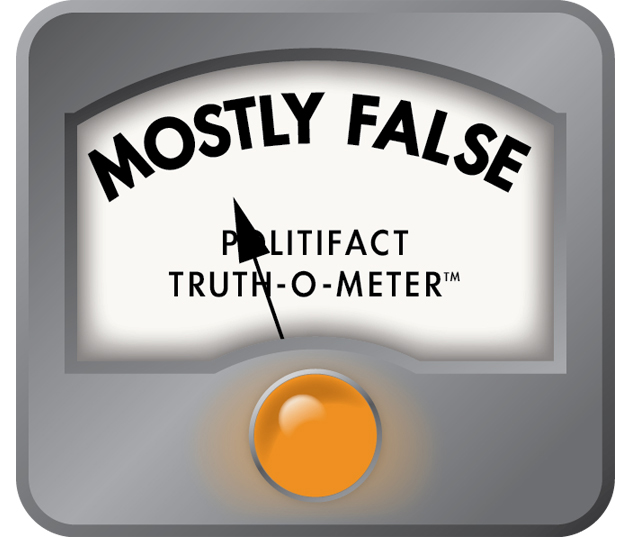
We rate this statement Mostly False.
Share The Facts
Ted Cruz
U.S. senator from Texas

"The Democrats filibustered the legislation that would’ve resulted in this shooter being in federal prison instead of murdering those innocents in that Texas church."

About this statement:

Published: Friday, November 10th, 2017 at 12:00 p.m.
Researched by: Manuela Tobias
Edited by: Katie Sanders
Subjects: Guns

Sources:

Email interview with Phil Novack, Ted Cruz spokesman, Nov. 7, 2017
The Washington Post, Ted Cruz’s claim on gun background check prosecutions, April 12, 2013
The Washington Post, The gun amendments need 60 votes to pass but why?, April 17, 2013
Plain blog about politics, Manchin-Toomey and the Filibuster, April 17, 2013
Congress.gov, Safe Communities, Safe Schools Act of 2013, March 22, 2013
Congress.gov, Manchin-Toomey amendment, April 11, 2013
Senate.gov, Manchin-Toomey roll call vote, April 17, 2013
Senate.gov, Grassley-Cruz roll call vote, April 17, 2013
Phone interview with Molly Moran, former Principal Deputy Associate Attorney General, Acting Assistant Attorney General for the Civil Rights Division and Counselor and Deputy Chief of Staff to Attorney General Eric Holder, Nov. 8, 2017
Email interview with Adam Winkler, law professor at University of California, Los Angeles, Nov. 8, 2017
Email interview with Phil Cook, public policy and sociology professor at Duke University, Nov. 7, 2017
Email interview with Geoffrey Corn, law professor at South Texas College of Law Houston, Nov. 8, 2017
Email interview with Jonathan Bernstein, political scientist and Bloomberg View columnist, Nov. 8, 2017
Email interview with Gregory Koger, professor of political science at the University of Miami, Nov. 8, 2017

15 April 2016

The Time Ted Cruz Defended a Ban on Dildos & "Ted Cruz thinks people don't have a right to "stimulate their genitals." I was his college roommate. This would be a new belief of his." 13APR16

Dildos are on display at the Venus International Erotic Trade Fair in Berlin on September 29, 2011. Organisers expect 30,000 consumers to visit the fair running until October 2, 2011.
DILDOS and ted cruz. I won't say any more about it, just check this out from +Mother Jones and this tweet from his old college roomate .....

The Time Ted Cruz Defended a Ban on Dildos

—By 

| Wed Apr. 13, 2016 6:00 AM EDT

His legal team argued there was no right "to stimulate one's genitals."

Ted Cruz thinks people don't have a right to "stimulate their genitals." I was his college roommate. This would be a new belief of his.
In one chapter of his campaign book, A Time for Truth, Sen. Ted Cruz proudly chronicles his days as a Texas solicitor general, a post he held from 2003 to 2008. Bolstering his conservative cred, the Republican presidential candidate notes that during his stint as the state's chief lawyer, in front of the Supreme Court and federal and state appellate courts he defended the inclusion of "under God" in the "Pledge of Allegiance," the display of the Ten Commandments on the grounds of the state Capitol, a congressional redistricting plan that assisted Republicans, a restrictive voter identification law, and a ban on late-term abortions. He also described cases in which he championed gun rights and defended the conviction of a Mexican citizen who raped and murdered two teenage girls in a case challenged by the World Court. Yet one case he does not mention is the time he helped defend a law criminalizing the sale of dildos.
The case was actually an important battle concerning privacy and free-speech rights. In 2004, companies that owned Austin stores selling sex toys and a retail distributor of such products challenged a Texas law outlawing the sale and promotion of supposedly obscene devices. Under the law, a person who violated the statute could go to jail for up to two years. At the time, only three states—Mississippi, Alabama, and Virginia—had similar laws. (The previous year, a Texas mother who was a sales rep for Passion Parties was arrested by two undercover cops for selling vibrators and other sex-related goods at a gathering akin to a Tupperware party for sex toys. No doubt, this had worried businesses peddling such wares.) The plaintiffs in the sex device case contended the state law violated the right to privacy under the 14th Amendment. They argued that many people in Texas used sexual devices as an aspect of their sexual experiences. They claimed that in some instances one partner in a couple might be physically unable to engage in intercourse or have a contagious disease (such as HIV), and that in these cases such devices could allow a couple to engage in safe sex.
But a federal judge sent them packing, ruling that selling sex toys was not protected by the Constitution. The plaintiffs appealed, and Cruz's solicitor general office had the task of preserving the law.
In 2007, Cruz's legal team, working on behalf of then-Attorney General Greg Abbott (who now is the governor), filed a 76-page brief calling on the US Court of Appeals for the 5th Circuit to uphold the lower court's decision and permit the law to stand. The filing noted, "The Texas Penal Code prohibits the advertisement and sale of dildos, artificial vaginas, and other obscene devices" but does not "forbid the private use of such devices." The plaintiffs had argued that this case was similar toLawrence v. Texas, the landmark 2003 Supreme Court decision that struck down Texas' law against sodomy. But Cruz's office countered that Lawrence "focused on interpersonal relationships and the privacy of the home" and that the law being challenged did not block the "private use of obscene devices." Cruz's legal team asserted that "obscene devices do not implicate any liberty interest." And its brief added that "any alleged right associated with obscene devices" is not "deeply rooted in the Nation's history and traditions." In other words, Texans were free to use sex toys at home, but they did not have the right to buy them.
The brief insisted that Texas, in order to protect "public morals," had  "police-power interests" in "discouraging prurient interests in sexual gratification, combating the commercial sale of sex, and protecting minors." There was a  "government" interest, it maintained, in "discouraging…autonomous sex." The brief compared the use of sex toys to "hiring a willing prostitute or engaging in consensual bigamy," and it equated advertising these products with the commercial promotion of prostitution. In perhaps the most noticeable line of the brief, Cruz's office declared, "There is no substantive-due-process right to stimulate one's genitals for non-medical purposes unrelated to procreation or outside of an interpersonal relationship." That is, the pursuit of such happiness had no constitutional standing. And the brief argued there was no "right to promote dildos, vibrators, and other obscene devices." The plaintiffs, it noted, were "free to engage in unfettered noncommercial speech touting the uses of obscene devices," but not speech designed to generate the sale of these items.
The brief by Cruz's office compared the use of sex toys to "hiring a willing prostitute or engaging in consensual bigamy," and it equated advertising these products with the commercial promotion of prostitution.
In a 2-1 decision issued in February 2008, the court of appeals told Cruz's office to take a hike. The court, citing Lawrence, pointed to the "right to be free from governmental intrusion regarding 'the most private human contact, sexual behavior.'" The panel added, "An individual who wants to legally use a safe sexual device during private intimate moments alone or with another is unable to legally purchase a device in Texas, which heavily burdens a constitutional right." It rejected the argument from Cruz's team that the government had a legitimate role to play in "discouraging prurient interests in autonomous sex and the pursuit of sexual gratification unrelated to procreation." No, government officials could not claim as part of their job duties the obligation to reduce masturbation or nonprocreative sexual activity. And the two judges in the majority slapped aside the solicitor general's attempt to link dildos to prostitution: "The sale of a device that an individual may choose to use during intimate conduct with a partner in the home is not the 'sale of sex' (prostitution)."
Summing up, the judges declared, "The case is not about public sex. It is not about controlling commerce in sex. It is about controlling what people do in the privacy of their own homes because the State is morally opposed to a certain type of consensual private intimate conduct. This is an insufficient justification for the statute after Lawrence...Whatever one might think or believe about the use of these devices, government interference with their personal and private use violates the Constitution."
The appeals court had rejected the arguments from Cruz's office and said no to Big Government policing the morals of citizens. But Abbott and Cruz wouldn't give up. Of course, they might have initially felt obligated to mount a defense of this state law. But after it had been shot down, they pressed ahead, relying on the same puritanical and excessive arguments to justify government intrusion. Abbott and Cruz quickly filed a brief asking the full court of appeals to hear the case, claiming the three-judge panel had extended the scope of Lawrence too far. This brief suggested that if the decision stood, some people would argue that "engaging in consensual adult incest or bigamy" ought to be legal because it could "enhance their sexual experiences." And Cruz's office filed another brief noting it was considering taking this case to the Supreme Court.
Cruz and Abbott lost the motion for a hearing from the full court of appeals. And the state soon dropped the case, opting not to appeal to the Supreme Court. This meant that the government could no longer outlaw the sale of dildos, vibrators, and other sex-related devices in the Lone Star State—and in Mississippi and Louisiana, the two other states within this appeals court's jurisdiction.
The day after the appeals court wiped out the Texas law, Cruz forwarded an email to the lawyer in his office who had overseen the briefs in the case. It included a blog post from legal expert Eugene Volokh headlined, "Dildoes Going to the Supreme Court?" and a sympathetic note from William Thro, then the solicitor general of Virginia. "Having had the experience of answering questions about oral sex from a female State Supreme Court Justice who is also a grandmother," Thro wrote Cruz, "you have my sympathy. :-) Seriously, if you do go for cert [with the Supreme Court] and if we can help, let me know." But for whatever reason—Cruz certainly doesn't explain in his book—Abbott and he did not take the dildo ban to the Supreme Court. And Cruz, who was already thinking about running for elected office, missed out on the chance to gain national attention as an advocate for the just-say-no-to-vibrators cause. Imagine how his political career might have been affected had Cruz become the public face for the anti-dildos movement.

DAVID CORN

Washington Bureau Chief
David Corn is Mother Jones' Washington bureau chief. For more of his stories, click here. He's also on Twitter and Facebook.


01 April 2016

#backpfeifengesicht ted cruz, Tatiana Maslany Reveals The German Word For Ted Cruz & Is Ted Cruz Really an Awful, Terrible Jerk? & Why Ted Cruz’s Facial Expression Makes Me Uneasy 1APR&25&1JAN16


ONE of the most hated people in D.C., especially by republicans! dominionist reconstructionist ted cruz

Tatiana Maslany Reveals The German Word For Ted Cruz

and after the pictures below check out the articles from +Mother Jones and +Psychology Today .....


Well, terms like "pompous asshole" and "backpfeifengesicht" tend to come up.

| Mon Jan. 25, 2016 7:00 AM EST
With the bromance between Ted Cruz and Donald Trump over, the mogul turned GOP front-runner has begun trash talking the senator from Texas. "He's a nasty guy," Trump recently huffed. "Nobody likes him. Nobody in Congress likes him. Nobody likes him anywhere once they get to know him." For members of the politerati, this was no revelation. As Cruz has quickly climbed the political ladder, he has left a long line of associates who complain, without much prompting, that he is an insufferable schmuck.
A prominent aide to George W. Bush's 2000 campaign could barely contain himself when we asked him to discuss Cruz, who worked in the campaign's policy shop. This person described Cruz as hyper-arrogant and widely despised, and he emphasized—over and over—that the pervasive dislike of Cruz within the Bush ranks had nothing to do with ideology. (Cruz, he noted, never objected to Bush's call for compassionate conservatism, immigration reform, and national education standards, and no one on the campaign regarded him as an ideologue.) The problem was simple: his personality.
"That's exactly what he was: a big asshole," says a campaign veteran who worked with Cruz.
"Ted thought he was an expert on everything," says this campaign veteran, who asked not to be named. "He was a smart and talented guy, but completely taken with himself and his own ideas. He would offer up opinions on everything, even matters outside his portfolio. He was a policy guy, but he would push his ideas on campaign strategy. He would send memos on everything to everyone. He would come to meetings where he wasn't invited—and wasn't wanted." In fact, this Bush alum recalls, "the quickest way for a meeting to end would be for Ted to come in. People would want out of that meeting. People wouldn't go to a meeting if they knew he would be there. It was his inability to be part of the team. That's exactly what he was: a big asshole."
The Bush vet goes on: "I don't know anyone who had a decent relationship with Cruz." And when Bush became president, his top campaign aides agreed Cruz should not be offered a job in the White House. "No one wanted to work with him," this source remembers. "George W. Bush couldn't stand the guy." This person adds, "It's a real quandary for Bush campaign people: Trump versus Cruz, who to vote for? And it would be a big quandary even if it's Cruz versus Hillary Clinton. That's how much they cannot stand him."
It may be easy for someone to lob anonymous shots at Cruz. But there are plenty of others, including prominent Republicans, who have not been shy about sharing their feelings about Cruz on the record. Here is a quick guide to Cruz's loudest detractors:

Bob Dole

Fighting words: The 1996 Republican presidential nominee and former senator from Kansas told the New York Times last week that Cruz would be an ineffective president because "nobody likes him." He explained: "He doesn't have any friends in Congress. He called the leader of the Republicans [Mitch McConnell] a liar on the Senate floor. If you want to call somebody a liar in the Senate, you go to their office—you don't go on the Senate floor and make it public."
The beef: Last fall, Cruz mocked the failed candidacies of Dole, Mitt Romney, and John McCain, citing their efforts as evidence of the electoral impotence of mainline Republicans. But the feud with Dole began in 2014, when Cruz led a last-minute push to defeat the UN Treaty on the Rights of Persons With Disabilities. He claimed the accord threatened American sovereignty. Dole, who suffered a disabling injury while serving in World War II, had come to the Senate floor in his wheelchair to lobby for passage of the treaty.
Bob Dole likes every GOP candidate in the field—except for the one he whispers at the end of this video:


Sen. John McCain

Fighting words: McCain called Cruz, Sen. Rand Paul, and Rep. Justin Amash "wacko birds" in 2013. Last spring, McCain derided Cruz after Cruz boasted he had been leaning on McCain to loosen restrictions regarding guns on military bases. "It came as a complete surprise to me that he had been pressing me; maybe it was some medium that I'm not familiar with," McCain told Politico. "Maybe it was through, you know, hand telegraph; maybe sign language. Ask him how he communicated with me because I'd be very interested." In January, McCain suggested that Cruz might not be eligible for the presidency because he was born in Canada. "He fucking hates Cruz," a McCain adviser told GQ. "He's just offended by his style."
The beef: McCain considered Cruz's treatment of Dole unforgivable. "It was the most embarrassing day in my time in the Senate, to force Bob Dole to watch that," he told the New Yorker. And he certainly holds no warm feelings for Cruz, who once said he was "embarrassed" to have supported McCain in 2008. But McCain's hatred of Cruz is not just personal. It has a policy component: The two have clashed on drones, NSA data collection, and the nomination of McCain's friend Chuck Hagel for secretary of defense.

George W. Bush

Fighting words: "I just don't like the guy," the former president said in October.
The beef: Cruz worked as a policy adviser for Bush's 2000 campaign. But while most of Cruz's colleagues on the campaign got White House jobs, Cruz ended up at the Federal Trade Commission—an indication he had alienated his campaign comrades. Explaining W's dislike of Cruz, a Jeb Bush donor told Politico that "he sort of looks at this like Cruz is doing it all for his own personal gain, and that's juxtaposed against a family that's been all about public service and doing it for the right reasons. He's frustrated to have watched Cruz basically hijack the Republican Party of Texas and the Republican Party in Washington." Bush consigliere Karl Rovetold Fox News that Dubya was particularly upset that Cruz had questioned Bush's nomination of Chief Justice John Roberts—whom Cruz himself had once praised.

John Boehner

Fighting words: The former speaker of House has called Cruz "that jackass" and a "false prophet."
The beef: Where to start? Cruz has served as a cheerleader for the House Freedom Caucus, the band of arch-conservatives who made Boehner's job all but impossible. He trod so heavily on Boehner's turf that he earned the nickname "Speaker Cruz." Cruz pushed for a government shutdown over defunding Planned Parenthood, and then he accused Boehner of selling out conservatives to cut a deal with Nancy Pelosi. When Boehner resigned, Cruz took a victory lap.

Rep. Peter King

Fighting words: When CNN's Wolf Blitzer asked the Long Island Republican if he would support Cruz as the nominee, King replied, "I hope that day never comes; I will jump off that bridge when we come to it." He has called Cruz a "carnival barker," a "counterfeit" with "no qualifications" who appeals "to the lowest common denominator," and "just a guy with a big mouth and no results."
The beef: King was one of the House Republicans most upset with Cruz's push for a government shutdown in 2013, which he considered disastrous for the party. "If you come up with a strategy that's going to shutdown the government of the United States, and you have no way of winning, you're either a fraud or you're totally incompetent," King told CNN.

Sen. Lindsey Graham

Fighting words: "He is an opportunist, he's a libertarian when it is hot," the senator from South Carolina told RealClearPolitics, adding that Cruz "has done more to allow ISIL to gain a foothold in Syria than any senator other than Rand Paul." Last week, Graham said picking between Trump and Cruz was like having to choose "death by being shot or poisoning," and he said the party would be better off if it picked "somebody out of the phone book."
The beef: Graham thinks Cruz has blocked national security measures for personal gain, and he rebuked the Texan for suggesting Hagel had received money from the North Korean government.

Everyone on the 2000 campaign

Fighting words: (See above.)
The beef: Per GQ:
He was infamous for firing off mundane work e-mails in the middle of the night—it happened so often that some in the Bush campaign suspected him of writing them ahead of time and programming his computer to send while he was asleep. He was also known for dispatching regular updates on his accomplishments that one recipient likened to "the cards people send about their families at Christmas, except Ted's were only about him and were more frequent."

Supreme Court clerks

Fighting words: Former clerks who had worked at the Supreme Court when Cruz was clerking for Chief Justice William Rehnquist dissed his "dime store novel" write-ups of death penalty cases.
The beef: The New York Times reported that Cruz's fellow clerks believed he was "obsessed" with capital punishment and noted that clerks took offense at the airy tone with which he discussed executions when the court received last-minute appeals for a stay.

Harvard Law School classmates

Fighting words: "A pompous asshole."
The beef: GQ reported that Cruz started a study group during his first year in Cambridge, but he announced that "he didn't want anybody from 'minor Ivies' like Penn or Brown." In an interview with the Boston Globe, another student recalled what happened when she agreed to carpool with Cruz: "We hadn't left Manhattan before he asked my IQ."

His Princeton roommate

Fighting words: "I would rather have anybody else be the president of the United States," screenwriter Craig Mazin told the Daily Beast in 2013. "Anyone. I would rather pick somebody from the phone book." On Twitter, Mazin—who has called Cruz "a nightmare of a human being"—recalled that when he was a freshman sharing a dorm room with Cruz, he would get invited to parties hosted by seniors because the upperclassmen pitied him. Cruz, he notes, "was that widely loathed. It's his superpower."
Getting emails blaming me for not smothering Ted Cruz in his sleep in 1988. What kind of monster do you think I am? A really prescient one?

The beef: It's personal. "I have plenty of problems with his politics, but truthfully his personality is so awful that 99 percent of why I hate him is just his personality," he said on the Scriptnotes podcast. According to Mazin, Cruz would hit snooze on his alarm clock over and over again, and he refused to stop doing this when Mazin asked. Also, Mazin says, Cruz was just weird. "I remember very specifically that he had a book in Spanish and the title was Was Karl Marx a Satanist?," Mazin told theDaily Beast. "And I thought, who is this person?"

Everyone else at Princeton

Fighting words: Per the Daily Beast, "Several fellow classmates who asked that their names not be used described the young Cruz with words like 'abrasive,' 'intense,' 'strident,' 'crank,' and 'arrogant.' Four independently offered the word 'creepy.'"
People might think Craig is exaggerating. He's not. I met Ted freshman week and loathed him within the hour.

The beef: It's tough to pinpoint any one cause, but Cruz made female students uncomfortable by frequently walking to their end of the floor in his freshman dorm, wearing only a paisley bathrobe. When he announced his bid for president of the school's debate society, the other members had a secret meeting to pick an anyone-but-Cruz candidate. The eventual winner later acknowledged that "my one qualification for the office was that I was not Ted Cruz."

Ted Cruz

Fighting words: "If you want someone to grab a beer with, I may not be that guy," Cruz said at a Republican debate in October.
The beef: Being well liked is not everything. At least that seemed to be the point Cruz was making about himself. He added, "But if you want someone to drive you home, I will get the job done and I will get you home."

Source: Gage Skidmore via Flickr (CC BY-SA 2.0)
It’s hard to look at Ted Cruz’s face. He’s said to be a brilliant orator with a sharp legal mind. But his expression unsettles me. I understand that my reaction is visceral and automatic, but as a neurologist it is my business to notice things out of the ordinary and probe them. The Senator’s atypical expressions leave me uneasy.
It's remarkable how many colleagues and former associates say that they "loathe" Cruz. A Bush alumnus told The New York Times' Frank Bruni, “Why do people take such an instant dislike to Ted Cruz? It just saves time.” Former Senate Majority leader Bob Dole says, "Nobody likes him," while Rep. Peter King sees "malice" behind his visage. According to The Washington Post, screenwriter Craig Mazin, Cruz's former Princeton roommate, calls him a "huge asshole," and "creepy." He's Tweeted, "Getting emails blaming me for not smothering Ted Cruz in his sleep in 1988." The distaste for Cruz extends well beyond the US: Germans say Backpfeifengesicht, meaning a face in need of a good punch.
Humans learn to read faces from the day they are born. Infants readily respond to smiles. They imitate others’ facial expressions and gestures. During the first months of life, brainactivity readings trace the development of their body maps. These brain maps allow an infant to recognized similarities between self and other—the foundation on which all socialcognition rests, especially trust.
Our stone–age ancestors learned to read faces and rapidly tell friend from foe. While we live in a far different environment, we still possess the same stone–age brain as our distant relatives. Like them, we judge instantly. Automatically and more quickly than conscious reflection could ever manage, we weigh whether we like a new face or distrust the person behind it. Our social circuits, which are almost entirely emotional, tell us whether to trust a person or not. Given a million years of practice, our brains are good at this.
I didn't care about Senator Cruz one way or the other until I watched the first Republican debate. I noticed that his countenance doesn’t move the way I typically expect faces to move. (Neurologists scrutinize thousands of faces as part of the standard exam, so doing it becomes automatic.) Human faces can’t help but broadcast what we feel, what we may be thinking, and even what we may intend. Many animals likewise broadcast what’s happening in their heads. Charles Darwin illustrated this at length in The Expression of the Emotions in Man and Animals.
Hulto Archives/Getty Images
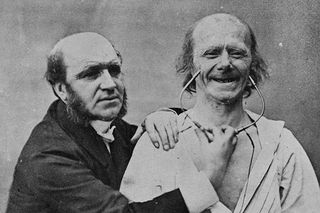
French neurologist Duchenne electrically evoking a normal, emotionally based smile.
Source: Hulton Archives/Getty Images
Reading faces is such a fundamental skill that 54 facial muscles orchestrate its endless nuances. Others read these gestures like a book just as we read them. Only a minority of these many facial muscles are under voluntary control, which is one reason it is hard to maintain a poker face or counterfeit a smile.
I have rarely, if ever, seen a conventional smile from Senator Cruz. In a natural smile the corners of the mouth go up; these muscles we can control voluntarily as well. But muscles circling the eyes are strictly under involuntary control: they make the eyes narrow, forming crow’s feet at the outside corners. Even the Mona Lisa’s smile shows this. The eyes give away one’s game and help us tell forged from genuine smiles. Grandma may have told you to put on a happy face, but you can’t if it isn’t heartfelt.
No matter what the emotional coloring of Senator Cruz’s outward rhetoric is, his mouth typically tightens into the same straight line. If it deviates from this, then the corners of his mouth bend down, not upwards. The outside of his eyebrows bend down, too, when he emotes, something so atypical that it disturbs me. Typically a person’s eyebrows arch up, as does the corrugator muscle that furrow the forehead. What is such a downturned face signaling?
Downturned expressions usually signal disagreeableness or disgust. But I honestly don’t know because such an expression is rare in the context of public presentations meant to win people over. Cruz may well be unaware that the message of his body language is incongruent with his words.
And then there is that open “O” of the Senator’s mouth that photos capture over and over. I don’t know what to make of it. But he makes it when he overtly emotes—he shows us as well as tells us that he is determined, irritated, or above it all—whereas speakers who are angry, indignant, or rhetorically displeased push their mouth forward in a pout. He doesn’t. Google “Ted Cruz smiling,” and judge for yourself. For the record I am not a Democrat. I’m at a loss to verbalize what unsettles me so when I watch the freshman senator. But it leaves me cold.