

BUCKNACKT'S SORDID TAWDRY BLOG We should not be a journey to the grave with the intention of arriving safely in an attractive & well preserved body, but rather to skid in sideways, chocolate, bier or wein in hand, body thoroughly used up, totally worn out and screaming "WHOO-HOO, WHAT A RIDE!!!!!!"
Showing posts with label rich people's tax breaks. Show all posts
Showing posts with label rich people's tax breaks. Show all posts
11 March 2018

17 March 2017
HEALTHCARE STAKEOUT AT YOUR REPRESENTATIVE'S OFFICE 17MAR17

ACCEPT RESPONSIBILITY for the future of health care in America, join the opposition to drumpf/trumpryancare and make sure it is never passed. If you can't join one of the stakeout's at representative's offices around the country take the time to e mail your representative here demanding they vote against this plan. If they support this plan tell them they better make sure they, their families, staffs and all members of the White House administration and staffs are also included in drumpf/trumpryancare, because if it is good enough for the American people it is good enough for them too. CLICK HERE to find a stakeout near you ( I will be at rep barbara comstock's office in Sterling, VA ). From the PCCC / Progressive Change Campaign Committee and MoveOn.....

The Republican healthcare plan will result in over 24 million Americans losing their health insurance.
We are partnering with MoveOn and other progressive allies to pressure the 23 House Republicans whose district Hillary Clinton won in 2016 to vocally oppose this bill -- so we can derail it and focus on real solutions like the public option and Medicare for All. We're also pressuring 9 key Republican senators.
Can you join a rolling stakeout event at Rep. Comstock's office this Thursday and Friday -- giving an hour of time between 7:30 a.m. and 7:30 p.m. to ensure Comstock and her staff see visible resistance from constituents all day?
YES -- I'll sign up! Sounds great.
If you have them, bring medical-themed props (slings, crutches, scrubs, stethoscopes), this sign, and your stories, your anger, and your hope!
Thanks for being a bold progressive.
-- Keith Rouda, PCCC organizer

Want to support the Warren wing? Senator Elizabeth Warren says, "When PCCC members donate millions in small-dollar donations and make millions of phone calls for progressive candidates, leaders in Washington, they take notice." Chip in $3 here.
Progressive stickers, T-shirts, and more!
store.boldprogressives.org CONGRESSIONAL STAKEOUTS TO SAVE HEALTH CARE
16 March 2017
Weekend Update on Trumpcare - SNL
EXPOSING drumpf/trumpcare for the fraud it is......
Weekend Update on Trumpcare - SNL
Weekend Update on Trumpcare - SNL
Published on Mar 12, 2017
Weekend Update anchors Colin Jost and Michael Che tackle the week's biggest news, including President Trump introducing the American Health Care Act and surprising children on a tour of the White House.
11 November 2016
WHY PAY TAXES????
GREAT question, but drumpf/trump will not answer just like he NEVER released his tax returns....

04 October 2012
Mitt Romney Won the Debate. But Why? 4OKT12
MORE debate lies by mitt robme romney exposed by Bob Cesca on HuffPost, and check this out from The Daily Kos Mitt Romney: Lying to victory (DEBATE ANALYSIS) 4OKT12
Mitt Romney won the debate last night but only if you judge the "winner" of a debate as the most hyperkinetic, oftentimes aggressive and condescending participant who used his rehearsed delivery to spackle over his lies, mistakes, generalities and misleading statements.
Almost on cue, the cable news people along with, shockingly enough, some people who I otherwise admire and whose work I read every day, confused style for substance and leadership quality -- and they've completely and totally ignored the words Mitt Romney actually said. More on that presently.
In contrast to Mitt Romney's used-car salesman approach in which he stabs you in the face but does so in a way that makes you thank him and shake his clammy hand in the end, Barack Obama's natural and authentic -- underscore authentic -- style might've seemed like he wasn't as polished.
No, the president wasn't as energetic as he could've been. Yes, he was far too kind and deferential to an opponent whose entire goal is to roll back every Obama administration achievement. But there was zero chance that President Obama would appear in Denver last night and suddenly reveal himself to be a snappy, idealized Aaron Sorkin character. Furthermore, many of my friends on the left lapsed back into this weird chronic amnesia in which they forget how Barack Obama carries himself, how he debates and who he is. With a few exceptions, the Obama you watched last night was the same Obama we watched win all three debates against John McCain four years ago, say nothing of all of the various town halls, press conferences and Question Time forums he's hosted. He's thoughtful and deliberate and, yes, he sometimes stammers during pauses, but that's no reflection on his leadership qualities or unrivaled intelligence. For the most part, this is how he's always comported himself. The problem, however, was that it might've come off as too deliberate and thoughtful when contrasted against Romney's caffeinated morning zoo deejay persona.
Speaking of which, let's talk about Romney's performance in terms of what he said.
Romney -- not the president -- made the biggest mistake of the night and almost everyone missed it. The president, in a very effective run, highlighted not only "corporate welfare" for oil companies but he also talked about how corporations receive tax breaks when they ship jobs overseas.
Romney's response to this tax break accusation?
"The second topic, which is you said you get a deduction for getting a plant overseas. Look, I've been in business for 25 years. I have no idea what you're talking about. I maybe need to get a new accountant." In other words, Why didn't I get that tax break when I shipped jobs overseas?
Right there, and on a televised presidential debate, Romney accidentally admitted to shipping jobs overseas -- but claims to have never received such a tax break, obviously when he's shipped jobs overseas with Bain Capital. In an alternate dimension of punditry that isn't an superficial as ours, this might have been the headline today, especially given that American job creation was a central point of debate. Romney appeared on television last night and was tasked with describing how he would create jobs, he ended up copping to eliminating American jobs and sending those jobs to China and elsewhere. Romney needs to be pressed on this point. Over and over and over.
And immediately following that discussion, Romney went on to repeat the tired and universally debunked lie that Obamacare "cuts" $716 billion from Medicare.
He also insisted that his tax cuts, which are the centerpiece of his economic plan, wouldn't cost $5 trillion. Of course they do. The Tax Policy Center agrees. This is the guy who fancies himself as the deficit hawk whose convention featured a real-time debt clock, and he's on deck to add another $5 trillion to the deficit. He also said the cuts won't result in tax hikes on the middle class. FactCheck.org wrote, "Experts say that's not possible." And regarding the "six studies" that Romney repeatedly cited as evidence against the massive deficit that his tax plan would create, it's actually five studies, not six. Further:
On top of everything else, Romney continued to be elliptical and deceptive about how he intends to pass a repeal of various unknown tax deductions; how he intends to pass a health care replacement through a potentially hostile Senate after repealing Obamacare, which most of the sitting Democratic senators spent considerable political capital to pass into law; how he intends to replace Dodd-Frank when he knows the tea party Republicans in the House will never vote for new regulations on Wall Street; or how tax cuts will magically create jobs even though businesses are enjoying the lowest taxes in history yet aren't spending the record $2 trillion in cash assets being mysteriously held in reserve.
Mitt Romney, for all of his spastic awkwardness, is clearly a good actor. Most serial liars and matchstick men are Oscar-worthy performers. You don't get this far in a race for the presidency with a record of 20-40 lies per week (that Benen knows of) without being a slick operator. President Obama, for his part, wasn't entirely as mighty as he could've been, but his side of the affair wasn't the disaster some pundits (I'm looking at you, Chris Matthews and Ed Schultz) and, sadly, fellow liberals have claimed.
Adding... Not that this will impact the broader conventional wisdom about who "won," but you should try reading some of the transcript of the debate.
Cross-posted at The Daily Banter.
Subscribe to the uncensored and totally raw Bob & Chez Show After Party podcast.
Click here to listen to the Bubble Genius Bob & Chez Show podcast.
BobCesca.com Blog with special thanks to Rockville attorney Kush Arora.
Follow Bob Cesca on Twitter: www.twitter.com/bobcesca_go
Mitt Romney won the debate last night but only if you judge the "winner" of a debate as the most hyperkinetic, oftentimes aggressive and condescending participant who used his rehearsed delivery to spackle over his lies, mistakes, generalities and misleading statements.
Almost on cue, the cable news people along with, shockingly enough, some people who I otherwise admire and whose work I read every day, confused style for substance and leadership quality -- and they've completely and totally ignored the words Mitt Romney actually said. More on that presently.
In contrast to Mitt Romney's used-car salesman approach in which he stabs you in the face but does so in a way that makes you thank him and shake his clammy hand in the end, Barack Obama's natural and authentic -- underscore authentic -- style might've seemed like he wasn't as polished.
No, the president wasn't as energetic as he could've been. Yes, he was far too kind and deferential to an opponent whose entire goal is to roll back every Obama administration achievement. But there was zero chance that President Obama would appear in Denver last night and suddenly reveal himself to be a snappy, idealized Aaron Sorkin character. Furthermore, many of my friends on the left lapsed back into this weird chronic amnesia in which they forget how Barack Obama carries himself, how he debates and who he is. With a few exceptions, the Obama you watched last night was the same Obama we watched win all three debates against John McCain four years ago, say nothing of all of the various town halls, press conferences and Question Time forums he's hosted. He's thoughtful and deliberate and, yes, he sometimes stammers during pauses, but that's no reflection on his leadership qualities or unrivaled intelligence. For the most part, this is how he's always comported himself. The problem, however, was that it might've come off as too deliberate and thoughtful when contrasted against Romney's caffeinated morning zoo deejay persona.
Speaking of which, let's talk about Romney's performance in terms of what he said.
Romney -- not the president -- made the biggest mistake of the night and almost everyone missed it. The president, in a very effective run, highlighted not only "corporate welfare" for oil companies but he also talked about how corporations receive tax breaks when they ship jobs overseas.
Romney's response to this tax break accusation?
"The second topic, which is you said you get a deduction for getting a plant overseas. Look, I've been in business for 25 years. I have no idea what you're talking about. I maybe need to get a new accountant." In other words, Why didn't I get that tax break when I shipped jobs overseas?
Right there, and on a televised presidential debate, Romney accidentally admitted to shipping jobs overseas -- but claims to have never received such a tax break, obviously when he's shipped jobs overseas with Bain Capital. In an alternate dimension of punditry that isn't an superficial as ours, this might have been the headline today, especially given that American job creation was a central point of debate. Romney appeared on television last night and was tasked with describing how he would create jobs, he ended up copping to eliminating American jobs and sending those jobs to China and elsewhere. Romney needs to be pressed on this point. Over and over and over.
And immediately following that discussion, Romney went on to repeat the tired and universally debunked lie that Obamacare "cuts" $716 billion from Medicare.
He also insisted that his tax cuts, which are the centerpiece of his economic plan, wouldn't cost $5 trillion. Of course they do. The Tax Policy Center agrees. This is the guy who fancies himself as the deficit hawk whose convention featured a real-time debt clock, and he's on deck to add another $5 trillion to the deficit. He also said the cuts won't result in tax hikes on the middle class. FactCheck.org wrote, "Experts say that's not possible." And regarding the "six studies" that Romney repeatedly cited as evidence against the massive deficit that his tax plan would create, it's actually five studies, not six. Further:
Two of the five "studies" were blog items. And none of three other studies was nonpartisan: Two were written by Romney campaign advisers and a third was by a former economic adviser to President George W. Bush.Romney also accused the president of doubling the deficit. This is a super-colossal lie. The president was inaugurated into a $1.2 trillion deficit for 2009 generated by Bush spending requests. The highest the deficit has climbed was $1.4 trillion by the end of that year. In every year since then, the deficit has been cut -- contrary to the wishes of liberals like me.
On top of everything else, Romney continued to be elliptical and deceptive about how he intends to pass a repeal of various unknown tax deductions; how he intends to pass a health care replacement through a potentially hostile Senate after repealing Obamacare, which most of the sitting Democratic senators spent considerable political capital to pass into law; how he intends to replace Dodd-Frank when he knows the tea party Republicans in the House will never vote for new regulations on Wall Street; or how tax cuts will magically create jobs even though businesses are enjoying the lowest taxes in history yet aren't spending the record $2 trillion in cash assets being mysteriously held in reserve.
Mitt Romney, for all of his spastic awkwardness, is clearly a good actor. Most serial liars and matchstick men are Oscar-worthy performers. You don't get this far in a race for the presidency with a record of 20-40 lies per week (that Benen knows of) without being a slick operator. President Obama, for his part, wasn't entirely as mighty as he could've been, but his side of the affair wasn't the disaster some pundits (I'm looking at you, Chris Matthews and Ed Schultz) and, sadly, fellow liberals have claimed.
Adding... Not that this will impact the broader conventional wisdom about who "won," but you should try reading some of the transcript of the debate.
Cross-posted at The Daily Banter.
Subscribe to the uncensored and totally raw Bob & Chez Show After Party podcast.
Click here to listen to the Bubble Genius Bob & Chez Show podcast.
BobCesca.com Blog with special thanks to Rockville attorney Kush Arora.
Follow Bob Cesca on Twitter: www.twitter.com/bobcesca_go
Why Obama Didn't Mention the 47 Percent Video & Who Didn’t Win the Presidential Debate? & THE LINE (VIDEO) 4OKT12
DEBATE analysis from Mother Jones of the first debate between Pres Obama and mitt robme romney offering an answer to the questions of why didn't the President raise romney's 47% comments and why was romney allowed to dominate the issues? And from God's Politics Blog, commentary of the plight of the poor completely absent from the debate. Other debate commentary available in my earlier post The First Presidential Debate & Five Takeaways From The First Presidential Debate 4OKT12
...
 After the first presidential debate in Denver—which an on-the-attack Mitt Romney seemed to exploit better than a noncombative President Barack Obama—at least one question loomed: Why had the president not once referred to the 47 percent video
that showed Romney denigrating half of Americans as moochers and
victims who don't assume responsibility for their lives? After all, this
video seemed to have sent the Romney campaign reeling, and focus groups
conducted by both campaigns have found it had a serious impact on voter
perceptions of Romney.
After the first presidential debate in Denver—which an on-the-attack Mitt Romney seemed to exploit better than a noncombative President Barack Obama—at least one question loomed: Why had the president not once referred to the 47 percent video
that showed Romney denigrating half of Americans as moochers and
victims who don't assume responsibility for their lives? After all, this
video seemed to have sent the Romney campaign reeling, and focus groups
conducted by both campaigns have found it had a serious impact on voter
perceptions of Romney.
The morning after the debate, I contacted several Democratic strategists. They each said they were puzzled by Obama's silence on this topic and by his decision not to say a word about Romney's days at Bain Capital. "This is the stuff that has been working for us," one remarked. "Bain, 47 percent, Romney not empathizing with the middle class. Why not mention it?"
The Obama campaign does have an explanation. When I asked a top campaign official why Obama had made no mention of Romney's 47 percent remark, he said,
Despite the pundit reviews noting that Romney performed better than Obama, is it possible that Obama's low-impact strategy worked—or didn't fail? Priorities USA Action, a pro-Obama super-PAC, has released a memo based on a "dial group session" pollster Geoff Garin held in Aurora, Colorado, during the debate; the participants were "weak Democrats and independents who voted for Obama in 2008 but who remain open to switching in the upcoming election." The results were mixed:
UPDATE: On a conference call with reporters, a defensive David Axelrod, Obama's chief strategist, noted that the president's supporters would have liked to see Obama slam Romney on Bain, tax returns, and the 47 percent video. But, he added, "a lot of these issues are well known to the public," and Obama's "choice was to talk about the main things people are worried about in their lives." Obama, Axelrod said, had wanted to avoid an insult-fest and instead use the debate to discuss the future. He did note that following the debate the campaign would "make some adjustments."

...
The morning after the debate, I contacted several Democratic strategists. They each said they were puzzled by Obama's silence on this topic and by his decision not to say a word about Romney's days at Bain Capital. "This is the stuff that has been working for us," one remarked. "Bain, 47 percent, Romney not empathizing with the middle class. Why not mention it?"
The Obama campaign does have an explanation. When I asked a top campaign official why Obama had made no mention of Romney's 47 percent remark, he said,
Not that we won't talk about it again. We will. But [what's] most compelling [is] hearing it from Romney himself. We've got that on the air at a heavy dollar amount in key states. And it's sunk in. Ultimately the president's goal last night was to speak past the pundits and directly to the undecided voter tuning in for the first time about the economic choice and his plans to restore economic security.It's clear, one Democratic strategist said, that Obama's inner circle concluded it was best not to turn the debate into a slugfest and hit Romney personally. That might come across as not presidential. It could distract from his aim of persuading those few remaining undecideds that they should see this election as a choice between two starkly different visions for the future and select his. Besides, there are weeks of ads to come, and if the 47 percent theme continues to resonate, the campaign certainly can keep producing ads that use the video as ammo.
Despite the pundit reviews noting that Romney performed better than Obama, is it possible that Obama's low-impact strategy worked—or didn't fail? Priorities USA Action, a pro-Obama super-PAC, has released a memo based on a "dial group session" pollster Geoff Garin held in Aurora, Colorado, during the debate; the participants were "weak Democrats and independents who voted for Obama in 2008 but who remain open to switching in the upcoming election." The results were mixed:
Compared with the beginning of the session, there was a doubling in the number of respondents who said that Obama has good ideas for improving the economy. While Romney also improved on this dimension, 63% of respondents said at the end that Obama expressed good ideas for improving the economy, compared with 27% who said the same about Romney in the debate…Not settle much. That's often the case with presidential debates. But perhaps the most worrisome of these findings for the Obama camp is that these voters ended up believing Romney's not such a bad guy. That suggests his debate performance has the potential to undo some of the damage he suffered from the Bain blasts and the revelation of his 47 percent tirade. Yet, as the Obama campaign official suggests, there's plenty of time—and plenty of opportunity—for the campaign to resume its Bain-bashing and reprise its 47 percent assault.
Romney did gain ground on the President on the issue of taxes, and he largely negated the advantage Obama had on the issue when respondents first walked into the room.
In the moment-to-moment dialing, President Obama’s high points were when he talked about outsourcing and tax breaks for shipping jobs overseas, the need for a balanced approach to dealing with the deficit, and clean energy. Romney’s high points were fewer, but he scored best whenever he spoke about making jobs the number-one priority.
Respondents who came into the room open to Romney as an alternative to Obama felt disappointed in Romney’s lack of specifics. But Romney did benefit from low expectations among this group, and several said that Romney did not seem as bad as they thought he might be. For these key swing voters, whom Obama must hold and Romney must win, the first debate did not change much, but it also did not settle much. Obama continues to have the advantage with them, but the deal still is not sealed.
UPDATE: On a conference call with reporters, a defensive David Axelrod, Obama's chief strategist, noted that the president's supporters would have liked to see Obama slam Romney on Bain, tax returns, and the 47 percent video. But, he added, "a lot of these issues are well known to the public," and Obama's "choice was to talk about the main things people are worried about in their lives." Obama, Axelrod said, had wanted to avoid an insult-fest and instead use the debate to discuss the future. He did note that following the debate the campaign would "make some adjustments."
If You Liked This, You Might Also Like...
SECRET VIDEO: Romney Tells Millionaire Donors What He REALLY Thinks of Obama Voters
When he doesn't know a camera's rolling, the GOP candidate shows his disdain for half of America.WATCH: Full Secret Video of Private Romney Fundraiser
Mitt Romney wanted the full tape. Here it is.SECRET VIDEO: On Israel, Romney Trashes Two-State Solution
At a private fundraiser, the GOP candidate calls Middle East peace "almost unthinkable" and says he would "kick the ball down the field."The Emotional Power of the "47 Percent" Comments Explained
The Washington Post on why Romney's now infamous comments are "taking a toll" more than his other gaffes.Obama Campaign Unleashes Blistering New 47 Percent Ad
MoJo's secret fundraiser scoop now airing in seven key swing states.Who Didn’t Win the Presidential Debate?
http://sojo.net/blogs/2012/10/04/who-didn%E2%80%99t-win-presidential-debate?utm_source=feedburner&utm_medium=feed&utm_campaign=Feed%3A+sojourners%2Fgods-politics+%28Sojourners+God%27s+Politics+Blog%29Many people in America are poor, due to no fault of their own—and their numbers are growing.
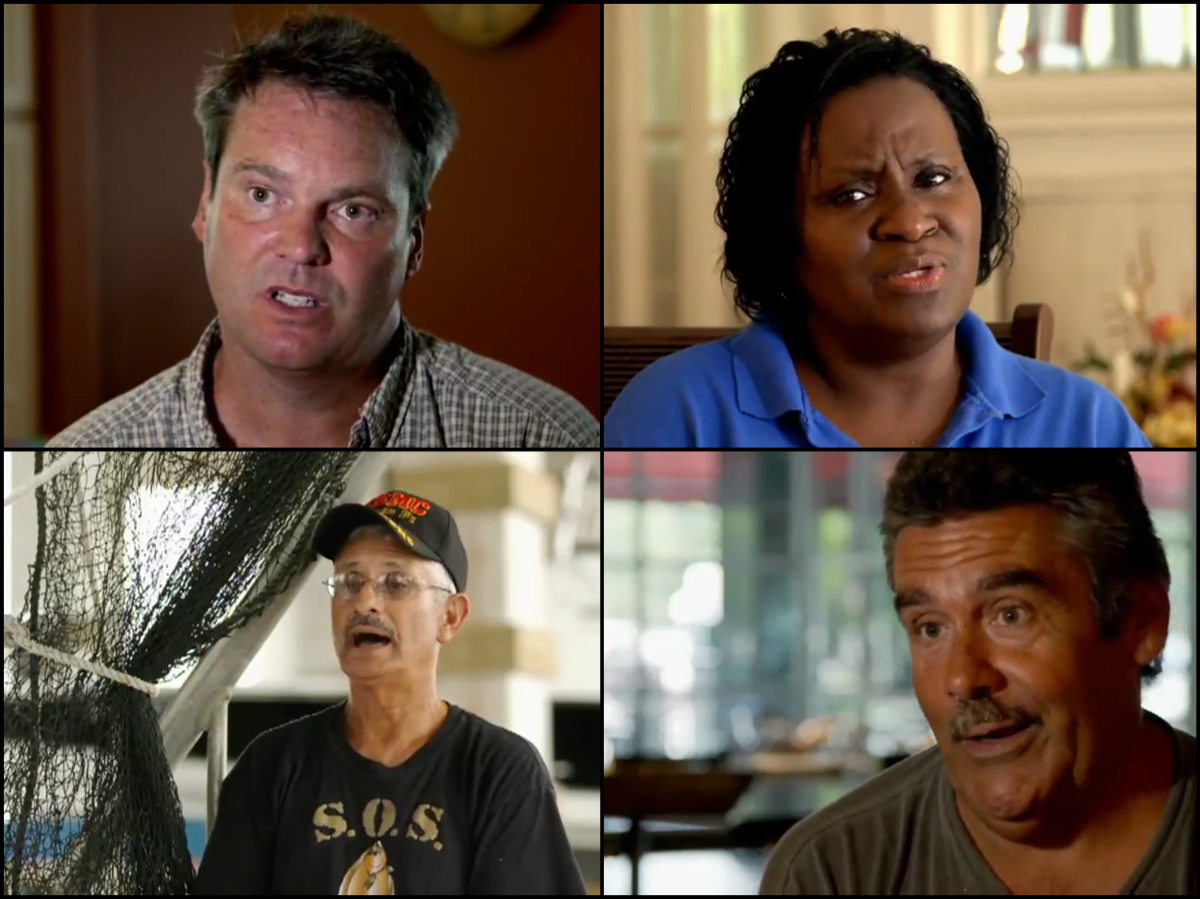
(L-R, top-bottom) John, Sheila, Ronnie, and James from "The Line."
If you really know any poor people, you know that to be true. If you don’t, the first sentence of this post runs against the grain of many cultural assumptions in America that tend to blame people for being poor.
On the eve of the first Presidential debate, Sojourners premiered The Line — a film about the new faces of poverty in America. In this powerful documentary from award-winning filmmaker Linda Midgett, those popular judgmental assumptions against poor people clearly and convincingly are debunked.
The Line, which I am asking everyone who reads this column to watch, deftly dismantles many stereotypes about poverty and why a growing number of Americans find themselves falling into it. The film does so by telling the personal stories of people who have fallen beneath “the line.”
My 14-year-old son Luke, watched the story of John: a banker from a failed bank who once made a six figure salary, but who now finds himself a substitute teacher making $12,000 a year and trying to raise his three kids. John painfully talked about what it feels like to have to go to a food bank because he has no other viable choice.
His story caused Luke to ask his mom after the film, “John said he got straight A’s in school, so could that happen to me?”
My nine year old, Jack, was most impressed with James, a fellow who lost a blue-collar job after 23 years, and now — in his 50s — was working hard to be a successful busboy.
My Mississippi-born friend Burns Strider said he identified most with Ronnie — a self-employed fisherman in coastal Louisiana whose family has been in the shrimping business for generations who faces an uncertain future now that the shrimp have disappeared in the wake of Hurricane Katrina and the BP Oil spill that have devastated the ecosystem and the economy.
And many in the hundreds-strong crowd that packed the DC theater where The Line premiered earlier this week were drawn to Sheila, a mother of three who, after lifting herself out of poverty and a poor, violent neighborhood in Chicago, tripped and fell down the steps of an “L” train stop and has fought against disabilities and health care costs ever since.
Sheila was attended the DC premiere and was a part of the panel discussion, along with the director, Linda Midgett, Adam Taylor from Bread for the World, and me, that followed the screening.
What also was true of each of the people profiled in the film is that falling into poverty made them feel alone. The line that most struck me was from Ronnie who, when speaking about himself and his wife, said, “We have no confidence in the future…and we worry about our kids.”
After the presidential debate last night, I doubt if the growing numbers of poor people in America feel less alone.
The political discussion today is only about who won the debate. But millions of people who are struggling financially (and otherwise) in America are not likely to feel that they did.
Presidential candidates could make it clear to those who are experiencing very hard times that they will not be left alone. But that didn’t come across last night, in the first presidential debate focused on domestic policy.
The competing narratives between Obama and Romney about tax policies, health care, the role of government, their focus on the middle class, and their differing arguments for economic growth now are being polled and debated as pundits and wonks try to determine to which candidate had the best performance and how it might affect the electoral numbers.
But one thing is certain about last night: there was no clarifying discussion about what the policies Obama and Romney debated will mean for the Americans who are struggling the most.
After watching The Line, what so many of us felt was a desire to reach out to the people who, with great candor and courage, swallowed their pride (and their privacy) and told their stories, revealing how hard their lives have become.
Conservative, liberal, neither or both —I believe many Americans would want to reach out to the people whose stories were told in The Line.
Clearly it is the mission of the church to tell and to show the millions of people who have fallen below the poverty line that they are not alone. Jesus clearly says, in the Matthew 25 that how we treat them is how we treat him.
I think we also want to live in a society that makes sure that people who are struggling with poverty are not left alone. That is the responsibility of all of us, and it is also part of the role of government.
The presidential candidates could make those who are hurting the most feel like they are not alone anymore. But that didn’t happen last night.
Journalists tell us at Sojourners that poverty is not a “sexy” issue in America — especially not at election time. Some told us that again on the day The Line premiered.
We had hoped for perhaps 100 screenings of The Line around the country. By the time the film began rolling Tuesday night, we had more than 1,600 screenings of the film scheduled across the country and around the globe — including nearly every state and continent, even as far away as Japan, New Zealand and Australia.
The tremendous response we are getting to this extraordinary film tells me that while the issue poverty in America may not be a top issue for our journalists and our politicians, it most assuredly is for a growing number of people of all faith traditions and none, across denominational, political, and cultural lines.
The stories in The Line explain why.
See the film, share it, talk about it, and help make this poverty — a fundamental moral issue that respects the health (and wealth) of the soul of our nation — a priority during this election season and beyond.
Jim Wallis is CEO of Sojourners, and the author of Rediscovering Values: A Guide for Economic and Moral Recovery and the forthcoming On God's Side: What Religion Forgets and Politics Hasn't Learned about Serving the Common Good, which will be released in February 2013. Follow Jim on Twitter @JimWallis or join him on Facebook HERE.
The First Presidential Debate & Five Takeaways From The First Presidential Debate 4OKT12
I was disappointed in Pres Obama's debate performance last night, I thought he allowed mitt robme romney to get away with the lies and deceptions he has been repeating while campaigning and failed to challenge him directly on his economic agenda, bain capital and outsourcing jobs to the prc china. Pres Obama can not repeat last night's performance in the remaining two debates if he wants to win this election. Here are two sane, sobering, realistic analysis of the debate from Robert Reich on HuffPost and NPR, and for commentary on what wasn't covered in the the debate see my post Why Obama Didn't Mention the 47 Percent Video & Who Didn’t Win the Presidential Debate? 4OKT12
.....
In Wednesday night's debate, Romney won on style while Obama won on substance. Romney sounded as if he had conviction, which means he's either convinced himself that the lies he tells are true or he's a fabulous actor.
But what struck me most was how much Obama allowed Romney to get away with: Five times Romney accused Obama of raiding Medicare of $716 billion, which is a complete fabrication. Obama never mentioned the regressiveness of Romney's budget plan -- awarding the rich and hurting the middle class and the poor. He never mentioned Bain Capital, or Romney's 47 percent talk, or Romney's "carried-interest" tax loophole. Obama allowed Romney to talk about replacing Dodd-Frank and the Affordable Care Act without demanding that Romney be specific about what he'd replace and why. And so on.
I've been worried about Obama's poor debate performance for some time now. He was terrible in the 2008 primary debates, for example. Expectations are always high -- he's known as an eloquent orator. But when he has to think on his feet and punch back, he's not nearly as confident or assured as he is when he is giving a speech or explaining a large problem and its solution. He is an educator, not a pugilist, and this puts him at a disadvantage in any debate.
Romney stayed on script. If you look at a transcript of his remarks you'll see that he repeated the same lines almost word for word in different contexts. He has memorized a bunch of lines, and practiced delivering them. The overall effect is to make him seem assured and even passionate about his position. He said over and over that he cares about jobs, about small businesses, and ordinary Americans. But his policies and his record at Bain tell a very different story.
The question now is whether Team Obama understands that our president must be more aggressive and commanding in the next two debates -- and be unafraid to respectfully pin Romney to the floor.
Follow Robert Reich on Twitter: www.twitter.com/RBReich
http://www.huffingtonpost.com/robert-reich/the-first-presidential-de_1_b_1938720.html?utm_source=Alert-blogger&utm_medium=email&utm_campaign=Email%2BNotifications

Mitt Romney may have given his campaign something of a reset with his performance in the first debate against President Obama.
He appeared more comfortable on stage than the incumbent, and was able at least to lay the groundwork for a message of bipartisanship that could appeal to remaining undecided voters.
Of course, it's not clear yet whether the debate will create enough momentum to offer Romney an advantage heading into the next debate, let alone through Election Day. Perhaps some of the inevitable post-debate fact checking will challenge Romney's credence on certain points.
But it's notable that Obama failed to do much of that himself, launching far fewer attacks during the debate than his aggressive campaign advertising strategy suggested he might.
Here's a quick review of five takeaways from the first debate in Denver:
Obama Looked Tired And Sounded Defensive
Obama's advisers noted before the debate that the president was having a hard time finding much unbroken debate practice time, and much of what he did have was devoted to boiling down his positions to fit the time limits. All of this showed.
Romney looked straight at his opponent, often wearing a confident Mona Lisa grin. Obama looked down at his notes or over at the moderator, Jim Lehrer of PBS, only occasionally looking directly into the camera.
Aside from his body language, some of Obama's answers came across as wonky. Both men offered laundry lists of their ideas, but Obama failed to craft a compelling case for his own record or second-term agenda, instead repeating complaints that he had inherited a mess.
What's more, he failed to go after Romney aggressively. There was no mention of Bain Capital or Romney's dismissive videotaped comments about the "47 percent" of Americans who are dependent on government.
Only in the last 20 minutes of the 90-minute debate did Obama land much of a blow, complaining that Romney was keeping the specifics about his tax plans and his approaches to health care and banking regulation too much a secret.
Romney Grasped The Mantle Of Bipartisanship
Romney said he didn't want to lay out anything other than broad principles during the campaign, because he found out as Massachusetts governor that a "my way or the highway" approach doesn't win over legislators.
Even before Lehrer had made "partisan gridlock" the subject of his final question, Romney stressed the importance of bipartisanship. He said that something as important as the federal health care law should have been passed on a bipartisan basis (it received essentially no GOP support) and paid homage to the working relationship of Republican President Ronald Reagan and Democratic House Speaker Tip O'Neill in the 1980s.
"I had the great experience — it didn't seem like it at the time — of being elected in a state where my legislature was 87 percent Democrat," Romney said, "and that meant I figured out from day one I had to get along and I had to work across the aisle to get anything done."
Given consistent Republican opposition to Obama in Congress — some have called it obstructionism — no doubt Democrats will question the sincerity of Romney's embrace of bipartisanship. But it's a message that could be welcomed by voters, particularly centrist independents.
You're A Drinking Game Winner If You're Middle Class
Both candidates were at pains to pay tribute to members of the middle class, again and again. Each referred to specific members of the middle class they had met along the campaign trail, who had gone back to school or were now out of work. Each insisted his plan would do more to help such people out and create middle-class jobs.
Obama argued that Romney's plans to cut taxes and increase military spending would necessarily cause the deficit to balloon or "burden" the middle class, because there would not be sufficient savings available to offset their cost by ending deductions or closing loopholes.
Romney insisted that his tax-cut plan would impose no such hardship. "I will not, under any circumstances, raise taxes on middle-income families," he said.
When Candidates Have The Microphone, They'll Keep Talking
Romney sought to refute a study Obama had cited to show his tax package would hurt the middle class was wrong: "There are six other studies that looked at the study you describe and say it's completely wrong," Romney said.
Many of the candidate's responses were like that: Sometimes arcane, often straying from the original question that Lehrer had asked. At one point, Romney used an education question to repeat a charge that Obama had squandered billions on unsuccessful green-energy programs.
Nearly all politicians use debate questions merely as jumping-off points, concerning themselves with highlighting policies they deem most important. Both men did that Wednesday, ignoring Lehrer's frequent invitations to confront or question their opponent directly, in favor of rattling off other arguments of their own.
Partly as a result, the debate's intended format, of 15-minute segments each covering six different topics, was broken almost immediately, leaving only three minutes for the final segment.
Lehrer struggled unsuccessfully to cut off the two candidates and redirect them to the supposed topic at hand. A stammering Twitter handle called @SilentJimLehrer went up during the debate, quickly attracting thousands of followers.
Democrats Will Want To Retool For Future Debates
For all his oratorical gifts, Obama has sometimes struggled in debates. He was often out-mastered during the long series of debates during the Democratic primary season in 2008 and hasn't had much practice since then — except for his debates against Sen. John McCain in 2008.
Republicans, meanwhile, have been nearly salivating for months at the prospect of the vice presidential debate, which takes place on Oct. 11. They believe Romney's running mate, Rep. Paul Ryan of Wisconsin, has the intellectual and rhetorical firepower to wipe the floor with Vice President Joe Biden.
That may prove to be wishful thinking. Ryan has put many of his own ideas on ice while serving as the loyal No. 2, while Biden is deeply versed in both domestic and foreign policy.
But Obama's lackluster performance — coupled with Biden's remark Tuesday that "the middle class ...has been buried the last four years" — will leave GOP partisans giddy with anticipation of next Thursday's debate.
http://www.npr.org/2012/10/04/162265100/five-takeaways-from-the-first-presidential-debate?ft=3&f=1001&sc=nl&cc=nh-20121004
.....
In Wednesday night's debate, Romney won on style while Obama won on substance. Romney sounded as if he had conviction, which means he's either convinced himself that the lies he tells are true or he's a fabulous actor.
But what struck me most was how much Obama allowed Romney to get away with: Five times Romney accused Obama of raiding Medicare of $716 billion, which is a complete fabrication. Obama never mentioned the regressiveness of Romney's budget plan -- awarding the rich and hurting the middle class and the poor. He never mentioned Bain Capital, or Romney's 47 percent talk, or Romney's "carried-interest" tax loophole. Obama allowed Romney to talk about replacing Dodd-Frank and the Affordable Care Act without demanding that Romney be specific about what he'd replace and why. And so on.
I've been worried about Obama's poor debate performance for some time now. He was terrible in the 2008 primary debates, for example. Expectations are always high -- he's known as an eloquent orator. But when he has to think on his feet and punch back, he's not nearly as confident or assured as he is when he is giving a speech or explaining a large problem and its solution. He is an educator, not a pugilist, and this puts him at a disadvantage in any debate.
Romney stayed on script. If you look at a transcript of his remarks you'll see that he repeated the same lines almost word for word in different contexts. He has memorized a bunch of lines, and practiced delivering them. The overall effect is to make him seem assured and even passionate about his position. He said over and over that he cares about jobs, about small businesses, and ordinary Americans. But his policies and his record at Bain tell a very different story.
The question now is whether Team Obama understands that our president must be more aggressive and commanding in the next two debates -- and be unafraid to respectfully pin Romney to the floor.
Follow Robert Reich on Twitter: www.twitter.com/RBReich
http://www.huffingtonpost.com/robert-reich/the-first-presidential-de_1_b_1938720.html?utm_source=Alert-blogger&utm_medium=email&utm_campaign=Email%2BNotifications
Five Takeaways From The First Presidential Debate
Enlarge Charlie Neibergall/AP Republican
presidential nominee Mitt Romney and President Obama talk after the
first presidential debate at the University of Denver on Wednesday.
He appeared more comfortable on stage than the incumbent, and was able at least to lay the groundwork for a message of bipartisanship that could appeal to remaining undecided voters.
Of course, it's not clear yet whether the debate will create enough momentum to offer Romney an advantage heading into the next debate, let alone through Election Day. Perhaps some of the inevitable post-debate fact checking will challenge Romney's credence on certain points.
But it's notable that Obama failed to do much of that himself, launching far fewer attacks during the debate than his aggressive campaign advertising strategy suggested he might.
Here's a quick review of five takeaways from the first debate in Denver:
Obama Looked Tired And Sounded Defensive
Obama's advisers noted before the debate that the president was having a hard time finding much unbroken debate practice time, and much of what he did have was devoted to boiling down his positions to fit the time limits. All of this showed.
Romney looked straight at his opponent, often wearing a confident Mona Lisa grin. Obama looked down at his notes or over at the moderator, Jim Lehrer of PBS, only occasionally looking directly into the camera.
Aside from his body language, some of Obama's answers came across as wonky. Both men offered laundry lists of their ideas, but Obama failed to craft a compelling case for his own record or second-term agenda, instead repeating complaints that he had inherited a mess.
What's more, he failed to go after Romney aggressively. There was no mention of Bain Capital or Romney's dismissive videotaped comments about the "47 percent" of Americans who are dependent on government.
Only in the last 20 minutes of the 90-minute debate did Obama land much of a blow, complaining that Romney was keeping the specifics about his tax plans and his approaches to health care and banking regulation too much a secret.
Romney Grasped The Mantle Of Bipartisanship
Romney said he didn't want to lay out anything other than broad principles during the campaign, because he found out as Massachusetts governor that a "my way or the highway" approach doesn't win over legislators.
Even before Lehrer had made "partisan gridlock" the subject of his final question, Romney stressed the importance of bipartisanship. He said that something as important as the federal health care law should have been passed on a bipartisan basis (it received essentially no GOP support) and paid homage to the working relationship of Republican President Ronald Reagan and Democratic House Speaker Tip O'Neill in the 1980s.
"I had the great experience — it didn't seem like it at the time — of being elected in a state where my legislature was 87 percent Democrat," Romney said, "and that meant I figured out from day one I had to get along and I had to work across the aisle to get anything done."
Given consistent Republican opposition to Obama in Congress — some have called it obstructionism — no doubt Democrats will question the sincerity of Romney's embrace of bipartisanship. But it's a message that could be welcomed by voters, particularly centrist independents.
You're A Drinking Game Winner If You're Middle Class
Both candidates were at pains to pay tribute to members of the middle class, again and again. Each referred to specific members of the middle class they had met along the campaign trail, who had gone back to school or were now out of work. Each insisted his plan would do more to help such people out and create middle-class jobs.
Obama argued that Romney's plans to cut taxes and increase military spending would necessarily cause the deficit to balloon or "burden" the middle class, because there would not be sufficient savings available to offset their cost by ending deductions or closing loopholes.
Romney insisted that his tax-cut plan would impose no such hardship. "I will not, under any circumstances, raise taxes on middle-income families," he said.
When Candidates Have The Microphone, They'll Keep Talking
Romney sought to refute a study Obama had cited to show his tax package would hurt the middle class was wrong: "There are six other studies that looked at the study you describe and say it's completely wrong," Romney said.
Many of the candidate's responses were like that: Sometimes arcane, often straying from the original question that Lehrer had asked. At one point, Romney used an education question to repeat a charge that Obama had squandered billions on unsuccessful green-energy programs.
Nearly all politicians use debate questions merely as jumping-off points, concerning themselves with highlighting policies they deem most important. Both men did that Wednesday, ignoring Lehrer's frequent invitations to confront or question their opponent directly, in favor of rattling off other arguments of their own.
Partly as a result, the debate's intended format, of 15-minute segments each covering six different topics, was broken almost immediately, leaving only three minutes for the final segment.
Lehrer struggled unsuccessfully to cut off the two candidates and redirect them to the supposed topic at hand. A stammering Twitter handle called @SilentJimLehrer went up during the debate, quickly attracting thousands of followers.
Democrats Will Want To Retool For Future Debates
For all his oratorical gifts, Obama has sometimes struggled in debates. He was often out-mastered during the long series of debates during the Democratic primary season in 2008 and hasn't had much practice since then — except for his debates against Sen. John McCain in 2008.
Republicans, meanwhile, have been nearly salivating for months at the prospect of the vice presidential debate, which takes place on Oct. 11. They believe Romney's running mate, Rep. Paul Ryan of Wisconsin, has the intellectual and rhetorical firepower to wipe the floor with Vice President Joe Biden.
That may prove to be wishful thinking. Ryan has put many of his own ideas on ice while serving as the loyal No. 2, while Biden is deeply versed in both domestic and foreign policy.
But Obama's lackluster performance — coupled with Biden's remark Tuesday that "the middle class ...has been buried the last four years" — will leave GOP partisans giddy with anticipation of next Thursday's debate.
Close Read: NPR Reporters Examine Denver Debate
Our team provides analysis and checks the facts behind the candidates' statements in Denver.Election 2012
Obama, Romney Clash Repeatedly Over Taxes
In a 90-minute debate, Romney aggressively challenged the president on his record.http://www.npr.org/2012/10/04/162265100/five-takeaways-from-the-first-presidential-debate?ft=3&f=1001&sc=nl&cc=nh-20121004
02 October 2012
Give me a break, STOP OUTSOURCING AMERICAN JOBS! 2OKT12
HERE'S just a few of the real people who are being hurt by bain capital's outsourcing American jobs to the prc (china). mitt robme romney is receiving tax breaks on his income from sensata, a company that is closing it's American factory and sending those jobs to the prc. Check out this video and share it, because if romney wins on November 6th many of us could be making videos just like this.....
By the end of this year, I won't have a job. And despite our efforts—which are only getting stronger because of you—Mitt Romney refuses to use his influence and save our Bain Capital jobs from being shipped to China.
Mitt still makes millions each year from his time at Bain. And just a short while ago, it was revealed that he received an estimated $350,000 in tax breaks by writing off his stock in Sensata, the company that I've worked at for 33 years.
That's right - Mitt Romney is actually receiving tax breaks off of a company that is actively shipping my job overseas. This is the same person who's accused myself and 47% of country of not paying our fair share in taxes and not working hard enough. Tell me another one, Mitt.
Watch this video featuring my co-workers Tom, Dot and Bonnie—whom I consider part of my family—and pass it along to your own friends and family:
http://action.99uniting.org/

Romney's written us off twice now. The first time is when he said "[his] job is not to worry about those people" - the 47% of us who have worked hard to be where we are today. Now, he's writing off his shares in Sensata as a tax break—by transferring its worth to his own private foundation.
I don't have a private foundation. All I have is a house that I want to keep. And while all those tax breaks sit in Romney's offshore bank accounts, we in Freeport could use that money to pay our bills and keep our town alive.
Now, I may be a bit biased, but this is a story that all of your friends and family need to see before they make a decision this fall. I had no idea this issue could affect me, and yet here I am now, fighting to keep my job.
Watch this video, and pass it along:
http://action.99uniting.org/
If Mitt keeps writing us off, then maybe we need to write off Romney's failed economic model. It's about time that he sees what it's doing to America.
Sincerely,
Cheryl Randecker
Sensata Worker
PS - Don't forget about tomorrow's first presidential debate at 9 PM EDT. See where the candidates stand on keeping jobs here in America.
This message was sent by Cheryl Randecker from the SignOn.org system. MoveOn.org Civic Action sponsors SignOn.org, but does not endorse specific campaigns or the contents of this message.
By the end of this year, I won't have a job. And despite our efforts—which are only getting stronger because of you—Mitt Romney refuses to use his influence and save our Bain Capital jobs from being shipped to China.
Mitt still makes millions each year from his time at Bain. And just a short while ago, it was revealed that he received an estimated $350,000 in tax breaks by writing off his stock in Sensata, the company that I've worked at for 33 years.
That's right - Mitt Romney is actually receiving tax breaks off of a company that is actively shipping my job overseas. This is the same person who's accused myself and 47% of country of not paying our fair share in taxes and not working hard enough. Tell me another one, Mitt.
Watch this video featuring my co-workers Tom, Dot and Bonnie—whom I consider part of my family—and pass it along to your own friends and family:
http://action.99uniting.org/
Romney's written us off twice now. The first time is when he said "[his] job is not to worry about those people" - the 47% of us who have worked hard to be where we are today. Now, he's writing off his shares in Sensata as a tax break—by transferring its worth to his own private foundation.
I don't have a private foundation. All I have is a house that I want to keep. And while all those tax breaks sit in Romney's offshore bank accounts, we in Freeport could use that money to pay our bills and keep our town alive.
Now, I may be a bit biased, but this is a story that all of your friends and family need to see before they make a decision this fall. I had no idea this issue could affect me, and yet here I am now, fighting to keep my job.
Watch this video, and pass it along:
http://action.99uniting.org/
If Mitt keeps writing us off, then maybe we need to write off Romney's failed economic model. It's about time that he sees what it's doing to America.
Sincerely,
Cheryl Randecker
Sensata Worker
PS - Don't forget about tomorrow's first presidential debate at 9 PM EDT. See where the candidates stand on keeping jobs here in America.
This message was sent by Cheryl Randecker from the SignOn.org system. MoveOn.org Civic Action sponsors SignOn.org, but does not endorse specific campaigns or the contents of this message.
29 September 2012
Quote of the Day: Romney Is Ruining Things (GASP!!!!) For All the Other Rich Guys 27SEP12
ALL these rich people must feel so betrayed!!!!
Today's QOTD comes from Stephen Breitstone,
co-head of the taxation and wealth preservation group at Meltzer,
Lippe, Goldstein & Breitstone LLP, commenting on one of the tax
avoidance schemes that Mitt Romney used in the $100 million trust he set
up for his children and grandchildren:
Bloomberg says Romney did this with some DoubleClick shares he got in 1997, back when he was CEO of Bain Capital, but that's undoubtedly just the tip of the iceberg. The DoubleClick payday amounted to a piddling $674,000 out of a trust worth over $100 million. Sadly for our nation's ultra-wealthy, though, the spotlight Romney is shining on stuff like this might spur Congress to close some of these loopholes. Maybe.
It’s going to be harder to do tax planning in the future. He’s bringing attention to things that weren’t getting attention.This comes from a Bloomberg story about Romney's use of an "I Dig It" trust, which Breitstone says is so important to the wealthy that ending its tax benefits "would put an end to much of estate planning as we know it." Here's how it works:
The person setting up the trust, like Romney, contributes assets such as an interest in a fund or shares in a company. If he makes that contribution before those assets appreciate — particularly when they are privately held and difficult to value — he can claim the gift tax obligation is low or non-existent since the declared value is low or zero.Very cool, no? First, Romney undervalues the assets he puts into the trust so he owes little or no gift tax. Then, later, when the assets appreciate, he pays only the capital gains tax, which is considerably lower than the gift tax. And to make it even better, he pays the capital gains tax out of his own pocket, so the trust owes nothing. It's like making a second gift to his kids free and clear.
If the trust generates any income — such as by selling stock — the eventual tax bill is the responsibility of Romney, not the trust. By paying the capital gains tax, which was 20 percent in the late 1990s and is now 15 percent, he can avoid depleting the funds in the trust — in essence making an additional donation that’s free of gift taxes....Gains in the trust for Romney’s heirs remain free of gift taxes and potential estate taxes.
Bloomberg says Romney did this with some DoubleClick shares he got in 1997, back when he was CEO of Bain Capital, but that's undoubtedly just the tip of the iceberg. The DoubleClick payday amounted to a piddling $674,000 out of a trust worth over $100 million. Sadly for our nation's ultra-wealthy, though, the spotlight Romney is shining on stuff like this might spur Congress to close some of these loopholes. Maybe.


28 September 2012
Mitt Romney Gets Tax Break Off Firm Sending Jobs To China & Anti-tax group says Obama sent $450 million to China to build Texas wind farm 27&23SEP12
mitt robme romney rants and rails about American jobs boing to the prc and falsely attacks Pres Obama for supporting outsourcing jobs to the prc. BUT mitt robme romney continues to get a tax break from a US company, Sensata Technologies (owned by bain capital) which is closing it's American factory and sending the jobs to the prc. SUCH is the economic policy of the romney-ryan ticket, increasing the wealth of the rich and to hell with the rest of us. From HuffPost and PolitiFact, and check out my earlier post Bain Capital is shipping my job to China 3AUG12 & Despite spotlight, Sensata closure continues 23JUL12
http://bucknacktssordidtawdryblog.blogspot.com/2012/08/bain-capital-is-shipping-my-job-to.html
WASHINGTON -- Sensata Technologies is a healthy manufacturing company that employs nearly 200 workers at a factory in northern Illinois. The company has become the focus of national attention because it has been taken over by Bain Capital, which plans to shut the factory down, lay off the workers, and outsource the production to China before the end of the year.
The workers have pleaded with GOP presidential candidate Mitt Romney, the founder of Bain Capital, to exert his considerable influence to save their jobs. Romney still makes millions each year in income from Bain. So far, he has declined to weigh in, and the factory is scheduled to close by the end of the year.
While the workers and the town may suffer, Romney himself has done well as a result of Bain's work with the company. According to his recently released 2011 tax returns, Romney transferred $701,703 worth of Sensata stock to the Tyler Charitable Foundation, a 501(c)3 tax-exempt nonprofit controlled by Romney. The gift is listed on page 323 of the pdf, on form 8283 (below).
Moving the stock to his nonprofit brings Romney twin benefits. First, he gets to deduct the full value of the stock. At a 35 percent tax rate, that's nearly a $250,000 benefit. At 15 percent, it's just over $100,000.
Second, Romney is able to avoid paying capital gains taxes on the stock price increase. Romney's returns list no cost for the stock, and indicate he obtained them as part of a partnership interest in Bain. Avoiding capital gains taxes on the full increase would save an additional $100,000. In 2010, Romney gifted $170,000 worth of Sensata stock to his charity, saving $25,000 in capital gains taxes that year.
Cheryl Randecker, a Sensata worker facing an imminent layoff, said, "I could pay off my house with that [$25,000], and he doesn't need it anyway."
Randecker received her 60-day layoff notice shortly after Labor Day. She and other Sensata employees have tried in vain to pressure Romney and Bain to keep their jobs in the U.S., going so far as to create a "Bainport" encampment across the street from their plant in Freeport, Ill. Billed as the "home of the Romney economy," the site highlights what some Sensata workers describe as corporate greed squeezing the middle class.
As
in many Midwestern towns, Freeport's jobs at Sensata are some of the
few well-paying manufacturing jobs that remain in the area. Several
Sensata workers have told HuffPost
that they're worried that after the layoffs they'll end up in
low-paying service-sector positions, if they manage to find jobs at all.
Randecker, a 33-year Sensata veteran, said she fears having to start a
new career at age 52. Barring something miraculous, she said she will
lose her job the day before the presidential election.
"Knowing ... that he's going to profit single-handedly from us losing our jobs here in Freeport is very disturbing," Randecker, a single mother, said. On the subject of Romney's capital gains savings, Randecker continued, "It's very bothersome that he doesn’t pay his fair share of taxes. If he and the rest of the one percent did, we probably wouldn’t be in a deficit here ... The lower and middle class keep getting stepped on."
Rebecca Wilkins, an attorney with Citizens for Tax Justice, said that Romney's move is a prime example of the way that the super-wealthy are able to game the charitable deduction while still holding on to their money.
"During the last crazy weeks of each year, in the middle of the holiday and year-end rush, most of us sit down and write a few checks to our favorite charities. We want to support their work and we appreciate the related tax deduction," Wilkins said. "But higher-income taxpayers can use special arrangements, like charitable trusts and private foundations, to get big deductions now for amounts that won’t go to charities for many years to come -- often not until the taxpayer dies. They can also give gifts of property, like stock, that have gone up in value. They get a deduction for the full fair market value of the stock, but never have to pay the capital gains tax on the appreciation."
The Romney campaign did not immediately respond to a request for comment. But Andrea Saul, a campaign spokeswoman, previously told HuffPost that the candidate "donates a substantial amount of money every year to charity. He receives the same charitable deduction for his private giving as does any other American."
In the end, Romney didn't even need the extra tax benefit he got from transferring the Sensata stock. When Romney released his most recent returns, his trustee explained that he declined to take roughly $2 million in charitable deductions for contributions for which he was eligible. He declined the deductions so that his tax rate wouldn't dip below 13 percent -- a marker he had set earlier when he said that there was no year he'd paid a rate lower than that.
If Romney amends his tax return after the election, he will be eligible to recoup the difference.
Romney also transferred nearly $220,000 worth of stock in Dunkin Donuts, another Bain investment, according to his returns.
http://www.huffingtonpost.com/2012/09/27/mitt-romney-sensata-tax-break_n_1920396.html


WASHINGTON -- Sensata Technologies is a healthy manufacturing company that employs nearly 200 workers at a factory in northern Illinois. The company has become the focus of national attention because it has been taken over by Bain Capital, which plans to shut the factory down, lay off the workers, and outsource the production to China before the end of the year.
The workers have pleaded with GOP presidential candidate Mitt Romney, the founder of Bain Capital, to exert his considerable influence to save their jobs. Romney still makes millions each year in income from Bain. So far, he has declined to weigh in, and the factory is scheduled to close by the end of the year.
While the workers and the town may suffer, Romney himself has done well as a result of Bain's work with the company. According to his recently released 2011 tax returns, Romney transferred $701,703 worth of Sensata stock to the Tyler Charitable Foundation, a 501(c)3 tax-exempt nonprofit controlled by Romney. The gift is listed on page 323 of the pdf, on form 8283 (below).
Moving the stock to his nonprofit brings Romney twin benefits. First, he gets to deduct the full value of the stock. At a 35 percent tax rate, that's nearly a $250,000 benefit. At 15 percent, it's just over $100,000.
Second, Romney is able to avoid paying capital gains taxes on the stock price increase. Romney's returns list no cost for the stock, and indicate he obtained them as part of a partnership interest in Bain. Avoiding capital gains taxes on the full increase would save an additional $100,000. In 2010, Romney gifted $170,000 worth of Sensata stock to his charity, saving $25,000 in capital gains taxes that year.
Cheryl Randecker, a Sensata worker facing an imminent layoff, said, "I could pay off my house with that [$25,000], and he doesn't need it anyway."
Randecker received her 60-day layoff notice shortly after Labor Day. She and other Sensata employees have tried in vain to pressure Romney and Bain to keep their jobs in the U.S., going so far as to create a "Bainport" encampment across the street from their plant in Freeport, Ill. Billed as the "home of the Romney economy," the site highlights what some Sensata workers describe as corporate greed squeezing the middle class.
"Knowing ... that he's going to profit single-handedly from us losing our jobs here in Freeport is very disturbing," Randecker, a single mother, said. On the subject of Romney's capital gains savings, Randecker continued, "It's very bothersome that he doesn’t pay his fair share of taxes. If he and the rest of the one percent did, we probably wouldn’t be in a deficit here ... The lower and middle class keep getting stepped on."
Rebecca Wilkins, an attorney with Citizens for Tax Justice, said that Romney's move is a prime example of the way that the super-wealthy are able to game the charitable deduction while still holding on to their money.
"During the last crazy weeks of each year, in the middle of the holiday and year-end rush, most of us sit down and write a few checks to our favorite charities. We want to support their work and we appreciate the related tax deduction," Wilkins said. "But higher-income taxpayers can use special arrangements, like charitable trusts and private foundations, to get big deductions now for amounts that won’t go to charities for many years to come -- often not until the taxpayer dies. They can also give gifts of property, like stock, that have gone up in value. They get a deduction for the full fair market value of the stock, but never have to pay the capital gains tax on the appreciation."
The Romney campaign did not immediately respond to a request for comment. But Andrea Saul, a campaign spokeswoman, previously told HuffPost that the candidate "donates a substantial amount of money every year to charity. He receives the same charitable deduction for his private giving as does any other American."
In the end, Romney didn't even need the extra tax benefit he got from transferring the Sensata stock. When Romney released his most recent returns, his trustee explained that he declined to take roughly $2 million in charitable deductions for contributions for which he was eligible. He declined the deductions so that his tax rate wouldn't dip below 13 percent -- a marker he had set earlier when he said that there was no year he'd paid a rate lower than that.
If Romney amends his tax return after the election, he will be eligible to recoup the difference.
Romney also transferred nearly $220,000 worth of stock in Dunkin Donuts, another Bain investment, according to his returns.
http://www.huffingtonpost.com/2012/09/27/mitt-romney-sensata-tax-break_n_1920396.html
The Truth-O-Meter Says:
Says Obama sent $450 million to China to build a wind farm in Texas.
Americans For Tax Reform on Friday, September 21st, 2012 in a mailer to votersAnti-tax group says Obama sent $450 million to China to build Texas wind farm
Share this story:
In the battleground state of Florida, critics of President Obama have
accused him not simply of spending billions in stimulus money to no good
effect but actually using that money to give a leg up to America’s
economic rivals. Americans for Tax Reform has revived an old charge that
Obama sent $450 million to create jobs in China.
Americans for Tax Reform -- an anti-tax group whose founder, Grover Norquist, is famous for arguing for a government so small it could be drowned in a bathtub -- mailed a flyer to Florida voters that showed a stack of hundred dollar bills being blown in a graceful arc across the globe to land in a very red China. On the reverse side, it said "Obama's massive spending includes giving millions to a Chinese company to build a wind farm in Texas. The Chinese company is expected to receive $450 million in U.S. taxpayer money. More jobs in China .. fewer jobs here."
We’ve looked at this sort of claim before and in this fact check, we examine whether Obama sent $450 million to China to build a wind farm in Texas.
Promoting alternative energy under the stimulus
Americans for Tax Reform told us it based this claim on an ABC News report from 2010. In that story, ABC pointed out that the bulk of the stimulus dollars spent on wind and solar projects went to foreign companies.
With the twin goals of diversifying the country’s energy supply and boosting a domestic alternative energy industry, the Obama administration used the stimulus to expand a program that awarded tax credits for wind and solar projects once they came online and produced power.
The tax credits were handed out as grants that could cover up to 30 percent of the construction costs. We checked on the latest numbers and found that as of 2011, some $9.8 billion went to fund over 300 wind farms around the country.
The ABC report relied heavily on the work of Russ Choma, who at the time was a journalist with the Investigative Reporting Workshop, a project at American University. Choma noted that foreign companies received over 60 percent of the alternative energy grants. As we’ll explain in a moment, that does not tell us how much of that money went overseas.
Right now, our main focus is that wind farm in Texas built with Chinese towers and turbines. The ABC report spoke of it this way, "Perhaps the most controversial wind project is one that has yet to receive stimulus money." It then goes on to say that a reporter visited the vacant offices of the Chinese firm that allegedly was providing the turbines.
So Americans for Tax Reform relied on an article that said the project had not been funded and gave some evidence that hinted strongly that the project was not very active.
In fact, by late 2010, it was clear that this particular Texas wind farm had never gone beyond the idea stage. In 2012, Liz Salerno, director of industry data and analysis for the trade group American Wind Energy Association, confirmed that. Salerno tracks wind projects across the country.
"The companies held a press conference at the National Press Club in 2010," Salerno said. "They have made no progress since that announcement."
PolitiFact Ohio wrote a piece making the same point in 2012.
Let’s return briefly to the question of whether stimulus dollars have benefited foreign companies. The short answer is, yes but how much is unclear. Choma, the investigative reporter, noted that the larger overseas firms have American plants that make the blades and other components that were used in U.S. wind farms. Choma wrote that tracking the dollars would be a massive undertaking.
"I can't say how many of the turbines built by American manufacturers were overseas, and how many of the turbines built by foreign manufacturers were built here," Choma said.
To choose just one example, a wind farm in Alaska has a distinct multi-national flavor. The turbines come from GE, the blades from Brazil, the generators come from Southern California, the central hubs from the Florida Panhandle and the towers from China.
The National Renewable Energy Laboratory reported that the grant program added between 44,000 to 66,000 jobs in the wind energy sector each year from 2009 to 2011. Employment peaked in 2009 when new construction was at its height. It has since fallen and the wind power industry is poised for further declines if government tax credits are not renewed beyond 2013.
Our ruling
The Americans for Tax Reform flyer said that Obama sent $450 million to China to build a wind farm in Texas.
The wind farm was never built, the project sponsors never applied for government funds and never received any.
These facts have been well known for at least two years and were publicly reported several times. The source cited by Americans for Tax Reform noted that the project had not been funded.
The flyer spreads a discredited claim. We rate the statement Pants on Fire.
Subjects: China, Jobs, Message Machine 2012, Stimulus
Sources:
Americans for Tax Reform, Florida mailer, September 2012
PolitiFact, Romney says stimulus money for wind and solar was "outsourced" to overseas companies, July 20, 2012
Email interview, John Kartch, communications director, Americans for Tax Reform, September 24, 2012
ABC News, New Wind Farms In The U.S. Do Not Bring Jobs, February 9, 2010
Reuters, U.S. Renewable Energy Group, China’s Shenyang Power Group, and Cielo Wind Power to Develop a 600MW Wind Farm in Texas, October 29, 2009
Greenwire, DOE disputes senators' claims of stimulus grants flowing overseas, March 4, 2010
PolitiFact-Ohio, Josh Mandel says Sherrod Brown is responsible for Ohio jobs moving to China, March 1, 2012
IRS, 1603 Program payments
FactCheck.org, Stimulus Jobs In China?, October 29, 2010
PolitiFact, Stimulus went to windmills in China? Romney ad says so, July 23, 2012
National Renewable Energy Laboratory, Preliminary Analysis of the Jobs and Economic Impacts of Renewable Energy Projects Supported by the 1603 Treasury Grant Program, April 2012
Investigative Reporting Workshop, Renewable Energy money still going abroad, February 8, 2010
Investigative Reporting Workshop, Workshop's Wind Stories Kicking Up Political Dust, September 27, 2010
Anchorage Daily News, Turbines Rising at Fire Island, Wind Farm July 19, 2012
Interview with Liz Salerno, director of industry data and analysis, American Wind Energy Association, July 2012
Congressional Research Service, U.S. Wind Turbine Manufacturing: Federal Support for an Emerging Industry, September 23, 2011
Written by: Jon Greenberg
Researched by: Jon Greenberg
Edited by: Bill Adair
Americans for Tax Reform -- an anti-tax group whose founder, Grover Norquist, is famous for arguing for a government so small it could be drowned in a bathtub -- mailed a flyer to Florida voters that showed a stack of hundred dollar bills being blown in a graceful arc across the globe to land in a very red China. On the reverse side, it said "Obama's massive spending includes giving millions to a Chinese company to build a wind farm in Texas. The Chinese company is expected to receive $450 million in U.S. taxpayer money. More jobs in China .. fewer jobs here."
We’ve looked at this sort of claim before and in this fact check, we examine whether Obama sent $450 million to China to build a wind farm in Texas.
Promoting alternative energy under the stimulus
Americans for Tax Reform told us it based this claim on an ABC News report from 2010. In that story, ABC pointed out that the bulk of the stimulus dollars spent on wind and solar projects went to foreign companies.
With the twin goals of diversifying the country’s energy supply and boosting a domestic alternative energy industry, the Obama administration used the stimulus to expand a program that awarded tax credits for wind and solar projects once they came online and produced power.
The tax credits were handed out as grants that could cover up to 30 percent of the construction costs. We checked on the latest numbers and found that as of 2011, some $9.8 billion went to fund over 300 wind farms around the country.
The ABC report relied heavily on the work of Russ Choma, who at the time was a journalist with the Investigative Reporting Workshop, a project at American University. Choma noted that foreign companies received over 60 percent of the alternative energy grants. As we’ll explain in a moment, that does not tell us how much of that money went overseas.
Right now, our main focus is that wind farm in Texas built with Chinese towers and turbines. The ABC report spoke of it this way, "Perhaps the most controversial wind project is one that has yet to receive stimulus money." It then goes on to say that a reporter visited the vacant offices of the Chinese firm that allegedly was providing the turbines.
So Americans for Tax Reform relied on an article that said the project had not been funded and gave some evidence that hinted strongly that the project was not very active.
In fact, by late 2010, it was clear that this particular Texas wind farm had never gone beyond the idea stage. In 2012, Liz Salerno, director of industry data and analysis for the trade group American Wind Energy Association, confirmed that. Salerno tracks wind projects across the country.
"The companies held a press conference at the National Press Club in 2010," Salerno said. "They have made no progress since that announcement."
PolitiFact Ohio wrote a piece making the same point in 2012.
Let’s return briefly to the question of whether stimulus dollars have benefited foreign companies. The short answer is, yes but how much is unclear. Choma, the investigative reporter, noted that the larger overseas firms have American plants that make the blades and other components that were used in U.S. wind farms. Choma wrote that tracking the dollars would be a massive undertaking.
"I can't say how many of the turbines built by American manufacturers were overseas, and how many of the turbines built by foreign manufacturers were built here," Choma said.
To choose just one example, a wind farm in Alaska has a distinct multi-national flavor. The turbines come from GE, the blades from Brazil, the generators come from Southern California, the central hubs from the Florida Panhandle and the towers from China.
The National Renewable Energy Laboratory reported that the grant program added between 44,000 to 66,000 jobs in the wind energy sector each year from 2009 to 2011. Employment peaked in 2009 when new construction was at its height. It has since fallen and the wind power industry is poised for further declines if government tax credits are not renewed beyond 2013.
Our ruling
The Americans for Tax Reform flyer said that Obama sent $450 million to China to build a wind farm in Texas.
The wind farm was never built, the project sponsors never applied for government funds and never received any.
These facts have been well known for at least two years and were publicly reported several times. The source cited by Americans for Tax Reform noted that the project had not been funded.
The flyer spreads a discredited claim. We rate the statement Pants on Fire.
About this statement:
Published: Tuesday, September 25th, 2012 at 5:02 p.m.Subjects: China, Jobs, Message Machine 2012, Stimulus
Sources:
Americans for Tax Reform, Florida mailer, September 2012
PolitiFact, Romney says stimulus money for wind and solar was "outsourced" to overseas companies, July 20, 2012
Email interview, John Kartch, communications director, Americans for Tax Reform, September 24, 2012
ABC News, New Wind Farms In The U.S. Do Not Bring Jobs, February 9, 2010
Reuters, U.S. Renewable Energy Group, China’s Shenyang Power Group, and Cielo Wind Power to Develop a 600MW Wind Farm in Texas, October 29, 2009
Greenwire, DOE disputes senators' claims of stimulus grants flowing overseas, March 4, 2010
PolitiFact-Ohio, Josh Mandel says Sherrod Brown is responsible for Ohio jobs moving to China, March 1, 2012
IRS, 1603 Program payments
FactCheck.org, Stimulus Jobs In China?, October 29, 2010
PolitiFact, Stimulus went to windmills in China? Romney ad says so, July 23, 2012
National Renewable Energy Laboratory, Preliminary Analysis of the Jobs and Economic Impacts of Renewable Energy Projects Supported by the 1603 Treasury Grant Program, April 2012
Investigative Reporting Workshop, Renewable Energy money still going abroad, February 8, 2010
Investigative Reporting Workshop, Workshop's Wind Stories Kicking Up Political Dust, September 27, 2010
Anchorage Daily News, Turbines Rising at Fire Island, Wind Farm July 19, 2012
Interview with Liz Salerno, director of industry data and analysis, American Wind Energy Association, July 2012
Congressional Research Service, U.S. Wind Turbine Manufacturing: Federal Support for an Emerging Industry, September 23, 2011
Written by: Jon Greenberg
Researched by: Jon Greenberg
Edited by: Bill Adair
Subscribe to:
Posts (Atom)