

BUCKNACKT'S SORDID TAWDRY BLOG We should not be a journey to the grave with the intention of arriving safely in an attractive & well preserved body, but rather to skid in sideways, chocolate, bier or wein in hand, body thoroughly used up, totally worn out and screaming "WHOO-HOO, WHAT A RIDE!!!!!!"
Showing posts with label free market. Show all posts
Showing posts with label free market. Show all posts
15 April 2017

15 September 2014
The atheist libertarian lie: Ayn Rand, income inequality and the fantasy of the “free market” & Paul Krugman decries the “enormous intellectual failure” of modern economics 14&15SEP14
A well written piece exposing more of the hypocrisy of rand paul, ayn rand, atheist libertarians, followed by a great Paul Krugman article on the failure of modern economies. From +Salon .....
Sunday, Sep 14, 2014 01:00 PM EST
 Rand Paul, Ayn Rand, Richard Dawkins (Credit: AP/Timothy D. Easley/Reuters/Chris Keane)
Sunday, Sep 14, 2014 01:00 PM EST
The atheist libertarian lie: Ayn Rand, income inequality and the fantasy of the “free market”
Atheist libertarians pose as skeptics -- except when it comes to free markets and the nature of corporate power
 Rand Paul, Ayn Rand, Richard Dawkins (Credit: AP/Timothy D. Easley/Reuters/Chris Keane)
Why
atheists are disproportionately drawn to libertarianism is a question
that many liberal atheists have trouble grasping. To believe that
markets operate and exist in a state of nature is, in itself, to believe
in the supernatural. The very thing atheists have spent their lives
fleeing from.
According to the American Values Survey, a mere 7 percent of Americans identify as “consistently libertarian.” Compared to the general population, libertarians are significantly more likely to be white (94 percent), young (62 percent under 50) and male (68 percent). You know, almost identical to the demographic makeup of atheists – white (95 percent), young (65 percent under 50) and male (67 percent). So there’s your first clue.
Your second clue is that atheist libertarians are skeptical of government authority in the same way they’re skeptical of religion. In their mind, the state and the pope are interchangeable, which partly explains the libertarian atheist’s guttural gag reflex to what they perceive as government interference with the natural order of things, especially “free markets.”
Robert Reich says that one of the most deceptive ideas embraced by the Ayn Rand-inspired libertarian movement is that the free market is natural, and exists outside and beyond government. In other words, the “free market” is a constructed supernatural myth.
There is much to cover here, but a jumping-off point is the fact that corporations are a government construct, and that fact alone refutes any case for economic libertarianism. Corporations, which are designed to protect shareholders insofar as mitigating risk beyond the amount of their investment, are created and maintained only via government action. “Statutes, passed by the government, allow for the creation of corporations, and anyone wishing to form one must fill out the necessary government paperwork and utilize the apparatus of the state in numerous ways. Thus, the corporate entity is by definition a government-created obstruction to the free marketplace, so the entire concept should be appalling to libertarians,” says David Niose, an atheist and legal director of the American Humanist Association.
In the 18th century, Adam Smith, the granddaddy of American free-market capitalism, wrote his economic tome “The Wealth of Nations.” But his book has as much relevance to modern mega-corporation hyper-capitalism today as the Old Testament has to morality in the 21st century.
According to the American Values Survey, a mere 7 percent of Americans identify as “consistently libertarian.” Compared to the general population, libertarians are significantly more likely to be white (94 percent), young (62 percent under 50) and male (68 percent). You know, almost identical to the demographic makeup of atheists – white (95 percent), young (65 percent under 50) and male (67 percent). So there’s your first clue.
Your second clue is that atheist libertarians are skeptical of government authority in the same way they’re skeptical of religion. In their mind, the state and the pope are interchangeable, which partly explains the libertarian atheist’s guttural gag reflex to what they perceive as government interference with the natural order of things, especially “free markets.”
Robert Reich says that one of the most deceptive ideas embraced by the Ayn Rand-inspired libertarian movement is that the free market is natural, and exists outside and beyond government. In other words, the “free market” is a constructed supernatural myth.
There is much to cover here, but a jumping-off point is the fact that corporations are a government construct, and that fact alone refutes any case for economic libertarianism. Corporations, which are designed to protect shareholders insofar as mitigating risk beyond the amount of their investment, are created and maintained only via government action. “Statutes, passed by the government, allow for the creation of corporations, and anyone wishing to form one must fill out the necessary government paperwork and utilize the apparatus of the state in numerous ways. Thus, the corporate entity is by definition a government-created obstruction to the free marketplace, so the entire concept should be appalling to libertarians,” says David Niose, an atheist and legal director of the American Humanist Association.
In the 18th century, Adam Smith, the granddaddy of American free-market capitalism, wrote his economic tome “The Wealth of Nations.” But his book has as much relevance to modern mega-corporation hyper-capitalism today as the Old Testament has to morality in the 21st century.
CJ Werleman is the author of "Crucifying America"
and "God Hates You. Hate Him Back." You can follow him on Twitter: @cjwerleman
More CJ Werleman.
More CJ Werleman.
Monday, Sep 15, 2014 09:20 AM EST
 Elias Isquith is an assistant editor at Salon, focusing on politics. Follow him on Twitter at @eliasisquith, and email him at eisquith@salon.com.
More Elias Isquith.
Paul Krugman decries the “enormous intellectual failure” of modern economics
The economist and Times columnist says his field has suffered from believing in "an idealized vision of capitalism"
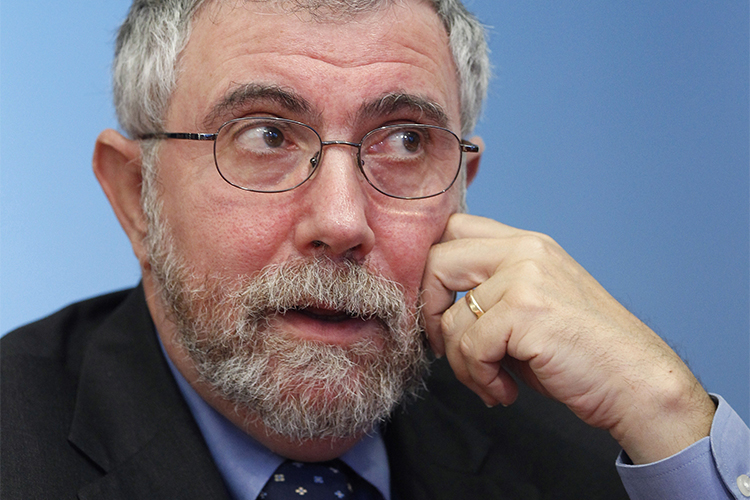
In his latest column for the New York Times,
award-winning economist and liberal pundit Paul Krugman returns to one
of his recurring themes and tries to understand how the field of
economics could not only fail to predict the economic catastrophe of
2008, but fail to ensure policymakers in the West responded to it with
pro-growth, countercyclical spending. “[I]t’s important to realize that
the enormous intellectual failure of recent years took place at several
levels,” Krugman writes. “In what sense did economics go astray?”
One of the first places to look, Krugman argues, is at the field’s recent deification of free-market economics and the “neoclassical models” that support its proponents. “[I]dealized models have a useful role to play in economics,” Krugman grants. “But starting in the 1980s it became harder and harder to publish anything questioning these idealized models in major journals.” The problem, Krugman says, is that “assuming away irrationality and market failure,” as neoclassical models did and do, “meant assuming away the very possibility of the kind of catastrophe that overtook the developed world six years ago.”
Despite these mistakes, Krugman says, the truth is that while most economists did not predict the crash, most have subsequently responded by promoting the correct Keynesian response. It’s just that policymakers haven’t been listening. “If you imagine that policy makers have spent the past five or six years in thrall to economic orthodoxy, you’ve been misled,” Krugman deadpans. “On the contrary, key decision makers have been highly receptive to innovative, unorthodox economic ideas — ideas that also happen to be wrong but which offered excuses to do what these decision makers wanted to do anyway.”
Indeed, instead of putting the lion’s share of the blame on the shoulders of economics in general or famous, mostly right-wing economists in particular, Krugman says we would do best to look at our political leaders. Their justifications for their policy decisions may shift, he writes, but their overall goal is crystal clear:
One of the first places to look, Krugman argues, is at the field’s recent deification of free-market economics and the “neoclassical models” that support its proponents. “[I]dealized models have a useful role to play in economics,” Krugman grants. “But starting in the 1980s it became harder and harder to publish anything questioning these idealized models in major journals.” The problem, Krugman says, is that “assuming away irrationality and market failure,” as neoclassical models did and do, “meant assuming away the very possibility of the kind of catastrophe that overtook the developed world six years ago.”
Despite these mistakes, Krugman says, the truth is that while most economists did not predict the crash, most have subsequently responded by promoting the correct Keynesian response. It’s just that policymakers haven’t been listening. “If you imagine that policy makers have spent the past five or six years in thrall to economic orthodoxy, you’ve been misled,” Krugman deadpans. “On the contrary, key decision makers have been highly receptive to innovative, unorthodox economic ideas — ideas that also happen to be wrong but which offered excuses to do what these decision makers wanted to do anyway.”
Indeed, instead of putting the lion’s share of the blame on the shoulders of economics in general or famous, mostly right-wing economists in particular, Krugman says we would do best to look at our political leaders. Their justifications for their policy decisions may shift, he writes, but their overall goal is crystal clear:
Elias Isquith is an assistant editor at Salon, focusing on politics. Follow him on Twitter at @eliasisquith, and email him at eisquith@salon.com.
More Elias Isquith.
03 June 2010
How Soon Until the Free Market Stops the Oil Spill? & Closing the Hole in the Gulf: A Petroleum Engineer Responds 2JUN10
(Two updates added below.)
I'm sitting here at my desk watching the oil droids hack away at the blowout preventer in preparation for the "cap" portion of the "cut and cap" procedure, which, contrary to what I'm hearing on cable news, is intended to do something other than stopping the flow of oil into the Gulf of Mexico. In fact, this latest solution isn't a solution for stopping the flow of oil at all. The oil will continue to gush from the well, only now BP will be able to more effectively harvest some of the oil -- a more reliable version of what they were doing with the riser insertion tube for the better part of last month.
Good for them. So they can resume drinking their milkshake between now and August when, we hope, the relief well will be completed. At which time, corporate milkshake drinking will carry on via more conventional methods.
And why not? It's the free market after all. As I watch these robots slice the riser from the blowout preventer and read the news about lakes of oil moving towards the coasts of Florida, I'm wondering who to blame for this. The list is long, but, in part, I blame anyone who bought into the lines: "government is the problem" and "the era of big government is over." It's been systematic deregulation and the elevation of free market libertarian laissez-faire capitalism that have wrought this damage and allowed potentially destructive corporations to write their own rules and do as they please.
Does anyone seriously believe that BP has suddenly become a philanthropic venture interested in doing whatever it takes -- sparing no expense -- to make the Gulf region whole again? It will do the absolute minimum necessary to weasel its way through this crisis. Not a red cent more.
Last week, while the "top kill" procedure was failing, BP continued its effort to fight regulations in Canada mandating relief wells for every offshore rig. Simultaneously, Rayola Dougher, a lobbyist with the American Petroleum Institute laughed off the notion of requiring relief wells here in America.
Dougher said on MSNBC, "That would be -- that would really make it unviable [sic]. I couldn't even imagine such a suggestion." A relief well costs around $100 million. That would cut into revenues and so -- nope.
This is one of many reasons why Robert Reich's plan makes sense at this point. Temporary receivership. Despite the political peril involved in such an endeavor, the government should take over BP, its manpower and assets, and eliminate the corporate revenue motive from the capping and cleanup process. BP has proved itself incapable of tackling this job with the best interests of Gulf coast livelihoods and the marine environment in mind, and so they ought to lose their privileges to operate in the Gulf of Mexico for a while.
After all, the nature of any corporation is to mitigate losses and increase revenues. Keep the shareholders as happy as possible, spend the least amount of money necessary, hire the best lawyers to avoid paying punitive fines and get back to drilling and selling oil for profit. This is what corporations do.
So it comes as no surprise that the only achievements since the rig explosion have involved releasing a syllabus of weasely remarks designed to ameliorate any damage to the BP brand, and literally harvesting oil from the riser.
At the peak of the riser insertion tube's efficacy, BP was successfully harvesting around 200,000 gallons of oil per day with a total capacity to process around 15,000 barrels per day. That's a lot of milkshake drinking in the middle of an unprecedented oil spill. And so BP will probably do what they always do. Refine and sell those barrels for a profit. And once the relief wells are completed, they'll do the same.
Regardless of Justice Department investigations or lawsuits or cleanup costs, BP will emerge from this disaster and continue to profit from the drilling and selling of petroleum, including the oil from Macondo prospect.
Exxon, as precedent, is now Exxon-Mobil and is doing just fine. It endlessly appealed the fines imposed as the result of Valdez oil spill and whittled the down the cost of the disaster to corporate pocket change, and whatever money they paid out was covered by insurance policies.
Read that again. Exxon almost entirely escaped financial damages from the Valdez. In fact, it spent most of the last 21 years appealing its financial liability related to the Prince William Sound disaster. Why? Mitigating losses, and increasing revenues. There's no reason or evidence to believe that BP will be any different, lest anyone think they're in this to take full responsibility and do whatever it takes to repair the Gulf waters and its coastline.
Predictably, BP has lied or misrepresented the truth all along the way.
Simultaneously, most of the small businesses along the Gulf coast, which have nothing to do with the oil industry, have been crushed. Someone explain to those people how they shouldn't sweat it -- their businesses are just small sacrifices in the grander scheme of unregulated capitalism on the march. Clear the way, Mr. Gump with your shrimp boat, the free market has to drill, baby, drill. Didn't you hear? The "era of big government" ended back in the 1990s. You obviously didn't get the message, so, you know, buh-bye.
Forty years of corporate deregulation by conservative Republican Ayn Rand fetishists (and their Democratic enablers) have successfully poisoned the Gulf of Mexico. Ironically, the most liberal pro-regulation president in this same span of time -- the president who has announced on several occasions a significant break from Reagan's "government is the problem" mantra -- appears to be the only politician being blamed for this so far. One of many reasons why I fear it'll be another 40 years before we roll back this free market monster.
And, as I watch this video, the solution occurs to me: they should just plug the oil leak with every single existing copy of Atlas Shrugged.
UPDATE: I can't believe I have to do this, but for the record, I'm not opposed to capitalism. I'm opposed to deregulated, laissez-faire, irresponsible capitalism. The mini-McCarthys in the comments are clearly incapable of, you know, reading.
UPDATE 2: Robert Reich reports:
AND THE ROBERT REICH REPORT NOTED ABOVE

I'm sitting here at my desk watching the oil droids hack away at the blowout preventer in preparation for the "cap" portion of the "cut and cap" procedure, which, contrary to what I'm hearing on cable news, is intended to do something other than stopping the flow of oil into the Gulf of Mexico. In fact, this latest solution isn't a solution for stopping the flow of oil at all. The oil will continue to gush from the well, only now BP will be able to more effectively harvest some of the oil -- a more reliable version of what they were doing with the riser insertion tube for the better part of last month.
Good for them. So they can resume drinking their milkshake between now and August when, we hope, the relief well will be completed. At which time, corporate milkshake drinking will carry on via more conventional methods.
And why not? It's the free market after all. As I watch these robots slice the riser from the blowout preventer and read the news about lakes of oil moving towards the coasts of Florida, I'm wondering who to blame for this. The list is long, but, in part, I blame anyone who bought into the lines: "government is the problem" and "the era of big government is over." It's been systematic deregulation and the elevation of free market libertarian laissez-faire capitalism that have wrought this damage and allowed potentially destructive corporations to write their own rules and do as they please.
Does anyone seriously believe that BP has suddenly become a philanthropic venture interested in doing whatever it takes -- sparing no expense -- to make the Gulf region whole again? It will do the absolute minimum necessary to weasel its way through this crisis. Not a red cent more.
Last week, while the "top kill" procedure was failing, BP continued its effort to fight regulations in Canada mandating relief wells for every offshore rig. Simultaneously, Rayola Dougher, a lobbyist with the American Petroleum Institute laughed off the notion of requiring relief wells here in America.
Dougher said on MSNBC, "That would be -- that would really make it unviable [sic]. I couldn't even imagine such a suggestion." A relief well costs around $100 million. That would cut into revenues and so -- nope.
This is one of many reasons why Robert Reich's plan makes sense at this point. Temporary receivership. Despite the political peril involved in such an endeavor, the government should take over BP, its manpower and assets, and eliminate the corporate revenue motive from the capping and cleanup process. BP has proved itself incapable of tackling this job with the best interests of Gulf coast livelihoods and the marine environment in mind, and so they ought to lose their privileges to operate in the Gulf of Mexico for a while.
After all, the nature of any corporation is to mitigate losses and increase revenues. Keep the shareholders as happy as possible, spend the least amount of money necessary, hire the best lawyers to avoid paying punitive fines and get back to drilling and selling oil for profit. This is what corporations do.
So it comes as no surprise that the only achievements since the rig explosion have involved releasing a syllabus of weasely remarks designed to ameliorate any damage to the BP brand, and literally harvesting oil from the riser.
At the peak of the riser insertion tube's efficacy, BP was successfully harvesting around 200,000 gallons of oil per day with a total capacity to process around 15,000 barrels per day. That's a lot of milkshake drinking in the middle of an unprecedented oil spill. And so BP will probably do what they always do. Refine and sell those barrels for a profit. And once the relief wells are completed, they'll do the same.
Regardless of Justice Department investigations or lawsuits or cleanup costs, BP will emerge from this disaster and continue to profit from the drilling and selling of petroleum, including the oil from Macondo prospect.
Exxon, as precedent, is now Exxon-Mobil and is doing just fine. It endlessly appealed the fines imposed as the result of Valdez oil spill and whittled the down the cost of the disaster to corporate pocket change, and whatever money they paid out was covered by insurance policies.
Read that again. Exxon almost entirely escaped financial damages from the Valdez. In fact, it spent most of the last 21 years appealing its financial liability related to the Prince William Sound disaster. Why? Mitigating losses, and increasing revenues. There's no reason or evidence to believe that BP will be any different, lest anyone think they're in this to take full responsibility and do whatever it takes to repair the Gulf waters and its coastline.
Predictably, BP has lied or misrepresented the truth all along the way.
- Before a drop of oil was spilled, they deliberately refused to invest in crucial failsafe mechanisms to prevent this sort of tragedy in the first place.
- Following the rig explosion, they detained workers who witnessed the Deepwater Horizon explosion.
- They attempted to distribute ridiculously small settlement offers.
- They consistently low-balled the estimated volume of oil leaking from the riser and blowout preventer, arguably to avoid harsher liability.
- They brazenly refused to stop using Corexit despite evidence that it was more toxic than other chemical dispersants.
- BP's CEO, Tony Hayward, tried to tell us that the environmental damage will be "very, very modest."
- They ordered federal Coast Guard officers to shoo the press away from tar-balled beaches.
- They're preventing other reporters from photographing dead animals.
- This week, they not only denied the existence of massive underwater plumes of dispersed oil, but, on top of it all, they've hired Dick Cheney's former press secretary to run their PR efforts. Any minute now, I'm half expecting to hear that the oil spill is in its "last throes."
Simultaneously, most of the small businesses along the Gulf coast, which have nothing to do with the oil industry, have been crushed. Someone explain to those people how they shouldn't sweat it -- their businesses are just small sacrifices in the grander scheme of unregulated capitalism on the march. Clear the way, Mr. Gump with your shrimp boat, the free market has to drill, baby, drill. Didn't you hear? The "era of big government" ended back in the 1990s. You obviously didn't get the message, so, you know, buh-bye.
Forty years of corporate deregulation by conservative Republican Ayn Rand fetishists (and their Democratic enablers) have successfully poisoned the Gulf of Mexico. Ironically, the most liberal pro-regulation president in this same span of time -- the president who has announced on several occasions a significant break from Reagan's "government is the problem" mantra -- appears to be the only politician being blamed for this so far. One of many reasons why I fear it'll be another 40 years before we roll back this free market monster.
And, as I watch this video, the solution occurs to me: they should just plug the oil leak with every single existing copy of Atlas Shrugged.
UPDATE: I can't believe I have to do this, but for the record, I'm not opposed to capitalism. I'm opposed to deregulated, laissez-faire, irresponsible capitalism. The mini-McCarthys in the comments are clearly incapable of, you know, reading.
UPDATE 2: Robert Reich reports:
A petroleum engineer who's worked in the oil industry tells me BP is doing the minimum to clean up the oil and everything it can to protect its bottom line. According to the engineer, here's what BP should be doing right now to mitigate the damage.I rest my case.
AND THE ROBERT REICH REPORT NOTED ABOVE
Closing the Hole in the Gulf: A Petroleum Engineer Responds
A petroleum engineer who's worked in the oil industry tells me BP is doing the minimum to clean up the oil and everything it can to protect its bottom line. According to the engineer, here's what BP should be doing right now to mitigate the damage. If the President were to put BP into temporary receivership, he'd have the power to get BP to:
1. Stop releasing dispersants. So-called dispersants are toxic, and it's crazy to add more poison to the Gulf. Dispersants do nothing to assist the environment in naturally cleaning the oil; their main use is PR. They reduce the number of ugly pictures of birds covered in pure black crude. Dispersants break the thick layer of crude into smaller globs, but that doesn't help the Gulf and its wildlife. Most of the crude just mixes with the water to produce a goop that looks like chocolate ice cream but is highly poisonous.
2. Mobilize every possible tanker to siphon up crude from as close to the leak points as possible. Oil industry leaders as John Hofmeister (president of Shell Oil from 2005 until 2008) have recommended this, but inexplicably neither BP nor the federal government are talking about even trying this idea. BP currently has only one spot where they have inserted a tube into a riser, or pipe, that is leaking oil from the sea floor. The company is gathering the crude oil and siphoning it up to a drill ship for storage.
They should have at least a dozen collectors. BP has 24 tankers that are being used to make money for BP, not for clean-up duty. (President Obama should also use all necessary federal power -- or money, and send BP the bill -- to put as many tankers and refineries from other companies on the task.)
Mile-long pipes could be dangled down into the crude spewing from the wellhead and at each breach in the riser pipe, and the tankers could pump the crude mixed with water back into the tankers. They could then separate the crude and water in the tanker, and pump the water out on the spot. This should continue until each tanker is full of oil. The crude should then be taken to a refinery for processing, as other tankers take their place. Submersibles can be used to monitor the uptake into the dangling pipes, moving them as needed to keep them picking up as much crude as possible.
Even after some separation time in the tankers, the crude will be contaminated with water beyond the typical water contamination levels acceptable at refineries. This would drive up the price of gas in the short term. The president will need to go on TV and ask all Americans to cut their gasoline and energy usage in half, as an emergency response to the disaster in the Gulf, so that tankers and refineries can enact these far-from-perfect cleanup measures.
3. Restart work on the second pressure relief well. BP did start work on two relief wells as the government requested, but the second has been shut down to cannabalize parts from it for the primary well kill effort. The President must order BP to spend whatever money it takes to get another blow out preventer on site, to re-start work on the second pressure relief well. A recent blow-out off the coast of Australia required five pressure relief wells to successfully shut it down.
1. Stop releasing dispersants. So-called dispersants are toxic, and it's crazy to add more poison to the Gulf. Dispersants do nothing to assist the environment in naturally cleaning the oil; their main use is PR. They reduce the number of ugly pictures of birds covered in pure black crude. Dispersants break the thick layer of crude into smaller globs, but that doesn't help the Gulf and its wildlife. Most of the crude just mixes with the water to produce a goop that looks like chocolate ice cream but is highly poisonous.
2. Mobilize every possible tanker to siphon up crude from as close to the leak points as possible. Oil industry leaders as John Hofmeister (president of Shell Oil from 2005 until 2008) have recommended this, but inexplicably neither BP nor the federal government are talking about even trying this idea. BP currently has only one spot where they have inserted a tube into a riser, or pipe, that is leaking oil from the sea floor. The company is gathering the crude oil and siphoning it up to a drill ship for storage.
They should have at least a dozen collectors. BP has 24 tankers that are being used to make money for BP, not for clean-up duty. (President Obama should also use all necessary federal power -- or money, and send BP the bill -- to put as many tankers and refineries from other companies on the task.)
Mile-long pipes could be dangled down into the crude spewing from the wellhead and at each breach in the riser pipe, and the tankers could pump the crude mixed with water back into the tankers. They could then separate the crude and water in the tanker, and pump the water out on the spot. This should continue until each tanker is full of oil. The crude should then be taken to a refinery for processing, as other tankers take their place. Submersibles can be used to monitor the uptake into the dangling pipes, moving them as needed to keep them picking up as much crude as possible.
Even after some separation time in the tankers, the crude will be contaminated with water beyond the typical water contamination levels acceptable at refineries. This would drive up the price of gas in the short term. The president will need to go on TV and ask all Americans to cut their gasoline and energy usage in half, as an emergency response to the disaster in the Gulf, so that tankers and refineries can enact these far-from-perfect cleanup measures.
3. Restart work on the second pressure relief well. BP did start work on two relief wells as the government requested, but the second has been shut down to cannabalize parts from it for the primary well kill effort. The President must order BP to spend whatever money it takes to get another blow out preventer on site, to re-start work on the second pressure relief well. A recent blow-out off the coast of Australia required five pressure relief wells to successfully shut it down.
Subscribe to:
Posts (Atom)