NORTON META TAG

02 September 2016

Colin Kaepernick: Football, God, and the American Flag 31AUG16

NFL: Preseason-San Francisco 49ers at San Diego Chargers
COLIN KAEPERNICK. His name provokes outrage, profanity, and hypocrisy. Here is a civil take on his protest from +Sojourners ...... AND by the by, to the haters, Christians and patriots who are spreading the rumor that Colin Kaepernick converted to Islam, it is just that, a rumor that is not true. Find another face to put on your hateful, racist, xenophobic Islamophobia....

Colin Kaepernick: Football, God, and the American Flag


By Adam Ericksen 08-31-2016
Colin Kaepernick at the 13rd Annual Cartoon Network Hall Of Game Awards on Feb. 9, 2013 in Los Angeles. Ga Fullner /Shutterstock.com
San Francisco quarterback Colin Kaepernick refused to stand while the National Anthem played on Friday night. He plans to continue his protest into the season. He defended his decision over the weekend,stating that, “This country stands for freedom, liberty, justice for all – and it’s not happening right now.”
By sitting down, Kaepernick is standing up for those people who remain voiceless. “There’s people being murdered unjustly and not being held accountable. Cops are getting paid leave for killing people. That’s not right.”
Kapernick’s protest comes during a time where black men like Philando Castile and Sylville Smith have been killed by police officers. Just this weekend, the Associate Press reports that, “After threatening to sue, the Chicago Tribune has obtained data from the city’s police department that tracks every time an officer has opened fire in the city over the past six years. The vast majority of those hit were black men or boys.”

Racism in America

Racism remains a huge problem in America. Jim Wallis describes the problem well in his recent book on racism, America’s Original Sin,
Too many African Americans have been left behind without good education, jobs, homes, and families—and these factors are all connected. Perhaps most visibly and dramatically, the treatment of black men by police and a still racialized criminal justice system in America became painful and controversial national issues over the last few years, making visible what has been true for decades.
Of course, these facts have been invisible to many white Americans, not the many black Americans who live with a system of oppression every day. And now Kaepernick has placed that racism front and center.
The truth will set you free. But the truth about racism that Kaepernick has set before us is making many white Americans uncomfortable. Instead of suffering from white fragility and defensiveness, we would do well to listen to Kaepernick’s reasons for protesting.
Unfortunately, many fans are not listening. In a classic case of white fragility that blinds us to the truth, they attack Kaepernick. In fact, the Twitterverse relentlessly criticized him. Some burned Kaepernick jerseys, while others criticized him for being anti-American. Others assert that the 49ers should release him.
Kaepernick doesn’t seem to care about the consequence. After sitting down during the Anthem, he told NFL.com, “I am not looking for approval. I have to stand up for people that are oppressed … If they take football away, my endorsements from me, I know that I stood up for what’s right.”
Many, including the 49ers organization, have defended Kapernick’s right to sit during the anthem. The team’s leadership commented, “In respecting such American principles as freedom of religion and freedom of expression, we recognize the right of an individual to choose to participate, or not, in our celebration of the national anthem.”
Kaepernick’s supporters have generally followed the 49ers lead. As an American, the argument goes, he has the freedom to protest. Some say this with resentment, as in, “He has the freedom to act like an idiot.” But I’d like to explore a different motivation that has little to do with American “freedom” — Kaepernick’s Christian faith.
Because, you see, America and Christianity are not the same thing. For many evangelicals, if you criticize America, you are criticizing Christianity.
Since coming into the NFL, Kaepernick has spoken about his faith.* He also has Bible verses tattooed on his chest and a cross on his arm. But his expressions of faith are more than skin deep. Kaepernick is standing up with those cast to the margins of society by a culture that continues to foster systemic racism. In doing so, he is using his platform to worship the God who stands with the marginalized in order to transform human culture.

Christianity a Protest Movement

When Jesus announced the Kingdom of God was at hand, he was implicitly protesting the Kingdom of Rome. He became one with the oppressed, speaking with and for them. Jesus challenged the national and religious power structures of his day, and those power structures killed him as a result.
The Roman empire gained strength through violence. Like a black man living in America, Jesus was arrested and killed by state soldiers and police. As the Gospel of John tells it, “… a detachment of soldiers together with police from the chief priests and the Pharisees” came to arrest Jesus “with lanterns and torches and weapons.”
Jesus protested Roman oppression in order to show Rome an alternative way of living. The way of love and justice. And he suffered the consequences.
After his death, the early Christians continued as a protest movement that hoped for social transformation. “Jesus is Lord,” they proclaimed, which meant Caesar and the Roman Empire were not. They refused to worship the Roman gods of conquest that oppressed those on the margins. They risked their lives by declining to participate in public displays of national loyalty that required people to offer sacrifices to Caesar. The early Christians protested. They sat down.
One can argue whether Kaepernick is being a loyal American by refusing to stand during the National Anthem. But in standing up against racism that continues to oppress black people in this country, he is following Jesus. And like Jesus, he is suffering the consequences.
Kaepernick is showing us that for Christians, Jesus is Lord. Which means that America is not.
*I’m aware of gossip websites that claim Kaepernick is being “anti-American” because he converted to Islam two months ago. This false connection shows that not only is racism a problem in America, but so is Islamophobia. Whatever the case, Christianity and Islam have long histories of protesting cultural oppression. As a Christian, I pray for the day when Christians are criticized for being “anti-American” when standing up with the oppressed.

Adam Ericksen
Adam Ericksen blogs at the Raven Foundation where he uses mimetic theory to provide social commentary on religion, politics, and pop culture. Like his Facebook page Adam Ericksen – Public Theologian and follow him on Twitter.

Powerful photos of topless women with anti-rape slogans written on their bodies 26JAN16

Still not asking for it
BRAVE women, brilliant photographer and a powerful message to those who feel they have the right to rape and the courts who protect them. From the +Daily Mirror .....

When Rory Banwell was pregnant with a little girl, a chance comment made her think about the way that society treats females

Still not asking for it
As a woman: This subject posed with the words 'I Am Not Your Property' on her body
A photo series featuring nearly naked models has been shared online with the message that a victim of sexual assault is never to blame for their attack.
Rory Banwell's images, taken in stark black and white, show women and men of various ages and sizes with powerful messages written on their bodies.
"I am not your property", says one, and "Bisexual - Still not asking for it" reads another, all showing that a person's body is always under their own control.
Rory, who is based in Coff's Harbour in New South Wales, Australia, was inspired to start the series of powerful images in 2014 when she and her husband Alex found out she was pregnant with a girl.
Rory BanwellStill not asking for it
Someone actually said to Alex that it was "time to buy a gun" and we were so disappointed that people's initial reactions were that we would need to protect her, purely because of her gender," Rory told Daily Mail Australia.
She felt like the matter-of-fact approach to her child's safety being in jeopardy was difficult.
Rory BanwellStill not asking for it
"I decided I needed to do something; being a photographer, I knew that I could use this medium to accomplish my something and so 'Still Not Asking For It' was born."
Inspired by an image of a woman at a Slut Walk in Toronto with tape covering her nipples and 'Still not asking for it' written on her body, Rory set to work snapping men and women with empowering messages scrawled on their skin.
Rory BanwellStill not asking for it
Rory's Tumblr and Facebook pages features the images, and Rory herself even appeared in one shot when she was pregnant, holding a sign that says 'I don't want my child to be born into a society that accepts sexual violence."
Rory has set up a Go Fund Me page to raise money for more photoshoots around Australia, including travel and exhibition costs.

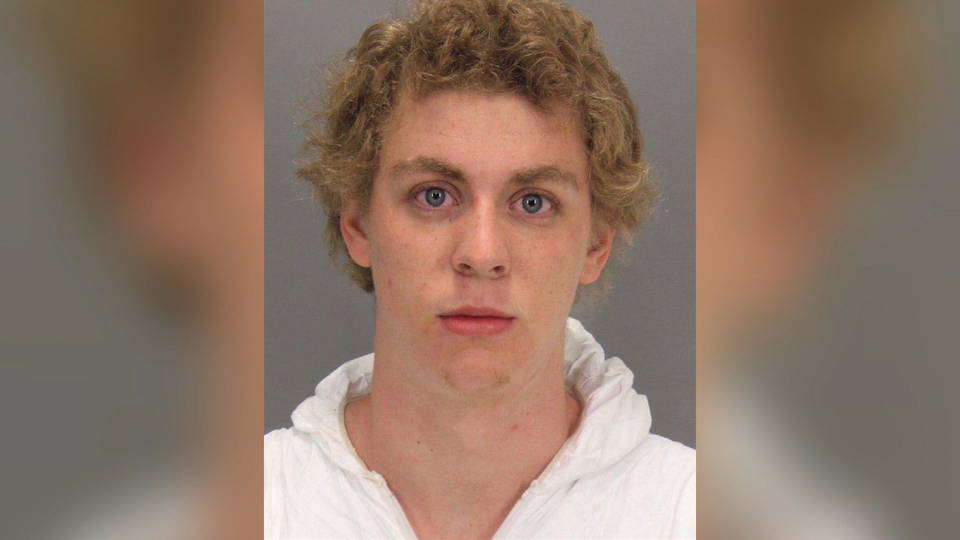
Stanford Swimmer Brock Turner Released from Jail After Only 3 Months & Is an Arkansas Town Operating a "Hot Check" Court as an Illegal Debtors' Prison? & The Criminalization of Poverty: Woman Describes Fines & Arrests After $1.07 Check Bounces 2SEP16

Still not asking for it
IT is disgusting that "afflunza victim" brock turner is out of jail. Not only did this pig get away with rape, he didn't even serve the full term of his favorable sentence for raping a woman. brock turner is disgusting, aaron persky, the judge who sentenced him is also a disgusting pig, and they will, some day, be held accountable for their actions. Meanwhile people like Nikki Petree, struggling to live in Sherwood, Arkanas, has been repeatedly fined and has been jailed by for bouncing one check for $29.00, and she is not the only victim of "judge" milas 'butchie' hale and the illegal debtors' prison in Sherwood, Arkansas. Thank God for the ACLU,  the +Lawyers Committee for Civil Rights and the law firm of Morrison & Foerester, at least they have the moral fortitude to take on 'butchie' hale and his illegal court system. I have no doubt Nikki Petree and the other poor people who have been persecuted, prosecuted, fined and imprisoned illegally will get justice. If they had only used the "affluenza" defense!

Stanford Swimmer Brock Turner Released from Jail After Only 3 Months

SEPTEMBER 02, 2016
HEADLINES
H14brockturner
Meanwhile, Stanford swimmer Brock Turner is slated to leave a Santa Clara jail today, after serving only three months of a six-month sentence for sexually assaulting an unconscious woman behind a dumpster. His short sentence has sparked massive outrage against the judge on the case, Aaron Persky. It’s also inspired California lawmakers to pass a new law requiring prison time for those convicted of sexually assaulting an unconscious victim. In a widely read letter, Brock Turner’s victim wrote: "You took away my worth, my privacy, my energy, my time, my intimacy, my confidence, my own voice, until today."

Is an Arkansas Town Operating a "Hot Check" Court as an Illegal Debtors' Prison?

SEPTEMBER 02, 2016
https://www.youtube.com/watch?v=JuDnCnGaLCg
A woman in Sherwood, Arkansas, just spent 35 days in a county jail after she accidentally bounced a $29 check five years ago. Nikki Petree was sentenced to jail last month by a judge accused of running a debtors’ prison. She had already been arrested at least seven times over the bounced check and paid at least $600 in court fines. Her release comes as the Lawyers’ Committee for Civil Rights Under Law, the ACLU and an international law firm have filed a lawsuit to challenge the modern-day debtors’ prison in Sherwood. We speak with Kristen Clarke, president and executive director of the Lawyers’ Committee for Civil Rights Under Law, who says Sherwood jails people in violation of a long-standing law that forbids the incarceration of people for their failure to pay debts.

TRANSCRIPT

This is a rush transcript. Copy may not be in its final form.
JUAN GONZÁLEZ: We turn now to Arkansas to look at the case of a mother who just spent 35 days in a county jail after she accidentally bounced a $29 check five years ago. Nikki Petree was sentenced to jail just last month by a judge accused of running a debtors’ prison. Petree had already been arrested at least seven times over the bounced check, and paid at least $600 in court fines—more than 20 times the original debt. Petree said, quote, "Every time I go to jail, they’d let me out immediately for $100. They’d turn around and add $600 or $700 more to my bond. I couldn’t afford to pay. They cornered me, and there was no way out from underneath it. I felt overwhelmed and hopeless," she said.
AMY GOODMAN: Nikki Petree’s release comes as the Lawyers’ Committee for Civil Rights Under Law, the ACLU and the international law firm Morrison & Foerster have filed a class-action civil rights lawsuit challenging the modern-day debtors’ prison in Sherwood, Arkansas. The lawsuit was filed in the United States District Court for the Eastern District of Arkansas against the city of Sherwood, Arkansas; Pulaski County, Arkansas; and Judge Milas Hale. Petree is one of four named plaintiffs in the suit who allege their constitutional rights were violated by the Hot Check Division of the Sherwood District Court when they were jailed for their inability to pay court fines and fees. The lawsuit alleges that Sherwood, Pulaski County, engages in a policy and custom of jailing poor people who owe court fines, fees and costs stemming from misdemeanor bad check convictions. It also says they jail people in violation of a long-standing law that forbids the incarceration of people for their failure to pay debts.
For more, we’re going to Washington, D.C., to Kristen Clarke, president and executive director of the Lawyers’ Committee for Civil Rights Under Law, one of the groups that filed this lawsuit.
Welcome to Democracy Now! Can you explain exactly what happened to Nikki Petree? She ends up in jail for a $28-and-change check, that she didn’t realize had bounced because her last paycheck hadn’t put in, and she ends up in jail five years later?
KRISTEN CLARKE: Yeah, Nikki Petree is not alone. This is a debtors’ court system that’s been in place in Sherwood that preys on the backs of poor people. Nikki Petree is one woman who exemplifies what happens if you’re poor in Sherwood. She wrote a check that was returned for insufficient funds about five years ago. That check amounted to about $28. And since that time, she’s spent more than 25 days in jail and has paid more than $600 in fines to the local court system. That is money that she did not have. She lives below the poverty line. She remains indebted by more than $2,500 to the local court system. And she was jailed at the time that we filed this suit last week. And there are so many people like her in Sherwood. We filed this lawsuit to bring an end to a court system that we believe preys on the backs of poor people.
JUAN GONZÁLEZ: Well, Kristen Clarke, in that lawsuit, you raise the issue of why this is happening. You say that local courts and municipalities throughout Arkansas have used the threat and the reality of incarceration to trap their poorest citizens in a never-ending spiral of repetitive court proceedings and ever-increasing debt. But you say also that faced with opposition to increased taxes, municipalities have turned to creating a system of debtors’ prisons to fuel the demand for increased public revenue. How extensive is this in Arkansas that municipalities are using this as a new revenue source?
KRISTEN CLARKE: It’s not only the case in Arkansas, but all over the country we’re seeing the resurgence of debtors’ prisons. In Sherwood, this is a court that’s generated more than $12 million over the course of five years by imposing fines and fees over and over again on poor people who wrote checks to local merchants that were returned for insufficient funds. In Ferguson, Missouri, we saw a local court system that was built on this concept of entangling people in the court system for transit, for traffic offenses. That court generated $20 million off the backs of poor people in Ferguson. But we know that these are not isolated practices.
What’s happened is that in 1983 the Supreme Court made clear that this is unconstitutional, that you can’t lock people up merely because they are poor. But what we’ve seen is the resurgence of debtors’ prison, because there hasn’t been enough enforcement to put a check on court systems like the one in place in Sherwood. So we filed this lawsuit to bring an end to an era that’s been marked by a court system in which one judge presides, Judge Butch Hale, where he has disregarded the due process rights of poor people at every turn.
What happens in Sherwood is that people get on line outside his courtroom. They are forced to sign a waiver of their right to counsel. Nobody is allowed in that courtroom but the defendants. If you come with a family member, an advocate or friend, you’re not allowed in. There are no tapes or recordings of the proceedings, no transcripts of the proceedings. People appear without counsel by their side. No one explains their rights to them. And every time they stand up before Judge Butch Hale, he imposes fine, fee after fine and fee, and court costs on them, subjecting these people to a spiraling cycle of debt.
AMY GOODMAN: I mean, it is an astounding story about Nikki Petree. Didn’t she end up owing something like $2,600 on this $28-and-change check?
KRISTEN CLARKE: That’s exactly right. She remains indebted by more than $2,500, $2,600. She spent more than 25 days in jail. She’s already come out of pocket more than $600. And that’s money that she doesn’t have, because she, like everybody who appears before this court, are poor people. This is a court that preys on the most vulnerable people in Sherwood. And they make a profit off of this.

The Criminalization of Poverty: Woman Describes Fines & Arrests After $1.07 Check Bounces

SEPTEMBER 02, 2016

We continue our look at what the ACLU calls an illegal debtors’ prison in Arkansas by speaking with a former resident who wrote a check for $1.07 for a loaf of bread. She describes how after her check bounced, her debt ballooned with fees and fines to nearly $400, and police officers twice came to her job to arrest her. Since then, she has been caught up in Sherwood’s Hot Checks Department. We are also joined by lawyer Kristen Clarke, president and executive director of the Lawyers’ Committee for Civil Rights Under Law, who says the woman’s experience is common.

TRANSCRIPT

This is a rush transcript. Copy may not be in its final form.
AMY GOODMAN: We’re also joined by Janice, who is a native of Little Rock, Arkansas, who’s been caught up in Sherwood’s Hot Checks Department for decades. One check she wrote for $1.07 for a loaf of bread bounced. The debt ballooned after fees and fines to nearly $400. She currently has a warrant in Sherwood’s Hot Checks Department and wishes to remain anonymous for fear of arrest.
So, Janice, you’re in profile; you don’t want to be seen. But explain what happened to you.
JANICE: On several occasions, I have been arrested by Sherwood Police Department for bounced checks, insufficient funds checks. I’ve even been arrested on my job—two different jobs, as a matter of fact, one—with two different hospitals. My checks has totaled, I would say, less than $1,000 worth of checks. And they’re little, small checks. I was a bad manager. I didn’t keep a good register, so, therefore, I had bounced checks. Some were $20. Hundred dollar may have been the highest number of checks that I wrote. But I have had accumulated fees up to thousands of dollars in fees and costs, on roughly less than $1,000 worth of checks.
JUAN GONZÁLEZ: And when you go into the—before the judge on these cases, what’s the process? What happens there?
JANICE: He just bring you before him, and, like they say, you sign a waiver. You go up before the judge, and he assesses your fees and court costs, and give you a monthly payment amount, until you have to pay this monthly payment by such, such date. You have a 10-day grace period. If it’s not paid, then there’s another failure-to-pay warrant issued and additional costs and fines assessed to the amount you already have.
AMY GOODMAN: Now, part of your struggle is you have MS—is that right, Janice? And you’re trying to deal with medical costs, as well?
JANICE: Correct.
AMY GOODMAN: And is this Judge Hale that you’re going before, who Kristen Clarke just described?
JANICE: Yes, it is.
AMY GOODMAN: Are you allowed to bring in a friend, a family member, a lawyer at your side?
JANICE: Now, if you do retain an attorney, an attorney can be there, but family members and friends are not allowed in.
AMY GOODMAN: So what is your situation right now?
JANICE: Right now, I have not been there since somewhere around 2008. And I have an active warrant, because I could not afford to pay the monthly payment that he had assessed of $200, because I feel as if I have paid, you know, restitution on the checks that I’ve previously wrote, but these are all accumulated fines and court costs that has been assessed.
JUAN GONZÁLEZ: And they’ve come on several occasions to arrest you on your job? I find this hard—this is a civil issue. Why they would be coming to arrest you on your job?
JANICE: Because that’s what they do. Even though they know your address, your home address, they will come out to your job, opposed to your home. And this has caused me to lose two jobs because of that.
JUAN GONZÁLEZ: Kristen Clarke, what about that, this issue of—I mean, normally, if somebody writes a check that they don’t have funds for, the bank will send them and issue, you know, a charge, but having law enforcement come in and arrest you for this, especially on your job, is this—is this illegal?
KRISTEN CLARKE: This abusive debt collection practice is part of the scheme. The clients that we represent in this case have had the cops show up at their doorstep and insist that they pay money now, or they are threatened with arrest. I am heartbroken to hear the story of the woman who just spoke. But again, we know that these are not isolated cases. This is a systemic pattern that exists across Sherwood and across Pulaski County. This is a court that has made big business out of preying on the backs of poor people. And they have made the focus on the most marginalized people in this community the focus of this court. People who have written small checks that are returned for insufficient funds, that is the focus of this court. And I can’t tell you how many people we’ve talked to who have stories like the woman who just spoke. We represent a cancer patient in this case. You know, he was hospitalized and receiving chemotherapy. And two—you know, a few checks bounced for very small amounts, and this man has been jailed and remains indebted in thousands of dollars to a court. Every time someone appears before Judge Hale, he imposes more court costs, more fines, more fees. And there is no way out for the people who are entrapped in this system.
AMY GOODMAN: So where does the lawsuit go from here, Kristen?
KRISTEN CLARKE: Well, we filed a federal class-action lawsuit. The woman who just spoke may indeed be somebody who is a member of this class. We will fight. We believe that Sherwood is a poster child, if you will. This is a classic example of a debtors’ prison. And we believe we’ll be successful at the end of the day in securing relief for the poor people of Sherwood. We believe that when somebody faces criminal charges, that they should have a lawyer by their side. They should have a judge who warns them about their rights and who counsels them about their rights and respects their due process rights. We will—we will fight on.
And then we’re going to look elsewhere around the country, because we know that this is a nationwide problem that we face. All around the country, we’ve seen the resurgence of debtors’ prisons. We’ve seen the criminalization of poverty. So, we are going to fight until we end this practice and bring our courts in line with that 1983 ruling from the Supreme Court that says you cannot lock poor people up merely because of their inability to pay a fine or fee.
AMY GOODMAN: Well, I want to thank you, Kristen Clarke, with the Lawyers’ Committee for Civil Rights Under Law. And, Janice, thank you for being with us—not her real name. She is in shadow, but that’s because of what she faces as a poor person who is a victim of Sherwood’s Hot Checks Department in Arkansas.

Democracy Now! Daily Digest 2SEP16


Democracy Now! Daily Digest

A Daily Independent Global News Hour with Amy Goodman & Juan González

Friday, September 2, 2016

Stories


Could the signing of a historic peace accord in Colombia between the government and FARC rebels bring an end to Latin America's longest armed conflict? "There's a long way ... Read More →

A woman in Sherwood, Arkansas, just spent 35 days in a county jail after she accidentally bounced a $29 check five years ago. Nikki Petree was sentenced to jail last month by ... Read More →

A federal judge has denied a request from the former Black Panther and journalist Mumia Abu-Jamal for life-saving medication that could cure his hepatitis C. Last year, ... Read More →

We continue our look at what the ACLU calls an illegal debtors' prison in Arkansas by speaking with a former resident who wrote a check for $1.07 for a loaf of bread. ... Read More →

Headlines →

31 August 2016

Former extremist: 'I was living dual lives' An extremist’s path to academia — and fighting terrorism 29AUG16


FASCINATING. Just listen to this man's experience and take special note of what he found out from his Muslim students while he was teaching in Morocco. One of the most important things he said is about the attitude of his Muslim students in Morocco. "JESSE CURTIS MORTON: And in my conversations with my students, I realized that the vision, the utopian vision of the Islamic State that I held, the general, particularly from amongst the millennial population, didn’t have any desire for such a society." I have had many discussions and arguments with family and friends on this very point over the years, that the overwhelming majority of Muslims do not support, approve of or want the restrictive, controlling and violent extremist "islamic" society and government the taliban, al-qaida, daesh/isis, boko haram and all other radical islamic groups as well as saudi arabia and iran want to impose on Muslims. Thank you Mr. Morton!"  Take special note of the fact that he became a trusted adviser to U.S. and foreign security agencies not because he was tortured into submission but because he wasn't. His honesty is admirable, and I hope and pray he really is kept safe from extremist of all faiths and politics. From the +PBS NewsHour .....

Former extremist: 'I was living dual lives'

An extremist’s path to academia — and fighting terrorism

Jesse Curtis Morton begins work as a counterterrorism researcher at George Washington University this fall. But his path to the position was highly unconventional: until 2012, Morton was Younus Abdullah Muhammad, a Muslim extremist who founded a radical Islamist website. His decision to go undercover and assist in counterterrorism efforts while in prison changed his trajectory profoundly.
HARI SREENIVASAN: Across the country, students are heading back to school. As on many campuses, today is also the first day of class at George Washington University.
This summer, a think tank at the school made one of the most unique hires in academia.
The “NewsHour” has a broadcast exclusive interview with a man who was once convicted of terrorism-related charges, and is now a researcher on campus.
I caught up with Jesse Curtis Morton recently.
This is Jesse Curtis Morton. In 2010, he went by another name, Younus Abdullah Muhammad.
JESSE CURTIS MORTON, George Washington University: We will fight you and destroy you if we have to, but we prefer that you come home and pack it up. Stop killing our innocent men, women and children overseas.
HARI SREENIVASAN: Born in the U.S., he grew up in Pennsylvania and New Jersey, but Morton became a Muslim extremist. This was him on the streets of New York.
JESSE CURTIS MORTON: There will be no peace with Israel until Israel is in pieces.
HARI SREENIVASAN: Morton also helped found Revolution Muslim, a Web site that the FBI says encouraged Muslims to support Osama bin Laden, al-Qaida and other violent jihadi groups.
The Web site threatened violence against the creators of the Comedy Central show “South Park” for a 2010 cartoon depicting the Prophet Mohammed. In 2012, Morton was sentenced to more than 11-and-a-half years in jail for using the Internet to threaten bodily harm.
But here we are four years later. He’s a free man with a decent-paying job at a George Washington University think tank in the nation’s capital. Morton is out of jail early because he cooperated with authorities in the U.S. and overseas. He worked undercover to gather intelligence on those who still trusted the man they saw in those videos.
He helped train law enforcement to recognize people on the path he was on, and helped analyze the behavior of suspected terrorists with insights only someone like him could have.
You’re on camera now. Your face is going to be out there. And you’re going to be walking around a college campus, as someone who has been convicted of supporting al-Qaida.
JESSE CURTIS MORTON: Yes.
HARI SREENIVASAN: There’s 10,000 sets of parents who might be a little concerned that someone with a target on their back might be walking around on the same campus as their students.
JESSE CURTIS MORTON: Well, there has been an extensive security plan put in place by a very competent security team at G.W. And we have assessed the risk with the law enforcement community, federal, local, and some state agencies. And there is very, very, very little risk at this point.
HARI SREENIVASAN: Getting to this point, Morton says, has been a long road through radicalization and then de-radicalization.
JESSE CURTIS MORTON: I came from a very tumultuous childhood, where there was very severe abuse. And when I reached out to my society and tried to get assistance to stop that abuse, the school, my family, and the society around me didn’t prevent it. And so, at a very young age, I rejected American culture and the American way of life, so to say, and sought a new identity.
HARI SREENIVASAN: Not to discount the abuse that you went through, but lots of kids live through child abuse. They don’t go out and build Web sites supporting Osama bin Laden.
JESSE CURTIS MORTON: Well, it’s a common denominator with regard to radicalization processes. When we study pre-radicalization, we oftentimes see trauma, we see criminality, we see that the radical or the violent extremist interpretation of Islam attracts people with some degree of baggage.
It doesn’t mean that I justify it. It doesn’t mean that I blame what I became on what I went through.
HARI SREENIVASAN: A runaway at 16, he was a hippie following the Grateful Dead. Drug dealing landed him in jail, and there, he says, began his slow introduction to Islam.
There are people who convert to Islam all over the world every day, don’t end up where you are. How’s that?
JESSE CURTIS MORTON: I was a radical and extremely political before I adopted Islam. So, I think I naturally gravitated toward the politicized interpretation of Islam.
And from there, I identified with the sort of anti-imperialist message that was being promoted by al-Qaida.
HARI SREENIVASAN: His thoughts were becoming progressively more radical. In 2006, at a Muslim Day Parade in New York, he happened upon the extremist Muslim Thinkers Society.
JESSE CURTIS MORTON: I glanced to my left and saw the black flag, what we call the black flag of ISIS now, but has a much longer history, and saw the movement or the group promoting the images of dead children on the streets and selling T-shirts that said “I love jihad” in Arabic.
I immediately walked up to them and told them I wanted to join them. And very soon, I was climbing their ranks and becoming one of their primary speakers on the streets of Manhattan, Jackson Heights, Queens, protests outside of Israeli embassies, et cetera, et cetera.
HARI SREENIVASAN: Around this time, Morton enrolled at Columbia University’s School of International and Public Affairs, earning a master’s degree in international affairs.
JESSE CURTIS MORTON: Sort of sort of like I was living dual lives. I was Jesse Morton in school, and I was Younus Abdullah Muhammad, leader of Revolution Muslim, outside of school. And I never combined the two, so people didn’t really know what I was doing while I was at Columbia.
HARI SREENIVASAN: But the Ivy League education did nothing to moderate Morton’s world view. In 2007, he and a few other radicals started the Revolution Muslim Web site.
JESSE CURTIS MORTON: At the time, online radicalization was becoming easier because of the Web 2.0, the relatively nascent platforms like YouTube and chat rooms.
Online forums, that was the platform back then. And you could see that the number of hits that were on the Web site were growing and mounting, so we knew that we were having an enhanced impact.
HARI SREENIVASAN: The now-defunct Web site posted calls for jihad and excerpts from “Inspire,” the al-Qaida magazine.
Lorenzo Vidino is the director of the Program on Extremism at George Washington’s Center for Cyber and Homeland Security. It was his idea to hire Morton.
LORENZO VIDINO, George Washington University: His Web site was one of the first — I would say the first Web site in the United States that spread the message of al-Qaida, of other groups.
And it was sort of the go-to place for wannabe jihadists in the United States. It is no coincidence that a variety of individuals who have gone down the trajectory of radicalization and eventually become terrorists were at some point in one way or the other involved in the Web site.
HARI SREENIVASAN: In 2009, Morton moved to Morocco. While running the Web site, he taught English and standardized test prep. Ironically, moving to Morocco didn’t harden his views toward jihad. Quite the opposite. Meeting a new generation of students, Morton says, made him begin rethinking things.
JESSE CURTIS MORTON: And in my conversations with my students, I realized that the vision, the utopian vision of the Islamic State that I held, the general, particularly from amongst the millennial population, didn’t have any desire for such a society.
HARI SREENIVASAN: In May of 2011, Morton was arrested in Morocco on a U.S. criminal complaint, charged with communicating threats online. After five months in a Moroccan prison, he was flown back to the U.S. to face trial.
His de-radicalization began on the plane ride home.
JESSE CURTIS MORTON: And the agent that initiated communication on that plane asked me what I wanted to be called, Jesse Morton or Younus Abdullah Muhammad. And, interestingly enough, I responded Jesse Morton. And it shocked me too.
And over time, I learned that my identity as Younus Abdullah Muhammad was an effort to kill a person that I hated.
HARI SREENIVASAN: He eventually received a sentence of 11-and-a-half years. In jail, he was interviewed by counterterror officials. Those interactions, he says, further changed his world view.
JESSE CURTIS MORTON: I had interaction with a very intelligent and a very sincere female FBI agent. And over the course of a very long debriefing process, the world view that I once held that held them to be enemies of Islam and engaged in a conspiracy to prevent Islam from establishing itself politically was, in fact, false.
HARI SREENIVASAN: Soon, Morton says he began helping counterterrorism officials in their investigations.
JESSE CURTIS MORTON: We generated significant rewards from my cooperation, some of which involved international activity. At the time, the Syrian civil war was heating up, and more jihadist groups were appearing. And several people from the West were joining them.
I can’t talk about specifics of particular cases, but we also yielded domestic investigatory gains.
HARI SREENIVASAN: Lorenzo Vidino thinks Morton will make a valuable contribution to research on terrorism and radicalization.
LORENZO VIDINO: Most of the analysis of radicalization comes from outsiders, from people who are just studying it. This analysis will come from the inside, firsthand from somebody who has lived it and has played a prominent role in that scene.
HARI SREENIVASAN: There’s also going to be several people watching this that say, how do we know he’s telling the truth? How can we trust him?
JESSE CURTIS MORTON: The prosecuting attorney on my case advocated for my hiring at G.W. And some of the biggest high-profile individuals of the counterterrorism community have also vouched for me.
And so I will prove that to the public as time goes on.
HARI SREENIVASAN: What if somebody doesn’t want to believe that and puts your life at risk?
JESSE CURTIS MORTON: If I am willing to sacrifice in the past so much to promote such a disgusting ideology, then I think that, if I’m sincere in my reform, I should be as equally dedicated and equally passionate about trying to repair some of the damage that I have done.
HARI SREENIVASAN: For the PBS “NewsHour,” I’m Hari Sreenivasan in Washington.

UPDATE 31AUG16

I have been off line for 2 months as I have been caring for my parents, providing a home for them and taking care of their health issues. But now the are actually home, back in the house we built as a family in 1969-1970, in Scandia, Pennsylvania. My retired brother and sister-in-law have moved in with them and will take care of them until they die.  Mom and dad are so happy to be home with their family still in the area, their Church and friends, and to be in the wilds of Northwestern Pennsylvania. They wanted to be home to die, and we are all praying that will not be for a long, long time.......