NORTON META TAG

Showing posts with label American National Anthem. Show all posts

18 February 2025

Booing an anthem? Three fights in nine seconds? Welcome to USA-Canada hockey. 16FEB25

 INITIATING brawls with our Canadian friends only shows those starting these fights are as ignorant as NOT MY pres drumpf / trump. drumpf / trump has insulted Canada with his comments about making Canada the 51st state and threatening to impose tariffs on Canadian exports to the U.S. Who but an idiot says these things to a friend, and who but an idiot would defend these ignorant comments? I wish Canadians did not boo our national anthem, it is insulting Americans who are opposing the fascist agenda of the drumpf / trump-vance autocratic oligarchy. I hope the booing of our national anthem in Canada will soon stop, I hope the brawling by "sportsmen" will soon stop, and I know Canada will celebrate with America when our long national nightmare is over on 20 January 2029.

Booing an anthem? Three fights in nine seconds? Welcome to USA-Canada hockey.


Fans in Montreal continued to boo the American national anthem and a string of fights followed in the United States’ entertaining win over Canada in Saturday night’s 4 Nations Face-Off game.


Cindy Boren arrived at The Post in 2000 as an assignment editor in charge of baseball and NFL/Washington Football Team coverage. She switched to full-time writing, focusing on national sports stories and issues, when she founded The Early Lead blog in 2010


There hadn’t been a fight in an international hockey tournament since the NHL hosted the 2004 World Cup of Hockey, but there hasn’t been an international hockey tournament at a time of such strained relations between the United States and Canada.

Against the backdrop of President Donald Trump’s talk of making Canada the 51st state and the imposition of tariffs on Canadian goods, Saturday night’s 4 Nations Face-Off matchup between the countries began when the sold-out crowd at Montreal’s Bell Centre booed the American national anthem. The spirit quickly spilled over onto the ice, with three fights in the first nine seconds of the highly entertaining game, which the United States won, 3-1.

The matchup was an emotional one for Canadian fans who booed “The Star-Spangled Banner” despite the public address announcer asking — in French and English — “in the spirit of this great game that unites everyone that you kindly respect the anthems and the players that represent each country.” Montreal fans also booed before Team USA’s 6-1 victory against Finland on Thursday, prompting forward Matthew Tkachuk to say afterward, “I didn’t like it, and that’s all I got.” The boos, which were louder Saturday night, were a continuation of those at NBA and NHL games in Calgary, Ottawa, Toronto and Vancouver earlier this month as well.

“We knew it was going to happen,” U.S. defenseman Zach Werenski told reporters Saturday night. “It happened the last game, it’s been happening in the NHL before this, and we knew tonight was going to be the same way. We obviously don’t like it.”

“There should not be any of that. We’re here to play a hockey game. They can boo all they want during the games. The anthems should be off limits,” Canada’s Brad Marchand, who plays for the Boston Bruins, told reporters Thursday. Players, he added, “have nothing to do with the political things that are going on.”

Fans booed “The Star Spangled Banner” before the U.S.-Canada ice hockey game in Montreal on Feb. 15. (Video: Storyful)

U.S. players were prepared for the reception. “It is what it is,” Werenski said. “We kind of had an idea. We used it as motivation the best we could and found a way to get a win. But we had an idea going into it, so it wasn’t a surprise. Definitely don’t like it, though.”

The Tkachuk brothers — Matthew and Brady — were at the heart of the players’ plan to come out swinging. The fisticuffs marked the fastest fight to start an NHL international game, beating the record of 20 seconds. That dubious achievement occurred in 1996, when Canada’s Keith Primeau and Claude Lemieux fought Team USA’s Keith Tkachuk, father of Matthew and Brady, and Bill Guerin in the World Cup of Hockey.

“We needed to send a message,” Matthew Tkachuk said after Team USA’s win. “We’re here in Montreal on a Saturday night. We want it to be our time, and that message started right from the get-go.”

The puck had barely hit the ice when Matthew Tkachuk, who plays for the Florida Panthers, and Brandon Hagel, who plays for the Tampa Bay Lightning, dropped gloves in a continuation of their NHL teams’ rivalry. After Matthew Tkachuk headed to the penalty box, Brady Tkachuk, whose NHL team is the Ottawa Senators, fought Sam Bennett, his older brother’s Panthers teammate, after the second faceoff, with Matthew Tkachuk pounding the glass in support. Then, J.T. Miller of the New York Rangers fought Colton Parayko of the St. Louis Blues after the two tangled in front of Canada’s net.

Miller was thrilled to be part of the Tkachuk brothers’ plan, calling it “the coolest experience I’ve probably had on the ice, one of them. To hear the building like that, it’s something you’ll never forget. There’s a lot of bad blood, but at the same time, tons of respect for the other team.”

It was part of the American players’ strategy to take the fight to Canada immediately. “There was a little discussion during the day,” Brady Tkachuk said after being encouraged by his brother to “tell the truth” as they addressed reporters.

“Yeah, there was a group chat going on today,” he added. “We just reaffirmed we were going to do that. I think Matthew’s fight to start it off was just such an energy boost. I think I was more excited, more nervous for my own. And then for Millsy to cap it off against a big guy like that, he did a great job. It was a pretty awesome experience.”

With a spot in the final of the round-robin tournament secured, Team USA plays Sweden on Monday night while Canada and Finland play Monday afternoon as the tournament moves to Boston’s TD Garden. The final is Thursday night.

correction

A previous version of this article incorrectly said J.T. Miller plays for the Vancouver Canucks. He was traded to the New York Rangers in January. The article has been corrected.

12 September 2022

NINE-ELEVEN & WATCH: Lady Gaga sings ‘The Star Spangled Banner’ at Biden inauguration 20JAN21& The Story Behind the Star Spangled Banner 1MAR07


REMEMBERING the terrorism on 9/11 (11 SEP 2001) and the terrorism of the insurrection on 6 JAN 21 I think it is appropriate to share what I think is one of the best as well as most sincere performances of our national anthem and the real story behind the Star Spangled Banner after  Charlotte Parson's beautiful poem Nine-Eleven.....

NINE-ELEVEN

You passed me on the street
I rode the subway with you
You lived down the hall from me
I admired your dog in the park one morning
We waited in line for a concert
I ate with you in the cafes
You stood next to me at the bar
We huddled under an awning during a downpour
We dashed across the street to beat the light
I bumped into you coming round the corner
You stepped on my foot
I held the door for you
You helped me up when I slipped on the ice
I grabbed the last Sunday Times
You stole my cab
We waited forever at the bus stop
We sweated in steamy August
We hunched our shoulders against the sleet
We laughed at the movies
We groaned after the election
We sang in church
Tonight I lit a candle for you
All of you

WATCH: Lady Gaga sings ‘The Star Spangled Banner’ at Biden inauguration


Lady Gaga sang the National Anthem on Jan. 20 to open President-elect Joe Biden’s inauguration ceremony. Gaga, who campaigned in November in Pennsylvania for Biden, posted a photo on Twitter and Instagram from the U.S. Capitol yesterday. She wrote that the inauguration was “a day of peace for all Americans. A day for love, not hatred. A day for acceptance not fear.”

The Story Behind the Star Spangled Banner

How the flag that flew proudly over Fort McHenry inspired an anthem and made its way to the Smithsonian

star-spangled-banner-large.jpg
A conservator works on the Star-Spangled Banner in 1914. Corbis

On a rainy September 13, 1814, British warships sent a downpour of shells and rockets onto Fort McHenry in Baltimore Harbor, relentlessly pounding the American fort for 25 hours. The bombardment, known as the Battle of Baltimore, came only weeks after the British had attacked Washington, D.C., burning the Capitol, the Treasury and the President's house. It was another chapter in the ongoing War of 1812.

A week earlier, Francis Scott Key, a 35-year-old American lawyer, had boarded the flagship of the British fleet on the Chesapeake Bay in hopes of persuading the British to release a friend who had recently been arrested. Key's tactics were successful, but because he and his companions had gained knowledge of the impending attack on Baltimore, the British did not let them go. They allowed the Americans to return to their own vessel but continued guarding them. Under their scrutiny, Key watched on September 13 as the barrage of Fort McHenry began eight miles away.

"It seemed as though mother earth had opened and was vomiting shot and shell in a sheet of fire and brimstone," Key wrote later. But when darkness arrived, Key saw only red erupting in the night sky. Given the scale of the attack, he was certain the British would win. The hours passed slowly, but in the clearing smoke of "the dawn's early light" on September 14, he saw the American flag—not the British Union Jack—flying over the fort, announcing an American victory.

Key put his thoughts on paper while still on board the ship, setting his words to the tune of a popular English song. His brother-in-law, commander of a militia at Fort McHenry, read Key's work and had it distributed under the name "Defence of Fort M'Henry." The Baltimore Patriot newspaper soon printed it, and within weeks, Key's poem, now called "The Star-Spangled Banner," appeared in print across the country, immortalizing his words—and forever naming the flag it celebrated.

Nearly two centuries later, the flag that inspired Key still survives, though fragile and worn by the years. To preserve this American icon, experts at the National Museum of American History recently completed an eight-year conservation treatment with funds from Polo Ralph Lauren, The Pew Charitable Trusts and the U.S. Congress. And when the museum reopens in summer 2008, the Star-Spangled Banner will be its centerpiece, displayed in its own state-of-the-art gallery.

"The Star-Spangled Banner is a symbol of American history that ranks with the Statue of Liberty and the Charters of Freedom," says Brent D. Glass, the museum's director. "The fact that it has been entrusted to the National Museum of American History is an honor."

Started in 1996, the Star-Spangled Banner preservation project—which includes the flag's conservation and the creation of its new display in the renovated museum—was planned with the help of historians, conservators, curators, engineers and organic scientists. With the construction of the conservation lab completed in 1999, conservators began their work. Over the next several years, they clipped 1.7 million stitches from the flag to remove a linen backing that had been added in 1914, lifted debris from the flag using dry cosmetic sponges and brushed it with an acetone-water mixture to remove soils embedded in fibers. Finally, they added a sheer polyester backing to help support the flag.

"Our goal was to extend [the flag's] usable lifetime," says Suzanne Thomassen-Krauss, the conservator for the project. The intent was never to make the flag look as it did when it first flew over Fort McHenry, she says. "We didn't want to change any of the history written on the artifact by stains and soil. Those marks tell the flag's story."

While the conservators worked, the public looked on. Over the years, more than 12 million people peered into the museum's glass conservation lab, watching the progress.

"The Star-Spangled Banner resonates with people in different ways, for different reasons," says Kathleen Kendrick, curator for the Star-Spangled Banner preservation project. "It's exciting to realize that you're looking at the very same flag that Francis Scott Key saw on that September morning in 1814. But the Star-Spangled Banner is more than an artifact—it's also a national symbol. It evokes powerful emotions and ideas about what it means to be an American."

1 / 16
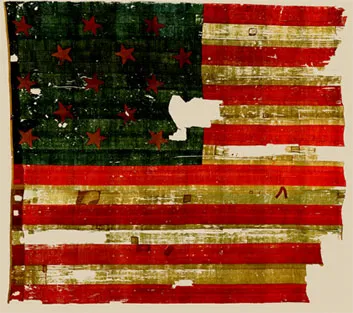
Smithsonian photographers created this composite image of the Star-Spangled Banner in 2004 from 73 separate photographs. The flag's large size (30-by-34 feet) prevented photographers from capturing it in one image while conservators worked on it in the specially-built conservation lab. Courtesy of the National Museum of American History

The Flag's Beginnings

The Star-Spangled Banner's history starts not with Francis Scott Key, but a year earlier with Maj. George Armistead, the commander of Fort McHenry. Knowing that his fort was a likely British target, Armistead told the commander of Baltimore defenses in July 1813 that he needed a flag—a big one. "We, sir, are ready at Fort McHenry to defend Baltimore against invading by the enemy…except that we have no suitable ensign to display over the Star Fort, and it is my desire to have a flag so large that the British will have no difficulty in seeing it from a distance."

Armistead soon hired a 29-year-old widow and professional flagmaker, Mary Young Pickersgill of Baltimore, Maryland, to make a garrison flag measuring 30 by 42 feet with 15 stars and 15 stripes (each star and stripe representing a state). A large flag, but one not unusual for the time. Over the next six weeks, Mary, her daughter, three of Mary's nieces, a 13-year-old indentured servant and possibly Mary's mother Rebecca Young worked 10-hour days sewing the flag, using 300 yards of English wool bunting. They made the stars, each measuring two feet in diameter, from cotton—a luxury item at the time. Initially they worked from Mary's home (now a private museum known as the Flag House), but as their work progressed they needed more room and had to move to Claggett's brewery across the street. On August 19, 1813, the flag was delivered to Fort McHenry.

For making the Star-Spangled Banner, Mary was paid $405.90. She received another $168.54 for sewing a smaller (17 by 25 feet) storm flag, likely using the same design. It was this storm flag—not the garrison flag now known as the Star-Spangled Banner—which actually flew during the battle. The garrison flag, according to eyewitness accounts, wasn't raised until the morning.

After the Battle of Baltimore

Armistead remained in command of Fort McHenry for the rest of his life. Historians are not sure how the Armistead family came into possession of the flag, but upon Armistead's death in 1818, his wife Louisa inherited it. It is she who is thought to have sewed the red upside-down "V" on the flag, beginning the stitches for the letter "A." She is also thought to have begun the tradition of giving pieces of the flag away to honor her husband's memory, as well as the memories of the soldiers who defended the fort under his command.

When Louisa died in 1861, she passed the flag down to their daughter Georgiana Armistead Appleton over the legal objections of their son. "Georgiana was the only child born at the fort, and she was named for her father," says Thomassen-Krauss. "Louisa wanted Georgiana to have it."

The Missing Pieces

In 1873, Georgiana loaned the flag to George Preble, a flag historian who until that time had thought the flag was lost. That same year, Preble had the first known photograph of it taken at the Boston Navy Yard and exhibited it at the New England Historic Genealogical Society, where he stored it until 1876.

While the Star-Spangled Banner was in Preble's care, Georgiana allowed him to give away pieces of the flag as he saw fit. Georgiana, herself, had given away cuttings of the flag to other Armistead descendants, as well as family friends. She once noted, "[H]ad we given all that we have been importuned for little would be left to show." This family tradition continued through 1880 with Armistead's grandson giving away the last documented piece, says Thomassen-Krauss.

Several of these cuttings from the Star-Spangled Banner have been located over the years, including about a dozen that are owned by the American History Museum. "We're aware of at least a dozen more that exist in other museums and private collections," says Kendrick.

But a missing 15th star has never been found. "There's a legend that the star was buried with one of the soldiers from Fort McHenry; another says that it was given to Abraham Lincoln," says Kendrick. "But no real evidence has surfaced to support these stories, and the true fate of the star remains one of the Smithsonian's great unsolved mysteries."

100 Years at the Smithsonian

After Georgiana's death, the flag passed to Eben Appleton, Armistead's grandson, who loaned it to the city of Baltimore for the 1880 sesquicentennial celebration. It then remained in a safe-deposit vault in New York City until Appleton loaned it to the Smithsonian in 1907. Five years later, he made the gift permanent, saying he wanted it to belong "to the Institution in the country where it could be conveniently seen by the public and where it would be well cared for."

When the flag arrived at the Smithsonian it was smaller (30 by 34 feet), damaged from years of use at the fort and from pieces being removed as souvenirs. Recognizing its need for repair, the Smithsonian hired Amelia Fowler, an embroidery teacher and well-known flag preserver, in 1914 to replace the canvas backing that had been added in 1873. Having worked on historic flags for the United States Naval Academy, Fowler had patented a method of supporting fragile flags with a linen backing that required a honeycomb pattern of stitches. With the help of ten needlewomen, Fowler spent eight weeks on the flag, receiving $1,243 for the materials and work.

For the next 50 years, with the exception of a brief move during World War II, the Star-Spangled Banner was displayed in what is now the Arts and Industries Building. Because of the flag's size and the dimensions of the glass case it was displayed in, the public never saw the entire flag while it was housed in this location.

That changed after architects designed the new National Museum of History and Technology, now the National Museum of American History, with space to allow the flag to hang. The Star-Spangled Banner remained in Flag Hall from 1964 until 1999, when it was moved to the conservation lab.

With the recent completion of the project, the Star-Spangled Banner will remain an icon of American history that can still be seen by the public. Says Glass, "The survival of this flag for nearly 200 years is a visible testimony to the strength and perseverance of this nation, and we hope that it will inspire many more generations to come."

05 September 2016

Weekly Wrap 9.2.16: The 10 Best Stories You Missed This Week 2SEP16


Weekly Wrap 9.2.16: The 10 Best Stories You Missed This Week


By the Web Editors 09-02-2016
As Kaepernick continues to protest, read this sobering look at what happens when black athletes choose to point their aggression towards larger, systematic inequalities. (Hint: there's always backlash.)
A good primer for Sunday’s canonization of Mother Teresa: Before candidates qualify for sainthood, the miracles attributed to them must be proven. Here’s how that happens.
“Special police officers like the two that killed Alonzo are not quite full police officers, but they’re more than security guards. They are a private police force, empowered to make arrests and carry guns. But because they work for private contractors and not public agencies, their actions are often shrouded in mystery.” (Bonus wrap! Watch: How can we trust that black lives matter to police?)
“Humiliated” has long been used to describe Abedin. But why do we assume her dignity and self-respect have suffered in her husband’s embarrassment?
A Christian woman who adheres to the New Testament directive for women to cover their hair was told only Muslim women have the right to do so in ID photos. She is suing, and the religious liberty conversation is adding another dimension.
The idea is controversial, but "there isn't the slightest shred of doubt in my mind, that everyone on some level is anxious, deeply anxious, about climate change," says one forensic psychiatrist.
It’s a top challenge for social media platforms: How to develop digital tools that are open and accessible but also protect users against hate? Here’s what one tech company is doing — and so far, it’s working.
One reason, in this insightful piece after the posthumous news of Wilder’s struggle with Alzheimer’s: Disclosure might come with a burden. “People might expect a ‘big, profound’ conversation … and that’s a lot to ask of someone who doesn’t feel well and is dealing with their own complicated feelings.”
Fifteen years after the PBS show ended, the wisdom and empathy of its host persist in an unexpected place: advice columns. (Really!)
The beloved writer, on the American Dream and the legacy of racism: “So I think the burden is now upon us white people, to say that this systemic inequality offends us. It offends us because it is un-American, and puts our brother- and sister-Americans at risk, and puts upon them hardships too great to bear. I also think it's on us to investigate ourselves for any lingering sense that we are 'giving' equality. We are not. It is already given. And not by us.”

02 September 2016

Colin Kaepernick: Football, God, and the American Flag 31AUG16

NFL: Preseason-San Francisco 49ers at San Diego Chargers
COLIN KAEPERNICK. His name provokes outrage, profanity, and hypocrisy. Here is a civil take on his protest from +Sojourners ...... AND by the by, to the haters, Christians and patriots who are spreading the rumor that Colin Kaepernick converted to Islam, it is just that, a rumor that is not true. Find another face to put on your hateful, racist, xenophobic Islamophobia....

Colin Kaepernick: Football, God, and the American Flag


By Adam Ericksen 08-31-2016
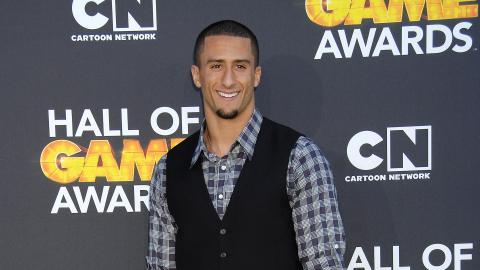
Colin Kaepernick at the 13rd Annual Cartoon Network Hall Of Game Awards on Feb. 9, 2013 in Los Angeles. Ga Fullner /Shutterstock.com
San Francisco quarterback Colin Kaepernick refused to stand while the National Anthem played on Friday night. He plans to continue his protest into the season. He defended his decision over the weekend,stating that, “This country stands for freedom, liberty, justice for all – and it’s not happening right now.”
By sitting down, Kaepernick is standing up for those people who remain voiceless. “There’s people being murdered unjustly and not being held accountable. Cops are getting paid leave for killing people. That’s not right.”
Kapernick’s protest comes during a time where black men like Philando Castile and Sylville Smith have been killed by police officers. Just this weekend, the Associate Press reports that, “After threatening to sue, the Chicago Tribune has obtained data from the city’s police department that tracks every time an officer has opened fire in the city over the past six years. The vast majority of those hit were black men or boys.”

Racism in America

Racism remains a huge problem in America. Jim Wallis describes the problem well in his recent book on racism, America’s Original Sin,
Too many African Americans have been left behind without good education, jobs, homes, and families—and these factors are all connected. Perhaps most visibly and dramatically, the treatment of black men by police and a still racialized criminal justice system in America became painful and controversial national issues over the last few years, making visible what has been true for decades.
Of course, these facts have been invisible to many white Americans, not the many black Americans who live with a system of oppression every day. And now Kaepernick has placed that racism front and center.
The truth will set you free. But the truth about racism that Kaepernick has set before us is making many white Americans uncomfortable. Instead of suffering from white fragility and defensiveness, we would do well to listen to Kaepernick’s reasons for protesting.
Unfortunately, many fans are not listening. In a classic case of white fragility that blinds us to the truth, they attack Kaepernick. In fact, the Twitterverse relentlessly criticized him. Some burned Kaepernick jerseys, while others criticized him for being anti-American. Others assert that the 49ers should release him.
Kaepernick doesn’t seem to care about the consequence. After sitting down during the Anthem, he told NFL.com, “I am not looking for approval. I have to stand up for people that are oppressed … If they take football away, my endorsements from me, I know that I stood up for what’s right.”
Many, including the 49ers organization, have defended Kapernick’s right to sit during the anthem. The team’s leadership commented, “In respecting such American principles as freedom of religion and freedom of expression, we recognize the right of an individual to choose to participate, or not, in our celebration of the national anthem.”
Kaepernick’s supporters have generally followed the 49ers lead. As an American, the argument goes, he has the freedom to protest. Some say this with resentment, as in, “He has the freedom to act like an idiot.” But I’d like to explore a different motivation that has little to do with American “freedom” — Kaepernick’s Christian faith.
Because, you see, America and Christianity are not the same thing. For many evangelicals, if you criticize America, you are criticizing Christianity.
Since coming into the NFL, Kaepernick has spoken about his faith.* He also has Bible verses tattooed on his chest and a cross on his arm. But his expressions of faith are more than skin deep. Kaepernick is standing up with those cast to the margins of society by a culture that continues to foster systemic racism. In doing so, he is using his platform to worship the God who stands with the marginalized in order to transform human culture.

Christianity a Protest Movement

When Jesus announced the Kingdom of God was at hand, he was implicitly protesting the Kingdom of Rome. He became one with the oppressed, speaking with and for them. Jesus challenged the national and religious power structures of his day, and those power structures killed him as a result.
The Roman empire gained strength through violence. Like a black man living in America, Jesus was arrested and killed by state soldiers and police. As the Gospel of John tells it, “… a detachment of soldiers together with police from the chief priests and the Pharisees” came to arrest Jesus “with lanterns and torches and weapons.”
Jesus protested Roman oppression in order to show Rome an alternative way of living. The way of love and justice. And he suffered the consequences.
After his death, the early Christians continued as a protest movement that hoped for social transformation. “Jesus is Lord,” they proclaimed, which meant Caesar and the Roman Empire were not. They refused to worship the Roman gods of conquest that oppressed those on the margins. They risked their lives by declining to participate in public displays of national loyalty that required people to offer sacrifices to Caesar. The early Christians protested. They sat down.
One can argue whether Kaepernick is being a loyal American by refusing to stand during the National Anthem. But in standing up against racism that continues to oppress black people in this country, he is following Jesus. And like Jesus, he is suffering the consequences.
Kaepernick is showing us that for Christians, Jesus is Lord. Which means that America is not.
*I’m aware of gossip websites that claim Kaepernick is being “anti-American” because he converted to Islam two months ago. This false connection shows that not only is racism a problem in America, but so is Islamophobia. Whatever the case, Christianity and Islam have long histories of protesting cultural oppression. As a Christian, I pray for the day when Christians are criticized for being “anti-American” when standing up with the oppressed.
Adam Ericksen
Adam Ericksen blogs at the Raven Foundation where he uses mimetic theory to provide social commentary on religion, politics, and pop culture. Like his Facebook page Adam Ericksen – Public Theologian and follow him on Twitter.