NORTON META TAG

Showing posts with label 2020 election. Show all posts

02 April 2026

April 2 is International Fact-Checking Day. Here’s what it means in 2026. / In uncertain times, fact-checkers are working with special urgency 2APR26


EVERYBODY lies ( except maybe the Pope, but he is human... ). NOT MY pres drumpf / trump, NOT MY vp vance, Sec of State fascist fotze trunt little marco rubio and Sec of Defense fascist fotze trunt petie lola hegseth are compulsive liars and their volume of lies, deception, misrepresentation, manipulation and Orwellian propaganda rivals what goebbels ( reincarnated as fascist fotze trunt stevie miller ), hitler, stalin, mao, putin and netanyahu spewed. We will be eternally grateful to the true Fact Checkers for the work they do and share. This from PolitiFact.....

April 2 is International Fact-Checking Day. Here’s what it means in 2026. / In uncertain times, fact-checkers are working with special urgency 2APR26

Louis Jacobson
By Louis JacobsonApril 2, 2026

On Feb. 28, the world learned that the United States and Israel had launched wide-ranging attacks on Iranian military and leadership targets. Tensions between the U.S. and Iran had been building for weeks, and prior to that, for decades. But the specific timing and the broad sweep of the military campaign caught many people off guard.

At such a tense moment, fact-checking is crucial. PolitiFact and other fact-checking outlets around the world, including Agence France-Presse, Germany’s Deutsche WelleIran’s Factnameh, India’s BOOM, and Israel’s Globes' Whistle, jumped in.

On the war’s first day, PolitiFact investigated whether President Donald Trump was right when he said Iran could "soon" have missiles capable of reaching the U.S. Trump contradicted a 2025 federal government assessment that said such capabilities are years away. In short order, we looked at what the war might mean for petroleum markets (nothing good) and whether the U.S. had a "virtually unlimited supply" of munitions to fight the war. (It varies by type.) And we delved into misleading social media posts, some of them using artificial intelligence, and offered advice on how not to get fooled by war fabrications online.

Trump asserted multiple times in mid-March that U.S. and Israeli strikes had already "destroyed 100% of Iran’s military capability." We concluded that although data showed that the U.S. had weakened Iran’s military capabilities, Iran was continuing to fire missiles and drones at its neighbors and U.S. military sites. 

Determining the truth of something happening under classified conditions on the other side of the world is not easy, and fact-checkers’ assessments inevitably require caveats about what we don’t know. But PolitiFact and other fact-checking outlets know how to use the resources that do exist, including data and the assessments of experts we’ve found to be trustworthy. We value transparency — not anonymous sources, who may have an agenda — and we value fairness, including reaching out to whoever is making the claim, including the Trump White House. 

On International Fact-Checking Day, April 2, we’re reflecting on our mission of holding powerful politicians to account, and of cutting through the clutter to provide our readers with a better understanding of often overwhelming news developments from across the globe.

The Iran war is an example of why the tradition of open-minded but clear-eyed fact-checking that PolitiFact and its colleagues around the world is needed every day. 

Here are three political themes over the past year in which PolitiFact identified an immediate need for clarity, and sought to provide it. Each topic inspired public confusion on a matter of high import: war, democracy and the global economy.
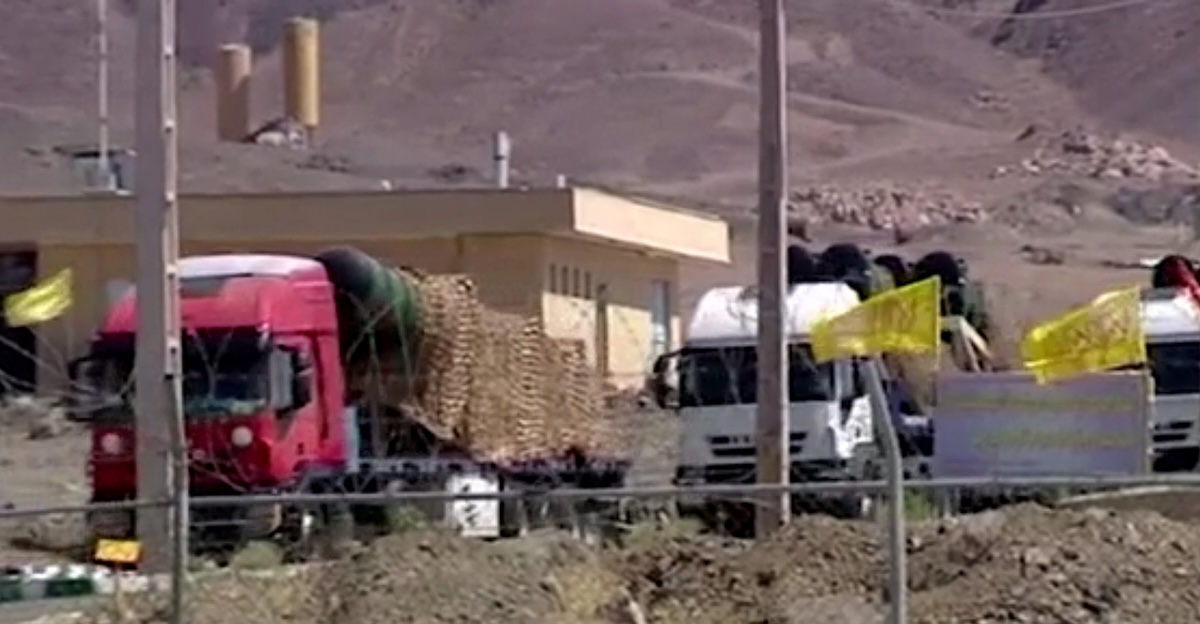
A video broadcast on Iranian state television shows trucks outside the Fordo nuclear facility in Iran on Aug. 29, 2016. (Via AP)

The 2025 U.S. airstrike on Iranian nuclear facilities

After the United States attacked three Iranian nuclear sites on June 21, 2025, Trump said that "Iran’s key nuclear enrichment facilities have been completely and totally obliterated." 

Trump’s comment immediately caught our eye because battle damage assessments take time to produce — and because Trump’s certitude contrasted with more measured assessments from Vice President JD VanceDefense Secretary Pete Hegseth and Israeli military officials. So we jumped into action.

As Trump doubled and tripled down on his "obliterated" characterization, we published an extensively reported article that exposed uncertainty in Trump’s analysis. We concluded that Trump’s arrival at such certitude, so quickly, was questionable.

Assessing the results of a bombing raid begins with the use of overhead surveillance, from satellites and sometimes from drones, military experts told us. Reports from the participating pilots can also be valuable, although they might be hampered by high altitude and darkness.

In the case of the Iran strikes, the targets were located hundreds of feet underground and would not be visible on satellite imagery. Unless military forces or spies were on the ground, the U.S. would have to surveil conversations by Iranian officials or lower-level workers at the sites, or be fed information by Iranians working with U.S. intelligence. A completed assessment is also not as definitive as Trump’s "obliterated"; it is usually offered on a spectrum with a specific level of confidence — either high, low or somewhere in between. 

Making these judgments is a painstakingly time-consuming process, requiring much more time than Trump would have had before making his initial statement shortly after the mission was completed. 

In the nine months since that strike, a bit more information has become public about the 2025 strike, but little additional certainty, even though Trump continues to use such maximalist phrasing. 
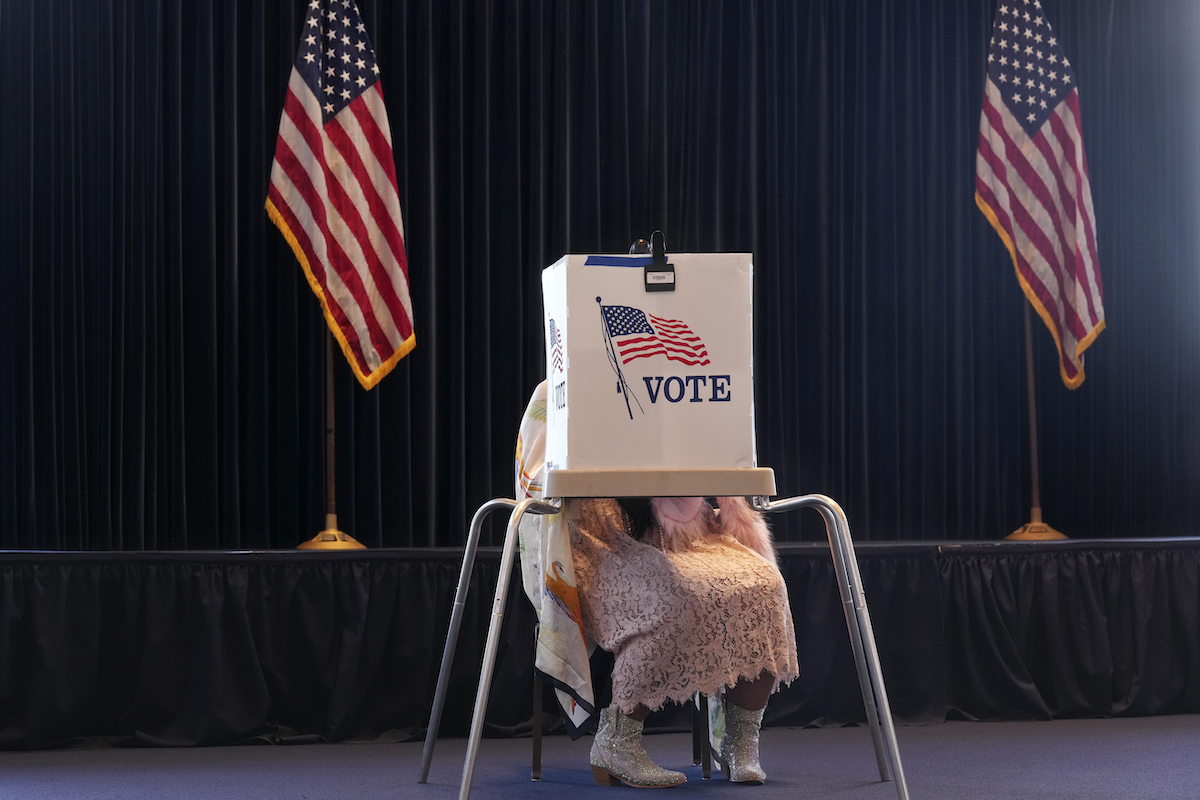
A voter works on her ballot at a polling place at the Ronald Reagan Presidential Library on Election Day, Tuesday, Nov. 5, 2024, in Simi Valley, Calif. (AP)

What’s the truth about a proposed rewrite of election law?

In the Trump era, he and his supporters have regularly questioned the legitimacy of the voting process. The audacity of these claims has led our readers to care a lot about the discussion over preserving democratic norms around voting. Our most-clicked 2025 fact-check concerned how married women who take their spouse’s name would be affected by a proposed law backed by Trump and his allies.

That debate and reader interest continued in 2026.

Having argued for years that he lost the 2020 election because it was "rigged" — even though it wasn’t — Trump has sought to curb practices like voting by mail and require voters to present documentation of their citizenship status before registering to vote. Verifying citizenship is commonly practiced across the world, experts say, but many countries have national ID cards, often mandatory and at no cost. That’s not the case in the U.S.

As lawmakers have been debating the Safeguard American Voter Eligibility (or SAVE America) Act, we’ve published numerous fact-checks of claims for and against the legislation. The mixed Truth-O-Meter ratings underscore another truth about fact-checking: Rhetoric is rarely black and white.

We’ve analyzed Democratic leaders’ talking points that it would force Americans to register in person (pretty much), require every voter to reregister (not really) and that 9% of American citizens lack the proposed identification requirement (basically right).

We also fact-checked Trump’s statement that "mail-in voting means mail-in cheating." That earned a Pants on Fire

Gas prices are displayed at a station March 24, 2026, in Chicago. (AP)

How could the Iran war affect gasoline prices?

Crude oil prices, and the prices for many other commodities, have soared after Iran threatened tanker traffic in the Strait of Hormuz. Hardly any country has been immune. Amid widespread U.S. voter concern about high consumer prices — an issue that may have done more than anything to propel Trump back into the Oval Office in 2024 — few price increases hit consumers everywhere harder than prices at the gasoline pump.

The international market for oil is confusing and sometimes counterintuitive. For instance, the release of oil from underground stockpiles or increased Venezuelan production may not do much to lower gasoline prices for Americans. And higher output from U.S. oil producers may not be able to keep prices down.

In a March 12 Fox News interview, Energy Secretary Chris Wright downplayed the impact of stalled tanker traffic in the Strait of Hormuz. "The United States — we produce more oil than we can consume. We’re a net oil exporter," Wright said.

Wright’s comment was misleading.

The U.S. does produce a lot of crude oil, but it’s not a net exporter of crude oil on its own — and it’s not clear that the U.S. could meet its own consumption needs without also buying some oil from other countries. 

The reason for this is a refinery mismatch — something the average reader may not know, but which an energy secretary should. The U.S. doesn’t have enough refinery capacity to make gasoline out of all the oil it produces domestically, so it exports some of the type of oil it can’t refine and imports some of the kind of oil that can be refined here. This makes the U.S. dependent for at least some of its oil on the international market, where the Strait of Hormuz blockage is pushing prices higher.

Once again, it was a case where we heard something our leaders were saying that raised our eyebrows. And if that’s the case, we think our readers will benefit from a deep, dispassionate investigation — especially at a time in which every day brings urgent news developments.

That’s what keeps us motivated to go into work every day.

Louis Jacobson is PolitiFact’s chief correspondent. A longtime Washington journalist, he joined PolitiFact in 2009. Reach him at ljacobson@poynter.org

30 May 2025

Oklahoma parents fight new curriculum on 2020 election ‘discrepancies’ 29MAI25


The best way to "teach" others Christianity is to live it, not mandate it through lies, deception and manipulation. The gop / greed over people-republican "christianity" with it's alt-jesus and gospel of selfishness and self-righteousness promoted by ryan walters is the kind of witness that drives people from the Church, not to it. And ryan, watch your prayer video again and reflect on the New Testament lesson on grandstanding public prayer. From the Washington Post....

Oklahoma parents fight new curriculum on 2020 election ‘discrepancies’


A lawsuit alleges that state superintendent Ryan Walters added a provision on election questions without notifying some board members before they voted.


A battle is roiling Oklahoma over new social studies standards that include teaching high-schoolers that there were “discrepancies” in the 2020 presidential election, as a legal fight unfolds over allegations that the state superintendent added the provision to the standards without notifying some education board members before they voted to pass them.

An Oklahoma County judge is considering a request to block the standards from being enacted and heard arguments Wednesday in the lawsuit, which was filed against state education officials by a group of teachers and parents. Meanwhile, other parents opposed to the standards’ content are circulating opt-out forms to remove their children from the future lessons.

Under the curriculum, high-schoolers would be asked to analyze debunked theories related to the 2020 vote and election security, such as “security risks” of voting by mail and “batch dumps” of ballots — references to the disproven theory circulated by President Donald Trump that he did not lose that election.

High-schoolers will also be instructed to “identify the source of the COVID-19 pandemic from a Chinese lab,” a theory that Trump has pushed but on which intelligence analysts and scientists remain divided. The standards also mandate teaching about the Bible in history lessons, escalating an ongoing debate over the use of the Bible in public schools in Oklahoma and elsewhere.

Oklahoma’s public schools have been launched into the national news repeatedly by state superintendent Ryan Walters (R), who made a push to put Bibles matching those endorsed by Trump in classrooms, asked school districts to show students a video of himself praying for Trump and backed the effort to create a publicly funded religious charter school in Oklahoma that went to the Supreme Court last week.

Walters has argued that the state’s new standards will remove alleged “liberal indoctrination” from classrooms. Opponents say Walters is the one trying to push false information on their children. (Walters has denied allegations of impropriety in the standards’ passage.)

“People are asking, ‘How do I make sure my kids don’t get taught this?’” said Erica Watkins, who leads We’re Oklahoma Education, a parent group that has circulated the opt-out letters.

As the Trump administration seeks to influence public school curriculums and right-leaning states move to incorporate Christianity into public schools, the Oklahoma standards present a possible test case. The inclusion of lessons rooted in a conspiracy theory has also raised questions among some Oklahoma parents about Walters’s leadership.

The new standards were passed by the state education board in February — but at least three board members said afterward they did not know Walters had added the election-related item to the standards before the 5-1 vote, the Oklahoma Voice reported in April.

“We were unaware that the version we received (almost 400 pages of documents) at 4 p.m. the day before the meeting had changes to what the public reviewed,” Christopher Van Denhende, one of the three board members, told The Washington Post.

Walters did not announce the changes to the publicly reviewed version at the meeting where the board voted, the suit alleges.

On Wednesday, Oklahoma County Judge C. Brent Dishman declined to rule on the plaintiffs’ request for a temporary block of the standards. A permanent ruling is expected within the next two weeks, said Michael J. Hunter, an attorney for the group that brought the lawsuit.

The draft shown to the public only mandated that high-schoolers “examine issues related to the election of 2020,” according to the lawsuit.

The version that was approved says students will “identify discrepancies in 2020 elections results” and will be instructed to analyze information including “the sudden halting of ballot-counting in select cities in key battleground states, the security risks of mail-in balloting, sudden batch dumps, an unforeseen record number of voters, and the unprecedented contradiction of ‘bellwether county’ trends.”

The board members received a copy at 4 p.m. the day before the morning meeting, and some raised concerns that they hadn’t had enough time to review the standards before Walters urged a vote, according to the lawsuit.

That prompted protest among some parents, who lobbied the legislature to send the standards back to the board — but a Republican-led attempt failed to get enough support in the GOP-controlled legislature, allowing the standards to move forward.

Through a spokesperson via email, Walters said the process was “fully transparent and above board for many months.”

“School board members were never denied access to the process at any point from the moment the standards were written to the moment they were voted on,” he told The Washington Post on Wednesday.

Van Denhende, the board member, said there should be transparency in the state’s development of the standards. He also said he believed the election language was “unnecessary” to include.

“The bigger issue is Oklahoma is 49th in the national for educational outcomes, and we need to be talking about how to improve reading and math scores, not the 2020 election,” Van Denhende said.

Hunter, the attorney for the plaintiffs in the lawsuit, said they are “confident that we’re going to be able to show the court the calamity which was the board’s review of the rules.”

He told The Post, “The process was completely mishandled and inconsistent with the responsibilities of the superintendent and the board.”

Valery Drazek, 31, an Oklahoma City mother of a 6-year-old who is not involved in the lawsuit, said she found We’re Oklahoma Education’s opt-out forms on social media and has been passing them out to fellow parents.

“I’m trying to raise a kid, and as she gets older, she will be going to these social studies classes. I don’t want her to think the 2020 election was rigged or that covid was man-made, things of that nature,” Drazek told The Post.

“I don’t want there to be a sentiment of distrust in our voting system,” she added. “I would like her to grow up to be an active member of society and know that her voice and her vote matters.”

There is no evidence that widespread corruption tainted the 2020 election results, and judges repeatedly said that Trump and his supporters did not provide evidence to back up their assertions, which included false accusations such as impropriety in Michigan’s ballot counts and illegal voting in Nevada.

In the email to The Post, Walters argued the curriculum on the 2020 election doesn’t “pressure or persuade students to have one opinion or another.”

“These academic standards will be based on facts as students are given graphs, charts and data points of the 2020 election and they can come to their own conclusion on what they believe the outcome was,” he said.

“Any critical thinking individual will look at the 2020 election and would understand there were discrepancies,” Walters added.

Melanie Larson, 42, a substitute teacher in Edmond, Oklahoma, said she feels Walters is “overstepping the will” of teachers and parents. She has opposed efforts to incorporate the Bible into public schools.

She said her two children, who will be in middle and high school in the fall, asked questions about how the state could put “untrue things” in the standards, referring to the item on the 2020 election results.

“I understand, because I feel that way, too,” Larson said. “I had to talk to my kids about how the things you’re learning in class may or may not be true. This is wild.”

Justine McDaniel covers national news. She joined The Washington Post in 2022 after reporting for the Philadelphia Inquirer

Anumita Kaur is a national breaking news reporter for The Washington Post. She was previously a reporter for the Los Angeles Times and Guam Pacific Daily News.

20 September 2022

SOJOURNERS VERSE & VOICE & Video appears to undercut Trump elector’s account of alleged voting-data breach in Georgia 20SEP22

Verse and Voice
More of the ongoing deception and lies from the drumpf / trump camp, they have no problem stacking lies on top of lies, even when they have been caught lying. From Sojourners and the Washington Post.....

Verse of the day

These are the things that you shall do: Speak the truth to one another, render in your gates judgments that are true and make for peace.

- Zechariah 8:16
Voice of the day

In this life I have worshipped so many lies. / Then I workshop them, make them better.

- Sally Wen Mao, Occidentalism
Prayer of the day

God of truth, it is tempting to worship and workshop lies; may we instead fiercely commit to speaking truth.

Video appears to undercut Trump elector’s account o alleged voting-data breach in Georgia

By Jon Swaine and Emma Brown 
Updated September 20, 2022 at 1:04 a.m. EDT|Published September 20, 2022 at 12:00 a.m. EDT

On Jan. 7, 2021, a group of forensics experts working for lawyers allied with President Donald Trump spent eight hours at a county elections office in southern Georgia, copying sensitive software and data from its voting machines.

Under questioning last month for a civil lawsuit, a former Georgia Republican Party official named Cathy Latham said in sworn testimony that she briefly stopped by the office in Coffee County that afternoon. She said she stayed in the foyer and spoke with a junior official about an unrelated matter at the front desk.

“I didn’t go into the office,” Latham said, according to a transcript of her deposition filed in court. She said she had seen in passing a pro-Trump businessman who was working with the experts. She said they chatted for “five minutes at most” — she could not remember the topic — and she left soon after for an early dinner with her husband.

Surveillance video footage reviewed by The Washington Post shows that Latham visited the elections office twice that day, staying for more than four hours in total. She greeted the businessman, Scott Hall, when he arrived and led him into a back area to meet the experts and local officials, the video shows. Over the course of the day, it shows, she moved in and out of an area where the experts from the data forensics firm, SullivanStrickler, were working, a part of that building that was not visible to the surveillance camera.

She took a selfie with one of the forensics experts before heading out at 6:19 p.m.

A Post examination found that elements of the account Latham gave in her deposition on the events of Jan. 6 and 7, 2021, appear to diverge from the footage and other evidence, including depositions and text messages. Many of those records, including Latham’s Aug. 8 deposition, were filed in a long-running federal civil court case involving election security in Georgia.

During the 2020 election and its aftermath, Latham was a member of the Georgia Republican Party’s executive committee and sat on its election confidence task force. She was also chairwoman of the Coffee County Republican Party. She was one of the “fake electors” who signed unauthorized certificates in a bid to keep Trump in power after his 2020 election defeat.

In response to questions from The Post, Latham’s lawyers said, “Failing to accurately remember the details of events from almost two years ago is not lying.” They have said she did not take part in the copying or in anything improper or illegal.

Her attorneys Robert D. Cheeley and Holly A. Pierson wrote in a court filing last week that the alleged security breach was “actually less of a breach or criminal undertaking and more of a permissible exercise of the County Elections Board’s authority.”

They wrote that “the parties involved plainly believed that they had the authority to authorize it and the authority to do it, and that belief seems to be at least reasonable and likely accurate, which negates any possible criminal intent.”

The surveillance footage shows that Latham appeared to introduce the SullivanStrickler team to local officials when they arrived that day. She then watched as they began looking at county voting equipment, it shows.

Coffee County, Ga. GOP Chairwoman Cathy Latham and digital forensics experts hired by lawyers allied with former president Trump on Jan. 7, 2021. (Video: Obtained by The Washington Post)

The Georgia Bureau of Investigation and a grand jury in Atlanta are probing the incident in Coffee County, a Republican stronghold about 200 miles south of Atlanta. Federal and state prosecutors are also investigating the “fake elector” scheme, in which Latham and dozens of other Republicans in battleground states signed certificates proclaiming Trump the rightful winner.

The Coffee County episode is one of several alleged breaches of voting equipment since the 2020 election. In each instance, Trump supporters — often with the help of like-minded local officials — sought access to voting equipment to hunt for evidence that the election was rigged.

Access to voting machines is typically tightly restricted, and some security analysts fear that such breaches — including the copying of voting software that is also used elsewhere — risk exposing the systems to hackers.

Details about what happened in Coffee County, including the surveillance video reviewed by The Post, have surfaced largely because of a lawsuit brought against Georgia by several voters and the nonprofit Coalition for Good Governance. The plaintiffs say the state’s voting system is unconstitutionally insecure, which state officials deny. The plaintiffs have subpoenaed documents and testimony from a number of individuals, including Latham.

Sidney Powell, the Trump-allied attorney who was billed for the work, has not directly responded to questions from The Post about Coffee County. “Prior reports of my involvement were seriously misrepresented,” she said in an email.

Records obtained by the plaintiffs show that Powell signed contracts for the forensics experts’ elections work. The SullivanStrickler team updated her by email on the work in Coffee County and billed her more than $26,000, according to the records.

Coffee County was among a handful of locations across the nation where Trump and his advisers pounced on minor errors or rumors of voting-machine irregularities in an attempt to overturn the 2020 election.

After Coffee County elections supervisor Misty Hampton discussed concerns about Dominion Voting Systems machines at a Nov. 10 elections board meeting, a Trump campaign staffer emailed her seeking information available under public records law. The county refused to certify its results after a statewide recount on Nov. 30, claiming that the machines showed inconsistent results. State investigators later concluded that the discrepancies had been caused by human error.

A local news outlet published a video that featured Hampton purporting to show how she could “flip” votes from one candidate to another. It went viral. Trump’s team later cited Coffee County in its campaign to stop Congress from certifying Joe Biden’s victory.

Obtained By The Washington Post: Cathy Latham, right, then the chairwoman of the Coffee County, Ga., Republican Party, takes a selfie with an employee of data forensics firm SullivanStrickler at the county elections office on Jan. 7, 2021. (Obtained By The Washington Post)

In her deposition, Latham said that some time between 4 p.m. and 5 p.m. on Jan. 6, after she had worked a full day as a high school teacher — and as Trump supporters were attacking the U.S. Capitol — she received a call from Hall, the businessman.

Hall had been “looking into the election on behalf of the President,” Georgia GOP chairman David Shafer told Trump campaign officials on Nov. 20, 2020, in an email obtained by The Post. The email centered on problems with absentee ballots and did not mention Coffee County or voting machines.

In her deposition, Latham said Hall asked her to connect him to Hampton. She did not know why and did not ask, she said.

“Because that had been a hectic day. I hadn’t had any sleep, all the stuff had been happening, I had been getting phone calls left and right I was answering. I was tired, I wanted to go home,” Latham said. She said she then briefly telephoned Hampton to put her in touch with Hall.

“I would have called Misty and I said, ‘Well, let me give you his email,’” Latham said, adding: “I sent her the email. That’s all I remember doing.”

The new surveillance footage shows that Latham and Hampton were together inside the office during this time. Latham arrived at the office at 3:58 p.m. and had at least three phone calls between 4 p.m. and 4:40 p.m.

At 4:26 p.m., Hampton texted Eric Chaney, a member of the county elections board that employed her, records show. “Scott Hall is on the phone with Cathy about wanting to come scan our ballots from the general election like we talked about the other day,” she wrote.

Latham’s husband joined them at the office at 5 p.m., the footage shows, and later brought in takeout food. The Lathams and Hampton all left the office shortly before 7:40 p.m.

The following morning, Latham exchanged text messages with SullivanStrickler’s chief operations officer, Paul Maggio, as the team drove to Coffee County, records show, coordinating who would fetch Hall from the airport.

Latham also updated Hampton on the visitors’ movements.

“Team left Atlanta at 8. 5 members led by Paul Maggio. Scott is flying in,” Latham wrote Hampton in a text message at 9:26 a.m.

“Yay!!!!” Hampton replied.

In her deposition, Latham said she was just passing on information that Hall asked her to share with Hampton. She said she didn’t know why Maggio and Hall were coming to Coffee County.

Latham said she also worked a full day at Coffee High School on that day, Jan. 7, before briefly visiting the elections-office foyer after about 4 p.m., for reasons unrelated to SullivanStrickler’s work there.

Latham said she could see people behind the front desk but that she wasn’t paying attention to who they were and she remained on the other side of the partition. “There were people in there, and I get uncomfortable when there’s others,” she said.

External surveillance footage made public earlier this month showed that Latham arrived at the office at 11:37 a.m. that day. Three SullivanStrickler employees arrived at the elections office soon after. They were later joined by a fourth colleague. They intended to collect whatever data possible from the county’s voting machines, emails and billing records show.

Cheeley, Latham’s attorney, previously told The Post that Latham did not remember all the details of that day but testified truthfully. He said she did recall visiting the office after school “to check in on some voter review panels from the runoff election” that had been held for Georgia’s two U.S. Senate seats earlier that week.

Latham described herself to SullivanStrickler as an elections official, an executive from the company said during a deposition on behalf of the firm this month. A lawyer for Latham said something must have been taken out of context or misunderstood because Latham has never been a Coffee County election official and did not hold herself out as one.

Asked during her deposition whether the team met Chaney, the board member, Latham replied: “I have no idea.”

The new video shows that, after greeting SullivanStrickler’s team, Latham led them into a central area behind the public counter and appeared to introduce them to Chaney and Hampton.

Hampton, Chaney and Hall did not respond to messages seeking comment.

At about 12:30 p.m., Latham joined Maggio, Hall and Hampton as they appeared to examine a large piece of equipment in the central area. At one point, she bent down and touched it. Then, as Maggio began examining electronic “poll pads,” which are used to check in voters at polling locations, Latham took a seat directly across from him and watched, the video shows.

In her deposition, Latham said she left the office before Hall and did not see him depart. The video shows that Hall shook Latham’s hand on his way out shortly before 5 p.m., and that Latham stayed more than an hour longer.

In an email filed to court last month, SullivanStrickler’s lawyers said Latham was “a primary point of contact in coordinating and facilitating” the firm’s work in Coffee County, adding: “Ms. Latham was on-site in the Coffee County elections office that day while the work was performed.”

In the deposition on behalf of the firm, the company executive said Hampton, the elections supervisor, had directed the majority of the team’s work. But “Cathy Latham also provided direction on what was required for collection,” he said, according to a transcript the plaintiffs provided to The Post.

SullivanStrickler believed it had been given proper authorization to make “forensic images,” or exact copies, of the election equipment in Coffee County, the company executive said in his deposition. In a statement to The Post, a lawyer for SullivanStrickler said the firm and its employees were witnesses in the grand jury investigation. “We will continue to fully cooperate with law enforcement,” the lawyer wrote.

In May, when The Post first reported on claims that outsiders copied Coffee County’s central elections server and other election equipment, Chaney said he did not know Hall and was not aware of or present at the office “when anyone illegally accessed the server or the room in which it had contained.” He said he recalled “going by the office” and finding “people present unknown to me” who he believed to be associated with the secretary of state’s office.

The interior surveillance video shows Chaney was there throughout much of the day, talking with Hall and SullivanStrickler employees. Chaney was also there as Maggio used a cord to connect poll pads into his laptop, the video shows.

Questioned under oath in the election-security lawsuit, Chaney acknowledged that he went to the elections office on Jan. 7. He repeatedly cited his Fifth Amendment right in response to questions about the effort to copy voting data.

Peter Stevenson, Amy Gardner and Tom Hamburger contributed to this report.