BUCKNACKT'S SORDID TAWDRY BLOG
We should not be a journey to the grave with the intention of arriving safely in an attractive & well preserved body, but rather to skid in sideways, chocolate, bier or wein in hand, body thoroughly used up, totally worn out and screaming "WHOO-HOO, WHAT A RIDE!!!!!!"
“Honey Pie” by The Beatles cover from Josh Turner Guitar, featuring Allison Young (now known as The Bygones!).
Subscribe: http://bit.ly/subJoshTurnerGuitar | Patreon Rewards: https://bit.ly/3yyI59e
NEWEST videos: • Newest Videos | Josh Turner Guitar | Get Live Show Tix: http://bit.ly/31PqZTX
Filmed in Robin Hood's Bay, England. Special thanks to Mark Hetherington for lining up the tour on which this video was shot, as well as Lou, John, Luke, all the people of Robin Hood's Bay who made us feel so at home when we were there. We want to go back as soon as we can!
Hey friends 💗 Happy to be returning to YouTube after a little winter hibernation. I've spent the past several months resting & finding solace in some much needed, delicious sleep (a.k.a. a cozy dreamland of beautiful music) ! During that time, I was fortunate to host 3 wonderful friends at my apartment for a recording session that perfectly captured my meditative mood during that time.
Thanks so much Josh, Allison, and Mike ! It was a magical experience getting to blend harmonies with y'all 🙏🥰
"Dream" was composed by the great Johnny Mercer back in 1944! This 4-part vocal arrangement was recorded by the Pied Pipers in 1945, and transcribed by incredible trombonist (& longtime friend) Joe McDonough. Thanks Joe!
Featuring:
Joshua Lee Turner, vocals & guitar
@JoshTurnerGuitar
Allison Young, vocals & fender rhodes pedal (lol. Thanks Allison!)
@allisonyoungmusic
Michael Stephenson a.k.a. Sonny Step, vocals & tenor saxophone
/ sonnystep
Filmed by Kelly Oden
/ kelly__oden
Mixed By: Josh Turner
Comedian John Belushi's best impersonation ever of Joe Cocker singing The Beatles cover of With A Little Help From My Friends from Sgt. Pepper's Lonely Hearts Club Band album. Both greats are dead; John Belushi died in Hollywood, CA of a drug overdose on March 5, 1982; Joe Cocker RIP of lung cancer in December 22, 2014.
In April 1969, Joe Cocker laid the groundwork for his ’70s stardom when he unveiled his debut album, With a Little Help From My Friends. For almost a decade, the Sheffield-born Cocker had been toiling in the trenches — first under the pseudonym Vance Arnold and later under his own name, fronting cult pub legends the Grease Band. In an era of self-contained bands and singer-songwriters, With a Little Help From My Friends bucked the trend in establishing Cocker as one of the most imaginative and distinctive interpretative singers of his generation.
The album opens with funky piano chords ushering in Dave Mason’s Traffic song “Feelin’ Alright,” the first of many tracks that Cocker made his own with help from backup singers Merry Clayton (who also sang on the Stones‘ ‘Gimme Shelter’) and Brenda and Patrice Holloway. Around the same time, he also debuted his singular stage mannerisms, which he later genially spoofed alongside John Belushi on Saturday Night Live.
The album’s highlights showcase Cocker’s formidable vocal and emotional range, including a bluesy reading of the 1926 pop standard “Bye Bye Blackbird”; Bob Dylan’s “Just Like a Woman,” lovingly approached like a church hymn; and a sultry arrangement of “Don’t Let Me Be Misunderstood” that flipped the Animals’ famously angst-ridden version on its head. Cocker even threw some playful falsettos into “Marjorine,” one of two songs he co-wrote with pianist and fellow Grease Band alum Chris Stainton.
And then there’s the title track, a rare reinvention of a Beatles song that’s better than the the original. Cocker takes the lovely but rather staid Ringo Starr-sung cut and radically transformed it into a master class of soulful tension and release, punctuated by stinging guitars played by Jimmy Page. The following year, Cocker performed one of the most memorable sets at Woodstock, skyrocketing his fame and setting him up for an even more fruitful decade to come.
Read More: 46 Years Ago: Joe Cocker Releases His Debut Album With a Little Help From His Friends | http://ultimateclassicrock.com/joe-co...
AND I, like my mom, sisters, brother and other family members and friends miss him. But the separation is temporary, and though it is hard not to be down when missing a loved one who has died, there ain't nothin like a little gospel music to lift your spirits......
HUGH MASEKELA, South African, musician, anti-apartheid activist. He was also a son, husband and father. I have the 45 of 'Grazing In The Grass' and remember him using his music and fame in the struggle to free South Africa from apartheid. I am glad he experienced a free South Africa. Godspeed Mr Masekela, and thank you! NKOSI SIKELEL IAFRIKA
Bra Hugh’s family sent a statement confirming the news to the media.
“After a protracted and courageous battle with prostate cancer, he passed peacefully in Johannesburg, South Africa surrounded by his family,” read the statement.
The musician’s team released a statement in October saying he had been battling prostate cancer since 2008.
The statement explained that the jazz veteran underwent eye surgery in March 2016 after the cancer spread, and had to go into theatre again in September 2016 as another tumour was discovered.
In December, Georgiou told TshisaLIVE that he was fighting the disease with everything he had.
Bra Hugh was born in KwaGuqa township in Witbank and began singing and playing the piano as a child.
After seeing the film Young Man with a Horn when he was 14, Masekela began playing the trumpet.
His first trumpet was given to him by Archbishop Trevor Huddleston, an anti-apartheid chaplain at St Peter’s Secondary School.
He soon mastered the instrument and by 1956 joined Alfred Herbet’s African Jazz Revue.
Bra Hugh’s music was inspired by the turmoil that South Africa went through during apartheid and he said it was used as a weapon to spread political change.
Masekela’s son, Sal Masekela, said it was with a heavy heart that he confirmed his father had “hung up his horn after a long battle with prostate cancer”.
“It is difficult to comprehend that this moment is real. To me, my father has always been both ageless and immortal. Of the countless shows I had the honor of watching my dad perform, each felt like the first, each felt brand new,” he wrote on Facebook.
“To know Hugh Masekela was to know no matter class, creed, color, religion or any other made up distinctions, he stood with empathy and compassion, locked arm in arm with the distressed, displaced and downtrodden everywhere and anywhere on this planet. He carried a deep seeded belief in justice, freedom and equality for all peoples to the very end.”
Fans from across the globe have filled social media with heartfelt condolences to Bra Hugh’s family and have remembered his massive contribution to the country’s political struggle through music:
A baobab tree has fallen, the nation has lost a one of a kind musician with the passing of Jazz legend bra Hugh Masekela. We can safely say bra Hugh was one of the great architects of Afro-Jazz and he uplifted the soul of our nation through his timeless music. #RIPBraHughMasekela
CELEBRATED international trumpeter Hugh Masekela hit all the right notes for scores of budding Nelson Mandela Bay artists at a workshop held in Port Elizabeth yesterday. He gave them the lowdown on the nuts and bolts of his long international music career – and explained just how to hit the…
December 18, 2015
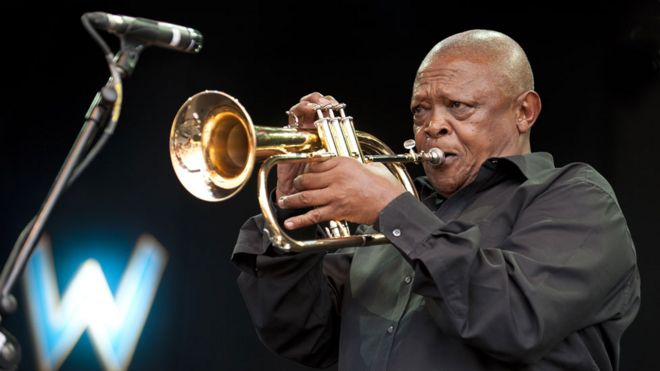
Hugh Masekela, South African jazz trumpeter, dies
Image captionMasekela was given his first trumpet at the age of 14
Legendary jazz trumpeter Hugh Masekela, a leading figure in the struggle to end apartheid and "the father of South African jazz", has died aged 78.
In a statement, his family said he had "passed peacefully" in Johannesburg "after a protracted and courageous battle with prostate cancer".
Masekela gained global recognition with his distinctive Afro-Jazz sound and hits such as Soweto Blues.
The 1977 song became synonymous with the anti-apartheid movement.
In a statement, South African President Jacob Zuma said Masekela's death was "an immeasurable loss to the music industry and to the country at large".
Zuma continued: "His contribution to the struggle for liberation will never be forgotten."
Media captionHugh Masekela on music and his relationship with South Africa
Born in the South African town of Witbank in 1939, Masekela was inspired to learn the trumpet after seeing Kirk Douglas play Bix Beiderbecke in the 1950 film Young Man with a Horn.
He persuaded one of his teachers - the anti-apartheid crusader Father Trevor Huddleston - to buy him an instrument, promising to stay out of trouble in return.
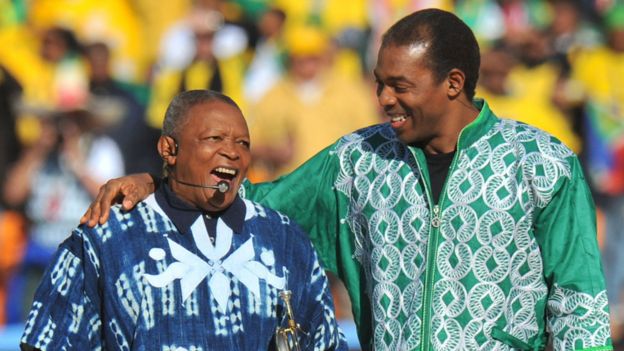
Image copyrightGETTY IMAGESImage captionHe helped open the 2010 World Cup in South Africa with fellow musician Femi Kuti
In 1960, aged 21, he left South Africa to begin what would be 30 years in exile from the land of his birth.
Under the tutelage of Dizzy Gillespie and Louis Armstrong, he was encouraged to develop his own unique style.
In 1967, he performed at the Monterey Pop Festival alongside Janis Joplin, Otis Redding, Ravi Shankar, The Who and Jimi Hendrix.
The following year, his instrumental single Grazing in the Grass topped the charts in the US and became a worldwide hit.
Masekela returned to South Africa in 1990 following the release of Nelson Mandela, whose freedom he had called for in his 1986 anthem Bring Home Nelson Mandela.
In June 2010, he performed at both the opening concert of the Fifa World Cup and the tournament's opening ceremony in Soweto's Soccer City.
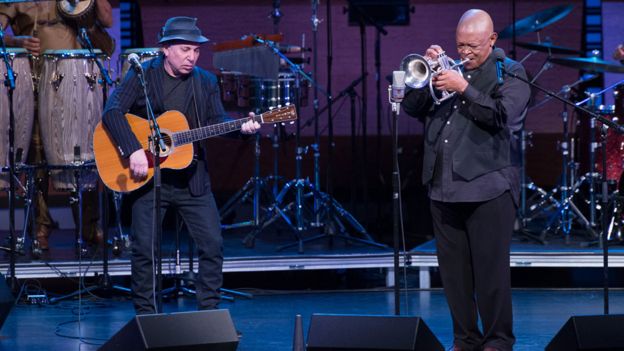
Image copyrightGETTY IMAGESImage captionMasekela's many friends included Paul Simon, seen here performing with him in 2014
In their statement, Masekela's family described him as "a loving father, brother, grandfather and friend" who would be "forever in our hearts".
"Hugh's global and activist contribution to and participation in the areas of music, theatre and the arts in general is contained in the minds and memory of millions across six continents," it continued.
"We are blessed and grateful to be part of a life and ever-expanding legacy of love, sharing and vanguard creativity that spans the time and space of six decades."
Details of memorial and burial services, the family said, would be released "in due course".
South African musician Loyiso Bala was among many to mark his death on Twitter.
Totally shattered to hear that Bra Hugh has passed. An absolute legend, mentor and the man who introduced my family to the music industry. Lala ngoxolo Bra #HughMasekela You will be sorely missed...
The passing of Hugh Masekela is the end of an era and has saddened many across the country. Described as a legend, he was celebrated for his contribution to music, theatre and social and political activism.
The jazz musician whose Soweto Blues served as one of the soundtracks to the anti-apartheid movement was never one to shy away from challenging the status quo.
In a career spanning six decades, he gained international recognition with his distinctive sound, a constant reminder of his love for South Africa - a country whose political turmoil once forced him into exile.
Diagnosed with prostate cancer in 2008, the world-acclaimed musician - affectionately known as Bra Hugh - spent the last months of his life encouraging men to go for regular cancer check-ups.
Follow us on Facebook, on Twitter @BBCNewsEnts, or on Instagram at bbcnewsents. If you have a story suggestion email entertainment.news@bbc.co.uk.


 • Newest Videos | Josh Turner Guitar | Get Live Show Tix: http://bit.ly/31PqZTX
Filmed in Robin Hood's Bay, England. Special thanks to Mark Hetherington for lining up the tour on which this video was shot, as well as Lou, John, Luke, all the people of Robin Hood's Bay who made us feel so at home when we were there. We want to go back as soon as we can!
• Newest Videos | Josh Turner Guitar | Get Live Show Tix: http://bit.ly/31PqZTX
Filmed in Robin Hood's Bay, England. Special thanks to Mark Hetherington for lining up the tour on which this video was shot, as well as Lou, John, Luke, all the people of Robin Hood's Bay who made us feel so at home when we were there. We want to go back as soon as we can! / sonnystep
Filmed by Kelly Oden
/ sonnystep
Filmed by Kelly Oden





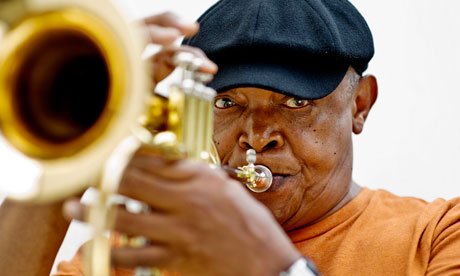


 A legend has fallen, may his soul rest in eternal peace. What a man!!!! Thank you for the music