BUCKNACKT'S SORDID TAWDRY BLOG
We should not be a journey to the grave with the intention of arriving safely in an attractive & well preserved body, but rather to skid in sideways, chocolate, bier or wein in hand, body thoroughly used up, totally worn out and screaming "WHOO-HOO, WHAT A RIDE!!!!!!"
Maybe you can sympathize. After two pandemic years, I was sick of wearing a mask. Vaccinated and boosted, I couldn't understand why I should worry about a milder, albeit more contagious, variant that is highly unlikely to send a healthy twentysomething to the hospital. I was, as they say, "vaxxed and done."
It wasn't until I read Ed Yong's latest piece in the Atlanticthat I understood that a small number of severe cases out of a large number of infected people is still a massive burden on the hospital system. On an individual level, this means that if I crash my bike and need to go to the emergency room, I'll likely have to wait hours to be treated. Societally, it means a shortage of hospital workers—because they've either gotten sick or left the profession—and the collapse of the health care system as a whole. "This is the cost of two years spent prematurely pushing for a return to normal," Yong writes. "The lack of a normal to return to."
I've been thinking a lot about what the return to "normal" looks like, especially this weekend. In October 2020, I moved from New York City to Denver, but my old roommate hung onto the apartment. On Saturday, he moved upstate. It took me a while to figure out why this positive development in his life made me so sad. And then I realized that that apartment embodied my pre-pandemic life. When I visited last spring—climbing those same carpeted steps, eating pizza on that same ratty brown couch—I could almost pretend that things were as they had always been.
Soon, a stranger will sign the lease and start sleeping in my old bedroom. Things will never go back to the way they were, and I was foolish, in those early pandemic days, to think they would. I guess Omicron isn't the only thing I've been in denial about. Nothing lasts forever. And that's just the way things go.
More than half of the continental United States was in moderate to
extreme drought in June -- including corn- and soybean-producing states
-- damaging crops and impacting prices at the grocery store.
Some say if the hot, dry weather continues, this year's drought could rival the "dust bowl" years of the 1930s:
The United States also suffered drought conditions in the 1950s,
particularly in the Midwest, the Great Plains and the Southwest: Source of maps: National Oceanic and Atmospheric Administration.
The Palmer index, developed in 1965 by W.C. Palmer, compares the amount
of precipitation in an area to the average amount expected.
"It's a critical time of pollination for corn, and the dryness is
impacting yield," said Brian Fuchs, climatologist with the National
Drought Mitigation Center at the University of Nebraska in Lincoln.
"Soybeans come a little later, but with the dryness and heat, it's still
stunting growth."
Overall, commodities markets are responding in anticipation of a
reduced harvest and in turn, any users of the products in their raw form
are seeing prices increase, he said.
Joe Glauber, chief economist at the U.S. Department of Agriculture,
said poor people who spend more of their income on food are impacted the
most.
"Anytime you have food inflation, it's regressive in that it hits
poor families harder," he said. "There are adjustments in the food stamp
program that will reflect food price increases over time, but any
increase in food costs, poor people are hit harder."
Cattle producers are feeling the pinch with dried pasturelands,
forcing some to sell off their stock. The flood of beef to the market
will mean lower prices in the short term, but heftier price tags are
expected later.
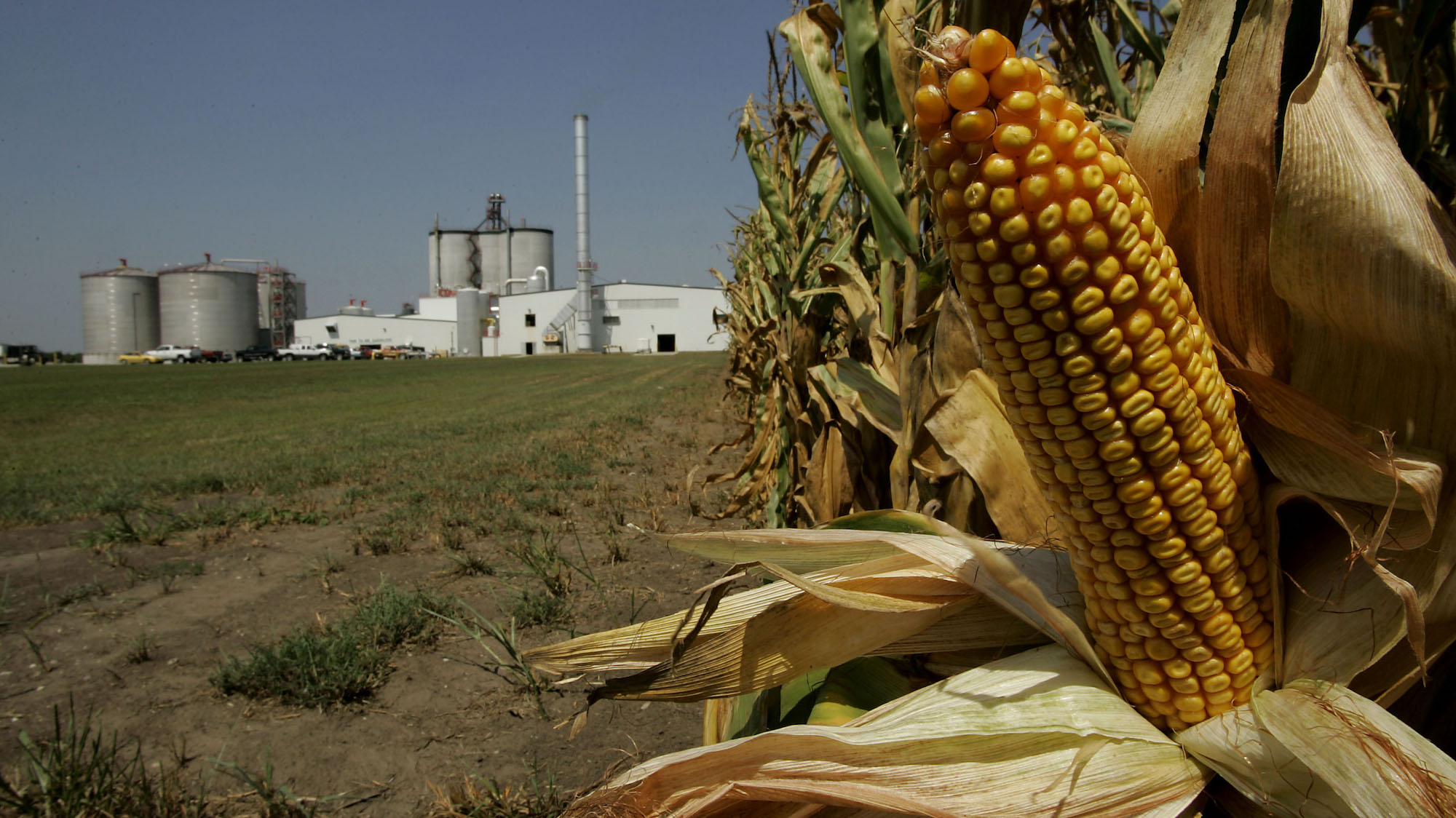
Producers of the biofuel ethanol, made from corn, also will be
impacted, said Fuchs. "Some plants have had to shut down production
because they can't make ethanol at the price corn is at already."
The next national crop survey by the U.S. Department of Agriculture
is in August, which will give the agency -- and others -- a better sense
of the drought's effects on food production. On Tuesday's NewsHour, we heard more from Brian Fuchs of the
National Drought Mitigation Center and from David Beckmann, president of
Bread for the World, about the impacts of the U.S. drought here and
abroad:
View more drought-related stories from the NewsHour:
U.S. Drought Means Wilting Crops, Higher Food Prices; Officials Pray For Rain
As severe drought spreads across much of the U.S., wilting crops could mean higher prices for consumers on a range of goods.
By Russ Blinch and K.T. Arasu
WASHINGTON/CHICAGO,
July 18 (Reuters) - Oppressive heat and a worsening drought in the
U.S. Midwest pushed grain prices near or past records on Wednesday as
crops wilted, cities baked and concerns grew about food and fuel price
inflation in the world's top food exporter.
Soybean
prices at the Chicago Board of Trade set a record high and corn closed
near a record as millions of acres of crops seared in triple-digit
heat in the Corn Belt. Corn fields have been plowed up in many
locations for lack of rain. Now soybeans, which develop later than
corn, are in the bull's eye.
"I get on my knees
every day and I'm saying an extra prayer right now," U.S. Agriculture
Secretary Tom Vilsack told reporters after briefing President Barack
Obama. "If I had a rain prayer or a rain dance I could do, I would do
it."
Vilsack said the drought was getting worse for hard-hit farmers and the wilting crops will mean higher food prices.
"Part
of the problem we're facing is that weather conditions were so good at
the beginning of the season that farmers got in the field early, and
as a result this drought comes at a very difficult and painful time in
their ability to have their crops have good yield," Vilsack said.
Drought
conditions now extend over more than 60 percent of the lower 48
states, the government said. The Department of Agriculture on Wednesday
extended drought aid to an additional 39 counties designated as
primary natural disaster areas, bringing such aid to a total of 1,297
counties across 29 states.
Vilsack said rising
grain prices would mean meat and poultry prices will be higher this
year and next, although the inflation may be delayed as farmers start
culling their herds due to high feed prices and meat supplies stay
adequate.
But the outlook for higher food prices
could add up to another headache for Obama as he faces a November
election with high joblessness and slower economic growth.
Hard-hit
livestock producers and other groups want the Environmental Protection
Agency to give oil refiners a waiver from the mandate to blend ethanol
into gasoline, arguing demand for the corn-based fuel was driving up
corn prices. About 40 percent of the U.S. corn crop now is used to
produce ethanol.
But Vilsack said there was no need for such action as yet.
"There is no need to go to the EPA at this time based on the quantity of ethanol that is in storage," he said.
The
U.S. drought is expected to be felt worldwide as the world's biggest
grain exporter struggles with shortfalls. The United States exports
more than half of all world corn shipments and is also the single top
exporter of wheat and soy.
"The dramatic rise in
grain prices in the past few weeks is shaping up to be a serious
financial blow for wheat importing countries," one German trader said
on Monday.
"African and Middle Eastern countries are now facing painful rises in import bills."
WEATHER OUTLOOK STILL HOT AND DRY
Forecasters
were calling for scattered showers on Wednesday evening in some parts
of the east coast and Midwest. But relief was seen as too little and
too late for many of the key areas of the central Plains and Corn Belt.
"There
are no soaking rains in sight, nothing to relieve the drought," said
World Weather Inc meteorologist Andy Karst. "There will be some light
rains today through Friday in the eastern Midwest."
Iowa
and Illinois, which produce about a third of U.S. corn and soybeans,
continued to swelter on Wednesday in temperatures at or above 100
degrees (37.8 degrees Celsius) with little to no rain forecast.
Corn
prices have jumped more than 50 percent in the last month as the crop
wilted in many locations during its key growth stage of pollination.
Corn
for September delivery at the Chicago Board of Trade closed at $7.95 a
bushel, near last summer's record high of $7.99-3/4. Soybeans for
August delivery closed at $16.85-1/2, a new record high.
"Now,
it's soybeans' turn. The next two weeks will be critical for them.
There is a chance for catastrophic problems in soybeans," said grains
analyst Don Roose of U.S. Commodities in Des Moines, Iowa
"The
summer of 2012 is on pace to finish third hottest on the list of 62
summers since 1950," said Steven Root, a meteorologist with WeatherBank
Inc. "But it is still in the running for number two or one."
In
many parts of the country, power grids were under pressure from demand
on air conditioning but most were holding up. In New York City,
Consolidated Edison reduced its power voltage in some Manhattan
neighborhoods, resulting in brownouts.
Low water
levels in many lakes and rivers were hampering transportation, with
hydroelectric plants tapping water in locations like Arkansas and the
Army Corps of Engineers issuing warnings to consumers about water
levels.
Water usage for lawns and recreation continued to see restrictions in many areas of the country.
In
crop areas, farmers saw further headaches from plant diseases like
fungus and crop pests like spider mites on soybeans or rootworms or
Japanese beetles in corn that appear in hot weather.