Since its full-scale invasion began, Russia has targeted Ukraine’s energy infrastructure—its old-school fossil-fueled power plants, substations, and transmission lines—to advance its offensive and beat down the Ukrainian people. Half of the country’s energy infrastructure is in ruins, and Russian attacks this winter have left giant swaths of Ukraine with irregular electricity and heat amid subzero temperatures. In January, President Volodymyr Zelenskyy declared a state of emergency in the energy sector.
But even as Ukraine scrambles to keep the lights on, grid operators are looking past the next drone swarm and pushing to diversify the country’s energy sources. The plan is to replace bulky thermal plants and the centralized grid—which are vulnerable to drone and missile attacks—with distributed renewables and modestly sized gas-fired power plants that are less attractive targets for incoming fire.
Solar and wind arrays with independent transmission lines are scattered across the landscape, making them harder to hit and easier to repair. “A coal power station [is] a large single target that a single missile could take out,” says Jeff Oatham of Ukrainian energy company DTEK. “You would need around 40 missiles to do the equivalent amount of capacity damage at a wind farm.” And both solar and wind facilities can function even when parts of them are out of operation.
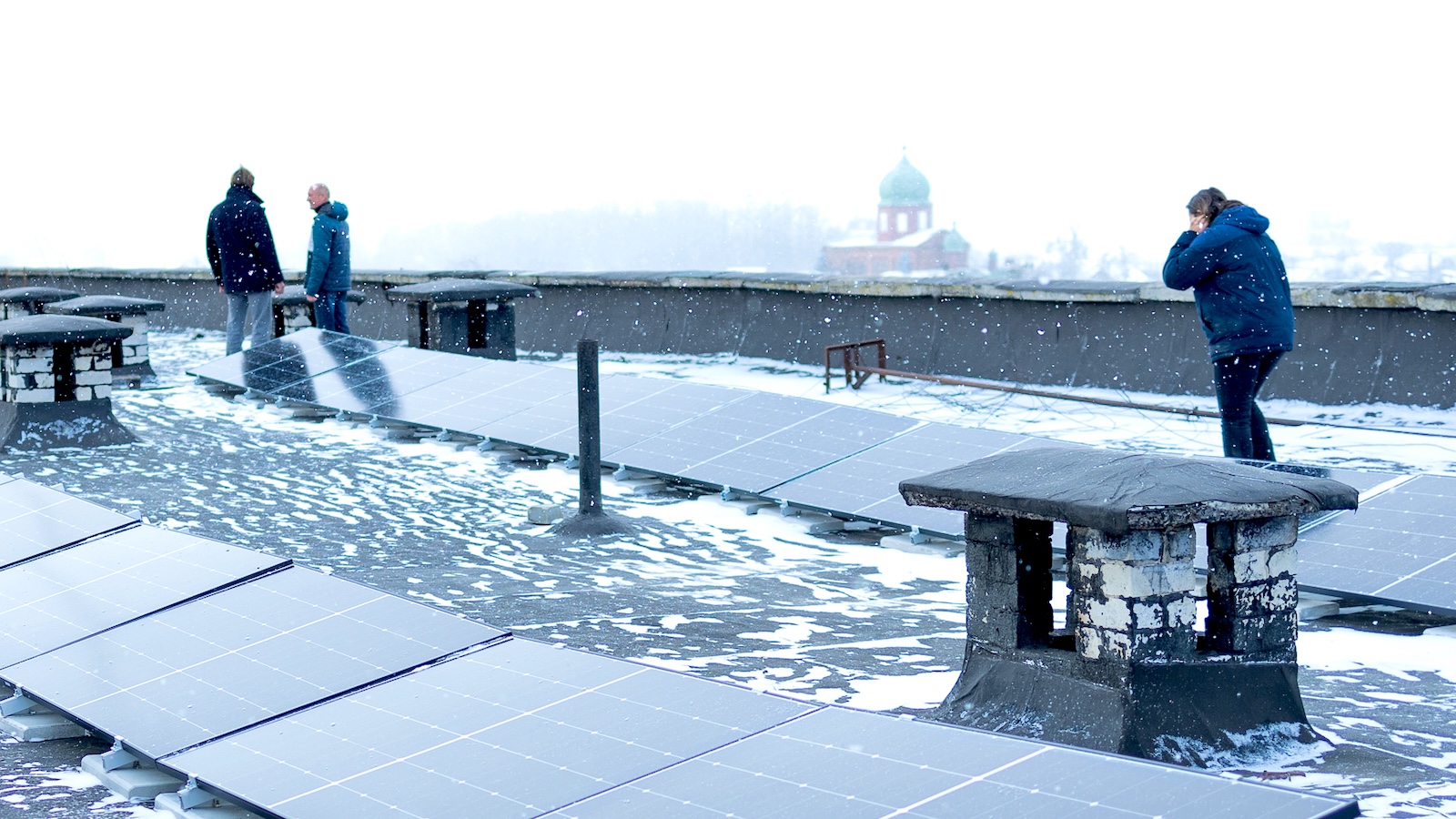
Ukraine is revamping its power sector as rapidly as it can: By one estimate, it installed at least 1.5 gigawatts of new solar generation in 2025—enough to power roughly 1.1 million homes—and grid operators intend to almost double renewable energy production over the next four years. In a new report for Climate Desk partner Yale Environment 360, I explore how Ukraine’s push to fortify its grid is advancing an unexpected clean energy transition. —Paul Hockenos







No comments:
Post a Comment