NORTON META TAG

Showing posts with label syngenta. Show all posts

04 July 2021

Corporate studies asserting herbicide safety show many flaws, new analysis finds 2JUL21


MORE on the propaganda campaign being waged by bayer, monsanto, dow, and syngenta to name a few to prevent glyphosate from being banned in Europe and then in the U.S. due to major health concerns. This from the Guardian.....

Revelations come as Europe wrestles over renewal question for Bayer’s Roundup herbicides

A French farmer sprays glyphosate herbicide ‘Roundup 720’ made by agrochemical giant Monsanto, in Piace, northwestern France, in a corn field, near a wind farm on 23 April 2021.
A French farmer sprays glyphosate herbicide ‘Roundup 720’ made by agrochemical giant Monsanto, in Piace, north-western France, in a cornfield, near a wind farm on 23 April 2021. Photograph: Jean-François Monier/AFP/Getty Images


A new analysis of more than 50 previously secret, corporate-backed scientific studies is raising troubling questions about a history of regulatory reliance on such research in assessing the safety of the widely used weedkilling chemical known as glyphosate, the key ingredient in the popular Roundup herbicide.

In a 187-page report released on Friday, researchers from the Institute of Cancer Research at the Medical University of Vienna in Austria said a thorough review of 53 safety studies submitted to regulators by large chemical companies showed that most do not comply with modern international standards for scientific rigor, and lack the types of tests most able to detect cancer risks.

“The quality of these studies, not of all, but of many of these studies is very poor. The health authorities … accepted some of these very poor studies as informative and acceptable, which is not justified from a scientific point of view,” Siegfried Knasmueller, the lead author of the analysis told the Guardian.

Glyphosate is the most widely used herbicide in the world, and is particularly popular with farmers growing common food crops. But there is heated debate in many countries about whether or not glyphosate herbicides should continue to be used due to concerns they may cause cancer.

The corporate studies at issue focus on the genotoxic properties of glyphosate – whether or not it causes DNA damage – and they support corporate assurances that the chemical is safe when used as directed and does not cause cancer. They were commissioned and/or conducted by the former Monsanto Co, which is now a part of Bayer AG, as well as Syngenta, Dow, and others involved in making and/or selling glyphosate.

Though some of the studies date back decades, they have been part of recent submissions to regulators in Europe and the United States, where regulators have agreed with the companies in concluding there is no cancer risk with glyphosate. European officials reaffirmed that view in an 11,000-page report issued last month.

The new analysis challenges those safety assurances, finding that much of the methodology used in the industry studies is outdated and not in keeping with international quality standards. Of the 53 studies submitted to regulators by the companies, only two were acceptable, according to current internationally recognized scientific standards, said Knasmueller.

Particularly problematic, he said, was the focus on testing for chromosome damage in early stages in red blood cells of the bone marrow in laboratory mice and rats. These tests routinely detect only 50-60% of carcinogens, according to Knasmueller. “So many carcinogens are not detected with this method,” he said.

A type of test known as “comet assay” has a much higher value for identifying carcinogens because it can quantify and detect DNA damage in individual cells in a variety of organs, and is commonly used for evaluating genotoxicity, according to Knasmueller. But no comet assay tests were included, according to the analysis.

“I cannot understand why the health authorities did not ask for such data,” said Knasmueller, who is an expert in genetic toxicology and along with his work at the cancer institute is editor-in-chief of two prominent scientific journals, including Mutation Research – Genetic Toxicology and Environmental Mutagenesis.

Knasmueller was asked to review the studies by the SumOfUs non-profit advocacy group, though he said he was not paid for the work. A co-author on the analysis and fellow cancer institute scientist, Armen Nersesyan, was paid roughly €3,500 ($4,146) , however.

If Knasmueller’s observations are accurate, the new finding of flaws in industry studies means regulatory assurances about glyphosate safety in Europe and the United States have been based, at least in part, on shoddy science.

Analysis comes at a critical time as Bayer is asking European regulators to reauthorize glyphosate ahead of the expiration of approval next year.
Analysis comes at a critical time as Bayer is asking European regulators to reauthorize glyphosate ahead of the expiration of approval next year. Photograph: Josh Edelson/AFP/Getty Images

Linda Birnbaum, former director of the US National Institute for Environmental Health Sciences, said there has been an ongoing problem that is not unique to glyphosate with regulators taking industry studies “at industry’s word”, while ignoring red flags raised in non-industry-funded research.

The European Food Safety Authority (EFSA) said it could not comment on the analysis but said all interested parties will have the opportunity to submit comments on the draft assessment of glyphosate. The agency did not answer a question about its level of confidence in the validity of industry studies.

The US Environmental Protection Agency (EPA) confirmed that no comet assay tests are required but said the agency “strives to use high-quality studies” and “a broad set of data” when evaluating pesticides. As well, the EPA “independently evaluates required studies for scientific acceptability” that meet agency and international guidelines, an EPA spokeswoman said.

The analysis comes at a critical time as Bayer and a contingent of companies calling themselves the Glyphosate Renewal Group (GRG) are again asking European regulators to reauthorize glyphosate ahead of the expiration of approval next year, and as the industry battles to preserve glyphosate use globally.

Bans or reductions in use have been called for in several countries, including Mexico, where a glyphosate ban is to take effect in 2024, and in France, where the government last year announced financial incentives for farmers who stopped using the chemical. In the US, New York City recently banned glyphosate use on city property and other cities have implemented reductions or bans.

The GRG did not respond to a request for comment. But Bayer, a leading member of the GRG, said the package of studies submitted to regulators is “one of the most extensive scientific dossiers ever compiled for a pesticide active ingredient”.

Bayer said for the current registration review, it was “required” to submit the older genotoxicity studies along with new corporate genotoxicity studies. As well, the companies submitted to regulators “a vast review of thousands of published scientific publications regarding glyphosate”, said a Bayer spokesman.

Concerns about glyphosate have mounted since 2015 when the International Agency for Research on Cancer (IARC), part of the World Health Organization, classified glyphosate as a probable human carcinogen based on scientific studies conducted by independent researchers. Unlike regulators, IARC relied primarily on a large body of published and peer-reviewed research and not industry studies in its classification.

The IARC classification led a group of European lawmakers in 2017 to demand access to industry studies that had been given to regulators but withheld from public scrutiny. Monsanto’s are stamped as “company confidential”.

A 2019 court decision forced EFSA to provide public access, however, clearing the way for scrutiny such as the Knasmueller analysis.

It is not clear if some or all of the 53 studies examined in the analysis are part of the package the GRG recently submitted to European authorities.

Glyphosate was only narrowly given a five-year renewal in Europe in December 2017 after the European parliament voted against renewal.

Several questionable interactions between Monsanto and regulators have come to light in recent years, including the fact that EFSA dismissed a study linking the company’s weedkiller to cancer after consultation with a US EPA official linked to Monsanto. Documents also demonstrated that an EU report declaring glyphosate safe was in part copied and pasted from a Monsanto study.

And when the EPA consulted with a scientific advisory panel assembled in Washington DC in December 2016, panel members complained that EPA officials were not following proper scientific guidelines for how to assess research about glyphosate health impacts.

“This puts once more a finger on a sore spot: that national regulators do not seem to pay close scrutiny when looking at the quality of industry’s studies,” said Nina Holland, researcher at the watchdog group Corporate Europe Observatory. “This is shocking as it is their job to protect people’s health and the environment, not to serve the interests of the pesticide industry.”

09 April 2018

COMMENT DEADLINE APPROACHING: Tell the EPA to Protect our Bees & EU expected to vote on pesticide ban after major scientific review 7APR&28FEB18

Related imageImage result for bee die off meme
THE campaign started in 2014 against pesticides that kill bees continues, neonicotinoids and neonics are being pushed by bayer and syngenta, and though they know their products are responsible for killing off bee colonies across the country and are threats to the health of farm workers and residents in farm states where the bayer-syngenta cabal is seeking approval for expanded use of these poisons. They are putting profit over the health and safety of the American people and environment. These pesticides were banned from use on sunflowers, oilseed rape and corn in Europe in 2013 because studies prove they kill bees. Now the EU is expected to vote on completely banning their outdoor use because of more studies showing  they ans killing off bees. bayer and syngenta believe they will get approval from the US EPA director scott pruit to expand the use of these poisons to 165 million acres of American farmland.  Please submit a comment telling the EPA to deny bayer and syngenta  their request to expand the use of these pesticides and point out the EPA is supposed to be the Environmental Protection Agency. And be sure to check out the article in Nature...... 


Survey of more than 1,500 studies concludes that neonicotinoids harm bees.
URGENT: Scott Pruitt is embroiled in scandal, but his EPA is not stopping plans to expand the use of dangerous bee-killing pesticides. Help protect our pollinators and submit an official comment by April 21st »

URGENT ACTION NEEDED!

We cannot let Pruitt's dirty dealings decimate our pollinator populations, contaminate our waterways, and jeopardize our health.

Right now, while scandal after scandal breaks exposing EPA chief Scott Pruitt's cozy ties to industry insiders, he is still moving to help his corporate buddies. This time, it's by expanding the use of extremely toxic bee-killing neonicotinoid thiamethoxam pesticides on over 165 million acres of farmland.

Scientific evidence has shown that this pesticide is hazardous to our environment and that the EPA should be reducing its use, not expanding it.

We know Scott Pruitt is willing to prioritize the profits of Big Corporations over the health of our pollinators, communities, and ecosystems. And with mega-corporations Bayer and Syngenta — two of the largest producers of these bee-killing neonic pesticides — lobbying Pruitt to make sure that their pesticides stay on the market, we must act quickly and LOUDLY.

There are only a few weeks left to act — that's why we need LCV members like you to speak out and tell the EPA to eliminate these dangerous pesticides once and for all. Pressure is building against Scott Pruitt's EPA so now is the time to act — join us.

TIME IS RUNNING OUT: Tell the EPA to keep bee-killing pesticides OUT of our farms. GOAL 30,000 comments »

Numerous studies have shown that neonic pesticides not only harm bees, but they also pose danger for birds and aquatic species through the contamination of plants and waterways. Already these chemicals have become ubiquitous in our food supply — with evidence of neonic pesticides found on fruits, vegetables, and honey sold in our grocery stores.

To make matters worse, the communities that work on and live near these farms are disproportionally exposed to these dangerous pesticides and suffer from greater health risks. And Pruitt is moving to reduce the minimum age requirement for farm workers, increasing the exposure of young workers to these dangerous pesticides.

We cannot ignore the science — these pesticides harm wildlife, contaminate the produce we eat, and risk the health of our communities. We must raise our voices in opposition to any move that could jeopardize the health of our pollinators and frontline farm working communities! 

As Big Corporations try to discredit science and stop the EPA from taking action in order to protect their bottom line, we must build a bigger and stronger movement to stand up against dangerous pesticides. If enough of us submit a comment, the EPA will have no choice but to reconsider this disasterous plan — and we can save the bees. We can stop them, but we only have until April 21st to speak out.

Join the fight — submit a comment and tell Pruitt to stop putting Big Corporations above our health and environment »

The EPA exists to protect our pollinators, communities, and environment from dangers just like this. Scott Pruitt thinks he can get away with only protecting the interests of corporations like Bayer and Syngenta. We simply won't let that stand. Show the EPA that we're paying attention and won't stand for attacks against our pollinators.

Thank you for standing up for our bees.

EU expected to vote on pesticide ban after major scientific review

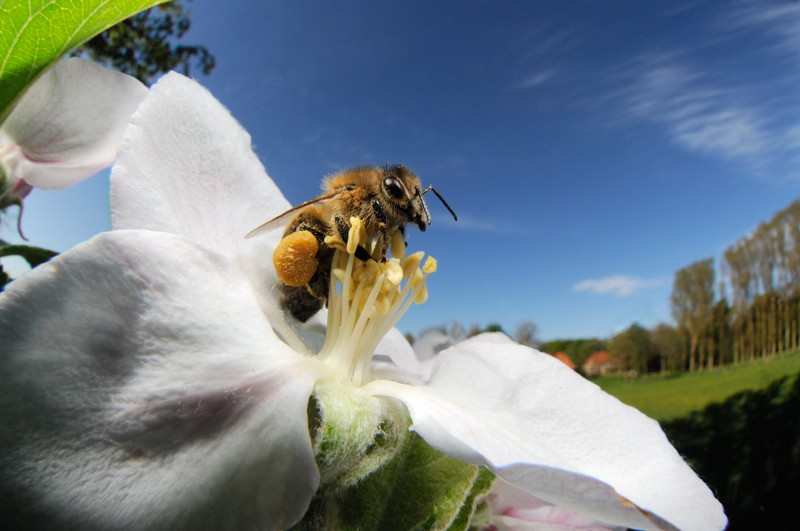
Honey bee (Apis mellifera) collecting pollen from the flower of an apple tree
A honeybee (Apis mellifera) gathers pollen from an apple-tree flower.Credit: Solvin Zankl/NPL
Survey of more than 1,500 studies concludes that neonicotinoids harm bees.
In a long-awaited assessment, the European Union’s food-safety agency has concluded that three controversial neonicotinoid insecticides pose a high risk to wild bees and honeybees. The findings by the European Food Safety Authority (EFSA) in Parma, Italy, raise the chances that the EU will soon move to ban all uses of the insecticides on outdoor crops.
In 2013, the EU prohibited applications of the three chemicals on crops attractive to bees — such as sunflowers, oilseed rape and maize (corn) — after an EFSA assessment raised concern about the insecticides’ effects. Since then, researchers have amassed more evidence of harm to bees, and the European Commission last year proposed banning all outdoor uses, while still allowing the pesticides in greenhouses. The latest EFSA assessment strengthens the scientific basis for the proposal, says Anca Păduraru, a European Commission spokeswoman for public health and food safety. EU member states could vote on the issue as soon as 22 March.
Neonicotinoids (often abbreviated to neonics) are highly toxic to insects, causing paralysis and death by interfering with the central nervous system. Unlike pesticides that remain on plant surfaces, neonicotinoids are taken up throughout the plant — in the roots, stems, leaves, flowers, pollen and nectar.
The EFSA assessment covered the three neonicotinoids of greatest concern to bee health — clothianidin, imidacloprid and thiamethoxam. The agency considered more than 1,500 studies, including all the relevant published scientific literature, together with data from academia, chemical companies, national authorities, non-governmental organizations (NGOs) and beekeepers’ and farmers’ associations. The assessment found that each of the three chemicals posed at least one type of high risk to bees in all outdoor uses.
Harmful exposure
The agency found that foraging bees are exposed to harmful levels of pesticide residues in pollen and nectar in treated fields and contaminated areas nearby, as well as in dust created when treated seeds are planted. It also concluded, on the basis of more limited evidence, that neonicotinoids can sometimes persist and accumulate in the soil, and so can affect generations of planted crops and the bees that forage on them.
“EFSA’s advice is often criticized by interested parties such as NGOs and companies, but this is a good demonstration of how EFSA gives scientifically sound and impartial advice,” says José Tarazona, head of the agency’s pesticides unit.
A spokesperson for the global biotechnology firm Syngenta, which produces neonicotinoids, says that EFSA’s conclusions are overly conservative. “When regulators make decisions about crop-protection products, what should matter is science, data and that the processes in place are respected and that the public interest is served,” the spokesperson says. “Any further restrictions based on this report would be ill-conceived.”
EU member states were scheduled to vote on the proposal to outlaw outdoor uses on 13 December, but postponed it partly because many wanted to wait until EFSA completed its evaluation.
Member states plan to discuss the EFSA assessment at a meeting of the commission’s Standing Committee on Plants, Animals, Food and Feed sometime in March, says Păduraru. “The protection of bees is an important issue for the commission since it concerns biodiversity, food production and the environment.”

RELATED ARTICLES

20 June 2014

Bzzzzzzzzzzzz......STOP THE BEE-POCALYPSE 16JUN14 & SNL KILLER BEES......


Killer Bees.
SNL's Killer Bee skits were hysterical, the bee die-off isn't.
HR 2692 has 65 co-sponsors in the US House. This legislation will ban pesticides containing neonics / neonicotinoids for two years while safer pesticides are developed. We are running out of time, the bees can't keep dying in the numbers they are without the potential for major disruptions in agricultural production in this country. Please click the link to send your Representative a letter telling them to support, co-sponsor and vote for HR 2692!
LCV logo header


honeybee

Could you imagine a fall without fresh apples? Thanksgiving without cranberry sauce or pumpkin pie? Chips without guacamole? It’s hard to picture, but this could be our not-so-distant future if we don’t take action now to save our number one food security guard -- the honeybee.
In recent years, nearly one third of commercial bee colonies in the U.S. have been dying over the winter. In Oregon last year we saw the biggest mass killing ever, as 50,000 bumblebees dropped dead after coming in contact with a pesticide used purely for aesthetic purposes. The situation is so bad that people have started to dub it the “Bee-pocalypse.”
Why is this a big deal? Because one third of the food produced in North America, including nearly 100 varieties of fruits and vegetables like apples, pumpkins, cranberries, and avocados, rely on honeybees for pollination.
Losing our bees wouldn’t just leave us without delicious guacamole and apple pie, it would be a crushing blow to our economy. We could lose more than $15 billion a year in agricultural production in the U.S.
The good news is that Congress has finally started to take notice. Just last week, a bill (H.R. 2692) to save honeybees by temporarily banning certain pesticides reached 65 co-sponsors.
This is the closest we’ve ever gotten to actual legislation to protect our bees, so we need your help to spread the word and keep the momentum going. If enough of us speak out, we can get more members of Congress to support this bill and make saving our bees a reality.
The mass death of our honeybees is not a natural phenomenon. Europe is seeing huge population declines as well. The difference is that the European Union is working to reverse this trend with a two-year ban in place on neonicotinoids, the pesticides linked to mass bee deaths. We need your help to get the United States to follow suit.
This bill would temporarily halt certain pesticides while safer pesticides are being developed. And get this -- we may already have the key to a safer pesticide. Researchers in England have been investigating the venom of one of the world’s most deadly spiders, the Australian funnel web spider. The spider’s venom creates a bio-pesticide that is still fatal to common farm pests, but appears to have absolutely no effect on bees.
We have a very real shot at saving the bees, but only if we stop the use of dangerous pesticides and develop new, safer alternatives. But we have to act now to convince Congress to do something about it. There are 65 members supporting the bill so far -- will you help us get even more on our side?
There’s no simple solution to the bee crisis, but we do know about some steps we can take now to move us in the right direction and the first one is passing this bill. The success of our crops and security of our nation’s food supply hinges on whether or not we can protect our bees. So thank you for telling Congress to take action today.
Best,
Vanessa
Vanessa Kritzer
Director of Digital Strategy
League of Conservation Voters

1920 L Street, NW Suite 800
Washington, DC 20036
202-785-8683
lcv-optim-share-donate.png

Bee deaths a result of pesticide Safari; count upped to 50,000 dead insects

Elizabeth Case, The Oregonian By Elizabeth Case, The Oregonian
Follow on Twitter
on June 21, 2013 at 5:16 PM, updated April 22, 2014 at 1:05 PM


As the estimate of dead bees rose to 50,000, the Oregon Department of Agriculture confirmed the insecticide Safari caused the deaths in a Wilsonville earlier this week. A landscaping company sprayed 55 linden trees in a Target parking lot to control for aphids, said Dan Hilburn, the plants division director at the department of agriculture. The bees have been dropping from trees since the spraying on Saturday.

Aphids produce honeydew, a sticky liquid that can drip off onto cars or pedestrians. A Target representative said by email that the Wilsonville store had received no customer complaints about it. 

The Portland-based Xerces Society, which first reported the die off to the state Agriculture Department said aphids can be controlled without insecticides, including by spraying infested plants with soapy water. 

On Friday the Agriculture Department, the City of Wilsonville, neighboring towns and some local landscape contractors covered the sprayed trees with netting in an attempt to prevent further insect deaths. 

The state is investigating any violation of pesticide laws, which could take up to four months, said Dale Mitchell of the Agriculture Department. 

Mitchell said the bee deaths, the largest documented die-off of bumblebees, could prove important in determining the use and regulations of Safari and other insecticides in the United States. 

Safari's main ingredient is dinotefuran, a neonicotinoid. There are two main kinds of neonicotinoids, both of which are general use insecticides. Safari is a member of the nitro-group.  Research published in 2012 shows these are generally more toxic to bees than the other type. The European Union issued a temporary ban on three other kinds of nitro-group neonicotinoids, which will go into effect this December. 

Elliot Associates, the land management company that rents the affected Argyle Square lot, released the following statement Thursday: "If a cause is discovered which may be attributable to our actions or those of our contractors, a proactive course of action will be taken after consulting with the DOA and other experts in this field." 


Bumblebee deaths caused by insecticide A bee poisoned by the insecticide "Safari" struggles in a parking lot in Wilsonville. 25,000 bees and insects were affected.
Meanwhile, other reports of bees dying around Wilsonville and surrounding towns have prompted Xerces to check whether similar pesticides were used elsewhere. 

"My worry is that we're going to lose sight of the real message," said Mace Vaughan of Xerces. "I think we're (using insecticides) all over the place, and people are doing it in their backyards without even knowing it." 

The agriculture department and other related groups will meet Monday to discuss any further action.

13 June 2014

Did Scientists Just Solve the Bee Collapse Mystery? 20MAI14

IF you are buying plants for your garden from home depot and lowe's you are killing bees. home depot and lowe's both sell plants and gardening / landscaping products containing neonics / neonicotinoids which are directly linked to bee colony collapse / mass bee die-off. The European Union has banned the sale of these products for two years to see the effect on bees there. If you are concerned about the massive bee die-off that has been occuring in the U.S. and around the world the choice is quite simple, stop buying plants and products containing neonics / neonicotinoids, and stop buying products from bayer and syngenta, the two international companies producing these chemicals responsible for the massive bee die-off threatening agriculture worldwide. From +Mother Jones .....
| Tue May 20, 2014 6:00 AM EDT

It's a hard-knock life, scouring the landscape for pollen to sustain a beehive. Alight upon the wrong field, and you might encounter fungicides, increasingly used on corn and soybean crops, and shown to harm honeybees at tiny levels. Get hauled in to pollinate California's vast almond groves, as 60 percent of US honeybees do, and you'll likely make contact with a group of chemicals called adjuvants—allegedly "inert" pesticide additives that have emerged as a prime suspect for a large bee die-off during this year's almond bloom.
Harvard researcher Lu believes that with this study, coming on the heels of a similar one he released in 2012, the colony collapse mystery has been solved.
The hardest-to-avoid menace of all might be the neonicotinoid class of pesticides, widely used not only on big Midwestern crops like corn and soybeans but also on cotton, sorghum, sugar beets, apples, cherries, peaches, oranges, berries, leafy greens, tomatoes, and potatoes. They're even common in yard and landscaping products. I've written before about the growing weight of science linking these lucrative pesticides, marketed by European agrichemical giants Bayer and Syngenta, to declining bee health, including the annual die-offs known as colony collapse disorder, which began in the winter of 2005-06.
And now, a new Harvard study fingers neonics as the key driver of colony collapse disorder. The experiment couldn't have been simpler. Working with nearby beekeepers, Harvard researcher Chensheng Lu and his team treated 12 colonies with tiny levels of neonics and kept six control hives free of the popular chemicals. All 18 hives made it through summer without any apparent trouble. Come winter, though, the bees in six of the treated hives vanished, leaving behind empty colonies—the classic behavior of colony collapse disorder. None of the six control hives experienced a CCD-style disappearing act, although one did succumb to a common-to-bees gut pathogen called nosema.
What makes the new Harvard study remarkable is that it actually simulated colony collapse disorder.
Other studies have shown negative "sublethal" impacts of neonics on bees—that is, that the chemicals harm bees in subtle ways at doses too low to kill them outright. For example, this 2012 Science paper found that tiny amounts of the chemicals significantly affects bees' ability to find their way back to their hives—"at levels that could put a colony at risk of collapse." Another 2012 study, also published in Science, found that bumblebees exposed to "field-realistic levels" of a neonicotinoid called imidacloprid exhibited a severely diminished capacity to produce new queens. What makes the new Harvard study remarkable is that it actually simulated colony collapse disorder—neonic-treated bees suddenly abandoned hives that had been healthy all summer, while untreated bees hung around and repopulated their hives.
In the paper, the authors call the spectacle of abandoned hives "striking and perplexing" because "honeybees normally do not abandon their hives during the winter." More research is needed to identify the mechanism by which neonic pesticides trigger the evacuations, they write, but the results point to "impairment of honeybee neurological functions, specifically memory, cognition, or behavior, as the results from the chronic sublethal neonicotinoid exposure."
Lu told me he thinks that with this study, coming on the heels of a similar one he published in 2012, the CCD mystery has been solved.
For its part, the pesticide industry is doing its best to shroud the phenomenon in uncertainty, promoting a "multifactorial" explanation that points the finger at mites, viruses, and "many other factors, but not…the use of insecticides," as neonic producer Bayer puts it in its "Honey Bee Health" pamphlet. As for Lu's study, Bayer is dismissive. In a response published on the trade website Ag Professional, Bayer accused Lu of overdosing the bees in his study:
Feeding honey bees levels of neonicotinoids greater than 10 times what they would normally encounter is more than unrealistic—it is deceptive and represents a disservice to genuine scientific investigation related to honey bee health.
In an email, Lu disputed this attack. He noted that the dose used, 0.74 micrograms per bee per day over 13 weeks, is actually quite tiny—by contrast, a grain of table salt weighs 64,800 micrograms. The level used in the study is also well below what scientists call the median lethal dose (LCD50) for neonicsthat is, the dose required to kill half the members of a tested population. Lu stressed that the treated bees showed no ill effects during the 13 weeks of the feeding—it was only well after exposure to the pesticides, during the winter, that they fled their hives.
Bayer also took issue with the length of the exposure, arguing that it went on too long. "Given the artificially high levels tested over 13 consecutive weeks, the colony failure rates observed are completely expected," the company claimed in its statement. Lu countered that in New England, where he performed the experiment, bees can forage outside from March to September—30 weeks. In other parts of the country, he added, bees can forage for as long as 41 weeks.
This year, beekeepers in Ohio, for example, reported winter losses of 50 percent to 80 percent.
For context on Lu's paper, I contacted Jeff Pettis, a USDA bee researcher who has participated in several papers on the recent decline of honeybee health—including a 2012 study showing that bees exposed to tiny levels of a neonic called imidacloprid were significantly more prone to succumb to the gut pathogen nosema than unexposed bees. Pettis told me that he thought Lu's study "adds to the list" of studies showing that pesticides pose a significant threat to honeybees. But he's not ready to declare a smoking gun—Lu's sample size, 12 treated hives and six controls, is too small, he says, to draw such a conclusion.
Meanwhile, the USDA has released a preliminary report on its nationwide survey asking beekeepers how their hives fared over the winter. The report found that 23.2 percent of hives collapsed—the lowest levels since CCD began in 2005-06, and down from a peak of about 35 percent in the winter of 2007-08. The previous year's losses clocked in 31 percent. For its part, Bayer declared the report "encouraging news to everyone who cares about bee health."
Lu isn't so sure. He notes that the numbers reflect nationwide averages, and might mask significant regional losses. Beekeepers in Ohio, for example, reported winter losses of 50 percent to 80 percent, and their peers in neighboring Pennsylvania suffered heavy losses as well. He plans to continue studying what he believes is a strong link to neonic pesticides. Last year, Europe placed a two-year moratorium on most neonic uses, pending more research on their effect on honeybees. The US Environmental Protection Agency, for its part, is reviewing its registration of the chemicals, and won't be done until 2016 at the earliest.

31 August 2013

UPDATE: Bayer vs. the bees: we're winning...& Bayer is suing *Europe* for saving the bees31AUG&3SEP13

FROM SumOfUs, an update on the campaign against the giant chemical companies, like Bayer, to get the pesticides they sell that are killing off the bees banned. Bayer and the other chemical companies are running scared and the EPA is feeling the pressure to ban these very chemicals that have been banned in Europe. Check this out....
THIS UPDATE ON 3SEP13 Bayer is suing *Europe* for saving the bees See the full article below....
Dear friends,
I just got back from a whirlwind trip to Chicago, where beekeepers from across the US were speaking out about the danger of bee-killing pesticides on behalf of thousands of SumOfUs supporters. And here’s what I learned: the pesticide industry really, really doesn’t want people to hear our message.
I went to Chicago to attend a massive commercial gardening convention, where the beekeepers (who call themselves ‘beeks’) and I were delivering the voices of over 140,000 SumOfUs supporters. Our message: stop selling the pesticides that are killing the bees! It wasn’t a message that Bayer and the pesticide giants wanted the world to hear. I was barely off the plane in Chicago when I learned that the industry-sponsored convention organizers had threatened SumOfUs with a lawsuit if we took our message inside the convention grounds!
But we had come prepared (thanks to thousands of donations from SumOfUs supporters!) -- and we didn’t leave until the beekeepers had reached out to thousands of commercial garden center owners and the national media about the dangers of these bee-killing pesticides. Here’s the most remarkable thing: many of the garden center owners signed on in support as soon as they heard our message -- exactly why Big Pesticide is scared of our campaign to save the bees.
Big Pesticide is determined to silence us, but we’re not going to let them -- and we won’t back down to legal intimidation. Our colorful bus ads blanketed Chicago during the conference, and were featured on morning TV news across the US -- and now, thanks to you, we’re taking the message straight to garden center owners themselves with ads in the biggest commercial garden publications. With your support, we’re going to keep fighting until these pesticides are banned around the world and the bees -- and our food supply -- are safe.
The threat of a lawsuit wasn’t the only tactic they used to silence us in Chicago. They rolled out a full campaign of intimidation, including:
  • telling hotels across the city not to book rooms to our beekeepers, and not to allow us to screen a documentary about bees; 
  • ordering security guards to prevent our accredited beekeepers and two human-size bees (okay, our friendly volunteers in bee costumes!) from entering the conference; 
  • and even stopping an 85 year-old local beekeeper from delivering 140,000 signatures from SumOfUs members to Bayer, one of the largest manufacturers of bee-killing pesticides!
Meanwhile, Bayer spent hundreds of thousands of dollars on huge ads all over the convention center and a booth advocating their “bee care” program, all the while selling the pesticides that are killing them at the convention!
But despite these dirty tactics, we got our message out loud and clear. Our beekeeper friends had hundreds of one-on-one conversations with convention attendees, handed out thousands of flyers about the deadly effects of ‘neonics’, the pesticides that are killing the bees, plastered the city’s buses with our ads, and took the city by swarm.
Bayer’s reaction shows one thing -- it’s scared. Europe has already banned these killer chemicals, so now the industry is fighting with all they’ve got to dump the neonics on North America. Just last week, Time Magazine wrote about the global bee die-off and neonic bee killers in its cover story, and this week, the American Environmental Protection Agency (EPA) ordering an immediate reduction in the use of these pesticides, and admitted that the chemical is partly responsible for the disappearance of honey bees. Big Pesticide is terrified that its profits will take a hit if we win in the US as well.
Thanks to your support, we’re going to keep up the fight. First up, we’re planning hard-hitting ads in gardening industry publications next month, to make sure the garden center owners get this vital information. And we’ve got more ideas in the works -- but after the legal threats in Chicago, we’re keeping them under wraps to stop the industry from trying to block us again.
Together, we can save the bees. We hope you’ll stay with us until we win this fight.
On behalf of all of us,
Angus and the beekeepers (Terry, Reba, Sam, Amy, and Edie)
PS: we don’t take any corporate funding, so all of this and more is made possible through your support. If you want to donate to make sure that we can keep campaigning to save the bees in the months ahead, you can do that here.

Bayer is suing *Europe* for saving the bees

I know it's less than 72 hours since we emailed you to update you on our bees campaign -- but Bayer is now suing Europe to overturn the landmark ban on bee-killing pesticides! See the full story below, and let's all sign now to stop this outrageous move! -- Claiborne
---------------------------
Bayer has just sued the European Commission to stop the ban on its bee-killing pesticides -- despite clear evidence its products are behind the massive bee die-offs.
We can't let Bayer and Syngenta get away with this blatant threat while the bees disappear. Sign the petition to tell them to drop the lawsuits now!

I know it's less than 72 hours since we emailed you to update you on our bees campaign -- but Bayer is now suing Europe to overturn the landmark ban on bee-killing pesticides! See the full story below, and let's all sign now to stop this outrageous move! -- Claiborne
Wow. Bayer has just sued the European Commission to overturn a ban on the pesticides that are killing millions of bees around the world. A huge public push won this landmark ban only months ago -- and we can't sit back and let Big Pesticide overturn it while the bees vanish.
Bayer and Syngenta, two of the world's largest chemical corporations, claim that the ban is "unjustified" and "disproportionate." But clear scientific evidence shows their products are behind the massive bee die-off that puts our entire food chain in peril. 
Just last month, 37 million bees were discovered dead on a single Canadian farm. And unless we act now, the bees will keep dying. We have to show Bayer now that we won't tolerate it putting its profits ahead of our planet's health. If this giant corporation manages to bully Europe into submission, it would spell disaster for the bees.
The dangerous chemical Bayer makes is a neonicotinoid, or neonic. Neonics are soaked into seeds, spreading through the plant and killing insects stopping by for a snack. These pesticides can easily be replaced by other chemicals which don’t have such a devastating effect on the food chain. But companies like Bayer and Syngenta make a fortune from selling neonics -- so they’ll do everything they can to protect their profits. 
The EU banned these bee-killers this past May, after a massive public campaign and a clear scientific finding from the European Food Safety Authority that neonics pose huge risks to bee populations. Bayer fought against the ban every step of the way, using tactics taken from Big Tobacco -- pouring millions into lobbying and fake science to stop decision-makers from taking action. 
We have to stand up for the European ban now, from Europe and from around the world. The current ban only lasts for two years before it's up for review, and Bayer is now determined to stop it before it even comes into force in December 2013. If it is allowed to intimidate the European authorities with impunity, then the pressure to overturn the ban will be huge. This will be a massive victory for the poison industry, and a devastating loss for the bees, and all of us. It will make every environmental regulation more difficult, because companies that can't win on the facts can use their enormous profits to fund expensive, baseless lawsuits.
Bayer is an enormous company with a ton of public-facing brands. Neonics are a big part of its bottom line, but it can't afford poor publicity on a global scale. And if word gets out that Bayer is wrecking our ecosystem and threatening a creature responsible for pollinating a third of all our crops, the company will have to back down.
SumOfUs staff and members have literally just gotten of the plane from a convention in Chicago where we took the fight for a ban in the US right to the industry itself -- so we know how important it is to hold the line.
Thanks for all you do,
Claiborne, Kaytee, and the team at SumOfUs

**********
More information:
EU insecticide ban triggers legal action, Nature News, 28 August, 2013