NORTON META TAG

Showing posts with label DPI. Show all posts

04 February 2011

HUMAN RIGHTS FIRST RIGHTS WIRE E MAIL NEWSLETTER 1FEB11

STORIES and updates from Human Rights First on Egypt, the murder of David Kato in Uganda, the terrorism trial and sentencing of ahmed ghailani in NYC, and internet censorship in the prc....
Rights Wire
    HRF'S E-NEWSLETTER February 1st, 2011 EMAIL TO A FRIEND» DONATE»

In This Issue From Our President and CEO»
What's in Store for Egypt?»
Homophobia in Uganda Fuels Tragic Murder»
Sentencing of Ex-Guantanamo Detainee in NYC Shows Federal Courts Work»
Tear Down the Great Firewall!»
Winning Human Rights Quote»
HRF in the News»
From the President and CEO
HRF's Elisa Massimino
In recent days we've seen dramatic developments in two countries where Human Rights First does extensive work. In Egypt, citizens are taking to the streets to demand human rights. And in Uganda, amid a climate of hatred and fear, a leading gay rights activist was brutally murdered.
For many years, we've been partnering with activists in both Egypt and Uganda, amplifying their voices and working to protect them from persecution. And we've been pressing the United States government to use its influence to advance human rights in both countries.
Now—as homophobic violence claims the life of a human rights champion and the protests in Egypt intensify—we are redoubling our efforts to help citizens in each country gain the freedoms to which they're entitled.
Thank you for your ongoing support, which makes this work possible.
You can help today by signing our petition to Ugandan President Museveni.

What's in Store for Egypt?
People in Egypt take to the Streets
Human Rights First has been working with frontline activists in Egypt for decades—including some who spent years in jail for the cause of democracy, and human rights. And what is happening right now—hundreds of thousands of protestors in the streets, facing off their corrupt, authoritarian leader—shows that the steady drumbeat for freedom will not be silenced. Egyptians deserve basic human rights and an end to repression.
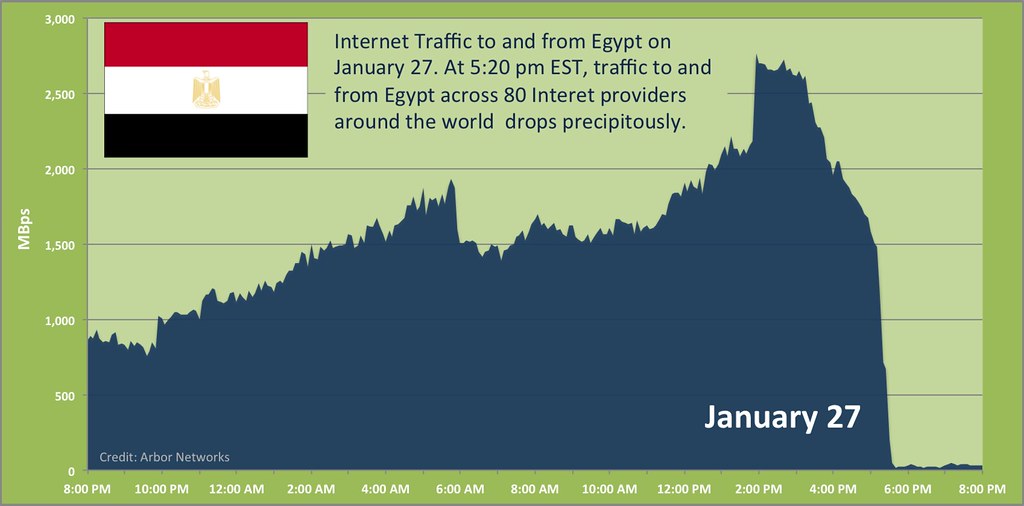
Mubarak responded to these demands with violence. More than 100 protestors have died. He shut down all means of communication in his power—Twitter, cell phones, then the entire Internet.
Mubarak's actions have demonstrated that he's not fit to rule in a way that meets the legitimate interests of Egyptians. The Obama Administration has belatedly and tentatively recognized the need for change. What's needed now—and what the United States should demand—is a transition plan from the Egyptian government that will reestablish order, schedule free elections, and ensure that basic rights are respected. And the United States should make clear that if the Egyptian army uses force against protestors, it will suspend military aid immediately.
Listen to Gamal Eid, one of the voices for change in Egypt. He and others have been muted by this recent crackdown—but they will not be silenced. Help support our work by making a donation today.

Homophobia in Uganda Fuels Tragic Murder
Uganda Headline Lead to Activists Murder
Last year in Uganda there was a threat to human rights in the form of a bill that would've made homosexuality punishable by death. Joining with other human rights groups and with frontline activists, we helped to block the bill. But the hatred behind it persists.
Last week David Kato, Uganda's most prominent gay rights activist, was found dead in his home. An intruder had beaten him to death with a hammer. A Ugandan paper had recently featured 100 prominent gay men on its front page under the headline "Hang Them." David Kato was one of them.
As Ugandan LGBTI advocate Julius Kaggwa said in his acceptance speech at our Human Rights Award Dinner in October, being homosexual in Uganda is a "death sentence." Sadly, his words were prophetic. Working with Julius, we will intensify our efforts to fight intolerance in Uganda and do all we can to protect those at risk.
Help us put pressure on Ugandan President Museveni to ensure Kato's murderer comes to justice—and to make sure that the bill that would mete out death sentences for being gay is shelved for good. Take action now!

Sentencing of Ex-Guantanamo Detainee in NYC Shows Federal Courts Work
Keep America Afraid new video
"This case was tried well, it was tried efficiently, it was tried properly," the judge in the federal court trial of former Gitmo detainee Ahmed Ghailani said. That's also what HRF's Daphne Eviatar said throughout the trial, which she monitored closely and reported on at our blog.
Last week, Ghailani was sentenced to life in prison in a federal court in Manhattan.
In Sunday's Chicago Tribune, General Joseph Hoar and General Charles Krulak, two leading members of the group of retired admirals and generals who have partnered with HRF to make sure that the United States' national security policies conform with our laws and values, ask: "Where is President Obama's will to win? Close Guantanamo now."
Watch our video spoofing what fearmongers had to say about this sentence. Hint: crickets. Since Federal Courts get the job done, ask your members of Congress why they are blocking these trials.

Tear Down the Great Firewall!
China Tear Down the Great Firewall!
It took two questions to get an answer from Chinese President Hu Jintao about China's human rights record. His first answer was that he didn't hear the question.
As HRF's Elisa Massimino said on Fox News immediately following the White House press conference: "Could there be a more striking metaphor for China and human rights?"
Watch Elisa Massimino on Fox and listen to our podcast on the Great Firewall of China.

Winning Human Rights Quote
On Human Rights Day, we asked you to vote on your favorite human rights quote. The winner, by a wide margin, was Martin Luther King Jr:
"True peace is not merely the absence of tension, it is the presence of justice."

 HRF in the News
Commenting on the Egyptian government's shutdown of the Internet at MSNBC, HRF's Neil Hicks makes clear that a crack down on Internet communication is a violation of human rights because it's a violation of the right of free speech.
On January 6, in a letter to the editors at the Washington Post "Obama needs a stronger strategy on human rights," Elisa Massimino argued that the U.S. is taking a dangerous path in Pakistan, China, and Egypt in its (lack of) human rights strategy.
On the Ghailani trial—and the question of evidence that was excluded because it was out of torture—HRF's Dixon Osburn was clear: "When it came to the issue of torture, the court clearly ruled against it." And he added: "Even with that, the jury got a conviction."—CNN

03 February 2011

NO INTERNET KILL SWITCH FOR THE U.S. 2FEB11 from FREEPRESS.NET & 'Kill Switch’ Legislation Back in Play from WIRED.COM

THERE was outrage in the worlds democracies when the Egyptian government cut off the internet during the ongoing pro-democracy protest. There is legislation in Congress that would grant our government the same power, though it is being propagandized through fear-mongering as another protection against terrorism. I agree with Wired.com, this sounds a lot like the arguments for the patriot act, which did more to lessen and threaten our civil liberties and human rights than any terrorist attack, including, dare I say it, 9/11. (I AM NOT BEING SACRILIGIOUS, THE LIVES LOST ON 9/11 AND IN THE WARS IN AFGHANISTAN AND IRAQ ARE WASTED IF WE GIVE INTO FEAR AND LOOSE OUR FREEDOM, OUR CIVIL LIBERTIES AND HUMAN RIGHTS AS GRANTED BY OUR CONSTITUTION!) Click the link to sign on to the petition against this legislation...
SavetheInternet.com


Take Action Now

A million people took to the streets of Egypt on Tuesday to protest the Mubarak regime and call for democratic reform. The Egyptian government responded, again, by cutting off Internet access and plunging the nation into digital darkness. 
Such drastic action is a new way for governments to smother popular movements worldwide... just as more and more people are turning to Twitter, Facebook and YouTube and using cell phones to speak out against authoritarian regimes.
We also have cause for concern at home: Plans are afoot that could give the U.S president the authority to flip the "kill switch" on our Internet. 
Senators Joe Lieberman (I-Conn.), Susan Collins (R-Maine) and Thomas Carper (D-Dela.) introduced legislation in the last Congress that would give the executive branch vague and unchecked authority to cut off “critical infrastructure” in times of crisis.
The "Protect Cyberspace as a National Asset Act" wasn't passed in 2010. But, according to a recent report in Wired, Sen. Collins plans to reintroduce the bill in the new Congress.1
We need to be dead certain that no bill gives government the authority to cut off Internet access. Such power, in the hands of the nation's top executive, poses a drastic threat to our First Amendment right to free speech.
Please send this letter to your senators telling them to vote "NO" on any legislation that gives government the unchecked authority to black out the Internet.
The events in Egypt show the power of the Internet in fostering free speech and reform worldwide. Both progressive and conservative activists in the United States have relied on the Web to rally supporters and build popular movements. 
We must guard against any effort to curtail our access to the open Internet.
Thank you for taking action,

Timothy Karr
Campaign Director
Save the Internet
Free Press Action Fund
www.freepress.net
1. Wired, January 28, 2011, "Internet ‘Kill Switch' Legislation Back in Play." http://act2.freepress.net/go/2086?akid=2265.9767049.QLpXok&t=6
INTERNET KILL SWITCH LEGISLATION BACK IN PLAY 28JAN11
Legislation granting the president internet-killing powers is to be re-introduced soon to a Senate committee, the proposal’s chief sponsor told Wired.com on Friday.
The resurgence of the so-called “kill switch” legislation came the same day Egyptians faced an internet blackout designed to counter massive demonstrations in that country.
The bill, which has bipartisan support, is being floated by Sen. Susan Collins, the Republican ranking member on the Homeland Security and Governmental Affairs Committee. The proposed legislation, which Collins said would not give the president the same power Egypt’s Hosni Mubarak is exercising to quell dissent, sailed through the Homeland Security Committee in December but expired with the new Congress weeks later.
The bill is designed to protect against “significant” cyber threats before they cause damage, Collins said.
“My legislation would provide a mechanism for the government to work with the private sector in the event of a true cyber emergency,” Collins said in an e-mail Friday. “It would give our nation the best tools available to swiftly respond to a significant threat.”
The timing of when the legislation would be re-introduced was not immediately clear, as kinks to it are being worked out.

An aide to the Homeland Security committee described the bill as one that does not mandate the shuttering of the entire internet. Instead, it would authorize the president to demand turning off access to so-called “critical infrastructure” where necessary.
An example, the aide said, would require infrastructure connected to “the system that controls the floodgates to the Hoover dam” to cut its connection to the net if the government detected an imminent cyber attack.
What’s unclear, however, is how the government would have any idea when a cyber attack was imminent or why the operator wouldn’t shutter itself if it detected a looming attack.
About two dozen groups, including the American Civil Liberties Union, the American Library Association, Electronic Frontier Foundation and Center for Democracy & Technology, were skeptical enough to file an open letter opposing the idea. They are concerned that the measure, if it became law, might be used to censor the internet.
“It is imperative that cyber-security legislation not erode our rights,” (.pdf) the groups wrote last year to Congress.
A congressional white paper (.pdf) on the measure said the proposal prohibits the government from targeting websites for censorship “based solely on activities protected by the First Amendment of the United States Constitution.”
Oddly, that’s exactly the same language in the Patriot Act used to test whether the government can wiretap or investigate a person based on their political beliefs or statements.
 http://www.wired.com/threatlevel/2011/01/kill-switch-legislation/

28 January 2011

EGYPT'S INTERNET CRACKDOWN COURTESY OF AMERICAN COMPANIES & One U.S. Corporation's Role in Egypt's Brutal Crackdown 28JAN11

IF an anti-American government takes power in Egypt and in other countries of the Maghreb and Yemen it is because of the American military-industrial complex including companies like Boeing's Narus and American made tear gas from Combined Tactical Systems being used against the freedom fighters, the American government's foreign policy and U.S. military aid to the brutal, repressive governments of the region. Click the header or links to sign the petition for Congress to investigate global sales of DPI technology and to tell Congress the American people stand with those struggling for freedom and democracy around the world.
SavetheInternet.com
Tell Congress to Investigate Spying Technology

Egypt's Mubarak regime today shut down Internet and cell phone communications before launching a violent crackdown against protesters.
Free Press has just discovered that one American company — Boeing-owned Narus of Sunnyvale, Calif. — has sold Egypt "Deep Packet Inspection" (DPI) equipment that can be used by the regime to track, target and crush political dissent over the Internet and mobile phones.1
Egyptian security forces have already arrested leading opposition figures for speaking out online. At such a crucial moment of democratic upheaval, it’s shocking that an American company would help Egypt repress its people.
Since the 2009 crackdown in Iran, Free Press has raised the alarm over the abuse of this technology. Today, we’re calling on Congress to investigate global trafficking in DPI technology by American firms. Add your name to our letter now.
Lawmakers of both parties seem to agree that democracy everywhere is at risk when you let repressive regimes block open networks.
"Internet Censorship is a real challenge, and not one any particular industry — much less any single company — can tackle on its own," California Rep. Mary Bono Mack wrote in 2009. "Efforts to promote freedom of expression and to limit the impact of censorship require both private and public sector engagement."
Yesterday, Secretary of State Hillary Clinton urged Egypt's government "not to prevent peaceful protests or block communications, including on social media."
The power to control the Internet and the resulting harm to democracy are so disturbing that the threshold for using DPI must be set very high. That’s why, before DPI becomes more widely used around the world and at home, the U.S. government must establish clear and legitimate criteria for governing the use of such surveillance and control technologies.
Today, as we’re watching the grave dangers of DPI technology unfold in real time on the streets of Cairo, it’s urgent that our lawmakers do everything they can to protect free speech and democracy.
Thank you,

Timothy Karr
Campaign Director
Free Press
1. Timothy Karr, "One U.S. Corporation's Role in Egypt's Brutal Crackdown," Huffington Post, 1/28/11: http://act2.freepress.net/go/1989?akid=2254.9767049.6dmOO1&t=5

One U.S. Corporation's Role in Egypt's Brutal Crackdown


The open Internet's role in popular uprising is now undisputed. Look no further than Egypt, where the Mubarak regime today reportedly shut down Internet and cell phone communications -- a troubling predictor of the fierce crackdown that has followed.
What's even more troubling is news that one American company is aiding Egypt's harsh response through sales of technology that makes this repression possible.
The Internet's favorite offspring -- Twitter, Facebook and YouTube -- are now heralded on CNN, BBC and Fox News as flag-bearers for a new era of citizen journalism and activism. (More and more these same news organizations have abandoned their own, more traditional means of newsgathering to troll social media for breaking information.)
But the open Internet's power cuts both ways: The tools that connect, organize and empower protesters can also be used to hunt them down.
Telecom Egypt, the nation's dominant phone and Internet service provider, is a state-run enterprise, which made it easy on Friday morning for authorities to pull the plug and plunge much of the nation into digital darkness.
Moreover, Egypt also has the ability to spy on Internet and cell phone users, by opening their communication packets and reading their contents. Iran used similar methods during the 2009 unrest to track, imprison and in some cases, "disappear" truckloads of cyber-dissidents.
The companies that profit from sales of this technology need to be held to a higher standard. One in particular is an American firm, Narus of Sunnyvale, Calif., which has sold Telecom Egypt "real-time traffic intelligence" equipment.
Narus, now owned by Boeing, was founded in 1997 by Israeli security experts to create and sell mass surveillance systems for governments and large corporate clients.
The company is best known for creating NarusInsight, a supercomputer system which is allegedly used by the National Security Agency and other entities to perform mass surveillance and monitoring of public and corporate Internet communications in real time.
Narus provides Egypt Telecom with Deep Packet Inspection equipment (DPI), a content-filtering technology that allows network managers to inspect, track and target content from users of the Internet and mobile phones, as it passes through routers on the information superhighway.
Other Narus global customers include the national telecommunications authorities in Pakistan and Saudi Arabia -- two countries that regularly register alongside Egypt near the bottom of Human Rights Watch's world report.
"Anything that comes through (an Internet protocol network), we can record," Steve Bannerman, Narus' marketing vice president, once boasted to Wired about the service. "We can reconstruct all of their e-mails along with attachments, see what web pages they clicked on; we can reconstruct their (Voice Over Internet Protocol) calls."
Other North American and European companies are selling DPI to enable their business customers "to see, manage and monetize individual flows to individual subscribers." But this "Internet-enhancing" technology has been sought out by regimes in Iran, China and Burma for more brutal purposes.
In addition to Narus, there are a number of companies, including many others in the United States, that produce and traffic in similar spying and control technology. This list of DPI providers includes Zeugma Systems (Canada), Camiant (USA), Procera Networks (USA), Allot (Israel), Ixia (USA), AdvancedIO (Canada) and Sandvine (Canada), among others.
These companies typically partner with Internet Service Providers to insert DPI along the main arteries of the Web. All Net traffic in and out of Iran, for example, travels through one portal -- the Telecommunications Company of Iran -- which facilitates the use of DPI.
When commercial network operators use DPI, the privacy of Internet users is compromised. But in government hands, the use of DPI can crush dissent and lead to human rights violations.
Setting the Bar High for DPI Sales
Even Republicans and Democrats seem to agree on this problem.
"Internet censorship is a real challenge, and not one any particular industry -- much less any single company -- can tackle on its own, " Rep. Mary Bono Mack wrote in a 2009 letter to Rep. Henry Waxman, then chair of the House Commerce Committee. "Efforts to promote freedom of expression and to limit the impact of censorship require both private and public sector engagement."
Earlier this week, Secretary of State Hillary Clinton urged Egypt's government "not to prevent peaceful protests or block communications, including on social media."
Bono Mack's letter and Clinton's statement echo Free Press' call for a congressional inquiry into the issue. But this is just a start.
Before DPI becomes more widely deployed around the world and at home, the Congress ought to establish clear criteria for authorizing the use of such surveillance and control technologies.
The power to control the Internet and the resulting harm to democracy are so disturbing that the threshold for using DPI must be very high.
Today we're seeing the grave dangers of this technology unfold in real time on the streets of Cairo.
Follow Timothy Karr on Twitter: www.twitter.com/TimKarr