NORTON META TAG

Showing posts with label US military assistance. Show all posts

16 August 2013

Egyptian Military Engineers Anti-Muslim Brotherhood Media Campaign, Sways Public Favor to Intervene in Sit-ins 16AUG13

THE bloodshed continues in Egypt, hundreds have been killed by the Egyptian military, journalist have been attacked, detained, beaten and killed. The American government must cut all aid to the military junta until democracy is restored. We may not like the government that was elected, Pres Morsi and the muslim brotherhood could not be considered friends of the U.S., but that is the government the Egyptian people chose in democratic elections. Concerns about the Suez Canal, the flow of oil, our "war on terror" and Egyptian relations with Israel should have nothing to do with the decision mandated by our laws concerning American aid to nations suffering a coup. It will be another example of the Obama administration's hypocrisy if they fail to stop all aid to the Egyptian junta, and the American people will pay once the the junta is removed from power if we do nothing to support democracy in Egypt. From RNN....
Lina Attalah: Egyptian Ministry of Interior uses light presence of firearms to justify aggressive military action that killed more than 500 peaceful sit-ins, as Saudi and Qatari power dynamics play out behind the scenes -   August 16, 13

Context: As yet there are no context links for this item. → Suggest Context Links Here

Bio

Lina Attalah is the founder of Mada Masr. She is the former Managing Editor at Egypt Independent (formerly Al-Masry Al-Youm English Edition). Lina studied journalism at the American University in Cairo. Before joining Egypt Independent, she wrote for Reuters, Cairo Times, the Daily Star, and the Christian Science Monitor, among others. In 2005, she worked as radio producer and campaign coordinator with the BBC World Service Trust in Darfur, Sudan. She also worked as project manager for a number of research-based projects with multimedia outputs around the themes of space, mobility, and intellectual history. Lina is particularly drawn to border areas, where human geography issues of conflict and desire are rampant.

Transcript

Egyptian Military Engineers Anti-Muslim Brotherhood Media Campaign, Sways Public 
Favor to Intervene in Sit-insJESSICA DESVARIEUX, TRNN PRODUCER: Welcome to The Real News Network. I'm Jessica Desvarieux in Baltimore.
The death toll in Egypt has surpassed 500, and it could rise as violence continues between military forces and supporters of ousted Egyptian president Mohamed Morsi. Hundreds of protesters have been killed, along with dozens of security forces, after the military used tear gas and live ammunition to clear two protest encampments housing thousands of members of the Muslim Brotherhood. Take a look at some of these pictures of protesters pushing an armed military vehicle off a bridge. There are some really powerful and tragic images coming out of Egypt, and scenes of thousands waiting for medical care as well. And now reports are emerging that medical facilities treating Muslim Brotherhood supporters are being attacked. The international community has condemned the violence, and the U.S. has canceled a planned joint military exercise with the Egyptian military. But they have refused to cut its $1.3 billion in annual aid to the Egyptian military.
Now joining us to discuss all this is Lina Attalah. Lina is the cofounder of Mada Masr, an Arabic and English online news organization. She's also the former managing editor at Egypt Independent. And she joins us now from Cairo.
Thanks for being with us.
So, Lina, here at The Real News, you know, we try to go beyond the headlines and take a look at what might be happening behind the scenes. There are some saying that this is exactly what the Egyptian military wants, in the sense that they allowed the Muslim Brotherhood to take power after being democratically elected, and they essentially gave them enough rope to hang themselves. They gave them control, allowing them to mismanage the economy, things of that nature. Do you see this as being strategic? Do you see the military actually getting exactly what they want in this situation?
LINA ATTALAH, COFOUNDER, MADA MASR: So, basically I think it's hard to imagine that there was so much orchestration throughout the last couple of years or, you know, year and a half from the side of the military. And this kind of narrative completely removes any incrimination from the Muslim Brotherhood as, you know, the temporary ruling elites or the, you know, short-living ruling elites of Egypt. We have to recognize the fact that there have been a lot of failures from the Brotherhood when they took over. And this is conducive to what we're going through right now. I do believe that there was a point in time when the generals thought that they can basically have some sort of an arrangement with the Brotherhood. I'm sure that there was a point in time when the generals were in agreement with the Brotherhood and there was thinking that this could be a working relationship. And I'm pretty sure that the two sides became at odds when the Brotherhood started to try and control state institutions a lot more on one hand, and on the other, when the military revealed its real interest in being the ultimate institution in control of the state in Egypt. So when those two real ambitions sort of emerged from these two elite institutions, this is when we started having a problem. But thinking from the beginning that this was all orchestrated by the military I think is a little bit far-fetched. We do have to account for the fact that the Brotherhood came to power and had basically no national projects in the shelves to, you know, try to work with it. They were mostly concerned with a power grab. And, you know, this put them at odds with the other institution that is also looking for remaining the most powerful body in the state. So this is what you're looking at, really, a power struggle, a traditional, typical power struggle between two strong parties in the country.
DESVARIEUX: So let's talk about another power struggle that's not really being seen is between Qatar and Saudi Arabia. How is the Qatari-Saudi rivalry being played out in Egypt?
ATTALAH: I mean, it's of course being played out on several levels. There is the funding level. So, for example, the Qataris were much more enthusiastic to support Egypt during the, you know, short-lived rule of Mohamed Morsi, of President Mohamed Morsi, while right now the Saudis have pledged tons of money in the form of loans and grants to the Egyptian government the moment Morsi was ousted. And you could tell that this is the chance for Saudi Arabia to basically, you know, get over what it was--what it was completely concerned about, which is a growing strength of the Muslim Brotherhood around the region. This is a disconcerting phenomenon for the Saudis in the Arab world, and the support that this emerging power getting from Qatar, an ambitious player in the the Gulf area, was also extremely disconcerting for the Saudis. So the Saudis are just feeling that they are perhaps having this moment when they can basically end this Brotherhood phenomenon in the Arab world, which is eventually endangering to its very, you know, status quo. So definitely there is another power struggle on the Gulf level between Qatar and Saudi Arabia that is playing out in the crisis in Egypt right now.
DESVARIEUX: And let's talk about the United States and where they fit into all this, because, like we mentioned, funding, for example, Saudi Arabia, Kuwait, Qatar, they are having a growing amount of influence and are funding the Egyptian military heavily. And there are reports coming out that it has already surpassed the United States in terms of the amount of aid that is provided to Egypt through Qatar, Saudi Arabia, and those Gulf countries and other Gulf countries. Can you talk a little bit about that? How is this going to affect the power dynamic between the United States, Egypt, and those Gulf nations?
ATTALAH: I think the United States right now is still in an in-between position of having had--just settled its relationship with the Brotherhood as the new ruling elite in Egypt, the kind of elite that basically was proving to be a good replacement to the Mubarak rule, which was also a traditional ally for the Americans for decades. And now this quick turning of the events and end--quick turn of the Brotherhood rule is of course causing confusion to the American administration, which is now at odds with the fact that they have to handle another leadership altogether, particularly a military leadership that they have for long been interested in seeing at the margins of politics, as opposed to being on the forefront of politics. So this is really the essence of the relationship between Egypt and America since the David Accords of 1979, namely that the military institutions should just be on the fringes of politics. Its main function should be to just preserve regional security in Egypt and the region. And the fact that this seems to be changing in a radical way is of course causing troubles for the American administration. So right now I think everyone is grappling with what should the final position be, because we're talking not just here about the relationship between Egypt and the United States, but we're also essentially talking about a long-term relationship between the Americans and the Saudis, which is also geared towards preserving regional security in the Middle East, which is basically the ultimate concern for the American administration and for any American administration. So you're yet to see how all these different parties are going to come to terms with each other [incompr.]. Right now, they do not seem to be necessarily allying with the Saudis supporting the post-Morsi regime and the Americans not being quite clear about their final position, but also hinging on rejecting what they have been--increasingly called a military coup against the Morsi regime. But I'm not expecting this position to stay the same for a long time.
DESVARIEUX: Okay. Let's talk a little bit about the Muslim Brotherhood and their call for just peaceful demonstration. Do you think that they'll stick to this strategy?
ATTALAH: I mean, since yesterday, since this the sit-ins' dispersals, it was hard to really see anything peaceful happening anywhere in the country. All marches, all actions, all protests undertaken by the Brotherhood since the dispersals of the sit-ins, since the forcible dispersals of the sit-ins, have ended up in clashes with residents of the neighborhoods in which they've been marching. But they have also been actively burning police stations. They have been not necessarily just Muslim Brotherhood members, but sympathizers, at least, have been burning churches, particularly outside of Cairo. So betting on peaceful action I think is far-fetched at this point. I did hear repeatedly while covering the dispersal yesterday people from the sit-in calling their fellows in different governorates and telling them not to come to a sit-in anymore, since the sit-in is over, and to just focus on burning the closest police station to them. So it's hard, it's really hard to bet on any peaceful action at this point.
DESVARIEUX: Okay. I'm also trying to get a sense of the mood in the country, because I think it does make a difference to know who was the aggressor in this situation. Obviously, the military, they came out with live ammunition and things of that nature, but the Ministry of Interior is reporting that there were armed protesters, or I should say there were armed people in the camps, in some of the encampments. So can you talk a little bit about that? Do you feel like people are buying that line? Or are there more people now sympathizing with the Muslim Brotherhood supporters?
ATTALAH: I mean, in terms of whether some of the encampments were armed or not, we did do some reporting in the past that proved that there is some weaponry inside the camps, inside the sit-ins. And at the same time, the fact that 43 people died from the ranks of the police is a manifestation of the fact that there has been, you know, some firearms from the side of the protesters during the dispersals of [incompr.] sit-ins. However, to exaggerate this narrative of the armament of the encampments is extremely problematic, because it was clear that what happened yesterday was a typical use of excessive force by both the police and the military to disperse the sit-ins and that there's no way that both parties were equally armed, at least judging, obviously, from the level of the casualties from both ends.
But in terms of a general mood, I do not get a sense that people have sympathized with the Brotherhood more just by the sheer fact that they lost over 500 of their supporters in the course of the few hours during which the sit-ins were dispersed yesterday. And that's mainly due to a state-engineered media campaign to demonize the Brothers, to call them terrorists, to call them armed thugs, which has basically left people with this sense of urge for the state to basically intervene and disperse the sit-ins, whatever it takes, because they are basically terrorists. So there was this huge media campaign that was conducive to very little sympathy from the people towards the Brotherhood, despite the fact that there have been atrocious images from the dispersals yesterday.
DESVARIEUX: Okay. Well, we'll certainly be tracking this story. Lina, thank you so much for joining us.
ATTALAH: Thank you, Jessica. Take care.
DESVARIEUX: And thank you for joining us on The Real News Network.

15 June 2013

Rand Paul: U.S. is funding a ‘war against Christianity’ & Rand Paul: America funding foreign ‘war against Christianity’ 13&14JUN13

THERE is truth to Sen rand paul's R KY statements on the war against Christianity. Christians do suffer restrictions, oppression, discrimination and violence against them in the Middle East (including Israel), on the Arabian Peninsula, the Indian subcontinent and Southeast Asia. Sen Paul's statement that this war on Christians is being funded by the American taxpayer is also correct. As long as we remain a warstate, the military-industrial complex, along with corporate America (somewhat one and the same) will dictate our foreign policy that doesn't take into consideration the human rights of the citizens of our "allies" but is focused on protecting and increasing the profit margins of said conspirators. Americans tolerate this because of self imposed  ignorance and greed, we don't want anything or anyone to threaten our lifestyle, one that depends on access to the natural resources in the very nations that restrict, oppress, discriminate against and commit violence against Christians daily. 
Sen paul's comments concerning the war on Christianity and arming our "allies" are also true to an extent. He is correct is stating we should not be spending American tax dollars providing military aid to these nations while they continue to violate the religious and all human rights of their Christian citizens. Not including Israel in this group of nations, when they should be, shows that his concern about the fate of Christians in other nations is disingenuous, and he is playing the Christian Zionist card, kow-towing to the Israeli lobby in the U.S.,  for his own political gain. 


Charles Dharapak, Associated Press
QUOTE OF THE DAY |
“It’s clear that American taxpayer dollars are being used in a war against Christianity. [...] These countries [like Egypt and Syria] are not our allies, and no amount of money is going to make them so. It makes no sense. Should we be sending F-16s and tanks to Egypt when (President Mohammed) Morsi says Jews are descendants of apes and pigs? [...] Even if all the atrocities against Christians were not being committed, we wouldn’t have the money to be sending to these countries. We’re borrowing money from China to send it to Pakistan.”
Read more on religion, culture and politics at the Berkley Center for Religion, Peace & World Affairs. 
http://www.washingtonpost.com/blogs/on-faith/wp/2013/06/14/rand-paul-america-funding-foreign-war-against-christianity/ 

Rand Paul: U.S. is funding a ‘war against Christianity’

By Aaron Blake, Updated: 

Sen. Rand Paul (R-Ky.) on Thursday continued his outreach to Christian conservatives, telling a gathering of them that the United States is effectively funding wars on Christianity by sending money to nations like Egypt and Syria.
“It’s clear that American taxpayer dollars are being used in a war against Christianity,” Paul said at a luncheon hosted by the Faith and Freedom Coalition to kick off the three-day Faith and Freedom Conference.
Paul said the U.S. war in Iraq led Christians to flee a secular country that had otherwise been “a relatively safe place for Christians,” and that Christians are now being hunted in nearby nations.
“These countries are not our allies, and no amount of money is going to make them so,” Paul said. “It makes no sense. Should we be sending F-16s and tanks to Egypt when (President Mohammed) Morsi says Jews are descendants of apes and pigs?”
(Morsi has contended that his 2010 comment suggesting Jews are the sons of apes and pigs was misunderstood.)
Paul then said that, even apart from the war on Christianity, the investments aren’t wise.
“Even if all the atrocities against Christians were not being committed, we wouldn’t have the money to be sending to these countries,” he said. “We’re borrowing money from China to send it to Pakistan.”

10 February 2011

Invest in People, not Guns 10FEB11

MAYBE if our foreign policy wasn't controlled by the greedy military-industrial complex we wouldn't have the enemies we do and wouldn't face the security threats we do. Our policies of supporting brutal dictatorial regimes is coming back to haunt us again, just like our policies on Afghanistan, Pakistan, Saudi Arabia and the Gulf States came back to us on 9/11 (Need proof? Read 'Ghost Wars'). Join the call by True Majority/USAction in calling on Congress to end military aid to Egypt and replace it with humanitarian aid. Support the non-violent revolution for freedom and democracy by the Egyptian people.


We should invest in Egypt’s people, not weapons.


Tear gas canister used by Egyption police was made in the U.S.A.


Tell Congress to invest in civilian, not military, aid for Egypt and our allies.
add your voice

The whole world has been inspired by the pro-democracy revolution underway in Egypt. But here in America, we're also worried about further government escalation and crack downs against the non-violent opposition. 1

We should be. We’ve already seen a scary preview of what that would look like, when Egypt’s brutal police forces used ‘Made in America’ tear gas on protesters.2

You see, the U.S. gives Egypt over $1.3 billion every year to buy tanks and guns. We even REQUIRE them to buy those weapons from American gun merchants, in a huge backdoor subsidy of the U.S. weapons industry.3

Instead of helping Egypt build schools or roads or even a working court system -- things that could really help them in a moment of crisis like this one -- all we’ve put in their hands is the means to kill people.

But it doesn’t have to be this way. Congress is about to set a new budget for 2012, and how much and what kind of aid we give to Egypt and other countries is very much under discussion.4 Click here to tell Congress that we want to invest in CIVILIAN aid, not military aid and make freedom and democracy our leading exports again.

http://act.truemajorityaction.org/p/dia/action/public/?action_KEY=182

It’s not just Egypt – all over the world our government gives repressive dictators billions of dollars specifically to buy weapons from American manufacturers.5 The reality is that a lot of those governments use the weapons bought with our tax money to oppress their own people.

The weapons builders don’t care who shoots who with their guns, so long as they can make a fortune selling them. And most taxpayers don’t even know that we spend most of our foreign aid money on weapons.6 But USAction/TrueMajority members like you have been fighting to cut weapons spending for years. And if the Egypt crisis shows us one thing, it’s that cutting the Pentagon budget is a good idea internationally, as well as domestically.

Help us send that message to Congress, and then, tell some friends too. Everyone wishes we could do something to help the Egyptian protesters – disarming their government is a good place to start.

For Peace,

Drew Hudson
USAction / TrueMajority

1 – http://www.nytimes.com/2011/02/08/world/middleeast/08diplomacy.html?hp
2 – http://abcnews.go.com/Blotter/egypt-protest-police-us-made-tear-gas-demonstrators/story?id=12785598
3 – http://www.salon.com/news/politics/war_room/2011/01/28/egypt_in_washington/index.html
4 – http://www.nytimes.com/2011/02/06/opinion/06lew.html?scp=1&sq=the%20easy%20cuts&st=Search
5 – http://www.thenation.com/article/158221/winter-discontent
6 – http://tpmdc.talkingpointsmemo.com/2011/02/polls-show-americans-largely-clueless-about-where-us-budget-goes.php

03 February 2011

Protesters run Mubarak thugs out of Tahrir Square: reports 2FEB11

I was watching the raging battles between pro and anti democracy protesters in Tahrir Square last night in the Rachel Maddow and Ed Show on MSNBC last night (see the earlier post from Tuesday 2FEB11 for video), this from The Raw Story.....
By Daniel Tencer
Wednesday, February 2nd, 2011 -- 10:32P
 
cairofeb3afp Protesters run Mubarak thugs out of Tahrir Square: reports
Protesters in Cairo's Tahrir Square ran pro-Mubarak counter-protesters out of the area in the early morning hours of Thursday, eyewitnesses reported.
It was a surprising show of force by pro-reform demonstrators who spent the day under siege from pro-Mubarak crowds who physically assaulted protesters and, according to many reporters, deliberately targeted the media in an attempt to stop news reports out of Egypt.
After a day of chaos in Cairo's streets that saw three protesters killed and hundreds injured, pro-Mubarak protesters who had seized control of a bridge and used it to launch Molotov cocktails found themselves chased away from the area, prompting NBC's Richard Engel to declare that the anti-Mubarak protesters had "won" the standoff.
Shortly after the pro-Mubarak crowd fled, tanks were seen moving into the area and firing into the air. (Follow the latest developments at the al-Jazeera blog.)
An al-Jazeera producer on location in Tahrir Square described the scene:
The pro-Mubarak crowd suddenly retreated, and the pro-democracy protesters advanced a moveable wall of metal shields to a new front line much further up.
A side battle erupted down a street behind the pro-Mubarak lines, with rock throwing and molotov cocktails.
An armored personnel carrier opened fire into the air, shooting red tracers up over Cairo, in an apparent effort to disperse/frighten the pro-Mubarak crowd, who contracted again.
The pro-democracy protesters are now advancing their line of staggered metal shields farther and farther and seem to have gained decisive momentum.
NBC's Engel also reported that pro-Mubarak protesters were "hunting down reporters," a claim repeated by numerous foreign correspondents reporting from Cairo.
"The Egyptian government is employing a strategy of eliminating witnesses to their actions," Mohamed Abdel Dayem of the Committee to Protect Journalists said in a statement. “The government has resorted to blanket censorship, intimidation, and today a series of deliberate attacks on journalists carried out by pro-government mobs.”
Among the many incidents Wednesday, CNN correspondent Anderson Cooper and his crew came under attack from pro-Mubarak forces; a car carrying ABC's Christiane Amanpour came under siege from protesters chanting anti-American slogans; and a Canadian cameraman was severely beaten.
Those mobs, according to some reports, were hired thugs ordered to attack protesters, or possible plainclothes police officers, a claim made by numerous reporters over the course of the day.
"Pro-Mubarak mobs arrived in buses, armed with machetes, straight-razors and clubs, very menacing," tweeted Nicholas Kristof of the New York Times.
"It is absurd to think of this as simply 'clashes' between two rival groups," Kristof wrote. "The pro-democracy protesters are unarmed and have been peaceful at every step. But the pro-Mubarak thugs are arriving in buses and are armed — and they’re using their weapons."
In Washington, the Obama administration's slow shift away from support of Mubarak continued, with a debate breaking out over the $1.5 billion in annual aid the US sends to the Egyptian government.
White House Press Secretary Robert Gibbs made it clear the Obama administration wasn't dead set on continuing the aid, which is granted in exchange for Egypt's recognition of an Israeli state.
"The money isn't guaranteed, and is constantly under review," Gibbs said, as quoted at al-Jazeera.
President Obama on Tuesday said the transition to a new government in Egypt "must begin now."
Gibbs on Wednesday held that line. "Now means yesterday," he said.

29 January 2011

Egyptian President’s Private Jets Have Cost US Taxpayers $111 Million 28JAN11

WAR IS BUSINESS, and here is another example of how the American government, controlled by the military-industrial complex, placed war profits over the human rights of Egyptians....just imagine the number of lives that could have been improved in Egypt if this money had been foreign aid to develop education, nutrition, health care, housing and economic interest in the country.....what a waste of American taxpayer dollars.

WIth all the worldwide news coverage of street protests in Egypt, conflict academic Chris Albon makes an astute point via Twitter: “Want to know why foreign military assistance is often a bad idea? Imagine video of Egyptian protesters being crushed by US-built APCs.”
As it happens, the anti-riot trucks favored by Egyptian police bear the logo of an Italian company, Iveco SpA.*
Albon’s concern is not misplaced, however. The US government has spent hundreds of millions of dollars over the years to equip the Egyptian security forces with high-tech military hardware.
But unless things get really, really bad there, it’s unlikely that any big-ticket American military hardware will be used directly against the Egyptian demonstrators. A selection of Defense Department contracts dating to the mid-1990s reveals weapons sales to Egypt that include a Black Hawk helicopters (Sikorsky), a dizzying variety of missiles (Raytheon), Abrams tanks (General Dynamics), Humvees (AM General Corp.) and all manner of ammunition.


Now, if through some incredible circumstance Egyptian President Hosni Mubarak decides to flee the country, à la Ben Ali, there’s a good chance his first-class flight would come courtesy of the American taxpayer.
Pentagon contracts show that the US government has spent at least $111,160,328 to purchase and maintain Mubarak’s fleet of nine Gulfstream business jets. (For those keeping score, Gulfstream is a subsidiary of General Dynamics.)

Amateur planespotters have photographed several of the planes around the world. Mubarak also apparently travels in a Airbus A340; I have no idea who put up the money for that one.
Here are the relevant contract summaries:
Gulfstream Aerospace Corp., Savannah, Ga., is being awarded a $9,535,315 firm fixed price contract modification to provide for continued fleet maintenance support for nine Gulfstream aircraft owned by the Egyptian government. This modification extends contract for 12 months plus 1-year option. Total funds have been obligated. This work will be complete by October 2006. Headquarters 72nd Air Base Wing, Tinker Air Force Base, Okla., is the contracting activity (FA8106-04-C-0001/P00005).
Gulfstream Aerospace Corp., Savannah, Ga., is being awarded a $19,825,221 firm fixed price contract modification to provide for the Foreign Military Sales Program in support of FMS Case Egyptian. The Air Force provides follow-on maintenance support for the Egyptian Government’s Presidential fleet of Gulfstream aircraft. The program will provide depot maintenance support, parts and material repair, and supply, field team, and Aircraft on Ground or urgent situation support. At this time, $14,825,221 of the funds has been obligated. Further funds will be obligated as individual delivery orders are issued. This work will be complete by November 2005. Solicitation began October 2003 and Negotiations were completed October 2003. The Headquarters Oklahoma City Air Logistics Center, Tinker Air Force Base, Okla., is the contracting activity (FA8106-04-C-0001).
Gulfstream Aerospace Corp., Savannah, Ga., is being awarded a $14,907,400 firm-fixed-price contract modification to provide for the Peace Lotus III Program, which is a foreign military sales program for the procurement of two Gulfstream G400 aircraft, Cleopatra modification, associated spares, logistics, support equipment, program management and training on behalf of the government of the Arab Republic of Egypt. The aircraft will become part of the Egyptian Presidential Fleet. Current modification is to establish negotiated firm-fixed prices for the outfitting of two aircraft interiors. Previous effort established negotiated firm-fixed prices for the procurement of two “green” aircraft (airframe only, no interior completion), Cleopatra modification and program management. Future effort will establish firm-fixed prices for associated spares, support equipment, logistics and training and will be covered under a separate 1279 report. Total funds have been obligated. This work will be complete by August 2004. The Oklahoma City Air Logistics Center, Tinker Air Force Base, Tinker Air Force Base, Okla., is the contracting activity (F34601-03-C-0038, P00001).
Gulfstream Aerospace Corp., Savannah, Ga., is being awarded a $66,892,392 firm fixed price contract to provide for two Gulfstream GIV-SP executive aircraft, associated spares, logistics, support equipment, and training. Contract is expected to be completed September 1998. Contract funds will not expire at the end of the current fiscal year. There was one firm solicited and one proposal received. Negotiations were completed March 1997. This effort supports foreign military sales to Egypt. Oklahoma City Air Logistics Center, Tinker Air Force Base, Okla., is the contracting activity (F34601-97/C-0244).
* This tidbit also comes via Twitter, thanks to eagle-eyed Foreign Policy magazine managing editor Blake Hounshell; Hounshell also noticed a report that Egyptian First Lady Suzanne Mubarak once “commandeered a bus that had been bought with money from the United States Agency for International Development and that had been meant to carry children to school.”

28 January 2011

EGYPT'S INTERNET CRACKDOWN COURTESY OF AMERICAN COMPANIES & One U.S. Corporation's Role in Egypt's Brutal Crackdown 28JAN11

IF an anti-American government takes power in Egypt and in other countries of the Maghreb and Yemen it is because of the American military-industrial complex including companies like Boeing's Narus and American made tear gas from Combined Tactical Systems being used against the freedom fighters, the American government's foreign policy and U.S. military aid to the brutal, repressive governments of the region. Click the header or links to sign the petition for Congress to investigate global sales of DPI technology and to tell Congress the American people stand with those struggling for freedom and democracy around the world.
SavetheInternet.com
Tell Congress to Investigate Spying Technology

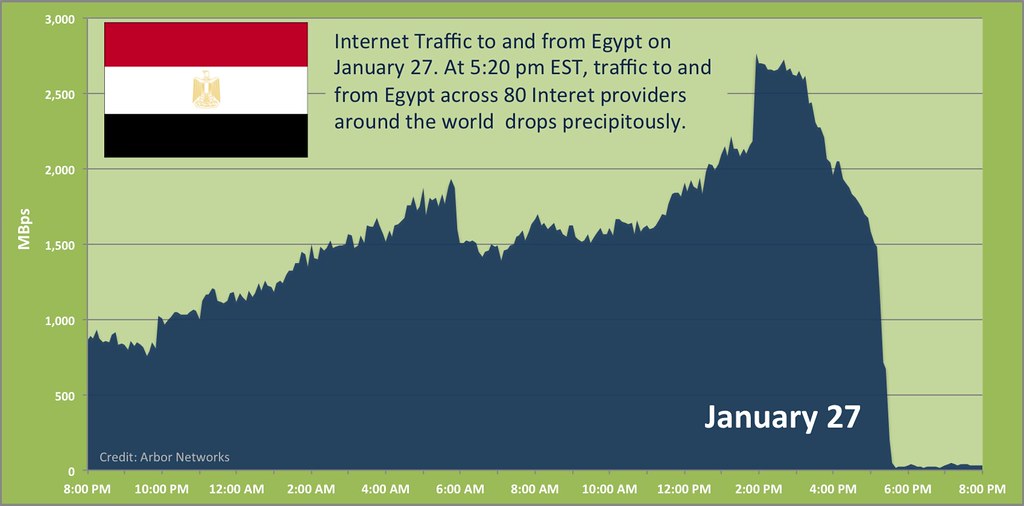
Egypt's Mubarak regime today shut down Internet and cell phone communications before launching a violent crackdown against protesters.
Free Press has just discovered that one American company — Boeing-owned Narus of Sunnyvale, Calif. — has sold Egypt "Deep Packet Inspection" (DPI) equipment that can be used by the regime to track, target and crush political dissent over the Internet and mobile phones.1
Egyptian security forces have already arrested leading opposition figures for speaking out online. At such a crucial moment of democratic upheaval, it’s shocking that an American company would help Egypt repress its people.
Since the 2009 crackdown in Iran, Free Press has raised the alarm over the abuse of this technology. Today, we’re calling on Congress to investigate global trafficking in DPI technology by American firms. Add your name to our letter now.
Lawmakers of both parties seem to agree that democracy everywhere is at risk when you let repressive regimes block open networks.
"Internet Censorship is a real challenge, and not one any particular industry — much less any single company — can tackle on its own," California Rep. Mary Bono Mack wrote in 2009. "Efforts to promote freedom of expression and to limit the impact of censorship require both private and public sector engagement."
Yesterday, Secretary of State Hillary Clinton urged Egypt's government "not to prevent peaceful protests or block communications, including on social media."
The power to control the Internet and the resulting harm to democracy are so disturbing that the threshold for using DPI must be set very high. That’s why, before DPI becomes more widely used around the world and at home, the U.S. government must establish clear and legitimate criteria for governing the use of such surveillance and control technologies.
Today, as we’re watching the grave dangers of DPI technology unfold in real time on the streets of Cairo, it’s urgent that our lawmakers do everything they can to protect free speech and democracy.
Thank you,

Timothy Karr
Campaign Director
Free Press
1. Timothy Karr, "One U.S. Corporation's Role in Egypt's Brutal Crackdown," Huffington Post, 1/28/11: http://act2.freepress.net/go/1989?akid=2254.9767049.6dmOO1&t=5

One U.S. Corporation's Role in Egypt's Brutal Crackdown


The open Internet's role in popular uprising is now undisputed. Look no further than Egypt, where the Mubarak regime today reportedly shut down Internet and cell phone communications -- a troubling predictor of the fierce crackdown that has followed.
What's even more troubling is news that one American company is aiding Egypt's harsh response through sales of technology that makes this repression possible.
The Internet's favorite offspring -- Twitter, Facebook and YouTube -- are now heralded on CNN, BBC and Fox News as flag-bearers for a new era of citizen journalism and activism. (More and more these same news organizations have abandoned their own, more traditional means of newsgathering to troll social media for breaking information.)
But the open Internet's power cuts both ways: The tools that connect, organize and empower protesters can also be used to hunt them down.
Telecom Egypt, the nation's dominant phone and Internet service provider, is a state-run enterprise, which made it easy on Friday morning for authorities to pull the plug and plunge much of the nation into digital darkness.
Moreover, Egypt also has the ability to spy on Internet and cell phone users, by opening their communication packets and reading their contents. Iran used similar methods during the 2009 unrest to track, imprison and in some cases, "disappear" truckloads of cyber-dissidents.
The companies that profit from sales of this technology need to be held to a higher standard. One in particular is an American firm, Narus of Sunnyvale, Calif., which has sold Telecom Egypt "real-time traffic intelligence" equipment.
Narus, now owned by Boeing, was founded in 1997 by Israeli security experts to create and sell mass surveillance systems for governments and large corporate clients.
The company is best known for creating NarusInsight, a supercomputer system which is allegedly used by the National Security Agency and other entities to perform mass surveillance and monitoring of public and corporate Internet communications in real time.
Narus provides Egypt Telecom with Deep Packet Inspection equipment (DPI), a content-filtering technology that allows network managers to inspect, track and target content from users of the Internet and mobile phones, as it passes through routers on the information superhighway.
Other Narus global customers include the national telecommunications authorities in Pakistan and Saudi Arabia -- two countries that regularly register alongside Egypt near the bottom of Human Rights Watch's world report.
"Anything that comes through (an Internet protocol network), we can record," Steve Bannerman, Narus' marketing vice president, once boasted to Wired about the service. "We can reconstruct all of their e-mails along with attachments, see what web pages they clicked on; we can reconstruct their (Voice Over Internet Protocol) calls."
Other North American and European companies are selling DPI to enable their business customers "to see, manage and monetize individual flows to individual subscribers." But this "Internet-enhancing" technology has been sought out by regimes in Iran, China and Burma for more brutal purposes.
In addition to Narus, there are a number of companies, including many others in the United States, that produce and traffic in similar spying and control technology. This list of DPI providers includes Zeugma Systems (Canada), Camiant (USA), Procera Networks (USA), Allot (Israel), Ixia (USA), AdvancedIO (Canada) and Sandvine (Canada), among others.
These companies typically partner with Internet Service Providers to insert DPI along the main arteries of the Web. All Net traffic in and out of Iran, for example, travels through one portal -- the Telecommunications Company of Iran -- which facilitates the use of DPI.
When commercial network operators use DPI, the privacy of Internet users is compromised. But in government hands, the use of DPI can crush dissent and lead to human rights violations.
Setting the Bar High for DPI Sales
Even Republicans and Democrats seem to agree on this problem.
"Internet censorship is a real challenge, and not one any particular industry -- much less any single company -- can tackle on its own, " Rep. Mary Bono Mack wrote in a 2009 letter to Rep. Henry Waxman, then chair of the House Commerce Committee. "Efforts to promote freedom of expression and to limit the impact of censorship require both private and public sector engagement."
Earlier this week, Secretary of State Hillary Clinton urged Egypt's government "not to prevent peaceful protests or block communications, including on social media."
Bono Mack's letter and Clinton's statement echo Free Press' call for a congressional inquiry into the issue. But this is just a start.
Before DPI becomes more widely deployed around the world and at home, the Congress ought to establish clear criteria for authorizing the use of such surveillance and control technologies.
The power to control the Internet and the resulting harm to democracy are so disturbing that the threshold for using DPI must be very high.
Today we're seeing the grave dangers of this technology unfold in real time on the streets of Cairo.
Follow Timothy Karr on Twitter: www.twitter.com/TimKarr