NORTON META TAG

Showing posts with label Bible. Show all posts

15 June 2024

The Gospel's Good News for Queer People — and Their Enemies 6JUN24


Rev. Nicole Berry, a United Methodist pastor, holds a sign that blocks off conservative Christians who protested at the August 12, 2023 Pride celebration in Eugene, Ore. Photo by Paul Jeffrey / Alamy via Reuters Connect.

 FOR all those religious people so willing to deny Christianity to the LGBTQ community on alleged Biblical bases, what about not applying Biblical text addressing adultery, fornication and divorce on society? What about not applying Biblical text on child molesters and rapist? To paraphrase the Hindenburg tragedy broadcast, 'Oh the hypocrisy!!!'. From Sojourners...

The Gospel's Good News for Queer People — and Their Enemies

Katherine Pater writes that the Bible's story of Philip baptizing a eunuch is a crucial inclusive text — but so is what happens next:

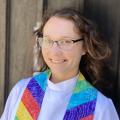
Rev. Katherine Pater is a Pres


JUN 6, 2024

Let’s get the awkward, middle-school sex-ed piece out of the way, shall we?

In Acts 8, we hear the story of how Philip baptizes an Ethiopian eunuch. Dictionaries define a eunuch as a man who has been castrated, especially (in the past) one employed to guard the women’s living areas.

I don’t know about you, but the concept of eunuchs makes me a little uncomfortable. The practice feels very foreign and cruel to my modern ears. 

But on top of being physically different for reasons that make us understandably uncomfortable, this man’s physical difference would have meant that he was also socially different. 

I won’t impose my 21st-century language or conceptions on this person, and say that he was trans, non-binary, gender non-conforming, or queer, but it’s clear that he did not conform to the social understanding of gender binaries or sex in the ancient Greco-Roman or Jewish world. There’s no getting around that. 

He was also from one of the farthest-off places early Christian disciples had heard of. The Ethiopian in this text is likely not from the Ethiopia that we know today, and instead is likely from a place called Kush that today is now part of South Sudan.

And as a result, he probably would have looked different than Philip and the other early disciples of Jesus. While race, like sexuality and gender, was a very different concept in the ancient world, this man was very likely a dark-skinned African. 

And as if all that difference wasn’t enough, he was also religiously different. It isn’t clear why someone from ancient Sudan would travel so far — and cross the imposing Saharan desert — to worship in Jerusalem. It is possible that he was a convert to Judaism, though the fact that he was a eunuch would have limited his participation in Jewish ritual life. It is also possible that he was a member of one of several ancient groups that worshiped the God of Israel but were not considered Jewish. 

For those deemed ‘other’

And so, one of the first stories of a singular person being baptized by an early disciple is this person who is marked by as many kinds of human differences as the ancient Christian community could classify, someone whose gender, sex, ethnicity, place of origin, and spiritual identity was undeniably “other.”

If you’re a queer Christian today, you probably know what it’s like to be deemed an “other,” whether by your family, your faith community, or even fellow LGBTQ+ folks who don’t understand your faith. It’s a struggle we queer people understand well, since we carry it inside our own hearts and minds and bodies. 

But I think it’s important to remember that we — the queer, the binary-breakers — have always been here. God’s radical grace went out of its way through Philip to welcome us from the beginning, without conditions. 

The text says that an angel of the Lord called Philip and led him to “a desert place” on a “wilderness road” where Philip meets the eunuch. The eunuch is reading the words of the prophet Isaiah and invites Philip to explain the text. After hearing “the good news about Jesus,” it’s the eunuch who eagerly asks to be baptized — and Philip agrees.

I notice that Philip did not conclude that this person was worthy of baptism and inclusion because Philip examined all the texts that have to do with gender non-conforming people, or eunuchs, or LGBTQ+ people and decided that yes, he could baptize this person. Philip just met the eunuch as he was, full of his genuine curiosity about Jesus and scripture. 

In fact, the earliest versions of this text do not even include the exchange in verse 37, this early confession of faith in which Philip tells the eunuch, “If you believe with all your heart, you may” be baptized, to which the eunuch replies, “I believe that Jesus Christ is the Son of God.” In the earliest versions of this story, when the man asked to be baptized, Philip just did it. No theological questions, no other rules, no barriers. 

Good news gets better

Now, I could just stop here. 

I could say that if we knew nothing else about Christianity, and about God, then the story of this conversion and this baptism would be enough information. 

I could just say, “And this is why queerness, why sexual and gender diversity has always been part of the church.” That this text calls us to fight gender and sexual discrimination in the church and society–spaces that have violently tried to police and legislate away these kinds of differences. 

I could remind us that more than 510 anti-trans bills were introduced in the U.S. last year and that this conversation is still very relevant. That lives may depend on how we read this text, because hateful legislation is proven to have real-life consequences. 

But while the story of Philip and the eunuch is where the eighth chapter of Acts ends, the next chapter begins with “meanwhile.” Which means that our story isn’t quite over.

So while Philip is baptizing a eunuch, meanwhile someone else — you’ve probably heard of him — was experiencing his own conversion, along a different road. 

The beginning of his story goes like this:

Meanwhile Saul, still breathing threats and murder against the disciples of the Lord, went to the high priest and asked him for letters to the synagogues at Damascus, so that if he found any who belonged to the Way, men or women, he might bring them bound to Jerusalem. Now as he was going along and approaching Damascus, suddenly a light from heaven flashed around him. He fell to the ground and heard a voice saying to him, “Saul, Saul, why do you persecute me?”  He asked, “Who are you, Lord?” The reply came, “I am Jesus, whom you are persecuting.”

God is sending Philip down a wilderness road to find and baptize this outsider, this person marked by difference, and meanwhile, God is also appearing to Saul, also called Paul. A devout Jew who was also a Roman citizen, he carried both a Hebrew and a Greco-Roman name. 

Unlike this eunuch, in Jewish and Greco-Roman life, Paul was something of an insider. One that was actively persecuting Christians like Philip, and like this new convert. 

But this insider also has a holy moment amid his journey — one that changes him forever. And he too joins the church and is baptized, at great cost and risk. As a Jewish leader, he would find himself at the center of a controversial new movement that would complicate and challenge his relationship to his own religious community. As a Roman citizen, he would find himself at odds with the most powerful empire of his time.  

‘The expansive openness of the early church’

And that, my good people, is the real scandal of the gospel. It isn’t just that it’s good news for the oppressed people in need of liberation or the poor in need of solidarity. It’s not just for the Ethiopian eunuchs, the outsiders. 

It’s also good news for the insiders, the sinners, the religious people who’ve gotten it wrong — which is actually all of us sometimes. 

The good news is that Jesus is coming for those people, too. 

As a society and a church in the past few decades, we have become so much more open in so many ways, to so many more people. Only now are we returning to the expansive openness of the early church, which was controversial in its own time for accepting slaves and free, male and female and none of the above, foreigner and Roman citizens alike. 

The point of the gospel isn’t that the outsiders will win and the insiders will lose. It’s not that the oppressed will win and the oppressor will lose. It’s not that the lovers will win and the haters will lose — it’s a dissolution of those categories of “in” and “out” to begin with. Everyone in. No one out. No exceptions. 

I have no idea how that’s possible in a world that feels so polarized and divided, but when I read these stories together, I think that’s what God is asking us to imagine. 

The message of this text is that if this sexually and ethnically and religiously different man is in, and if Paul — who famously hated Christians — is in, how can anyone else be out? Who’s left that doesn’t belong? No one. Not you, and not me. 

For those of us who still struggle with questions of human difference in the church — race, gender, sexual identity, or nationality — this story is an invitation to see everyone with the radical openness and love that God views those people. 

And for those of us who still live under threat, whose identities mean that we are still being persecuted or excluded, still seen as less than human by very real people who have very real power over us, the message is that God will indeed hold these people and powers accountable. But God wants to do so not by defeating them or excluding them, but by converting them. 

I can’t help but wonder if our division and polarization isn’t caused by a fundamental lack of faith that God is still out here, seeking not only the conversion of our enemies, but also our own conversion. 

Because the good news requires all of us to change. To die to ourselves. To step into that water and rise again, if we have not done so. That’s what we’re all invited to. No exceptions. 

22 November 2013

The Bible, Costco, and Fiction: On Foolish Christians and Multiplying Hot Dogs & Pastor Apologizes to Costco, Praises Them for Their Good Works 22NOV13

THIS pastor claims "faux news" and other media took him for a ride....
I don't believe him. He could have refused to speak to fox and all other media. He knew exactly what he was doing and though he'd get so good PR for his church. Well, his actions may have actually harmed Christianity rather than helped it. AND BY THE BY, I have shopped at Costco for years and have NEVER seen any books labeled as fiction or non-fiction. So I do believe the Costco employee who apologized for the mis-labeling and explained the labels were from the vendor. Here is a Christian reaction to the controversy from Sojourners and the pastor's apology Daily Kos story.....


The religion section of The Huffington Post published an article on Tuesday about how some Christians are responding to Costco. Unfortunately, it wasn’t about how Christians are celebrating the fact that this big-box store not only makes a profit and actually pays its employees a living wage.
Nicholas Eckhart/flickr
Costco recently apologized for placing "fiction" stickers on Bibles. Nicholas Eckhart/flickr

That, after all, would be Good News.
No. These Christians are outraged because Costco had Bibles labeled as fiction.
*Gasp*
Well, I had to see this for myself, so I went to Costco during my lunch break. Now, as any loyal Costco shopper will tell you, there are two times when you should never go to Costco because of the crowds: the weekend and 12:00 p.m.
So, I braved the lunchtime crowds to find the Bibles labeled with the offensive “fiction” sticker. I planned to take a picture of said Bibles for you to see, but alas, my Costco didn’t have Bibles, fictional or otherwise.
They did, however, have hot dogs. And I’ll take a $1.50 non-fictional hot dog over a $14.99 fictional Bible every time.
I love Costco.
We know about this Costco’s offensive Bible sticker because of a pastor named Caleb Kaltenbach. Despite his totally awesome name and his totally awesome twitter profile picture where he’s drinking from an R2D2 mug, Kaltenbach is all offended by Costco.
Dude, simmer down.
Christians are becoming known for being offended by anything. Some even claim that Christians in the United States are being persecuted. I wouldn’t be surprised if some loony tunes Christian states that Costco is part of a cultural conspiracy to persecute Christians.
Kattenbach didn’t say that, but he came close. He actually got an apology out of Costco by talking to Fox News (bet you didn’t see that one coming), stating: “On the one hand Christians should not yell out ‘persecution.’ We aren’t living in Iraq or Iran. But on the other hand, I believe that we do need to stand up for our faith and we need to be vocal about our concerns.”
No. We don’t. Because every time we “stand up for our faith” and are “vocal about our concerns” we make fools of ourselves. I can already hear someone offering a vague quote from St. Paul about the Christian faith being “foolishness to the Gentiles.” So, okay. Go ahead and take pride in being foolish.
But Paul wasn’t talking about being stupid. Christ crucified is foolishness to many because it says God’s power isn’t seen in fighting against the Empire of Costco when it offends us. The foolishness of Christ crucified is that Christ didn’t fight back. He didn’t defend himself. He didn’t whine about being offended. Rather, he offered forgiveness and then he moved on to his resurrection and offered peace.
Now, nonviolent love that offers forgiveness and love to those who have offended us is foolishness to the world and to many Christians. But that’s the kind of foolishness St. Paul was talking about. If the Gospels are non-fictional (and I’m foolish enough to believe they are) accounts of Jesus’ death and resurrection, then we should follow Jesus into the death of not being offended and into a resurrected life of loving everyone, especially those with whom we might take offense. In other words, death and resurrection is a process of becoming un-offended.
If the Gospels are accurate accounts of Jesus’ death and resurrection, then how would the resurrected Jesus respond to the Bible being called “fiction”? He’d gently laugh, and then he’d multiply the $1.50 hot dogs so that everyone could share in the bountiful feast that is the Kingdom of God.
Adam Ericksen blogs at the Raven Foundation, where he uses mimetic theory to provide social commentary on religion, politics, and pop culture. Follow Adam on Twitter @adamericksen.
http://sojo.net/blogs/2013/11/21/bible-costco-and-fiction-foolish-christians-and-multiplying-hot-dogs/ 

Pastor Apologizes to Costco, Praises Them for Their Good Works

 thomstarkFollow
 
I'm an avid reader of the Kos, but this is my first diary, and it's kind of personal.
I first learned about this story from The Young Turks. When I saw the quote from the pastor about Costco labeling their Bibles as "fiction," I laughed and groaned. Then I saw the name of the pastor. It was Caleb Kaltenbach, an old friend of mine from college. My immediate reaction was to be angry at him. I tagged him on Facebook and called him out, but gave him the benefit of the doubt. I wanted to see what really went down.
He called me, and told me his side of things. Turns out, he was being misquoted in the media, and it was never his intention to launch a crusade over how Costco had labeled their Bibles. He thought it was humorous, so he posted a snarky pic, having no idea the media shitstorm that would ensue. Naively, he was taken along for the ride by Fox and others.
Now probably 99 out of a 100 times, when a conservative Christian says something ridiculous in the media, they mean it. But I know Caleb, and I know he's not one of those culture warrior Christians.
Tonight, Caleb took responsibility for the controversy he unwittingly initiated, and posted an apology to Costco, and statements of support for them, on his Facebook and Twitter, where this all began.
I'm not crusading against Costco or anyone else. I am sorry that this has created a difficult season for them
Cultural warfare over book labels casts a shadow over the Gospel. Never my intent when I snapped a pic...
Matthew 25: God cares about how we care for our brothers & sisters in need... I'm glad ‪#‎Costco‬ is an example of that
‪#‎Costco‬ stands on the side of the Gospel when they pay employees a living wage & do good. Judge a tree by its fruit, not by its labels
(His Facebook is here.) Caleb isn't a culture warrior. He genuinely believes that being a Christian is about what one does for those in need, not about owning the culture. Yes, Caleb is a theological conservative, with theologically conservative views (though not necessarily politically conservative views). But while I most definitely am not a theological conservative, he and I remain friends. He's not interested in converting me to his way of thinking. He wants to cooperate with differently-minded people based on common ground. That's his thing. And, for every loud-mouthed fundy Christian who wants to make America over in their puny image, there's a down-to-earth conservative Christian who has bigger fish to fry.
So from my perspective, what this story is really about is how the media (especially Fox, obviously, but the media on both sides of the largely fictional left/right divide) feed on controversy, like parasites. And if there isn't controversy, they need to create it. It's cynicism at its finest—manipulating the emotions of those who are easily manipulated in order to turn a profit. I'm not denying that there are stupid and dangerous Christians (and fundies of all religious and non-religious stripes) out there. There are lots of them. But I do think that the primary reason there are so many of them is not something inherent in their faiths/ideologies, but something deeply embedded in the establishment media modus operandi. The media needs fundies because it needs controversy, and so it is invested in creating fundies, by limiting the parameters of acceptable public discourse, enabling, perpetuating, and amplifying the ignorance of some, then giving them the microphones.
No, I'm not denying that certain popular brands of religion have any share of the blame. Of course they do. But what we often fail to see is the way that the media and the politicians shape and recreate religion in ways that serve the purposes of perpetuating this fictive bi-polar national conflict, in order to distract us from their more basic, essentially economic, agenda.
(NOTE: This Diary has been edited to make clear the distinction between theological conservatism and political conservatism.)

Originally posted to thomstark on Fri Nov 22, 2013 at 12:50 AM PST.

Also republished by Anglican Kossacks

http://www.dailykos.com/story/2013/11/22/1257519/-Pastor-Apologizes-to-Costco-Praises-Them-for-Their-Good-Works#comments 


21 November 2013

11 Reasons To Love Costco That Have Nothing To Do With Shopping & (UPDATED 22NOV13) Costco labels Bible as fiction in this store. Pastor goes viral for wrong reason.19&21NOV13

(JUST from the header on this post I will ask you not pass judgement on Costco until you ready the Daily Kos article.) I have enjoyed shopping at Costco for many years now, and after making the decision (today) to no longer shop at sears, starbucks and target until they improve the pay and benefits for their employees I will be spending a lot more money there. Thank you Mr Jelinek for having the morals and courage to provide for your employees, corporate America could learn a lot from you. See The 10 Companies Paying Americans The Least: 24/7 Wall Street http://bucknacktssordidtawdryblog.blogspot.com/2013/11/the-10-companies-paying-americans-least.html
for the reasons I am boycotting sears, starbucks and target. This from HuffPost and Daily KOS.....
costco logo
It's not just the bulk toilet paper and $1.50 hot dog combos. There's more going on here.
1. The company pays a living wage. Costco's CEO and president, Craig Jelinek, has publicly endorsed raising the federal minimum wage to $10.10 an hour, and he takes that to heart. The company's starting pay is $11.50 per hour, and the average employee wage is $21 per hour, not including overtime. Most other big box retailers start their employees at minimum wage.
2. Workers get benefits. About 88 percent of Costco employees have company-sponsored health insurance, according to David Sherwood, Costco's Director of Financial Planning and Investor Relations. "I just think people need to make a living wage with health benefits,” Jelinek told Bloomberg. “It also puts more money back into the economy and creates a healthier country. It’s really that simple.”
3. The CEO makes a reasonable salary. Costco's CEO makes far less than most executives, with a total compensation package of about $4.83 million in 2012. In contrast, Walmart CEO Mike Duke made roughly $19.3 million during the same year. Walmart's CEO earns as much as 796 average employees, according to CNN Money, compared to Costco's CEO making 48 times more than the company's median wage.
costco jelinek

4. Costco helped its employees weather the recession. When the economic crisis hit and other retailers laid off workers, Costco's CEO approved a $1.50-an-hour wage increase for many hourly employees, spread out over three years.
5. Costco doesn't kill Thanksgiving. While many of its competitors are forcing employees to work on Thanksgiving Day, Costco will buck the trend and stay closed.
6. It also doesn’t waste money on expensive advertising. The company doesn't advertise nor does it hire a public relations staff. Meanwhile, Walmart dropped $1.89 billion on ads in 2011.
7. Its prices aren't horrendously high. Costco never marks up products by more than 15 percent, while most retailers commonly mark products up by more than 25 percent.
8. It embraces equality. Costco scored extremely well (90/100) on the Human Rights Campaign's Corporate Equality Index, an assessment of LGBT policies in the workplace.
9. It hires from the inside. More than 70 percent of its warehouse managers began their careers working the register or the floor.
10. Costco's employees are loyal. For employees that have worked at the company for more than one year, the annual turnover rate is below six percent, according to Sherwood. For executives, the turnover rate is less than one percent.
11. Free samples. Need we say more?
 http://www.huffingtonpost.com/2013/11/19/reasons-love-costco_n_4275774.html?utm_hp_ref=mostpopular

HERE is an update on this story from Sojourners and Daily KOS at The Bible, Costco, and Fiction: On Foolish Christians and Multiplying Hot Dogs & Pastor Apologizes to Costco, Praises Them for Their Good Works 22NOV13 http://bucknacktssordidtawdryblog.blogspot.com/2013/11/the-bible-costco-and-fiction-on-foolish.html


Thu Nov 21, 2013 at 01:01 PM PST

Costco labels Bible as fiction in this store. Pastor goes viral for wrong reason.

A major chain found something out the hard way. They got national publicity for hitting the third rail. In a country that is 78.4% Christian, that is a dangerous mistake. Chick-fil-a can make a social mistake if it has some doctrinal backing in Christianity (implied or otherwise). The converse is not true.
Is the bible fiction? Is it literal? Did Moses really part the sea? Some people really think that the stories in the Bible are just that, fictional stories. However, some really worship the Bible as the word of God. When in doubt, if one is selling Bibles, neutrality must reign, lest you incur the wrath of the offended.
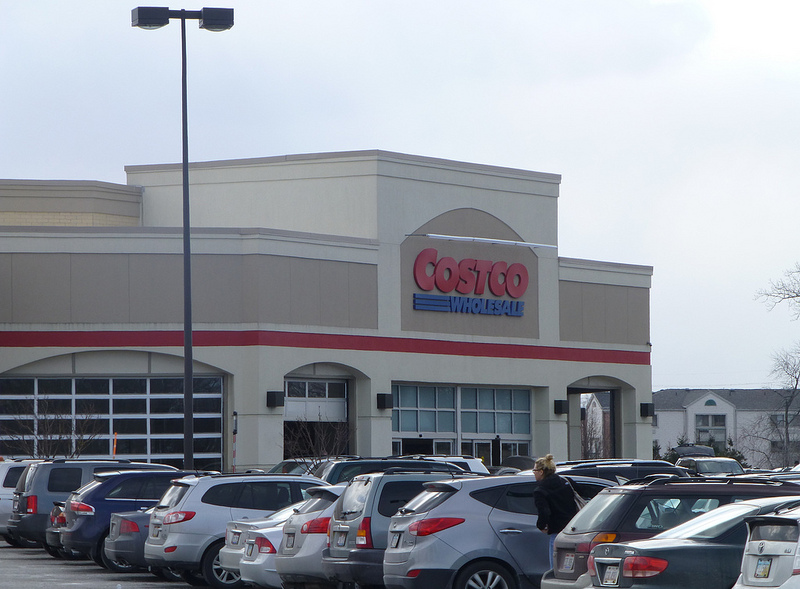
Costco labeled the Bible as fictional in a Simi Valley store. A pastor saw it.
Caleb Kaltenbach, pastor of Discovery Church, came across the Bibles while shopping for a gift and tweeted the picture on Friday with the comment: "Costco has Bibles for sale under the genre of FICTION Hmmmm..." That didn't sit well with members of his congregation.
“I was completely offended. It’s wrong, and I believe that the Bible is real,” Shellie Dungan told KTLA-TV.
Did the pastor go to Costco to get a response? Apparently he went directly to social media. He likely knew that he could rile up a significant portion of the Christian base to get notoriety. And he did. Follow me below the fold to see what happened next.
For all the brouhaha, Kaltenbach said the discussions the label has sparked have been good for the faith community. "It’s caused a lot of controversy, it’s caused a lot of conversation, which I think conversation is good," he told KCBS-TV.
I find it ironic that the pastor would go after a company like Costco. Costco treats its employees in a humane fashion by paying them a living wage and ensuring they have good benefits. Walmart stiffs its employees and pays them substandard wages while simulating support for family values. If the pastor wanted to do a Christian-like thing one would think he would be shaming Walmart into "doing unto others as they want done unto their shareholders." Costco says the mislabeling was a mistake by its distributor that they should have caught. Sadly, anyone who analyses this event should come to the conclusion that this pastor did an ‘un-Christian-like’ thing. He forgot about compassion.
Had the pastor gone directly to a Costco manager, he would have found out it was a simple mistake. By publicizing it as he did, he allowed the emotions to be unleashed on Costco. He likely hurt the bottom line of the company. That will affect many of its employees. Worse, he may have irreparably left a bad mark on the store’s manager that will follow that manager for life; So much for forgiveness.
http://www.dailykos.com/story/2013/11/21/1257374/-Costco-labels-Bible-as-fiction-in-this-store-Pastor-goes-viral-for-wrong-reason

07 July 2011

What Does the Bible Actually Say About Marriage? from HuffPost 7JUL11

A very interesting article in HuffPost, brings up things I have never really thought about before.....
When you attend a wedding at church, what passages of Scripture do you expect to hear? Congregations occasionally invite me to speak on the current same-sex marriage debates, and I ask them this question. Their answers are remarkably consistent.
Someone invariably mentions 1 Corinthians 13, the famous "Love Chapter." Love is patient, love is kind, love never insists on its own way and so forth. Wonderful advice for marriage, but Paul was not talking about marriage. He was addressing a church fight: the believers in Corinth had split into factions and were competing for prestige and influence. We see echoes of this conflict throughout the letter, but especially in chapters 12 and 14, which surround this passage.
Others call out, "Where you go, I will go; where you lodge, I will lodge; your people shall be my people, and your God my God" (Ruth 1:16; NRSV). Another moving passage, but it's certainly not about marriage. Ruth addresses this moving speech to her mother-in-law Naomi.
The second creation story in Genesis comes up: "Therefore a man leaves his father and his mother and clings to his wife, and they become one flesh" (Genisis 2:24). This passage is certainly appropriate to marriage, as it reflects the level of intimacy and commitment that distinguishes marriage from other relationships. Jesus quotes this passage, too, but he isn't exactly discussing marriage. Instead, his topic is divorce (Matthew 19:5; Mark 10:8). When ministers read the Gospel passages at weddings, as they often do, the message seems a little off. I'd rather not hear about divorce at a wedding.
One other passage frequently surfaces in weddings but rarely in mainline Protestant churches, the Lutheran, Presbyterian, Methodists and United Church of Christ congregations that invite me to speak. Ephesians 5:22-33 commands wives to obey their husbands and husbands to love their wives. Conservative Christians may try to explain away the offense of this passage, but there's no escaping its ugly reality. Ephesians calls wives to submit to their husbands just as children must obey their parents and slaves must obey their masters. See the larger context, Ephesians 5:21-6:9.
Not a Lot to Say
The point is, Christian weddings rarely feature passages that directly relate to marriage. Only one passage, Genesis 2:24, seems especially relevant, while other passages require us to bend their content to our desire to hear a good word about marriage. Things are so bad that the worship books for many denominations turn to John 2:11, where Jesus turns water into wine at a wedding feast, to claim that Jesus blessed marriage. My church, the United Church of Christ, has developed a new wedding liturgy, but it retains this common formula: "As this couple give themselves to each other today, we remember that at Cana in Galilee our Savior Jesus Christ made the wedding feast a sign of God's reign of love."
So we know Jesus blessed marriage because he attended a wedding? That's the best we can do? No wonder it's common for couples to struggle over the choice of Scripture for their wedding ceremonies. The Bible just doesn't have much to say on the topic.
Let's Be Honest
Unfortunately, many Christians use the Bible to support their own prejudices and bigotry. They talk about "biblical family values" as if the Bible had a clear message on marriage and sexuality. Let's be clear: There's no such thing as "biblical family values" because the Bible does not speak to the topic clearly and consistently.
It's high time people came clean about how we use the Bible. When Christians try to resolve difficult ethical and theological matters, they typically appeal to the Gospels and Paul's letters as keys to the question. But what about marriage? Not only did Jesus choose not to marry, he encouraged his disciples to abandon household and domestic concerns in order to follow him (Matthew 19:29; Mark 10:28-30; Luke 9:57-62). He even refers to those "who have made themselves eunuchs for the sake of the kingdom of heaven" (Matthew 19:10-13). Whatever that means, it's certainly not an endorsement of marriage. Paul likewise encourages male believers: "Do not seek a wife" (1 Corinthians 7:27, my translation) -- advice Paul took for himself. If neither Jesus nor Paul preferred marriage for their followers, why do some Christians maintain that the Bible enshrines 19th-century Victorian family values?
Let's not even go into some of the Bible's most chilling teachings regarding marriage, such as how a man's obligation to keep a new wife who displeases him on the wedding night (Deuteronomy 22:13-21), his obligation to marry a woman he has raped (Deuteronomy 22:28-30) or the unquestioned right of heroes like Abraham to exploit their slaves sexually. I wonder: Have the "biblical family values advocates" actually read their Bibles?
Christians will always turn to the Bible for guidance -- and we should. If the Bible does not promote a clear or redemptive teaching about slavery, that doesn't mean we have nothing to learn from Scripture about the topic. The same values that guide all our relationships apply to marriage: unselfish concern for the other; honesty, integrity and fidelity; and sacrificial -- but not victimized -- love. That's a high standard, far higher than a morality determined by anachronistic and restrictive rules that largely reflect our cultural biases. Rules make up the lowest common denominator for morality. Love, as Paul said, never finds an end.

05 September 2010

Has Hate Corrupted the Church? 5AUG10 from SOJO & Remembering History’s Evils 30JUL09


SIMPLY written, profoundly moving and convicting, this piece speaks to all of us.

As a writer with a public blog, I’ve become used to getting hate emails. Sure, some people might leave offensive comments on a blog, but the real vitriol gets reserved for emails. From the sick and twisted ones detailing what sexual violence I need done to me to cure me of my feminism to the reminders that I will one day burn in hell because of my association with the emerging church, I’ve become used to the church’s odd way of demonstrating “love” to one’s neighbor. But when I look at the two posts that have far and away garnered me the most hate mail, I find it difficult to not be disturbed and heartbroken for the church.
Last summer my inbox filled up with angry responses to my post recounting the often-ignored history of the slaughter of the Native Americans at the Taos Pueblo (men, women, and children took sanctuary in the church and the U.S. Army burned them alive inside). I was called every name in the book for daring to question the greatness of the U.S. and our right to Manifest Destiny.
Then recently, my post supporting the Cordoba House (the mosque going in near Ground Zero) was linked to at the Cordoba House site to demonstrate that some Christians do support the project. That of course brought on a new wave of hate in my inbox. From those accusing me of supporting the pedophile religion of Satan to those telling me I was mocking the power of Jesus by tolerating Muslims, I witnessed the overwhelming animosity Christians hold toward the other. The words of Jesus to love our neighbor apparently don’t apply if that neighbor looks or believes differently than we do.
Out of everything I have written, that these two posts should elicit such visceral responses demonstrates how deep the issues of racism and prejudice still are in the church today. Oh, churches might give lip service to accepting others and being “colorblind,” but in reality those fears and prejudices run deep. The general message of the white American church is eerily similar to a white person saying “I’m fine with black people; I just don’t want them living next door.” So we are fine with collecting dream catchers and turquoise jewelry and seeing sexy Native American teens running around shirtless as they turn into wolves, but not with listening to their side of the historical story or admitting to our country’s acts of terrorism against their nations. And some even say they are fine with Muslims as long as they don’t put a mosque where we can see it or ask us to engage in reconciliation projects. Stereotypes and prejudices are preferred to the truth, and anger erupts if such positions are questioned or challenged.
Granted, many Christians aren’t even okay with the lip-service tolerance or the “equal as long as they are separate” mentality. Recently Pastors Terry Jones and Wayne Sapp of Dove World Outreach Center in Gainesville, FL, declared September 11, 2010, to be International Burn a Koran Day. In a YouTube video (warning — video contains footage of a burning Koran) he tells viewers, “if you call yourself Christian you should be burning the Koran because it is of the devil.” Their blog even lists the top 10 reasons to burn a Koran as if it is some sort of late-night comedy routine (interestingly enough, I’ve heard most of the arguments they list used against the Bible as well).
Similarly, in a recent trip back to Taos, NM, I heard some white Christians discussing how the genocide of the Native American nations was a blessed gift from God to eliminate the satanic influence of their cultures from our “one nation under God.” There are some things that are just so extreme and so absurd that it is hard to believe people are even saying them, much less saying them in the name of Christ. But for many Christians this sort of hatred is at the core of their faith practice. Vengeance and revenge against the other have superseded the commands to love our enemies and to pray for those who persecute us.
The question that plagues me is if the church will ever repent of its allegiance to hate and start following in the way of Christ instead? It seems like the church has embraced a culture of hatred. I used to have a bumper sticker on my car that said “I’m for the Separation of Church and Hate,” but someone found its anti-hate message so offensive that they vandalized it with a marker. On top of that, much of the church has lent its ear to the false prophets who mock the words of Jesus and who command their followers to run from the churches that encourage us to love our neighbor or to set the oppressed free.
When the truth of God has been replaced by these racist and hate-filled lies of our culture, it is hard at times to have hope for the church. When yet another hate email arrives in my inbox questioning my faith because I spoke out against acts of violence and terrorism against non-white American peoples, I have to wonder where Jesus is in the church these days. But even amidst all that darkness there are glimmers of hope. I see the Christians (the National Association of Evangelicals even) asking that the International Koran Burning Day be canceled in the name of Jesus. I see the handful of Christians willing to stand with Muslims as they build the Cordoba House. These are public voices presenting to the world the side of Christianity that isn’t defined by violence and hatred. They may be few, but it is enough to keep believing that the core of Christianity hasn’t been completely corrupted or destroyed.

Remembering History’s Evils

http://julieclawson.com/2009/07/30/remembering-historys-evils/
2009 July 30
by Julie Clawson
Sorry for the long silence here. I spent the last week and a half at my parent’s place in Taos, New Mexico with a bunch of friends from our old church in Illinois. It was a great time, but I didn’t have two seconds together to attempt to even open my computer. Since we had friends visiting, we did touristy things all week and I couldn’t help but encounter stories of the history of the place that truly made me think.
It is strange being at places in America where our own sordid history has not been completely hushed up. In most of the country it is easy to forget who we stole the land from, who we enslaved to build initial infrastructure, and who we oppressed on our path to becoming a “great” nation. If those reminders aren’t there before our eyes, we tend to forget they ever happened (and then get accused of being unpatriotic or of outright lying if you even mention the history). But its hard to hide from that history in New Mexico – at least once you make even a vague attempt to open your eyes.
For instance – I attended the Emergent Gathering in Glorieta, NM a couple of times in the past. While I had heard that Glorieta was the site of a major Civil War battle, often called the Gettysburg of the West, I knew little else of its history or culture except for the fact that the Southern Baptists had built a camp there that did its best to pretend New Mexican culture didn’t exist. But this trip, I discovered that it was at the opening of the Glorieta Pass on the Santa Fe trail that the Mexican army made its last stand against the invading U.S. army in 1846. You see, for years U.S. citizens had been settling in Texas (often for the freedom to trade slaves). In 1836, these U.S. Texans declared Texas an independent country and went to war with the current ruler – Mexico. After remembering the Alamo and all that, the Republic of Texas formed. When the U.S. then annexed Texas in 1846 (which at that point included most of New Mexico), Mexico chose not to simply give up the land and leave. This was seen as cause for war and the U.S. invaded to secure the land we stole. General opinion saw it as our right to take the land, with some citing it “Our manifest destiny to overspread the continent allotted by Providence for the free development of our yearly multiplying millions.” A small group of dissenters called this invasion robbery and murder, and Abraham Lincoln asserted “Let us put a check upon this lust of dominion.” But their protest was to no avail. And so the U.S. army met and massacred the Mexican army at Glorieta – claiming the territory for ourselves. It puts things in perspective to know the history of the place – knowing who died so we could use a spiffy retreat center.
july09-221Same thing in Taos. One of the oldest continuously lived in pueblos in America is the Taos Pueblo. In 1847, after the U.S. took New Mexico, local Indians and Hispanics were fearful that the U.S. wouldn’t honor their ownership of the land and so staged a rebellion against the U.S. governor in Taos. The governor ended up dead and the U.S. Army moved quickly to quash the revolt. (the Indians actually claim that they had nothing to do with the murder, that the Mexicans set them up). As the U.S. army attacked, many of the pueblo’s residents (the women and children) as well as some of the insurgents took refugee in the Catholic church on the pueblo seeking its protection and sanctuary. The U.S. army burned them alive inside the church. The picture is of the remains of the church that has simply been left in ruins since that day.
I hear those stories and know that even though I am enjoying the benefits of past oppression, I have to at least acknowledge that great evil has been done. But there were others touring the Taos Pueblo I overheard who were offended that the Indians dare tell the story of how the U.S. army massacred their people. They thought it was rude and uncalled for to even bring up such stories. I found it interesting that here I was having no choice but to confront the sins of our collective past, and others around me were trying to silence history. But then I thought, at least they were hearing the stories whether they choose to believe them or not. That’s why I am a huge fan of going to places where that history is in your face. No, its not fun to visit the site of a massacre, or of a firebombing, or the Holocaust Museum, but unless we make that effort we too soon forget that they exist. And from there we quickly start pretending that the evils they remind us of never happened. We need those reminders.