NORTON META TAG

Showing posts with label Amnesty International AI. Show all posts

03 April 2014

دول الشرق الأوسط في طليعة من ارتفاع مقلق في عمليات إعدام 3 أبريل 2014

قد يشعر البعض هذا المنصب هو توقيت سوء النظر في أمريكا وجيشنا وحدادا على الذين قتلوا في اطلاق النار الشامل في فورت هود بولاية تكساس أمس (عقوبة الإعدام ليست قضية هنا كما استغرق مطلق النار حياته) نحن كأمة لا تشترك في العار من كونها واحدة من عدد قليل من الدول الديمقراطية العالمية الأولى التي لا تزال تستخدم عقوبة الإعدام عقابا على الجرائم البشعة. أن يضعنا في نفس الفئة من الدول مثل جمهورية الصين الشعبية وايران والعراق وكوريا الشمالية ومعظم العالم العربي، الدول ندين لسجلات حقوق الإنسان الخاصة بهم (طالما أن لا تتداخل مع هوامش الأرباح من الشركات الأمريكية) . أشعر بالخجل وأحرجت كل مرة يتم تنفيذ شخص في الولايات المتحدة. هذا على زيادة عمليات الإعدام في جميع أنحاء العالم من + منظمة العفو الدولية ....
بواسطة سارة الحشاش والشرق الأوسط و شمال أفريقيا المسؤول الاعلامي في منظمة العفو الدولية
At least 23,392 people were facing death sentences worldwide at the end of 2013. © AI Switzerland

هذا يبدو وكأنه مشهد من فيلم الرعب الرهيب ؛ خمس جثث مقطوعة الرأس يتأرجح من عمود أفقي معلق فوق الساحة الرئيسية في مدينة Jijzan في جنوب غرب المملكة العربية السعودية. بجانب كل الجسم معلقة كيس من البلاستيك تحتوي على رأس الضحية . ياردة ، والطلاب يصلون في إحدى الجامعات المحلية لاتخاذ امتحاناتهم .هذه الصور المؤرقة من خمسة يمنيين الذين أعدموا في المملكة العربية السعودية مشاركة قد توفر التفاصيل البشعة في أعقاب تنفيذ حكم الإعدام العلني .في كثير من مناطق العالم من الصين إلى الولايات المتحدة، في الشرق الأوسط و أفريقيا في جيوب ، لا يزال الناس يعيشون تحت شبح عقوبة الإعدام ، غالبا ما تكون من العين العامة.وثقت أحدث تقرير عالمي لمنظمة العفو الدولية حول عقوبة الإعدام أن 23،392 شخصا على الاقل كانوا يواجهون عقوبات الإعدام في جميع أنحاء العالم في نهاية عام 2013.الاتجاه العام في السنوات الأخيرة يظهر معظم البلدان الابتعاد عن عقوبة الإعدام.ولكن مقلق ، وقد برز عدد من دول الشرق الأوسط في طليعة مجموعة معزولة على نحو متزايد من الجلادين الراسخة تأجيج أحدث ارتفاع في الأرقام العالمية .وشكلت إيران والعراق والمملكة العربية السعودية وحدها ما يقرب من 80 في المائة من جميع عمليات الإعدام التي نفذت في جميع أنحاء العالم أفادت في عام 2013، باستثناء الصين . تصاعد عمليات الإعدام في إيران والعراق يفسر الارتفاع العالمي ما يقرب من 15 في المئة من عام 2012 .عبر أفريقيا والشرق الأوسط وشمال ، وأعدم 638 شخصا على الأقل في عام 2013 باستخدام أساليب تتراوح بين قطع الرؤوس و الشنق ، بالإعدام رميا بالرصاص.مهما كانت الطريقة ، و الرعب و النتيجة لا تزال هي نفسها .إيران تنفذ بمعدل ينذر بالخطر مع ارتفاع ما يقرب من 20 في المئة في عام 2013 . في إيران ، تم تسجيل 369 حالات الإعدام أقر رسميا من قبل منظمة العفو الدولية ، ولكن لم ينفذ مئات أكثر من - بعض هذه بسرية تامة - وفقا ل مصادر موثوقة، ليصل المجموع إلى أكثر من 700.سجلت العراق ارتفاعا صارخا للسنة الثالثة على التوالي، مع ما لا يقل عن 169 الإعدام ؛ وهذا هو أعلى رقم منذ أن أعادت العراق عقوبة الإعدام في عام 2004.كما حافظت المملكة العربية السعودية على نسبة عالية باستمرار عمليات الإعدام مع 79 عملية إعدام على الأقل في العام الماضي . وأدين الثلاثة الذين أعدموا من جرائم يزعم أنها ارتكبت عندما كانوا دون سن 18 عاما - وهو انتهاك واضح للقانون الدولي.استأنفت الكويت الإعدام للمرة الأولى في ست سنوات. أحكام الإعدام التي نفذت في قطاع غزة ، في منطقة السلطة الفلسطينية تدار فعليا من قبل سلطات حماس ، و أيضا ، في اليمن ، يرسم صورة مقلقة الإقليمية على نحو متزايد.ولوحظت تطورات إيجابية محدودة في دولة الإمارات العربية المتحدة ( الإمارات العربية المتحدة ) حيث ينفذ أي حكم بالإعدام في عام 2013 ، وفي البحرين حيث تصدر أي أحكام الإعدام.مثيرة للقلق على حد سواء هو عدد أحكام الإعدام التي صدرت في جميع أنحاء المنطقة بعد محاكمات فادحة الجور ، بما في ذلك استخدام واسع النطاق من "الاعترافات " المنتزعة عن طريق التعذيب .في العراق ، وثقت منظمة العفو الدولية 90 حالة من السجناء المحكوم عليهم بالإعدام كان قد أدين الإرهاب أو الجرائم الأخرى على أساس " اعترافات" بالإكراه في السنوات الأخيرة. وقد تم بالفعل إعدام 14 منهم على الأقل .في الكويت ، والمملكة العربية السعودية و الإمارات العربية المتحدة ، وحرم بعض الرعايا الأجانب الذين يواجهون عقوبة الإعدام مرافق ترجمة كافية أثناء محاكماتهم ، مما يعوق قدرتها على إعداد الدفاع المناسب .النشطاء و شخصيات المعارضة هي أيضا من بين أولئك الذين وجدوا أنفسهم المحكوم عليهم بالإعدام في قضايا ذات دوافع سياسية .كما لا تتحمل الحجة التي تستخدم عقوبة الإعدام إلا في الانتقام ل تدقيق الجرائم البشعة .في العديد من الحالات، يتم فرض أحكام الإعدام بالنسبة للجرائم غير القتل، و تقصر عن الوفاء بالمعايير الدولية الدنيا.في إيران والمملكة العربية السعودية و الإمارات العربية المتحدة ، تم تنفيذ عقوبة الإعدام على جرائم المخدرات . في المملكة العربية السعودية، أعدم رجل واحد من أجل " جريمة" " الزنا ". الجرائم ذات الصياغات الغامضة ، مثل الحرابة ( " معاداة الله " ) ، استخدمت في إيران لقمع أنشطة الأقليات العرقية.مواقف تعسفية ومتقلبة في بعض الأحيان حيال عقوبة الإعدام التي تعرض العديد من البلدان لا تؤدي إلا إلى تفاقم المأساة المحيطة استخدامه.بالنسبة للعديد من الحكومات ، يتم استخدام عقوبة الإعدام كأداة الشعبوية لإظهار موقفا متشددا بشأن الجريمة . حتى الآن لا يوجد دليل مقنع على أن استخدامه لديه أي تأثير رادع خاص. وقد تبين هذا في الدراسات الدولية المتعددة .قطع الرؤوس البشعة في ساحة المدينة Jijzan في المملكة العربية السعودية هي في نهاية المطاف لا يختلف عن الشنق أو الإعدام رميا بالرصاص وراء الأبواب المغلقة.بغض النظر عن الطريقة المستخدمة ، فإن عقوبة الإعدام هي العقوبة القاسية و اللاإنسانية النهائي و ينتهك الحق الأساسي في الحياة.الاتجاه العالمي بعيدا عن استخدام عقوبة الإعدام يقدم بصيصا من الأمل. هي الحكومات التي ما زالت تعدم على الجانب الخطأ من التاريخ. حان الوقت أن الجلادين المتبقية في أفريقيا والشرق الأوسط وشمال ، جنبا إلى جنب مع الصين والولايات المتحدة و جميع البلدان الأخرى التي لا تزال تتشبث هذا الشكل من العقاب، و هذا الاعتراف و إلغاء ممارسة مرة واحدة وإلى الأبد.هذا بلوق ظهر أصلا في مشاركة و العالمية .
 منظمة العفو الدولية منظمة العفو الدولية، عقوبة الإعدام، مصر، حقوق الإنسان، ايران، العراق، الكويت، جمهورية الصين الشعبية الصين، السعودية جزيره العرب، الإمارات العربية المتحدة والولايات المتحدة عقوبة الإعدام

Middle Eastern nations at forefront of disturbing spike in executions 3APR14

SOME may feel this post is ill timed considering America and our military are in mourning for those killed in the mass shooting at Ft Hood, Texas yesterday (the death penalty is not an issue here as the shooter took his own life) we as a nation do share the shame of being one of the few democratic First World nations that still uses the death penalty as punishment for heinous crimes. That puts us in the same category of nations as the prc, Iran, Iraq, N Korea, most of Arab world, nations we condemn for their human rights records (as long as that doesn't interfere with the profit margins of corporate America). I feel ashamed and embarrassed every time someone is executed in the US. This on the increase of executions world wide from +Amnesty International....
At least 23,392 people were facing death sentences worldwide at the end of 2013. © AI Switzerland
By Sara Hashash, Middle East and North Africa media officer at Amnesty International
It sounds like a scene from a grisly horror film; five decapitated bodies swinging from a horizontal pole suspended over the main square in the city of Jijzan in southwestern Saudi Arabia. Beside each body hangs a plastic bag containing the victim’s head. Yards away, students are arriving at a local university to take their exams.
These haunting images of five Yemenis who were executed in Saudi Arabia last May provide gruesome details of the aftermath of a public execution.
In many regions of the world from China to the US, in the Middle East and in pockets of Africa, people continue to live under the spectre of the death penalty, often out of the public eye.
Amnesty International’s latest global report on the death penalty documented that at least 23,392 people were facing death sentences worldwide at the end of 2013.
The overall trend in recent years shows most countries moving away from capital punishment.
But disturbingly, a number of Middle Eastern nations have emerged at the forefront of an increasingly isolated group of entrenched executioners fueling the latest spike in global figures.
Iran, Iraq and Saudi Arabia alone accounted for almost 80 per cent of all reported executions carried out worldwide in 2013, excluding China. An upsurge in executions in Iran and Iraq explains a global rise of almost 15 percent from 2012.
Across the Middle East and North Africa, at least 638 people were executed in 2013 using methods ranging from beheadings and hangings, to death by firing squad.
Whatever the method, the horror and outcome remain the same.
Iran is executing at an alarming rate with an almost 20 percent rise in 2013. In Iran, 369 officially acknowledged executions were recorded by Amnesty International, but hundreds more were carried out — some of these in total secrecy — according to credible sources, bringing the total to more than 700.
Iraq recorded a stark rise for the third year in a row, with at least 169 executions; this is the highest figure since Iraq reinstated the death penalty in 2004.
Saudi Arabia also maintained a consistently high rate of executions with at least 79 executions last year. Three of those executed were convicted of crimes they allegedly committed when they were under 18 — a clear violation of international law.
Kuwait resumed executions for the first time in six years. Death sentences carried out in Gaza, in the area of the Palestinian Authority administered de facto by the Hamas authorities, and also, in Yemen, paints an increasingly worrisome regional picture.
Limited positive developments were noted in the United Arab Emirates (UAE) where no executions were carried out in 2013, and in Bahrain where no death sentences were issued.
Equally alarming is the number of death sentences imposed across the region after grossly unfair trials, including the widespread use of “confessions” extracted through torture.
In Iraq, Amnesty International documented 90 cases of inmates on death row that had been convicted of terrorism or other crimes on the basis of forced “confessions” in recent years. At least 14 of them have already been executed.
In Kuwait, Saudi Arabia and the UAE, some foreign nationals facing capital punishment were denied adequate translation facilities during their trials, hindering their ability to prepare a proper defence.
Activists and opposition figures are also among those who have found themselves condemned to death in politically motivated cases.
The argument that the death penalty is only used as retribution for horrendous crimes also does not bear scrutiny.
In many cases, death sentences are imposed for offenses other than murder, falling short of minimum international standards.
In Iran, Saudi Arabia and the UAE, capital punishment was implemented for drug offenses. In Saudi Arabia, one man was executed for the “crime” of “adultery.” Vaguely worded offenses, such as moharebeh (“enmity against God”), were used in Iran to repress activities of ethnic minorities.
The arbitrary and sometimes capricious attitudes towards the death penalty that many countries display only serve to compound the tragedy surrounding its use.
For many governments, the death penalty is used as a populist tool to demonstrate a tough stance on crime. Yet there is no convincing evidence that its use has any particular deterrent effect. This has been shown in multiple international studies.
Gruesome beheadings in Jijzan city square in Saudi Arabia are ultimately no different from hangings or death by firing squad behind closed doors.
Regardless of the method used, the death penalty is the ultimate cruel and inhuman punishment and violates a fundamental right to life.
The global trend away from the use of the death penalty offers a glimmer of hope. Governments that still execute are on the wrong side of history. It is high time that the remaining executioners in the Middle East and North Africa, along with China, the US and all other countries that continue to cling to this form of punishment, recognize this and abolish the practice once and for all.
This blog originally appeared in the Global Post.
http://livewire.amnesty.org/2014/04/03/middle-eastern-nations-at-forefront-of-disturbing-spike-in-executions/ 

19 July 2013

‘Why should a person drown?’ from AI Amnesty International 19JUL13

I saw a person drown, and on occasion I still have nightmares about it though it happened about almost 30 years ago. I hear the wind and the crash of the waves in the shore and his screams for help and his brother screaming to him to help was on the way. I do not know how anyone could turn anyone else away from safety, to send them to drown rather than to provide aid and shelter. Thank God Giorgos Mavripidis and his crew were not blinded by politics, nationality, race or religion. Why are the leaders of Greece and the European Union so blind?
Giorgos Mavripidis, a fisherman from Skala Sikamias, saved a family from drowning as they were trying to reach the shores of Lesvos in October 2009. Eight other lives were lost that day.
“There’s no doubt many people are going to drown again this year”, he says.  “Because here the storms are wild and the currents are strong.”
It was a regular morning for Giorgos Mavripidis. He was on his boat throwing his fishing nets when a speedboat loaded with people was capsized by the waves. Giorgos left his nets and rushed to help.
Giorgos managed to save three lives, but he wasn’t able to help everyone. Eight people, 5 of them young children, drowned that day.
“We were throwing them life jackets. They were calling for us. They couldn’t swim. They couldn’t even reach the life jackets which were one meter away.”
Many people who try to enter Europe through Greece by sea are forced to take more and more dangerous routes in an attempt to avoid their boats being intercepted. Stories of Illegal push-backs by the Greek Coastguard are often reported by migrants too.
“If this happens again and we can help, we will. [Because] if you are human, you think: why should a person drown?”
Act now
Read more

05 March 2013

WIRE ALERT from AMNESTY INTERNATIONAL 4MAR13

WIRE ALERT, the human rights e mail newsletter from Amnesty International......

Amnesty International logo

WIRE alert: human rights news from around the world


Activists worldwide are gearing up to make history in March, when the final UN conference on a global Arms Trade Treaty takes place in New York, USA. It’s time to push for a bullet proof treaty to keep arms out of the wrong hands. Join our global week of action from 11-18 March.

Also in this issue of WIRE:
  • The human cost of the “Arab Spring” uprisings in Syria has been devastating. WIRE talks to Amnesty Researcher CILINA NASSER and Senior Crisis Advisor DONATELLA ROVERA about the conflict so far.
  • Ahead of a new global campaign to stop discrimination against Romani people across Europe, four Romani activists talk to WIRE about how racism and segregation can ruin people’s lives, and also motivate them to fight for their human rights.

ACT NOW

Uladzslau Kavalyou was arrested in connection with a bomb attack in Belarus in April 2011. After an unfair trial, he was sentenced to death in November 2011 and executed in 2012. Read our interview with Lubou Kavalyoua, Uladzslau’s mother, and take action.

New Amnesty research in Iraq has uncovered powerful stories of widespread human rights abuses, a decade after Saddam Hussein’s brutal rule ended. Read more and take action through our worldwide appeal.


Until next time,
WIRE Team

2013
Above: A man protesting against Egypt's President Mohamed Mursi shows used shotgun cartridges from bullets he said were fired by riot police during clashes along Qasr Al Nil bridge, which leads to Tahrir Square in Cairo, 27 January, 2013.
© REUTERS/Amr Abdallah Dalsh

Amnesty international teams blogging from the ground:
Li Yan is alive, but still facing execution
Li Yan is on death row in China for murdering her husband after suffering repeated, horrific abuse at his hands. She could be put to death any day now.
By Luisa De Campo from Amnesty International Australia
‘I want the world to know about us’
For many people flying to Greece means sunshine and leisure. Indeed the sun is shining today and the sea is blue and tempting. But for others, the same sea is dark and dangerous.  
By Giorgos Kosmopoulos, Amnesty International’s EU team campaigner and Carmen Dupont, European campaign coordinator on migration.

Join our Online communities on Twitter and Facebook at the Global Activism Center

Amnesty International
International Secretariat 
1 Easton Street
London, WC1X 0DW
www.amnesty.org

Who We Are    How You Can Help    Learn About Human Rights    News    Become a Member


Working to protect human rights worldwide

DISCLAIMER
Internet communications are not secure and therefore Amnesty International Ltd does not accept legal responsibility for the contents of this message. If you are not the intended recipient you must not disclose or rely on the information in this e-mail. Any views or opinions presented are solely those of the author and do not necessarily represent those of Amnesty International Ltd unless specifically stated. Electronic communications including email might be monitored by Amnesty International Ltd. for operational or business reasons.

This message has been scanned for viruses by Postini.
www.postini.com

27 February 2013

The world's biggest gun show, NO BACKGROUND CHECK REQUIRED 27FEB13

THE U.S. has a chance to do something this Spring to help reduce gun violence in America and in conflict zones around the world. Pres Obama needs to hear from us, tell him to tell the American people the nra is lying about the Arms Trade Treaty and that America has a moral responsibility to do what it can to help lessen gun violence in the U.S. and around the world. Click the link.....
Amnesty International
Are some of these gun show exhibitors supplying bad guys?
Dear Craig,

Need an AK-47? How about 6,000 for an army of child soldiers?

The International Defense Exhibition and Conference (IDEX), which concluded last week in Abu Dhabi, Dubai, bills itself as one of the biggest arms bazaars in the world. However, among the more than 1,100 companies exhibiting at IDEX were manufacturers whose products have made it a lot easier for bad guys to wreak havoc. After all, there are currently no global checks in place to keep guns out of the wrong hands.

We've got less than a month to go before states convene at the United Nations in New York to finalize a historic Arms Trade Treaty. Take action now to make this Arms Trade Treaty strong so that no more weapons can fall through gaping loopholes and into dangerous hands.

Amnesty International has been able to trace the flow of weapons from manufacturers exhibiting at IDEX to the very weapons used in countries where serious human rights abuses have taken place.

There were no checks in place then to stop the free flow of weapons:
  • from Pakistan to Sri Lanka, even though the country was embroiled in a brutal civil war that lasted three decades
  • or from China to the Democratic Republic of Congo, where both armed groups and government forces alike use child soldiers 
  • or from the United States to Bahrain, like the tear gas used by government forces against peaceful protesters
But we can ensure that there are checks in place now if we urge the Obama administration to support a strong Arms Trade Treaty.

All the while, NRA officials keep fueling a false#gunversation about the Arms Trade Treaty claiming that its purpose is to infringe on American gun owners rights -- knowing full well that it has no impact on gun rights within U.S. borders whatsoever. In fact, the gun lobby will be in D.C. today continuing to spread their misinformation campaign during Congressional hearings about gun control.

So if NRA officials have their way and the Arms Trade Treaty is weakened, then we would see more children recruited as soldiers, more women raped in conflict zones, more families driven from their homes and more senseless deaths.

We've got to make sure the record is set straight before March 18, when Arms Trade Treaty negotiations begin. We must do all we can to close dangerous loopholes, like the one that makes international gun shows an open bazaar for the suppliers of warlords and human rights criminals.

The Arms Trade Treaty has the potential to protect families from gun violence on a global scale. Show President Obama that you care about protecting families worldwide against gun violence by taking action now.

Your voice makes a difference in the global gun debate.

Thank You,

Michelle Ringuette
Chief of Campaigns & Programs
Amnesty International USA

No background checks needed 

A strong Arms Trade Treaty would help keep guns from falling into the wrong hands.


Take Action

Share on Facebook
Share on Twitter
Take Action Donate

© 2013 Amnesty International USA | 5 Penn Plaza, New York, NY 10001 | 212.807.8400

09 November 2012

PRES OBAMA, DON'T BLOW IT ON HUMAN RIGHTS 9NOV12

PRESIDENT OBAMA has the mandate to live up to his campaign promise to make human rights a priority in his administration. He must close Gitmo, end indefinite detention, end unlawful killings with drones, guarantee a comprehensive arms trade treaty and make sure the policy of the American government is to honor and uphold the Universal Declaration of Human Rights. Click the link to join Amnesty International's call to action and send a message to Pres Obama.....

Amnesty International


"Don't blow it." That's what I want to say to President Obama.

This is the moment that will define the future of the United States' commitment on human rights. President Obama's second term will determine whether the post 9/11 stains on the United States' human rights record are an anomaly or the "new normal."

President Obama promised to support and advance human rights. Let's hold him to it.

When he was first elected in 2008, President Obama promised a new dawn of American leadership. As a new president, he acknowledged that the protection of human rights cannot rest on exhortation alone.

He offered the promise of an administration that would respect human rights -- closing the Guantánamo prison, bringing detention practices in line with international law, repudiating secrecy and ensuring that human rights weren't traded away in the name of national security.

It really isn't a choice for the President to make. Under international law, the U.S. government is obligated to respect, protect and fulfill human rights, and ensure accountability for violations of those rights.

Tell President Obama to live up to his promises and uphold human rights.

The prison at Guantánamo, indefinite detention, unfair trials, unlawful killings with drones and other human rights violations committed by the U.S government undermine the rule of law in the U.S. and around the world. These abuses also create a climate in which other countries can point to a double-standard to justify their own human rights abuses with the refrain, 'if the U.S. government does that, why shouldn't we?'

By taking bold steps to restore respect for human rights President Obama can help ensure justice, security and accountability here in the U.S. and around the world. That's why he must take three bold actions immediately:

  • Close the prison at Guantánamo
  • Stop unlawful killing with drones
  • Ensure the UN adopts a strong Arms Trade Treaty
President Obama has been given a second chance to keep his promises on human rights. Please stand with us today and call on the president to live up to those promises.

Thank you for everything you do to protect and advance human rights.

Sincerely,
Suzanne Nossel
Executive Director
Amnesty International USA


21 September 2012

We've got unfinished Troy Davis business 21SEP12

TROY DAVIS was executed one year ago today. An innocent man, or at least a man who did not get a fair trial, was murdered by the state of Georgia with full approval of the American government. Too many questions remain unanswered, too many violations of police and judicial protocol have been ignored. Please join Amnesty International's request for the Justice Department into Troy Davis' case so justice will actually be served.
Amnesty International

I am still Troy Davis and I am still committed to taking the death penalty system down!

Georgia -- we've got unfinished business.

One year ago today, you did the unthinkable. You executed a man even though the case against him had fallen apart. You had the chance to commute his sentence to life to avoid the risk of executing someone for a crime he may not have committed, but you dashed that option. Add to that, you carried out the execution in my name.

For the rest of our lives, we are left to wonder: Did Georgia kill an innocent man?
 
I remember the intense mix of emotions I felt on September 21, 2011. I remember the anger and horror. But most of all, I remember feeling a strong resolve come over me to take the death penalty system down!

Georgia officials -- we're not letting you off the hook, but this time we're also involving the U.S. Department of Justice to give Troy Davis' case -- and others -- the scrutiny they deserve.
Investigate the execution of Troy Davis and patterns of government misconduct in death penalty cases.

We've been busy over the past year -- building a stronger case for why the death penalty system must be abolished. You see, all of the alarms we sounded in the case of Troy Davis -- including alleged police coercion of witnesses -- are many of the same alarms we've sounded before in other instances where people's lives are on the line.

In far too many cases, death and doubt go hand-in-hand: from Troy Davis to Robert Waterhouse, who was executed in Florida on Feb. 15 of this year, despite the fact that evidence from the crime scene had been destroyed before it could be subjected to DNA analysis. Let's not forget Reggie Clemons, who is fighting for his life right now, despite the fact that the case against him was likely built on police brutality and an abusive prosecutor.

That's why Amnesty International, along with the NAACP, is taking 10 well-documented capital cases, including Troy's, to the very top of the justice system -- and demanding not just answers, but accountability.

Help us put the justice system in check!

The death penalty is fundamentally flawed because it's fallible -- it makes mistakes. Since 1973, 140 people have been released from death row due to evidence of innocence.

When the death penalty system gets it wrong, there's no going back. Guilty or innocent, the death penalty is a terrible power that shouldn't belong to government.

It's okay to remember the sadness and anger we felt one year ago, but it's more important that we remember Troy's dying wish -- "to not give up the struggle for justice…to keep fighting for the other Troy Davises on death row."

With your support, we intend to do just that. Keep Troy Davis' struggle for justice alive!


In Solidarity,

Laura Moye
Death Penalty Abolition Campaign Director
Amnesty International USA

P.S. Please share this image with your friends and family today. Tell them all about Troy Davis.


What if he was innocent?

One year ago today, the state of Georgia executed Troy Davis, despite issues of unfairness and overwhelming doubts about his guilt. Today, we’re taking our case for accountability to the top of the justice system!


Take Action

Share on Facebook
Share on Twitter


Take Action Donate

© 2012 Amnesty International USA | 5 Penn Plaza, New York, NY 10001 | 212.807.8400

12 July 2012

Fact vs Fiction: Arms Trade Treaty and Gun Ownership in the US 6JUL12

THE nra's deceptive propaganda campaign against the ATT (Arms Trade Treaty) being considered by the UN is for the protection of the gun manufacturers and the military-industrial complex, not the 2nd Amendment rights of Americans (no matter what your interpretation of that amendment is). There is no threat to gun ownership in the U.S. from this treaty. It DOES regulate the international gun trade, and attempts to stop the flow of weapons to drug dealers, terrorist and "rebel" groups who often use children in their campaigns of violence for their own financial gain. If the position of the nra is justified and true they shouldn't have to resort to lies, but unfortunately if the nra didn't like it wouldn't be the nra as we know it. This from Amnesty International......
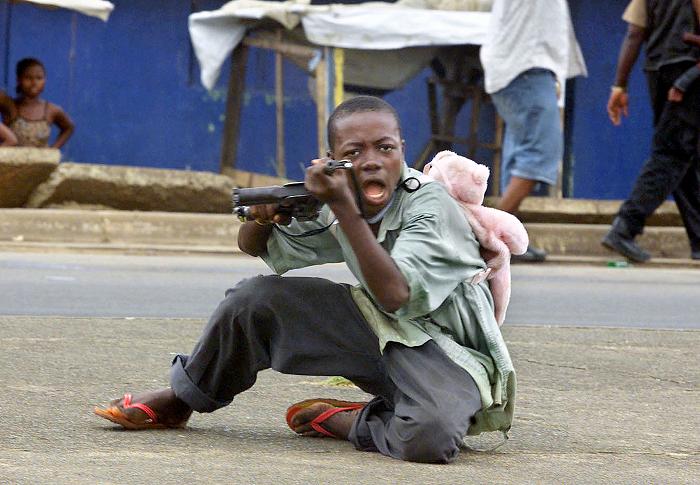
child soldier in liberia
Countries in several parts of the world grapple with the horrific problem of the use of child soldiers exacerbated by the unregulated flow of weapons. © AFP/Getty Images
As world leaders meet in New York this month to negotiate the first ever global arms trade treaty, the Internet has been buzzing with conspiracy theories that such a treaty would infringe on Second Amendment rights in the US.
This is a fallacy, driven at best by misinformation and at worst by a deliberate effort to undermine the treaty. Given the incredibly lucrative arms trade estimated to exceed $60 billion annually (with the US exporting 34% of all weapons) it’s not a surprise that such a misinformation campaign has taken the Internet by storm.
Here let me break down fact from fiction.
Will the ATT stop the sale of handguns in the US?
NO it will not.
The UN General Assembly resolution starting the process on the Arms Trade Treaty explicitly states that it is “the exclusive right of States to regulate internal transfers of arms and national ownership, including through constitutional protections on private ownership.”
No ATT can therefore infringe on that exclusive right. To that end, all the papers circulated by the Chair of the UN ATT (Ambassador Roberto García Moritán of Argentina) process clearly reference that right.
Further, Ambassador Moritán has stated that the definitive goal of the small arms treaty “is to try to have common standards to be applied by all countries when they export or import weapons.”
Furthermore, about the ATT, the State Department has said:
“There will be no restrictions on civilian possession or trade of firearms otherwise permitted by law or protected by the U.S. Constitution. There will be no dilution or diminishing of sovereign control over issues involving the private acquisition, ownership, or possession of firearms, which must remain matters of domestic law.”
What the ATT will do
It will stop the black market in arms on global level.
Every minute, someone dies from armed violence. Because of the out-of-control worldwide arms trade thousands more are injured, raped, forced into becoming child soldiers and worse.
While the international community regulates things like bananas and dinosaur bones, there are virtually no global rules for the trade of products designed to kill and injure.
There are several factors contributing to the crisis that is being caused by the global trade.  Key among those are:
  • Irresponsible decisions by governments – who regularly flout or ignore their obligations not to contribute to human rights violations;
  • Gaping loop holes in the current international regime regulating global arms sales, transfers and other exchanges and,
  • A lack of implementation by governments of the regulations that do exist.
These factors contribute to and facilitate the black market as well as the terrible human rights abuses linked to this trade.
An ATT would improve transparency and accountability, and would establish common standards to regulate the different kinds of transfers that make up the global arms trade.
A robust ATT will require governments to establish stronger, more rigorous systems to manage and regulate their countries’ export and import of weapons and munitions.
In short, the ATT will help keep weapons out of the hands of the worst human rights abusers and save countless lives.

29 June 2012

Click. Boom. Why Amnesty's gone bananas; We need millions to sign the petition for a strong Arms Trade Treaty 28JUN12

BAHRAIN, Syria, Somalia, Yemen, The Democratic Rep of Congo, Uganda, The Central African Republic, Mali, Chad, Colombia, Mexico...just some of the countries being devastated by the world's rampant arms trade supplying every weapon imaginable to tyrants, despots, drug cartels and terrorist. The UN is meeting next week on this issue and Amnesty International has an ongoing campaign calling on the international community to take action to regulate and enforce restrictions on the arms trade. They face formidable opposition, here in the U.S. war is big business and the military-industrial complex often dictates our foreign and military policies, Check out the information below and sign Amnesty's petition to Pres Obama to be part of the solution, not part of the problem...

We need millions to sign the petition for a strong Arms Trade Treaty

World leaders are meeting in July to draw up the first ever international Arms Trade Treaty. This treaty could save countless lives and help prevent human rights abuses around the world – but we have just one shot to get it right. Sign the petition to demand a bulletproof Arms Trade Treaty! Most governments continue to permit irresponsible trade of weapons. Treaties regulate the global trade of many goods – even bananas and dinosaur bones – but not guns and bullets.
Share these Graphics!
Get Involved
Arms Trade Updates
Blog
World leaders are meeting in July to negotiate a global Arms Trade Treaty. Will the weapons trade finally have at least the same protections as trade of bananas and cell phones?
Press Release
Journalists and staff killed today during an attack on a pro-government TV station in Syria should not have been targeted and signals another worrying sign of escalating violence.
Report
An ATT should ensure that the underlying principle of any national authorization system is that no conventional arms can be imported, exported or otherwise internationally transferred without the awar...
Arms Trade Issues
 

11 February 2012

Egypt and its generals: between denial and repression from AMNESTY INTERNATIONAL 11FEB12


The SCAF has failed the Egyptian people miserably. It no longer seems there was a revolution as much as a coup. Women, Copts, NGOs and political activist trying to keep the dream of the revolution alive are all targets of the SCAFs brutality, the rest of Egypt languishes in a declining economy caused by the political uncertainty of the situation. The American government needs to continue supporting the democratization of Egypt and make it clear to the SCAF that while good economic and military relations with Egypt are desired they will not be at the expense of the human rights of the Egyptian people.

Egypt and its generals: between denial and repression


Women subjected to invasive "virginity tests" by security forces are among thousands of Egyptians still waiting for justice. © FILIPPO MONTEFORTE/AFP/Getty Images
By Salil Shetty, Secretary-General of Amnesty International
Last March, following a violent crackdown on peaceful demonstrations in Cairo’s Tahrir Square, a group of 18 women protesters were detained by the Egyptian army.
Seventeen of them were held for four days, repeatedly beaten, given electric shocks, subjected to strip searches and at least seven were forced to submit to “virginity checks”. They were told that “those not found to be virgins” would be charged with prostitution. Before they were released, the women were brought before a military court and received one-year suspended sentences for variety of confected charges.
Only one of the women ultimately felt strong enough to endure the risks of coming forward to fight what had happened. Samira Ibrahim, a 25-year-old marketing manager from Sohag, Upper Egypt, filed two complaints in Egyptian courts: one demanding an end to the “tests” on Egyptian women; the other for what she had to personally endure. Months later, she is still waiting for justice and change. She is not alone.
One year after the toppling of Egyptian President Hosni Mubarak ended three decades of crushing repression, people across Egypt are also waiting for justice and change. The success of the 25 January movement that ended the Mubarak regime offered promises that have yet to be kept. And instead of a new, freer and more equal Egypt, many are trapped between the old and new, living under military rule and facing an uncertain future.
Mubarak’s iron fist was rapidly replaced by an equally formidable military junta known as the Supreme Council of the Armed Forces (SCAF), which has been in control of government functions for the past year.
In June, three months after the incident involving the 18 women, I met with SCAF’s Major General Abdel Fattah al-Sisi, Head of the Military Intelligence Department, to discuss a range of human rights abuses in Egypt documented by Amnesty International, including the army’s forced “virginity tests”.
Maj. Gen. al-Sisi explained that they had been carried out on female detainees to “protect the army against possible allegations of rape”. He said the “tests” would not be carried out again.
Those were just some of the assurances the General gave that day.
During the course of the meeting, he also stressed the importance of ensuring social justice for all Egyptians. He agreed that there was a need to change the culture of the security forces. And he said that violence would not be used against protesters, and that detainees would be properly treated.
Since then, government forces under SCAF control have been at the heart of a growing list of allegations of violence and abuse. In October security forces broke up a demonstration, mostly of Copts, with extreme force, leading to 28 deaths. Many had been shot with live ammunition or run over by soldiers driving armoured vehicles at speed. In November, riot police dispersed a peaceful sit-in at Tahrir Square by people injured during the 25 January protests who were demanding a transfer to civilian rule and reparations, sparking several days of violence that resulted in at least 50 dead and hundreds injured.
In December, soldiers dispersing another peaceful sit-in using excessive force that resulted in the deaths of 17 people, were filmed beating, kicking and dragging women protesters on the ground by their hair. And most recently, despite Ministry of the Interior denials, riot police used bird shot and other live ammunition to crush protests in the wake of the Port Said football tragedy, killing at least 15.
One year after Mubarak’s resignation, life has changed little for ordinary Egyptians, particularly women. And it remains to be seen whether the newly-elected Parliament will have the courage to challenge the generals and the abysmal status quo.
Despite promising to end the state of emergency, the SCAF has retained the oppressive Emergency Law for vaguely defined crimes of “thuggery”, which has replaced “terrorism” as the new justification for holding people without charge or trial. Freedom of expression, association and assembly were promised, but the harsh reality is that criticism of the new authorities is not tolerated. Activists are being targeted, NGOs are being harassed and peaceful demonstrations are being forcefully dispersed. And thousands of people have been tried before military courts, where some have received the death penalty.
In late-December, after months of delays, an Egyptian administrative court finally ruled “virginity tests” to be illegal and ordered an end to the practice. And the doctor accused of being responsible for performing them is now facing trial, although charges against him have been reduced.
But one year after Mubarak’s fall, Samira Ibrahim, like millions of Egyptians, is still waiting to see justice and change. Her case has already been postponed at least six times. Last week, incredibly, lawyers for the military again tried to suggest that the “tests” on the women protesters never took place.
Samira continues to receive threats, including from security officers. But like millions of Egyptians, she says she will continue to fight, no matter how long it takes. “If I drop the charges,” she says defiantly, “what happened to me could happen to any girl in Egypt.” Read more:

20 January 2012

Year of Rebellion: Where do we go from here? from AMNESTY INTERNATIONAL 19JAN12

THE American government shouldn't be supporting the Egyptian transitional government's repression of freedom, democracy and human rights. Our history of supporting the dictatorship of hosni mubarak has already damaged the reputation of the U.S. with the Egyptian people, supporting the military transitional government's brutality and undemocratic actions against their citizens will only further degrade our relations with whatever government finally takes over once elections are completed. Allowing weapons of death and repression to be exported to the current Egyptian government is morally wrong will greatly diminish our influence in support of democratic forces in Egypt. Please participate in this action from Amnesty International calling on the US State Department to halt exports of weapons, ammunition and equipment to Egypt to be used against their own citizens by the government in Cairo, click the link to take action (on the campaign site go to page 2).

Throughout the Middle East and North Africa, 2011 was the year a tightly wound coil was suddenly unsprung. Ordinary people flooded the streets to demand change, releasing energy and power that continues to transform the region.

Millions of people, many of them women protesting for the first time, risked their lives to publicly express a deep, burning need for change. Government forces responded with relentless brute force.

It's not over yet. Brave individuals continue to put their safety on the line, standing against governments that respond with guns, tear gas and tanks.

Our special in-depth report "Year of Rebellion: The State of Human Rights in the Middle East and North Africa," documents this historic, tumultuous year and issues a bold human rights agenda for change in the region. Foremost among these recommendations: stop sending weapons to governments that use them to kill and repress their own people.

I'm going to be talking a lot about weapons sales in the next few months -- it's an issue I care about, and one that has major implications for human rights.

Take Egypt. Last January, Egyptian protestors stormed Tahrir square and braved violent government crackdowns as they drove President Hosni Mubarak from power.

One year later, Egypt's new military government continues using excessive force against protestors. Many have died. The government has even fired tear gas canisters that say "Made in the USA."

This is unacceptable. Urge the U.S. State Department to stop authorizing the shipment of U.S.-manufactured tear gas, bullets, and other military equipment that could be used by Egypt's military to violate human rights.

The people of Egypt have achieved momentous change, but their gains are fragile.

Your solidarity is needed still.

Demand that the State Department stop any future transfers of weapons and equipment that the Egyptian military could use to attack Egyptian protestors.

Thank you for all you do to support human rights.

In solidarity,

Sanjeev Bery
Advocacy Director, Middle East North Africa
Amnesty International USA 

05 January 2012

Pres. Obama signed the NDAA - now we fight back from AMNESTY INTERNATIONAL 4JAN11

PRES Obama promised to close gitmo, yet it remains open, an example of American hypocrisy on human rights and justice for all. Join Amnesty International in this call to action petitioning the government to end the national disgrace that is gitmo and to revoke the detention provision of the NDAA, click the header or link to participate.
Amnesty International
Help us right 10 years of wrong. Help us close Guantanamo.

January 11, 2012 marks the 10th anniversary of "war on terror" detainees at Guantanamo. We're not going to let this day pass quietly.

Sign Amnesty's global petition urging President Obama to finally follow through on his promise to close Guantanamo. Help us meet our goal of 100,000 signatures worldwide -- signatures we plan to deliver straight to the White House door.

We haven't forgotten President Obama's pledge to close Guantanamo, one of his first acts as president. Nearly three years later, the President has failed to keep his end of the bargain.

Even worse, President Obama has yet again relented to extremists in Congress. On New Year's Eve, he signed the National Defense Authorization Act (NDAA) into law, along with its appalling detention provisions.

We lost that fight, but there's reason for hope. The battle over the NDAA united activists across the ideological divide, who put differences aside and came together to oppose the NDAA.

January 11th isn't just any anniversary. This year, it's a critical moment to rise up against a shameful decade of human rights abuses perpetrated in our name. We can't let the recent outrage against the NDAA simply ebb away -- help us channel this passion into a movement rededicated to closing Guantanamo!

Guantanamo is a costly human rights catastrophe. Military and intelligence experts have repeatedly asserted that Guantanamo and the violations it stands for are immoral, illegal and counterproductive to US national security.

There is a simple solution to closing Guantanamo -- either charge detainees and give them a fair trial in US federal court, or release them.

Sign our petition to tell President Obama that we are tired of his excuses. Guantanamo must be closed.

For many, the New Year holiday embodies humanity's hopes for the future. Here's to 2012 -- and with your help, this could be Guantanamo's final year.

Sincerely,

Zeke Johnson
Director, Security with Human Rights Campaign
Amnesty International USA

P.S. It's not too late to join us in Washington, DC on January 11th for a National Day of Action Against Guantanamo. Lend a hand to our human chain!