NORTON META TAG

Showing posts with label beer. Show all posts

06 July 2023

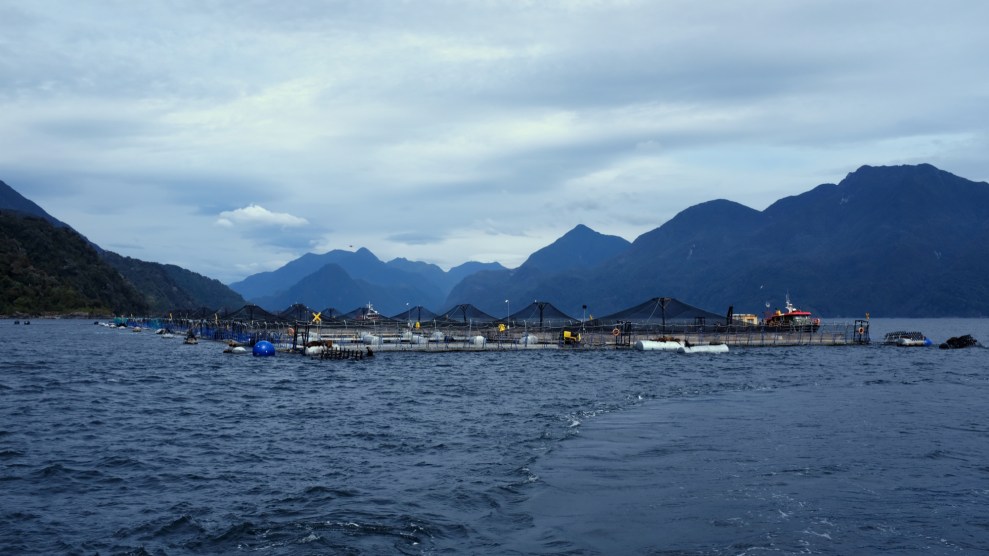
MOTHER JONES DAILY: Top Climate Groups Took Millions From Billionaire Oil and Gas Investors, It sure was hot yesterday, A massive UPS strike is imminent, Civil rights groups challenge Harvard's legacy admissions, Fox News agrees to pony up $12 million to former Tucker Carlson producer alleging coercion, The Perils of Farming Salmon in a Warming World 5JUL23


10 November 2015

5 O'Clock Somewhere: From Wartime Relic to Drinking Den of Choice 10 NOV 15

A cool story for our veterans, from +The Huffington Post ......

5 O'Clock Somewhere: From Wartime Relic to Drinking Den of Choice

Posted: Updated:
ROADS AND KINGDOMS RAIL
This post is from Roads & Kingdoms' Five O'Clock Somewhere series: daily dispatches at cocktail hour from around the world. Find more food and travel storytelling at Roads & Kingdoms.
By James Fixter
Astra in Hamburg
It's not so much an optional activity as a hallowed tradition when my colleagues convene for a Friday afternoon beer. It's time to put into practice what may as well be Hamburg's official motto: work hard, then play harder. And so we find ourselves standing before one of the colossal concrete flak bunkers that still loom over the city. An unusual choice of venue, but one that certainly provides plenty of food for thought over a beer.
The entrance is uninviting. The path meanders through clammy corridors that once echoed with rushed footsteps as air raid sirens howled across the city, and the cold light of electric bulbs on bare concrete walls quickly induces claustrophobia. We stepped in from a chilly October afternoon, yet it actually seems to be colder inside as we crowd into the elevator.
We emerge on the top floor, surprised to find a sleek rooftop bar that now stands where the massive anti-aircraft guns once did. We seem to have beaten the Friday rush and have an unbeatable view of the city to ourselves as the waitress plants chilled glasses of Astra on the table in front of us. The name of this cult lager can be found everywhere here, whether stacked in stubby bottles on supermarket shelves, atop a sticky counter in a seedy bar on the Reeperbahn, or in the neon glare of a sign hanging off a pub wall. If any beer can be said to represent Hamburg, then this is surely it.
astra in hamburg
The venue for today's session is more remarkable than our brew of choice, however. If Astra epitomizes the spirit of Hamburg, then so, too, does the old bunker in which we are now enthusiastically swilling it. Once used to repel Allied bombers in the World War II, it was later left standing as a crumbling and overgrown ruin after a botched demolition. Sixty years later, developers embarked on an ambitious project to transform it into a solar-power station and renamed it the Energiebunker. Photovoltaic panels now cascade down the southern wall and the stripped-out interior has been filled with machinery to harness the green energy.
"This kind of pragmatism is typical of Hamburg," one colleague tells me with more than a hint of local pride. In fact, there is a track record of taking a pragmatic approach to the bunkers in Hamburg, where these unlikely contenders for beloved landmarks have found a new lease on life as apartments, restaurants, bars, music studios, and outdoor climbing centers. There are even plans to construct a modern interpretation of the Hanging Gardens of Babylon on top of the other remaining flak bunker in order to "alienate" it from its original purpose and create more valuable green space.
Civic initiatives have transformed these wartime relics into symbols of a thriving contemporary culture. Where else but Hamburg can you go to a poetry slam in a flak bunker or eat Portuguese food in a converted air raid shelter? Taking the leftovers of a reviled regime and putting them to good use makes a clear statement about the liberal Germany of today. It isn't possible to rewrite painful history, but Hamburg can certainly teach us about coming to terms with it.
As I sit -- beer in hand -- I feel that this is something worth drinking to.
You can explore more dispatches from the Five O'Clock Somewhere series here and see Roads & Kingdom's Breakfast series here.

05 October 2012

What Your Beer Says About Your Politics 27SEP12

ME? Guinness, microbrews like Fat Tire or Port City or Flying Dog, various German imports, Red Stripe. I can be a beer snot. My politics? Christian Socialist, and I do vote, haven't missed an election yet....

beer chart.jpg
Credit: Tracey Robinson, NMRPP
Americans who most often drink Dos Equis are in the middle-of-the-road while drinkers of Heineken's flagship brand are strongly Democratic. Samuel Adams drinkers are strongly Republican, and more likely to vote.
Beer has a long and storied place in American presidential history and politics.

George Washington
famously brewed it. James Madison purportedly sought to create a cabinet-level Secretary of Beer. And Franklin Delano Roosevelt helped make it legal to produce and sell (again) by championing legislation repealing Prohibition. Upon signing the bill, he reportedly said, "I think this would be a good time for a beer."
As you may have heard, our current president likes his beer, too. Earlier this month, the Obama White House released two official recipes of its own in a blog post entitled "Ale to the Chief."
Of course, this savvy election-year move was not the first time Obama has played the "beer card." In 2009, he famously hosted a "Beer Summit" at the White House to help quell racial tensions.
Beer is also a staple on the presidential campaign trail, with candidates often visiting pubs to show they understand the common man. Similarly, pollsters sometimes ask the question, "Who would you rather have a beer with?" to gauge which candidate has the likeability edge.
Last week, beer poured into presidential politics in an unprecedented way when the beverage's most famous personality - the Most Interesting Man in the World - hosted an Obama fundraiser. You've likely seen him in ads for Mexican beer Dos Equis. His real name is Jonathan Goldsmith.
Some Dos Equis fans were not happy about the fundraiser and expressed their displeasure on the beer's Facebook page, according to Ad Age.
"Mr. Goldsmith's opinions and views are strictly his own, and do not represent those of Dos Equis," said Heineken USA, which imports Dos Equis, in a statement seeking to head off political blow-back.
Clearly, the Most Interesting Man in the World, who "once had an awkward moment, just to see how it feels," has created an awkward moment for the brewing company.
Should Heineken be worried about damage to one of its flagship brands?
Based on the partisanship of beer drinkers, they are wise to be in damage control mode.
We've analyzed Scarborough Research data, which includes 200,000 interviews with American adults, to determine the politics of beer drinkers.
As the bubble chart shows, Dos Equis is a bipartisan brew - Republicans and Democrats both like to drink it. So Mr. Goldsmith's public foray into the 2012 race could alienate a large share of Dos Equis fans.
Ironically, this is in contrast to its corporate sister Heineken, which as it turns out is the most Democratic beer of all. On the other hand, Republicans love their Coors Light and favor Sam Adams, which is brewed just a few miles away from Romney campaign headquarters and whose namesake was an original tea partier.
Dos Equis is not the first - and won't be the last - brand to find itself in a political pickle. From Chick-fil-A to Susan G. Komen to the pizza owner who recently hugged the president, the fallout depends on media coverage, the brand's response, and the political values of its customers.
We continue to advise big brands - who spend millions on consumer research - to make the investment to know where their fans stand politically and to put in safeguards to mitigate a political firestorm.
That being said, the best advice we can give: Stay nonpartisan, my friends.
Will Feltus is the Senior Vice President for media research and planning at National Media in Alexandria, Virginia. Mike Shannon is a partner at the consulting firm Vianovo in Austin, Texas. 
http://hotlineoncall.nationaljournal.com/archives/2012/09/the-politics-of-3.php 

22 September 2012

ARTHUR'S DAY IS 27SEP12 SLAINTE!!!! IS LÁ ARTHUR'S 27SEP12 Sláinte!!!!!!!

FOR all who enjoy a good pint, remember to toast Arthur Guinness on the 253rd anniversary of the founding of his brewery in Dublin (which I toured in 2010) at 1759 (5:59 PM) on 27SEP12! SLAINTE!
DO gach duine taitneamh a bhaint as pionta maith, dearmad a toast Arthur Guinness ar chothrom 253 de bhunú a ghrúdlann i mBaile Átha Cliath (a chuaigh ar camchuairt mé i 2010) ag 1759 (05:59) ar 27SEP12! Sláinte!

Arthur's Day
Guinness 250 Anniversary 1759-2009.jpg
To Arthur!

Years active 4
Date(s) 24 September 2009,
23 September 2010,
22 September 2011,
27 September 2012
Arthur's Day refers to a series of music events which were first organised in 2009 to celebrate the 250th anniversary of the Guinness brewing company by its owner Diageo plc.
Those events took place internationally in the cities of Dublin, Kuala Lumpur, Lagos, New York and Yaoundé on 23 September 2009. The event was broadcast internationally on Sky TV, ITV2 and DirecTV.[1] €6 million has been pledged to the Arthur Guinness Fund.[1] The celebration has been endorsed by several high-profile names, such as rock star-turned political activist Bob Geldof, director and screenwriter Guy Ritchie, footballer and Guinness football ambassador for Africa Michael Essien and British celebrities such as Peter Crouch, Sophie Dahl.[2]
Guinness drinkers are expected to raise a glass to the memory of Arthur Guinness at 17:59 (5:59 pm), a reference to 1759, the year the Guinness Brewery was established..[3][4] An 82c stamp of an Arthur Guinness portrait was also released by An Post to commemorate the anniversary.[5]
Arthur's Day 2012 is scheduled for on 27 September.
http://en.wikipedia.org/wiki/Arthur%27s_Day

01 January 2011

Which Kind of Booze Is Best for the Planet? from MOTHER JONES NOV/DEZ 2010

FROM Mother Jones.......
An inconvenient vermouth: When it comes to global warming, why beer beats tequila, whiskey tops rum, and savvy New Yorkers buy French wine.
Murder in Detroit, overworked immigration judges, bruisers-for-hire on Indian reservations: If you've been reading Mother Jones lately, you're probably ready for a stiff drink. Not so fast! In terms of greenhouse-gas emissions, US booze manufacturers release the annual equivalent of 1.9 million households. How's that for a buzzkill? The good news is that you have choices. Here are a few tips for drowning your sorrows sustainably.
WINE: Fruity bouquet? Tastes like pencil shavings? Environmentally speaking, none of that matters: According to a 2007 study (PDF) commissioned by the American Association of Wine Economists, the majority of wine's carbon footprint comes from shipping. You can minimize your wine miles by using the handy map below. In short, New Yorkers should buy French, while Iowans are better off drinking California wines. If you're concerned about water use, go for bubbly wines made with early-harvested grapes. TRY: French Rabbit wines. They come in recyclable Tetra Paks, which reduce packaging weight by 90 percent over bottles. For reasonably priced organic wines, try Frey Vineyards—if the map allows.

The Wine Line


If you live east of this line, European wines are better for your carbon footprint. Western oenophiles? Go green by buying Napa.
BEER: In 2008, New Belgium Brewing Company commissioned an environmental analysis (PDF) of its Fat Tire Amber Ale and found that refrigeration accounted for almost one-third of its overall greenhouse-gas emissions. Glass production was second, contributing 22 percent. Though aluminum production is an environmental disaster, cans beat bottles handily on the carbon front: Pablo Päster, a blogger and sustainability consultant, calculates that shipping cans rather than bottles results in 30 percent fewer emissions. And cans are recycled at significantly higher rates. Good news for your inner frat boy: Kegs are the most efficient vessels of all. TRY: New Belgium. The Colorado-based company brews in superefficient kettles and is entirely powered by renewables.
DISTILLED SPIRITS: As we learned in college, liquor is quicker than wine or beer. But producing it uses more energy, ounce for ounce, and nearly all the water that goes into the still emerges as waste. Here's how selected spirits stack up.
Whiskey: Single malt Scotch is made from only one grain source, while most American whiskeys are made from mixtures of rye, corn, wheat, or barley. So which are greener? Most single malts are produced by boutique outfits using old-fashioned energy-hogging pot stills, as opposed to the more efficient column-style stills employed by major distillers. And while American bourbons are aged in virgin-oak barrels that are used only once, most of those barrels end up being reused by other liquor makers. TRY: Maker's Mark. The bourbon maker buys local grain and turns its waste into energy. Most of the company's land is a nature preserve.
Vodka and gin: Although some vodkas are still made from potatoes, most now come from a mix of grains. Ditto for gin. In terms of distillation, vodka requires more energy and water than most spirits. That's because it's distilled down to 95 percent ethanol—some ethanol plants even make vodka on the side—then diluted back to 40 percent. Gins are often made the same way. TRY: Square One vodka, which is organic and purchases one-quarter of its electricity from a local wind farm through renewable energy credits. TRU2 gin uses lightweight bottles and recyclable corks, and plants a tree for each bottle it sells.
Rum: The mojito enabler is made from molasses or cane juice, and its fibrous leftovers can throw off the microorganism balance in waterways. In 2001, the EPA sued Bacardi for illegally dumping 3,000 gallons of this goop into a river near its Puerto Rico plant. (Many major distillers now treat their water.) Sugarcane is also a notoriously destructive crop, producing massive amounts of wastewater and greenhouse gases. TRY: DonQ rum. The Puerto Rico-based distiller turns its waste into compost and irrigation water, and uses excess steam from its treatment plant to help power the still.
Tequila: Tequila's waste problem is as bad as rum's. For every liter of tequila, you get about 11 pounds of pulp and 10 liters of vinazas, or acidic waste—which ends up befouling soil and water in Mexico's Jalisco state, where most tequila comes from. Blue agave farmers, meanwhile, have used more and more pesticides since their crops were chewed up by insects during the 1990s. TRY: Casa Noble or 4 Copas, the first tequilas to be certified organic.
Got a burning eco-quandary? Submit it to econundrums@motherjones.com. Get all your green questions answered by visiting Econundrums on Facebook here.

23 October 2010

MAD FOX BREWING COMPANY

Went to Mad Fox Brewing Company / Pub last night with my friends Pam and Elsie and we love this place! Take the slightly bitchy write up in the Washington Post (AUG this year) with a grain of salt, the beer (I really like Kolsch, also had Alter, good too) and the cider and mead are good, there are a lot of  appetizers, and had the three specials for dinner and the food was really, really good. The place was full and everyone seemed to be enjoying the drink and food as much as we were. We just had a really good time there. The staff is very friendly and efficient without being annoying. Give the place a go, we will definitely go back.