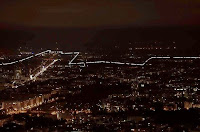
BUCKNACKT'S SORDID TAWDRY BLOG
We should not be a journey to the grave with the intention of arriving safely in an attractive & well preserved body, but rather to skid in sideways, chocolate, bier or wein in hand, body thoroughly used up, totally worn out and screaming "WHOO-HOO, WHAT A RIDE!!!!!!"
Eine Sache , die zusammen fast jedermann bringen kann , ist Essen. Wie lange wird es dauern , bis Mahlzeiten und Feste wie diese können in Israel und der Westbank und im Gazastreifen organisiert werden? Oder in der Ukraine? Libanon? Sudan? N. Ireland und Irland, Bosnien-Herzegowina und Serbien? Von + NPR .....
Am vergangenen Freitag Abend veranstaltete die Berliner Buchhandlung Shakespeare and Sons einen Sabbat Abendessen im Rahmen der Pre-Kick-off-Aktivitäten für Nosh Berlin, dem ersten jüdischen Nahrungsmittelfestival der deutschen Hauptstadt. Die Gäste in der Buchhandlung enthalten viele nicht-jüdische Deutsche, die Tickets gekauft haben.
Veronica Zaragovia für NPR
Innerhalb einer Berliner Buchhandlung auf einem letzten Freitag Abend, entfaltete eine ungewöhnliche Szene. Dreißig Leute saßen um einen langen Tisch, israelisch-marokkanische Gerichte wie das Teilen matbucha (eine Seite des gebratenen Paprika und Tomaten), Ptitim (a geröstete Nudeln in kleine Kugeln geformt) und eine moderne Variante der traditionellen Challa oder Ei Brot - eine vegane ein mit Trockenfrüchten, Quinoa, Kräutern und Granatapfelsaft gefüllt.
Sie feierten das Ende der Woche und den Beginn eines Tag der Ruhe, wie der Sabbat in den jüdischen Gemeinden bekannt. Während aufmerksame Juden häufig ein Sabbat Abendessen am Freitagabend genannt Shabbat, viele der Gäste haben waren nicht-jüdische Deutsche, die Tickets gekauft haben.
Der Schabbat Feier in der Buchhandlung war ein Pop-up - Abendessen von einem neuen israelischen Unternehmen organisiert genannt Kiddusch in Verbindung mit dem Start 19. März von Berlin allerersten jüdischen Speise Woche Feier namens Nosh Berlin .
Andere Nosh Berlin Veranstaltungen gehören eine Diskussion über die deutsch-jüdische Kaffeehauskultur der 1920er und Abendessen mit Yemeni, persischen und römischen jüdischen Rezepte.
Marokkanisch-israelischen Gerichte und Challa sind an einem jüdischen Sabbat Pop-up-Dinner-Party veranstaltet in einer Berliner Buchhandlung, Teil der Feierlichkeiten rund um Nosh Berlin serviert, die ersten jüdischen Nahrungsmittelfestival der Stadt.
Verónica Zaragovia für NPR
"Das Essen ist immer eine warme und einladende Weise eine Kultur zu nähern", sagt Laurel Kratochvila. Sie tat sich mit Essen Schriftsteller Liv Fleischhacker bis Nosh Berlin zu organisieren Juden zu vereinigen und Nicht-Juden aus allen Bereichen.
Da der Holocaust auf die Vernichtung von rund 6 Millionen europäischen Juden geführt hat Deutschland bemüht, seine Bürger zu ermutigen, die Geschichte zu verstehen, was passiert ist. "Wir haben viel über den Zweiten Weltkrieg und den Holocaust gelehrt, und das führt zu einem Gefühl der genug-ist-genug an einem gewissen Punkt", sagt Fleischhacker. Sie will, dass die Leute über verschiedene Aspekte der deutsch-jüdischen Lebens zu lernen, nicht nur die Tragödie. "Ich denke, es muss ein bisschen eine Modernisierung zu sein, ein Jugendlichkeit zu ihm -. Ein anderer Ansatz"
Die Veranstalter, die beide jüdisch sind, wollen auch jüdischen Stolz in Berlin zu rühren.
Eine Nahaufnahme von ruggelach, Cookies beliebt unter den Juden von Ashkenazi oder osteuropäischer Herkunft, die von der Fine Bagels Garküche am historischen Berliner Markthalle, den 19. März, verkauft unter den jüdischen Lebensmittel waren 2017. Dieser Teil von Nosh Berlin war, die erste jüdische Food Festival in der deutschen Hauptstadt.
Verónica Zaragovia für NPR
"Juden Berlin vor dem Holocaust geformt", sagt Fleischhacker. "Es sollte ein Fest der Vergangenheit und der Zukunft sein."
Vor dem Holocaust, Juden öffnete nicht wirklich nach oben Restaurants Essen als markierte Portion "jüdisch" . Juden wurden gut integriert, mit Sicherheit in den Städten. "Es gibt nicht so etwas wie der deutsch-jüdischen Kultur" , sagt Cilly Kugelmann, Programmdirektorin des Jüdischen Museums in Berlin. "Deutsch - jüdischen Kultur ist der Mainstream - Kultur. Es ist die klassische Musik, es ist [Johann Wolfgang von] Goethe und [Friedrich] Schiller. Es ist keine ethnische Kultur."
Auch die deutschen Juden nicht essen die jüdischen Lebensmittel , die Juden aus Osteuropa tat - (. Crepes mit Käse) Ashkenazi Lebensmittel wie Matzokugelsuppe oder blintzes Sie aßen hauptsächlich deutsche Küche. Manchmal ist es sogar schwer , die beiden zu unterscheiden. Deutsche, zum Beispiel essen gebratene Kartoffelpuffer und nennen sie Kartoffelpuffer. Juden nennen sie latkes.
Dennoch sorgten die Nazis Juden eine harte Zeit zu essen jüdischen Nahrung hatte, sowieso. Als sie 1933 die Macht ergriffen, eines der ersten Gesetze erlassen sie die koschere Schlachten von Tieren verboten.
In der Nachkriegszeit, die Juden in der Gastronomie ging, "aber auf jeden Fall nicht koscheres Essen, weil Sie Geld zu verdienen wollte", erklärt Kugelmann, dessen eigene Eltern ein Restaurant im Besitz und nur gekocht koscheres Essen zu Hause. "Und Sie hatten so wenige Juden hier, dass Sie nie Geld mit einem koscheren-Food-Restaurant zu machen, wäre in der Lage."
Erst in den 1970er Jahren hat die jüdische Gemeinde Start in messbarer Weise zu wachsen, wobei die erste Welle der Juden kommen aus der ehemaligen Sowjetunion, wo das Judentum, wie alle Religionen unterdrückt wurde. Dass die Einwanderung nach Deutschland dauerte durch das Auseinanderbrechen der Sowjetunion in den frühen 1990er Jahren.
Tausende Israelis haben nach Berlin in den letzten fünf bis 10 Jahren bewegt. Einige nennen als Motivation die hohen Kosten für die in Israel leben; andere sagen , dass sie mit der israelischen Politik nicht einverstanden sind . Einige dieser Einwanderer für die deutsche Staatsbürgerschaft zu qualifizieren , wenn ihre deutschen jüdischen Vorfahren von den Nazis verfolgt wurden. Im Jahr 2015 schätzte die Bundesregierung , dass etwa 4000 Israelis in Berlin leben, aber auch andere Schätzungen zufolge gibt es bis zu 20.000 sind, nach dem American Jewish Committee Berlin .
Yuval Belhans des Kiddusch Schabbat Pop-up-Projekt ist eine von ihnen, und so ist sein Geschäftspartner, Maayan Meir. Meir denkt, dass bis vor kurzem hier selten jüdische Speisen serviert wurde, weil "die Menschen nicht gerne Schuld und Nahrung mischen", sagt sie. Aber sie sagt, die mehr, dass die Israelis bewegen hier und offene Restaurants, die normalere es erscheinen wird.
Kratochvila von Nosh Berlin ist optimistisch, dass die jüdischen Speise Szene über die Grundlagen entwickeln wird. "Je mehr du hast, desto spannender wird es", sagt sie. "Man kann nicht auf einem Basisniveau bleiben, wenn Sie den Wettbewerb."
Juden werden hier wahrscheinlich in Bewegung bleiben. Die Stadt ist einladend, trotz einer Zunahme der antisemitische Handlungen in den letzten Jahren. Die Berliner Polizei zeichnet antisemitische Handlungen nach ihrer politischen Motivation. In der ersten Hälfte des Jahres 2015, protokolliert die Abteilung 62 Vorfälle von rechten Gruppen. Im Jahr 2016 ging es um 64 bis Während niemand die Ursache für sicher, während dieser Zeit kennt, Medienberichte abgedeckt Antisemiten von den Mitgliedern der gemachten Ausführungen rechtsextreme Partei Alternative für Deutschland, die öffentliche Unterstützung zu gewinnen hatte.
Eine weitere Einheit in Berlin , die antisemitische Handlungen verfolgt wird die Abteilung für Forschung und Information über Antisemitismus genannt. Im vergangenen Monat, es berichtet Antisemiten um 16 Prozent von 2015 bis 2016 erhöhte sich Angriffe, aber es hat eine viel breitere Definition von antisemitische Handlungen und kann nicht direkt mit der Polizei - Abteilung Daten verglichen werden.
Einer der Anbieter in der Berliner Markthalle während Nosh Berlin, die erste Nahrung Woche verkaufte der deutschen Hauptstadt cholent , die er genannt "jüdische Seele Nahrung." 19, März 2017
Verónica Zaragovia für NPR
Cilly Kugelmann des Jüdischen Museums weist darauf hin, dass die Lebensmittel Wochen wie diese mehr tun, als Lebensmittel zu verkaufen. Sie sind lehrreich. Das spricht Kratochvila von Nosh Berlin, die dies eine jährliche Veranstaltung zu machen hofft.
"Ich würde nicht von dem Aufruf der Küche träumen hier homogen - es gibt eine wirklich vielfältige Gastronomieszene in Berlin", sagt sie. "Aber das ist ein Bestandteil der Nahrung Landschaft, die von ihm eine Art von Geschichte entfernt worden ist, die hier wachsen sollte."
Gemessen an der Wahlbeteiligung bei Nosh Berlin bisher, sind die Menschen begeistert von hier das jüdische Leben. Am Sonntag Abend, alle bis auf einen der Schabbat Abendessen für diesen Freitag aufgereiht waren ausverkauft.
Veronica Zaragovia ist ein öffentlicher Radioreporter, der in Berlin lebt und ist ein Kerl mit der Robert - Bosch - Stiftung . Sie können ihr auf Twitter @verozaragovia und auf Instagram @veronicazaragovia finden.
ONE thing that can bring almost anyone together is food. How long will it be before meals and festivals like these can be organized in Israel and the West Bank and Gaza? Or in the Ukraine? Lebanon? Sudan? N. Ireland and Ireland, Bosnia-Herzegovina and Serbia? From +NPR .....
Last Friday night, the Berlin bookstore Shakespeare and Sons hosted a Sabbath dinner as part of the pre-kickoff activities for Nosh Berlin, the German capital's first Jewish food festival. Guests at the bookstore included many non-Jewish Germans who purchased tickets.
Veronica Zaragovia for NPR
Inside a Berlin bookstore on a recent Friday night, an unusual scene unfolded. Thirty people sat around a long table, sharing Israeli-Moroccan dishes like matbucha (a side of roasted red peppers and tomatoes), ptitim (a toasted pasta shaped in little balls) and a modern twist on the traditional challah or egg bread — a vegan one filled with dry fruits, quinoa, herbs and pomegranate juice.
They were celebrating the end of the week and the beginning of a day of rest, known as the Sabbath in Jewish communities. While observant Jews commonly have a Sabbath dinner on Friday nights called Shabbat, many of the guests were non-Jewish Germans who purchased tickets.
The Shabbat celebration in the book store was a pop-up dinner organized by a new Israeli business called Kiddush in conjunction with the March 19 start of Berlin's first-ever Jewish food week celebration called Nosh Berlin.
Other Nosh Berlin events include a discussion about German-Jewish coffeehouse culture of the 1920s and dinners featuring Yemeni, Persian and Roman Jewish recipes.
Moroccan-Israeli dishes and challah are served at a Jewish Sabbath pop-up dinner party hosted at a Berlin bookstore, part of the festivities surrounding Nosh Berlin, the city's first Jewish food festival.
Verónica Zaragovia for NPR
"Food is always a warm and welcoming way to approach a culture," says Laurel Kratochvila. She teamed up with food writer Liv Fleischhacker to organize Nosh Berlin to unite Jews and non-Jews of all backgrounds.
Since the Holocaust led to the extermination of some 6 million European Jews, Germany has striven to encourage its citizens to understand the history of what happened. "We were taught a lot about the Second World War and the Holocaust, and that leads to a feeling of enough-is-enough at some point," says Fleischhacker. She wants people to learn about different aspects of German Jewish life, not only the tragedy. "I think there needs to be a bit of a modernization, a youthfulness to it — a different approach."
The organizers, both of whom are Jewish, also want to stir Jewish pride in Berlin.
A close up of ruggelach, cookies popular among Jews of Ashkenazi, or Eastern European descent, that were among the Jewish food items sold by the Fine Bagels food stall at Berlin's historic market hall, March 19, 2017. This was part of Nosh Berlin, the first Jewish food festival in the German capital.
Verónica Zaragovia for NPR
"Jews shaped Berlin before the Holocaust," Fleischhacker says. "There should be a celebration of the past and of the future."
Before the Holocaust, Jews didn't really open up restaurants serving food labeled as "Jewish." Jews were well integrated, certainly in cities. "There is no such thing as German-Jewish culture," says Cilly Kugelmann, program director of the Jewish Museum in Berlin. "German Jewish culture is mainstream culture. It's classical music, it's [Johann Wolfgang von] Goethe and [Friedrich] Schiller. It's not an ethnic culture."
Also, German Jews didn't eat the Jewish foods that Jews from Eastern Europe did — Ashkenazi foods like matzo ball soup or blintzes (crepes with cheese.) They ate mostly German food. Sometimes it's even hard to distinguish the two. Germans, for example, eat fried potato pancakes and call them Kartoffelpuffer. Jews call them latkes.
Still, the Nazis ensured Jews had a hard time eating Jewish food, anyways. When they seized power in 1933, one of the first laws they passed banned the kosher slaughter of animals.
In the post-War era, Jews did go into the restaurant industry, "but definitely not kosher food because you wanted to make money," explains Kugelmann, whose own parents owned a restaurant and only cooked kosher food at home. "And you had so few Jews here that you would never be able to make money with a kosher food restaurant."
Not until the 1970s did the Jewish community start to grow in any measurable way, with the first wave of Jews coming from the former Soviet Union, where Judaism, like all religions, was oppressed. That immigration to Germany lasted through the USSR's breakup in the early 1990s.
Thousands of Israelis have moved to Berlin in the last five to 10 years. Some cite as motivation the high cost of living in Israel; others say they disagree with Israeli politics. Some of these immigrants qualify for German citizenship if their German Jewish ancestors were persecuted by the Nazis. In 2015, the German government estimated that about 4,000 Israelis live in Berlin, but other estimates suggest there are up to 20,000, according to the American Jewish Committee Berlin.
Yuval Belhans of the Kiddush Shabbat pop-up project is one of them, and so is his business partner, Maayan Meir. Meir thinks serving Jewish food has been rare here until recently because "people don't like to mix guilt and food," she says. But she says the more that Israelis move here and open restaurants, the more normal it will seem.
Kratochvila of Nosh Berlin is optimistic that the Jewish food scene will evolve beyond the basics. "The more you have, the more exciting it gets," she says. "You can't stay at a base level if you have competition."
Jews will likely keep moving here. The city is welcoming, despite an increase in anti-Semitic acts in recent years. The Berlin Police Department records anti-Semitic acts according to their political motivation. In the first half of 2015, the department logged 62 incidents by right-wing groups. In 2016, it went up to 64. While no one knows the cause for sure, during this time, media reports covered anti-Semitic remarks made by members of the extreme-right party Alternative for Germany, which had been gaining public support.
Another entity in Berlin that tracks anti-Semitic acts is called the Department for Research and Information on Anti-Semitism. Last month, it reported anti-Semitic attacks increased by 16 percent from 2015 to 2016, but it has a much broader definition of anti-Semitic acts and can't be compared directly with the police department's data.
One of the vendors at Berlin's food hall during Nosh Berlin, the German capital's first food week, sold cholent, which he dubbed "Jewish soul food." March 19, 2017
Verónica Zaragovia for NPR
Cilly Kugelmann of the Jewish Museum points out that food weeks like this one do more than sell food. They are educational. That appeals to Kratochvila of Nosh Berlin, who hopes to make this an annual event.
"I wouldn't dream of calling the cuisine here homogeneous — there's a really diverse food scene in Berlin," she says. "But this is a component of the food landscape that's been sort of removed from it by history, that should be growing here."
Judging by the turnout for Nosh Berlin so far, people are enthusiastic about Jewish life here. By Sunday evening, all but one of the Shabbat dinners lined up for this Friday had sold out.
Veronica Zaragovia is a public radio reporter who lives in Berlin and is a fellow with the Robert Bosch Foundation. You can find her on Twitter @verozaragovia and on Instagram @veronicazaragovia.
Szerencsére nem minden európai követi a magyar politikai vezetés például, amikor a barátságos és elfogadó menekültek. Német
foci (soccer) csapat aktívan támogatta a menekültek, köszöntjük őket
Németországba, és integrálja a német társadalomban, miközben dolgozik
elleni német neonáci jobboldal szélsőséges. Ez nem
eredményeként a képet Aylan Kurdi tesznek közzé világszerte, német
labdarúgó vett részt a menekültek számára az elmúlt években. Isten áldja meg a német labdarúgó-bajnokság és a rajongók! Honnan + Huffington Post .....
BERLIN (AP) - Egy edzőtábor a migráns gyerekek. A $ 1.100.000 adományt. Német nyelvoktatást.
Ezek néhány dolog német labdarúgó klub a Bayern München is csinál, hogy
segítsen néhány ezer bevándorlók, akik az országba érkezés után menekülő
háború és a szegénység Szíriában és más bajba jutott nemzetek.
Más német foci csapat is az élen jár a prédikáció elfogadják az új érkezők.
"A nehéz időkben ezek az emberek, ez egy kis hozzájárulást, hogy elvonja
a mindennapi életben," a német csapat Mainz mondta a honlapján anak
migránsok mérkőzésekre való eljutását.
Bayern úgy tűnik, hogy az élen, de. A klub, az egyik
legnagyobb és leggazdagabb Európában, mondta csütörtök adományoz
1.000.000 € ($ 1.100.000) a menekült projektek és hozott egy edzőtábor,
hogy adna gyermekek és serdülők német nyelvoktatást, étkezés, és a foci
berendezések.
És a következő hazai pályán a szeptember 12-én a csapat sztárjátékosok
majd kisétál területén kézen fogva egy német gyerek az egyik oldalon és a
migráns gyermekek között.
Bayern mondta, hogy lenne "egy szimbólum, a menekültek beilleszkedését."
Németország tanúi példátlan hulláma a menedékkérők ebben az évben. Mintegy
800.000 bevándorlók várhatóan érkezik 2015-ben, négyszeres növekedést a
tavalyi, és a futball szurkolók már régóta megjelenítésére
szolidaritását. Bannerek "menekültek szívesen" már megszokott látvány a Bundesliga játékokat.
Több mint 2000 bevándorló érkezett vonattal a müncheni kedden, amikor a
rendőrség azt mondta, hogy "túlterheltek" adományaiból lakosok.
Németország nemzeti csapat, amely megnyerte a világbajnokságot Brazíliában tavaly is ütött részt. Jerome
Boateng, Ilkay Gundogan, Bastian Schweinsteiger, Mesut Özil és Toni
Kroos megjelent egy videó szerda tiszteletben tartásának előmozdítása és
a tolerancia.
Mainz meghívott 200 migránsokat múlt heti játék, és még 400 várhatóan a
klub következő hazai játék szeptember 18. A második divízió csapat
Bielefeld készült 500 jegy annak hazai pályán ellen Heidenheim. Szerint a klub, mind arra felkapta két órán belül.
Dortmundban, ahol a klub már részt vett egy régóta húzódó csatát
szélsőjobboldali közül néhány saját támogatói, néhány rajongó már várja
migránsok évek óta. A klub a közelmúltban felkérte 220
bevándorlók a helyi "angekommen" (Megérkezett) támogatási kezdeményezést
nézni egy Európa Liga selejtező ellen a norvég csapat Odds BK.
Míg sok migráns keres egy jobb élet vonzza a Dortmund, meg a hátország
ipari Ruhr-vidék, a város is szolgál fókuszpontja neonácik az állam
Észak-Rajna-Vesztfália.
A klub, Borussia Dortmund, számos intézkedést hozott, hogy megfékezze a
jobboldali erőszak és a tolerancia előmozdítása, beleértve a "No Beer
rasszisták" kampány. A klub is kérdezett vissza a javaslatot, hogy Németország nem engedhetünk meg több bevándorlót.
"Németország egyik legnagyobb és leggazdagabb ország Európában," Dortmund írta a honlapján. "Ha fel a menedékjog iránti kérelmek vonatkozásában a lakosság, Németország csak 10. a listán Európán belül."
Rival Bundesliga klubjai Hannover és a Schalke, és az alacsonyabb szintű
csapat, köztük Fortuna Düsseldorf és Dynamo Dresden, szintén részt vett
kezdeményezések a bevándorlók számára. És a nagylelkűség
nem korlátozódik a foci - kézilabda-válogatott HSG Wetzlar készült 100
jegy a migránsok egyes első két hazai bajnoki szezon.
Babelsberg, egy harmadik divízió labdarúgó klub székhelye Berlinben
alapított egy csapat, amely teljes egészében a bevándorlók tavaly. "Üdvözöljük
United," mint a ventilátor által finanszírozott csapat nevezett, fog
játszani az első szezonban a berlini alacsonyabb bajnokságban ebben az
évben.
"Azt akarjuk, hogy az emberek szívesen, függetlenül attól, hogy miért kellett hagyniuk otthonaikat," Babelsberg mondja. "Úgy véljük, minden emberi lény eszköz lehet a társadalom számára."
Zum Glück nicht alle Europäer folgende Beispiel die
politische Führung in Ungarn, wenn es um gemütliche und Aufnahme von
Flüchtlingen geht. Deutsche Fußball (Soccer) Teams sind bei
der Unterstützung der Flüchtlinge, sie nach Deutschland begrüßen zu
dürfen, und deren Integration in die deutsche Gesellschaft während der
Arbeit gegen den deutschen Neonazi-rechtsradikale aktiv. Dies
ist nicht ein Ergebnis der Bild Aylan Kurdi, die auf der ganzen Welt
veröffentlicht wurde, hat den deutschen Fußball mit den Flüchtlingen in
den letzten paar Jahren beteiligt. Gott segne die deutsche Fußball-Ligen und ihre Fans! Von + Huffington Post .....
Berlin (dpa) - Ein Trainingslager für Migrantenkinder. A $ 1,1 Millionen Spende. Deutsch-Unterricht.
Das sind ein paar der Dinge, deutsche Fußballverein FC Bayern München
tut, um einige der Tausende von Migranten, die in dem Land anreisen,
nach der Flucht Krieg und Armut in Syrien und anderen Krisenländern zu
helfen.
Andere deutsche Fußball-Teams haben auch an der Spitze in der Predigt die Akzeptanz der Neuankömmlinge war.
"In einer schwierigen Zeit für diese Menschen, das ist ein kleiner
Beitrag, um vom Alltag ablenken," German-Club Mainz sagte auf seiner
Website nach einladend Migranten zu den Spielen teilzunehmen.
Bayern zu sein scheint den Weg, aber. Der Club, zu den
größten und reichsten in Europa, sagte am Donnerstag, es wäre 1.000.000 €
($ 1,1 Millionen) um Flüchtlingsprojekte zu spenden und legte auf einem
Trainingslager, die Kinder und Jugendliche geben würde
Deutsch-Unterricht, Mahlzeiten und Fußball-Ausrüstung.
Und bei ihrem nächsten Heimspiel am 12. September, die Mannschafts
Sterne Spieler aufs Feld, die Hände mit einem deutschen Kind auf einer
Seite und mit Migrations Kind zum anderen zu gehen.
Bayern sagte, es wäre "ein Symbol für die Integration von Flüchtlingen."
Deutschland erlebt einen beispiellosen Anstieg der Asylsuchenden in diesem Jahr. Über
800.000 Migranten werden voraussichtlich im Jahr 2015 kommen, eine
Vervierfachung gegenüber dem Vorjahr, und Fußball-Fans schon lange
Anzeige von Nachrichten der Solidarität. Banner mit "Flüchtlinge willkommen" waren ein alltäglicher Anblick auf Bundesliga-Spiele.
Mehr als 2.000 Migranten kamen mit dem Zug in München am Dienstag, als
die Polizei sagte, sie wurden durch Spenden von Einwohnern
"überwältigt".
In Deutschland Nationalmannschaft, die die Weltmeisterschaft in
Brasilien im vergangenen Jahr gewonnen, auch bekommen beteiligt. Jerome
Boateng, Ilkay Gündogan, Bastian Schweinsteiger, Mesut Özil und Toni
Kroos erschien in einem Video Mittwoch bis Respekt und Toleranz zu
fördern.
Mainz eingeladen 200 Migranten in der vergangenen Woche Spiel, und 400
weitere sind der Club nächsten Heimspiel am 18. September
Zweitligaverein Bielefeld 500 Tickets für ihre Heimspiel gegen
Heidenheim zur Verfügung zu erwarten. Nach den Club, waren alle innerhalb von zwei Stunden aufgeschnappt.
In Dortmund, wo der Club hat sich in einem lang andauernde Kampf gegen
Rechtsextremismus unter einigen seiner eigenen Anhänger beteiligt, haben
einige Fans schon begrüßen Migranten seit Jahren. Der Club
vor kurzem eingeladen 220 Migranten aus dem lokalen "Angekommen"
(Kamen) Unterstützung Initiative zur Schaffung eines
Europa-League-Qualifikationsspiel gegen norwegischen Verein Odd Grenland
beobachten.
Während viele Migranten auf der Suche nach einem besseren Leben sind
nach Dortmund gezogen, in das Kernland der industriellen Ruhrgebiet
eingestellt ist, dient die Stadt auch als Anlaufstelle für die Neonazis
im Land Nordrhein-Westfalen.
Der Club, Borussia Dortmund, hat mehrere Maßnahmen, um rechte Gewalt
einzudämmen und Förderung der Toleranz, einschließlich der "kein Bier
für Rassisten" Kampagne gemacht. Der Club hat auch entgegen den Vorschlag, dass Deutschland können keine weiteren Migranten nicht leisten.
"Deutschland ist einer der größten und wohlhabendsten Ländern in Europa," Dortmund schrieb auf ihrer Website. "Wenn man die Asylanträge in Bezug auf die Bevölkerung ausgedrückt, ist Deutschland nur 10. in der Liste innerhalb Europas."
Rival Bundesligisten Hannover und Schalke und niedrigerer Ebene der
Teams, sowie Fortuna Düsseldorf und Dynamo Dresden haben sich auch an
Initiativen für Migranten gemacht. Und die Großzügigkeit
ist nicht auf Fußball beschränkt - Handball Team HSG Wetzlar für jeden
seiner ersten beiden Heimligaspielen der Saison gemacht, um Migranten
100 Tickets verfügbar.
Babelsberg, ein drittes Teilungsfußballverein mit Sitz in Berlin,
gründete ein Team völlig von Migranten machte im vergangenen Jahr. "Willkommen
Groß", wie der Ventilator-finanziertes Team genannt wird, wird seine
erste Saison in der Berliner untere Liga in diesem Jahr zu spielen.
"Wir wollen die Menschen willkommen sein, unabhängig davon, warum sie ihre Heimat verlassen hatten," Babelsberg sagt. "Wir glauben, dass jeder Mensch kann eine Bereicherung für die Gesellschaft sein."
THANKFULLY not all Europeans are following Hungary's political leadership's example when it comes to welcoming and accepting refugees. German football (soccer) teams are active in supporting the refugees, welcoming them to Germany, and integrating them in German society while working against German neo-nazi right wing extremist. This is not a result of the picture of Aylan Kurdi being published around the world, German football has been involved with the refugees for the past few years. God Bless the German football leagues and their fans! From +Huffington Post .....
BERLIN (AP) -- A training camp for migrant children. A $1.1 million donation. German lessons.
Those are a few of the things German soccer
club Bayern Munich is doing to help some of the thousands of migrants
who are arriving in the country after fleeing war and poverty in Syria
and other troubled nations.
Other German soccer teams have also been at the forefront in preaching acceptance of the new arrivals.
"At a difficult time for these people, this
is a small contribution to distract from daily life," German club Mainz
said on its website after inviting migrants to attend matches.
Bayern appears to be leading the way,
however. The club, among the biggest and richest in Europe, said
Thursday it would donate 1 million euros ($1.1 million) to refugee
projects and put on a training camp that would give children and
adolescents German lessons, meals, and soccer equipment.
And at their next home game on Sept. 12, the
team's star players will walk out onto the field holding hands with a
German child on one side and a migrant child on the other.
Bayern said it would be "a symbol for the integration of refugees."
Germany is witnessing an unprecedented surge
of asylum seekers this year. About 800,000 migrants are expected to
arrive in 2015, a fourfold increase from last year, and soccer
supporters have long been displaying messages of solidarity. Banners
with "Refugees welcome" have been a common sight at Bundesliga games.
More than 2,000 migrants arrived by train in
Munich on Tuesday, when police said they were "overwhelmed" by donations
from residents.
Germany's national team, which won the World
Cup in Brazil last year, has also gotten involved. Jerome Boateng, Ilkay
Gundogan, Bastian Schweinsteiger, Mesut Ozil and Toni Kroos appeared in
a video Wednesday to promote respect and tolerance.
Mainz invited 200 migrants to last week's
game, and 400 more are expected for the club's next home game on Sept.
18. Second-division club Bielefeld made 500 tickets available for its
home game against Heidenheim. According to the club, all were snapped up
within two hours.
In Dortmund, where the club has been involved
in a long-running battle against far-right extremism among some of its
own supporters, some fans have been welcoming migrants for years. The
club recently invited 220 migrants from the local "Angekommen" (Arrived)
support initiative to watch a Europa League qualifier against Norwegian
club Odds BK.
While many migrants looking for a better life
are attracted to Dortmund, set in the heartland of the industrial Ruhr
area, the city also serves as a focal point for neo-Nazis in the state
of North Rhine-Westphalia.
The club, Borussia Dortmund, has taken
several measures to curb right-wing violence and promote tolerance,
including its "No Beer for Racists" campaign. The club has also
countered the suggestion that Germany can't afford any more migrants.
"Germany is one of the largest and most
prosperous countries in Europe," Dortmund wrote on its website. "If you
put the asylum applications in relation to the population, Germany is
only 10th on the list within Europe."
Rival Bundesliga clubs Hannover and Schalke,
and lower-level teams including Fortuna Duesseldorf and Dynamo Dresden,
have also taken part in initiatives for migrants. And the generosity
isn't restricted to football - handball team HSG Wetzlar made 100
tickets available to migrants for each of its first two home league
games of the season.
Babelsberg, a third-division soccer club
based in Berlin, founded a team made entirely of migrants last year.
"Welcome United," as the fan-funded team is called, will play its first
season in Berlin's lower league this year.
"We want people to be welcome, regardless of
why they had to leave their homes," Babelsberg says. "We believe every
human being can be an asset to society."
BERLIN. THE WALL. I have a friend who was in the U.S. Army, stationed in Berlin when the Wall went up on 13 August 1961. He said when the Russians and East Germans started to put up the Wall they were mobilized and stood all along the line dividing West and East Berlin but they were not allowed to do anything to stop the construction of the Wall, they were there just to make sure the Russians did not go over the line. He said he stood there and cried because he knew the U.S. could have stopped it, and because he knew what the Wall would do to Berlin and Germany and Eastern Europe. On my first trip to The Federal Republic of Germany (West Germany) in August - September 1988 we were going to take the train from Frankfurt to West Berlin but the Russian / East Germany authorities had stopped all ground transportation from the West, only flights were getting into West Berlin so I never got to see the the Wall and the growing protest against the communist government. I do remember the day in 1989 the Wall fell, and was so happy and so proud of the German people, the people of Berlin, and so thankful the East German government did not resort to violence to stop the Wall coming down. 9 November 2014 is the 25th anniversary of the fall of the Berlin Wall, and Germans as well as all free people are celebrating this and the subsequent collapse of the communist governments in East Germany and across the rest of Eastern Europe. Reunification of Germany has not been easy politically, economically and socially and is still a work in progress, but Germany is one, to stay a unified nation forever, and I am proud of what the German people have accomplished and of my German heritage. God Bless Germany and us all! These from +NPR and there are more related stories at the end of this post .....
Radio Glasnost host Ilona Marenbach in West Berlin
1987. In the final years of the Cold War, the program received cassette
recordings from dissidents in East Berlin and broadcast them back to the
eastern part of the city.
ARD Kontraste/Courtesy of BStU
When Soviet leader Mikhail Gorbachev called for glasnost and perestroika (openness
and restructuring) in the communist world in the 1980s, East German
leaders resisted. But grass-roots opposition groups in East Germany saw
an opening.
There was a forum for critical, public debate in
the Protestant church, which had a degree of independence from the
officially atheist East German state.
In the former East Germany, which was officially known as the
German Democratic Republic, or the GDR, the dissidents made
cassette-taped messages and managed to smuggle them across the border to
West Berlin. There, a makeshift studio that included East German exiles
as well as West Germans, broadcast the radio reports back to the east.
The monthly show, known as Radio Glasnost, was broadcast on the alternative West Berlin station Radio 100.
One
of the show's founders and editors was Roland Jahn, then a political
exile from the east. Today he is Germany's federal commissioner of the
archives of the Stasi, the East German secret police.
"It was
exactly what I'd always hoped for. We gave the GDR opposition a voice
and let it ring out over East Berlin," Jahn remembers.
Roland Jahn was the founder and former editor of Radio Glasnost. Now he is Germany's commissioner for the archive of East Germany's Stasi secret police.
Ronny Rozum/Courtesy of BStU
Jahn was essential to the entire operation. He provided the
contacts needed to smuggle blank cassette tapes to the east and then
broadcast material when it came to the west.
Punctuated by punk
music, the show informed the GDR's burgeoning resistance movement about
upcoming demonstrations and meetings. It aired dispatches about the
reality of life under Stasi surveillance and covered issues distorted or
ignored by the state media in the east and neglected or misunderstood
by the mainstream media in the west.
Like the samizdatnewsletters,
the radio equivalent was imperfect and its reporters were amateurs. But
crucially, it was uncensored, hence the show's jingle: "Out of
control."
"Some of what we aired was pretty shoddy at times, often unfit for consumption for the average radio listener," Jahn recalls.
No
matter how poor the quality, the show's editors in West Berlin never
attempted to improve upon or edit the reports they received. They did
not want to be seen as another censor or as condescending Western
do-gooders.
Jahn says they had to work hard to gain the confidence of the East Berliners.
This map by East Germany's Stasi secret police illustrates their jamming campaign against the dissident radio show, Radio Glasnost.
The Robert Havemann Archive/Courtesy of BStU
"The dissidents in the East had to trust us," he says. "But we had
to trust them too. We weren't in a position to fact check whether an
arrest at this or that demonstration had really taken place."
Not
surprisingly, the Stasi were some of the show's most dedicated
listeners, but their activities were not limited to monitoring.
At
this time, Gorbachev ceased jamming Voice of America and the BBC in the
Soviet Union, yet the East German authorities launched their first
jamming campaign in a decade.
But the measure backfired. Radio Glasnost simply repeated the blocked shows, thanking the Stasi for the free promotion.
As the Stasi began to lose its grip on East German society, it gave up jamming the show. Radio Glasnost
served as a vital communication channel for the resistance movement for
over two years until it was no longer needed. The final show was
broadcast just three weeks after the Berlin Wall fell on Nov. 9, 1989.
"I
still get emotional now when I think about that last show," Jahn says.
"How we all came together for the first time in our studio and
celebrated the fall of the wall and the peaceful revolution."
Even
today, Jahn — still a broadcast journalist at heart — believes the
power of radio should not to be underestimated: "By November 1989, Radio Glasnost had done its job."
"It had contributed to the fall of the wall," he says.
The Berlin Wall fell on Nov. 9, 1989, 25 years ago this
weekend. East Germans flooded into West Berlin after border guard Harald
Jaeger ignored orders and opened the gate for the huge, unruly crowd.
Alain Nogues/Sygma/Corbis
To many Germans, Harald Jaeger is the man who opened the Berlin Wall. It's a legacy
that still makes the former East German border officer uncomfortable 25
years after he defied his superiors' orders and let thousands of East
Berliners pour across his checkpoint into the West.
"I didn't
open the wall. The people who stood here, they did it," says the
71-year-old with a booming voice who was an East German lieutenant
colonel in charge of passport control at Bornholmer Street. "Their will
was so great, there was no other alternative but to open the border."
Those
people had come to his crossing at Bornholmer Street after hearing
Politburo member Guenther Schabowski say — mistakenly, as it turns out —
at an evening news conference on Nov. 9, 1989, that East Germans would
be allowed to cross into West Germany, effective immediately.
Harald Jaeger in uniform next to the flag of his East German border regiment in 1964.
Courtesy of Harald Jaeger
Schabowski was a member of the ruling Socialist Unity Party in
East Germany who helped force East German leader Erich Honecker from
power a month earlier because of mounting public pressure across the
Soviet Bloc for reforms.
Jaeger recalls almost choking on his
dinner when he heard Schabowski on his workplace cafeteria's TV set. He
rushed to the office to get some clarification on what his border guards
were supposed to do.
For East Berliners yearning to go to a
part of their city that had been off-limits for 28 years, Schabowski's
meaning couldn't have been clearer. He was a member of the ruling party,
and what he said was law.
Jaeger stands in front of a remnant of the Berlin Wall.
Behind him is a photo from Nov. 9, 1989, when he was the border guard
who opened up the Bornholmer Street crossing, allowing East Germans to
go to the west, the event that marked the fall of the wall.
Soraya Sarhaddi Nelson/NPR
But for Jaeger, everything he learned as a communist who served
his homeland in the army, border patrol and much-hated Ministry for
State Security had been turned on its head.
The Berlin Wall was a "rampart against fascism," he recalls. "When it went up on the 13th of August, 1961, I cheered." A Feeling Of Uncertainty
Twenty-eight years later, on Nov. 9, hours before the Berlin Wall came down, Jaeger felt confused.
He
says between 10 and 20 people showed up at Bornholmer Street right
after Schabowski's news conference. They kept their distance from the
crossing, nervously waiting for a sign from the East German guards that
it was all right to cross.
They didn't give any.
The crowd soon swelled to 10,000, with many of them shouting: "Open the gate!"
"I
called Col. Ziegenhorn, who was my boss at the time, and he said: 'You
are calling me because of this nonsense?' " Jaeger says, adding that
Ziegenhorn told him to send the people away. Jaeger says further calls
to other government officials didn't help, either.
He insists
that East German border guards never had orders to shoot East Berliners
illegally crossing into the West on that night or any other. But the
official Center for Contemporary History in Potsdam says 136 people were
killed at the Berlin Wall during its existence, including people trying
to escape, border guards and bystanders.
Jaeger says lethal fire was permitted only if guards felt their lives were threatened.
During
the quarter-century he worked at the Bornholmer Street crossing, his
guards only fired one warning shot, Jaeger says. But on Nov. 9, he
worried that if the crowd grew unruly, people would end up hurt, even if
it wasn't from guns.
Cracking The Gate Open
To ease the
tension, he was ordered to let some of the rowdier people through, but
to stamp their passports in a way that rendered them invalid if they
tried to return home.
Their departure only fired the crowd up
more, and pressure mounted on Jaeger from above and below to avert a
riot. Despite orders from his higher ups not to let more people through,
at 11:30 p.m.: "I ordered my guards to set aside all the controls,
raise the barrier and allow all East Berliners to travel through," he
says.
It's an order Jaeger says he never would have given if Schabowski hadn't given the press conference four hours earlier.
He
estimates that more than 20,000 East Berliners on foot and by car
crossed into the West at Bornholmer Street. Some curious West Berliners
even entered the east.
People crossing hugged and kissed the
border guards and handed them bottles of sparkling wine, Jaeger recalls.
Several wedding parties from East Berlin moved their celebrations
across the border, and a couple of brides even handed the guards their
wedding bouquets.
But Jaeger says he refused to leave East Berlin.
"I
was on duty," he explains with a laugh. East German officers didn't get
permission from their government to cross into the West until just
before Christmas, he adds. Red tape involving his travel documents
delayed the trip another month. Making His Own Trip To The West
When he
finally did go, Jaeger decided it had to be across his border crossing
to the West Berlin neighborhood on the other side.
"I felt like
I knew that place after hearing so often about it from people who
constantly crossed here," he says. "So I wanted to see for myself what
the area was like."
His first impressions of West Berlin
weren't very positive, however. He was surprised, for example, to see
Turkish immigrants living in conditions as poor as those of East Berlin.
But
he also knew from West Germans who came across his border crossing that
western goods were better than eastern ones and more readily available.
Bananas, for example, were available in West Berlin during the cold
winter months, but not in East Berlin, he says.
The West German
government gave 100 marks (about $60) to East Germans who came to
visit. Jaeger says he bought an air pump for his car tires and gave the
rest of the money to his wife and daughter.
Reunification of
East and West Germany in 1990 led to the dissolution of the East German
border authority, and Jaeger found himself unemployed at age 47. He
tried his hand at a number of businesses, including selling newspapers,
but he says the ventures never took off.
So he retired to a
small town outside Berlin and spends his time giving interviews and
traveling with his wife, Marga. He says they love to travel to countries
they couldn't go to before 1989, including Turkey for their 50th
wedding anniversary.
Jaeger says he has no regrets about what he did on the night of Nov. 9,
1989, nor was he punished by his East German superiors for doing it. He
adds that he is looking forward to the 25th anniversary activities this
weekend.
The highlight, he says, will be a meeting with one of
his heroes — Mikhail Gorbachev. The former Soviet leader has invited
Jaeger to his Berlin hotel on Saturday. Soraya Sarhaddi Nelson is NPR's Berlin correspondent. Follow her @sorayanelson.
ROBERT SIEGEL, HOST:
This
evening, 8,000 helium balloons lit up the root of what was the concrete
and barbed wire barrier known as the Berlin Wall. The installation
marks a quarter-century since the wall was breached and thousands of
Berliners from the Communist East flooded into the Capitalist Western
half of the city. NPR's Berlin correspondent Soraya Sarhaddi Nelson has
gone over to the balloon wall to view the anniversary celebrations.
Hiya, Soraya.
SORAYA SARHADDI NELSON, BYLINE: Hi, Robert.
SIEGEL: And describe for us what you're seeing there.
NELSON:
Well, I'm at Bernauer Street, which of course is a famous part of where
the wall was. There is a big mural here on the side of one building
that shows an East German soldier who fled to the West as the wall was
going up. And as you look down the street here you see this line of
balloons, these helium balloons on flexible stands. There's already been
one casualty, unfortunately - one less balloon. So maybe we should say
7,999. It's laying here on the side. I mean, it is pretty windy. It's
sort of an interesting atmosphere. There's not a whole lot of people.
But the ones who are here are taking selfies and looking forward to
seeing these balloons released on Sunday.
SIEGEL: I gather to the accompaniment of Beethoven's "Ninth."
NELSON:
That is correct - "Ode To Joy." Now, there are of course some questions
about whether 8,000 people are going to release 8,000 balloons or
exactly how this is going to work. But for this weekend, they'll get to
look at this long line - about 10 miles long - of balloons.
SIEGEL: But beyond taking the selfies, Berliners are enjoying the celebration?
NELSON:
They are, and they aren't. I mean, there's a lot of tension because of a
nationwide rail strike that's affecting city transit, as well, so there
aren't as many people here. And the ones who are here, who live here,
feel that this is yet just another obstacle, having all these stages and
balloons and lights out to commemorate the weekend.
SIEGEL:
Now, there actually was controversy in Berlin over what to do with the
remnants of the real Berlin Wall. That wasn't an easy question to
answer. How did that play out?
NELSON: Well, absolutely. I
mean, you were here for when - at the beginning, when there were a lot
of people coming who were coming across and on both sides were taking
hammers and shovels and whatnot to the wall to try and bring it down.
Afterward, there was a lot of discussion about what happens with this
thing. And you had developers really wanting property, and this wall was
in the way. You had German politicians who really wanted to bury this.
They just didn't want to be reminded of how their country was divided so
uncomfortably for so many years. And then you had activists who felt
the history should be preserved. You even had people coming from
overseas like American actor David Hasselhoff, who's actually a popular
singer here with a certain generation, and protesting against this. So
yeah, it definitely was very controversial.
SIEGEL: Now I want
you to talk about one of the most interesting visitors to the
celebrations - former Soviet leader Mikhail Gorbachev, the man to whom
Ronald Reagan addressed that line, Mr. Gorbachev, tear down that wall.
NELSON:
Yes, absolutely. He's here in Berlin this weekend. And he will be
meeting with people. In fact, there are posters up around town that say
come out and thank Gorby is what the slogan is. I think he will have a
positive reception here, shall we say, or popular reception perhaps more
so than in his homeland at the moment. But he's also probably going to
be generating some controversy. He has indicated in some press
conferences in Moscow that he will be defending President Vladimir
Putin's actions in Ukraine, that he's blaming Washington for why there
are problems now. So that should be interesting.
SIEGEL: So at
this celebration marking not just the fall of the wall but the end of
the Cold War, a little chill, a little echo of the Cold War from Mr.
Gorbachev.
NELSON: Yeah, that certainly seems to be the case.
SIEGEL: Well, NPR's Soraya Sarhaddi Nelson in Berlin. Thank you very much.
NELSON: You're welcome, Robert.
But the activists were searching for a way to amplify their voice, and radio proved to be the answer.
Launching a pirate radio show in East Berlin was too dangerous. But left-wing West Berliners were in position to make it happen.