NORTON META TAG

Showing posts with label 5th Amendment. Show all posts

09 August 2025

VIDEO: INDIANA LT GOVERNOR GETS SCHOOLED ON DUE PROCESS BY HIS CONSTITUENTS


 THE only explanation for the constitutional ignorance of the lt governor of Indiana is his schooling in neo-nazi, fascist authoritarianism which is all to common in that state. THANK GOD many people in Indiana, as shown in this video, know and understand our laws, civil liberties, civil rights, human rights and our Constitution and are not intimidated by punks like their lt governor!


Beckwith, a Christian pastor by trade, was elected to the state's second-highest office last year alongside Republican Gov. Mike Braun.

The lieutenant governor has frequently split with Braun on state policy issues and garnered headlines for his taxpayer-funded purchase of a $88,000 SUV, lack of neutrality as the Indiana Senate's presiding officer and his belief that the federal government is using airplanes to control the weather.

11 May 2025

They Came for the Books First SOJOURNERS MAGAZINE MAI 2025


FROM nazi book burnings in the 1930's to bookshop raids in East Jerusalem and ice raids in America in 2025 the ugly specter of fascist authoritarianism is still a threat to human rights, civil liberties, freedom, democracy and peace. We can not do nothing and wait to see if this phase passes because it will not, not as long as NOT MY pres drumpf / trump, NOT MY pres musk, NOT MY vp vance, their administration and the gop / greed over people-republican party controlling congress and too many state and local governments are still in power. This from Sojourners.....

They Came for the Books First

Historical patterns of intolerance from Germany to Israel to the U.S.

IN MAY 1933, Nazi-influenced student groups publicly burned more than 25,000 books by Jewish authors and those deemed liberal or leftist in 34 university towns across Germany. Newspapers supported it as “action against the un-German spirit,” and Joseph Goebbels, Hitler’s minister of propaganda, said to a crowd of 40,000 that “the era of extreme Jewish intellectualism is now at an end. ... The future German man will not just be a man of books, but a man of character.”

This anti-semitic act of censorship and intolerance is memorialized at the Yad Vashem Holocaust History Museum in Jerusalem, where a display about book burnings sets the tone for the rest of the museum. Before you enter the display on the rise of Nazism, you must first consider the gravity of book burnings. A prophetic quote from 19th century German poet Heinrich Heine concludes the display: “Where books are burned, human beings are destined to be burned too.”

Across the city, in East Jerusalem, is the Palestinian-run Educational Bookshop. It consists of an English store, which doubles as a coffee shop, workspace, and community hub, and an Arabic store across the road. This family-owned business, which opened in 1984, sells all sorts of titles related to Palestine. There are Palestinian books on cooking, art, and history; there are novels, textbooks, and children’s books. The Educational Bookshop carries titles that are hard to find within Israel, and on a Sunday afternoon in February, this popular bookstore was raided by undercover Israeli police for the first time.

“They came into the shop with a search warrant,” Ahmad Muna, assistant manager of the shop, told me. “They demanded a search that happened over the course of two hours. The officers were aggressive, brutal, were not polite.” According to Muna, the officers didn’t speak Arabic or English; at first they used Google Translate to figure out book titles.

“At some point they had enough of Google Translate,” Muna said, “It was getting too tedious. So, they started to judge the books by their covers, by the design, by the picture on the cover, any book that had the flag of Palestine, any book that had a picture of a prisoner, of a boy being arrested, a picture of the wall, a picture of a Palestinian flag, it was confiscated.”

Police took away about 300 books in trash bags. Muna and his uncle were arrested and detained for two nights. After release, both were put under house arrest for five days and banned from entering their shop for more than two weeks.

A month after the initial raid, the bookstore was raided again. This time the police did not have a search warrant. They detained Muna’s father, confiscated the keys to the store, and took 50 more books, although most were later returned. The store reopened shortly after the second raid and has received an outpouring of support from Israelis as well as diplomats from eight countries who attended the hearing of Ahmad and his uncle, Mahmoud, in February.

These raids point toward increased intolerance for Palestinian perspectives within Israel, where 21% of the population is Palestinian Israeli (a larger percentage of the population than that of any minority group in the United States). And as such intolerance grows in Israel, it also grows in the U.S., Israel’s biggest political and economic ally.

On March 8 in New York City, Mahmoud Khalil, a legal permanent resident of the U.S. who is married to an American citizen, was detained in his apartment building lobby by immigration agents who arrived in unmarked cars. Khalil, a graduate student at Columbia University until December, was a lead organizer and negotiator for the pro-Palestine campus demonstrations last year. He was transferred to an ICE detention center in Louisiana to await deportation, despite having no criminal record. A judge has stayed the deportation and ordered Khalil returned to New Jersey for a hearing. According to an Associated Press report, Khalil’s attorney spoke to one of the ICE agents during the arrest, who said “they were acting on State Department orders to revoke Khalil’s student visa.” Once the ICE agents were informed that Khalil had a green card and not a student visa, they said that they were revoking the green card instead.

The raids on the Educational Bookshop in Jerusalem and Khalil’s detainment are both attacks on free speech, a foundation of healthy democracy. The free exchange of ideas is fundamental to a culturally pluralistic society, and banning books and arresting protesters are attempts to limit exposure to ideas unpopular with a current administration, not the so-called “anti-terrorism” measures that governments claim.

I asked Ahmad Muna why people of faith should particularly care about the raids on the Educational Bookshop. He said, “Raiding bookshops, getting into what people read, attacking places where knowledge is spread, where knowledge is written, where people come so they can get introduced to new ideas, to new struggles, to new challenges, a place where people can or should feel safe — everybody should stand to condemn such actions, regardless of what religion they follow.”

In the U.S., defending free speech is part of defending religious freedom too. When one part of the First Amendment is attacked, the others are endangered. Suzanne Nossel, former CEO of PEN America, an organization defending free expression, explains it this way: “As set out in the First Amendment, free speech is a series of interlocking rights that collectively ensure that citizens have the ability to perpetuate and perfect their system of governance.” These protections — of freedom of belief, speech, the press, and assembly, and the right to petition the government for the redress of grievances — are both private and public. “Those freedoms are the essence of democratic citizenship,” writes Nossel.

A bookstore raid in Jerusalem and a green-card holder detained in New York may feel far away for some people — but people of faith, and people of privilege, must stand against these attacks. In his famous poem, German Protestant pastor Martin Niemöller (who initially supported Hitler, then spent his life repenting that support) reminds us why “First they came for the Communists / and I did not speak out / Because I was not a Communist ... Then they came for me / And there was no one left / to speak out for me.” As Christians, we are called to speak up for the silenced until they can speak for themselves, to speak up for the bookseller and the activist. This is how God’s justice is loosed in the world. How are you speaking up?

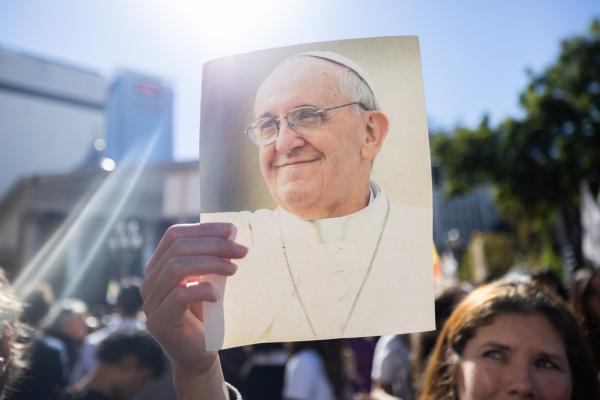
Eulogies are easy. Living his call for justice is not.

 U.S. Cardinal Robert Prevost was elected in a surprise choice to be the new leader of the Catholic Church on Thursday, taking the name Leo XIV, becoming the first American pontiff.

30 April 2025

THE 5TH AMENDMENT OF THE U.S. CONSTITUTION: DUE PROCESS


Amdt5.5.1 Overview of Due Process

Fifth Amendment:

No person shall be held to answer for a capital, or otherwise infamous crime, unless on a presentment or indictment of a Grand Jury, except in cases arising in the land or naval forces, or in the Militia, when in actual service in time of War or public danger; nor shall any person be subject for the same offence to be twice put in jeopardy of life or limb; nor shall be compelled in any criminal case to be a witness against himself, nor be deprived of life, liberty, or property, without due process of law; nor shall private property be taken for public use, without just compensation.

The Fifth Amendment provides that no person shall be deprived of life, liberty, or property, without due process of law.1 Generally, due process guarantees protect individual rights by limiting the exercise of government power.2 The Supreme Court has held that the Fifth Amendment, which applies to federal government action, provides persons with both procedural and substantive due process guarantees. If the federal government seeks to deprive a person of a protected life, liberty, or property interest, the Fifth Amendment’s Due Process Clause requires that the government first provide certain procedural protections.3 Procedural due process often requires the government to provide a person with notice and an opportunity for a hearing before such a deprivation.4 In addition, the Supreme Court has interpreted the Fifth Amendment’s Due Process Clause to include substantive due process guarantees that protect certain fundamental constitutional rights from federal government interference, regardless of the procedures that the government follows when enforcing the law.5 Substantive due process has generally dealt with specific subject areas, such as liberty of contract, marriage, or privacy.

The Fifth Amendment’s Due Process Clause protects all persons within U.S. territory, including corporations,6 aliens,7 and, presumptively, citizens seeking readmission to the United States.8 However, the states are not entitled to due process protections against the federal government.9 The clause is effective in the District of Columbia10 and in territories that are part of the United States,11 but it does not apply of its own force to unincorporated territories.12 Nor does it reach enemy alien belligerents tried by military tribunals outside the territorial jurisdiction of the United States.13 The Clause restrains Congress in addition to the Executive and Judicial Branches and cannot be so construed as to leave Congress free to make any process ‘due process of law’ by enacting legislation to that effect.14

Due process cases may arise under both the Fifth and Fourteenth Amendments. Both amendments use the same language but have a different history.15 The Supreme Court has construed the Fourteenth Amendment’s Due Process Clause to impose the same due process limitations on the states as the Fifth Amendment does on the federal government.16 Fourteenth Amendment due process case law is therefore relevant to the interpretation of the Fifth Amendment. Except for areas in which the federal government is the actor, much of the Constitution Annotated's discussion of due process appears in the Fourteenth Amendment essays.17

Footnotes

  1.  Jump to essay-1U.S. Const. amend. V.
  2.  Jump to essay-2Due ProcessBlack’s Law Dictionary 610 (10th ed. 2014).
  3.  Jump to essay-3See Morrissey v. Brewer408 U.S. 471, 481 (1972) (citing Cafeteria & Restaurant Workers Union v. McElroy367 U.S. 886, 895 (1961)).
  4.  Jump to essay-4Twining v. New Jersey211 U.S. 78, 110 (1908)Jacob v. Roberts223 U.S. 261, 265 (1912).
  5.  Jump to essay-5E.g.Zablocki v. Redhail434 U.S. 374, 386–87 (1978) (citing Loving v. Virginia388 U. S. 1 (1967)).
  6.  Jump to essay-6Sinking Fund Cases99 U.S. 700, 719 (1879).
  7.  Jump to essay-7Wong Wing v. United States163 U.S. 228, 238 (1896).
  8.  Jump to essay-8United States v. Ju Toy198 U.S. 253, 263 (1905)cf. Quon Quon Poy v. Johnson273 U.S. 352 (1927).
  9.  Jump to essay-9South Carolina v. Katzenbach383 U.S. 301, 323–24 (1966).
  10.  Jump to essay-10Wight v. Davidson181 U.S. 371, 384 (1901).
  11.  Jump to essay-11Lovato v. New Mexico242 U.S. 199, 201 (1916).
  12.  Jump to essay-12Pub. Util. Comm’rs v. Ynchausti & Co.251 U.S. 401, 406 (1920).
  13.  Jump to essay-13Johnson v. Eisentrager339 U.S. 763 (1950)In re Yamashita327 U.S. 1 (1946).
  14.  Jump to essay-14Murray’s Lessee v. Hoboken Land & Improvement Co.59 U.S. (18 How.) 272, 276 (1856)See also Massachusetts Supreme Judicial Court Chief Justice Lemuel Shaw’s opinion in Jones v. Robbins74 Mass. (8 Gray) 329 (1857).
  15.  Jump to essay-15French v. Barber Asphalt Paving Co.181 U.S. 324, 328 (1901).
  16.  Jump to essay-16Cf. Arnett v. Kennedy416 U.S. 134 (1974)Heiner v. Donnan285 U.S. 312, 326 (1932) (The restraint imposed upon legislation by the due process clauses of the two amendments is the same.); Morehead v. New York ex rel. Tipaldo298 U.S. 587, 610 (1936).
  17.  Jump to essay-17See Amdt14.S1.3 Due Process Generally.

08 July 2023

ACLU THE DEBRIEF: We're Sharing Your Stories One Year After Dobbs. Read more. →, Federal Court Temporarily Blocks North Carolina Abortion Ban, How We Are Protecting the Right to Vote on the 10th Anniversary of Shelby v. Holder, A Victory for Indigenous Sovereignty, ACLU Win for Trans Youth Health Care in Tennessee, Supreme Court Rules in Favor of Free Speech in First Amendment and Immigration Case, ACLU Reaches Landmark Settlement in L.A. County Jails Case, ACLU Supreme Court Town Hall, Police Should Not Be Allowed to Compel Our Cell Phone Passwords, Protect Native Families 8JUL23


 THE ACLU continues to protect our rights, your rights, my rights, liberal and conservative and all ethnicities and rich and poor and working class rights because as long as we have our rights we will be a democratic Republic. Thank you ACLU! I have been a member and sustaining member for years, please join the ACLU and donate what you can.....


ACLU DEBRIEF

As the attacks on our rights continue in state legislatures across the country and in the Supreme Court, every member of the ACLU – including you – has a critical role to play in the fight to defend and expand constitutional rights for all.

Because of your generous support, ACLU teams are prepared to fight back against recent unjust decisions from the Supreme Court. We're continuing the fight to defend LGBTQ rights, promote racial justice in higher education, and challenge every attack on our fundamental freedoms.

This crucial civil liberties work would not be possible without the extraordinary support from leaders like you. Please read on to learn more about the progress we're making together – and how you can take action to advance these efforts in the weeks and months to come.

We're Sharing Your Stories One Year After Dobbs. Read more. 

We're Sharing Your Stories One Year After Dobbs
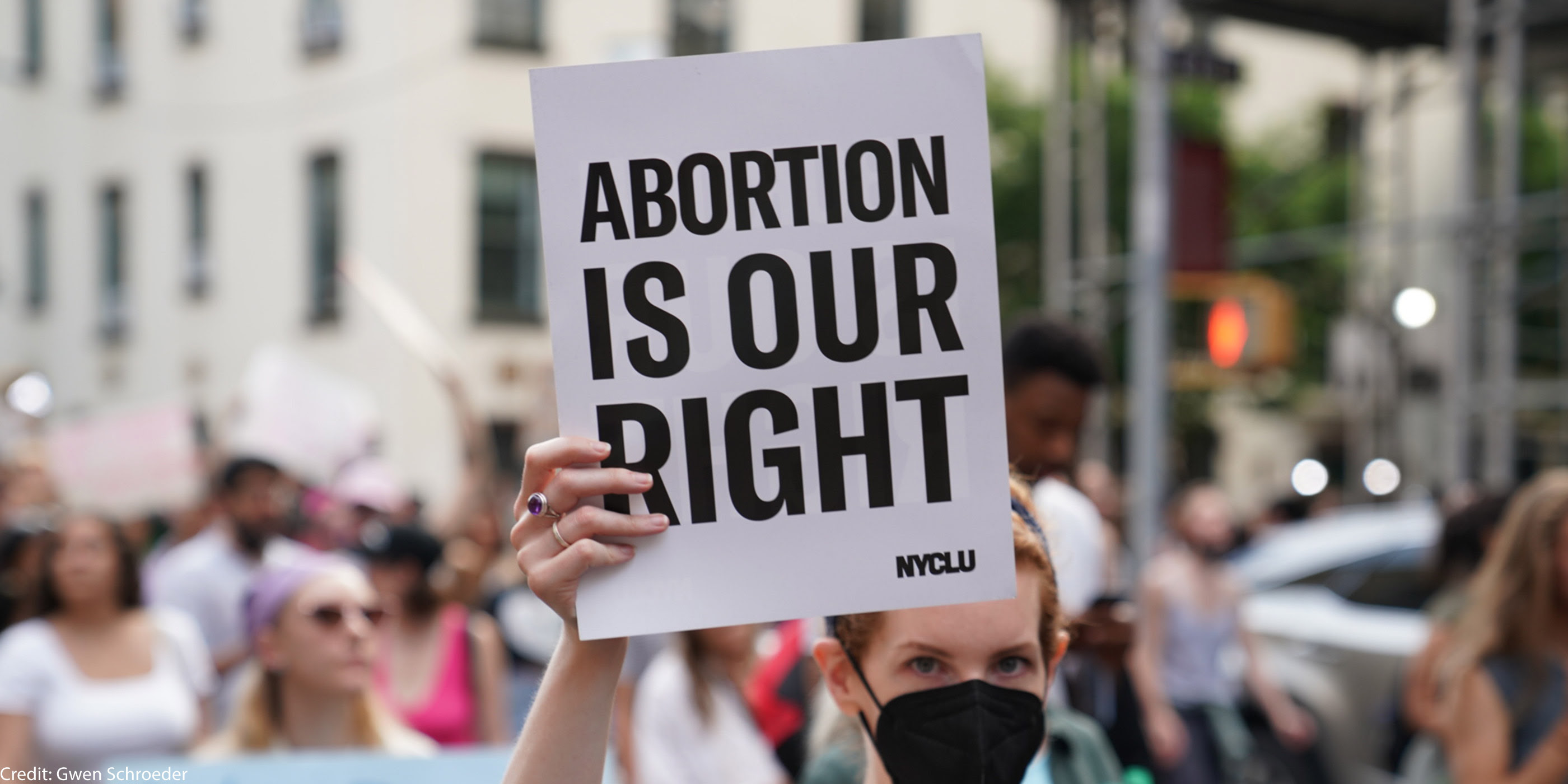
Federal Court Temporarily Blocks North Carolina Abortion Ban
 

North Carolina's governor recently signed a bill into law to ban abortion after 12 weeks, stripping away the right to reproductive choice for millions of people living in the state and nearby areas where abortion is already banned. In response, the ACLU filed a lawsuit against North Carolina on behalf of Planned Parenthood and health care providers, and a judge temporarily blocked the law from going into effect.

FROM THE FRONT LINES
 
Protecting the Right to Vote
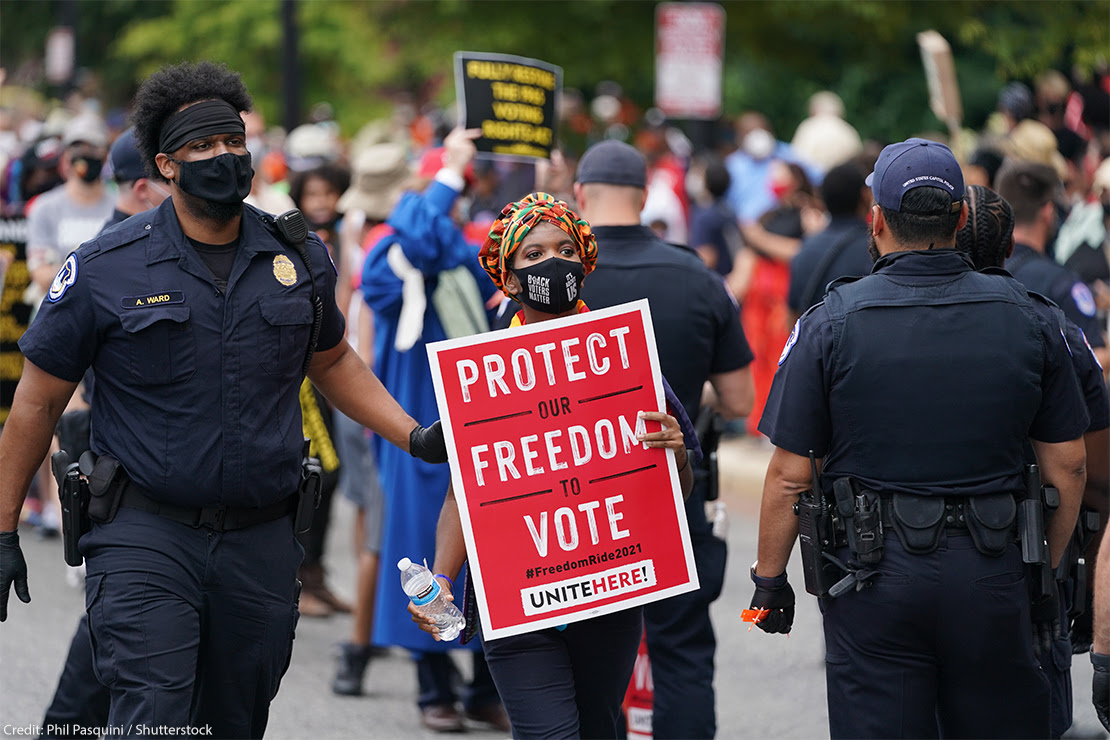
How We Are Protecting the Right to Vote on the 10th Anniversary of Shelby v. Holder
 

Ten years ago, the Supreme Court struck down key provisions of the Voting Rights Act of 1965 (VRA), which had successfully protected Black, brown, Indigenous, and other marginalized voters for decades. The ruling unleashed a torrent of voter suppression laws, which have recently intensified. With another election on the horizon, we just launched the Democracy Defender program to fight back.


Trans Youth Health Care in Tennessee
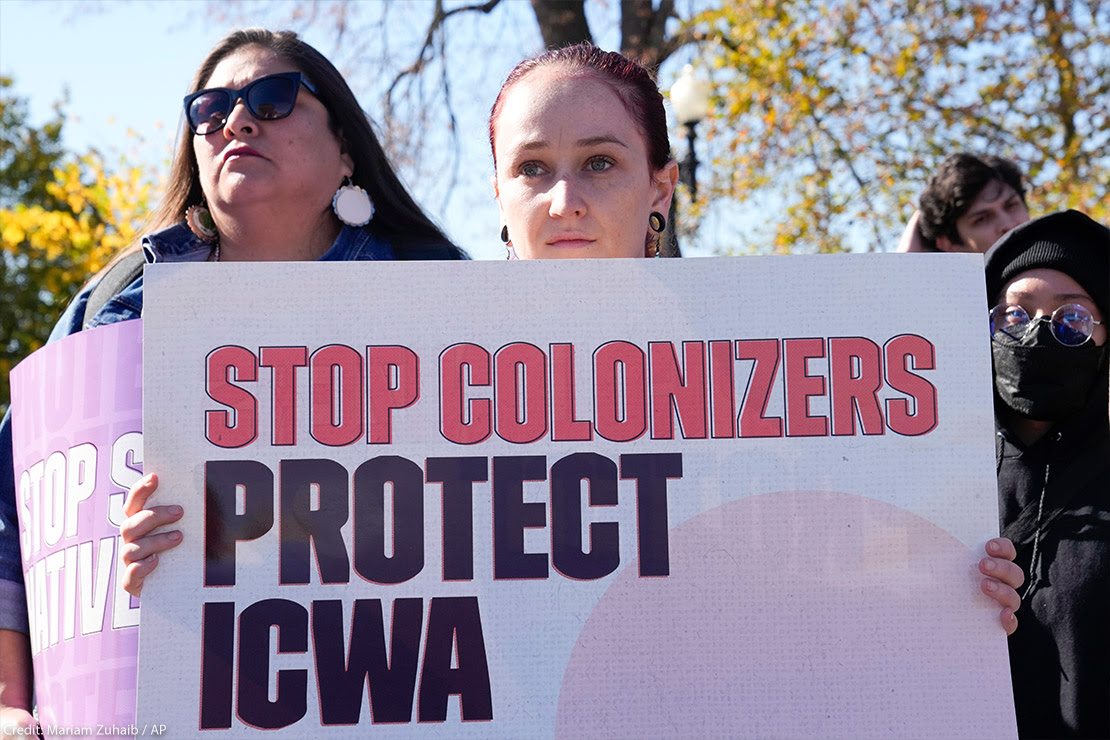
A Victory for Indigenous Sovereignty
 

The U.S. has a long, shameful history of using child welfare agencies to rip Native children from their families and place them in non-Native homes, in an effort to force these children to adopt white cultural norms. The Indian Child Welfare Act (ICWA) was passed to put an end to this extremely harmful practice, and the Supreme Court just rejected all constitutional challenges to the law in a landmark case. Now we must convince states to pass laws that build on federal protections.


ACLU Win for Trans Youth Health Care in Tennessee
 

The ACLU and the ACLU of Tennessee filed a lawsuit against a case that bans best practice medical care for trans youth. In a victory for trans youth, their families, and health care providers, a federal judge has blocked enforcement of the law while the case proceeds in court.


Supreme Court Rules in Favor of Free Speech in First Amendment and Immigration Case
 

In an ACLU case concerning free speech and immigrant rights, the Supreme Court ruled that the government cannot criminalize speech that merely encourages a noncitizen to enter or stay in the U.S. unlawfully. It can only do so where the defendant intentionally solicits or aids and abets specific unlawful acts.


ACLU Reaches Landmark Settlement in L.A. County Jails Case
 

The ACLU recently reached an extraordinary agreement with L.A. County Jails that will ultimately reduce the number of people coming to jail through a number of measures, including mental health support. This is a watershed moment: It's the first time a jurisdiction has agreed the cornerstone to addressing abysmal jail conditions and overcrowding is to reduce the number of people coming to jail in the first place.

TUNE IN
 
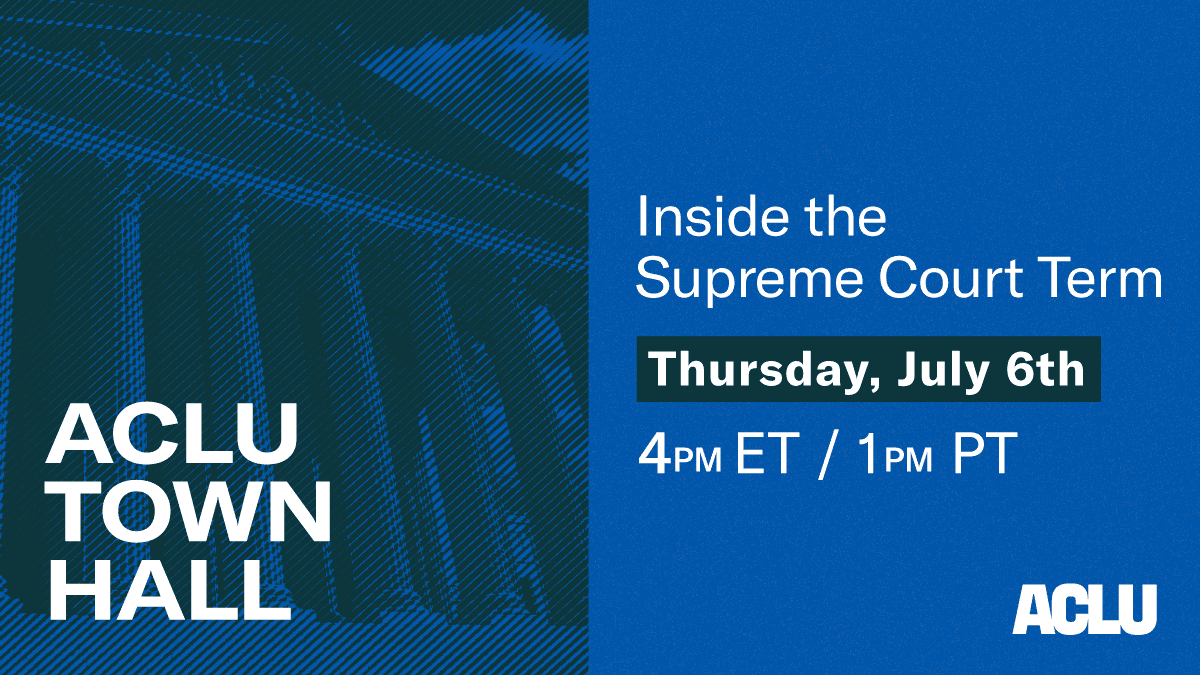
ACLU Supreme Court Town Hall
 

The Supreme Court ended its latest term with decisions that will have a profound impact on our civil liberties – from voting rights and Indigenous Justice to LGBT equality and equal opportunities in higher education. Last Thursday, we held a town hall to have ACLU experts break down what these decisions mean for civil liberties, how they impact our litigation and advocacy work, and what you can to do to help. You can watch the town hall here.

Please note: This link will take you to a third-party website, youtube.com.

WHAT'S NEXT
 
Cell Phone Passwords
Police Should Not Be Allowed to Compel Our Cell Phone Passwords

Our cell phones and other digital devices play a central role in our private lives, storing an unprecedented amount of our most personal information, but courts have issued mixed rulings on cell phone privacy in the digital age. Last month, in a loss for our privacy, the Illinois Supreme Court ruled that the Fifth Amendment does not prevent the state from asking a criminal defendant for access to their cell phone.

TAKE ACTION
 
Take Action
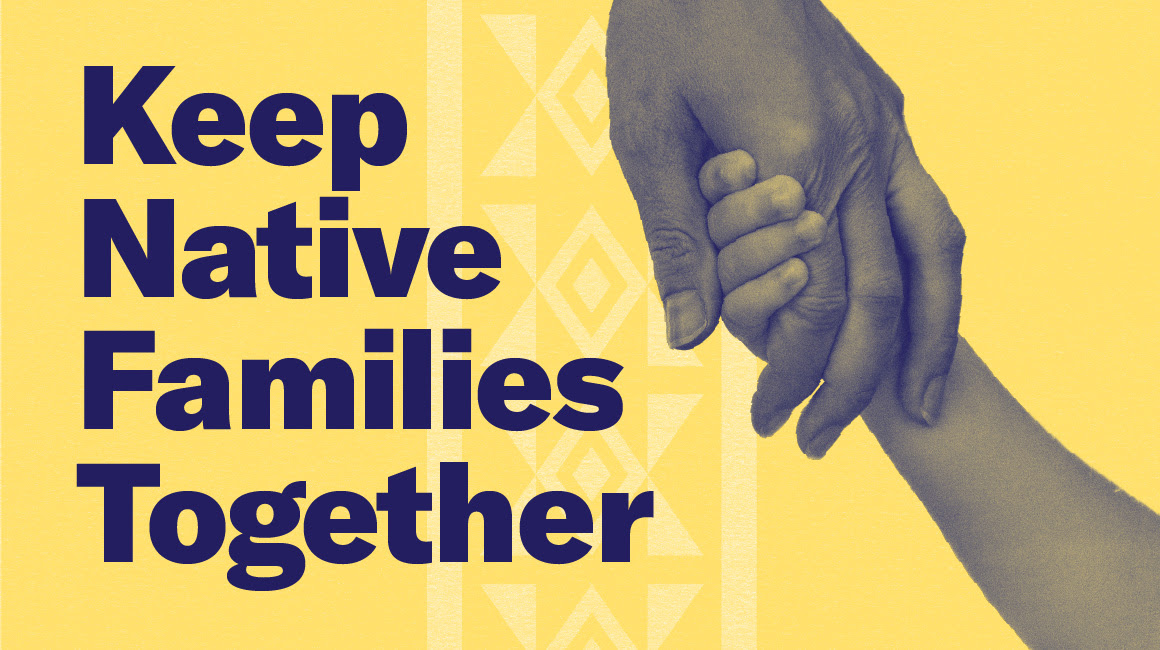
Protect Native Families

Throughout history, federal and state governments have sought to undermine and threaten the existence of tribes through the forced separation and assimilation of Native children. The Supreme Court just upheld a law that keeps Native families together – but now, we need states across the country to build on these federal protections.

DONATE NOW
Facebook     Twitter     Instagram

You are receiving this message because you signed up for emails from the American Civil Liberties Union.

We respect your right to privacy – view our policy.

This email was sent by:
American Civil Liberties Union
125 Broad Street, 18th Floor
New York, NY 10004, USA