| Government demolishes statue in the centre of Manama where anti-government movement has gathered. | ||||
The concrete statue of six dhow sails holding up a pearl was demolished using drills and diggers on Friday.
Bahrain has arrested seven opposition leaders after weeks of protests that saw martial law being declared and troops from Saudi Arabia entering the tiny kingdom. Weeks of protests – sometimes in violent clashes with security forces – by the Shia majority slid into sectarian violence and crippled the economy. On Friday Sheikh Khaled bin Ahmed al-Khalifa, Bahrain's foreign minister, said the demolition of the statue was an effort to erase "bad memories". He reiterated Bahrain's commitment to talks with the opposition but said security was a priority, and that three or four Gulf states were sending troops and will remain in the city until order is restored. Speaking to reporters in Manama, Sheikh Khaled said their role will be limited to guarding strategic assets such as oil facilities, and they will not be involved in quelling protests. Limited role "We look with all confidence to the return of normal life in Bahrain," he said. "We know dialogue is our path." Denying there was any "systematic violence against the people" Sheikh Khaled said the royals had done their utmost to push for dialogue, allowing protests and offering assurances, but the opposition had rejected talks and started blocking main streets, while civilians began to clash daily. "In volatile situations you do expect violence to happen but there is no systematic violence against the people," he added.
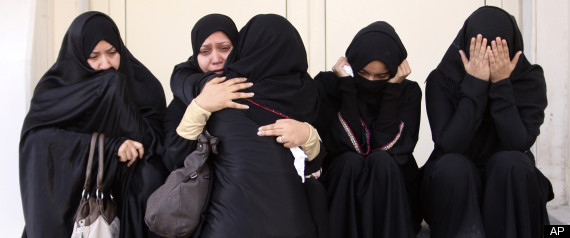
Thousands of angry mourners buried an activist killed in a crackdown that has angered Iran and raised tension in the world's largest oil-exporting region. Sheikh Issa Qassim, Bahrain's most influential Shia cleric, said during Friday sermon that Gulf troops would have been better off helping Palestinians in Gaza than entering Bahrain. "The violence of the authorities has created a deep, wide and dangerous wound between the government and people," he said. "The government wants to break our will so we give up our calls for substantial and meaningful reforms, but they will never break our will. They can use tanks and planes to smash our bodies but will never break our souls and our will for reforms." Psychological victory The statue that was demolished comprised six sails symbolising each of the six members of the Gulf Cooperation Council, holding up a pearl, symbol of the pearl fishing heritage that was the economic mainstay of the region before the discovery of oil. "It is a kind of psychological victory for the protesters," said Hussein Oraibi, who works in telecommunications. "It upset them so much that people were gathering there, they had to go out of their way to pull this down and change the traffic directions." Al Jazeera's correspondent in Bahrain, speaking anonymously for safety reasons, said the monument "was the centre of the protests for a month; it was seen as being symbolic of anti-government sentiment. "It seems rather strange that by removing it there is the thought that that symbolism will disappear ... [The destruction] is very symbolic of that final stage in the last couple of days of this huge great crackdown on the opposition." More than 60 per cent of Bahrainis are Shia, and most are campaigning for a constitutional monarchy. But calls by hardliners for the overthrow of the monarchy have alarmed Sunnis, who fear the unrest serves Iran, separated from Saudi Arabia and Bahrain by only a short stretch of Gulf waters. Shia Muslim power Iran, which supports Shia groups in Iraq and Lebanon, complained to the United Nations and asked other neighbours to join it in urging Saudi Arabia to withdraw from Bahrain. In a sign of rising tension, Bahrain condemned Iran for what it says is interference in the country's internal affairs. |

BUCKNACKT'S SORDID TAWDRY BLOG We should not be a journey to the grave with the intention of arriving safely in an attractive & well preserved body, but rather to skid in sideways, chocolate, bier or wein in hand, body thoroughly used up, totally worn out and screaming "WHOO-HOO, WHAT A RIDE!!!!!!"
Showing posts with label Pearl Sq. Show all posts
Showing posts with label Pearl Sq. Show all posts
19 March 2011
Bahrain tears down protest symbol 18MAR11
IT is unfortunate the government in Bahrain has decided it is better to kill protesters calling for reform and the creation of a constitutional monarchy, freedom and democracy than to actually meet the majorities demands, set a date for parliamentary elections and adopt the Declaration of Human Rights in to the Bahrain constitution. This from Al Jazeera, click the header to go to their blog for updates in Bahrain.


17 February 2011
Bahrain Protests: Police Storm Protest, Army Controls 'Key Parts' Of City 17FEB11
THE people of Bahrain have had enough, and like others in the Gulf region, the people of Yemen, the people of the Maghreb, their non-violent protest for freedom and democracy are being met with brutality and violence by the governments in power. We can only hope and pray the people are as successful as their sisters and brothers in Tunisia and Egypt were. This from the Huffington Post....

MANAMA, Bahrain — Army patrols and tanks locked down the capital of this tiny Gulf kingdom after riot police swinging clubs and firing tear gas smashed into demonstrators, many of them sleeping, in a pre-dawn assault Thursday that uprooted their protest camp demanding political change. Medical officials said four people were killed. (Scroll down for latest updates.)
Hours after the attack on Manama's main Pearl Square, the military announced on state TV that it had "key parts" of the capital under its control and that gatherings were banned.
The developments marked a major crackdown by the island nation's rulers to put an end to days of protests inspired by Egypt's revolt against Hosni Mubarak. Tiny Bahrain is a pillar of Washington's military framework in the region. It hosts the U.S. Navy's 5th Fleet, which is a critical counterbalance to Iran's efforts to expand its clout in the region.
The capital Manama was effectively shut down Thursday. For the first time, tanks and military checkpoints were deployed in the streets and army patrols circulated. The Interior Ministry warned Bahrainis to stay off the streets. Banks and other key institutions did not open, and workers stayed home, unable or to afraid to pass through checkpoints to get to their jobs.
Barbed wire and police cars with flashing blue lights encircled Pearl Square, the site of anti-government rallies since Monday. Police cleaned up flattened protest tents and trampled banners inside the square, littered with broken glass, tear gas canisters and debris. A body covered in a white sheet lay in a pool of blood on the side of a road about 20 yards (meters) from the landmark square.
Demonstrators had been camping out for days around the square's 300-foot (90-meter) monument featuring a giant pearl, making it the nerve center of the first anti-government protests to reach the Arab Gulf since the uprisings in Tunisia and Egypt.
The protesters' demands have two main objectives: force the ruling Sunni monarchy to give up its control over top government posts and all critical decisions, and address deep grievances held by the country's majority Shiites who claim they face systematic discrimination and are effectively blocked from key roles in public service and the military.
But among Bahrain's rulers, the prospect of a prolonged crisis raised fears of a potential flashpoint between Iran and its Arab rivals in the Gulf. Bahrain's ruling Sunni dynasty is closely allied to Saudi Arabia and the other Arab regimes in the Gulf. Shiite hard-liners in Iran have often expressed kinship and support for Bahrain's Shiite majority, which accounts for 70 percent of the island's 500,000 citizens.
The police assault came early Thursday with little warning. Mahmoud Mansouri, a protester, said police surrounded the camp and then quickly moved in.
"We yelled, 'We are peaceful! Peaceful!' The women and children were attacked just like the rest of us," he said. "They moved in as soon as the media left us. They knew what they're doing."
MANAMA, Bahrain — Army patrols and tanks locked down the capital of this tiny Gulf kingdom after riot police swinging clubs and firing tear gas smashed into demonstrators, many of them sleeping, in a pre-dawn assault Thursday that uprooted their protest camp demanding political change. Medical officials said four people were killed. (Scroll down for latest updates.)
Hours after the attack on Manama's main Pearl Square, the military announced on state TV that it had "key parts" of the capital under its control and that gatherings were banned.
The developments marked a major crackdown by the island nation's rulers to put an end to days of protests inspired by Egypt's revolt against Hosni Mubarak. Tiny Bahrain is a pillar of Washington's military framework in the region. It hosts the U.S. Navy's 5th Fleet, which is a critical counterbalance to Iran's efforts to expand its clout in the region.
The capital Manama was effectively shut down Thursday. For the first time, tanks and military checkpoints were deployed in the streets and army patrols circulated. The Interior Ministry warned Bahrainis to stay off the streets. Banks and other key institutions did not open, and workers stayed home, unable or to afraid to pass through checkpoints to get to their jobs.
Barbed wire and police cars with flashing blue lights encircled Pearl Square, the site of anti-government rallies since Monday. Police cleaned up flattened protest tents and trampled banners inside the square, littered with broken glass, tear gas canisters and debris. A body covered in a white sheet lay in a pool of blood on the side of a road about 20 yards (meters) from the landmark square.
Demonstrators had been camping out for days around the square's 300-foot (90-meter) monument featuring a giant pearl, making it the nerve center of the first anti-government protests to reach the Arab Gulf since the uprisings in Tunisia and Egypt.
The protesters' demands have two main objectives: force the ruling Sunni monarchy to give up its control over top government posts and all critical decisions, and address deep grievances held by the country's majority Shiites who claim they face systematic discrimination and are effectively blocked from key roles in public service and the military.
But among Bahrain's rulers, the prospect of a prolonged crisis raised fears of a potential flashpoint between Iran and its Arab rivals in the Gulf. Bahrain's ruling Sunni dynasty is closely allied to Saudi Arabia and the other Arab regimes in the Gulf. Shiite hard-liners in Iran have often expressed kinship and support for Bahrain's Shiite majority, which accounts for 70 percent of the island's 500,000 citizens.
The police assault came early Thursday with little warning. Mahmoud Mansouri, a protester, said police surrounded the camp and then quickly moved in.
"We yelled, 'We are peaceful! Peaceful!' The women and children were attacked just like the rest of us," he said. "They moved in as soon as the media left us. They knew what they're doing."
Subscribe to:
Posts (Atom)