NORTON META TAG

Showing posts with label I Have A Dream speech. Show all posts

19 January 2016

The woman who inspired Martin Luther King's “I Have a Dream” speech 18JAN16 & I've Been Buked and I've Been Scorned- Mahalia Jackson & I HAVE A DREAM... MARTIN LUTHER KING - August 28, 1963 & "How I Got Over" - Mahalia Jackson 28AUG1963


IT may be a day late, but I can't think of a better way to recognize the importance of MLK Day than to share this video of great Mahalia Jackson singing "I've Been Buked and I've Been Scorned" before Dr King's I Have A Dream speech and "How I Got Over" after at the 28 August 1963 March On Washington. We're still trying to fulfill your dream, our dream, Dr King, and we keep on keepin' on through the faith Sister Jackson proclaims so beautifully in song......
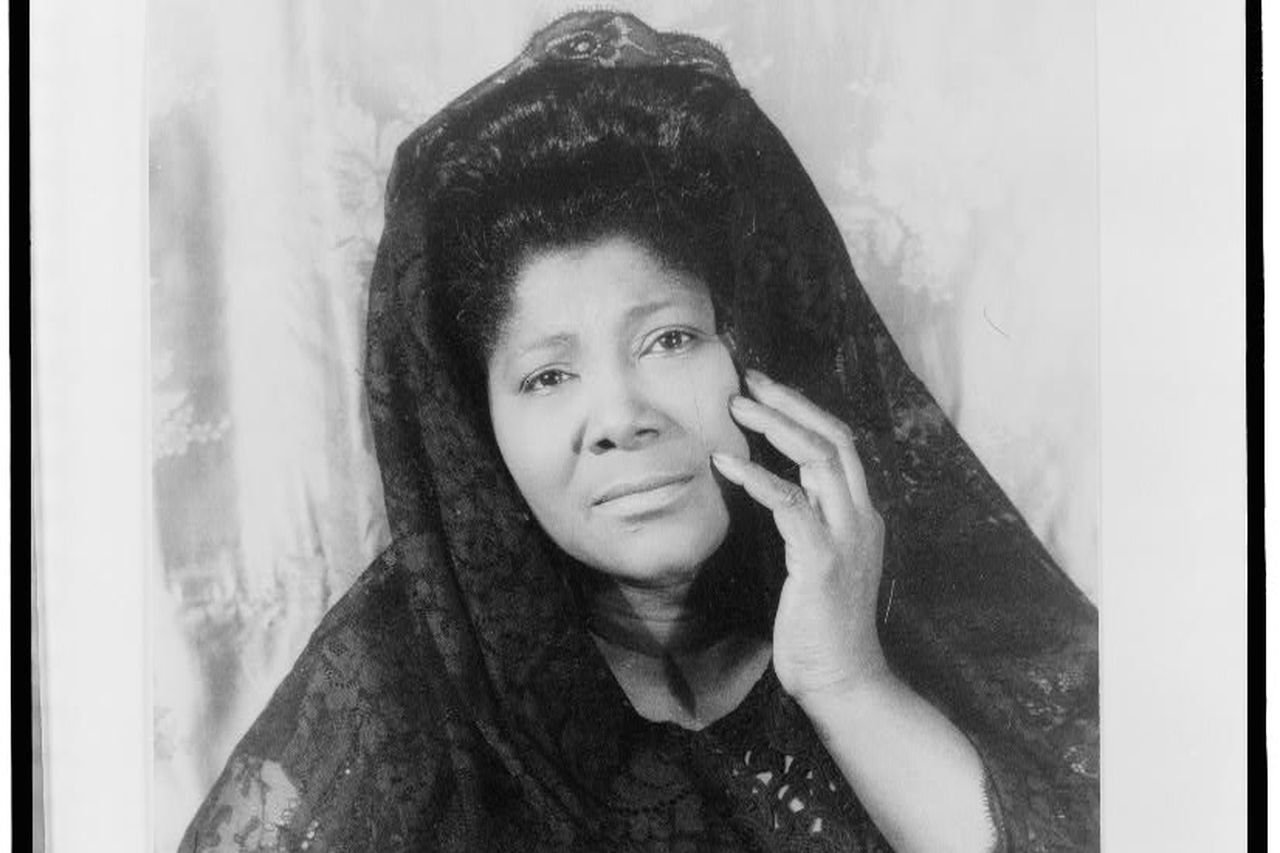
The woman who inspired Martin Luther King's “I Have a Dream” speech

Mahalia Jackson. Wikimedia Commons
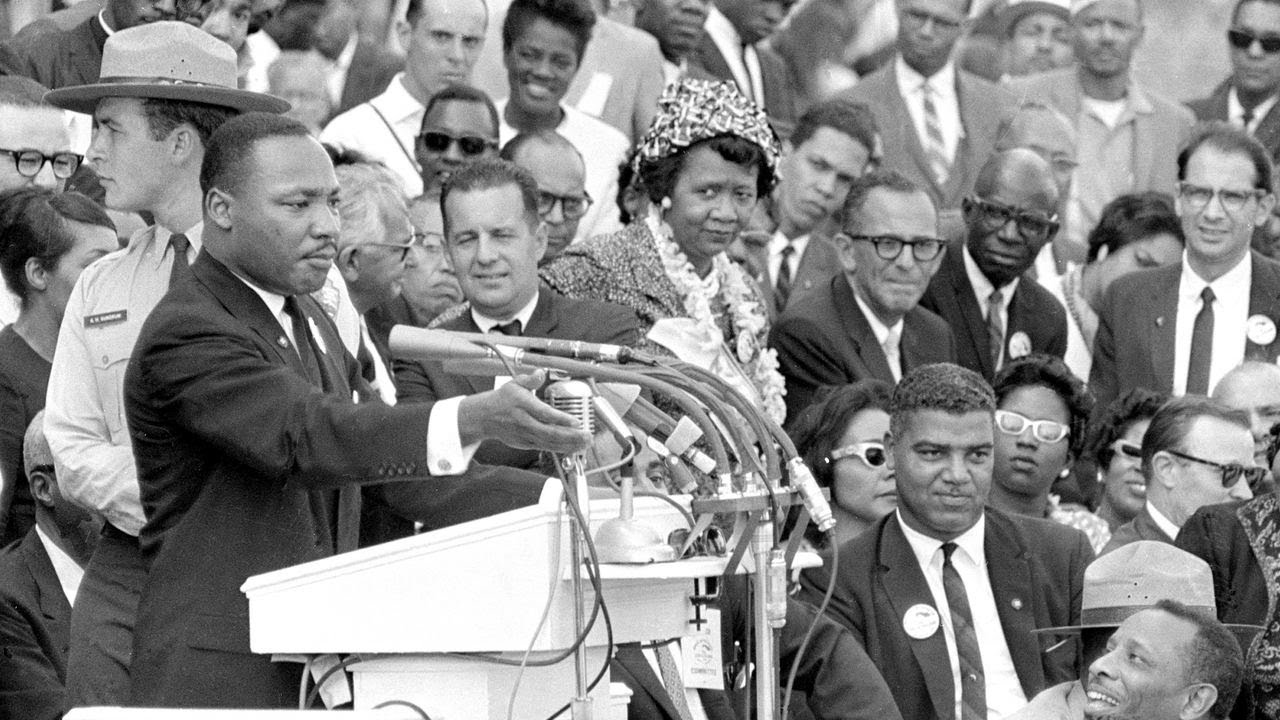
Without Mahalia Jackson, Martin Luther King Jr.'s famous "I Have a Dream" speech might never have happened.
Jackson, known as the Queen of Gospel, was a musical legend who helped bring gospel from church to mass audiences. She mentored Aretha Franklin and Della Reese, and in 1961 was the first gospel singer to win a Grammy. She was also instrumental to the civil rights movement, especially as a good friend of King's.
Shortly after meeting King at the National Baptist Convention in 1956, Jackson agreed to sing at a fundraising rally for the Montgomery bus boycott. After that, she frequently accompanied King to perform at rallies and events. Her voice became "the soundtrack of the civil rights movement," as NPR's Sonari Glinton put it.
Jackson was devoted to King, and accompanied him into the most hostile parts of the segregated South for rallies and demonstrations. Even in moments when King felt discouraged, he would call Jackson on the phone just to hear her sing.
This bond of mutual inspiration and respect between King and Jackson came at a pivotal moment during the 1963 March on Washington.
King had struggled with his speech, which was supposed to be kept to five minutes. His advisers argued over which themes he should include. King himself was torn between two metaphors he liked, figuring he only had time for one.
There was the image of a "bad check," representing America's failure to deliver on her promises of freedom to her black citizens. And then there was the idea of King's "dream" for a nation undivided by racial tensions, which he had used in speeches throughout the previous year in cities like Detroit and Birmingham, Alabama. Check out the Detroit version of the speech here — it has a lot in common with the much more famous March on Washington version, but the rhetoric is a bit less soaring and the grievances a bit more specific.
King originally thought the speech should be lower-key, since he was speaking to a broad audience about controversial themes. So the "bad check" image won out — at least in the original printed version of the speech, which doesn't even mention the word "dream." (Can you imagine generations of schoolchildren being taught about MLK's "Insufficient Funds" speech?)
But during delivery, King started improvising a bit when he reached a sentence that felt clunky. Instead of calling on the crowd to "go back to our communities as members of the international association for the advancement of creative dissatisfaction," he went with: "Go back to Mississippi; go back to Alabama; go back to South Carolina; go back to Georgia; go back to Louisiana; go back to the slums and ghettos of our Northern cities, knowing that somehow this situation can and will be changed."
It was at that moment, says King's adviser Clarence Jones, that Mahalia Jackson cried out: "Tell them about the dream, Martin! Tell them about the dream!"
It was, Jones said, "one of the world’s greatest gospel singers shouting out to one of the world’s greatest Baptist preachers." Jones, who was standing about 50 feet away from King during the speech, recalled that King looked over at Jackson briefly after she shouted. "Then he takes the text of the written speech that's been prepared, and he slides it to the left side of the lectern, grabs the lectern, looks out on more than 250,000 people there assembled." Jones remembers turning to the person next to him and saying, "These people out there, they don’t know it, but they’re about ready to go to church."
Then King started speaking completely off the cuff. That ad-lib became "I Have a Dream."
Jones isn't sure, but he thinks Jackson must have heard one of King's earlier versions of the "dream" speech, and that she knew the moment called for it. Jones said when Jackson called out to King it was like a "mandate to respond," and King's body language transformed from lecturer to preacher. "I have never seen him speak the way I saw him on that day," Jones said. "It was as if some cosmic transcendental force came down and occupied his body. It was the same body, the same voice, but the voice had something I had never heard before."
It's no wonder Jackson was King's favorite gospel singer, and that he would be so inspired by her at just the right time. Here's Jackson singing "I Been 'Buked and I Been Scorned" at the March on Washington right before King spoke. She would have had her place in civil rights history with this performance even without what came next.

I've Been Buked and I've Been Scorned- Mahalia Jackson


Published on Apr 26, 2015
Mahalia Jackson, March on Washington, August 28, 1963.
ALL RIGHTS TO CBS.

For more on other amazing women entertainers and activists who shaped the March on Washington and the civil rights movement, check out this great slideshow from the Root.

Next Up in Identities


I HAVE A DREAM... MARTIN LUTHER KING - August 28, 1963


I am happy to join with you today in what will go down in history as the greatest demonstration for freedom in the history of our nation. [Applause]

Five score years ago, a great American, in whose symbolic shadow we stand signed the Emancipation Proclamation. This momentous decree came as a great beacon light of hope to millions of Negro slaves who had been seared in the flames of withering injustice. It came as a joyous daybreak to end the long night of captivity.

But one hundred years later, we must face the tragic fact that the Negro is still not free. One hundred years later, the life of the Negro is still sadly crippled by the manacles of segregation and the chains of discrimination. One hundred years later, the Negro lives on a lonely island of poverty in the midst of a vast ocean of material prosperity. One hundred years later, the Negro is still languishing in the corners of American society and finds himself an exile in his own land. So we have come here today to dramatize an appalling condition.

In a sense we have come to our nation's capital to cash a check. When the architects of our republic wrote the magnificent words of the Constitution and the declaration of Independence, they were signing a promissory note to which every American was to fall heir. This note was a promise that all men would be guaranteed the inalienable rights of life, liberty, and the pursuit of happiness.

It is obvious today that America has defaulted on this promissory note insofar as her citizens of color are concerned. Instead of honoring this sacred obligation, America has given the Negro people a bad check which has come back marked "insufficient funds." But we refuse to believe that the bank of justice is bankrupt. We refuse to believe that there are insufficient funds in the great vaults of opportunity of this nation. So we have come to cash this check -- a check that will give us upon demand the riches of freedom and the security of justice. We have also come to this hallowed spot to remind America of the fierce urgency of now. This is no time to engage in the luxury of cooling off or to take the tranquilizing drug of gradualism. Now is the time to rise from the dark and desolate valley of segregation to the sunlit path of racial justice. Now is the time to open the doors of opportunity to all of God's children. Now is the time to lift our nation from the quicksands of racial injustice to the solid rock of brotherhood.

It would be fatal for the nation to overlook the urgency of the moment and to underestimate the determination of the Negro. This sweltering summer of the Negro's legitimate discontent will not pass until there is an invigorating autumn of freedom and equality. Nineteen sixty-three is not an end, but a beginning. Those who hope that the Negro needed to blow off steam and will now be content will have a rude awakening if the nation returns to business as usual. There will be neither rest nor tranquility in America until the Negro is granted his citizenship rights. The whirlwinds of revolt will continue to shake the foundations of our nation until the bright day of justice emerges.

But there is something that I must say to my people who stand on the warm threshold which leads into the palace of justice. In the process of gaining our rightful place we must not be guilty of wrongful deeds. Let us not seek to satisfy our thirst for freedom by drinking from the cup of bitterness and hatred.

We must forever conduct our struggle on the high plane of dignity and discipline. We must not allow our creative protest to degenerate into physical violence. Again and again we must rise to the majestic heights of meeting physical force with soul force. The marvelous new militancy which has engulfed the Negro community must not lead us to distrust of all white people, for many of our white brothers, as evidenced by their presence here today, have come to realize that their destiny is tied up with our destiny and their freedom is inextricably bound to our freedom. We cannot walk alone.

And as we walk, we must make the pledge that we shall march ahead. We cannot turn back. There are those who are asking the devotees of civil rights, "When will you be satisfied?" We can never be satisfied as long as our bodies, heavy with the fatigue of travel, cannot gain lodging in the motels of the highways and the hotels of the cities. We cannot be satisfied as long as the Negro's basic mobility is from a smaller ghetto to a larger one. We can never be satisfied as long as a Negro in Mississippi cannot vote and a Negro in New York believes he has nothing for which to vote. No, no, we are not satisfied, and we will not be satisfied until justice rolls down like waters and righteousness like a mighty stream.

I am not unmindful that some of you have come here out of great trials and tribulations. Some of you have come fresh from narrow cells. Some of you have come from areas where your quest for freedom left you battered by the storms of persecution and staggered by the winds of police brutality. You have been the veterans of creative suffering. Continue to work with the faith that unearned suffering is redemptive.

Go back to Mississippi, go back to Alabama, go back to Georgia, go back to Louisiana, go back to the slums and ghettos of our northern cities, knowing that somehow this situation can and will be changed. Let us not wallow in the valley of despair.

I say to you today, my friends, that in spite of the difficulties and frustrations of the moment, I still have a dream. It is a dream deeply rooted in the American dream.

I have a dream that one day this nation will rise up and live out the true meaning of its creed: "We hold these truths to be self-evident: that all men are created equal."

I have a dream that one day on the red hills of Georgia the sons of former slaves and the sons of former slave owners will be able to sit down together at a table of brotherhood.

I have a dream that one day even the state of Mississippi, a desert state, sweltering with the heat of injustice and oppression, will be transformed into an oasis of freedom and justice.

I have a dream that my four children will one day live in a nation where they will not be judged by the color of their skin but by the content of their character.

I have a dream today.

I have a dream that one day the state of Alabama, whose governor's lips are presently dripping with the words of interposition and nullification, will be transformed into a situation where little black boys and black girls will be able to join hands with little white boys and white girls and walk together as sisters and brothers.

I have a dream today.

I have a dream that one day every valley shall be exalted, every hill and mountain shall be made low, the rough places will be made plain, and the crooked places will be made straight, and the glory of the Lord shall be revealed, and all flesh shall see it together.

This is our hope. This is the faith with which I return to the South. With this faith we will be able to hew out of the mountain of despair a stone of hope. With this faith we will be able to transform the jangling discords of our nation into a beautiful symphony of brotherhood. With this faith we will be able to work together, to pray together, to struggle together, to go to jail together, to stand up for freedom together, knowing that we will be free one day.

This will be the day when all of God's children will be able to sing with a new meaning, "My country, 'tis of thee, sweet land of liberty, of thee I sing. Land where my fathers died, land of the pilgrim's pride, from every mountainside, let freedom ring."

And if America is to be a great nation this must become true. So let freedom ring from the prodigious hilltops of New Hampshire. Let freedom ring from the mighty mountains of New York. Let freedom ring from the heightening Alleghenies of Pennsylvania!

Let freedom ring from the snowcapped Rockies of Colorado!

Let freedom ring from the curvaceous peaks of California!

But not only that; let freedom ring from Stone Mountain of Georgia!

Let freedom ring from Lookout Mountain of Tennessee!

Let freedom ring from every hill and every molehill of Mississippi. From every mountainside, let freedom ring.

When we let freedom ring, when we let it ring from every village and every hamlet, from every state and every city, we will be able to speed up that day when all of God's children, black men and white men, Jews and Gentiles, Protestants and Catholics, will be able to join hands and sing in the words of the old Negro spiritual, "Free at last! free at last! thank God Almighty, we are free at last!"

"How I Got Over" - Mahalia Jackson


Uploaded on Aug 16, 2008
*DISCLAIMER- I don't own the rights to this video. This is just a fan post, sharing history with all who want to learn*
Recorded during the historic 1963 March On Washington. Mahalia sings "How I Got Over" after Rev. Dr. Martin Luther King, Jr. finished delivering his famous "I Have A Dream" speech.

17 January 2011

I HAVE A DREAM SPEECH

REV MARTIN LUTHER KING JR would have been 82 years old today had he not been assassinated, taken from us much too early in his life. I love watching this speech, hearing him speak these words. I get goosebumps hearing this speech, I get them even reading it, as I do a least once a year. So here it is for all of us, great words from a great man to a great nation meant to make us even greater.....and we need to hear these words, and words like these, more and more in these times.....Thank you Rev King!


"I Have a Dream"

I am happy to join with you today in what will go down in history as
the greatest demonstration for freedom in the history of our nation.

Five score years ago, a great American, in whose symbolic shadow
we stand today, signed the Emancipation Proclamation. This momentous
decree came as a great beacon light of hope to millions of Negro slaves
who had been seared in the flames of withering injustice. It came as a
joyous daybreak to end the long night of their captivity.

But 100 years later, the Negro still is not free. One hundred years
later, the life of the Negro is still sadly crippled by the manacles of
segregation and the chains of discrimination. One hundred years later, the
Negro lives on a lonely island of poverty in the midst of a vast ocean of
material prosperity. One hundred years later, the Negro is still languished
in the corners of American society and finds himself an exile in his own
land. And so we've come here today to dramatize a shameful condition.

In a sense we've come to our nation's capital to cash a check. When
the architects of our republic wrote the magnificent words of the
Constitution and the Declaration of Independence, they were signing a
promissory note to which every American was to fall heir. This note was a
promise that all men - yes, black men as well as white men - would be
guaranteed the unalienable rights of life, liberty, and the pursuit of
happiness.

It is obvious today that America has defaulted on this promissory note
insofar as her citizens of color are concerned. Instead of honoring this
sacred obligation, America has given the Negro people a bad check, a
check that has come back marked "insufficient funds."

But we refuse to believe that the bank of justice is bankrupt. We
refuse to believe that there are insufficient funds in the great vaults of
opportunity of this nation. And so we've come to cash this check, a check
that will give us upon demand the riches of freedom and security of justice.
We have also come to his hallowed spot to remind America of the fierce
urgency of now. This is no time to engage in the luxury of cooling off or to
take the tranquilizing drug of gradualism. Now is the time to make real the
promises of democracy. Now is the time to rise from the dark and
desolate valley of segregation to the sunlit path of racial justice. Now is the
time to lift our nation from the quicksands of racial injustice to the solid
rock of brotherhood. Now is the time to make justice a reality for all of
God's children.

It would be fatal for the nation to overlook the urgency of the moment.
This sweltering summer of the Negro's legitimate discontent will not pass
until there is an invigorating autumn of freedom and equality. Nineteen
sixty-three is not an end but a beginning. Those who hoped that the Negro
needed to blow off steam and will now be content will have a rude
awakening if the nation returns to business as usual. There will be neither
rest nor tranquility in America until the Negro is granted his citizenship
rights. The whirlwinds of revolt will continue to shake the foundations of
our nation until the bright day of justice emerges.

But there is something that I must say to my people who stand on the
warm threshold which leads into the palace of justice. In the process of
gaining our rightful place we must not be guilty of wrongful deeds. Let us
not seek to satisfy our thirst for freedom by drinking from the cup of
bitterness and hatred. We must forever conduct our struggle on the high
plane of dignity and discipline. We must not allow our creative protest to
degenerate into physical violence. Again and again we must rise to the
majestic heights of meeting physical force with soul force. The marvelous
new militancy which has engulfed the Negro community must not lead us to
a distrust of all white people, for many of our white brothers, as evidenced
by their presence here today, have come to realize that their destiny is tied
up with our destiny. And they have come to realize that their freedom is
inextricably bound to our freedom. We cannot walk alone.

And as we walk, we must make the pledge that we shall always
march ahead. We cannot turn back. There are those who are asking the
devotees of civil rights, "When will you be satisfied?" We can never be
satisfied as long as the Negro is the victim of the unspeakable horrors of
police brutality. We can never be satisfied as long as our bodies, heavy
with the fatigue of travel, cannot gain lodging in the motels of the highways
and the hotels of the cities. We cannot be satisfied as long as the Negro's
basic mobility is from a smaller ghetto to a larger one. We can never be
satisfied as long as our children are stripped of their selfhood and robbed
of their dignity by signs stating "for whites only." We cannot be satisfied as
long as a Negro in Mississippi cannot vote and a Negro in New York
believes he has nothing for which to vote. No, no we are not satisfied and
we will not be satisfied until justice rolls down like waters and
righteousness like a mighty stream.

I am not unmindful that some of you have come here out of great
trials and tribulations. Some of you have come fresh from narrow jail cells.
Some of you have come from areas where your quest for freedom left you
battered by storms of persecution and staggered by the winds of police
brutality. You have been the veterans of creative suffering. Continue to
work with the faith that unearned suffering is redemptive.

Go back to Mississippi, go back to Alabama, go back to South
Carolina, go back to Georgia, go back to Louisiana, go back to the slums
and ghettos of our northern cities, knowing that somehow this situation can
and will be changed.

Let us not wallow in the valley of despair. I say to you today my
friends - so even though we face the difficulties of today and tomorrow, I
still have a dream. It is a dream deeply rooted in the American dream.

I have a dream that one day this nation will rise up and live out the
true meaning of its creed: "We hold these truths to be self-evident, that all
men are created equal."

I have a dream that one day on the red hills of Georgia the sons of
former slaves and the sons of former slave owners will be able to sit down
together at the table of brotherhood.

I have a dream that one day even the state of Mississippi, a state
sweltering with the heat of injustice, sweltering with the heat of oppression,
will be transformed into an oasis of freedom and justice.

I have a dream that my four little children will one day live in a nation
where they will not be judged by the color of their skin but by the content
of their character.

I have a dream today.

I have a dream that one day down in Alabama, with its vicious racists,
with its governor having his lips dripping with the words of interposition
and nullification - one day right there in Alabama little black boys and
black girls will be able to join hands with little white boys and white girls as
sisters and brothers.

I have a dream today.

I have a dream that one day every valley shall be exalted, and every
hill and mountain shall be made low, the rough places will be made plain,
and the crooked places will be made straight, and the glory of the Lord
shall be revealed and all flesh shall see it together.

This is our hope. This is the faith that I go back to the South with.
With this faith we will be able to hew out of the mountain of despair a
stone of hope. With this faith we will be able to transform the jangling
discords of our nation into a beautiful symphony of brotherhood. With this
faith we will be able to work together, to pray together, to struggle
together, to go to jail together, to stand up for freedom together, knowing
that we will be free one day.

This will be the day, this will be the day when all of God's children will
be able to sing with new meaning "My country 'tis of thee, sweet land of
liberty, of thee I sing. Land where my father's died, land of the Pilgrim's
pride, from every mountainside, let freedom ring!"

And if America is to be a great nation, this must become true. And so
let freedom ring from the prodigious hilltops of New Hampshire. Let
freedom ring from the mighty mountains of New York. Let freedom ring
from the heightening Alleghenies of Pennsylvania.


Let freedom ring from the snow-capped Rockies of Colorado. Let
freedom ring from the curvaceous slopes of California.


But not only that; let freedom ring from Stone Mountain of Georgia.


Let freedom ring from Lookout Mountain of Tennessee.


Let freedom ring from every hill and molehill of Mississippi - from
every mountainside.


Let freedom ring. And when this happens, and when we allow
freedom ring - when we let it ring from every village and every hamlet,
from every state and every city, we will be able to speed up that day when
all of God's children - black men and white men, Jews and Gentiles,
Protestants and Catholics - will be able to join hands and sing in the words
of the old Negro spiritual: "Free at last! Free at last! Thank God Almighty,
we are free at last!"


---

Distribution statement: Accepted as part of the Douglass Archives of American Public Address (http://douglass.speech.nwu.edu) on May 26, 1999. Prepared by D. Oetting (http://nonce.com/oetting).

Permission is hereby granted to download, reprint, and/or otherwise redistribute this file, provided this distribution statement is included and appropriate point of origin credit is given to the preparer and Douglass.


28 August 2010

WE ARE CLOSER TO REALIZING THE DREAM THAN MANY WANT TO ADMIT AND ACCEPT, SO THE WORK AND STRUGGLE CONTINUES 28AUG10

ON the day celebrating the 47th anniversary of Rev. Martin Luther King's 'I Have A Dream' speech here is an article from Mother Jones celebrating the fact that we are getting closer to realizing the dream.....and I have also included Rev. King's speech (and added it to the Speeches page on this blog) I still get goosebumps when I listen to him give this speech. And be sure to check out the attached stories from MOJO.

Turning Westboro Church's Hate Into Charity (VIDEO)

| Wed Aug. 18, 2010 11:29 AM PDT

"What would happen if hate came to your town?"
It's a simple question. Four Richmond, Virginia, moms faced it last March, when they learned that Fred Phelps' roadshow of hate—the anti-gay, anti-Jew, anti-America, proto-nihilist Westboro Baptist Church—was headed to their town. The abusive Westies, who are famous for celebrating the funerals of fallen soldiers and intimidating grade schoolers, planned to bring their multi-colored signs and cuss-laden chants to four area sites: the Virginia Holocaust museum, the local Jewish Community Center, a Jewish day camp called the Jerusalem Connection, and the Straight-Gay Student Alliance at Hermitage High School.
How to resist such a movement? Counter-protests? Sure. Just make sure the anger and violence is all their side, not yours.
Singing? OK, it's worked before.
Blocking their access? Lord, no. The church "elders" are all attorneys, who live to sue and counter-sue everyone who challenges them, citing their First Amendment rights.
Anyway, all of these are ephemeral responses. The Westies come, 11-year-old hate-spewing child in tow, they say their piece, they get TV coverage, then they move on and do it again. A counter-protest is for one day. Westboro's hate goes on forever.
So Sarah Allen-Short, Jessica Lucia, Sara Heifetz, and Patience Salgado decided to do more. They harnessed Richmond residents' anti-Westboro frustrations to solicit donations for the targeted Jewish and LGBT organizations. The deal: Give a dollar for every minute WBC protests.
That was how Pennies in Protest started. They figured they'd get $1,000 or so. But by the time WBC blew out of town, 500 individuals had given more than $14,000. Their Facebook page had 3,000 fans. And people across the country were asking how to do it in their own communities.

Oh yeah, and WBC got drowned out by counter-protesters at every stop, too. And GayRVA, the local LGBT publication, made the four women their "Out.Spoken" Richmonders of the year.
"We're always trying to do better things in the world and this was just a no-brainer," Allen-Short told GayRVA. "It seemed like the only thing that's not complicated. It's not political, but I think that’s what was cool about it."
Now, these ladies can't drop their lives to follow WBC's hate-speech caravan all over the globe. So they did the next best thing: They started a website, PenniesinProtest.com, that explains their success story and how it can be duplicated by anyone anywhere. Fourteen easy steps show how to start a charity for kindness against hate.
But the best step of all? Step 13. It probably came naturally to group co-founder Salgado, who uses her blog, Kindness Girl, to chronicle "her adventures in what she calls 'Guerrilla Goodness'—from leaving Starbucks cards all over Carytown to writing inspiring messages in sidewalk chalk to students across the city on their first day of school."
Hence, Step 13:
It was important to us to let the Westboro Baptist Church know that the organizations they hate the most benefitted directly from their visit to our city. If they had never come here and chanted their hateful messages, our local community wouldn’t have donated $14,000 to local Jewish and LGBT organizations. They came here to harm our local Jewish and LGBT people, and their visit resulted in love and support.
So we made them a beautiful thank you note, and we mailed it to them.
This morning, Allen-Short sent me a note, too, on Twitter. But it's not really for me, it's for you: "WBC is headed to CA and NE next, so maybe some MoJo readers there will take up the cause. thx!"
Any takers?

I Have a Dream Speech - Address at March on Washington 28AUG63
http://www.mlkonline.net/video-i-have-a-dream-speech.html

Martin Luther King's I Have A Dream Speech


I Have a Dream Speech

Full text (transcribed from audio)

I am happy to join with you today in what will go down in history as the greatest demonstration for freedom in the history of our nation.

Five score years ago, a great American, in whose symbolic shadow we stand today, signed the Emancipation Proclamation. This momentous decree came as a great beacon light of hope to millions of Negro slaves who had been seared in the flames of withering injustice. It came as a joyous daybreak to end the long night of their captivity.

But one hundred years later, the Negro still is not free. One hundred years later, the life of the Negro is still sadly crippled by the manacles of segregation and the chains of discrimination. One hundred years later, the Negro lives on a lonely island of poverty in the midst of a vast ocean of material prosperity. One hundred years later, the Negro is still languished in the corners of American society and finds himself an exile in his own land. And so we've come here today to dramatize a shameful condition.

In a sense we've come to our nation's capital to cash a check. When the architects of our republic wrote the magnificent words of the Constitution and the Declaration of Independence, they were signing a promissory note to which every American was to fall heir. This note was a promise that all men, yes, black men as well as white men, would be guaranteed the "unalienable Rights" of "Life, Liberty and the pursuit of Happiness." It is obvious today that America has defaulted on this promissory note, insofar as her citizens of color are concerned. Instead of honoring this sacred obligation, America has given the Negro people a bad check, a check which has come back marked "insufficient funds."

But we refuse to believe that the bank of justice is bankrupt. We refuse to believe that there are insufficient funds in the great vaults of opportunity of this nation. And so, we've come to cash this check, a check that will give us upon demand the riches of freedom and the security of justice.

We have also come to this hallowed spot to remind America of the fierce urgency of Now. This is no time to engage in the luxury of cooling off or to take the tranquilizing drug of gradualism. Now is the time to make real the promises of democracy. Now is the time to rise from the dark and desolate valley of segregation to the sunlit path of racial justice. Now is the time to lift our nation from the quicksands of racial injustice to the solid rock of brotherhood. Now is the time to make justice a reality for all of God's children.

It would be fatal for the nation to overlook the urgency of the moment. This sweltering summer of the Negro's legitimate discontent will not pass until there is an invigorating autumn of freedom and equality. Nineteen sixty-three is not an end, but a beginning. And those who hope that the Negro needed to blow off steam and will now be content will have a rude awakening if the nation returns to business as usual. And there will be neither rest nor tranquility in America until the Negro is granted his citizenship rights. The whirlwinds of revolt will continue to shake the foundations of our nation until the bright day of justice emerges.

But there is something that I must say to my people, who stand on the warm threshold which leads into the palace of justice: In the process of gaining our rightful place, we must not be guilty of wrongful deeds. Let us not seek to satisfy our thirst for freedom by drinking from the cup of bitterness and hatred. We must forever conduct our struggle on the high plane of dignity and discipline. We must not allow our creative protest to degenerate into physical violence. Again and again, we must rise to the majestic heights of meeting physical force with soul force.

The marvelous new militancy which has engulfed the Negro community must not lead us to a distrust of all white people, for many of our white brothers, as evidenced by their presence here today, have come to realize that their destiny is tied up with our destiny. And they have come to realize that their freedom is inextricably bound to our freedom.

We cannot walk alone.

And as we walk, we must make the pledge that we shall always march ahead.

We cannot turn back.

There are those who are asking the devotees of civil rights, "When will you be satisfied?" We can never be satisfied as long as the Negro is the victim of the unspeakable horrors of police brutality. We can never be satisfied as long as our bodies, heavy with the fatigue of travel, cannot gain lodging in the motels of the highways and the hotels of the cities. *We cannot be satisfied as long as the negro's basic mobility is from a smaller ghetto to a larger one. We can never be satisfied as long as our children are stripped of their self-hood and robbed of their dignity by a sign stating: "For Whites Only."* We cannot be satisfied as long as a Negro in Mississippi cannot vote and a Negro in New York believes he has nothing for which to vote. No, no, we are not satisfied, and we will not be satisfied until "justice rolls down like waters, and righteousness like a mighty stream."¹

martin luther king I have a dream speech

I am not unmindful that some of you have come here out of great trials and tribulations. Some of you have come fresh from narrow jail cells. And some of you have come from areas where your quest -- quest for freedom left you battered by the storms of persecution and staggered by the winds of police brutality. You have been the veterans of creative suffering. Continue to work with the faith that unearned suffering is redemptive. Go back to Mississippi, go back to Alabama, go back to South Carolina, go back to Georgia, go back to Louisiana, go back to the slums and ghettos of our northern cities, knowing that somehow this situation can and will be changed.

Let us not wallow in the valley of despair, I say to you today, my friends.

And so even though we face the difficulties of today and tomorrow, I still have a dream. It is a dream deeply rooted in the American dream.

I have a dream that one day this nation will rise up and live out the true meaning of its creed: "We hold these truths to be self-evident, that all men are created equal."

I have a dream that one day on the red hills of Georgia, the sons of former slaves and the sons of former slave owners will be able to sit down together at the table of brotherhood.

I have a dream that one day even the state of Mississippi, a state sweltering with the heat of injustice, sweltering with the heat of oppression, will be transformed into an oasis of freedom and justice.

I have a dream that my four little children will one day live in a nation where they will not be judged by the color of their skin but by the content of their character.

I have a dream today!

I have a dream that one day, down in Alabama, with its vicious racists, with its governor having his lips dripping with the words of "interposition" and "nullification" -- one day right there in Alabama little black boys and black girls will be able to join hands with little white boys and white girls as sisters and brothers.

I have a dream today!

I have a dream that one day every valley shall be exalted, and every hill and mountain shall be made low, the rough places will be made plain, and the crooked places will be made straight; "and the glory of the Lord shall be revealed and all flesh shall see it together."²

This is our hope, and this is the faith that I go back to the South with.

With this faith, we will be able to hew out of the mountain of despair a stone of hope. With this faith, we will be able to transform the jangling discords of our nation into a beautiful symphony of brotherhood. With this faith, we will be able to work together, to pray together, to struggle together, to go to jail together, to stand up for freedom together, knowing that we will be free one day.

And this will be the day -- this will be the day when all of God's children will be able to sing with new meaning:

My country 'tis of thee, sweet land of liberty, of thee I sing.

Land where my fathers died, land of the Pilgrim's pride,

From every mountainside, let freedom ring!

And if America is to be a great nation, this must become true.

martin luther king I have a dream speech

And so let freedom ring from the prodigious hilltops of New Hampshire.

Let freedom ring from the mighty mountains of New York.

Let freedom ring from the heightening Alleghenies of
Pennsylvania.

Let freedom ring from the snow-capped Rockies of Colorado.

Let freedom ring from the curvaceous slopes of California.

But not only that:

Let freedom ring from Stone Mountain of Georgia.

Let freedom ring from Lookout Mountain of Tennessee.

Let freedom ring from every hill and molehill of Mississippi.

From every mountainside, let freedom ring.

And when this happens, when we allow freedom ring, when we let it ring from every village and every hamlet, from every state and every city, we will be able to speed up that day when all of God's children, black men and white men, Jews and Gentiles, Protestants and Catholics, will be able to join hands and sing in the words of the old Negro spiritual:

Free at last! Free at last!

Thank God Almighty, we are free at last!³


¹ Amos 5:24 (rendered precisely in The American Standard Version of the Holy Bible)

² Isaiah 40:4-5 (King James Version of the Holy Bible). Quotation marks are excluded from part of this moment in the text because King's rendering of Isaiah 40:4 does not precisely follow the KJV version from which he quotes (e.g., "hill" and "mountain" are reversed in the KJV). King's rendering of Isaiah 40:5, however, is precisely quoted from the KJV.

³ At: http://www.negrospirituals.com/news-song/free_at_last_from.htm

External Link: http://www.mlkmemorial.org/

External Link: http://www.thekingcenter.org/