

BUCKNACKT'S SORDID TAWDRY BLOG We should not be a journey to the grave with the intention of arriving safely in an attractive & well preserved body, but rather to skid in sideways, chocolate, bier or wein in hand, body thoroughly used up, totally worn out and screaming "WHOO-HOO, WHAT A RIDE!!!!!!"
MEMORIAL:NGO THAT FOUGHT FOR VICTIMS OF RUSSIAN REPRESSION
THE MOSCOW TIMES
THESE people are so incredibly STUPID and IGNORANT! They leave no doubt we are better off without them here by this comment "The Hares said they felt unsafe in Texas because of unregulated migration. Chantelle said she was worried her sons wouldn’t be able to “marry a real girl” and not a transgender person and deplored laws such as those establishing buffer zones around abortion clinics." which elicited these remarks in the comments section for this article in the Washington Post, from Flavius Baltus "I'm just curious where in Texas there are only transgender women for their sons to marry. Or are their sons that stupid?", reply from Kram1960 "I'd go with the latter and good luck.",reply from Reginald von Ravenhorst "Their son bought this girl named Lola a cherry cola and it went sideways from there.". I found that hysterical and just had to respond to Reginald "Off topic but I am waiting for petie lola hegpeth to make an appearance kinda like jedgar hoover / vivian vance. He does have that fancy new makeup room in his office at the Pentagon and you know a girl isn't going to let that go to waste!".


ANYONE unsure of the threat of Christian Nationalism, anyone not sure of what it would do to our democratic Republic only needs to look at the brutality of the theocratic governments of Saudi Arabia, Iraq, Afghanistan, the U.A.E., Qatar, Oman, Iran and Kuwait just to name a few. These Christian Nationalist seek not only to protect and increase the wealth of the 1% but to impose a "Christian sharia" on the nation. They are so blinded by their own self-righteousness they don't realize so many of them and their families would not survive judgement by "Christian sharia" rule. This from Sojourners.....
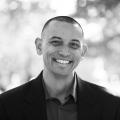
Adam Russell Taylor is president of Sojourners and author of A More Perfect Union: A New Vision for Building the Beloved Community. Follow him on Twitter @revadamtaylor.
AUG 24, 2023
If the first debate for the 2024 Republican primary is any indication, we’re headed toward a combative and chaotic presidential race. The first debate, held last night in Milwaukee, was most notable for who didn’t attend, namely former President Donald Trump, who, despite facing four separate criminal indictments, is the leading Republican candidate by a margin of nearly 40 points. His refusal to debate his opponents does a disservice to Republican voters and the country, all of whom deserve to hear Trump defend his previous actions and 2024 campaign platform, which includes several dangerously authoritarian proposals such as making it easier to fire career civil servants or deploying the National Guard to fight street crime.
But my main interest in watching the first Republican primary debate was to get a sense of whether Republican candidates would challenge the growing anti-democratic forces within their party. For example, will Republican candidates continue to defend Trump’s efforts to overturn the 2020 election results? And will they continue to embrace the “us-versus-them,” fear and grievance-based politics that propelled Trump to power? I was also on the lookout for indicators of candidates’ support for white Christian nationalism, a set of ideas enjoying an alarming resurgence (and super-charging the anti-democratic forces) that pose a grave threat to both our democracy and the witness of the church.
The term “Christian nationalism” gets used in different ways, but some experts define it as “a constellation of beliefs — that the founding of the United States was ‘divinely inspired’ or that God is invested in the success of the U.S. — that manifest in political goals.” In politics (and some churches), these ideas are part of a coordinated strategy to ensure white Christians maintain their ongoing dominance in all sectors of U.S. society. When I think about examples of Christian nationalism, I think of the subtle ways some people imply that one must be Christian to be a “true” American, or argue that the growing presence of non-white people and non-Christians pose a threat to “traditional” values, or stoke fear by saying that Christianity is under attack.
But Christian nationalism exists on a spectrum — and we need to resist it in all its forms. Extreme and overt manifestations of Christian nationalism include those who displayed Christian symbols and prayed during the violent insurrection at the U.S. Capitol on Jan. 6, 2021. Subtler and perhaps more insidious forms of Christian nationalism include people who say things like, “America has always been and should remain a Christian nation.” We also must be careful not to use “Christian nationalism” as a catchall term for anyone we disagree with, including social or political conservatives; while we may strongly disagree with those who want to make abortion illegal or support cuts to social welfare programs, we should not assume that someone who holds those beliefs automatically believes Christianity deserves a more prominent place in U.S. politics.
While there are some extreme politicians like Rep. Marjorie Taylor Greene (R-Ga.) who proudly claim the label, it’s unlikely the top Republican presidential candidates will explicitly embrace Christian nationalism by that name. Instead, voters in the 2024 election will need to be on the lookout for how candidates’ behavior and rhetoric aligns with Christian nationalist ideals and anti-democratic beliefs. Or as Jesus put it: “You will know them by their fruits” (Matthew 7:16).
Here are some questions I’ll be asking throughout the upcoming election to evaluate whether any candidates seeking public office are advancing Christian nationalism and anti-democratic views:
In other words, do they seek to undermine trust in our electoral process and thwart free and fair elections? The correlation between Christian nationalist beliefs and the belief that the 2020 election was stolen from Trump has been documented in both surveys and reporting. Recent surveys have also shown 40 percent of people who adhere to Christian nationalist beliefs agree with the statement that “patriots may have to resort to violence in order to save our country,” compared to just 16 percent of all Americans. And though the 2020 elections are long over, the threat of election interference is not: Among the 2024 field of candidates, The Washington Post has documented that only seven of the 12 candidates they contacted would commit to accepting the results of the 2024 election. Fortunately, in the first Republican debate, every candidate except for Vivek Ramaswamey agreed that former Vice President Mike Pence did the right thing when he exercised his constitutional duty to certify the 2020 election results. On the other hand, it was deeply disconcerting that all of the candidates (except former Arkansas Gov. Asa Hutchinson and former New Jersey Gov. Chris Christie) expressed that they would still support Trump if he won the nomination and was convicted of a crime in a court of law.
Two recent studies show that Christian nationalism is highly correlated with racism, white supremacy, homophobia, patriarchy, and Islamophobia. While we certainly cannot say that a person who makes racist comments or expresses support for an Islamophobic policy is automatically a Christian nationalist, we can think of this connection as one of several things of which we should be wary. For example, hard line stances on immigration taken by most of the declared GOP candidates indicate that, at the very, these candidates are trying to exploit the degree to which many conservative voters fear the United States’ growing racial and religious diversity. During the first debate, Ramaswamy described migrants entering the country as “the invasion across our southern border”— language that dehumanizes migrants, evokes threat and warfare, and echoes similar language many candidates have used throughout their campaigns. We also need to be vigilant for candidates using any coded language, often called dog whistles, that signal to audiences that white Americans are the “true” or “real Americans” and others are therefore suspect and less patriotic or less truly American.
Our nation was founded around the First Amendment’s commitment to no established religion and the free exercise of religion, but last fall, some candidates for Congress and governor got a lot of attention for more overt and aggressive statements about America’s founding as a Christian nation. In the coming elections, we should watch for these blatant examples as well as softer statements that carry this connotation.
For example, in the first debate, South Carolina’s Sen. Tim Scott, who is Black, kept talking about his life story of overcoming adversity to underline American greatness and the American dream, saying that if he could succeed in the U.S., anyone can. Yet Scott failed to mention any of the systemic injustices deeply rooted in history that continue to disadvantage and harm Black and brown Americans.
This misguided and overly narrow agenda says very little about so many other issues of grave moral consequence — from climate change to poverty to racialized policing and immigration, and more. For example, during the first debate, Pence repeatedly invoked his faith as he called for a national 15-week ban on abortion, ignoring that many people of his same faith do not share his moral position on abortion. Nor did Pence invoke his faith to call for a more urgent response to domestic or global poverty.
Christian nationalism is often tied to an ethno-nationalist identity, which in the U.S., means being white. Many candidates who claim to be “anti-woke” are simply refusing to imagine an America in which the promise of “liberty and justice for all” is truly extended to people of every racial group. Many of these people also deny that there is any need to seek repair or systemic change to correct past and current wrongs. At last night’s debate, Florida’s Gov. Ron DeSantis bragged about his record of banning Critical Race Theory (never mind that the theory isn’t something taught in primary or secondary schools to begin with) and what he called “gender ideology,” in schools. These are clear signals that he objects to a true accounting of American history that recognizes the role racism and sexism have always played. This myth that the the U.S. is an “innocent nation” is prevalent among Christian nationalists.
In Matthew 5, Jesus is clear that the way to discern whether Christian language is true or false is to look to the outcomes: the fruit. The questions above can help us recognize — and resist — the manifestations, or fruit, of Christian nationalism at the federal, state, and local level. The point of recognizing this unsavory fruit isn’t to then demonize the people who bear it; the point of recognizing this toxic ideology is to neutralize it and keep it from spreading. In the voting booth, this means rejecting candidates who embrace these ideas; in our churches, it means being resourceful and more courageous in finding ways to disciple Christians away from this heresy.
Editor’s note: This piece was corrected on Aug. 28, 2023 to reflect that Chris Christie said he would not support Donald Trump as Republican candidate if Trump were convicted of a felony.
McLean Bible — which is seen as a conservative evangelical congregation and once had more than 16,000 attendees — has long been an important church in Washington with four locations near the city. But threatening McLean now is a group that has spread all kinds of rumors, Platt said.
Platt said in his sermon that this group claimed, as members walked into the church, that new elders would lead the church “down the road of leaving the Gospel behind, leaving the Bible behind, embracing liberal theology and cultural Marxism, like the author of the ‘Communist Manifesto,’ that we would change our stance on abortion and sexuality, that we would allow Critical Race Theory and Black Lives Matter and defunding the police to drive our agenda as a church.”
Platt described these claims as “unquestionably untrue.”
The three new elders, who needed 75 percent of the vote, were voted in on Sunday with more than 80 percent of the vote and will join four existing elders. Congregants who want to become members of the church attend a class, are interviewed by elders or staff and are introduced to the congregation. On July 15, five members of the church filed a lawsuit claiming that the Sunday election violated the church’s constitution because the church did not allow a secret ballot.
Some of McLean’s members are nostalgic for the days of Lon Solomon, who led McLean for 37 years before handing the reins over to Platt in 2017. A July 8 letter from former church elder Mark Gottlieb described Platt as changing McLean into a “political, stripped-down version of what it used to be.”
Jeremiah Burke, who describes himself as the leader of more than 200 members who oppose current church leadership, including Platt, has been a member for 16 years and said he began raising questions about six months ago during a congregational meeting. His wife has been moderating the Facebook page called “Save McLean Bible Church” where members share articles that identify Platt and elders as “woke,” warning that McLean could go “woke” like other churches.
Burke, who has a financial adviser, said he noticed that while attendance had been down in 2020, giving had not gone down, and he wondered why. Burke believes that local Muslim leaders are looking for church buildings to buy and could have sights set on McLean’s property.
Burke, 36, is primarily focused on how the church has been giving money to the Southern Baptist Convention, even though it describes itself in its constitution as a nondenominational church. The SBC is “riddled” with controversy, Burke believes, with its sex abuse scandals and doctrinal disputes.
“McLean was one of the most influential churches in America. It had an incredible influence over the power players in D.C.,” he said. “We’re coming to try to take the church back. There’s no intention of us leaving the church. I think that’s what David’s scared of.”
Burke believes that Platt distracts from the issue of whether the church has ties to the SBC by bringing up other issues, such as its focus under Platt on racial justice. Under Platt’s predecessor, Solomon, the church began giving to the SBC in 2016, but it has recently suspended its contributions because of the confusion over whether the church could be considered Southern Baptist.
Under its FAQ page, the church also addresses whether it teaches critical race theory, an intellectual framework used to examine structural racism.
“CRT is a buzzword today, often used as an accusation (like “woke”) to label someone in the body of Christ in a way that cuts off any further discussion,” the church states. “We understand CRT to be a human (and therefore inherently flawed) effort towards understanding injustice.”
In an interview on Tuesday, Platt estimated that the church’s membership is more than 2,500, and several thousand people are attending services. Like many churches, attendance has taken a major hit during the pandemic, but it has been fully open with mask-optional services since May.
Platt said he believes the recent controversy has been a collision of several things, including racial tensions and political tensions.
In 2019, Platt was given a five-minute warning that former president Donald Trump would show up at McLean Bible and he would be asked to pray for him. Platt, who aims to be nonpartisan, wrote a letter to his congregation saying that he did not intend to endorse Trump or his policies, and some members took that to mean that he was apologizing for his prayer.
Then in the summer of 2020, Platt, led Christians in prayer as part of larger protests against racism and police brutality. Some in his congregation later took his involvement to mean that he supported the Black Lives Matter organization.
Platt said he doesn’t believe the controversy at his church is isolated, since he has been texting with several other pastors who have been through similar tensions.
“We are all walking through hard days,” Platt said. “The fundamental question is, how are we going to love God, one another, and the world around us in the middle of them?”
Platt, 43, has long been a popular evangelical preacher who wrote “Radical,” a best-selling book that called Christians to take their faith back from the American Dream and live more like Jesus. He was considered one of the youngest megachurch pastors in the country when he was appointed to the Church at Brook Hills in Birmingham, Ala., in 2006 at 27 years old.
Before he led McLean, Platt was president of the SBC’s International Mission Board. In his final address to the IMB, he criticized the “politics of the SBC” where he described “continual self-promotion” and “backroom deals.”
Correction: An earlier version of this piece stated that Platt was appointed to the Church Brook Hills when he was 28. He was 27.


