BUCKNACKT'S SORDID TAWDRY BLOG
We should not be a journey to the grave with the intention of arriving safely in an attractive & well preserved body, but rather to skid in sideways, chocolate, bier or wein in hand, body thoroughly used up, totally worn out and screaming "WHOO-HOO, WHAT A RIDE!!!!!!"
THE FCC is paralyzed from restoring net neutrality and increasing broadband access across the nation because the Senate has not approved Gigi Sohn, Pres Biden's nominee to the FCC. Big cable and internet companies along with right wing media like fox news and the wall street journal are running a dishonest propaganda campaign against her confirmation, keeping the FCC deadlocked and so protecting corporate profit margins as well as poor service. This from Demand Progress, and please take the time to e mail your senators telling them to get Gigi Sohn approved so she can take her seat at the FCC.
My e mail to Sens Kaine & Warner....
I expect you to push the Democratic Senate leadership to schedule a vote on Gigi Sohn's nomination to the FCC and to vote for her approval. The propaganda campaign by the right wing media like fox news, breitbart and the wall street journal can not be allowed to succeed.
“The most cynical and baseless smear campaign ever”
The corporate smear campaign against Gigi Sohn — Biden’s nominee to the Federal Communications Commission — just won’t quit.
For nearly a year and a half, Comcast surrogates have pushed a shameless campaign against Sohn, and right-wing outlets like Fox News and Breitbart have lobbed personal attacks at her, all in an effort to prevent her from casting tiebreaking votes on key issues, like restoring net neutrality.
It’s gotten so bad that a former executive for Disney and Fox came forward to condemn the attacks as “the worst, and most cynical and baseless smear campaign ever waged against a nominee to serve on the FCC."1
On Tuesday, Gigi Sohn stood up to attackers like Ted Cruz at her latest confirmation hearing, proving once again that she’s exactly the right person to take on Comcast and the rest of Big Cable.2
We need to have her back. That’s why Demand Progress Action is pressuring Democratic senators to defend Sohn against these baseless attacks and confirm her to the FCC ASAP.
Without a fifth member, the FCC remains at a 2-2 stalemate on a range of issues, effectively blocking action on net neutrality and stymying progress on issues like expansion of broadband access. The deadlock leaves Comcast and the rest of the telecom industry with far less oversight — just the way it prefers.
That’s why Comcast and the right-wing media have thrown everything but the kitchen sink at Sohn to stall her confirmation for nearly two years.
Fox News and The Wall Street Journal editorial board have repeatedly distorted and attacked her record.3 One group has poured money into false ads that claim she doesn’t support rural broadband access.4
If these attacks succeed, they will ensure that the FCC remains deadlocked and powerless to act on key issues like net neutrality. We can’t let that happen.
Demand Progress is turning up the heat on Democrats to defend and confirm Gigi Sohn, once and for all.
Sources: 1. Next TV, "Preston Padden: ISPs Complicit in Smear Campaign Against FCC Nominee Gigi Sohn," January 30, 2023. 2. Ars Technica, "Biden FCC nominee slams critics, says ISPs shouldn’t get to choose regulators," February 14, 2023. 3. Fast Company, "When will Democrats deliver on their promise to restore net neutrality?," May 16, 2022. 4. Common Dreams, "'Infuriating': Telecom Lobbyists Spending Big Money to Keep Gigi Sohn Off FCC," April 28, 2022.
PAID FOR BY DEMAND PROGRESS (DemandProgress.org) and not authorized by any candidate or candidate's committee. Contributions are not deductible as charitable contributions for federal income tax purposes. Join our online community on Facebook or Twitter.
I am fortunate enough to live in an area where I have access to high speed internet. Amazingly my sister and brother in law, living about 50 miles from Washington, D.C. (in Midland, VA) had to depend on dial-up until last year when a tower was installed so they now use wifi. And where I am from in rural NW PA many areas only have satellite internet service that is expensive and unreliable. We all need to push Pres Biden to to nominate a progressive Democrat to be the fifth member of the FCC, someone who will address the lack of basic internet service in too much of the country and who will reverse the policies of ajit pai and restore net neutrality. E mail Pres Biden and tell him to make his nomination to the FCC now. This from Demand Progress.....
( Here is my e mail to the White House and I also donated $10 to Demand Progress' campaign. You need to nominate a Democrat, preferably a progressive Democrat, to be the fifth member of the FCC so ajit pai's regressive policies can be reversed and Net Neutrality restored. The FCC also needs to address the lack of high speed internet access in too much of the country. I am fortunate enough to live in an area where I have access to high speed internet. Amazingly my sister and brother in law, living about 50 miles from Washington, D.C. (in Midland, VA) had to depend on dial-up until last year when a tower was installed so they now use wifi. Too often they had to take their kids to the library to use the computers there because their home service was so slow and unreliable. And where I am from in rural NW PA many areas only have satellite internet service that is expensive and unreliable (cell phone service is also extremely limited too).)
It’s been more than 150 days, and President Joe Biden still hasn’t named a fifth member to the Federal Communications Commission. Each day that goes by without a fully-functioning FCC is a day that Ajit Pai's legacy of sabotaging a free and open internet lives on.1
And it is leaving the commission deadlocked 2–2—unable to act on critical initiatives to bridge the digital divide and restore the net neutrality protections repealed by Trump-administration FCC Chair Pai.
Congress has to confirm the FCC appointee, and the legislative calendar days are dwindling. If Biden doesn’t act soon, the agency charged with ensuring a free, open internet and broadband access for everyone will remain stalemated.
The pandemic laid bare the grave digital divide in our country. Poor families and people of color are disproportionately disconnected from high-speed internet access, threatening their health, their education, and their livelihoods.
The FCC has a long list of initiatives that can help ensure an open internet for everyone, no matter the size of their paycheck.2
It includes reviving the long-neglected Lifeline program, which helps ensure internet access for low-income customers.3
It includes guiding federal funds for building broadband infrastructure in an equitable, effective manner.
And it includes restoring net neutrality rules dismantled during the Trump administration.
But the commission can’t move any of these efforts forward effectively without a fifth member appointed by the president. And with a limited number of legislative calendar days left this year, we’re running out of time to get that member confirmed and the FCC operating at full capacity.
That’s why Demand Progress is waging a full-court press to get Biden to name his appointee. We've gathered together dozens of groups to urge the administration to act and flooded the president with petition signatures.
1. Ars Technica, "Pai’s legacy lives on for now as Biden fails to nominate Democrat to FCC," June 14, 2021 2. Demand Progress Education Fund, "57 groups call for 5th FCC commissioner," June 14, 2021 3. Federal Communications Commission, "Lifeline Program for Low-Income Consumers," March 31, 2016
PAID FOR BY DEMAND PROGRESS (DemandProgress.org) and not authorized by any candidate or candidate's committee. Contributions are not deductible as charitable contributions for federal income tax purposes. Join our online community on Facebook or Twitter.
IF you have not sent a letter to your representative in Congress to sign the discharge petition to bring the CRA to restore net neutrality (already passed by the Senate) you can click here to do so. This from Demand Progress.....
Mark Stanley, DemandProgress.org
Jun 17, 2018, 5:09 PM
It's only been 5 days since net neutrality protections officially died, and already AT&T has merged with Time Warner and Comcast announced plans to buy 21st Century Fox for $65 billion.1
This merger mania is the worst-case net neutrality nightmare, with gigantic ISPs buying up content providers to control what we see and do online.
Now more than ever, we need Congress to step in and reinstate net neutrality, and we're flooding Capitol Hill with phone calls, organizing in-distict, and running polls in congressional districts all over the country to show undecided members of Congress that their constituents support net neutrality.
With no net neutrality rules to stop them, ISPs like Comcast and AT&T can push their subscribers to their own content—and block or throttle the rest.
With AT&T taking control of CNN and HBO, it will be able throttle or block competitors like YouTube or the BBC. As part owner of Hulu, Comcast will have the incentive to censor competitors like Netflix.
AT&T will be able to force users to watch CNN instead of MSNBC or PBS, while Comcast could push customers into Fox programming.2 Those of us who want to stream independent news? Good luck. Meanwhile, the small content companies, like 3M video and IFC, could be crushed.
This isn’t just about entertainment. The way we communicate, conduct business, and live our civic lives will all be controlled by these ever-expanding ISPs unless we save net neutrality.
The Senate has already voted to overrule the FCC and reinstate net neutrality, but to convince the House to join them, we need to convince undecided members that their constituents care about this too. Will you chip in $5 to help fight for net neutrality and organize in every key district with an undecided member of the House?
1. CNN, "Comcast bids $65 billion for most of 21st Century Fox," June 13, 2018 2. Recode, "Here’s who owns everything in Big Media today," June 11, 2018
PAID FOR BY DEMAND PROGRESS (DemandProgress.org) and not authorized by any candidate or candidate's committee. Contributions are not deductible as charitable contributions for federal income tax purposes. Join our online community on Facebook or Twitter.
The media landscape used to be straightforward: Content companies — studios — made stuff — TV shows and movies — and sold it to pay TV distributors, who sold it to consumers.
Now things are up for grabs: Netflix buys stuff from the studios, but it’s making its own stuff, too, and it’s selling it directly to consumers. That’s one of the reasons older media companies are trying to compete by consolidating. And new distributors like Verizon and AT&T are getting in on the action. AT&T, for instance, wants to merge with Time Warner.
Meanwhile, giant tech companies like Google, Amazon and Apple that used to be on the sidelines are getting closer and closer to the action.
To help sort this all out, we’ve created a diagram that organizes distributors, content companies and internet video companies by market cap and their main lines of business.
Here’s what the Big Media universe currently looks like. We will update it periodically:
AFTER the Senate Democrats with 3 Republicans forced a vote and passed a CRA to restore net neutrality the CRA in the House is being pushed for a vote. Please sign the petition organized by Demand Progress and a plethora of allied organizations telling your representative to sign the discharge petition to bring the CRA to the House floor for a vote and then to vote for it and send the repeal to NOT MY pres drumpf/trump to sign and so restore net neutrality.
The House of Representatives has the opportunity to save net neutrality — or let it die.
It's Monday, June 11: the day the FCC's repeal of net neutrality takes effect.
You may not notice any changes immediately. We don't know exactly when or how AT&T, Verizon, and Comcast will start throttling speeds and creating fast and slow lanes on the internet.
But we know it's coming. And that's why we need to force the House to save net neutrality.
Thanks to your activism, a bipartisan majority of senators voted to overturn the FCC and save net neutrality.
Now the fight is in the House, where we are gaining more support for the CRA resolution by the day. But we still need dozens more reps to sign a discharge petition to force a floor vote.
There's not a moment to lose. Every day the American people go without protections for a free and open internet will be one too many.
The pundits and Big Cable lobbyists said we could never win the CRA resolution in the Senate, but we did.
We flooded the Senate with millions of calls and emails from constituents -- and we got all 49 members of the Democratic caucus, along with three Republicans, to pass the CRA. It’s going to be an uphill climb, but if we make sure our representatives hear us loud and clear, we can win in the House too.
86% of Americans oppose the repeal of net neutrality, including a huge majority of Republicans. With multiple Senate Republicans voting to overturn the FCC, we have a strong shot of winning the House if we get the support of all Democrats and about two dozen Republicans.
We proved the pundits wrong once, and will prove them wrong again. But we need to raise our voices and make sure every representative knows you expect them to stand on the side of Team Internet, and not Team Cable.
The Senate on Wednesday voted to reinstate the Federal Communications Commission's (FCC) net neutrality rules, passing a bill that has little chance of advancing in the House but offers net neutrality supporters and Democrats a political rallying point for the midterm elections.
Democrats were able to force Wednesday’s vote using an obscure legislative tool known as the Congressional Review Act (CRA). CRA bills allow Congress, with a majority vote in each chamber and the president's signature, to overturn recent agency moves.
They argue that without the net neutrality regulations, which require internet service providers to treat all web traffic equally, companies such as Verizon and Comcast will be free to discriminate against certain content or boost their partner websites.
And despite the odds against the bill, Democrats see tremendous upside in the potential to use it as a campaign issue.
"A key question for anyone on the campaign trail in 2018 will now be, 'Do you support net neutrality?' " Sen. Ed Markey (D-Mass.), who introduced the bill, said in a press conference after the vote.
Republican FCC Chairman Ajit Pai blasted Democrats for their "scare tactics" and said that his proposal is meant to correct the FCC's regulatory overreach during the Obama administration.
“It’s disappointing that Senate Democrats forced this resolution through by a narrow margin," Pai said in a statement. "But ultimately, I'm confident that their effort to reinstate heavy-handed government regulation of the internet will fail.”
The bill will have a much harder time in the House, where Democrats would need 25 Republicans to cross the aisle and join a discharge petition in order to bring it up for a vote.
Rep. Mike Doyle (D-Pa.) said he would be releasing a discharge petition on the bill on Thursday morning.
For their part, most Republicans argue that the net neutrality rules are unnecessary and onerous for broadband providers. The GOP has been urging Democrats to come to the negotiating table to work out a legislative replacement to the FCC rules, a move that is also backed by the broadband industry.
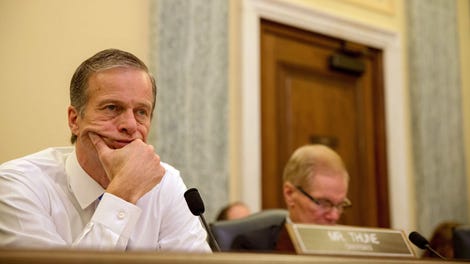
"I’m disappointed but not surprised that Democrats rejected my offer to write, consider, and amend legislation in a process open to ideas from both sides of the aisle," Sen. John Thune (R-S.D.) said in a statement. "Despite this vote, I remain committed to finding a path to bipartisan protections for the internet and stand ready to work with my colleagues on the other side of the aisle when they are ready as well.”
But net neutrality supporters reject the idea that a Republican-controlled Congress could come up with protections as strong as the FCC rules. Legislation offered by GOP members leaves open the possibility that internet providers could create “fast lanes” by charging websites for faster speeds.
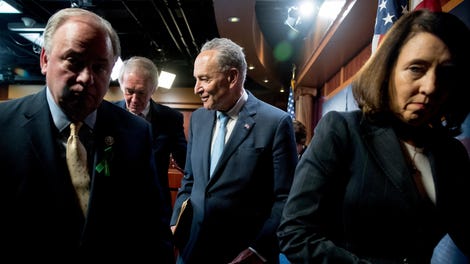
At a press conference Wednesday, House Minority Leader Nancy Pelosi (D-Calif.) joined Senate Minority Leader Charles Schumer (D-N.Y.) in calling on Speaker Paul Ryan (R-Wis.) to bring the bill to the House floor — and rank-and-file Republicans to back it.
"We consider this one of the major issues of the 2018 campaign," Schumer told reporters.
Polls consistently show public support for net neutrality, with one from before the FCC’s repeal vote reporting that more than 80 percent of respondents — including 75 percent of Republicans and 89 percent of Democrats — wanted to see the rules stay on the books.
The FCC voted 3-2 along party lines in December to repeal its Obama-era Open Internet Order, a move the GOP hailed as a rollback of regulatory overreach.
"Following today’s vote, Americans will still be able to access the websites they want to visit. They will still be able to enjoy the services they want to enjoy," Pai said last year. "There will still be cops on the beat guarding a free and open internet. This is the way things were prior to 2015, and this is the way they will be once again."
Democrats on and off the panel have decried the action ever since.
"As a result of today’s misguided action, our broadband providers will get extraordinary new power from this agency," Democratic Commissioner Jessica Rosenworcel said at the time. "They will have the power to block websites, throttle services and censor online content. They will have the right to discriminate and favor the internet traffic of those companies with whom they have pay-for-play arrangements and the right to consign all others to a slow and bumpy road.”
Democrats and net neutrality supporters are also trying to fight the FCC’s repeal order in court, though the legal battle is likely to drag on for months.
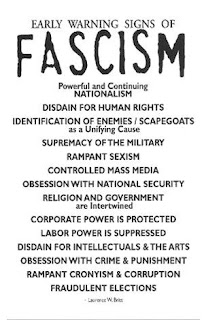
HERE are two good articles on the fascist anti-net neutrality policies of the drumpf/trump-pence administration's FCC chairman and the republican members of the FCC. Once net neutrality is revoked the only way to restore it will be to elect enough politicians to congress to pass a law restoring net neutrality as the law of the land. MIDTERM ELECTIONS ARE ON 6 NOV 18. VOTE! From arsTechnica and Gizmodo.....
As Mignon Clyburn left the Federal Communications Commission, the longtime telecom regulator worried that the FCC is abandoning its "prime directive" of protecting consumers.
"I'm an old Trekkie," Clyburn told Ars in a phone interview, while comparing the FCC's responsibility to the Star Trek fictional universe's Prime Directive. "I go back to my core, my prime directive of putting consumers first." If the FCC doesn't do all it can to bring affordable communications services to everyone in the US, "our mission will not be realized," she said.
The FCC's top priority, as set out by the Communications Act, is to make sure all Americans have "affordable, efficient, and effective" access to communications services, Clyburn said. But too often, the FCC's Republican majority led by Chairman Ajit Pai is prioritizing the desires of corporations over consumers, Clyburn said. "I don't believe it's accidental that we are called regulators," she said. "Some people at the federal level try to shy away from that title. I embrace it."
Clyburn's last FCC meeting was on April 17, and she gave her last policy speech as an FCC commissioner on May 9. She spoke to Ars shortly before her departure from the FCC.
ISPs are “last-mile monopolies”
Clyburn said that deregulation isn't bad in markets with robust competition, because competition itself can protect consumers. But "that is just not the case" in broadband, she said.
"Let's just face it, [Internet service providers] are last-mile monopolies," she told Ars. "In an ideal world, we wouldn't need regulation. We don't live in an ideal world, all markets are not competitive, and when that is the case, that is why agencies like the FCC were constructed. We are here as a substitute for competition."
Broadband regulators should strike a balance that protects consumers and promotes investment from large and small companies, she said.
"If you don't regulate appropriately, things go too far one way or the other, and we either have prices that are too high or an insufficient amount of resources or applications or services to meet the needs of Americans," Clyburn said.
Despite Clyburn's protests, the FCC's Republican majority decided to strip the agency of much of its regulatory authority over Internet providers. As part of the FCC's decision to eliminate net neutrality rules, the FCC declared that broadband isn't a telecommunications service and thus shouldn't be subject to common carrier regulation.
Clyburn stayed longer to fight GOP agenda
As an FCC commissioner for almost nine years and the acting chair for six months in 2013, Clyburn fought for net neutrality, online privacy, lower phone prices for prisoners, Lifeline support for low-income consumers, and numerous other consumer protection measures.
Clyburn was part of a Democratic majority for most of her tenure and was therefore able to push through much of her agenda. The FCC majority changed hands to Republicans when Donald Trump was elected president, and Clyburn's term expired in June 2017. She had the choice to leave or stay and seek a new five-year term, since commission rules allowed her to stay until the end of 2018.
Clyburn said that she likely would have left the FCC sooner if Democrats had remained in power. If Clyburn was confident that the FCC would put consumers first, "I probably would have exited long before now," she said.
Clyburn said she stayed on longer because of her concerns about the Republican majority's policies on inmate calling prices, the repeal of net neutrality, and universal service programs that fund broadband in rural areas.
Similarly, if a Democrat instead of Pai was in charge, "I would not have been worried about the Lifeline program, which I believe is on life support," Clyburn said.
One of Pai's pending proposals could prevent resellers from selling Lifeline-subsidized plans. This would force more than 70 percent of low-income wireless phone users who rely on Lifeline subsidies to find new ISPs, while dramatically limiting their options. Clyburn said the Lifeline program "runs the risk of being dismantled because of non-commonsensical rules that are being proposed," she said. During Pai's chairmanship, she has fought several changes that could make it harder for poor people to get broadband or phone service through Lifeline.
Pai's “deregulatory lens”
Pai views the telecom industry "through a deregulatory lens" and avoids regulations except when there's an egregious level of harm to consumers, Clyburn said. "He's a believer in markets. So am I," she said. But "it would take a whole lot of disruption for him to believe that this free market approach, this deregulatory approach, is not justified—a whole lot of harm, and I mean a whole lot."
Clyburn said that the FCC has done little to address high inmate calling prices "and other areas where there's a whole lot of harm and not any action here."
The US also hasn't done enough to fight red-lining practices in which ISPs provide advanced services in rich areas while letting networks stagnate in poorer neighborhoods, Clyburn said. "The people who need these services the most are the ones who have the least," she said.
Clyburn also wants a greater focus on urban broadband gaps. Government programs on broadband access generally focus on rural areas, which are sparsely populated and thus less profitable for ISPs. But Clyburn said that "we cannot afford to be so fixated on one part of America while ignoring" the urban areas that also lack robust and affordable broadband.
When Democrats held the majority, Clyburn helped push through privacy rules that would have required ISPs to get opt-in consent from consumers before sharing Web browsing data and other private information with advertisers and other third parties.
Congress's decision to prevent the FCC's implementation of those broadband privacy rules still bothers Clyburn.
"We've taken ourselves out of the privacy business and I think that's left us too vulnerable," she said. ISPs "know a lot about us," and "they can almost do whatever they feel like with the information that they have about us... to me, having a regulatory-free zone when it comes to privacy is extremely problematic."
Clyburn will continue fight outside FCC
Clyburn's vacated Democrat seat is likely to be filled by Geoffrey Starks, an assistant chief in the agency's enforcement bureau. Republicans will maintain a 3-2 majority.
Clyburn didn't reveal what her post-FCC plans are but said she will continue advocating for underserved populations. "I hope to be able to do much of the same, to be a voice for the voiceless," she said. "I hope to be able to be an advocate for those who may not have gotten the type of attention that I believe they deserve at the agency."
Serving on the FCC was "the most incredible job I've ever had," and the agency "is one of the most consequential agencies in the world," she said. But there's an advantage to being an advocate outside government, she noted. "When you serve on [the FCC], you are limited in how you say certain things and who you can say it to. The one good thing about me closing this chapter and beginning a new one is I won't have those levels of restrictions, but I will still have all the knowledge and passion."
Jon is Ars Technica's senior IT reporter, covering the FCC and broadband, telecommunications, wireless technology, and more.EMAILjon.brodkin@arstechnica.com//TWITTER@JBrodkin
In a bipartisan letter on Monday, two US senators called on the FCC to investigate the identity theft and fraud in public comments collected by the agency during its proposal to rollback net neutrality protections last year.
Senators Jeff Merkley, Democrat of Oregon, and Pat Toomey, Republican of Pennsylvania, are among the estimated “two million Americans” whose identities were used to file comments to the FCC without their consent.
“The federal rulemaking process is an essential part of our democracy and allows Americans the opportunity to express their opinions on how government agencies decide important regulatory issues,” the pair of lawmakers wrote. “As such, we are concerned about the aforementioned fraudulent activity. We need to prevent the deliberate misuse of Americans’ personal information and ensure that the FCC is working to protect against current and future vulnerabilities in its system.”
“We encourage the FCC to determine who facilitated these fake comments,” the letter continues. “While we understand and agree with the need to protect individuals’ privacy, we request that the FCC share with the public the total number of fake comments that were filed.”
So were “fake comments” filed using stolen identities? Almost certainly. The fact that two US senators of rival parties have signed a letter saying as much is a clear indication that some type of fraud occurred. But how many of the comments used stolen identities? Despite exhaustive digging by data scientists, journalists, and independent researchers, there’s no reliable figure thus far.
“People are losing faith in their democracy. The FCC’s repeal of net neutrality is set to go into effect in a matter of weeks, despite the fact that the process around it has been riddled with serious issues of fraud and abuse that the agency has thus far refused to address,” said Evan Greer, deputy director of the pro-net neutrality group Fight for the Future.
A majority of the 23 million comments received by the FCC last year were delivered via form submission; letters pre-written by activists, which users merely “signed” before clicking “send.” This is not unusual. Although the FCC doesn’t actually read or care whatsoever about these comments —it generally only takes into consideration those submitted by lawyers and industry experts—activists enjoy a ton of press when “millions” of comments are delivered and it helps drum up public support for their cause.
The FCC’s IT workers even privately coordinate with large advocacy groups to ensure that their comments can be submitted in bulk without overloading its servers. Private companies also do this, including CQ Roll Call, publisher of the the Washington DC newspaper Roll Call. A spokesperson for the company told Gizmodo in October: “CQ has had a system to direct comments to ECFS for more than a year. CQ’s advocacy system did deliver millions of comments to the ECFS for the docket Restoring Internet Freedom.”
Nearly 440,000 FCC comments identical to the one from "Barack Obama" were generated by a group called Center for Individual Freedom. Here's a screenshot of CFIF's website with an identical message.
All told, only 6 percent of the comments were unique, according to Pew Research. Others, however—potentially millions—were likely submitted by bots. And there’s substantial evidence, albeit mostly anecdotal, to support the theory that hundreds of thousands, if not millions of people’s names and addresses were used without their consent. One independent investigation found that more than 65 percent of the personal data used in identical FCC letters overlapped with data exposed in data breaches; though the database checked against does contain hundreds of millions of email accounts, many still likely in use.
FCC Chairman Ajit Pai has for the most part ignored cries over the use of fake accounts and has been combative of calls to investigate the matter, even after law enforcement officials began floating the idea that a federal crime may have been committed.
Sources told Gizmodo last year that Pai had quietly issued a directive telling the FCC’s staff not to make any attempt to filter out fake comments during the proceeding; it was believed that doing so would likely backfire, leading to accusations that the agency was censoring pro-net neutrality comments. To be fair, this likely would have occurred.
The decision was reflected publicly in remarks by Pai who once said the FCC “erred on the side of openness,” with regard to judging whether comments were legitimate. However, this tactic, too, backfired spectacularly.
More than 440,000 identical anti-net neutrality comments appeared in the FCC docket using language pulled from a 2010 press release authored by a group called the Center for Individual Freedom (CFIF), which also ran a submission page containing a pre-written letter to the FCC calling the net neutrality regulations “an extraordinary and unnecessary amount of regulatory control over the internet.”
Over 7 million comments included the phrase: “I am in favor of strong net neutrality under Title II of the Telecommunications Act.” Analysis of the comments performed by Chicago developer Chris Sinchock and published on Medium revealed that thousands of similarly-written pro-net neutrality comments as early as May 2017 containing boilerplate language such as, “I specifically support strong Net Neutrality backed by Title 2 oversight of ISPs.”
Another group, Free Our Internet, which is linked to former Trump campaign aide Christie McNally, is responsible for over 100,000 comments that read, in part: “...we are sick and tired of all the CONTROL FREAK elite loons that want to to dominate the people of the UNITED STATES, and for the record, know that the masses WILL NOT TOLERATE this treason against us.”
The FCC comment process is, in other words, a complete shitshow and practically worthless for gauging accurately the public sentiment on any high-profile issue. And frankly, even if 99 percent of the comments had been authentic, written by actual Americans who favored the Obama-era rules, the FCC still would’ve voted to repeal them. Nothing was going to stop that.
Actual research into how the public feels about net neutrality reveals that an overwhelming majority of the country opposes the FCC’s decision to roll back the protections. Even as high as 82 percent of Republicans are in favor of maintaining the rules, which the agency will formally disown a few weeks from now. Net neutrality remains controversial only in the nation’s capital among politicians who are either bought and paid for by the telecom industry or opposed to it for no reason other than to show loyalty to the Trump administration’s hugely unpopular anti-regulatory agenda.
The only question that remains is whether there was a concerted effort on the part of a few oblivious trolls to commit widespread fraud during the net neutrality proceedings. But as it has repeatedly demonstrated, the FCC would rather not know the answer. But who knows? Maybe two US senators demanding a response will shake something loose.
It’s just as likely, however, that the FCC will respond with some vague language designed to obfuscate any hint of mismanagement or culpability on its part, citing, probably, the need to protect people’s privacy or some other such nonsense. Over the past year, bullshitting lawmakers is the one thing we can honest agree the FCC has gotten better at.


:format(webp)/cdn.vox-cdn.com/uploads/chorus_asset/file/11515649/media_landscape_June_11_2018_01.png)