NORTON META TAG

Showing posts with label job creation. Show all posts

01 June 2017

Did Donald Trump's trip create or save 'millions' of jobs? 26MAI17

(NOT MY) president drumpf/trump is a compulsive, serial liar, he can't handle or tell the truth. I think he really believes his life and now his presidency are actually the lies he spews in speech and tweets. Here is another of his lies from PolitiFact......

Did Donald Trump's trip create or save 'millions' of jobs?
Share The Facts
Donald Trump
President
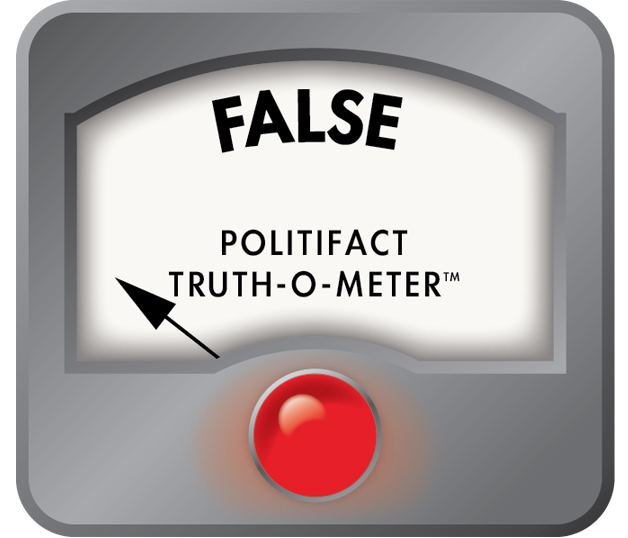
Says deals struck on his first foreign trip as president made and saved "millions of jobs."
In a tweet from his first foreign trip as president, President Donald Trump touted his accomplishments on one of the cornerstones of his presidential campaign -- jobs.
Trump traveled to Saudi Arabia, Israel, Brussels and Rome on a mix of business and diplomatic tasks from May 20 to May 27.
"Just arrived in Italy for the G7. Trip has been very successful. We made and saved the USA many billions of dollars and millions of jobs," Trump tweeted.
Millions of jobs? That would be a massive shot in the arm for the economy. For a sense of scale, Wal-Mart, the nation’s largest private employer, has 2.3 million employees; the second-largest, Yum Brands, which includes Taco Bell, Pizza Hut and KFC, has about 500,000.
The problem is, the White House has been cagey about exactly where this projection comes from.
For starters, Trump’s use of the word "millions" represents a thousand-fold expansion from what Trump had said just days earlier, when he told the audience in a speech in Saudi Arabia: "Yesterday, we signed historic agreements with the Kingdom that will invest almost $400 billion in our two countries and create many thousands of jobs in America and Saudi Arabia."
Meanwhile, over two days of inquiries to the White House, officials were unable to provide us with full details of the $110 billion arms deal with Saudi Arabia, which itself is just a portion of the $400 billion investment package Trump cited in his speech.
When the Washington Post Fact Checker asked the White House for details about Trump’s tweet, a White House official responded that Trump was referring to "benefits to trade from the entire trip from Saudi Arabia to the G7" -- that is, including Trump’s meetings with the heads of other advanced industrialized nations in Europe toward the end of the trip. (It’s not clear what trade deals were discussed in the European portion of the trip.)
In any case, assuming "millions" of jobs from unspecified investments is not justified, economists say.
"There’s not enough information to substantiate his claims on millions of jobs," said Chris Lafakis, senior economist at Moody’s.
In the meantime, here’s what we know and don’t know.
The arms deal
The Defense Security Cooperation Agency issued a news release on May 20 saying that the United States and Saudi Arabia agreed to a $110 billion package on five main areas: border security and counterterrorism, maritime and coastal security, air force modernization, air and missile defense, and cybersecurity and communications upgrades.
The release detailed six specific areas, with links to documents that offered a dollar amount. They were:
• Munitions and support: $6.8 billion;
• Chinook cargo helicopters: $3.51 billion;
That totals $23.74 billion, leaving $86 billion from the package unspecified.
Using other available data, John Pike, the director of globalsecurity.org, told PolitiFact that he can estimate perhaps $50 billion in arms sales, "most of which was initiated under Obama," he said.
Bloomberg calculations
Reporters at Bloomberg have written several articles about the deals signed in the Saudi portion of the trip, focusing on agreements outside the $110 billion arms deal.
They include:
• Agreements signed by Saudi oil company Aramco: $50 billion;
• Commitments by Saudi Arabia’s Public Investment Fund to an infrastructure investment fund with the Blackstone Group. (Blackstone, Bloomberg reported separately, has close ties to the family of Trump’s son-in-law, Jared Kushner.) $20 billion;
• General Electric memorandum of understanding with Saudi Arabia: $15 billion;
• Honeywell International memorandum of understanding with Saudi Aramco: $3.6 billion;
• McDermott International memorandum of understanding with Saudi Aramco: $2.8 billion;
• Jacobs Engineering Group memorandum of understanding: $250 million;
• Rowan Companies memorandum of understanding with Saudi Aramco for offshore drilling rigs: $7 billion;
• Rowan memorandum of understanding with Saudi Aramco for its supply chain: $1.2 billion;
• Nabors Industries memorandum of understanding on well and rig services on an existing joint venture worth $9 billion;
• Nabors memorandum of understanding with Saudi Aramco for its supply chain: $1.6 billion;
• Weatherford International memorandum of understanding: potential value of $2 billion.
That works out to about $112 billion, coming on top of the $110 billion in arms sales. Bloomberg cited a few more items without specific dollar amounts, including a jet purchase from Boeing by SaudiGulf Airlines, and a joint venture between National Oilwell Varco and Saudi Aramco for the manufacture of drilling rigs and equipment.
That leaves more than half of Trump’s $400 billion figure -- just for the Saudi leg of the trip -- undisclosed, to say nothing of what deals may have been struck in the European portion of the trip.
And for now, the Washington Post reported that several key CEOs of companies that signed deals have been a lot more restrained than Trump about promising specific numbers of jobs.
"There is absolutely zero chance that the trip created millions of jobs," said Dean Baker, a liberal economist. Even if jobs were created -- possibly in the thousands, not the millions -- "this may or may not lead to any net job creation, since the Fed could easily offset it with higher interest rates."
Our ruling
Trump said that deals struck on his first foreign trip as president created and saved "millions of jobs."
We can’t know for sure how many jobs will be created or saved -- nor, despite the certainty of his language, does Trump -- but the evidence at this point is so thin and so premature as to be little more than puffery or wishful thinking. We rate the statement False.

About this statement:

Published: Friday, May 26th, 2017 at 4:17 p.m.
Researched by: Louis Jacobson
Edited by: Aaron Sharockman
Subjects: Economy, Foreign Policy, Jobs

Sources:

Donald Trump, tweet, May 26, 2017
Defense Security Cooperation Agency, "Fact Sheet: Intended Sales to Saudi Arabia via Foreign Military Sales," May 20, 2017
Al.com, "30 largest employers in the U.S.," Feb. 7, 2017
Email interview with Lawrence White, professor at New York University’s Stern School of Business, May 26, 2017
Email interview with Chris Lafakis, senior economist at Moody’s, May 26, 2017
Email interview with Dean Baker, co-director of the Center for Economic Policy and Research, May 25, 2017
Email interview with John Pike, director of globalsecurity.org, May 22, 2017

03 April 2014

10 Reasons Americans Should be Wary of Rand Paul's Libertarianism, Especially Young People 2APR14

SEN +rand paul r t-b KY wants to transform the US into a plutocracy. His immoral agenda of greed and lust for power is being spread by a propaganda campaign financed by his corporate masters, and it is deceiving and manipulating the very people it will hurt if any part of it becomes law. He may be good looking, he may be well spoken, but a closer look exposes a man with a cold and corrupt soul. This from AlterNet.....
Sen. Rand Paul is trying to attract millennials. Don't fall for it!
 Republican Senator Rand Paul has been making a big play for millennials lately, most notably by taking his civil liberties pitch to colleges around the country. Paul has got the right idea when he says his party must “evolve, adapt or die” (although I think the first two are virtually the same thing). Katie Glueck of Politico wrote that “The Kentucky senator drew a largely friendly reception at the University of California-Berkeley as he skewered the intelligence community."

Sen. Paul spoke of “dystopian nightmares” and added that “your rights, especially your right to privacy, are under assault.” Paul also said he perceives “fear of an intelligence community that’s drunk with power, unrepentant and uninclined to relinquish power.” 
Virtually all of the other politicians taking that stand come from the left side of the political spectrum. They include figures like independent socialist Sen. Bernie Sanders and Democratic senators Ron Wyden and Mark Udall. Rand Paul is not like these other defenders of civil liberties.
Rand Paul, like his father, prefers to package his fairly old-school brand of economic conservatism under the trendier name of “libertarianism.” That’s not just a labeling change. It also means Paul has paired his retrograde economic ideas with a very outspoken stance against militarism and the espionage state. It’s a mixture that Paul hopes can make inroads with groups that are not traditionally Republican voters.
Paul’s play for millennials was almost inevitable. As a recent Pew study reported, that generation’s disaffection with the two-party system appears to be at record levels. Fifty percent of millennials polled said that they do not associate themselves with either party, which is the highest percentage recorded thus far. It’s also a 10 point jump from their equivalent age group’s level of political affiliation only seven years ago.
But Rand Paul gravely misunderstands the nature of that political disaffection. Yes, millennials feel alienated toward political and other institutions. They have a right to feel that way. As Joshua Holland says, millennials didn’t abandon these institutions. The institutions abandoned them.
But Rand Paul and libertarianism are not the answer. His economic strategy can be summed up in a quota used for one of his bills: “remove the shackles of big government by reducing taxes, regulations, and burdensome union work requirements.”
In other words, more of the same conservative philosophy that got us in this mess in the first place. Here are 10 reasons why millennials should be extremely wary of the senator from Kentucky.
1. His philosophy of deregulation created your jobs problem.
Rand Paul loved to preach the gospel of deregulation. He went so far as to proclaim that Obama was putting his “boot heel” on the neck of—get this—British Petroleum. Why? Because BP was being asked to bear part of the cost for the oil spill it created.
That’s right. Rand Paul believes “regulation” is evil, even when it’s only asking a reckless private corporation to clean up its own messes.
Wall Street deregulation crashed the economy in 2008. As a result, the millennial generation is entering the job market at the worst time in modern history. Millennials are facing record levels of unemployment and under-employment. What’s Rand Paul’s solution? More of the same.
2. He doesn’t believe in jobs programs.
Those of us who are fighting for jobs programs and infrastructure investment—two things that would help the millennial generation significantly—have a fierce opponent in Rand Paul. Paul believes government spending is inherently bad, and tax cuts are inherently good. There are jobs proposals that target millennials for assistance. Rand Paul is against them.
3. He thinks “tax cuts” create jobs.
There’s a simple answer to that, once we remember that the wealthy and corporations are paying lower taxes than at any time in modern history.
So where are the jobs?
Rand Paul’s solution is to eliminate the income tax altogether. That would be a red letter day for billionaires, millionaires and corporations. It would spell the end of vital services for the rest of us, in everything from public health to military defense.
Create jobs? Not so much.
4. Those “burdensome union work requirements” gave us Saturdays and Sundays off.
Without unions we would still be working six or seven days a week with no overtime pay. The weekend as we know it wouldn’t exist if we lived in Rand’s world.
Neither would paid vacations, the minimum wage, health and disability benefits, and quite a few other things a lot of working people count on to help them get by. (Sen rand paul is against every one of these benefits listed in my post 36 REASONS WHY YOU SHOULD THANK A UNION http://bucknacktssordidtawdryblog.blogspot.com/2014/01/36-reasons-why-you-should-thank-union.html )
5. Civil rights for African Americans and other minorities wouldn’t exist.
Rand Paul believes businesses have the right to discriminate against minorities, or against pretty much anybody, because he thinks that’s part of their First Amendment rights.
The First Amendment, as most of you may know, reads as follows: “Congress shall make no law respecting an establishment of religion, or prohibiting the free exercise thereof; or abridging the freedom of speech, or of the press; or the right of the people peaceably to assemble, and to petition the Government for a redress of grievances.”
There’s nothing in there about “businesses that want to force women like Rosa Parks to stand at the back of the bus when there are empty seats in the front of the bus,” or “lunch counters that won’t serve black folks.”
No, the First Amendment doesn’t say that. But Rand Paul thinks it does. He also says he would’ve voted against the Civil Rights Act of 1964. Here’s a newsflash for Sen. Paul: Millennials come in all races, religions, genders and sexual orientations. They value their rights just as much as Americans of other generations do.
6. He wants to eliminate Social Security.
Because, you know, the “free market” has done so well in protecting Americans’ financial security when they’re disabled or elderly.
Many millennials are collecting Social Security survivor benefits, like Rand Paul compatriot Paul Ryan did. Or disability benefits. Or they have parents and grandparents who are collecting retirement benefits.
Most millennials will live to collect those benefits themselves—if Rand Paul doesn’t get to them first.
7. He wants to eliminate Medicare, Obamacare, and even the private insurance you get through your employer.
“The fundamental reason why Medicare is failing is why the Soviet Union failed,” said Sen. Paul. “Socialism doesn't work.”
Unfortunately for Paul, Medicare is not failing. It has lower overhead than private insurance, lower cost than private insurance, and a lower rate of inflation than private insurance. It is the most successful, and the most popular insurance program in the country.
But as flawed as it is, private health insurance is critical to a lot of people’s physical and financial health. Rand Paul’s so right wing he doesn’t even like that. “We need to get insurance out of the way and let the consumer interact with their doctor the way they did basically before World War II," said Paul. (A lot of people didn’t interact with doctors at all before World War II; the morbidity and mortality statistics show it.)
Speaking as an ophthalmologist, which he is, Paul also said this: “If you think you have the right to healthcare, you are saying basically that I am your slave.” Sen. Paul is not just a conservative, he someone with a poor grasp of concepts like slavery. Healthcare providers are in fact paid under all systems of public and private insurance. They are also free to change professions, take a day off, set their own schedules, and do any number of things that are not associated with the practice of slavery.
Millennials need to know that medical care will be available when they need it. That’s not just something they want. It’s a right.
8. He wants to eliminate Roe v. Wade and have a woman’s right to choose decided by politicians at the state level.
Said Paul, “I would introduce and support legislation to send Roe v. Wade back to the states.”
Why? So that decisions about what a woman does with her body can be made by politicians like that guy in Virginia wanted mandatory transvaginal ultrasounds for any woman who wanted to terminate a pregnancy?
It may come as a surprise to Sen. Paul to learn that a great many millennials are, in fact, women.
The Supreme Court has established that a woman’s right to choose is constitutionally protected. Since then that right has been eroded in a thousand different ways at the state level. Rand Paul would remove this right forever, turning this fundamental principle of autonomy into a campaign issue to be decided by right-wing career politicians.
Way to go, “Mr. Civil Liberties.” And about that …
9. He’s not as strong and advocate for civil liberties as he seems.
At least Rand Paul is uncompromising in his defense of civil liberties, right? Well, not so much. Consider this quote:
“I'm not for profiling people on the color of their skin, or on their religion, but I would take into account where they've been traveling and perhaps, you might have to indirectly take into account whether or not they've been going to radical political speeches by religious leaders. It wouldn't be that they are Islamic. But if someone is attending speeches from someone who is promoting the violent overthrow of our government, that's really an offense that we should be going after— they should be deported or put in prison.”
“It wouldn’t be that they are Islamic,” says Rand Paul. But it’s clear that he’s only talking about a certain kind of terrorism. A lot of Tea Party leaders have “threatened the violent overthrow of the government.” Does Rand Paul think “they should be deported or put in prison”? Or are his brand of civil liberties only for white conservatives?
10. He’s picked the wrong oppressor.
Rand Paul’s brand of libertarian believes that “liberty” is freedom from an oppressive government. But in a democracy the government is us. The real oppressors in today’s economic and political system are the corporations which increasingly dominate all aspects of our public and private lives.
Rand Paul doesn’t have much to say about that. We applaud his stand against drone murders by the US government, but where is his stand against the kind of espionage Amazon and other corporations could use through the use of unregulated drones in the United States? We admire his stand against the NSA, but where is an equally courageous stand against invasions of privacy by corporations like Google? (For more on that topic, see our interview with Yasha Levine.)
Rand Paul would have us turned against the “oppression” of the Democratic process, while turning us over to the real oppression of the Corporate State. That’s not fighting for liberty. It’s fighting for corporations.
Underneath all the freedom jargon, Rand Paul’s pushing the same kind of economic conservatism that has increasingly dominated our political discourse over the last 40 years. He’s resolutely opposed to all of the civil rights advances of the last 50 years, and to any of the government interventions that could make things better for millennials and other Americans now.
Rand Paul wants more of the same tax cuts we’ve already given to him billionaires and corporations. He wants more of the deregulation that ruined the economy in 2008 and has caused so much harm to the environment.
How’s that working out for you?
Feel free to admire Rand Paul’s stands on civil liberties and military action, as selective as those stands may be. Then look for politicians who represent the full spectrum of your moral and economic beliefs. Better yet, become those politicians. We need your talents and your energy, to make right what previous generations (in the Paul family and elsewhere) have gotten so tragically wrong.
RJ Eskow is a senior fellow with the Campaign for America's Future.

http://www.alternet.org/economy/10-reasons-americans-should-be-wary-rand-pauls-libertarianism-especially-young-people?paging=off&current_page=1 

13 February 2014

An expiration date for wind energy? Tell Your Senators: Act Now to Keep Wind Power Growing 3FEB14

INSTEAD of continuing the tax breaks and subsidies for dirty fossil fuels (see my earlier post A Big Fracking Lie & Speak out against Dominion's Cove Point fracked gas export terminal 21JAN&13FEB14 http://bucknacktssordidtawdryblog.blogspot.com/2014/02/a-big-fracking-lie-speak-out-against.html )
and nuclear energy we should be investing in renewable, clean energy, conservation and upgrading our national power grid, creating thousands of middle class wage jobs in the U.S. The Union of Concerned Scientist offers the chance for you to tell your Senators to renew the tax credit for wind energy projects, just click the link, and if you are unsure what to tell your Senators here's my letter to my Senators, Tim Kaine D VA & Mark Warner D VA.....

I am proud of the fact that our nation is now home to enough wind energy to power more than 15 million homes.

Wind energy is delivering on its promise to enhance energy security and power economic growth. Nearly 75 percent of wind turbine equipment installed in the United States is made in America, and the wind energy industry employs more than 80,000 Americans full time.

More good paying American jobs will be created once the PTC is extended, more than would be realized from the keystone xl and from continuing tax credits and subsidies for dirty fossil fuels and nuclear energy. We know our future lies with clean, renewable energy as well as investing in conservation and upgrading our national energy grid to be safer and more energy efficient.

You need to find the courage to stand up to the fossil fuel and nuclear industries and end their federal tax breaks and subsidies. Our future depends on your voting for extending the PTC for wind power and American people support this program. I am a member of the Sen Elizabeth Warren wing of Bold Progressives of the Democratic Party and I will remember your vote on this issue.

Union of Concerned Scientists
 
Don't Let Wind Energy Jobs Expire
Support wind power
Wind energy now powers millions of American homes and thousands of American jobs. But Congress has allowed the Production Tax Credit to expire, limiting wind energy's growth. Tell your senators to act now to keep wind power growing.
ACTION ALERT
Tell Your Senators: Act Now to Keep Wind Power Growing
In 2012, wind energy emerged as the nation's number one new source of electricity for the first time. But uncertainty about a key incentive for producing renewable energy—the Production Tax Credit (PTC), which was allowed to expire at the end of 2012, briefly renewed, and then allowed to expire again at the end of 2013—caused new installations of wind energy to fall more than 90 percent in 2013. Now, the future of the wind energy industry is at stake.
Fossil fuel interests want Congress to end support for one of the primary drivers of wind energy, while continuing outdated subsidies for coal, natural gas, and oil. For the sake of our climate and economy, we can't let this losing scenario become reality. We need to continue to ramp up renewable energy to create new jobs, defend our health, and protect the environment.
And we will. Congress has voted to renew the PTC each time it has expired in the past, but only after hearing from citizens like you who know the facts and support clean energy. We just need your senators to take the first step.
Sincerely,
David Anderson
David Anderson
Outreach Coordinator
Climate & Energy Program
Union of Concerned Scientists