
BUCKNACKT'S SORDID TAWDRY BLOG We should not be a journey to the grave with the intention of arriving safely in an attractive & well preserved body, but rather to skid in sideways, chocolate, bier or wein in hand, body thoroughly used up, totally worn out and screaming "WHOO-HOO, WHAT A RIDE!!!!!!"
25 August 2020

In secretly recorded audio, President Trump’s sister says he has ‘no principles’ and ‘you can’t trust him’ 23AUG20

I'LL bet Mary Trump has her aunt on tape saying she wished her mother had eaten donald right after he was born, she should have sensed something was wrong with him. From the Washington Post.....
In secretly recorded audio, President Trump’s sister says he has ‘no principles’ and ‘you can’t trust him’
August 23, 2020 at 1:51 a.m. UTC
The president’s niece also secretly recorded her aunt saying, ‘you can’t trust him’
Maryanne Trump Barry was serving as a federal judge when she heard her brother, President Trump, suggest on Fox News, “maybe I’ll have to put her at the border” amid a wave of refugees entering the United States. At the time, children were being separated from their parents and put in cramped quarters while court hearings dragged on.
“All he wants to do is appeal to his base,” Barry said in a conversation secretly recorded by her niece, Mary L. Trump. “He has no principles. None. None. And his base, I mean my God, if you were a religious person, you want to help people. Not do this.”
Barry, 83, was aghast at how her 74-year-old brother operated as president. “His goddamned tweet and lying, oh my God,” she said. “I’m talking too freely, but you know. The change of stories. The lack of preparation. The lying. Holy shit.”
Lamenting “what they’re doing with kids at the border,” she guessed her brother “hasn’t read my immigration opinions” in court cases. In one case, she berated a judge for failing to treat an asylum applicant respectfully.
“What has he read?” Mary Trump asked her aunt.
“No. He doesn’t read,” Barry responded.
In the weeks since Mary Trump’s tell-all book about her uncle has been released, she’s been questioned about the source of some of the information, such as her allegation that Trump paid a friend to take his SATs to enable him to transfer into the University of Pennsylvania. Nowhere in the book does she say that she recorded conversations with her aunt.
In response to a question from The Washington Post about how she knew the president paid someone to take the SATs, Mary Trump revealed that she had surreptitiously taped 15 hours of face-to-face conversations with Barry in 2018 and 2019. She provided The Post with previously unreleased transcripts and audio excerpts, which include exchanges that are not in her book.
Barry has never spoken publicly about disagreements with the president, and her extraordinarily candid comments in the recordings mark the most critical comments known to have been made about him by one of his siblings. No one else in the family except Mary Trump has publicly rebuked the president.
The transcripts reveal the depths of discord between the president and his sister, illuminating a rift that began when she asked her brother for a favor in the 1980s, which Trump has frequently used to try to take credit for her success.
At one point Barry said to her niece, “It’s the phoniness of it all. It’s the phoniness and this cruelty. Donald is cruel.”
Mary Trump, 55, told The Post recently that her uncle is unfit to be president and she plans to do “everything in my power” to elect Joe Biden. Her father, Fred Trump Jr., died of an alcohol-related illness when she was 16 in 1981. In her book, she says Donald Trump and his father mistreated her father.
The Post sought comment about the tapes from Barry and White House officials on Friday and Saturday and did not receive a response. After this story posted online Saturday night, the White House issued this statement from the president that said in full: “Every day it’s something else, who cares. I miss my brother, and I’ll continue to work hard for the American people. Not everyone agrees, but the results are obvious. Our country will soon be stronger than ever before!”
‘He was a brat’
The allegation that the president paid someone to take his SATs, which was one of the most publicized allegations in Mary
Trump’s book “Too Much and Never Enough: How My Family Created The World’s Most Dangerous Man,” stems from a conversation that Barry had with her niece on Nov. 1, 2018.
Barry told how she tried to help her brother get into college. “He was a brat,” Barry said, explaining that “I did his homework for him” and “I drove him around New York City to try to get him into college.”
Then Barry dropped what Mary considered a bombshell: “He went to Fordham for one year [actually two years] and then he got into University of Pennsylvania because he had somebody take the exams.”
“No way!” Mary responded. “He had somebody take his entrance exams?”
“SATs or whatever . . . . That’s what I believe,” Barry said. “I even remember the name.” That person was Joe Shapiro, Barry said.
Donald Trump was friends with a person at Penn named Joe Shapiro, who is deceased. Shapiro’s widow and sister told The Post last month that he never took a test for anybody, including Trump. Mary Trump has said it was a different Joe Shapiro, but that person has not surfaced.
During a Post Live interview last month, Mary Trump was asked whether the source of her information was Barry. “I prefer not to say who it is,” she responded. “It’s somebody who would have absolutely no reason to make it up.”
Chris Bastardi, a spokesman for Mary Trump, said that she began taping conversations in 2018 with Barry after concluding that her relatives had lied about the value of the family estate two decades earlier during a legal battle over her inheritance, in which she received far less than she expected.
Under New York law, it is legal to tape a conversation with the consent of one party, which in this case was Mary Trump.
The inheritance dispute was settled privately in 2001, but Mary Trump has said she was duped into an agreement because the family said the estate was worth $30 million and she later believed the value was closer to $1 billion.
Bastardi said she recorded the conversations with Barry to gain information that would show she had been misled by the family about the estate’s value. “She hoped to prove this, as is often done, by recording words contrary to their sworn statements. She never expected to learn much of what she heard,” Bastardi said.
He said that Mary believed the information was particularly relevant given the federal charges that have been brought this year against prominent individuals who took “unethical steps to get their children into college.”
The president has said he got into what was then called the Wharton School of Finance at Penn — which he called one of “the hardest schools to get in to” — because he is a “super genius.” The Post reported last year, however, that Mary’s father, Fred Jr., was close friends with a Penn admissions official. That official, James Nolan, told The Post that Fred Jr. asked him to interview his brother for admission, which he did. He was granted a place at the school, which Nolan said was “not very difficult” because more than half of applicants at the time were accepted, compared with last year’s 7.4 percent rate.
The Trump siblings have been publicly supportive of the president. The president’s other sister, Elizabeth, has stayed out of the public eye. The president’s younger brother, Robert, who died on Aug. 15, said in 2016 he supported his brother “one thousand percent.”
In 1999, when family patriarch Fred Sr. died, Barry joined with Donald and Robert in a lawsuit to prevent Mary from getting a larger amount of the inheritance. had said in a probate case that she and her brother should have received an amount closer to what would have gone to their father, if he had lived.
On another matter apparently related to Fred Sr.’s will, Barry told her niece that she and Donald had a rift so serious that “he didn’t talk to me for two years.”
Barry received her undergraduate degree from Mount Holyoke College, a master’s from Columbia University and a law degree from Hofstra University. After being a homemaker for 13 years, and having eschewed the Trump family’s real estate business, she became one of only two women out of 62 lawyers in the office of the United States Attorney in New Jersey, where she worked from 1974 to 1983.
Barry has avoided talking publicly about her brother’s presidency while she was on the federal bench. In a rare public appearance, she used empathetic language far removed from her brother’s tough rhetoric.
“Success can be as simple as the warm feeling you get when you smile at a stranger, someone you know must be lonely, and having that stranger return your smile,” Barry said in a speech to graduates of Fairfield University in Connecticut in 2011.
The president, meanwhile, has publicly spoken glowingly of his sister, saying in 2016 that, “We do have different views a little bit,” while adding, “She's a very, very highly respected judge.”
‘I will level you’
In one of the taped conversations, however, Barry revealed how a deep animosity developed between her and her brother.
She recalled how she turned to him for help when she wanted to be nominated by then-President Ronald Reagan for a federal judgeship. She believed that help could come from his attorney: Roy Cohn, who had played an infamous role in the 1950s as chief counsel to Sen. Joseph McCarthy (R-Wis.) on the Senate’s Permanent Subcommittee on Investigations. Cohn was “like kissing buddies” with Reagan, she said.
“He had Roy Cohn call Reagan about needing to appoint a woman as a federal judge in New Jersey,” Barry told Mary. “Because Reagan’s running for reelection, and he was desperate for the female vote.” Then, she said, “I had the nomination,” and Donald Trump never let Barry forget it.
According to a recent documentary film, “Where’s My Roy Cohn?” Cohn had been in regular touch with Reagan. Donald Trump met with Reagan at the White House on Aug. 4, 1983, according to presidential records. Reagan talked with Barry on Sept. 13, 1983, and nominated her the following day, according to Reagan’s daily diary.
“He once tried to take credit for me,” Barry said of her brother, quoting him as saying, “Where would you be without me?”
Barry said she told her brother: “You say that one more time and I will level you.” She told Mary that it was “the only favor I ever asked for in my whole life.” She said that she deserved the nomination “on my own merit” and that she was subsequently elevated to higher judicial posts without her brother’s intervention.
“Donald is out for Donald, period,” Barry said.
Mary questioned Barry about what he had accomplished on his own. “I don’t know,” Barry said. “Nothing,” Mary responded. “Well he has five bankruptcies,” Barry said. (Trump’s companies filed for six corporate bankruptcies but he has never declared personal bankruptcy.)
“Good point. He did accomplish those all by his self,” Mary said.
“Yes, he did. Yes, he did. You can’t trust him,” Barry said.
Maryanne said on another occasion that her brother kept askMary ing about Fox News. One day, Barry said, the president called her and said, “Did you watch Fox News?”
“No,” Barry said she told the president. “Why not?” he said. “I don’t watch much television at all,” Barry said she responded.
“What do you do?” the president asked. “I read,” Barry replied. “What do you read?” the president said. “Books,” Barry said. The president was incredulous. “You don’t watch Fox?”
Around the same time the conversations were being conducted, an internal investigation was underway of whether Barry violated judicial conduct rules regarding her role in working with her siblings in determining their tax liability. The investigation stemmed in part from an action that Mary Trump had taken: She had provided boxes of family tax records to the New York Times, which published a Pulitzer Prize-winning report in 2018 that found the president had engaged in suspect tax schemes that increased the family wealth.
Barry retired shortly after the investigation was launched, which ended the probe.
One of the most emotional conversations between Mary and her aunt occurred when they discussed the 1999 funeral of the family patriarch, Fred Sr., at Marble Collegiate Church on Fifth Avenue in New York City. During that ceremony, Donald spoke more about his own accomplishments than his father’s life, Barry said.
“Donald was the only one who didn’t speak about Dad,” Barry said. She told Mary that “I don’t want any of my siblings to speak at my funeral. And that’s all about Donald and what he did at Dad’s funeral. I don’t know. It was all about him.” “I remember,” Mary responded. Mary Trump said she has not talked to her aunt since the book was published. She said in the Post Live interview that she would not be surprised “if she never contacted me, and I think that’s fair. I understand why she would not want to.”
24 August 2020


RNC BACKUP SPEAKER LINEUP 24AUG20
BACKUP LINEUP just in case any of the original lineup is arrested, indicted, leaves the country in a hurry.....


Have we no Republicans with any conscience to declare?& Jeff Flake, dozens of former GOP congressmen joining 'Republicans for Biden' 23&24AUG20

THE answer is no if you look at the speaker lineup for the Nuremberg style rally the fascist drumpf / trump-pence administration has planned for this week with the neo-nazi gop / greed over people-republican party. THE answer is still no if you consider the fake "opposition" of republican politicians like susan collins, mitt romney and others to the fascism of drumpf / trump-pence and the neo-nazi authoritarianism of moscow mitch mcconnell while they vote for and support as told the administration's policies and agenda. THE answer is yes if you consider the bravery and patriotism of former DHS official Miles Taylor, former republican Capital Hill aid Mike Lofgren, former Sec of Defense James Mattis, former PA governor and former Director of Homeland Security Tom Ridge, former republican members of congress and the founders and members of the Lincoln Project. We can only hope and pray there are enough true patriots among the republican party electorate who will consider the facts and opinions expressed by these republicans that they will either not vote (OK I guess) or will in fact vote for Biden-Harris and a Democratic majority congress (best choice). This from The Hill.....
On June 1, 1950, a few months after Joseph McCarthy (R-Wis.) claimed, without evidence, that 205 State Department employees were “known communists,” Margaret Chase Smith (R-Maine), made a speech on the floor of the United States Senate. A first-term senator (whose seat is now held by Susan Collins) and a staunch anti-communist, Smith declared: “Those of us who shout the loudest about Americanism in making character assassinations are all too frequently those who, by our own words and acts, ignore some of the basic principles of Americanism.”
Smith deemed it “high time that we all stop being tools and victims of totalitarian techniques — techniques that if continued unchecked, will surely end what we have come to cherish as the American way of life.”
Sen. McCarthy mocked Smith and the handful of Republican colleagues who endorsed her “Declaration of Conscience” as “Snow White and the Six Dwarfs.” But Margaret Chase Smith had the last laugh. The United States Senate censured McCarthy in 1954. By all accounts, her “Declaration” was courageous — and prescient.
In 2020, a Republican “Declaration of Conscience” is long overdue. Four developments in the last month alone underscore the clear and present danger President Trump poses to “basic principles of Americanism.”
1) In several appeals to “suburban housewives,” Trump has blown hard into the racist dog whistle he has used throughout his presidency. Referring to a 2015 initiative requiring local governments to address patterns of segregation in zoning Trump declared, “Your home will go down in value and crime rates will rapidly rise… [and your community] will “go to hell.” Suburban housewives, he added, were “thrilled” that he ended “the long running program where low-income housing would invade their neighborhood. Biden would install it, in a bigger neighborhood, with Corey [sic] Booker in charge.”
2) Using tactics similar to those he used to legitimize the “birther conspiracy” against Barack Obama, Trump spread false claims that Sen. Kamala Harris (D-Calif.) is not eligible to run for vice president because her parents were immigrants when she was born (in California) and may have “owed their allegiance to a foreign power or powers.” As he indicated he would not “pursue” the allegations, Trump told reporters they came from “a highly qualified, very talented lawyer” and should have been “checked out” before Biden selected Harris.
3) Following the victory of an avid conspiracy theory follower in a Republican primary for a Congressional seat in Georgia, Trump was all thumbs-up. Marjorie Taylor Greene is a supporter of QAnon, a conspiracy theory with extremist followers the FBI considers a domestic terrorism threat. She agrees with the fundamental QAnon tenet that there is a global cabal of Satan-worshipping pedophiles pulling the strings of government. Trump praised her as a “future Republican star” who “is strong on everything.”
4) Trump continues to push the claim that widespread use of mail-in ballots, a practice many states have used without any evidence of fraud, will result in “the most rigged election in history” — even though he has mailed in his own ballots for years and has exempted Florida from his critique because it has a Republican governor. Nor has Trump objected to his campaign sending absentee ballot request forms with his picture on them to voters in North Carolina. Yet he has opposed increased funding for the United States Postal Service because it might make voting by mail more feasible, and he has repeatedly refused to say that he will accept the results of the 2020 presidential election.
To date, the response of Republican office holders to these developments has been shrugs and silence.
(R-Utah), approve of Trump’s race-baiting, character assassination and sabotaging of elections?
Where are the likes of Margaret Chase Smith when we so desperately need them?
Glenn C. Altschuler is the Thomas and Dorothy Litwin Professor of American Studies at Cornell University. He is the co-author (with Stuart Blumin) of "Rude Republic: Americans and Their Politics in the Nineteenth Century."
Jeff Flake, dozens of former GOP congressmen joining 'Republicans for Biden'
Former Sen. Jeff Flake (R-Ariz.), a frequent critic of President Trump's, is endorsing Democratic presidential nominee Joe Biden along with several other former Republican lawmakers.
The Biden campaign announced the endorsements, first reported by Fox News, on Monday morning. The list includes other former members of Congress who had previously announced their support for Biden, including former Sens. John Warner (R-Va.) and Gordon Humphrey (R-N.H.), who is now an independent, and Rep. Charlie Dent (R-Pa.).
Other former lawmakers on the list include former Reps. Steve Bartlett (R-Texas), Tom Coleman (R-Mo.), Bob Inglis (R-S.C.), Chris Shays (R-Conn.), Alan Steelman (R-Texas) and Jim Walsh (R-N.Y.).
“These former members of Congress cited Trump’s corruption, destruction of democracy, blatant disregard for moral decency, and urgent need to get the country back on course as a reason why they support Biden,” an official with the Biden campaign told Fox News. “These former Members of Congress are supporting Joe Biden because they know what’s at stake in this election and that Trump’s failures as President have superseded partisanship.”
Flake is set to make remarks elaborating on his support for the former vice president Monday afternoon, according to the Biden campaign.
Flake, who retired in 2019, previously said in April that he would not vote for President Trump’s reelection. At the time he suggested he would not support Biden either, saying "This won't be the first time I've voted for a Democrat — though not for president. Last time I voted for a third-party candidate. But I will not vote for Donald Trump."
The announcement comes after several Republicans, including former Ohio Gov. John Kasich, former Rep. Susan Molinari (N.Y.) and former New Jersey Gov. Christine Todd Whitman, spoke at the Democratic National Convention last week. Former Hewlett-Packard CEO and onetime Republican presidential candidate Carly Fiorina has also announced her backing of Biden.
DEIXEI. PEOPLE.VOTE. (VÍDEO) VOTO POR CORREIO EXPLICADO. CONHEÇA OS SEUS DIREITOS DE VOTO 20 DE AGOSTO DE 2020


A ACLU está, para citar Mother Jones, lutando como o inferno para garantir que a eleição de TERÇA - FEIRA, 3 DE NOVEMBRO DE 2020 , seja livre e justa e que todo eleitor qualificado, independentemente de sua política, possa votar e que todos os votos sejam contados . TODOS devem ter este número de telefone ( linha direta de proteção eleitoral não partidária em 1-866-OUR-VOTE / 1-866-687-8683 ) em seus telefones e devem ligar para a ACLU se tiverem problemas para obter uma cédula de ausência ou quando vá votar antes ou na terça-feira, 3 de novembro de 2020. TODOS devem baixar este link em seus smartphones ( https://www.aclu.org/know-your-rights/voting-rights/ ) para obter informações sobre esses assuntos:1) Preciso me registrar para votar, 2) Preciso encontrar meu local de votação, 3) Não tenho certeza do que levar às urnas, 4) Quero votar antes do dia das eleições, 5) Quais são meus direitos gerais em dia da eleição ?, 6) O funcionário da votação diz que meu nome não está na lista de eleitores registrados, 7) Sou um eleitor com deficiência, 8) Falo inglês menos do que "muito bem", 9) Alguém está interferindo na minha direito ao voto.
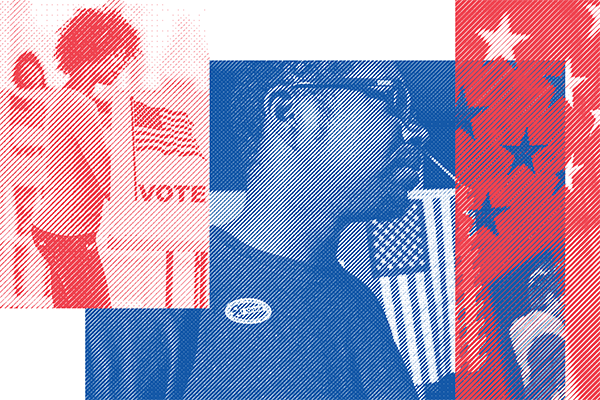
DEIXEI. PESSOAS. VOTO.
 |
Estamos lutando para salvar nossa democracia.
Com a Convenção Nacional Democrata chegando ao fim e a Convenção Nacional Republicana logo em seguida, faltam apenas 74 dias para a eleição. Vários estados ainda não garantiram o voto pelo correio a todos os eleitores elegíveis durante a pandemia, e as preocupações em torno do USPS permanecem.
Está claro que nossos apelos para "Deixe as pessoas votarem" são urgentes como sempre - e todos nós precisaremos agir rapidamente para garantir que nossas cédulas sejam lançadas e contadas. É por isso que reunimos um recurso para ajudá-lo a se preparar em aclu.org/voter.
Enquanto você se prepara para votar, as equipes jurídicas e de defesa da ACLU não vão parar de lutar para preservar este direito fundamental. Aqui está um resumo de nossos esforços de votação mais recentes:
Craig, exigir que as pessoas corram o risco de infecção por COVID-19 para votar é pura e simples supressão do eleitor. E quando sabemos que esta pandemia afeta de maneira desproporcional as pessoas de cor, pessoas com deficiência e comunidades de baixa renda - também é flagrantemente discriminatória.
Nossa democracia funciona melhor quando todos os eleitores podem votar. E este momento é um lembrete firme de que alcançar direitos de voto iguais ainda é imperativo. É por isso que a ACLU continua a lutar - especialmente nesta eleição mais importante.
Obrigado por agir,
Sophia Lin Lakin
Advogada da ACLU, lutando pelo direito de voto |
Voto por correspondência explicado
Como podemos votar com segurança durante uma pandemia?
Precisamos expandir a votação pelo correio e a votação antecipada, nos livrar dos obstáculos à votação, continuar votando pessoalmente para aqueles que precisam e fornecer financiamento adequado para os estados implementarem o voto pelo correio.
Saiba mais em www.aclu.org/voter/
Saiba mais sobre como exercer seus direitos de voto, resistir aos esforços de intimidação dos eleitores e acessar acomodações para deficientes físicos e assistência linguística nas urnas. Para obter ajuda nas urnas, ligue para a linha direta de proteção eleitoral apartidária em 1-866-OUR-VOTE.
EU PRECISO ME REGISTRAR PARA VOTAR
Os estados têm prazos e requisitos de registro de eleitor diferentes, portanto, certifique-se de estar registrado com bastante antecedência ao dia da eleição. Os prazos de registro de eleitores variam e alguns estados permitem que os indivíduos se inscrevam pela primeira vez e votem no dia da eleição.
O que fazer
- Verifique o status do seu registro em Can I Vote .
- Se você não está registrado para votar, vá para vote.gov para encontrar suas opções. Este link fornecerá informações sobre suas opções de registro, que podem incluir registro online.
Compartilhe este cenário:
EU PRECISO ENCONTRAR MEU LOCAL DE VOTAÇÃO
Cada estado oferece opções de voto pessoal no dia da eleição, mesmo aqueles que realizam eleições principalmente pelo correio.
O que fazer
- Encontre seu local de votação ou centro de votação e seu horário de funcionamento.
- Faça um plano para o dia da eleição: quando e onde você votará e como chegará lá?
Compartilhe este cenário:
NÃO TENHO CERTEZA DO QUE TRAZER PARA AS PESQUISAS
Seu estado pode exigir que você traga um documento de identidade ou documentos que comprovem sua residência, especialmente se você estiver votando pela primeira vez. Certifique-se de estar preparado.
O que fazer
- Saiba quais materiais você precisará levar com você para o local de votação no dia da eleição.
Compartilhe este cenário:
EU QUERO VOTAR ANTES DO DIA DA ELEIÇÃO
Seus direitos
- Se você não puder votar pessoalmente no Dia da Eleição, poderá votar antecipadamente ou por voto via correio ausente.
- Alguns estados permitem que qualquer eleitor vote ausente; outros têm requisitos mais rígidos.
O que fazer
- Saiba mais sobre suas opções para exercer o voto ausente ou antecipado em seu estado.
- Lembre-se de que o prazo para solicitar o voto ausente pode ser antes do dia da eleição.
Compartilhe este cenário:
QUAIS SÃO MEUS DIREITOS GERAIS NO DIA DA ELEIÇÃO?
Seus direitos
- Se as urnas fecharem enquanto você ainda estiver na fila, fique na fila - você tem o direito de votar.
- Se você cometer um erro em sua cédula, peça uma nova.
- Se as máquinas estiverem desligadas em seu local de votação, peça uma cédula de papel.
- Se você tiver problemas ou perguntas no dia da eleição, ligue para a linha direta de proteção eleitoral:
- Inglês: 1-866-OUR-VOTE / 1-866-687-8683
- Espanhol: 1-888-VE-Y-VOTA / 1-888-839-8682
- Árabe: 1-844-YALLA-US / 1-844-925-5287
- Para bengali, cantonês, hindi, urdu, coreano, mandarim, tagalo ou vietnamita: 1-888-274-8683
Compartilhe este cenário:
O FUNCIONÁRIO DA PESQUISA DIZ QUE MEU NOME NÃO ESTÁ NA LISTA DE ELEITORES REGISTRADOS
Seus direitos
- Os eleitores têm direito a uma cédula provisória, mesmo que não estejam no livro de votação.
- Após o dia da eleição, os funcionários eleitorais devem investigar se você está qualificado para votar e se registrou. Se você for qualificado e registrado, eles contarão sua cédula provisória.
O que fazer
- Peça ao funcionário da votação para verificar o seu nome na lista de eleitores registrados. Certifique-se de soletrar seu nome para o funcionário da votação.
- Se o seu nome não estiver na lista, pergunte se há uma lista suplementar de eleitores.
- Se o funcionário da votação ainda não conseguir encontrar seu nome, confirme se você está no local de votação correto:
- Solicite que os funcionários da votação verifiquem um sistema estadual (se houver) para ver se você está registrado para votar em um local de votação diferente.
- Se o funcionário eleitoral não tiver acesso a um sistema estadual, peça que liguem para o escritório eleitoral principal.
- Você também pode ligar para 1-866-OUR-VOTE e pedir ajuda para verificar seu local de votação adequado.
- Se você estiver registrado em um local diferente, na maioria dos casos, você terá que viajar para esse local para votar regularmente.
- Se o funcionário eleitoral ainda não conseguir encontrar seu nome ou se você não puder viajar para o local de votação correto, peça uma votação provisória.
Informação adicional
- Se você for rejeitado ou recusado um voto provisório, ligue para a Linha Direta de Proteção Eleitoral em 1-866-OUR-VOTE ou 1-888-VE-Y-VOTA (en Español).
- Relate sua experiência aos funcionários eleitorais locais .
Compartilhe este cenário:
EU SOU UM ELEITOR COM DEFICIÊNCIA
Seus direitos
- De acordo com a lei federal, todos os locais de votação para as eleições federais devem ser totalmente acessíveis para idosos e eleitores com deficiência. Simplesmente permitir a votação na calçada não é suficiente para atender aos requisitos de acessibilidade do American with Disabilities Act (ADA).
- Nas eleições federais, cada local de votação deve ter pelo menos um sistema de votação que permita aos eleitores com deficiência votarem de forma privada e independente. Normalmente, esta é uma máquina que pode ler a cédula para você (para pessoas com deficiência visual ou dislexia) e permite que você vote pressionando botões (para pessoas com deficiência motora).
- Segundo a lei federal, os eleitores com deficiência e os que têm dificuldade em ler ou escrever em inglês têm o direito de receber ajuda pessoal nas urnas da pessoa de sua escolha. Esse ajudante não pode ser o empregador do eleitor, um agente do empregador do eleitor, ou um agente ou oficial do sindicato do eleitor. O ajudante deve respeitar a privacidade do eleitor, não olhando para a cédula do eleitor, a menos que o eleitor solicite isso.
- Os oficiais eleitorais (incluindo funcionários eleitorais) devem fazer as acomodações razoáveis conforme necessário para ajudá-lo a votar.
- Os oficiais eleitorais devem fornecer-lhe ajuda, se for possível.
- Um eleitor com deficiência mental não pode ser rejeitado nas urnas porque um funcionário da pesquisa pensa que não está "qualificado" para votar.
O que fazer
- Você pode trazer um parente, amigo ou outra pessoa de sua escolha para auxiliá-lo nas urnas. Não traga seu empregador, ou um agente de seu empregador ou sindicato.
- Se você trouxer uma pessoa para ajudá-lo, informe isso aos funcionários quando fizer o check-in. Eles podem pedir que você jure sob juramento que é portador de uma deficiência e que pediu a essa pessoa para ajudá-lo. Seu ajudante também pode ser solicitado a assinar um formulário jurando que não disse a você como votar.
- Se houver longas filas e você tiver algum problema de saúde física ou mental ou alguma deficiência que torne difícil ficar na fila, informe um funcionário da votação.
- Diga aos funcionários eleitorais o que você precisa. Por exemplo, se for difícil para você ficar de pé, eles devem providenciar uma cadeira ou um lugar para sentar enquanto espera. Se a multidão ou o barulho são difíceis para você, os funcionários eleitorais podem encontrar um lugar tranquilo para você esperar e chamá-lo quando for sua vez de votar.
- Se você não puder entrar no local de votação porque o caminho para ele não é totalmente acessível, peça aos funcionários da pesquisa ajuda na calçada. Ligue também para 1-866-OUR-VOTE para relatar o problema.
- Se você tiver dificuldade em usar os materiais fornecidos para fazer as seleções, revisar ou dar o seu voto, avise um funcionário eleitoral e peça a ajuda necessária. Acessibilidade é a lei.
- Se você enfrentar qualquer desafio ao votar de forma privada e independente ou não puder votar, relate o problema à linha direta de Proteção Eleitoral em 1-866-OUR-VOTE. Advogados treinados podem ajudá-lo e garantir que outros eleitores não tenham o mesmo problema.
Informação adicional
- Encontre guias de votação detalhados no Bazelon Center for Mental Health Law
- Para obter um kit de ferramentas sobre como votar com deficiência, visite a Autistic Self Advocacy Network .
- Visite o Projeto GoVoter da SABE para treinamentos acessíveis sobre como exercer seus direitos como eleitor com deficiência.
- Faça um curso sobre os requisitos de acessibilidade do local de votação no Rocky Mountain ADA Center .
- Para informações sobre votação em linguagem de sinais americana, visite SignVote .
Compartilhe este cenário:
EU FALO INGLÊS MENOS DO QUE “MUITO BEM”
Seus direitos
- De acordo com a lei federal, os eleitores que têm dificuldade em ler ou escrever em inglês podem receber assistência presencial nas urnas da pessoa de sua escolha. Essa pessoa não pode ser o empregador do eleitor, um agente do empregador do eleitor ou um agente ou oficial do sindicato do eleitor.
- Os condados abrangidos pela Seção 203 da Lei de Direitos de Voto são obrigados a fornecer assistência bilíngue aos eleitores em idiomas específicos. Isso significa que eles devem fornecer funcionários eleitorais que falam determinados idiomas e disponibilizar todos os materiais eleitorais e informações relacionadas às eleições nesses idiomas. Verifique se o seu condado é obrigado a fornecer assistência eleitoral bilíngue no idioma que você fala.
O que fazer
- Você pode trazer um familiar, amigo ou outra pessoa de sua escolha para auxiliá-lo nas urnas. Não traga seu empregador, ou um agente de seu empregador ou sindicato.
- Se você mora em um condado que deve fornecer assistência eleitoral bilíngüe para um idioma que você fala, pode solicitar assistência oral de um funcionário eleitoral bilíngue e solicitar materiais de votação, como uma cédula, nesse idioma.
- Se você tiver problemas para votar devido à falta de fluência em inglês, ligue para uma destas linhas diretas:
- Espanhol: 1-888-VE-Y-VOTA / 1-888-839-8682
- Árabe: 1-844-YALLA-US / 1-844-925-5287
- Inglês: 1-866-OUR-VOTE / 1-866-687-8683.
- Bengali, Cantonês, Hindi, Urdu, Coreano, Mandarim, Tagalo, Vietnamita): 1-888-API-VOTE / 1-888-274-8683
Informação adicional
- Para obter orientação detalhada sobre a assistência ao voto bilíngue, visite Asian Americans Advancing Justice .
Compartilhe este cenário:
ALGUÉM ESTÁ INTERFERINDO NO MEU DIREITO DE VOTO
Exemplos de intimidação do eleitor
- Questionando agressivamente os eleitores sobre sua cidadania, antecedentes criminais ou outras qualificações para votar.
- Representar-se falsamente como oficial eleitoral.
- Exibir sinais falsos ou enganosos sobre fraude eleitoral e penalidades criminais relacionadas.
- Outras formas de assédio, especialmente assédio dirigido a não falantes de inglês e eleitores de cor.
- Espalhar informações falsas sobre os requisitos do eleitor.
- Você não precisa falar inglês para votar, em nenhum estado.
- Você não precisa passar em um teste para votar, em nenhum estado.
- Alguns estados não exigem que os eleitores apresentem documento de identidade com foto.
Seus direitos
- É ilegal intimidar eleitores e um crime federal "intimidar, ameaçar, [ou] coagir ... qualquer outra pessoa com o propósito de interferir com o direito de [essa] outra pessoa de votar ou votar como ela quiser."
O que fazer se você sofrer intimidação do eleitor
- Em muitos estados, você pode prestar uma declaração juramentada ao funcionário eleitoral de que preenche as qualificações para votar em seu estado e, em seguida, proceder à votação.
- Denuncie a intimidação à linha direta de proteção eleitoral em 1-866-OUR-VOTE ou 1-888-VE-Y-VOTA (em espanhol).
- Denuncie a intimidação aos funcionários eleitorais locais . Seus escritórios estarão abertos no dia da eleição.
Subscribe to:
Posts (Atom)