NORTON META TAG

05 February 2025

Trump Wants Us to Feel Powerless. Don't Let Him & 10 Ways To Stay Grounded During Trump’s Second Term 30JAN25


THIS is a powerful message of comfort, hope and guidance to taking action without hate and violence. I will definitely need to come back to this for an attitude and action adjustment because I intend to be active in the opposition. From Sojourners.....

Trump Wants Us to Feel Powerless. Don't Let Him
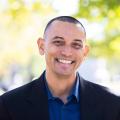
Rev. Adam Russell Taylor is president of Sojourners and author of A More Perfect Union: A New Vision for Building the Beloved Community


JAN 30, 2025

The first week of the second Trump administration felt like a year. By his team’s own admission, they used a strategy of shock-and-awe to “flood the zone” with executive orders and policy decisions.  

I’ll admit that the sheer volume of his actions — ranging from cruel and immoral to outrageous — has often left me reeling, unsure how best to respond. Trump pardoned Jan. 6 riotersrevoked security clearances of his critics, ended government DEI programsproclaimed there are only two genders, ended the policy barring ICE from conducting immigration raids at schools and churches, withdrew the U.S. from the Paris Climate Agreement and the World Health Organization, and attempted to end birthright citizenship — and that was just Inauguration Day. The onslaught continued as he removed internal government watchdogsfired those who’d conducted investigations against him, stopped foreign assistance for three months, and froze trillions of dollars in federal grants and loans — only to rescind the order later. Some of these actions, while discouraging, are well within his power as president; others represent a stretch of democratic norms — or an abuse of his authority.  

This chaos is, of course, a core feature of his governing style, not a glitch. As top Trump ally and former White House chief strategist Steve Bannon put it: “It’s working. It’s just stunning to me what they’re doing, and it’s not getting covered because it’s too much. They’re overwhelming the system.” 

And it is overwhelming. As we know, these actions have dire and far-reaching consequences: We saw aid organizations, schools, state governments, hospitals, and nonprofits in turmoil as they tried to figure out what to do when their funding was frozen. We see the fear in members of migrant and LGBTQ+ communities. Resisting the urge to panic is hard.  

But here’s the thing: Provoking a sense of disorientation, paralysis, numbness, fear, grief, or despair is the goal of the “flood the zone” strategy. We know that authoritarian movements of the past and present thrive on people feeling despair. Trump hopes to exploit a demoralized and overwhelmed opposition to quickly accomplish as much of his agenda as he can get away with.  

We don’t have to respond in the way Trump and his allies hope. As we process our feelings about horrible headlines, we can instead use that outrage to join efforts to block many of the most egregious policies all while casting a very different vision for America’s future: a healthy, inclusive democracy that prioritizes the common good and enables everyone to thrive. 

I won’t pretend that’s easy; turning outrage to action takes effort. But our faith reminds us that no earthly regime has the final word and points us to the great cloud of witnesses (Hebrews 12) who’ve worked to bring this world closer to the Beloved Community. These and other reminders from our faith can anchor our hope and reinforce our resilience. Leaning into my faith in this moment helps to remind and convict me that our faith is built for this moment.  

In the days ahead, I’m committed to staying informed — but doing so in moderation. I fully recognize the temptation to try to follow every event, every notification of “BREAKING NEWS” that comes across our screens. It’s important to remember that there’s an entire “attention economy” out there competing for our eyeballs, our clicks, and yes, our outrage. None of us is immune — and yes, I say this as the president of an organization that offers plenty of digital content!  

For me, news moderation means turning off notifications and rationing my media intake to the early morning and only a few times during the course of the day. I’m also trying harder to avoid getting sucked into reacting to the Trump administration’s latest outrageous or offensive action. At Sojourners, we’ve created the Truth and Action Roundup to help with the overwhelm. It’s a weekly newsletter that boils down the essential news,  along with a few concrete opportunities to take action and spiritual reflection to sustain us all.  

And that last part — spiritual sustenance — shouldn’t be an afterthought. As we consume so much news that can trouble us, it is important to stay rooted in scripture that speaks directly to this challenge. These include that God “gives strength to the weary and increases the power of the weak (Isaiah 40:29) and reassures us to be strong and courageous, reminding us we are never alone (Deuteronomy 31:6).  

While these reassurances can sometimes feel frustrating, particularly when God’s presence feels distant or when our prayers remain unanswered, now is a time to lean into whatever spiritual practices draw you closer to God’s presence. I often use a simple breathing exercise I learned from Richard Rohr centered around meditating around Psalm 46:10 that has helped bring me a sense of peace in the midst of many storms. I’m also grateful for my church’s annual 40-day fast which has enabled me to pray with and feel connected with thousands of other Christians who are trying to seek God first in this tumultuous season, believing that when we seek first the kingdom of God and his righteousness, then all things will be added unto us (Matthew 6:33). Staying rooted in our faith will help us show up in what will be a marathon and not only a sprint.  

To counter feelings of powerlessness, I’m also reminding myself there’s a lot of good work already happening. Many of Trump’s most extreme executive orders have faced immediate pushback in the form of court challenges that will delay, narrow, or outright halt the administration’s efforts. The birthright-citizenship executive order, for instance, was immediately blocked by a judge calling Trump’s attempt to redefine the 14th amendment “blatantly unconstitutional.” Likewise, the freeze in administering federal grants and loans — while reckless — was challenged in court and ultimately rescinded. While there’s no guarantee that courts will always rule in the way we believe upholds the common good, they can provide an essential guardrail. 

And we are not powerless: Through signing petitions, making phone calls, conducting district visits, writing op-eds, and more you can apply direct pressure on Congress, where a razor thin margin in the House will make it difficult to push through much of the Trump administration’s agenda that will increasingly require congressional action. Right now, we have significant power to block harmful legislation, for example, Trump’s proposed cuts to social programs such as Medicaid, SNAP, and WIC to pay for tax cuts that primarily benefit the rich will be unpopular and cause real harm to many of his supporters. 

My favorite metaphor in scripture compares the health of the church to that of the human body with many parts, as the Apostle Paul writes, “Just as a body, though one, has many parts, but all its many parts form one body, so it is with Christ” (1 Corinthians 12:12). Though written about the church, I think this text applies equally to our country and the world. We’re interdependent, all with different roles to play as we fulfill the biblical injunction to protect people who are threatened by policies that will dismantle our refugee and asylum system, break families apart, eviscerate programs that provide a lifeline to struggling families, reverse progress in addressing the climate crisis, and so much more. Our roles won’t be the same all the time, and that’s okay; that’s the point. 

This is a season in which we need some people to give more generously to shore up organizations working to resist and build, while others give their time and talents to offer aid to those who are vulnerable. We need some folks to build deeper relationships and engage in bridge-building efforts, while others advocate and engage in nonviolent resistance. We can each contribute in the way we are best equipped to do so, and together all of us — a growing movement committed to justice and peace— plays its part to move us all forward. 

Though it may feel unified now, the Trump administration is all but certain to falter due to many of its own divisions and excesses, including a feuding coalition that includes Christian nationalists, ultra-conservatives, tech billionaires, and white nationalists. The administration’s backtracking on a freeze on federal grants is one clear, recent example. As these failures become evident, I hope it will cause more and more people to hunger for justice and thirst for righteousness. 

Until then, we practice resistance by refusing to completely tune out, become demoralized, or fall into despair. Instead, as I was reminded at a recent retreat with other faith leaders, “Let us not grow weary in doing good, because in good season we will reap a harvest if we do not give up” (Galatians 6:9). 

10 Ways To Stay Grounded During Trump’s Second Term

For us to be of any use during the next four years, we must resist the temptation to cower in fear, isolation, exhaustion, and constant disorientation.

Daniel Hunter trains activists globally on nonviolence and founded Choose Democracy. He is the author of the Climate Resistance Handbook and Building a Movement to End the New Jim Crow


January/February 2025

SEEING THE RISE of right-wing populism globally, several months ago I began to lead scenario-planning and writing about what might happen if Donald Trump won. I played out strategies for how folks might meaningfully respond. Yet when he won, I still found myself deep in shock and sadness. In the days after, I reached out to my community to try to assess and get my feet back underneath me.

Being grounded is difficult when the future is unknown and filled with anxiety. Trump has signaled the kind of president he will be: vengeful, uncontrolled, and unburdened by past norms and current laws. If you’re like me, you’re already tired. The prospect of more drama is daunting.

As a nonviolence trainer working with social movements across the globe, I am blessed to have worked with colleagues living under autocratic regimes to develop resilient activist groups.

My colleagues keep reminding me that good psychology is good social change. For us to be of any use in a Trump world, we must pay attention to our inner states, so we don’t perpetuate the autocrat’s goals of fear, isolation, exhaustion, and constant disorientation. As someone raised by a liberation theologian, I’m reminded of how we lean hard on community and faith in tough times.

In that spirit, I offer some ways to ground ourselves for the times ahead.

1. Trust yourself

TRUMP IS ARRIVING at a time of great social distrust: There’s more distrust of the media, medical professionals, experts, politicians, community institutions, and membership groups. There are rifts among friends and family. Even our trust in predictable weather is diminished. Distrust fuels the flame of autocracy because it makes it easier to divide people.

Trust-building starts by trusting your own eyes and gut. This means being trustworthy — not just with information, but with emotions. If you’re tired, rest. If you’re scared, make peace with your fears. If you need to stop checking your phone compulsively, do it. If you don’t want to read this article now and would rather take a good walk, do it. Start with trusting your inner voice. Trust in self is foundational for a healthy movement life. I wrote some resources at FindingSteadyGround.com that you may find helpful.

2. Find others who you trust

IN A DESTABILIZED society, you need people who help ground you. Hannah Arendt, author of The Origins of Totalitarianism, uses the word verlassenheit — often translated as loneliness — to describe a kind of social isolation of the mind. Constant attacks on social systems turn us away from leaning on each other and toward ideologically simple answers that increase isolation.

In Chile in the 1970s and ’80s, the dictatorship aimed to keep people in such tiny nodes of trust that everyone was an island unto themselves. At parties, people would commonly not introduce each other by name for fear of being too involved. Fear breeds distance. We must consciously break that distance.

Find people you can regularly touch base with. Use that trust to explore your own thinking and support each other to stay sharp and grounded. For the last several months, I’ve been hosting a regular group at my house to “explore what is up with these times.” Our crew thinks differently but invests in trust. We emote, cry, sing, laugh, sit in stillness, and think together. All of us will benefit from actively organized nodes to help stabilize us.

3. Grieve

THE HUMAN THING to do is grieve loss. Humans are also good at compartmentalizing, rationalizing, intellectualizing, and ignoring — the damage this does to our body and psyche is well documented. But the inability to grieve is a strategic error. After Trump won in 2016, we saw colleagues who never grieved. They remained in shock. For years they kept saying, “I can’t believe he’s doing that.”

When Trump won the first time, I stayed up until 4 a.m. with a colleague for a tear-filled night of naming things that we had lost. This helped us find the sadness, anger, numbness, shock, confusion, and fear inside of us. We grieved. We cried. We held each other. We breathed. We dove back into naming what we knew we’d lost and things we thought we’d be likely to lose. It wasn’t strategizing or planning. Ultimately, this helped us believe it — so we didn’t spend years in a daze saying, “I can’t believe this is happening in this country.” Believe it. Believe it now. Grief is a pathway to acceptance.

4. Release that which you cannot change

ON HER BEDROOM wall, my mom had a copy of the Serenity Prayer: “God, grant me the serenity to accept the things I cannot change, the courage to change the things I can, and the wisdom to know the difference.” Theologian Reinhold Niebuhr wrote this during the rise of Nazi Germany.

Trump has proclaimed that his first day will include everything from pardoning Jan. 6 insurrectionists, reallocating money to build the wall, pulling out of the Paris Climate Agreement, and firing 50,000-plus government workers to begin replacing them with loyalists. It’s doubtful that day two will be much quieter. Amid that chaos, it will be hard to accept that we cannot do it all.

A colleague in Turkey told me that something bad happens every day, and if he were to react to every bad thing, he’d never have time to eat. Another time, an elder saw me trying to do everything and pulled me aside. “That’s not a healthy lifelong strategy,” she said. She’d been raised in Germany by Holocaust survivors who told her, “Never again.” She felt she had to stop every wrong. It wracked her and contributed to several ongoing medical conditions.

I’ve created a journaling exercise. It asks what issues in the coming years I would “completely throw down for, do a lot for, do a little for, or — despite caring about — do nothing for at all.” That last question can feel like torture for many of us, but the desire to act on everything leads to bad strategy.

5. Find your path

LAST SPRING, I wrote What Will You Do if Trump Wins, a choose-your-own-adventure-style book. Differentiated pathways of resistance will emerge, as will plenty of opportunities to join the cause. You may be attracted to some pathways more than others. Your path may not be clear right now. That’s okay. Below are just a few paths. You can find more at WhatIfTrumpWins.org.

Protect People. These are folks surviving and protecting our own — especially those of us directly targeted, such as trans people, folks choosing abortions, and immigrants. This might mean organizing outside current systems for health care and mutual aid or moving resources to communities that are being targeted.

Defend Civic Institutions. This group may or may not be conscious that current institutions don’t serve us all, but they are united in understanding that Trump wants them to crumble so he can exert greater control over our lives. Institutional pillars understand a Trump presidency is a dire threat. These insiders will need external support, such as showing compassion that some of our best allies will be inside, silently resisting. Celebrate people who get fired for doing the right thing, then offer them practical help with life’s next steps.

Disrupt and Disobey. In Norway, to create a culture of resistance during World War II, people wore innocuous paperclips as a sign they wouldn’t obey. In Serbia, protests against their dictator started with student strikes before escalating to strikes by pensioners before finally escalating to the game-changing strike of coal miners. The ultimate goal is paving a path for mass noncooperation: Tax resistance, national strikes, work shut-downs, and other nonviolent mass disobedience tactics are the most effective strategies to displace authoritarians.

Build Alternatives. We can’t only react. We need a vision to build alternatives that are more democratic, loving, and kind. This might include grounding and healing work, rich cultural work, different ways of growing food and caring for kids, participatory budgeting, or seeding constitutional conventions to build a majoritarian alternative to the Electoral College mess we’re in.

6. Do not obey in advance; do not self-censor

IF AUTOCRATS TEACH us any valuable lesson it’s this: Political space that you don’t use, you lose. This is for all levels of society — lawyers advising nonprofits, leaders worried about their funding base, folks worried about losing their jobs. I’m not coaching you to never self-protect. You can decide when to speak your mind. But we must combat the slippery slope. In Timothy Snyder’s helpful book and video series On Tyranny, he cites ceding power as the first problem: “Most of the power of authoritarianism is freely given. ... Individuals think ahead about what a more repressive government will want, and then offer themselves without being asked. A citizen who adapts in this way is teaching power what it can do.”

Put simply: Use the political space and voice you have.

7. Reorient your political map

A FEW MONTHS ago, I sat in a room with retired generals, Republicans such as Michael Steele, ex-governors, and congresspeople. We were scenario-planning ways to prevent Trump’s abuse of the Insurrection Act to target civilian protesters. For a committed antiwar activist, the phrase “strange bedfellows” doesn’t begin to describe the bizarre experience I felt.

A Trump presidency reshapes alignments and possibilities. How we position ourselves matters: Are we only interested in maintaining ideological purity and preaching to our own choir? Even if you don’t want to engage, we all must give space to those who do experiment with new language to appeal to others who don’t share our worldview.

Empathy will be helpful: At the close of that planning day, I saw a lot of pain in people of great power who were admitting a kind of defeat. The generals said, “The military cannot stop Trump from giving these orders.” Politicians said, “Congress cannot stop it.” The lawyers said, “We cannot stop it.” I felt compassion that surprised me. Only the left activists said, “We have an approach of mass noncooperation that can stop this. But we’d need your help.” I’m not sure that projected confidence was well received. But if we’re going to live into that approach (and I’m far from certain we can), we need to be pragmatic about power.

8. Get real about power

PSYCHOLOGICAL EXHAUSTION AND despair are high. We’re not going to convince Trump not to break norms and laws that get in his way. Marches and symbolic protests will not change his mind. We must recognize that his power is unstable, like an upside-down triangle. It naturally topples without support. Power relies on pillars of support to keep it upright. Describing these pillars, nonviolence strategist Gene Sharp said:

“By themselves, rulers cannot collect taxes, enforce repressive laws and regulations, keep trains running on time, prepare national budgets, direct traffic, manage ports, print money, repair roads, keep markets supplied with food, make steel, build rockets, train the police and army, issue postage stamps, or even milk a cow. ... If people would stop providing these skills, the ruler could not rule.”

Removing one pillar of support can gain major, life-saving concessions. Removing many will result in systemwide change. In Blockade, Catholic activist Dick Taylor described how he and a tiny group changed U.S. foreign policy by blocking armaments sent to support Pakistani dictator Yahya Khan. They repeatedly sent canoes to block military shipments leaving from East Coast ports until the International Longshoremen’s Association was persuaded to refuse to load them. This broke the back of national policy.

Power will need to emerge from folks no longer obeying the current unjust system. This tipping point of mass noncooperation will require convincing many people to take huge personal risks for a better future.

9. Handle fear, make violence rebound

OTPOR, A SERBIAN student organizing group, took a sarcastic response to regular police beatings by joking, “It only hurts if you’re scared.” Their attitude wasn’t cavalier — it was tactical. They refused to grow fear. When hundreds were beaten on a single day, their response was: This repression will only stiffen the resistance. Handling fear isn’t about suppressing it — it is about constantly redirecting.

Activist/intellectual Hardy Merriman released a studied response about political violence that surprised me: Physical political violence remains relatively rare in the U.S. Threats of violence, however, trend upward. CNN reported: “Politically motivated threats to public officials increased 178 percent during Trump’s presidency,” primarily from the right. He noted that a key component to political violence is to intimidate. We can shrink into a cacophony of “that’s not fair,” which fuels the fear of repression. Or we take a page from the great movement strategist Bayard Rustin. Black civil rights leaders were targeted by the Montgomery, Ala. government, during the 1950s bus boycott. Leaders like Martin Luther King Jr. went into hiding after police threats of arrest based on antiquated anti-boycott laws. Rustin organized them to go to the station and demand to be arrested since they were leaders — making a positive spectacle of the repression. Folks held their arrest papers high in the air amid a cheering crowd. Fear turned into valor.

10. Envision a positive future

WE’VE ALL IMAGINED how bad it might get. We would do ourselves a service to envision a positive future. As writer Walidah Imarisha says, “The goal of visionary fiction is to change the world.” We may mount righteous indignation that leads to mass noncooperation far beyond our expectations. Faith groups may play a critical role in leading morally charged strikes, tax resistance, and refusals to comply with unjust orders. Exposed political weaknesses could quickly turn many inside Trump’s organization against him. That feels far away from now. But possibilities remain.

Practicing future thinking gives me some hope and some strategic sensibilities. On the days when I can’t imagine good political possibilities, I zoom out to the lifespans of trees and rocks, heading into spiritual reminders that nothing lasts forever. All the future is uncertain. But a more hopeful future is more likely if we keep thinking of creative solutions.

This article is adapted with permission from wagingnonviolence.org.


Be Still and Know That I Am God (with lyrics) - the most PEACEFUL Hymn

"Be Still and Know That I Am God" (Hymn with lyrics) by Rosemary Siemens - Beautiful Hymn - Sunday Hymn Serenade - Bring Back The Hymns

I hope you enjoy this beautiful, classic and peaceful hymn, "Be Still and Know That I Am God". This hymn is based on Psalm 46:10 from the Bible, which says, "Be still, and know that I am God."Thanks for helping me Bring Back The Hymns! Be Still and Know That I Am God: 0:01 Verse 1 (Be still and know that I am God) 0:38 Verse 2 (I am the Lord that leadeth thee) 1:17 Verse 3 (In thee, O Lord, I put my trust) 1:51 Saxophone Melody 2:29 Violin Melody 3:08 Verse 1 (Be still and know that I am God)

Trump proposes U.S. ‘take over’ Gaza, permanent displacement of residents 4FEB25


Satellite images have been taken recently, revealing the aftermath of the airstrikes from the IDF in Beit Hanoun and Atatra in the Strip.

THE public pronouncements proving the ignorance and stupidity of (NOT MY) pres drumpf / trump are getting worse and worse. Isn't it time to invoke the 25th Amendment, wasn't that the plan between (NOT MY) vice-pres vance, the gop / greed over people-republican party and musk? See also GENOCIDE BY THE RSF IN SUDANS CIVIL WAR & BY THE IDF / ISRAELI DEFENSE FORCES IN GAZA 7JAN25


Trump proposes U.S. ‘take over’ Gaza, permanent displacement of residents

The idea, a first indicator of Trump’s approach to the conflict, was sure to inflame the region given the history of Palestinians’ displacement from their territory.

Updated February 4, 2025 at 7:42 p.m. EST

yesterday at 7:42 p.m. EST

Matt Viser is the White House bureau chief for The Washington Post. He has covered four administrations, as well as Congress, the State Department, and presidential campaigns. He joined The Post in October 2018, and was previously deputy chief of the Washington bureau for the Boston Globe.

Michael Birnbaum is a White House correspondent for The Washington Post, covering the Trump presidency. He previously covered national security and diplomacy from Washington and served more than a decade in Europe as The Post’s bureau chief in Brussels, Moscow and Berlin. He joined The Post in 2008. Send him secure tips on Signal at @mbwp.01

President Donald Trump on Tuesday proposed that the United States take a “long-term ownership position” over Gaza, moving its residents to a “good, fresh, beautiful piece of land” in another country and developing the war-torn territory under U.S. control, offering a vision of mass displacement likely to inflame sentiments in the Arab world.
Trump’s proposal, which he offered as he welcomed Israeli Prime Minister Benjamin Netanyahu to the White House, was likely to provoke a furious reaction from many Palestinians as well as their Arab allies in the region, since it suggested permanently removing Gaza’s 2.2 million residents from Palestinian territory and settling them outside of their land. It would also pull the United States even more deeply into the conflict by taking over territory that belongs to Palestinians.

The idea was a first indicator of Trump’s swaggering approach to the region, as he waded into a generations-old conflict with the assurance that he could resolve what years of efforts by U.S. diplomats have failed to accomplish. His proposal appeared to give little consideration to what Palestinians have said they want.

“I don’t think people should be going back to Gaza. I think that Gaza has been very unlucky for them,” Trump said. “They’ve lived like hell. They lived like you’re living in hell. Gaza is not a place for people to be living, and the only reason they want to go back, and I believe this strongly, is because they have no alternative.”

Gazan residents generally want to stay on their land. Trump did not specify where the new land for Gazans might be found, although he made his comments after repeating his desire for Egypt and Jordan to take in Gaza’s residents. Nor did he appear to grapple with the many Gazan residents who would not want to depart their home territory, nor with the practicalities of potentially forcing them to leave it.

“I do see a long-term ownership position, and I see it bringing great stability to that part of the Middle East, and maybe the entire Middle East,” Trump said.

Asked if U.S. troops would be deployed to take over Gaza, Trump said that “we’ll do what’s necessary. … We’ll take it over and develop it.”

Netanyahu said that he was open to the idea.

“He sees a different future for that piece of land,” Netanyahu said of Trump’s proposal for the United States to take over Gaza.

“It’s worth paying attention to this. We’re talking about it,” he added. “It’s something that could change history.”

Ahead of the meetings with Netanyahu on Tuesday, Trump said he believed Palestinians in Gaza did not have a future there.

“Look, the Gaza thing has not worked. It’s never worked,” Trump told reporters. “I think they should get a good, fresh, beautiful piece of land, and we get some people to put up the money to build it and make it nice and make it habitable and enjoyable.”

The president, who said he will visit Gaza, suggested that it could be a “piece of land, or numerous pieces of land,” raising the possibility that Palestinians could spread across multiple places, potentially diluting their identity — another idea that would spark anger among advocates for the war-battered territory, which faced relentless Israeli bombardment for nearly 16 months until a ceasefire took hold just before Trump took office last month.

Gaza “has been hell,” Trump later told reporters. “You take certain areas and you build really good-quality housing, like a beautiful town, like some place where they can live and not die, because Gaza is a guarantee that they’re going to end up dying. The same thing is going to happen again.”

Trump added that he felt that Gaza’s residents would “love to leave Gaza if they had an option. Right now, they don’t have an option.”

After the meetings, Trump said that a U.S. rebuilding effort in Gaza would create “economic development that will supply unlimited numbers of jobs and housing for the people of the area.” He didn’t specify which people he meant.

Netanyahu lavished the new U.S. leader with praise.

“You say things others refuse to say,” Netanyahu said. “And after the jaws drop, people scratch their heads and they say, ‘You know, he’s right.’”

The two leaders have a complicated history. They were close allies during Trump’s first term, when he moved the U.S. Embassy to Jerusalem. But in the aftermath of the 2020 election, the Israeli leader congratulated Joe Biden on winning the presidency. Trump then began publicly and privately criticizing Netanyahu.

But Trump’s decision to welcome the Israeli leader as his first international guest suggests an effort to patch up the relationship.

Trump’s blunt approach to Gaza’s future stood in sharp contrast with that of the Biden administration, which spent more than a year making painstaking, repeated visits to the region to try to devise a reconstruction plan that would satisfy the kaleidoscope of competing interests over the war-battered territory.

Egypt and Jordan have hotly resisted Trump’s attempts to cajole them into taking Gazans during the reconstruction of the devastated region, a process he has said could take 10 or 15 years.

Jordan is already home to more than 2 million Palestinian refugees, most of whom have Jordanian citizenship. Egypt has been adamant in refusing most Gazans entry during the conflict, although about 100,000 have crossed the border during the course of the conflict, according to the Palestinian Authority.

In addition to rebuilding Gaza, Trump and Netanyahu discussed the tenuous ceasefire between Israel and Hamas, how to handle Iran, and normalizing relations between Israel and Saudi Arabia. The two leaders held a series of meetings at the White House, and planned to hold a private dinner there too.

Ahead of the meeting, the foreign ministers of Egypt and Turkey — another country that has been involved in brokering an end to the conflict — released a joint statement rejecting any proposal to displace or resettle Palestinians to “countries outside the Palestinian territories, either for short-term or long-term purposes.”

Many Gazans also rejected it.

“Our Palestinian people, and the people of Gaza in particular, are rooted here and will not go anywhere. If Trump wants to pave something, he can go pave the sea,” Mustafa Ibrahim, a Gaza-based political expert, wrote on Facebook.

So did Hamas, the militant group that attacked Israel on Oct. 7, 2023, and retains control of significant parts of Gaza.

“Trump's statements are racist, and a blatant attempt to liquidate our Palestinian cause and deny our established national rights,” Izzat al-Rishq, a member of the Hamas political bureau, said in a statement.

Trump has invited Jordan’s King Abdullah II for a meeting in Washington next week. Egypt, meanwhile, is deeply dependent on the United States for military aid, giving Trump significant power in the relationship.

Trump, a former real estate developer, last month referred to Gaza as “a phenomenal location, on the sea, the best weather,” and added that “some fantastic things could be done with Gaza.” On Tuesday, he referred to the area as the “Riviera” of the Middle East and “something that could be so magnificent.”

He added: “I envision world people living there. The world’s people. I think you’ll make that into an international, unbelievable place. I think the potential in the Gaza Strip is unbelievable. And I think the entire world, representatives from all over the world, will be there, and they’ll live there. Palestinians, also, Palestinians will live there. Many people will live there.”

The visit comes at a difficult moment for Netanyahu, who has faced domestic criticism from members of his coalition for agreeing to a ceasefire, as well as international condemnation for his role in creating a humanitarian crisis in Gaza.

Netanyahu’s meeting with Trump was one part of several days of meetings as he adjusts to a Washington that has changed politically over the past few weeks, with Republicans who are more aligned with him now more ascendant. In addition to meetings with Trump administration officials Monday and Tuesday, Netanyahu is expected to visit with congressional leaders Thursday.

Despite Trump’s campaign promises to back Israel more enthusiastically than the Biden administration, he and Netanyahu do not see eye to eye about all aspects of the conflict.

Among other issues, Trump favors a swift and final end to the war. Netanyahu is facing a domestic rebellion from his right-wing coalition partners if he does not resume the fighting in Gaza once the hostages are released as part of the first phase of the ceasefire deal. The Israeli leader will need to reconcile the differences.

The agreement, which was mediated by Egypt, Qatar and the United States, began Jan. 19 and includes an initial phase of 42 days. Phase-two negotiations are expected to start this week, with some issues still unresolved. The initial ceasefire is supposed to continue even if the second phase is not agreed on in time.

“We’re going to try” to get to the second phase, Netanyahu said Tuesday ahead of the meeting.

Over the past two weeks, Hamas and allied militants have released 18 hostages who were abducted in the Oct. 7 attack, including 13 Israelis and five Thai nationals. Israel has also freed more than 580 Palestinian prisoners and detainees, allowed more aid to flow into Gaza and withdrawn its troops from key military posts in the enclave.

The Gaza Health Ministry says more than 47,000 people have been killed in the territory since the Oct. 7 attack. About 40 people are believed to still be held hostage in Gaza.

The two leaders also discussed normalizing relations between Israel and Saudi Arabia. That was a goal during Trump’s first term, and something that Biden also made a priority.

Trump and Netanyahu also discussed Iran, which both U.S. and Israeli officials believe is at its weakest point in years. After the collapse of its regional proxies, Tehran has been left without most of the tools it has used for decades to exert power throughout the Middle East.

That vulnerability could provide an opening to some sort of deal with the United States and the international community. But it also makes Tehran more of a target for Iran hawks in both Israel and Washington, and could spur Iranian leaders to go forward in their efforts to develop a nuclear weapon, policymakers said.

Karen DeYoung in Washington, Shira Rubin in Tel Aviv and Hazem Balousha in Toronto contributed to this report.


04 February 2025

THE IRONY OF DRUMPF / TRUMP 2.0


RFK Jr.’s confirmation hearings were even worse than expected ‘I hope he goes wild’: RFK Jr.’s nomination is headed to the Senate floor 31JAN & 4FEB25


 WHEN I hear robert f kennedy jr. say his decisions at HHS will be based on his own research (it seems he rejects almost all accepted, verified, completed medical research) I get chills because all I can think of is dr mengele's human experimentation "research" at Auschwitz and Auschwitz II (Birkenau) even though the results of his "research" were already known. I am not suggesting robert f kennedy jr. wants to do mengele style research, but his willingness to expose people to diseases and death because he disagrees with the medication or treatment for personal feelings not scientific facts is frightening. robert f kennedy jr must be rejected for leading the HHS. ( Josef Mengele - Wikipedia https://search.app/vak2Y9Se8nEtiyhQ8 ) The 'I hope he goes wild' paraphrasing in the Politico piece is from ff* rep thom tillis r-NC. It will be ironic if rfk jr's going wild results in negative outcomes for ff rep tillis' or his family or friends don't you think? E mail your representative and senators and tell them you expect your senators to vote NO on confirming rfk jr as Secretary of Health and Human Services for the safety and health of all Americans!  These from the Washington Post and Politico.....

(*ff fascist fotze) 

RFK Jr.’s confirmation hearings were even worse than expected 


The HHS nominee’s answers to senators’ questions were absurd — and dangerous.


Leana S. Wen, a Washington Post contributing columnist who writes the newsletter The Checkup with Dr. Wen, is an emergency physician, clinical associate professor at George Washington University and author of “Lifelines: A Doctor’s Journey in the Fight for Public Health.” Previously, she served as Baltimore’s health commissioner.

Two days of contentious Senate confirmation hearings did nothing to assuage doubts about the suitability of prominent vaccine skeptic Robert F. Kennedy Jr. to lead the Department of Health and Human Services. If anything, his responses were even worse than expected and illustrate that he is a uniquely dangerous choice for the position.

The bar for Kennedy was set very low. No one expected him to contradict President Donald Trump on harmful policy issues such as restricting abortion care, slashing Medicaid and unraveling the Affordable Care Act. No one thought he was an expert on health policy, though his insistence that he had a good grasp of the agencies he would oversee were undercut by his inability to answer basic questions about how Medicare and Medicaid work.

His biggest hurdle was proving that he was not an anti-vaccine evangelist despite decades of activism litigating against vaccine manufacturers and questioning the safety of childhood immunizations. I expected him to disavow past statements and claim that he would approach his work at HHS differently — from an advocate lobbying to change the system to a regulator overseeing it. This would have required a leap of faith but at least would have provided some reassurance.

But Kennedy went in the opposite direction. When questioned about his role in the 2019 Samoa measles epidemic that killed 83 people, he insinuated that some of these individuals did not die from measles and that measles (a virus that kills nearly 3 in 1,000 infected children) is not dangerous. When asked whether he would recant his past assertion that Black people should have a different vaccination schedule from White people, he doubled down, referring to “data” that Black people need a lower dose of a vaccine component.

Kennedy stood by the egregious claim that the human papillomavirus vaccine that is remarkably effective at preventing cervical cancer is, in fact, “killing girls.” He would not say that the coronavirus vaccine saved millions of lives and asserted that the coronavirus did not pose a threat to kids. (In fact, nearly 1,700 kids ages 17 and younger died from covid-19.) And though he touted his children being vaccinated as evidence that he supports immunizations, he could not respond when Sen. Ron Wyden (D-Oregon) quoted him as saying, in 2020, that he “would do anything, pay anything, to go back in time and not vaccinate my kids.”

Perhaps the most damning exchange was with Sen. Bill Cassidy (R-Louisiana), a physician who serves on both committees holding hearings to determine Kennedy’s fate. Cassidy gave him a lifeline: He talked about his concerns over dropping immunization rates because of misinformation, the influence Kennedy would have as HHS secretary, and why it was so important to have Kennedy once and for all clearly state that vaccines do not cause autism.

That was all Kennedy had to say. He didn’t. Instead, he went back to his playbook of asking for more research. He would review the evidence, he said, and apologize if proved wrong. Cassidy and numerous other senators cited the more than one dozen studies from seven countries that have thoroughly debunked the autism connection. Kennedy refused to budge and pulled out his own “research” as evidence to the contrary.

These are not the actions of someone who has left his advocacy hat behind. These are not even the actions of someone who has a healthy skepticism of the establishment. Cherry-picking data to support a predetermined conclusion is the antithesis of science and should be disqualifying for the person overseeing the nation’s top health and science agencies.

Kennedy’s supporters have sought to play down his troubling stances on vaccines by touting his “unique” ability to prevent chronic diseases and “Make America Healthy Again.” But what, exactly, does Kennedy plan to do about obesity, diabetes and heart disease? Despite being asked numerous times by sympathetic senators, he had surprisingly little to say and reverted to talking points railing against pesticides and chemicals. I didn’t hear specific policy proposals, such as restricting SNAP dollars from being used to buy junk food and stopping schools from serving ultra-processed products.

There are surely many health experts trusted by Trump who could better fly the MAHA banner but who don’t come with the baggage of peddling anti-vaccine conspiracy theories. (Trump’s choice to head the Food and Drug Administration, surgeon Marty Makary, comes to mind.)

As senators deliberate, they should remember the core medical principle of “first do no harm.” Whatever gains that could be made from chronic disease prevention would all be undone if previously eliminated infectious diseases such as measles and polio came roaring back, and if the United States faces another pandemic, as we very well could with the H5N1 avian flu.

The question in front of them is whether Kennedy should be trusted with the health and safety of the American people. The answer cannot be clearer.


‘I hope he goes wild’: RFK Jr.’s nomination is headed to the Senate floor

Republican senators on the Finance Committee united to move Robert F. Kennedy Jr.'s bid to lead government health agencies forward.

Robert F. Kennedy Jr., despite his long history of opposing widely accepted vaccines, is a step closer to leading the nation’s health agencies.

The Senate Finance Committee voted on party lines 14-13 to recommend his confirmation on Tuesday.

“It is time to put someone in there who’s going to go wild,” Sen. Thom Tillis (R-N.C.) said after voting to advance Kennedy’s confirmation, referencing President Donald Trump’s promise to Kennedy after Kennedy dropped his presidential bid last summer and endorsed Trump.

Tillis said he meant that he hoped bringing in “a disruptor” like Kennedy, a lawyer and not a health professional, to lead the Department of Health and Human Services, would bring new ideas to reduce the cost of health care and drug prices, bolster food safety and improve the government’s health insurance program for low-income people, Medicaid.

The full Senate will now vote, where Kennedy’s chances look good after Sen. Bill Cassidy (R-La.), who sharply questioned Kennedy at a health committee hearing last week about Kennedy’s assertion that some vaccines are unsafe, backed him.

The Finance panel’s vote marks another win for Trump in getting his Cabinet in place and another display of his power over Republicans in Congress who under other circumstances would likely have rejected Kennedy, a lifelong Democrat who’s supported abortion rights and environmental regulation.

Tillis suggested it wasn’t that Republicans didn’t take seriously Kennedy’s past work as an anti-vaccine activist, but that they were reassured by his statements that he would not take away vaccines and only wanted more transparency about their safety and efficacy.

“The only way that Bobby Kennedy and I will get crosswise is if he does actually take a position against the safety of proven vaccines,” Tillis said. “That will be a problem for me.”

Cassidy, who’d questioned Kennedy’s transparency argument, considering the overwhelming evidence that exists about vaccine safety, said on X that he had decided to vote "yes" after receiving "serious commitments" from Vice President JD Vance and because of the opportunity presented "to make progress on the issues we agree on like healthy foods and a pro-American agenda."

It was part of a much broader pressure campaign from the White House and grassroots groups that aimed to sway Cassidy, a doctor before entering politics who repeatedly pressed Kennedy last week to back vaccine use.

Cassidy acknowledged that his phone was ringing off the hook with calls from supporters of Kennedy and his “Make America Healthy Again” movement.

Cassidy already will face a challenge if he decides to seek a third Senate term next year from former Republican Rep. John Fleming, who’s called Cassidy out for voting in 2021 to convict Trump of instigating the Jan. 6, 2021, riot at the Capitol. Voting against Kennedy would have further jeopardized a reelection bid.

Under questioning from Cassidy last week, Kennedy declined, at least publicly, to renounce his past claims about vaccines, including connecting them to rising cases of autism.

Minutes before the vote, Trump posted on Truth Social: “20 years ago, Autism in children was 1 in 10,000. NOW IT’S 1 in 34. WOW! Something’s really wrong. We need BOBBY!!! Thank You! DJT.”

In a Senate floor speech after the Finance Committee vote, Cassidy said the administration had promised him that Kennedy would regularly meet with him and retain existing government vaccine safety systems, among other pledges.

Kennedy during his confirmation hearings said he’d prioritize combating chronic diseases that he believes are the result of additives in the food Americans eat and pollution in the environment. He said health agencies have spent too much time and money on infectious diseases, allowing chronic disease to grow.

In winning the Finance Committee’s approval, Kennedy overcame opposition from both Democrats and Republicans concerned, variously, about his views on vaccines, abortion, environmental regulation, food production and drug legalization, as well as his personal behavior.

Democrats, including friends and former allies of Kennedy, voted “no,” arguing that Kennedy’s assertions about vaccines defied scientific consensus and that he could use his bully pulpit at HHS to discourage vaccination. That would cost lives, they said.

Ranking member Ron Wyden (D-Ore.) and other Democrats tried to make the case to Cassidy.

“Last week, Mr. Kennedy was given ample opportunity on a bipartisan basis to recant his decades-long career peddling anti-vaccine conspiracies,” Wyden said, referencing Kennedy’s appearance at Finance and Health, Education, Labor and Pensions Committee hearings last week. “Instead, he dodged and weaved, and gave no indication that if confirmed as HHS secretary, he would stand by the long-settled science surrounding routine vaccinations.”

Other Democrats opposing Kennedy pointed to his connections to lawsuits against vaccine makers or accusations around his personal conduct — including an accusation of sexual assault that Kennedy has denied, his admission that he once cut off a whale’s head and took it home and that he dumped a dead bear cub in New York’s Central Park — as reasons for concern.

After the hearing, Wyden said he thought Kennedy could still lose a vote on the Senate floor.

"We’re going to pull out all the stops,” he said. “There are senators who I believe are going to vote no on the floor."

Republicans were unmoved, arguing that Kennedy would bring needed change.

“We'll have the opportunity to deliver much needed change to our patients’ health care system,” Finance Chair Mike Crapo (R-Idaho) said.

Robert King contributed to this story.

WHO'S FAMILY CREST IS THIS!?!?!?


 FOUND in a thrift shop for $4.99, wonder who's family crest that is?!?!?!