NORTON META TAG

03 January 2021

How the forgotten middle verses of ‘Auld Lang Syne’ reveal its deeper meaning on memory and gratitude 31DEZ20


Auld Lang Syne - from 'It's A Wonderful Life'

 I, like so many, have always found this year end song a bit morose but this article from American Magazine offers a different take based on all the verses, especially the middle verse....

How the forgotten middle verses of ‘Auld Lang Syne’ reveal its deeper meaning on memory and gratitude

Christian LingnerDecember 31, 2020

As I returned to my favorite holiday traditions over the last couple weeks, I fell again under the spell of “Auld Lang Syne.” It has always seemed to me a perfect song, with words and melody bound together so tightly as to be inextricable, like soul and body.

“Should auld acquaintance be forgot
And never brought to mind?
Should auld acquaintance be forgot
And days of auld lang syne?”

The phrase from which the song draws its title, preserved in the lyrics’ original Scots language, is often translated as “long, long ago” or “old long since.” I completely approve of those who left the phrase “auld lang syne” untampered in the modern English version. The wooden translations do violence to the phrase. Even at the phonetic level, the Scots “auld lang syne” seems to carry a vernacular charm, rolling off the tongue like fog from the highlands.

How can we celebrate “picking daisies fine” alongside wearisome wandering, or raise a glass to paddling streams together alongside our estrangement across broad seas?

For anyone who thinks “Auld Lang Syne” was written specifically for the final cathartic minutes of “It’s a Wonderful Life,” however, these translations do provide a helpful entry point for understanding the song’s history and legacy.

Composed by the poet Robert Burns in the second half of the 18th century, the song rapidly gained popularity across the English speaking lands. It eventually took its place among standard New Year’s Eve festivities, encouraging eager party-goers to reflect upon the year coming to a close before celebrating the year to come.

The song goes on:

We two have run about the hills,
And picked the daisies fine;
But we’ve wandered many a weary foot
Since auld lang syne.
We two have paddled in the stream,
From morning sun till dine;
But seas between us broad have roared
Since auld lang syne.

As is so often the case with old songs, the middle verses bear the greater load of meaningful content (and are also, incidentally, the first forgotten.) The song’s first two stanzas, paired by a celebratory chorus, seem fit for a cheerful Scottish pub, where members of a merry chorus offer each other winks and drinks for the sake of the “good ol’ days.” Now the song seems to take an odd turn by offering two verses in which a childhood memory is followed up by the admission of some painful reality. This pairing could be taken to communicate a recognition of the balance between happy and sad elements of the past.


When our experiences are understood as the setting and not the entire story, when they no longer need to define our ultimate value, they are utterly transfigured.

I think it more likely, however, that the song intentionally moves from a positive note to the negative in order to emphasize how the passage of time often coincides with increased hardship. These middle verses acknowledge the reality of sad memories, while insisting on an immediate return to the chorus and its famous affirmation of times “auld lang syne.”

This unflinching and abrupt transition from sad recollection to celebratory affirmation indicates that this old song can tell us something significant about what it means to remember. By extension, it gives us a clue as to how we should make sense of our experiences more generally.

We are at the end of a year during which our mettle has been tested repeatedly by onslaughts of anxiety, loneliness, sickness and social upheaval. If you are like me, all of these things discourage reflection on the past. Because I had never before experienced these kinds of difficulties for such a sustained period, I found examining the last nine months uniquely challenging.

Before this year, reflecting on the past usually amounted to taking an inventory of my happy and sad moments, the ups and the downs, before moving on at the soonest opportunity to declare that “all in all, I have a lot to be grateful for.”


“Auld Lang Syne” points us to relationship as that alone which makes our memories worth celebrating.

I have nothing against maintaining a sense of gratitude. Insofar as we have experienced earthly blessings, it is right and good for us to be grateful for those gifts.

However, if we limit our reflection to this sort of exercise, to focusing only on the good, I believe we place ourselves in a precarious position. Why? Suppose that the year on which we are reflecting has been as hard as this last one. What happens when our pain appears to outweigh our pleasure?

Furthermore, what are we to do when we realize that our difficulties carry right up to the present and seem far from abating? In each of these cases, we are forced to realize that if we fail to find meaning in both pleasurable and painful memories, we will not gain the solace we desire. When we are confronted with the pervasiveness of our pain, we realize that the type of reflection that amounts to placing pleasurable and painful experiences on a scale only proves helpful for those who don’t need help. If we only find value in pleasurable memories, then that can only help people whose experience is predominated by pleasurable memories.

Additionally, in troubled times, many of us fall back on the refrain: “Well, it could have been worse.” This is nothing but the sullen sister of the first “platitude of gratitude,” as it too relies on relative thinking. But instead of weighing good against bad and coming to the conclusion that we have a lot to be thankful for, we are weighing one bad against another. Things are hard. They could have been harder.

Both statements leave us wanting. They imply that life is fundamentally a condition that is either bad or worse. This kind of thinking hardly promises the kind of positive affirmation of life that most of us are after when we reflect on our past.

There is, though, another approach. If we accept that our pleasurable and painful experiences do not comprise the totality of our lives, but are merely the setting within which our story has been playing out, then all of our experiences suddenly have the capacity to become meaningful. Life is pain and life is joy, yes, but pain and joy contain a deeper meaning. Like the plot of land in Christ’s parable where a treasure has been buried, our experiences are precious when viewed in light of some underlying value. Our experiences are not what define meaning; they are merely the soil from which we can uncover meaning.

This old song can tell us something significant about what it means to remember.

When our experiences are understood as the setting and not the entire story, when they no longer need to define our ultimate value, they are utterly transfigured. They take on an aspect indiscriminately lovely and to be cherished. As with the individual movements of a symphony, some dominated by confident major chords and others by questioning minor strains, so also the strands of our life’s experiences can take on a persistent beauty when understood in light of a theme unifying them.

But what is this unifying theme? What is this dynamic meaning underlying our experiences both joyful and sorrowful? In the terms of the song, how can we celebrate “picking daisies fine” alongside wearisome wandering, or raise a glass to paddling streams together alongside our estrangement across broad seas? I believe Burns has something to say to this effect as well.

And there’s a hand my trusty friend!
And give me a hand o’ thine!
And we’ll take a right good-will draught,
For auld lang syne.
For auld lang syne, my dear,
For auld lang syne,
We’ll take a cup of kindness yet,
For auld lang syne.

After all is said and done, “Auld Lang Syne” points us to relationship as that alone which makes our memories worth celebrating. When our past experiences call to mind those with whom we have walked through thick and thin, these memories not only comfort us in isolation, but also draw us together.

I think Burns is entirely right on this score. Our supreme task and greatest joy lies in the vocation of friendship, which demands of us what we long for: a life of bearing one another’s burdens and sharing each other’s delights. Friendship is, quite simply, any relationship characterized by that beautiful word which stands out in the chorus like embossed print: kindness.

This season, we remember God’s ultimate act of kindness, when he revealed the self-sacrificial meaning of friendship by creating a way we can enter into relationship with him. Yet our relationship with God and our fellow humans is not only a responsibility, but also an opportunity--even one worth celebrating in song. Friendship is required of us only in the way life requires eating and drinking, for we have been made such that what we need is what we enjoy. That which sustains our life can become a feast. For we have been made by the One who desires we have life, and have it abundantly.

Remembering John le Carré, who knew that deep down, we all want to be secret agents & Words from the Clandestine World of John le Carré 28&29DEZ20


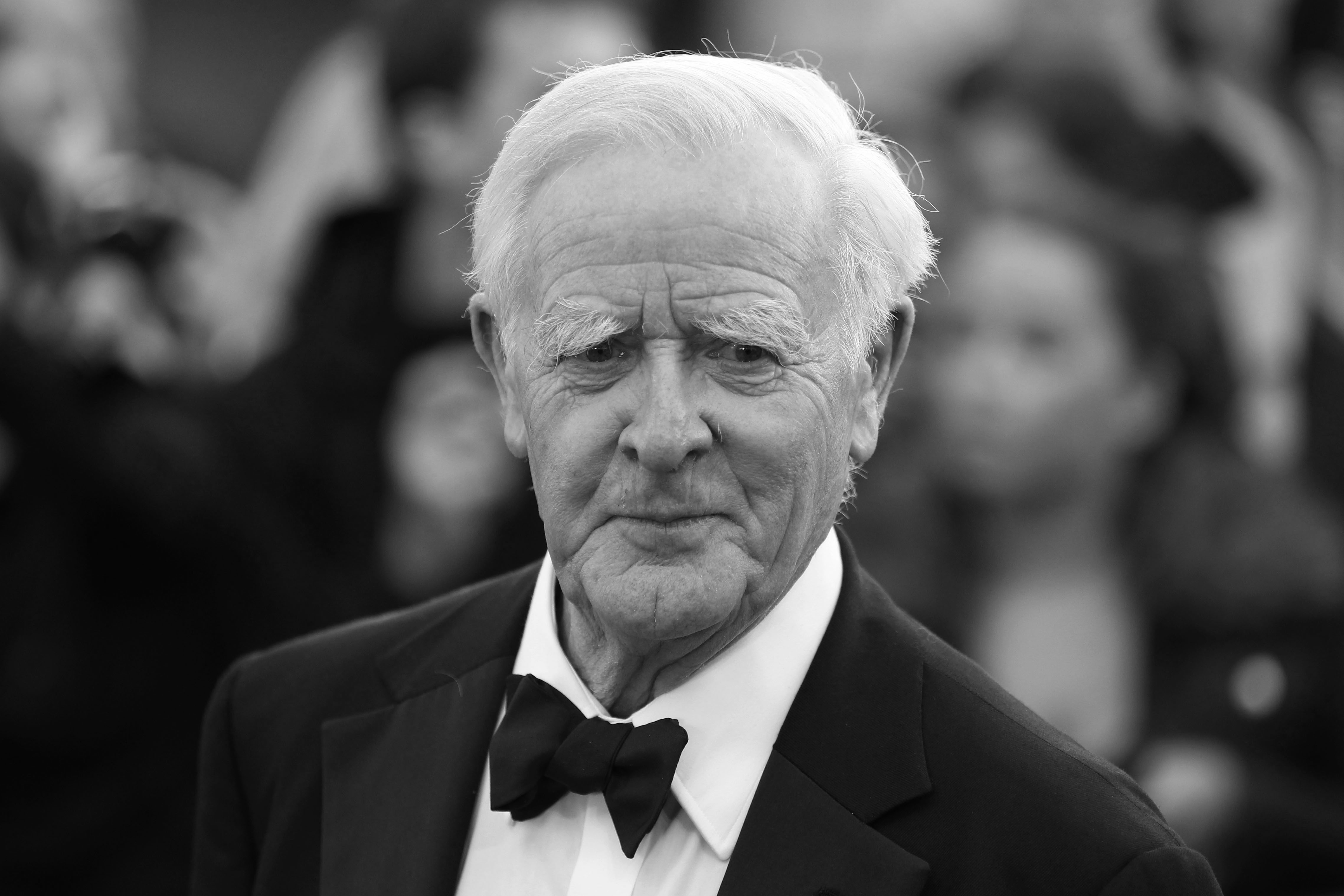
FILE - This Sept. 13, 2011, file photo shows British author John Le Carré at the U.K. film premiere of "Tinker Tailor Soldier Spy," in London. John le Carré, the spy-turned-novelist whose elegant and intricate narratives defined the Cold War espionage thriller and brought acclaim to a genre critics had once ignored, has died. He was 89, Le Carré’s literary agency, Curtis Brown, said Sunday, Dec. 13, 2020, that he died in Cornwall, in southwest England, on Saturday. (AP Photo/Sang Tan, File)

I became a fan of John le Carre when the Smiley's People miniseries was broadcast on PBS in the early 1980's. My family would gather at mom's and dad's hoping and praying the signal from WPSU in Clearfield was going to be strong enough for their antenna to pull it in! After that I started reading his books, always looking forward to his next publication knowing it was going to be amazing. I looked forward to his books to movies productions because of the control le Carre had. Godspeed David Cornwell, thank you for your books and movies. From American Magazine and Merriam-Webster.....

Remembering John le Carré, who knew that deep down, we all want to be secret agents

James T. KeaneDecember 28, 2020

Among the many fans of British novelist John le Carré, who died on Dec. 12 at the age of 89, was an America editor in chief: Thurston N. Davis, S.J., who filled the top job from 1955 to 1968. Davis wrote several long reviews of le Carré’s novels in the 1960s and 1970s, including a 1977 review of The Honourable Schoolboy that perhaps got to the heart of le Carré’s popularity and longevity. “The commercial success of John le Carré’s spy tales is no accident,” Father Davis wrote. “Partly, I suppose, it is explained by the theory that there is a secret agent deep in us all, and that the author simply knows how to feed those hidden fantasies.”

Father Davis, who had a Ph.D. in philosophy from Harvard and also edited The Catholic Mind for many years, might seem an unlikely fan of a spy novelist. Most of his reviews for America over the years were on serious books of history or theology. But, then again, John le Carré was closer on the literary spectrum to Graham Greene (who also knew his way around a good spy novel) than to his fellow popularizers of the genre. In 2008, London’s Sunday Times put him 22nd on their list of the 50 greatest British writers since 1945.

In addition to appealing to the inner secret agent in all of us, John le Carré also introduced millions of readers to a world of espionage that looked nothing like an Ian Fleming novel.

Father Davis did admit that Americans don’t tend to come off well in le Carré’s works, including C.I.A. agents who “incidentally, speak a peculiarly objectionable brand of American English. They tend to come from places like Norman, Oklahoma, and they despise the ‘Brits,’ who return that sentiment in genteel kind.” And indeed, one does not read le Carré’s early novels without getting the distinct sense that the United States was, in fact, regularly being mocked—in a particularly dry and subtle British way.

In addition to appealing to the inner secret agent in all of us, however, le Carré also introduced many millions of readers to a world of espionage that looked nothing like an Ian Fleming novel; in fact, Le Carré himself one described his most famous character, the rumpled and bookish George Smiley, as the “antidote to James Bond.”

John le Carré’s death from pneumonia brought an outpouring of grief and commentary from Great Britain but also from other corners of the globe. Stephen King tweeted that “This terrible year has claimed a literary giant and a humanitarian spirit,” while Stephen Fry wrote that “if there is a contemporary writer who's given me richer pleasure I can't for the moment name them.” Margaret Atwood wrote “His Smiley novels are key to understanding the mid-20th century.” (Unsurprisingly, the heads of the British intelligence services MI5 and MI6 have not always had such kind words for le Carre over the years, though the current director of MI6 did praise him as “a giant of literature who left his mark on #MI6 through his evocative & brilliant novels.”)

John B. Breslin, S.J., once noted that le Carré’s books depicted “authentic espionage,” and "the classic dilemma of every intelligence operation: Who watches the watchers?”

John le Carré’s most famous novels are probably the dense, carefully crafted Cold War thrillers collectively known as the “George Smiley novels,” including The Honourable Schoolboy, Tinker, Tailor, Soldier, Spy and The Spy Who Came In From The Cold, but they are but a small part of his output of 25 novels and a memoir over a career that spanned more than half a century. A number of his books were later made into films as well, including The Constant Gardener, The Tailor of Panama, The Spy Who Came In From The Cold and Tinker, Tailor, Soldier, Spy.

Born David Cornwell in 1931 (he adopted John le Carré as a pen name when his first novel was published in 1961), he had an insider’s view of Cold War espionage, because he worked briefly as an agent for the famed “MI5.” This firsthand experience of a world filled with betrayal, suspicion and intrigue also gave his characters a hardboiled and psychological complexity that is often lacking in other espionage thrillers. (No one could ever confuse George Smiley with Tom Clancy’s Jack Ryan, and certainly not with James Bond.) His books are not truly action-packed either; they are dense on interpersonal relations carried out in somewhat dingy hallways and dusty streets, the latter in locations all over the globe.

In a 1974 review of Tinker, Tailor, Soldier, Spy for America, John B. Breslin, S.J., noted that le Carré’s books depicted “authentic espionage,” and Tinker, Tailor, Soldier, Spy “tackles the classic dilemma of every intelligence operation: Who watches the watchers?”

He is survived by his wife Valerie Jane Eustace and four sons.

Words from the Clandestine World of John le Carré

Tinker, Tailor, Soldier, Dictionary.
Last Updated: 29 Dec 2020
Spy

“John le Carré” was the pseudonym of writer David Cornwell, who was working as a member of Her Majesty’s secret service when his first novels were published, requiring that he disguise his identity. He was advised by his publisher to choose a name with “two Anglo-Saxon monosyllables, like Chunk-Smith” as a false name, but chose instead the oddly French “le Carré.” Carré means “square” or “squared” in French, and is indeed sometimes a family name, but used with le seems a bit strange, coming across as “John the Square.”

This whole story of the writer’s name has an uncanny resonance with the word spy itself, which, while it has a chunky Anglo-Saxon monosyllabic quality, actually comes to English from French.

But, perhaps unsurprisingly, hiding behind the French word’s identity is a slightly unusual Germanic background—unusual for a language that directly descended from Latin, the language of origin for most French words. Spy, it turns out, comes from the French verb espier (“to spy”), itself from the Franconian spehôn, meaning “to observe attentively.” Franconian, known in French as francique, was a German dialect from a region that today includes Bavaria, known as Franconia. The French word was attested in the 11th century, and had come to Middle English by the 13th century.

A word’s etymology is its biography; sometimes it reveals a disguise. It seems fitting that the word spy is an English-looking monosyllable borrowed from French that ultimately comes from Germanic roots.

Espionage wears an indisputably French origin on its sleeve. It is pronounced in the French manner, rhyming with garage (for American English speakers), with that soft g sound that is distinctively French. Appropriately enough, it seems to be a word that is working in foreign territory.

Espionage shares roots with spy, but retains its superficial Frenchness because it was borrowed centuries later, in the late 1700s; earlier borrowings into English are often changed and anglicized more than relatively recent ones.

It also conveys something organized and systematic with its meaning “the practice of spying.” One could spy on a neighbor or act as a spy, but espionage brings a connotation of a network, an allegiance, an ideology, a motive.

The words that occur most frequently with espionage illustrate all of these elements:

industrial

economic

corporate

Chinese

cyber

Soviet

charges

international

case

thriller

Spies work behind the scenes, but the fact that thriller is among the most closely associated terms with espionage is perhaps proof that John le Carré made their secret stories take center stage.

John le Carré wasn’t the first person to use the term mole to refer to a spy, but it’s probable that he did more to make it commonly known than anyone else. Its use with the meaning “a spy (such as a double agent) who establishes a cover long before beginning espionage” actually dates back to the 1920s, but, according to the Oxford English Dictionary, “it is generally thought that the world of espionage adopted it from le Carré, rather than vice versa.”

Le Carré explains this use of the word in the text of Tinker, Tailor, Soldier, Spy:

Ivlov's task was to service a mole. A mole is a deep penetration agent so called because he burrows deep into the fabric of Western imperialism.

The plot of Tinker, Tailor involved the discovery of such a mole in the British secret service, one with deep factual resonance, since it paralleled the discovery of the British agent-turned-Soviet-spy Kim Philby (and is connected to the story of another Soviet mole in England whose discovery was depicted in The Crown).

Since Tinker, Tailor, Soldier, Spy derives from an English nursery rhyme, the French title for the novel and TV and film adaptations is more straightforward as La Taupe, the French word for mole (both the little furry animal and the human spy). A synonym of mole in this sense is sleeper.

The word assassin was borrowed into English directly from French, which based its word on a Latin term that traced back to the Arabic word ḥashshāsh, meaning “worthless person,” or, literally, “hashish user,” since the ultimate root of this word was hashīsh.

It originally referred to a member of a Shia Muslim sect at the time of the Crusades who was sent out on a suicidal mission to murder prominent enemies. The Oxford English Dictionary notes that this term, perhaps unsurprisingly, was initially a derogatory one that implied that the members of this group exhibited erratic behavior, as if intoxicated by hashish—or because they actually were.

Its current use, “a person who commits murder” and especially one who murders a politically important person for money or ideology, was first used in English in the 1500s. This modern meaning represents a subtle change in the idea behind the word’s use: if it initially referred to a particular quality of the killer, it now refers as much to a particular quality—prominence of some kind—of the killer’s target.

John le Carré, who had a brief career as a spy in the British secret service, used the word spook himself when referring to spies. The word’s use with this meaning dates to around World War II, a period rich with both spies and colorful informal language (ginormous, to cite just one example, was British military slang from WWII).

The original meaning of spook, meaning “ghost or specter,” was first attested in the United States in 1801, according to the Oxford English Dictionary. In what is an astonishing coincidence that would hardly be credible for a novelist to conjure, this first quotation using the word is from a publication entitled—wait for it: Massachusetts Spy:

By mine dunder I fly so swift as any spook.

Spook meaning “spy” is even used in discussions of another best-selling author:

Anyone with the patience and fortitude to wade through such imposing texts, claims Clancy, can accumulate enough intelligence to seem like a spook. The people in power know that the place to hide a fact isn't a safe (safes can be blown) but between a million other facts, most of them boring. So Clancy spends much of his time playing private eye, hunting down data as you might hunt down criminals.
— Rich Cohen, Rolling Stone, 1 December 1994

The Cold War is more than the background of le Carré’s novels: it was the essential world in which his characters moved. More than just ideologies, the Cold War, though rarely named explicitly, determined their motivations and actions and perceived rewards:

It was the time of great betrayal. The Cold War was really a game of loyalty. And the Cold War was fought under a constant mystery: how much can we do in defense of a free and decent society, and remain a free and decent society that was worth defending?

What he called “this vast conspiracy theory,” that Western governments and intelligence services were penetrated by communist spies, provided the context for the plots of his novels and the suspicions of his characters—what le Carré called “the atmosphere of mutual suspicion.”

He depicted a world of double agents and defectorssafe houses and dead drops, where the fear was real, even if the danger was, in part, imagined.

Because John le Carré was working as a low-level British spy in Germany when he submitted his first novels in the early 1960s, his books had to be approved by government censors (and he had to use a pseudonym) in order to demonstrate that he was not revealing details about the British secret service, its operations, or its personnel.

Because of this, he invented many of the colorful specifics of his fiction. He never anticipated the level of success that his books attained, and his vocabulary for spying was widely believed to be the real thing; he later said that, while he invented or popularized this terminology, it seemed real not because it was authentic, but because it was credible.

Considering that sales for The Spy Who Came in From the Cold were astonishingly high—twelve to fifteen million copies sold before the celebrated film was released—it seems that the terms he used for the world that he described so well would catch on and be used by others. At the very least, they would become recognized by those who read his books and saw their adaptations on TV and in movies.

These terms are not yet entered in our dictionaries. Some are probably too specialized and idiosyncratic to his works to become part of the general vocabulary, but some of them are widely used.

in from the cold : to return to normal life following a difficult period (such as an undercover assignment)

honey trap : seduction in order to gain information

chicken feed : unimportant information used to gain trust from an intelligence source

babysitter : a spy who remains out of sight in order to protect another

lamplighter : a surveillance agent

Moscow rules : secret codes, sequences, and signals to ensure the safety of a meeting of spies

espiocrat : high-ranking intelligence agency officials